Best 200cc Bikes in India (2026)
This guide is based on real owner forum data, dealer service quotes, and independent test rides — not manufacturer claims. Mileage figures reflect typical city and mixed riding conditions, not ARAI lab results. The 180–220cc segment is India's most diverse performance bracket — spanning commuter-friendly naked bikes, adventure tourers, full fairings, and cruisers. This guide covers all of them honestly.
The 180–220cc bracket is where Indian motorcycling gets genuinely interesting. These are bikes capable of sustained highway cruising, comfortable pillion duties on long distances, and real overtaking authority — without the price or insurance overhead of 250cc+ machines. Whether you are stepping up from a 150cc commuter, looking for a weekend tourer, or want an adventure-ready bike under ₹2 lakh, this segment has an answer.
This guide covers thirteen motorcycles across the 177cc–220cc displacement range — the bikes that matter most in this bracket in 2026. Each entry includes real-world mileage, honest pros and cons, ownership cost context, and a clear recommendation on who the bike actually suits.
Quick Picks — Skip to Your Best Match
- Best overall 200cc: KTM RC 200 — highest real-world mileage in segment, full fairing, track-bred DNA
- Best naked 200cc: KTM 200 Duke — most engaging street naked, sharp handling, premium build
- Best value performance: Bajaj Pulsar NS200 — most power per rupee, FI, slipper clutch
- Best sport tourer: Bajaj Pulsar RS200 — full fairing at an accessible price, highway-ready
- Best retro-sport: Bajaj Pulsar 220F — iconic semi-faired design, proven long-distance ability
- Best adventure 200cc: Hero Xpulse 210 — most capable off-road, long-travel suspension, rally pedigree
- Best adventure value: Hero Xpulse 200 4V — capable ADV at the lowest adventure price
- Best sports tourer under ₹1.5L: Bajaj Avenger Cruise 220 — relaxed cruiser ergonomics, all-day highway comfort
- Best budget 180cc: TVS Apache RTR 180 — most accessible entry into the performance segment
- Best Honda 200cc: Honda Hornet 2.0 — Honda refinement and build quality in a street naked
- Best Honda adventure: Honda NX200 — adventure styling with Honda reliability
- Best cruiser 220cc: Bajaj Avenger Cruise 220 — classic cruiser posture, highway mile-eater
- Best high-revving 200cc: TVS Apache RTR 200 4V — race-tuned engine, most track-ready TVS
At a Glance — All 13 Bikes Compared
All thirteen bikes in this guide compared across price, mileage, power, and positioning — so you can see at a glance where each one sits before reading the full write-ups.
| # | Bike | Price (ex-showroom) | Engine | Real-World Mileage | Power | Category | Standout Feature |
|---|---|---|---|---|---|---|---|
| 1 | TVS Apache RTR 180 | ₹1,26,245 | 177.4cc | 40–45 km/l | 17.02 PS | Naked Sport | Most affordable entry to segment |
| 2 | Hero Xpulse 200 4V | ₹1,41,059 | 199.6cc | 28–33 km/l | 19.16 PS | Adventure | Best value ADV, rally heritage |
| 3 | Hero Xpulse 210 | ₹1,62,901 | 210cc | 33–37 km/l | 24.6 PS | Adventure | Most capable off-road 200cc ADV |
| 4 | Hero Karizma XMR | ₹1,84,154 | 210cc | 37–42 km/l | 25.5 PS | Sport Tourer | Full fairing, strongest power here |
| 5 | Honda Hornet 2.0 | ₹1,47,151 | 184.4cc | 38–42 km/l | 17.03 PS | Naked Sport | Honda refinement + dual-channel ABS |
| 6 | Honda NX200 | ₹1,57,748 | 184.4cc | 38–42 km/l | 16.9 PS | Adventure | Honda ADV with beak styling |
| 7 | Bajaj Pulsar NS200 | ₹1,32,962 | 199.5cc | 36–40 km/l | 24.5 PS | Naked Sport | Slipper clutch, most power per rupee |
| 8 | Bajaj Pulsar RS200 | ₹1,72,857 | 199.5cc | 31–35 km/l | 24.5 PS | Faired Sport | Full fairing, highway cruiser |
| 9 | Bajaj Pulsar 220F | ₹1,29,924 | 220.4cc | 36–40 km/l | 20.4 PS | Semi-Faired | Iconic design, proven long-distance |
| 10 | Bajaj Avenger Cruise 220 | ₹1,26,620 | 220cc | 36–40 km/l | 19.03 PS | Cruiser | Low seat, all-day highway comfort |
| 11 | TVS Apache RTR 200 4V | ₹1,38,407 | 197.75cc | 38–42 km/l | 20.82 PS | Naked Sport | Race-derived engine, oil-cooled |
| 12 | KTM 200 Duke | ₹1,97,980 | 199.5cc | 31–36 km/l | 25 PS | Naked Sport | Sharpest handling, premium naked |
| 13 | KTM RC 200 | ₹2,20,907 | 199.5cc | 39–43 km/l | 25 PS | Faired Sport | Best mileage here, full fairing, track DNA |
1. TVS Apache RTR 180
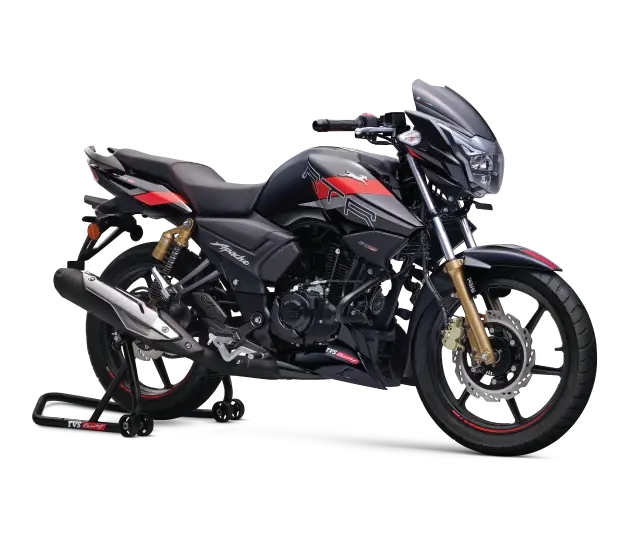
₹1,26,245 (ex-showroom) | 177.4cc | Real-world mileage: 40–45 km/l
The TVS Apache RTR 180 is the most accessible entry point into the genuine performance segment — and it has held that position for over a decade by being reliably good at the things that matter for everyday sporty riding. Its 177.4cc single-cylinder oil-cooled engine delivers 17.02 PS, which is adequate for confident urban riding and short highway stints, with a character that is more engaging than the 160cc bikes below it and more manageable than the 200cc machines above.
Real-world mileage of 40–45 km/l is among the better returns in this guide for the power on offer. The Apache RTR 180 features petal disc brakes front and rear, clip-on handlebars, and a sporty single-piece seat — giving it a riding position that sits squarely between commuter comfort and sport aggression. TVS's RT-Fi (Race Throttle with Fuel Injection) on select variants improves throttle response and mileage consistency over the older carbureted setup.
At ₹1,26,245, the Apache RTR 180 undercuts most 200cc machines in this guide by a meaningful margin. Buyers who want the Apache design language and sporty credentials without stretching to ₹1.38 lakh for the 200 4V will find the RTR 180 hits most of the same emotional notes at a lower outlay. TVS's service network is strong in tier-1 and tier-2 cities.
Pros
- Most affordable entry to the Apache RTR family
- 40–45 km/l — strong mileage for a sporty bike
- Petal disc brakes front and rear as standard
- Engaging ride character — noticeably sportier than 160cc
- Proven, well-supported TVS engine platform
Cons
- Only 177.4cc — less highway reserve than true 200cc bikes
- No ABS on base variants — safety gap versus newer rivals
- Styling is aging compared to the Apache 200 4V
- Weaker resale than KTM and Honda in premium urban markets
Who should buy: Riders stepping up from a 150cc bike who want the sporty Apache experience at the lowest possible price, and are primarily city-based with occasional highway use. Also a strong choice for those who want a second bike for daily riding without spending over ₹1.5 lakh.
View Full Specs & On-Road Price
2. Hero Xpulse 200 4V
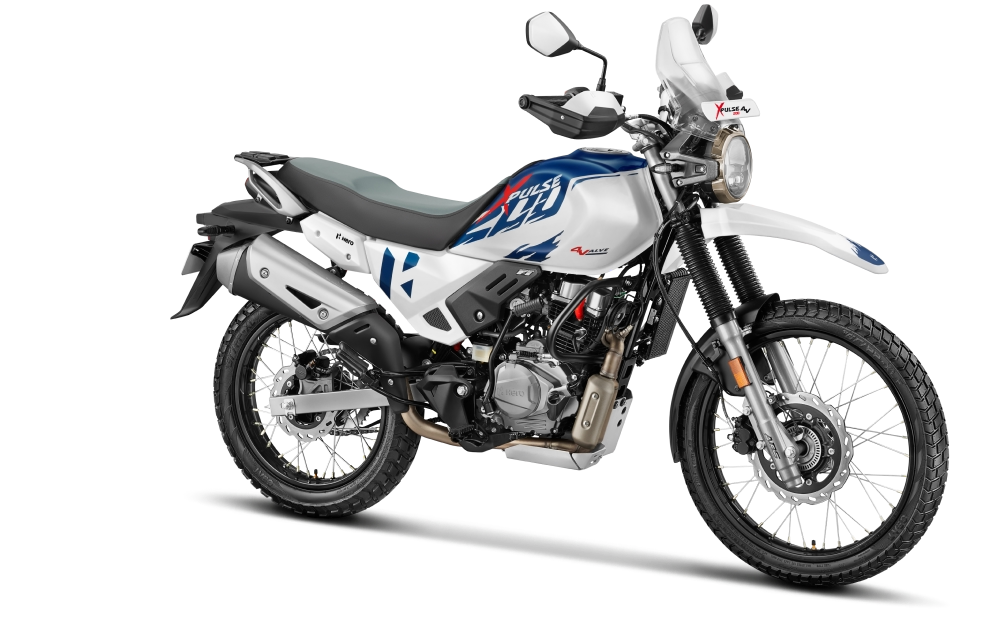
₹1,41,059 (ex-showroom) | 199.6cc | Real-world mileage: 28–33 km/l
The Hero Xpulse 200 4V is the most accessible adventure motorcycle in India today, and it makes a compelling case for itself that goes well beyond its price tag. Hero MotoCorp has invested genuine rally pedigree into the Xpulse line — the bike has competed at the Dakar Rally and won class honours at Indian rally events — and that real-world off-road development shows in the way the 200 4V handles varied terrain.
The 199.6cc 4-valve fuel-injected engine produces 19.16 PS — adequate rather than class-leading — but the Xpulse's real advantage lies in its 190mm front wheel, 170mm rear wheel, long-travel telescopic front forks with 190mm travel, and a monoshock rear with 170mm travel. These numbers translate directly to real-world capability on unpaved roads, river crossings, and rough tracks that would stop most 160–200cc sport bikes cold.
Real-world mileage of 28–33 km/l is the lowest in this guide — the adventure-oriented setup and heavier weight take their toll. But the Xpulse 200 4V is not bought for fuel economy; it is bought for the freedom to ride places other 200cc bikes cannot go, backed by Hero's 6,000+ service network across rural and semi-urban India.
Pros
- Most off-road capable bike at this price — genuine ADV ability
- Long-travel suspension — 190mm front, 170mm rear
- Hero's 6,000+ service network — best rural coverage
- Rally-tested platform — Dakar-proven lineage
- Lowest-priced adventure motorcycle in this guide
Cons
- Lowest real-world mileage here — 28–33 km/l
- 19.16 PS — less power than sport-focused rivals
- Tall seat height — challenging for shorter riders
- Heavy feel on tight urban roads
Who should buy: Riders who want to explore India beyond the highway — forest roads, mountain tracks, rural gravel — and want Hero's service safety net for remote journeys. The best-value adventure motorcycle available in India in 2026.
View Full Specs & On-Road Price
3. Hero Xpulse 210
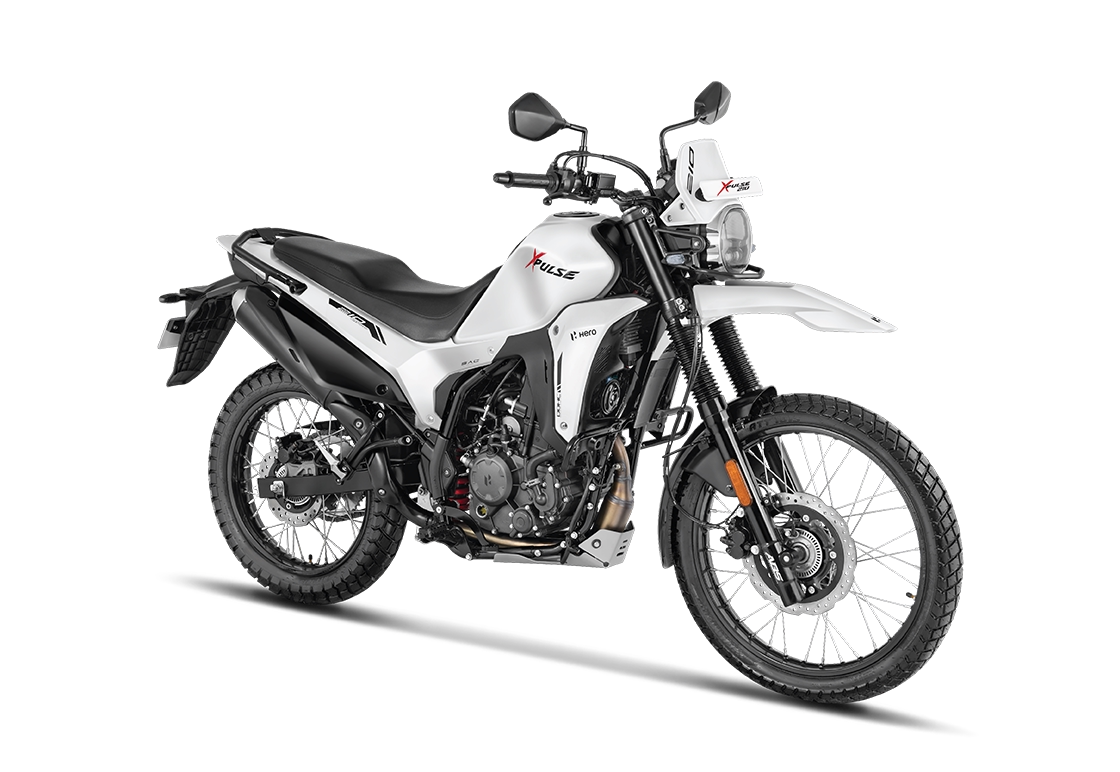
₹1,62,901 (ex-showroom) | 210cc | Real-world mileage: 33–37 km/l
The Hero Xpulse 210 is the evolution of the 200 4V — Hero's most ambitious production motorcycle to date, and the clearest statement of what the Xpulse platform can become when given more displacement, more power, and more sophisticated components. The jump from 199.6cc to 210cc brings a meaningful power increase to 24.6 PS — that is 5.4 PS more than the 200 4V, a gain that is felt immediately in throttle response, highway overtaking confidence, and loaded touring capability.
The Xpulse 210 adds USD front forks with 200mm travel, an upgraded rear monoshock with adjustable preload, and a slipper clutch — none of which appear on the 200 4V. The result is a more refined off-road experience and a noticeably more composed feel at speed. Real-world mileage of 33–37 km/l improves on the 200 4V — the extra displacement means a less-stressed engine at typical touring speeds.
At ₹1,62,901, the Xpulse 210 sits ₹21,842 above the 200 4V — a premium that buys meaningfully more motorcycle. For riders who take adventure seriously rather than aspirationally, the 210 is the one worth stretching to.
Pros
- 24.6 PS — a genuine power step over the 200 4V
- USD front forks + adjustable rear — best suspension here
- Slipper clutch standard — better control on descents
- 33–37 km/l — improved mileage over the 200 4V
- Hero's full 6,000+ service network
Cons
- ₹21,842 premium over the Xpulse 200 4V
- Tall seat height — not suited for shorter riders
- Heavy on tight city roads and parking
- Hero branding still trails KTM in premium urban perception
Who should buy: Serious adventure riders who want the best-equipped production ADV bike in India under ₹2 lakh — and who actually intend to use the off-road capability rather than just own it. The natural upgrade path from the Xpulse 200 4V.
View Full Specs & On-Road Price
4. Hero Karizma XMR
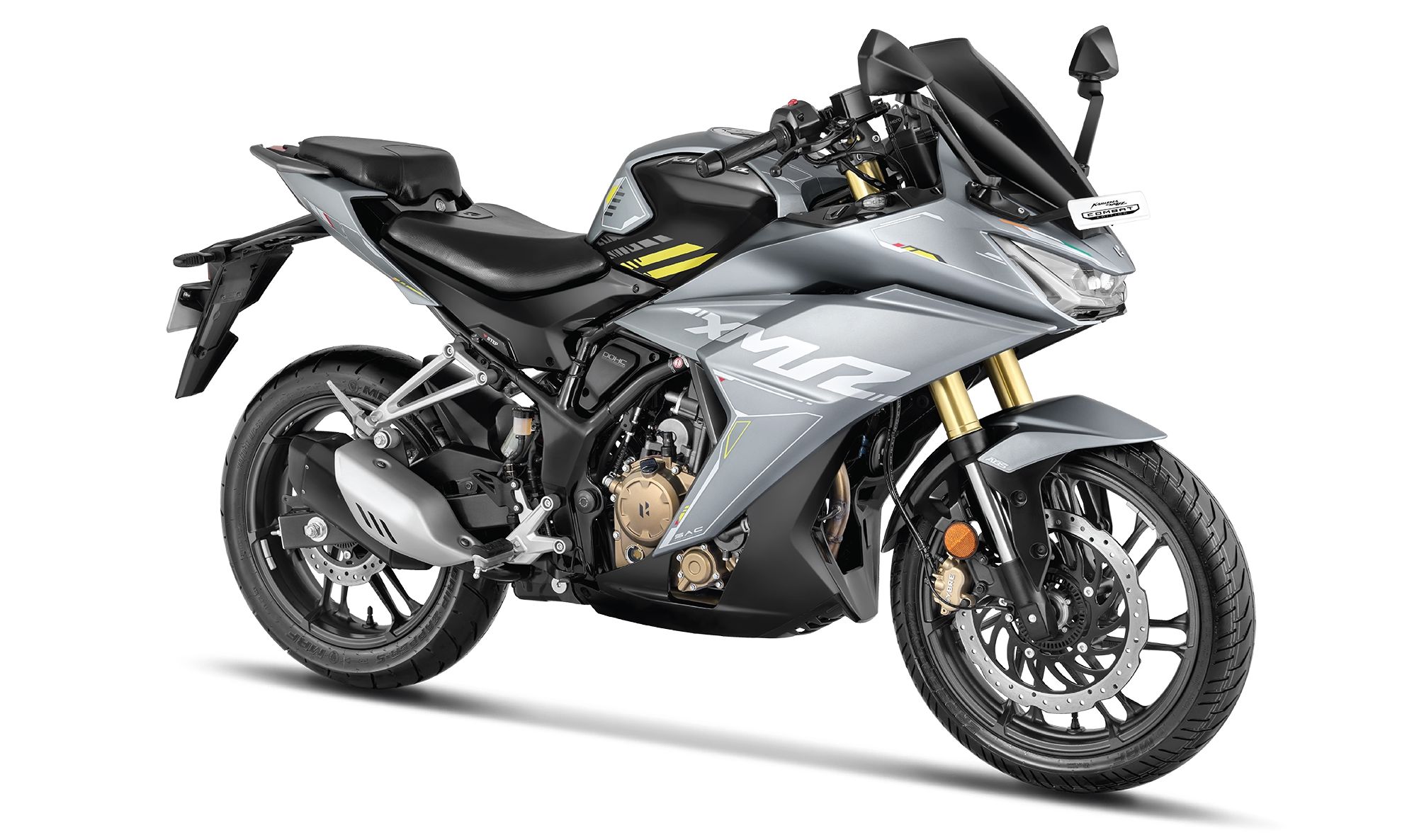
₹1,84,154 (ex-showroom) | 210cc | Real-world mileage: 37–42 km/l
The Hero Karizma XMR is the most powerful motorcycle in this guide at 25.5 PS, and it combines that performance with a full-fairing body that positions it as a genuine sport tourer — a bike that is equally comfortable cutting through city traffic and maintaining 100 km/h highway pace for extended periods. The revived Karizma nameplate carries strong nostalgia, but the XMR is a modern machine: fuel-injected, liquid-cooled, with a six-speed gearbox and dual-channel ABS.
The 210cc liquid-cooled engine delivers the strongest performance in this guide, with 25.5 PS and a linear power band that makes the XMR feel effortless at highway speeds. Real-world mileage of 37–42 km/l is impressive for a full-faired 210cc machine — the liquid cooling keeps the engine in its efficiency sweet spot, and the aerodynamic fairing reduces drag at higher speeds compared to naked rivals.
Build quality is a step up from Hero's commuter range — the fairing panel gaps are tight, the paint is deep, and the switchgear feels premium. A Bluetooth-connected instrument cluster with turn-by-turn navigation, a USB charging port, and LED lighting complete a feature set that justifies the ₹1,84,154 price in the context of this guide.
Pros
- Highest power in this guide — 25.5 PS
- 37–42 km/l — best mileage among faired bikes here
- Liquid-cooled engine — consistent performance in heat
- Bluetooth cluster, USB charging, dual-channel ABS
- Full fairing — genuine wind protection at highway speeds
Cons
- ₹1,84,154 — most expensive Hero in this guide
- Fairing servicing is more expensive than naked rivals
- Hero brand perception trails KTM and Bajaj RS200 for prestige
- Liquid cooling adds maintenance complexity over air-cooled rivals
Who should buy: Riders who want the most complete sport-touring package in this guide — maximum power, full fairing, highway efficiency, and modern features — and prefer Hero's service advantage over the KTM premium.
View Full Specs & On-Road Price
5. Honda Hornet 2.0
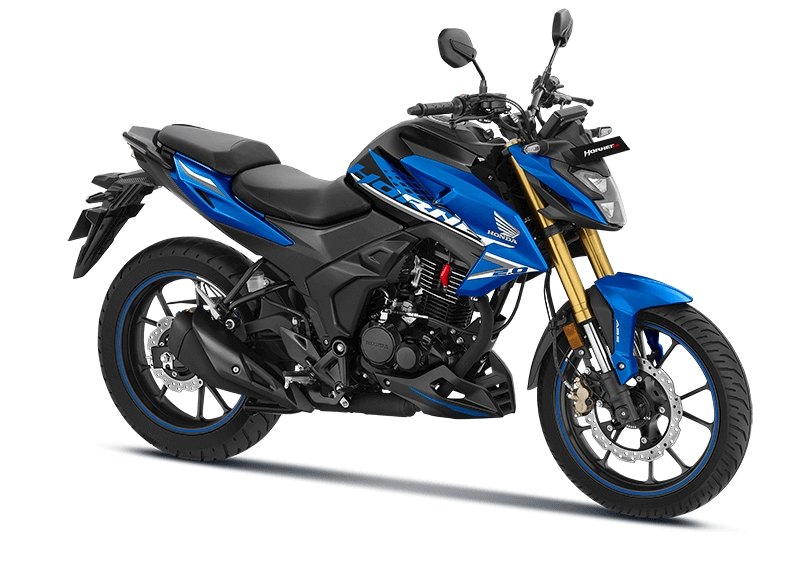
₹1,47,151 (ex-showroom) | 184.4cc | Real-world mileage: 38–42 km/l
The Honda Hornet 2.0 is the most refined naked motorcycle in this guide — and Honda's reputation for build quality, engine longevity, and service network reliability makes it a compelling option for buyers who prioritise ownership experience over outright performance numbers. The 184.4cc PGM-FI engine produces 17.03 PS, which is among the lower power outputs in this segment, but Honda's engineering makes every PS feel smooth, linear, and accessible in daily urban riding.
What the Hornet 2.0 brings that rivals cannot easily match is Honda's characteristic refinement — the engine note is cultured, vibrations are well-suppressed at typical urban and highway speeds, and the throttle response is precise without being abrupt. Dual-channel ABS is standard across variants, offering the best braking safety in this price bracket. The LED headlamp, digital instrument cluster, and aggressive naked styling give the Hornet 2.0 a contemporary visual identity that punches above its price.
Real-world mileage of 38–42 km/l is competitive for a 184cc PGM-FI engine. Honda's service network in tier-1 cities is strong, though it thins out compared to Hero in rural areas — a consideration for riders outside major cities.
Pros
- Honda build quality — best long-term reliability here
- Dual-channel ABS standard — safest braking in class
- PGM-FI engine — consistent performance across conditions
- 38–42 km/l — strong mileage for the refinement on offer
- Aggressive naked styling — looks premium at the price
Cons
- 17.03 PS — one of the lower outputs in the 200cc segment
- No Bluetooth or USB — features lag behind Karizma XMR
- Service network thinner than Hero outside major cities
- Resale trails KTM but beats Bajaj in premium markets
Who should buy: Buyers who value long-term reliability, Honda's engine smoothness, and dual-channel ABS safety over outright power numbers. The best choice for someone who will keep their bike 4–5 years and wants minimal ownership hassle.
View Full Specs & On-Road Price
6. Honda NX200
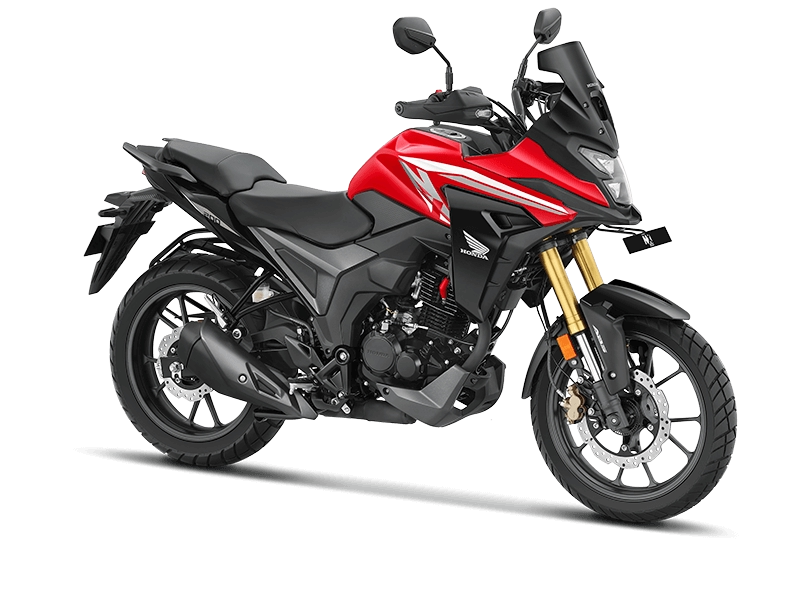
₹1,57,748 (ex-showroom) | 184.4cc | Real-world mileage: 38–42 km/l
The Honda NX200 is Honda's answer to the growing demand for adventure- styled motorcycles in the sub-₹2 lakh bracket — and it brings Honda's signature refinement to a segment that Hero Xpulse and Royal Enfield Himalayan have largely defined. The NX200 shares its 184.4cc PGM-FI engine with the Hornet 2.0, but is clothed in adventure-oriented bodywork: a front beak, wider handlebar, higher seat position, and adventure-spec tyres.
The NX200's 19-inch front wheel and adventure tyre give it better capability on unsealed roads than the Hornet 2.0, though its off-road ambitions are genuinely more modest than the Hero Xpulse 210 — this is a bike for light trails, gravel roads, and weekend escapes rather than serious off-road exploration. Where it excels is in versatility: it is as composed on the highway as it is on a gravel bypass, with Honda's characteristic engine smoothness and dual-channel ABS providing confidence across surfaces.
At ₹1,57,748 — ₹10,597 more than the Hornet 2.0 — the NX200 offers an expanded use case and a more distinctive visual identity for buyers who want Honda reliability with an adventurous character.
Pros
- Honda reliability in an adventure package
- 19-inch front wheel — better light off-road capability
- Dual-channel ABS standard across variants
- 38–42 km/l — strong mileage for an adventure bike
- Distinctive adventure styling — more presence than the Hornet 2.0
Cons
- 16.9 PS — less power than Xpulse 210 and Karizma XMR
- Not a genuine off-roader — limited to light trails
- ₹10,597 premium over the Hornet 2.0 for same engine
- Service network thinner than Hero in remote areas
Who should buy: Riders who want an adventure-styled Honda with the brand's reliability and dual-channel ABS, but primarily ride on tarmac with occasional gravel detours. A more practical adventure bike than the Xpulse 210 for city-based riders who tour on weekends.
View Full Specs & On-Road Price
7. Bajaj Pulsar NS200
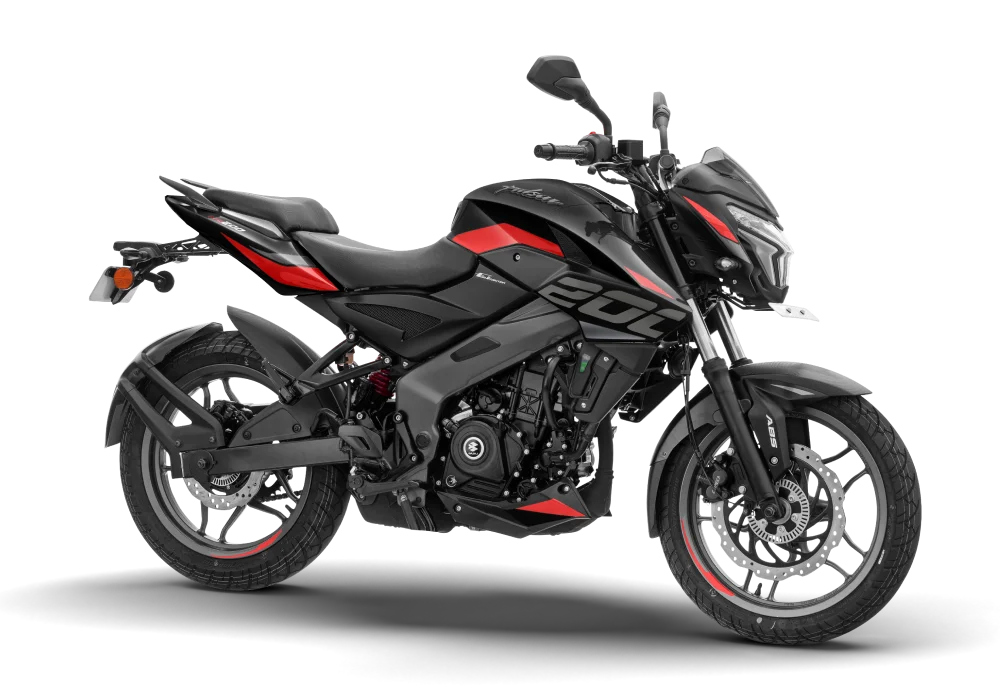
₹1,32,962 (ex-showroom) | 199.5cc | Real-world mileage: 36–40 km/l
The Bajaj Pulsar NS200 is the most performance-focused value proposition in this guide — delivering 24.5 PS, a liquid-cooled FI engine, a slipper clutch, and perimeter frame handling at ₹1,32,962. No other bike in this guide matches the NS200's power-to-price ratio. It is a motorcycle that punches well above its price in outright performance terms, and has earned a passionate following among urban performance riders since its introduction.
The 199.5cc liquid-cooled triple-spark engine produces its power in a manner that is genuinely exciting — the midrange is strong, the top end pulls confidently to its redline, and the exhaust note has a character that cheaper bikes simply do not replicate. The slipper clutch prevents rear wheel chatter under aggressive downshifts — a feature that used to be exclusive to much more expensive machines. The NS-series perimeter frame gives the NS200 a planted, confidence-inspiring feel through corners that sets it apart from the conventional double-cradle frames of its more affordable rivals.
Real-world mileage of 36–40 km/l is reasonable given the power on offer. Bajaj's service network is strong in cities, though thinner than Hero outside major urban centres.
Pros
- Best power-per-rupee ratio in this guide — 24.5 PS at ₹1.33L
- Slipper clutch standard — premium feature at accessible price
- Liquid-cooled FI engine — consistent in heat and altitude
- Perimeter frame — most engaging cornering feel here
- 36–40 km/l — acceptable mileage for the performance level
Cons
- No fairing — more wind exposure on long highway stints
- Bajaj service network thinner than Hero outside cities
- Resale trails Honda and KTM in premium urban markets
- Stiffer ride — not ideal for rough city roads
Who should buy: Performance-hungry urban riders who want the most motorcycle for the money — the highest power, the most engaging chassis, and premium features like a slipper clutch, without spending close to ₹2 lakh. The NS200 is the enthusiast's choice at an accessible price.
View Full Specs & On-Road Price
8. Bajaj Pulsar RS200
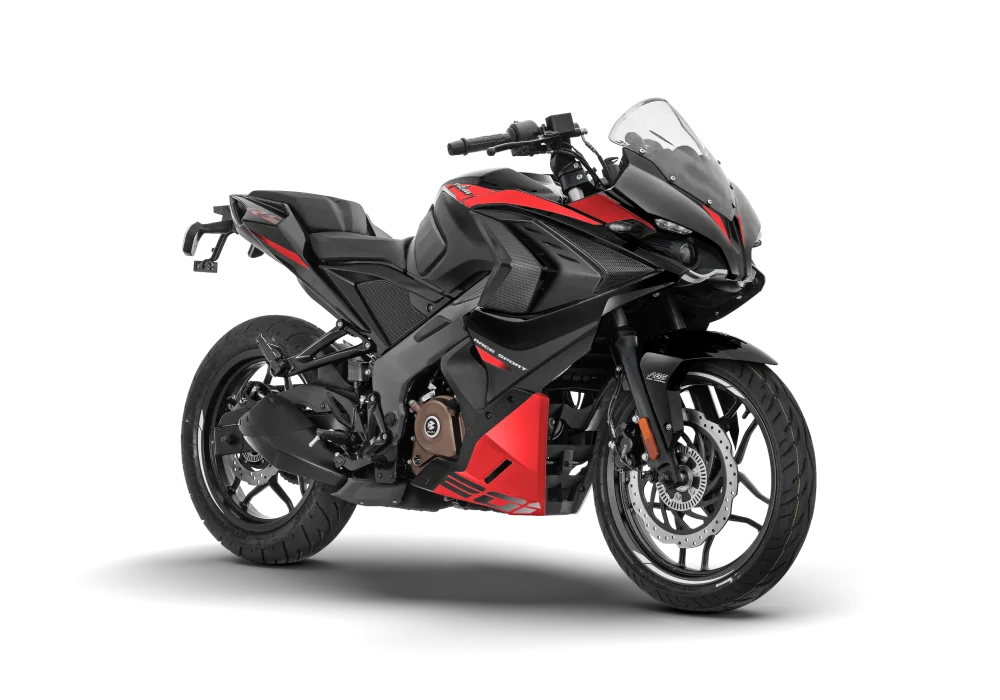
₹1,72,857 (ex-showroom) | 199.5cc | Real-world mileage: 31–35 km/l
The Bajaj Pulsar RS200 takes the NS200's liquid-cooled 199.5cc engine and wraps it in a full aerodynamic fairing — transforming the naked sport's urban agility into a proper highway weapon. The RS200 is the most highway-capable Bajaj in this guide, with its wind-cutting fairing providing meaningful protection at speeds above 80 km/h, reducing rider fatigue on long runs in a way that no naked bike in this segment can match.
The shared 199.5cc liquid-cooled engine produces the same 24.5 PS as the NS200, but the RS200's fairing and sportier riding position suit sustained high-speed running better. The clip-on handlebars place the rider in a more committed tuck, and the twin projector headlights give it a premium visual identity that has aged well since the RS200's original launch. Dual-channel ABS is standard.
Real-world mileage of 31–35 km/l is lower than the NS200 — the fairing adds weight and the more aggressive riding position encourages faster riding. At ₹1,72,857, the RS200 is ₹39,895 more expensive than the NS200. That premium buys the fairing, the highway capability, and a more distinctive visual package. Buyers who spend significant time on highways will find the extra cost recovers in comfort over distance.
Pros
- Full fairing — best wind protection in this guide
- 24.5 PS liquid-cooled engine — strong performance
- Dual-channel ABS standard
- Twin projector headlights — distinctive premium appearance
- Most highway-capable Bajaj in this guide
Cons
- 31–35 km/l — lower mileage than the NS200
- ₹39,895 premium over NS200 for essentially the same engine
- Sporty ergonomics — uncomfortable on extended urban riding
- Fairing panels increase repair costs after minor falls
Who should buy: Riders who regularly cover 100+ km highway stints and want full fairing wind protection with Bajaj's performance engine. Also for buyers who want the sport-bike look at a price point well below the KTM RC 200.
View Full Specs & On-Road Price
9. Bajaj Pulsar 220F
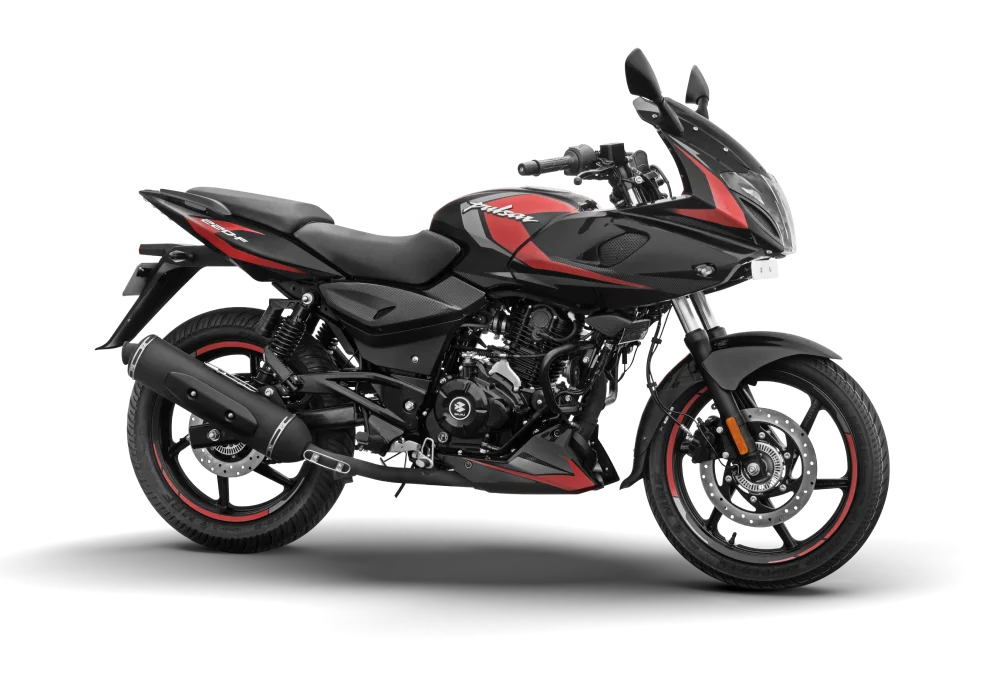
₹1,29,924 (ex-showroom) | 220.4cc | Real-world mileage: 36–40 km/l
The Bajaj Pulsar 220F is one of India's most enduring motorcycles — and its continued strong sales in 2026, nearly two decades after its original launch, speak to a formula that resonates deeply with a specific type of Indian rider. The 220.4cc air-cooled DTS-i engine produces 20.4 PS, which feels more accessible and less peaky than the liquid-cooled 200cc rivals in this guide, delivering a broad, usable power band that suits long-distance riding as much as daily commuting.
The 220F's semi-fairing — twin projector headlights, sculpted front cowl, and the distinctive twin-pod instrument cluster — gives it a road presence that buyers consistently cite as a reason for their purchase. Its 1380mm wheelbase is among the longest in this guide, which translates to straight-line stability that makes the 220F an unusually composed high-speed cruiser for its displacement class. Real-world mileage of 36–40 km/l is respectable for the 220cc air- cooled engine.
At ₹1,29,924, the 220F is the second most affordable bike in this guide, offering 220cc displacement and semi-faired protection at a price that undercuts most 200cc liquid-cooled machines. It is not the most technically advanced option here, but it is arguably the most characterful — and for many buyers, that is exactly what they want.
Pros
- 220cc — largest displacement at this price in the guide
- Iconic, proven design — instantly recognisable on Indian roads
- Broad, usable power band — better for long-distance touring
- Long wheelbase — excellent straight-line stability
- 36–40 km/l — strong mileage for 220cc
Cons
- Air-cooled — performance degrades in severe traffic heat
- No slipper clutch, no USD forks — older technology base
- Semi-fairing only — less wind protection than RS200
- Styling is mature — may feel dated to younger buyers
Who should buy: Riders who want the classic Pulsar 220F experience — the look, the feel, the sound — and do a mix of city riding and medium-distance highway touring. Excellent for buyers who value proven reliability over cutting-edge specifications.
View Full Specs & On-Road Price
10. Bajaj Avenger Cruise 220
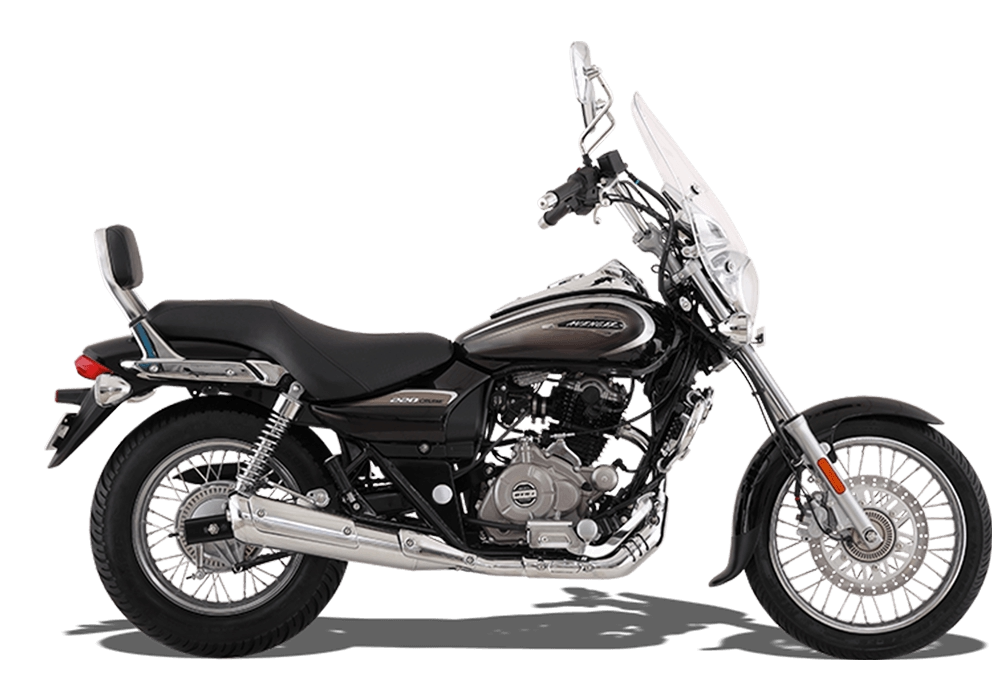
₹1,26,620 (ex-showroom) | 220cc | Real-world mileage: 36–40 km/l
The Bajaj Avenger Cruise 220 is the only dedicated cruiser in this guide — and it occupies a unique space in the Indian market as the most affordable way to experience genuine cruiser ergonomics on a highway. The low-slung seat at 710mm, forward-set footpegs, and wide pullback handlebar place the rider in the classic cruiser posture — relaxed, upright, and built for covering distance rather than chasing lap times.
The 220cc air-cooled DTS-i engine (shared with the Pulsar 220F) produces 19.03 PS — adequate rather than exciting, but appropriate for the Avenger's intended character. The long wheelbase and low centre of gravity make the Cruise 220 exceptionally stable at highway speeds, with a planted, confidence-inspiring feel that is distinctly different from the sportier machines in this guide. Wind protection from the large flyscreen is meaningful at 80–90 km/h.
Real-world mileage of 36–40 km/l — identical to the Pulsar 220F — is solid for a 220cc cruiser. The Avenger Cruise 220's appeal is not its headline numbers but its ability to cover long distances in genuine comfort, which is a quality that only reveals itself over hours in the saddle.
Pros
- Only dedicated cruiser in this guide — unique riding posture
- 710mm seat height — most accessible for shorter riders
- All-day highway comfort — the best long-distance posture here
- Strong highway stability — long wheelbase, low CoG
- ₹1,26,620 — among the most affordable 220cc bikes in India
Cons
- 19.03 PS — lowest power output among 220cc bikes here
- Cruiser ergonomics are poor for city filtering
- Air-cooled — performance consistency drops in heavy traffic
- Resale is weaker than Pulsar 220F and sport-oriented rivals
Who should buy: Riders who primarily use their bike for highway touring — weekend escapes, interstate commutes, leisure rides — and want the most relaxed, comfortable riding posture available in the sub-₹1.5 lakh segment. Particularly good for shorter riders who struggle with taller sport bikes.
View Full Specs & On-Road Price
11. TVS Apache RTR 200 4V
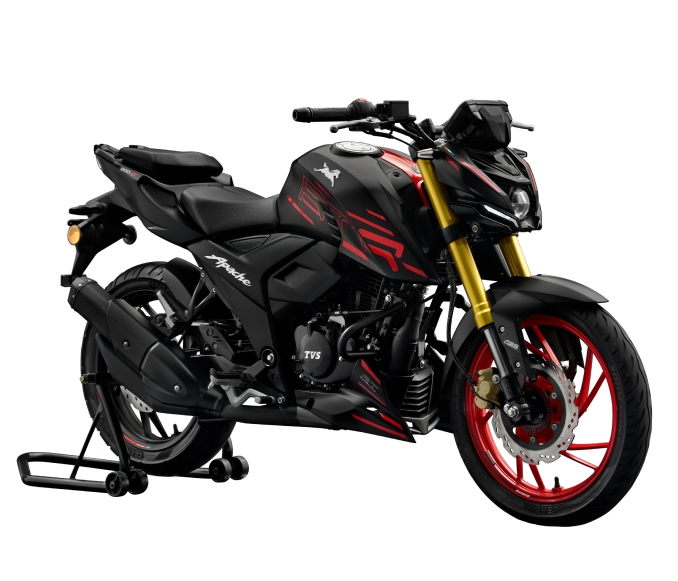
₹1,38,407 (ex-showroom) | 197.75cc | Real-world mileage: 38–42 km/l
The TVS Apache RTR 200 4V is one of the most technically accomplished motorcycles available in India under ₹1.5 lakh — and it has earned that reputation through genuine motorsport development rather than marketing. The 197.75cc 4-valve oil-cooled engine produces 20.82 PS, which is delivered in a character that reflects the bike's race-track origins: crisp throttle response, a strong midrange, and a top end that pulls enthusiastically to its redline.
TVS's Race Tuned Fuel Injection (RT-Fi) and Glide Through Technology (GTT) improve both performance and mileage consistency. Real-world mileage of 38–42 km/l is among the best in this guide for a genuinely sporty naked bike — the 4V head and FI system extract efficiency that comparable carbureted engines cannot match. Ride modes (Urban, Sport, Rain on select variants) allow the rider to tailor throttle response to conditions — a genuinely useful feature in India's mixed riding environments.
The Apache RTR 200 4V also features SmartXonnect Bluetooth connectivity, USB charging, and a semi-digital instrument cluster — a feature set that puts it ahead of most rivals in this guide at its price point.
Pros
- Race-derived 4-valve engine — most technical TVS in segment
- 38–42 km/l — best mileage among 200cc naked sport bikes
- Ride modes — Urban, Sport, Rain
- SmartXonnect Bluetooth, USB charging standard
- 20.82 PS — strong power with broad usability
Cons
- Oil-cooled — not as thermally stable as liquid-cooled rivals
- Weaker resale than KTM in premium segments
- Stiffer ride on rough roads
- TVS service network thinner than Hero in rural areas
Who should buy: Riders who want the best overall package of features, mileage, and performance from a 200cc naked bike under ₹1.5 lakh — and who ride a mix of urban and occasional track or sporting use. The Apache RTR 200 4V is the most rounded package at its price.
View Full Specs & On-Road Price
12. KTM 200 Duke
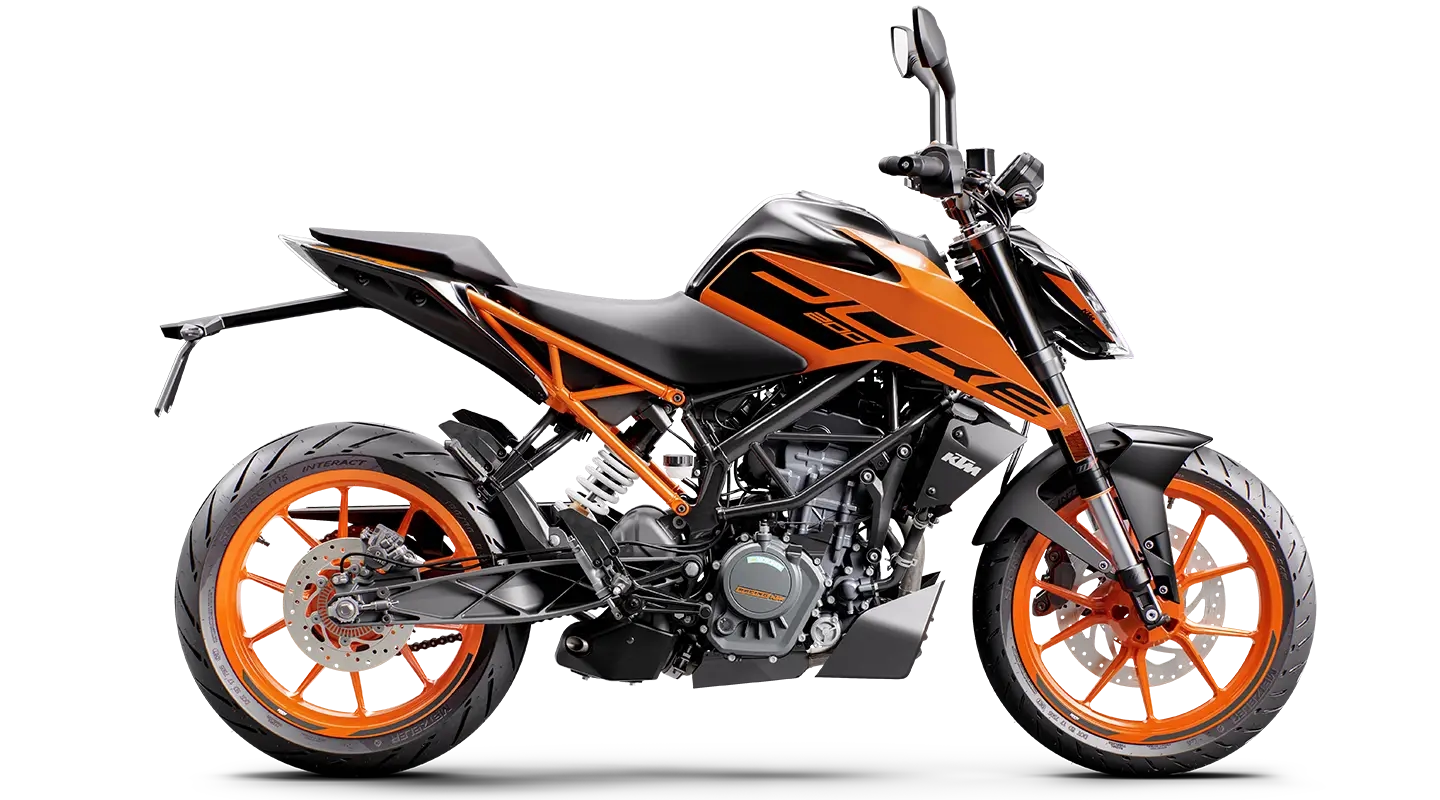
₹1,97,980 (ex-showroom) | 199.5cc | Real-world mileage: 31–36 km/l
The KTM 200 Duke is the benchmark street naked motorcycle in India under ₹2 lakh — and it holds that position not through a single standout specification but through the complete integration of chassis, engine, and ergonomics into a package that is more than the sum of its parts. The 199.5cc liquid-cooled single-cylinder engine produces 25 PS — the joint-highest in this guide — with an urgency of delivery that is distinctly KTM: eager, alert, and always ready to rev.
The 200 Duke's trellis frame, WP suspension front and rear, and Bybre (Brembo-derived) brakes give it a chassis precision that no domestically developed 200cc bike in this guide can match. Through corners, the 200 Duke feels lighter and more agile than its 159 kg kerb weight suggests — it responds to rider inputs with an immediacy that teaches better technique and rewards improving skill. The supermoto- inspired proportions and predatory styling remain distinctive and unmistakable.
At ₹1,97,980, the 200 Duke is the second most expensive bike in this guide. The premium over the Bajaj NS200 is ₹65,018 — a significant gap that buys meaningfully better chassis dynamics, WP suspension, and the KTM brand's resale advantage in urban markets.
Pros
- 25 PS — joint-highest power in this guide
- WP suspension — best suspension hardware here
- Bybre brakes — most precise stopping in the segment
- Sharpest handling dynamics in this guide
- Best resale value among naked bikes in this guide
Cons
- ₹1,97,980 — premium pricing close to ₹2 lakh
- 31–36 km/l — lower mileage than Apache RTR 200 4V
- No Bluetooth or ride modes — feature set behind Apache
- Sporty ergonomics — less suited to long daily commutes
Who should buy: Riders who want the absolute best riding dynamics, chassis precision, and brand prestige in the 200cc segment — and can justify spending close to ₹2 lakh for a naked bike. The 200 Duke is the enthusiast's choice when budget is secondary to riding quality.
View Full Specs & On-Road Price
13. KTM RC 200
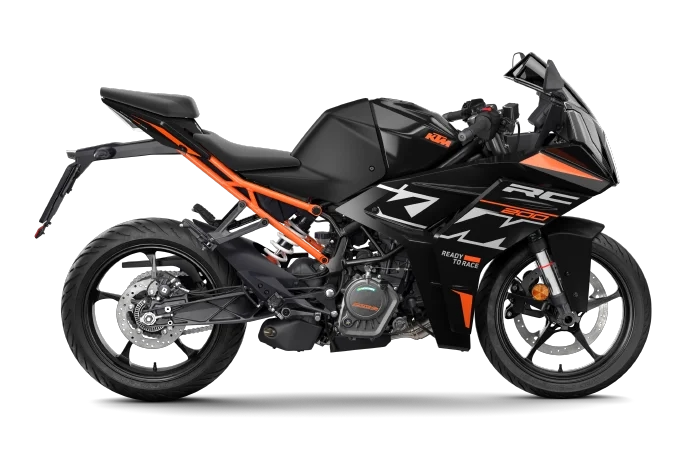
₹2,20,907 (ex-showroom) | 199.5cc | Real-world mileage: 39–43 km/l
The KTM RC 200 is the most expensive and most focused motorcycle in this guide — a full-faired track-ready machine that happens to be street-legal and surprisingly efficient. Its 199.5cc liquid-cooled engine is shared with the 200 Duke, producing the same 25 PS, but the RC 200's full aerodynamic fairing and committed riding position transform its character completely. This is a motorcycle with track events in its design brief, and it shows in every detail.
What is genuinely surprising about the RC 200 is its real-world mileage of 39–43 km/l — the best figure in this entire guide, and considerably better than the unfaired 200 Duke. The aerodynamic efficiency of the full fairing reduces drag at highway speeds, and the lower riding position reduces the rider's frontal area. At sustained 80–100 km/h highway speeds, the RC 200 is measurably more efficient than any naked bike at this displacement.
At ₹2,20,907, the RC 200 is the only bike in this guide above ₹2 lakh. WP suspension, Bybre brakes, a full TFT instrument cluster, traction control, and launch control are standard — a specification list that belongs to bikes costing considerably more in any other market.
Pros
- Best real-world mileage in this entire guide — 39–43 km/l
- Full fairing — best aerodynamics and wind protection here
- Traction control + launch control — track-grade electronics
- TFT instrument cluster — most advanced display in segment
- WP suspension + Bybre brakes — premium hardware
Cons
- ₹2,20,907 — most expensive bike in this guide
- Full-tuck riding position — uncomfortable in city traffic
- Fairing increases repair costs after urban falls
- KTM service network concentrated in larger cities
Who should buy: Riders who want the most capable and technically sophisticated faired motorcycle available in India under ₹2.5 lakh — whether for track days, long highway tours, or simply owning the segment's finest specification at 200cc. The RC 200 is difficult to fault on any objective metric in this guide.
View Full Specs & On-Road Price
Side-by-Side Comparison
Here is how all thirteen bikes compare across the factors that matter most to 200cc buyers.
| Bike | Price (ex-showroom) | Engine | Real-World Mileage | Power | Best For | Weakest Point |
|---|---|---|---|---|---|---|
| TVS Apache RTR 180 | ₹1,26,245 | 177.4cc | 40–45 km/l | 17.02 PS | Affordable segment entry | No ABS, aging spec |
| Hero Xpulse 200 4V | ₹1,41,059 | 199.6cc | 28–33 km/l | 19.16 PS | Best value ADV | Lowest mileage here |
| Hero Xpulse 210 | ₹1,62,901 | 210cc | 33–37 km/l | 24.6 PS | Best off-road capability | Tall seat, heavy feel |
| Hero Karizma XMR | ₹1,84,154 | 210cc | 37–42 km/l | 25.5 PS | Max power + full fairing | Expensive Hero, liquid cooling cost |
| Honda Hornet 2.0 | ₹1,47,151 | 184.4cc | 38–42 km/l | 17.03 PS | Honda refinement + ABS | Lower power vs rivals |
| Honda NX200 | ₹1,57,748 | 184.4cc | 38–42 km/l | 16.9 PS | Honda ADV versatility | Light off-road only |
| Bajaj Pulsar NS200 | ₹1,32,962 | 199.5cc | 36–40 km/l | 24.5 PS | Best power-per-rupee | No fairing, thinner rural service |
| Bajaj Pulsar RS200 | ₹1,72,857 | 199.5cc | 31–35 km/l | 24.5 PS | Full-faired highway bike | Lower mileage, fairing repair cost |
| Bajaj Pulsar 220F | ₹1,29,924 | 220.4cc | 36–40 km/l | 20.4 PS | Iconic design, proven tourer | Older tech, air-cooled |
| Bajaj Avenger Cruise 220 | ₹1,26,620 | 220cc | 36–40 km/l | 19.03 PS | All-day highway cruiser | Poor city ergonomics |
| TVS Apache RTR 200 4V | ₹1,38,407 | 197.75cc | 38–42 km/l | 20.82 PS | Features + mileage + performance | Oil-cooled, weaker resale |
| KTM 200 Duke | ₹1,97,980 | 199.5cc | 31–36 km/l | 25 PS | Best dynamics + prestige | Premium price, no features |
| KTM RC 200 | ₹2,20,907 | 199.5cc | 39–43 km/l | 25 PS | Best mileage + full fairing + electronics | Most expensive, aggressive posture |
Why Upgrade to 200cc? The Real Differences
Moving from a 125–150cc bike to a 200cc machine is a meaningful step — not just in numbers but in what becomes possible on the road. These are the four areas where the difference is felt most.
- Highway confidence: 150cc bikes are operating near their limit at 90–95 km/h. 200cc machines cruise at these speeds with significant power in reserve — overtaking is instinctive rather than planned, and maintaining pace with faster highway traffic becomes effortless.
- Pillion on long routes: Two-up touring on a 150cc bike over 200+ km is tiring for both rider and machine. 200cc engines handle the additional load with far more composure — highway speed with a pillion does not require constant gear management.
- Braking hardware: Most 200cc bikes in this guide feature dual-channel ABS, USD forks, or slipper clutches — safety and performance upgrades that simply do not exist in the 125–150cc class at comparable prices.
- Ride character: 200cc bikes from this guide have genuine identities — the KTM's sharpness, the Xpulse's off-road ability, the Avenger's cruiser posture. Below 150cc, most bikes converge toward practical commuter character. At 200cc, you ride a machine with a genuine point of view.
Real-World Mileage & Running Costs
ARAI figures are measured under controlled lab conditions — real-world mileage in mixed Indian riding is always lower. Expect 10–18% below ARAI claims depending on riding style and urban versus highway split.
Based on owner reports from Indian motorcycling forums and long-term owner data:
- KTM RC 200: 39–43 km/l — best mileage in the guide; aerodynamic fairing and efficient liquid-cooled engine
- TVS Apache RTR 180: 40–45 km/l — strong return for the power on offer; smaller displacement helps
- Honda Hornet 2.0: 38–42 km/l — Honda PGM-FI efficiency is consistent across riding conditions
- Honda NX200: 38–42 km/l — same engine as Hornet 2.0; adventure tyres slightly reduce efficiency
- TVS Apache RTR 200 4V: 38–42 km/l — 4-valve head extracts strong efficiency from the oil-cooled engine
- Hero Karizma XMR: 37–42 km/l — liquid cooling and fairing aerodynamics contribute to strong highway mileage
- Bajaj Pulsar NS200: 36–40 km/l — liquid-cooled FI; sporty riding reduces efficiency
- Bajaj Pulsar 220F: 36–40 km/l — broad power band is easy to ride efficiently on the highway
- Bajaj Avenger Cruise 220: 36–40 km/l — relaxed cruiser riding encourages efficient throttle use
- Hero Xpulse 210: 33–37 km/l — improved over the 200 4V with extra displacement reducing engine stress
- KTM 200 Duke: 31–36 km/l — sporty character and rider encouragement to rev takes a toll
- Bajaj Pulsar RS200: 31–35 km/l — fairing weight and aggressive riding position reduce mileage vs NS200
- Hero Xpulse 200 4V: 28–33 km/l — lowest in the guide; heavy off-road setup and lower gearing for trail use
At ₹104/litre and a 50 km daily commute, the KTM RC 200 costs approximately ₹2,900–₹3,200 per month in fuel. The Hero Xpulse 200 4V costs ₹3,800–₹4,400 for the same distance — a gap of up to ₹18,000 per year. Over three years, the mileage difference between the most and least efficient bikes in this guide amounts to ₹40,000–₹55,000 in fuel cost alone.
Service & Maintenance Costs
Typical servicing costs for 200cc bikes across major Indian cities (July 2026, based on authorised dealer quotes):
- Basic service (oil change + filters): ₹700–₹1,400
- Standard periodic service (every 3,000–5,000 km): ₹1,000–₹2,000
- Major service with parts (every 10,000–15,000 km): ₹2,500–₹5,000
- Front disc pad replacement: ₹500–₹1,000
- Coolant service (liquid-cooled models): ₹600–₹1,200
- Tyre replacement (MRF/CEAT/Michelin): ₹1,500–₹3,500 per tyre
Hero models — the Xpulse 200 4V, Xpulse 210, and Karizma XMR — benefit from Hero's 6,000+ service points and the most accessible genuine parts pricing. Honda models are slightly more expensive per service but intervals can be longer. TVS and Bajaj models fall in the middle range. KTM bikes carry the highest service costs in this guide — authorised KTM dealers are concentrated in larger cities, and parts cost more. Fairing-equipped bikes (RS200, RC 200, Karizma XMR) add bodywork repair costs that naked bikes avoid entirely.
Key Buying Factors for 200cc
- Primary use case: Daily urban commuting — Honda Hornet 2.0, TVS Apache RTR 200 4V, Bajaj Pulsar NS200. Highway touring — Bajaj Pulsar 220F, Karizma XMR, KTM RC 200. Adventure and off-road — Hero Xpulse 200 4V or Xpulse 210. Cruiser touring — Bajaj Avenger Cruise 220.
- Service network location: Rural or semi-urban areas — Hero Xpulse 200 4V, Xpulse 210, or Karizma XMR (Hero's 6,000+ points). Metro cities — any brand's network is adequate; KTM only in larger cities.
- Budget ceiling: Under ₹1.3 lakh — Bajaj Pulsar 220F or Avenger Cruise 220. Under ₹1.5 lakh — NS200, Apache RTR 180, or Apache RTR 200 4V. Under ₹1.75 lakh — Honda Hornet 2.0 or Xpulse 200 4V. Under ₹2 lakh — RS200, Xpulse 210, or KTM 200 Duke. Above ₹2 lakh — Karizma XMR or KTM RC 200.
- Feature priorities: Need Bluetooth and ride modes? TVS Apache RTR 200 4V or Hero Karizma XMR. Need dual-channel ABS? Honda Hornet 2.0, NX200, KTM 200 Duke, or RC 200. Need a slipper clutch? Bajaj NS200, Xpulse 210, or KTMs. Need traction control? KTM RC 200 only.
- Resale horizon: Selling within 3 years? KTM 200 Duke and RC 200 hold value best, followed by Honda. Hero, Bajaj, and TVS models depreciate faster in the 200cc class.
- Riding style preference: Sporty and engaged — KTM 200 Duke or NS200. Relaxed and comfortable — Avenger Cruise 220 or Honda Hornet 2.0. Adventure-capable — Xpulse 210. Versatile and featured — Apache RTR 200 4V.
When You Should Look Beyond 200cc
Consider stepping up to 250cc+ if: you regularly ride at 110–120 km/h on expressways, carry a pillion over 300+ km regularly, or want the kind of effortless overtaking reserve that makes highway riding feel genuinely relaxed rather than managed. At sustained speeds above 110 km/h, most 200cc engines are working near their comfortable limit — vibration increases and the safety margin for overtaking narrows.
In that case, a Bajaj Pulsar N250, KTM 250 Duke, Hero Xtreme 250R, or Royal Enfield — all available in the ₹1.6–₹2.5 lakh range — will make a material difference to your sustained high-speed experience. The jump from 200cc to 250cc in real-world highway performance is more significant than the jump from 150cc to 200cc, particularly in pillion-loaded touring conditions.
Final Verdict
For most buyers in the 200cc segment who want the complete package, the TVS Apache RTR 200 4V represents the strongest overall value — it combines race-developed performance, best-in-class mileage among 200cc naked bikes, Bluetooth connectivity, ride modes, and a proven TVS engine at ₹1,38,407. It is the most rounded choice across the broadest range of riders and use cases.
For pure riding engagement, the KTM 200 Duke sets the dynamic benchmark that nothing else in this guide approaches — but the premium over the Apache RTR 200 4V is ₹59,573, and buyers should be honest about how much of that dynamic advantage they will actually experience in daily riding. The KTM RC 200 goes further still, adding a full fairing, traction control, and paradoxically the best real-world mileage in the guide — at ₹2,20,907 it is genuinely difficult to fault on specification alone.
Among the adventure options, the Hero Xpulse 210 is the recommended choice for riders who will genuinely use the off-road capability — the USD forks, slipper clutch, and power step over the 200 4V are worth the ₹21,842 premium. The Hero Karizma XMR is the sport-touring recommendation for buyers who want Hero's service network in the most powerful and feature-complete package. And the Bajaj Avenger Cruise 220 remains the only comfortable answer for riders whose primary goal is all-day highway miles in a relaxed posture.
Before finalising, take a test ride. The difference between the upright cruiser posture of the Avenger, the neutral streetfighter stance of the Apache, and the committed tuck of the RC 200 is enormous — and the one that suits your body and your roads on day one will still be the right choice at year three.
Frequently Asked Questions
Which is the best 200cc bike in India in 2026?
The answer depends on use case, but the TVS Apache RTR 200 4V is the strongest overall choice for most buyers — offering the best combination of performance, mileage, features, and price. For pure riding dynamics, the KTM 200 Duke is the benchmark. For the most complete specification, the KTM RC 200 leads the segment. For the best value performance, the Bajaj Pulsar NS200 is difficult to beat.
Which 200cc bike gives the best real-world mileage?
Counterintuitively, the KTM RC 200 delivers the best real-world mileage in this guide at 39–43 km/l — its full aerodynamic fairing reduces drag at speed significantly. The TVS Apache RTR 180 (177cc) is close behind at 40–45 km/l. Among true 200cc naked bikes, the TVS Apache RTR 200 4V and Honda Hornet 2.0 both return 38–42 km/l. The Hero Xpulse 200 4V returns the lowest mileage at 28–33 km/l.
KTM 200 Duke vs Bajaj Pulsar NS200 — which should I choose?
Choose the KTM 200 Duke if you prioritise riding dynamics, chassis precision, and brand prestige — and can justify the ₹65,018 premium. Choose the Bajaj NS200 if you want near-equivalent performance, a slipper clutch, and liquid cooling at a significantly lower price, and plan to use the bike primarily for city and occasional highway riding rather than spirited mountain routes.
Is 200cc significantly better than 150cc for daily use?
Yes — meaningfully so for riders who mix city riding with regular highway use. The key improvements are highway overtaking confidence, two-up performance on long rides, and the safety hardware that 200cc bikes carry (dual-channel ABS, slipper clutches) that most 150cc bikes do not. For pure city commuting under 40 km/day, a well-chosen 150cc bike is often more practical and economical.
Which 200cc bike is best for long-distance highway touring?
The Hero Karizma XMR is the most well-rounded long-distance machine in this guide — full fairing, 25.5 PS, Bluetooth navigation, and the best highway mileage among faired bikes. The Bajaj Avenger Cruise 220 is the most comfortable choice for riders who value posture and fatigue reduction over outright pace. The KTM RC 200 offers the highest specification for serious touring, but at a higher price.
Which 200cc bike is best for rural and semi-urban India?
Hero models — the Xpulse 200 4V, Xpulse 210, and Karizma XMR — are the clear choices for rural and semi-urban areas. Hero MotoCorp's 6,000+ service points and widest genuine parts availability in the country make Hero bikes significantly easier to maintain outside major cities. The Xpulse 200 4V is particularly appropriate for buyers in rural areas who also face rough roads regularly.
Which 200cc bike holds its resale value best?
KTM models — the 200 Duke and RC 200 — hold the strongest resale value in the 200cc segment, typically retaining 60–68% of their original price after three years in metro markets. Honda Hornet 2.0 and NX200 come second. Bajaj and TVS models in this class generally retain 50–58% after three years. Hero models sit between the Bajaj/ TVS and Honda tiers, with stronger resale in rural markets than urban ones.
Hero Xpulse 200 4V vs Hero Xpulse 210 — which is better?
The Xpulse 210 is the better motorcycle in almost every objective measure — more power (24.6 vs 19.16 PS), USD front forks, adjustable rear preload, slipper clutch, and better mileage. The ₹21,842 premium is justified for riders who will regularly use the bike off-road or on mountain routes. The 200 4V makes sense only if the budget is strictly capped below ₹1.5 lakh, or if the taller Xpulse 210 seat height is inaccessible.
What is the approximate EMI for 200cc bikes?
At a standard 10% down payment and 24-month tenure at approximately 10.5% interest, monthly EMIs range from roughly ₹5,200 (TVS Apache RTR 180, Bajaj Avenger Cruise 220) to approximately ₹9,000 (KTM RC 200). The mid-range bikes — NS200, Apache RTR 200 4V, Honda Hornet 2.0 — fall between ₹5,600 and ₹6,400 per month. Always compare offers from at least two lenders — rates and processing fees vary significantly between manufacturer-backed and independent lenders.