At a Glance
Key differences that define each motorcycle
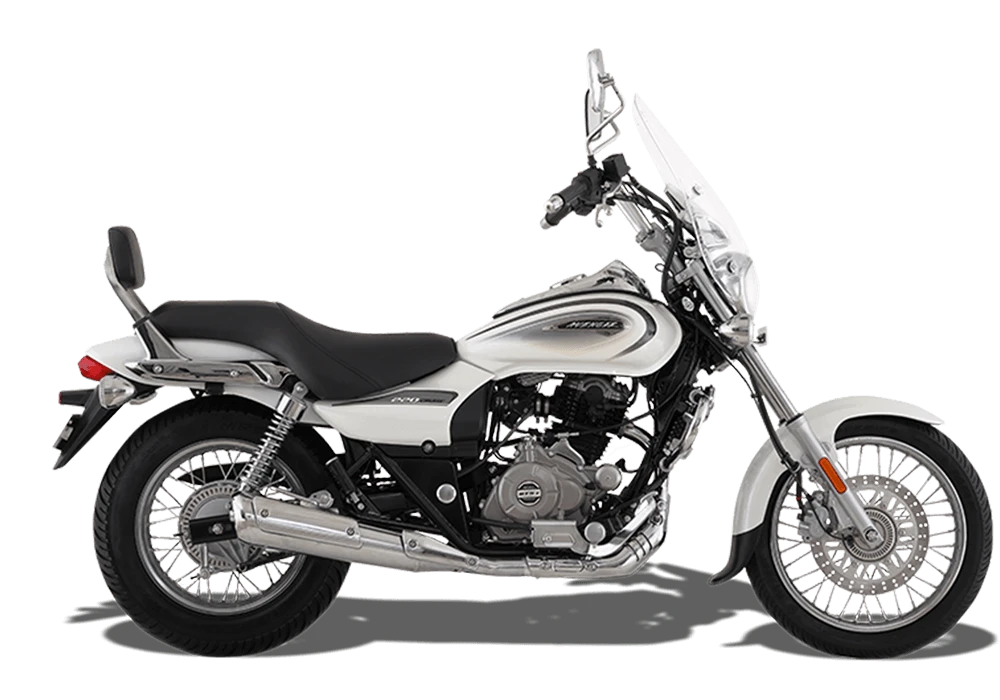
Bajaj Avenger Cruise 220
- 220 cc Oil-Cooled, 2-valve DTS-i
- 19.03 PS @ 8500 rpm
- 40 km/l (ARAI)
- 13-litre tank
- 1 variant available
- Single-channel ABS
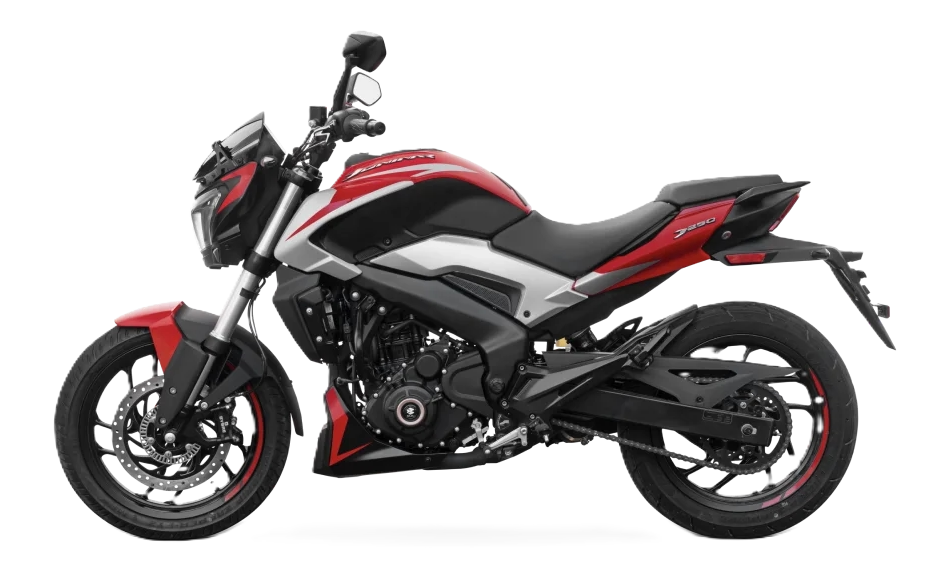
Bajaj Dominar 250
- 248.77 cc Liquid-Cooled, 4-valve
- 27 PS @ 8500 rpm
- 35 km/l (ARAI)
- 13-litre tank
- 1 variant available
- 4 Ride Modes + Dual-Ch ABS
Full Specification Comparison
Every number that matters — side by side
| Specification | Bajaj Avenger Cruise 220 | Bajaj Dominar 250 |
|---|---|---|
| Engine & Performance | ||
| Displacement | 220 cc | 248.77 cc |
| Cooling System | Oil-Cooled | Liquid-Cooled |
| Max Power | 19.03 PS @ 8500 rpm | 27 PS @ 8500 rpm |
| Max Torque | 17.55 Nm @ 7000 rpm | 23.5 Nm @ 6500 rpm |
| Valves per Cylinder | 2 | 4 |
| Compression Ratio | 9.8 : 1 | 11.9 : 1 |
| Bore × Stroke | 67 × 62.4 mm | 72 × 61.1 mm |
| Emission Standard | BS6 Phase 2 | BS6 Phase 2B |
| Transmission | 5-Speed Manual | 6-Speed Manual |
| Clutch | Wet Multiplate | Assist & Slipper Clutch |
| Top Speed | ~120 km/h | ~132 km/h |
| Riding Modes | No | Road, Rain, Sport, Off-Road |
| Traction Control | No | Yes |
| Fuel & Range | ||
| Mileage (ARAI) | 40 km/l | 35 km/l |
| Fuel Tank | 13 litres | 13 litres |
| Reserve Capacity | 3.8 litres | 2.6 litres |
| Riding Range | ~507 km | ~416 km |
| Brakes & Wheels | ||
| Braking System | Single Channel ABS | Dual Channel ABS |
| Front Brake | Disc – 280 mm | Disc – 300 mm |
| Rear Brake | Drum – 130 mm | Disc – 230 mm |
| Tyre Type | Tubed | Tubeless |
| Tyre Size (F / R) | 90/90-17 / 130/90-15 | 100/80-17 / 130/70-17 |
| Wheel Type | Spoke | Alloy |
| Suspension & Chassis | ||
| Front Suspension | Telescopic Fork | 37 mm USD Fork |
| Rear Suspension | 5-Step Adjustable Twin Shock | Multi-step Adjustable Monoshock (Nitrox) |
| Chassis | Tubular Double Cradle | Beam Type Perimeter Frame |
| Rear Preload Adjuster | Yes | Yes |
| Dimensions & Weight | ||
| Kerb Weight | 163 kg | 180 kg |
| Seat Height | 737 mm | 800 mm |
| Ground Clearance | 169 mm | 157 mm |
| Wheelbase | 1490 mm | 1453 mm |
| Overall L × W × H | 2210 × 806 × 1321 mm | 2156 × 836 × 1112 mm |
| Features & Electronics | ||
| Instrument Console | Semi-Digital | LCD Display |
| Headlight | Halogen | LED |
| DRLs | Yes | Yes |
| Turn Signals | LED | LED |
| Hazard Warning Lights | No | No |
| Riding Modes | No | Road / Rain / Sport / Off-Road |
| Traction Control | No | Yes |
| Bluetooth Connectivity | No | Yes |
| Call & SMS Alerts | No | Yes |
| USB Charging Port | No | Yes (Front) |
| Distance to Empty | No | No |
| Gear Indicator | No | Yes |
| Tachometer | No | Digital |
| Pillion Backrest | Yes | No |
| Keyless Ignition | No | No |
| Price & Warranty | ||
| Starting Price (ex-showroom) | ₹1,26,620 | ₹1,78,273 |
| Number of Variants | 1 | 1 |
| Standard Warranty | 5 Years / 75,000 km | 5 Years / 75,000 km |
★ Green highlights indicate the stronger value in each row. Prices are ex-showroom India averages and may vary by city.
Variant-wise Price Comparison
All variants laid out — find the right one for your budget
Avenger Cruise 220 Variants
Dominar 250 Variants
Pros & Cons
Honest strengths and weaknesses of each bike
Pros
- Classic cruiser ergonomics with a low 737 mm seat height
- Better ARAI-certified fuel efficiency at 40 km/l
- Larger 3.8-litre reserve for greater peace of mind
- Longer wheelbase (1490 mm) for superior highway stability
- Lighter at 163 kg — 17 kg less than the Dominar 250
- Pillion backrest for comfortable long-distance two-up riding
- Classic spoke wheel aesthetic
- Significantly more affordable — ₹51,653 cheaper
- Identical 5-year / 75,000 km warranty as Dominar 250
Cons
- Significantly less power (19.03 PS vs 27 PS)
- Rear drum brake instead of disc brake
- Single-channel ABS only — no dual-channel
- No riding modes or traction control
- No Bluetooth connectivity or USB charging port
- Halogen headlight instead of LED
- Semi-digital console lacks gear indicator and tachometer
- Tubed tyres — less convenient than tubeless
- 5-speed gearbox vs 6-speed on the Dominar
Pros
- Significantly more powerful — 27 PS and 23.5 Nm
- Liquid-cooled 4-valve engine for better sustained performance
- 4 riding modes — Road, Rain, Sport, Off-Road
- Dual-channel ABS for maximum braking safety
- Disc brakes front and rear (300 mm / 230 mm)
- USD forks and perimeter frame for superior handling
- Assist and slipper clutch for smoother downshifts
- Bluetooth connectivity with call and SMS alerts
- Traction control as standard
- USB charging port (front) and full LED lighting
- Higher top speed — ~132 km/h vs ~120 km/h
- Identical 5-year / 75,000 km warranty as Avenger
Cons
- Lower fuel efficiency (35 km/l vs 40 km/l)
- Significantly more expensive — ₹51,653 premium over Avenger
- Heavier at 180 kg — can feel cumbersome in city traffic
- Higher seat height (800 mm) — less accessible for shorter riders
- No pillion backrest for two-up touring comfort
- No hazard warning lights
- Lower ground clearance (157 mm vs 169 mm)
Key Differences Explained
What really sets these two bikes apart
Engine Character
The Avenger Cruise 220 uses a 220 cc oil-cooled, 2-valve DTS-i engine making 19.03 PS — perfectly adequate for relaxed cruising but not built for spirited riding. The Dominar 250's 248.77 cc liquid-cooled, 4-valve engine pumps out 27 PS and 23.5 Nm — a 42% power advantage. Combined with its 6-speed gearbox and assist & slipper clutch, the Dominar is a genuinely capable touring performer that rewards aggressive throttle inputs, especially on highway overtakes.
Fuel Efficiency & Range
The Avenger Cruise 220 leads with a 40 km/l ARAI figure against the Dominar 250's 35 km/l. Both bikes share a 13-litre tank, so this translates directly to a longer riding range of ~507 km for the Avenger versus ~416 km for the Dominar. The Avenger also holds a larger 3.8-litre reserve (vs 2.6 litres), giving riders more buffer before hitting empty. For daily commuters with high mileage, the Avenger's running cost advantage is meaningful.
Braking & Safety
The Dominar 250 holds a clear braking advantage across the board. It gets dual-channel ABS, a larger 300 mm front disc, and a 230 mm rear disc — all as standard. The Avenger Cruise 220 makes do with single-channel ABS, a 280 mm front disc, and a rear drum brake. Beyond braking hardware, the Dominar also adds traction control, making it significantly safer to ride in varied conditions. The Avenger's tubed tyres also put it at a disadvantage compared to the Dominar's tubeless setup in the event of a puncture.
Technology & Features
The Dominar 250 leads comprehensively on electronics — four riding modes, traction control, Bluetooth connectivity with call/SMS alerts, a front USB charging port, a full digital LCD console with gear indicator and tachometer, and full LED lighting throughout. The Avenger Cruise 220 offers a semi-digital console, a halogen headlight, and no connectivity features at all. This is perhaps the largest qualitative gap between the two bikes.
Comfort & Ergonomics
Both are designed for touring, but with different philosophies. The Avenger's classic cruiser layout — low 737 mm seat, forward foot pegs, wide handlebars and a pillion backrest — is ideal for riders who want relaxed all-day comfort with minimal fatigue. The Dominar's 800 mm seat height, upright touring posture and stiffer chassis are more performance-oriented; it excels on fast highways but its lack of a pillion backrest and heavier 180 kg weight make it less welcoming for two-up touring.
Price & Value
The Avenger Cruise 220 at ₹1,26,620 is ₹51,653 cheaper than the Dominar 250 at ₹1,78,273 — a substantial gap for single-variant bikes of the same brand. Both share an identical 5-year / 75,000 km warranty. The Avenger offers far better value per rupee spent on comfort and fuel economy; the Dominar justifies its premium through a dramatically better features package and performance. The right choice depends entirely on whether the Dominar's tech and power are worth the extra investment to you.
Expert Verdict
Which one should you actually buy?
Buy the Avenger Cruise 220 if…
- You want a classic cruiser riding posture with a very low seat height
- Budget is a priority — ₹51,653 less than the Dominar 250
- You ride two-up regularly and value the pillion backrest
- Better mileage and lower running costs matter to you
- You are a shorter or newer rider who values confidence from a low seat
- You prefer relaxed long-distance highway cruising over performance
- You like the classic spoke wheel aesthetic
Buy the Dominar 250 if…
- You want significantly stronger performance for highway overtakes
- Riding modes and traction control for varied conditions appeal to you
- Dual-channel ABS and disc brakes front and rear are important
- Bluetooth connectivity and a USB charging port are must-haves
- USD forks and slipper clutch matter for your riding style
- You plan to regularly cruise at high speeds (120+ km/h)
- You want the most feature-rich motorcycle under ₹2 lakh
Overall Winner for Most Riders: Bajaj Dominar 250. Despite being ₹51,653 more expensive, the Bajaj Dominar 250 offers a dramatically more complete motorcycle — 42% more power, liquid-cooled 4-valve engine, four riding modes, dual-channel ABS, disc brakes at both ends, traction control, Bluetooth connectivity, USD forks, a slipper clutch, and full LED lighting. For riders who plan to use their motorcycle for spirited touring and daily riding, the Dominar's technology and performance package represents genuine value. Choose the Avenger Cruise 220 only if your absolute priorities are classic cruiser comfort, a low seat height, better fuel economy, pillion backrest convenience, or a tighter budget.
Frequently Asked Questions
Common questions answered by our experts
The Bajaj Dominar 250 is better for most buyers who want stronger performance (27 PS), riding modes, dual-channel ABS, traction control, Bluetooth connectivity, and a more modern feature set. The Bajaj Avenger Cruise 220 is better if you prioritise classic cruiser ergonomics, a low 737 mm seat height, better fuel efficiency (40 km/l ARAI), a pillion backrest, and a significantly lower price of ₹1,26,620.
The Bajaj Avenger Cruise 220 starts at ₹1,26,620 ex-showroom while the Bajaj Dominar 250 starts at ₹1,78,273 ex-showroom — a difference of ₹51,653. Both are available in a single variant each and carry the same Bajaj warranty of 5 years / 75,000 km. Prices are India ex-showroom averages and may vary by city.
The Bajaj Avenger Cruise 220 has better ARAI-certified mileage at 40 km/l compared to the Bajaj Dominar 250's 35 km/l. Both bikes share a 13-litre fuel tank, giving the Avenger an estimated riding range of ~507 km versus ~416 km for the Dominar. The Avenger's larger 3.8-litre reserve (vs 2.6 litres for the Dominar) provides additional range buffer when the low fuel light comes on.
The Bajaj Dominar 250 makes significantly more power at 27 PS @ 8500 rpm and 23.5 Nm @ 6500 rpm compared to the Avenger Cruise 220's 19.03 PS @ 8500 rpm and 17.55 Nm @ 7000 rpm. The Dominar's liquid-cooled 4-valve engine also achieves a higher top speed of approximately 132 km/h versus 120 km/h for the Avenger.
Yes, the Bajaj Dominar 250 comes with four rider-selectable modes — Road, Rain, Sport, and Off-Road — as standard. These adjust power delivery and ABS behaviour for different road and weather conditions. The Bajaj Avenger Cruise 220 does not offer any riding modes.
Both bikes offer identical warranty coverage — 5 years / 75,000 km — making this a draw. As both are Bajaj motorcycles, they also share the same service schedule: first service at 500–750 km, second at 4500–5000 km, and third at 9500–10000 km. This equal warranty is a notable advantage for the Avenger Cruise 220 given its significantly lower price.