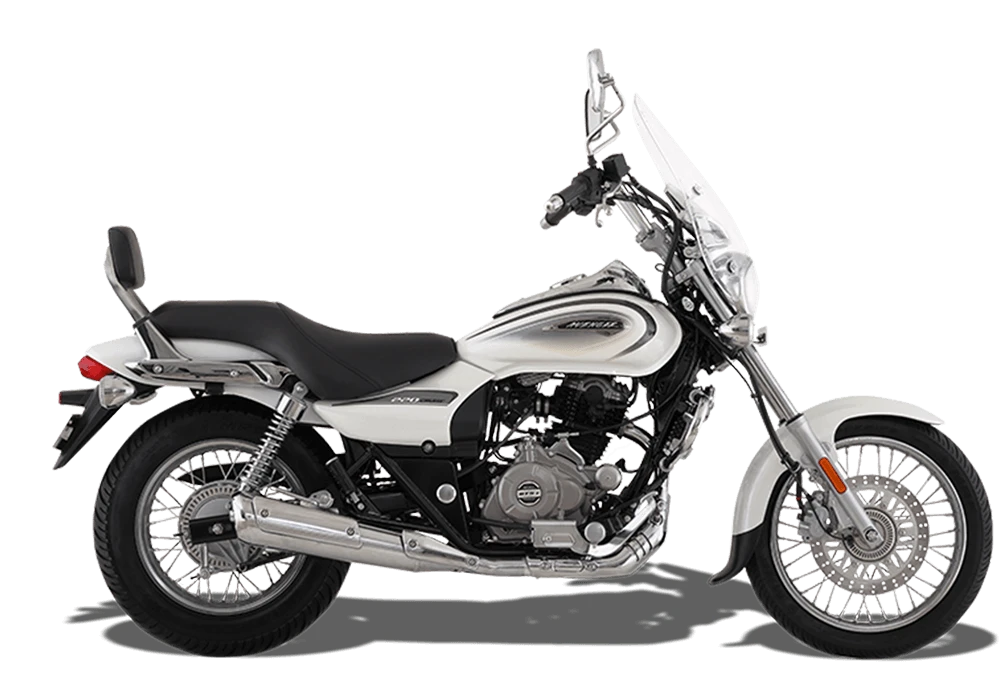
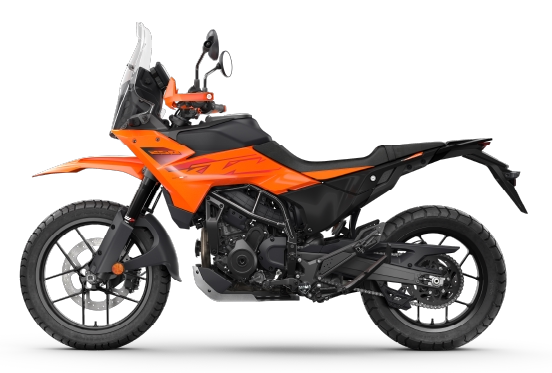
At a Glance
Key differences that define each motorcycle
Bajaj Avenger Cruise 220
- 220 cc Oil-Cooled, 2-valve
- 19.03 PS @ 8500 rpm
- 40 km/l (ARAI)
- 13-litre tank
- 1 variant available
- Single-channel ABS
KTM 250 Adventure
- 248.76 cc Liquid-Cooled, 4-valve
- 30.5 bhp @ 9250 rpm
- 32 km/l (Owner Reported)
- 14.5-litre tank
- 1 variant available
- Dual-Ch ABS + Off-Road Mode
Full Specification Comparison
Every number that matters — side by side
| Specification | Bajaj Avenger Cruise 220 | KTM 250 Adventure |
|---|---|---|
| Engine & Performance | ||
| Displacement | 220 cc | 248.76 cc |
| Cooling System | Oil-Cooled | Liquid-Cooled |
| Max Power | 19.03 PS @ 8500 rpm | 30.5 bhp @ 9250 rpm |
| Max Torque | 17.55 Nm @ 7000 rpm | 25 Nm @ 7250 rpm |
| Valves per Cylinder | 2 | 4 |
| Compression Ratio | 9.8 : 1 | 12.5 : 1 |
| Bore × Stroke | 67 × 62.4 mm | 72 × 61.1 mm |
| Emission Standard | BS6 Phase 2 | BS6 Phase 2 |
| Transmission | 5-Speed Manual | 6-Speed Manual |
| Clutch | Wet Multiplate | Assist & Slipper Clutch |
| Quickshifter | No | Yes (Quickshifter+) |
| Top Speed | ~120 km/h | ~140 km/h |
| Riding Modes | No | No |
| Traction Control | No | No |
| Fuel & Range | ||
| Mileage (Claimed / Reported) | 40 km/l (ARAI) | 32 km/l (Owner Reported) |
| Fuel Tank | 13 litres | 14.5 litres |
| Reserve Capacity | 3.8 litres | 2.9 litres |
| Riding Range | ~507 km | ~464 km |
| Brakes & Wheels | ||
| Braking System | Single Channel ABS | Dual Channel ABS + Off-Road Mode |
| Front Brake | Disc – 280 mm | Disc – 320 mm |
| Rear Brake | Drum – 130 mm | Disc – 230 mm |
| Tyre Type | Tubed | Tubeless |
| Tyre Size (F / R) | 90/90-17 / 130/90-15 | 100/90-19 / 130/80-17 |
| Wheel Type | Spoke | Alloy |
| Front Wheel Size | 17 inch | 19 inch |
| Suspension & Chassis | ||
| Front Suspension | Telescopic (Anti-friction bush) | USD Fork |
| Rear Suspension | 5-step Twin Shock Absorber | WP APEX Monoshock |
| Chassis | Tubular Double Cradle | Steel Trellis Frame |
| Rear Preload Adjuster | Yes | Yes |
| Dimensions & Weight | ||
| Kerb Weight | 163 kg | 177 kg |
| Seat Height | 737 mm | 825 mm |
| Ground Clearance | 169 mm | 227 mm |
| Wheelbase | 1490 mm | 1430 mm |
| Overall L × W × H | 2210 × 806 × 1321 mm | 2154 × 900 × 825 mm |
| Features & Electronics | ||
| Instrument Console | Semi-Digital | 5" TFT Display |
| Headlight | Halogen | Dual LED Projector |
| DRLs | Yes | Yes |
| Turn Signals | LED | LED |
| Hazard Warning Lights | No | No |
| Bluetooth Connectivity | No | Yes |
| Call & SMS Alerts | No | Yes |
| USB Charging Port | No | Yes |
| Distance to Empty | No | Yes |
| Gear Indicator | No | Yes |
| Tachometer | No | Digital |
| Keyless Ignition | No | No |
| Pillion Backrest | Yes | No |
| Cruise Control | No | No |
| Price & Warranty | ||
| Starting Price (ex-showroom) | ₹1,26,620 | ₹2,46,140 |
| Number of Variants | 1 | 1 |
| Standard Warranty | 5 Years / 75,000 km | 2 Years / 30,000 km |
★ Green highlights indicate the stronger value in each row. Prices are ex-showroom India averages and may vary by city.
Variant-wise Price Comparison
All variants laid out — find the right one for your budget
Avenger Cruise 220 Variants
KTM 250 Adventure Variants
Pros & Cons
Honest strengths and weaknesses of each bike
Pros
- Much lower price — nearly half the cost of the KTM
- Better ARAI-certified fuel efficiency (40 km/l)
- Exceptional 5-year / 75,000 km warranty
- Much lower seat height (737 mm) — accessible to all riders
- Lighter at 163 kg vs 177 kg
- Longer wheelbase for superior highway stability
- Pillion backrest for touring comfort
- Lower maintenance and service costs
- Wider Bajaj service network across India
Cons
- Significantly lower peak power (19.03 PS vs 30.5 bhp)
- Only single-channel ABS — no rear disc brake
- No Bluetooth, TFT display or USB charging
- Halogen headlight vs KTM's dual LED projector
- Less ground clearance (169 mm vs 227 mm)
- No quickshifter or slipper clutch
- Tubed tyres vs KTM's tubeless
- Not suitable for off-road or rough terrain
Pros
- Significantly higher peak power — 30.5 bhp @ 9250 rpm
- Liquid-cooled 4-valve engine with superior performance
- Dual-channel ABS with dedicated off-road mode
- 5" TFT display with Bluetooth & navigation
- Quickshifter+ and slipper clutch
- Much higher ground clearance (227 mm)
- Larger 14.5-litre fuel tank
- USD front forks and WP APEX monoshock
- 19-inch front wheel for better off-road stability
- Dual LED projector headlight
Cons
- Costs nearly double the Avenger (₹2,46,140 vs ₹1,26,620)
- Much lower warranty coverage — 2 years / 30,000 km only
- Higher service costs and KTM dealer network less widespread
- Tall seat height (825 mm) — challenging for shorter riders
- Lower fuel efficiency (~32 km/l vs 40 km/l)
- Heavier at 177 kg
- No riding modes or traction control
- No pillion backrest
Key Differences Explained
What really sets these two bikes apart
Engine Character
The Avenger Cruise 220 uses a 220 cc oil-cooled, 2-valve DTS-i engine tuned for smooth, relaxed cruising — delivering predictable power well-suited to highway touring. The KTM 250 Adventure uses a 248.76 cc liquid-cooled, 4-valve unit producing 30.5 bhp — over 60% more power — with a free-revving, performance-oriented character. The KTM also gets a Quickshifter+ and slipper clutch, further elevating its sporty credentials.
Fuel Efficiency & Range
The Avenger leads on efficiency with an ARAI-certified 40 km/l against the KTM's owner-reported 32 km/l. However, the KTM's larger 14.5-litre tank (vs 13 litres) partially offsets the mileage gap, giving estimated ranges of ~464 km (KTM) vs ~507 km (Avenger). For daily commuters, the Avenger's fuel savings add up meaningfully over time.
Braking & Safety
The KTM holds a clear advantage here. Its 320 mm front disc is 40 mm larger than the Avenger's 280 mm unit, and it features a 230 mm rear disc compared to the Avenger's drum brake. The KTM's dual-channel ABS with off-road mode offers superior safety across conditions. The Avenger makes do with single-channel ABS and a rear drum — adequate for a cruiser, but not comparable.
Technology & Features
The KTM 250 Adventure comprehensively wins the tech battle. Its 5" TFT display with Bluetooth, distance-to-empty, gear indicator, USB charging, call/SMS alerts, quickshifter, and slipper clutch leave the Avenger's semi-digital instrument cluster far behind. The Avenger offers none of these modern features, but compensates with a pillion backrest — important for touring with a passenger.
Warranty & Ownership
The Avenger Cruise 220 wins convincingly here. Its 5-year / 75,000 km warranty dwarfs the KTM's 2-year / 30,000 km coverage. Bajaj's larger service network also means easier access to authorised servicing across India. KTM service costs are substantially higher, which matters for long-term ownership budgeting.
Price & Value
At ₹1,26,620, the Avenger Cruise 220 costs nearly half of the KTM's ₹2,46,140 — a difference of approximately ₹1,19,520. The KTM justifies much of its premium with performance, technology, and hardware. However, if budget is the primary concern, the Avenger delivers a complete, comfortable touring package at a fraction of the cost.
Expert Verdict
Which one should you actually buy?
Buy the Avenger Cruise 220 if…
- Budget is your primary concern — you want to spend under ₹1.5 lakh
- You want a comfortable, relaxed cruiser for long highway rides
- Fuel efficiency (40 km/l ARAI) and lower running costs matter
- Low seat height (737 mm) is important for your stature
- You prioritise the outstanding 5-year / 75,000 km warranty
- You ride primarily on highways and well-paved roads
- Lower service costs and Bajaj's wide network appeal to you
Buy the KTM 250 Adventure if…
- You want significantly more performance (30.5 bhp) for highways and light off-road
- Modern tech — TFT display, Bluetooth, quickshifter — is a priority
- Dual-channel ABS with off-road mode matters for your riding
- High ground clearance (227 mm) is needed on your regular routes
- You plan adventure touring across varied terrain
- Budget allows for the ₹2.46 lakh investment and KTM's service costs
- You want a bike that can grow with your riding skills
Bottom Line: Two very different bikes for two very different buyers. This is not a close contest — these motorcycles occupy fundamentally different market segments. The Bajaj Avenger Cruise 220 is a proven, affordable cruiser built for comfort, accessibility, and worry-free long-term ownership with its exceptional warranty. The KTM 250 Adventure is a performance-oriented machine packed with technology that costs nearly double, but delivers a dramatically different riding experience. Choose the Avenger if value, comfort and budget are paramount. Choose the KTM 250 Adventure if you are willing to invest in superior performance, modern electronics, and adventure touring versatility.
Frequently Asked Questions
Common questions answered by our experts
They serve very different riders. The Bajaj Avenger Cruise 220 is better for budget-conscious buyers wanting a comfortable cruiser with a low seat height, 40 km/l fuel efficiency, and a class-leading 5-year / 75,000 km warranty at ₹1,26,620. The KTM 250 Adventure is better for those wanting strong performance (30.5 bhp), a TFT display, Bluetooth, dual-channel ABS with off-road mode, and adventure touring versatility — at ₹2,46,140.
The Bajaj Avenger Cruise 220 is priced at ₹1,26,620 ex-showroom while the KTM 250 Adventure costs ₹2,46,140 ex-showroom — a difference of approximately ₹1,19,520. The KTM costs nearly double the Avenger. Both are single-variant bikes in India, and prices may vary by city.
The Bajaj Avenger Cruise 220 has significantly better fuel efficiency at 40 km/l (ARAI certified) compared to the KTM 250 Adventure's owner-reported ~32 km/l. The Avenger's estimated riding range (~507 km from its 13-litre tank) also exceeds the KTM's ~464 km despite the KTM's larger 14.5-litre tank, due to the mileage difference.
The KTM 250 Adventure makes substantially more power at 30.5 bhp @ 9250 rpm compared to the Bajaj Avenger Cruise 220's 19.03 PS @ 8500 rpm. The KTM also produces significantly more torque at 25 Nm vs 17.55 Nm, has a top speed of ~140 kmph vs ~120 kmph, and uses a liquid-cooled 4-valve engine versus the Avenger's oil-cooled 2-valve motor.
The Bajaj Avenger Cruise 220 has a far superior warranty at 5 years / 75,000 km compared to the KTM 250 Adventure's 2 years / 30,000 km. This is one of the Avenger's strongest ownership advantages — especially for touring riders who cover high distances yearly.
The KTM 250 Adventure can handle daily commuting, but its tall seat height (825 mm), slightly aggressive power delivery, higher running costs and lower fuel efficiency (~32 km/l) make it less ideal for pure city use. It truly shines on highways and for adventure touring. The Bajaj Avenger Cruise 220 is more practical for mixed city/highway daily use with its lower seat, better mileage, and lower costs.