At a Glance
Key differences that define each motorcycle
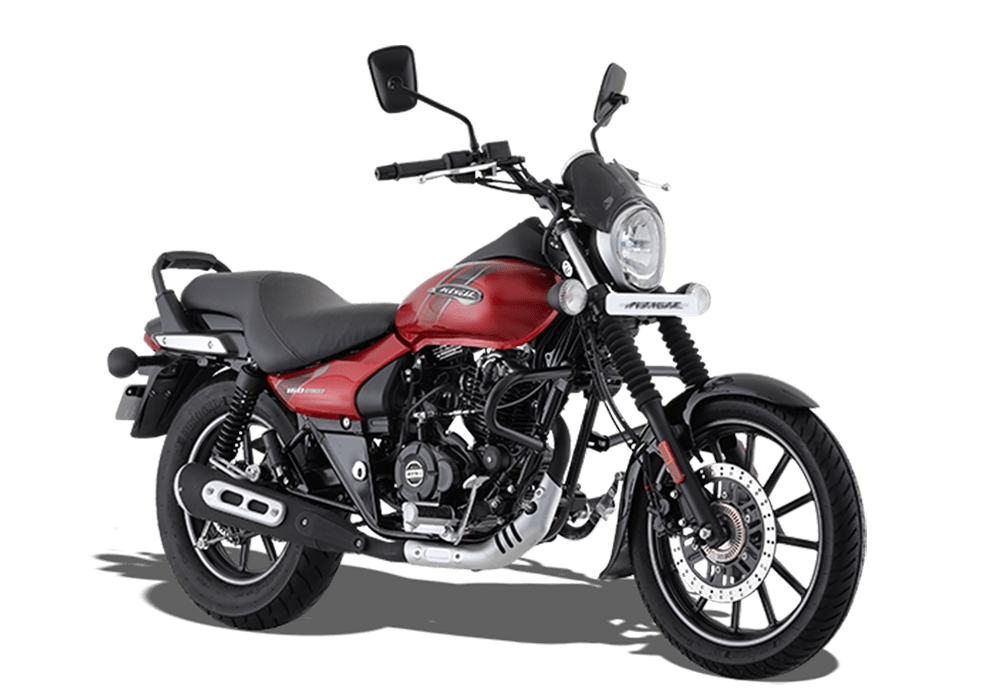
Bajaj Avenger Street 160
- 160 cc Air-Cooled, 2-valve DTS-i
- 15 PS @ 8500 rpm
- 45 km/l (ARAI)
- 13-litre tank
- 1 variant available
- Single-channel ABS
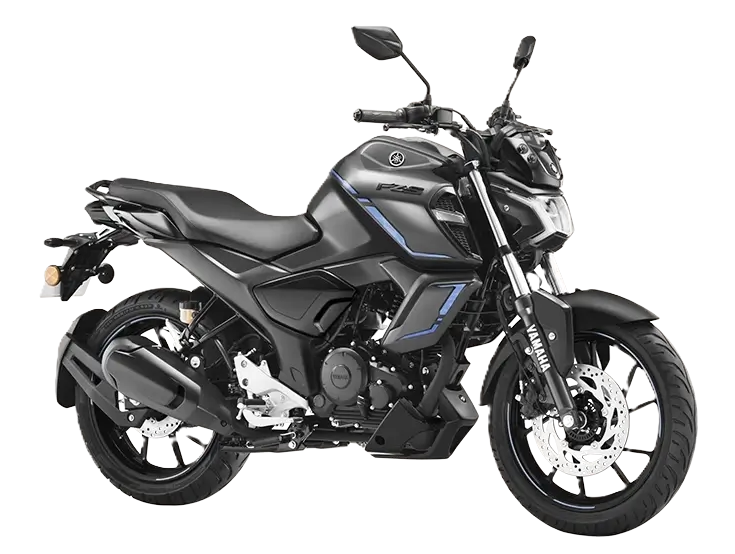
Yamaha FZ-S Fi
- 149 cc Air-Cooled, 2-valve
- 12.4 PS @ 7250 rpm
- 60 km/l (Claimed)
- 13-litre tank
- 1 variant available
- Traction control + Bluetooth
Full Specification Comparison
Every number that matters — side by side
| Specification | Bajaj Avenger Street 160 | Yamaha FZ-S Fi |
|---|---|---|
| Engine & Performance | ||
| Displacement | 160 cc | 149 cc |
| Cooling System | Air-Cooled | Air-Cooled |
| Max Power | 15 PS @ 8500 rpm | 12.4 PS @ 7250 rpm |
| Max Torque | 13.7 Nm @ 7000 rpm | 13.3 Nm @ 5500 rpm |
| Valves per Cylinder | 2 | 2 |
| Compression Ratio | 9.8 ± 0.3 : 1 | 9.6 : 1 |
| Bore × Stroke | 58 × 60.7 mm | 57.3 × 57.9 mm |
| Emission Standard | BS6 | BS6 Phase 2 |
| Transmission | 5-Speed Manual | 5-Speed Manual |
| Top Speed | ~105 km/h | ~115 km/h |
| Riding Modes | No | No |
| Traction Control | No | Yes |
| Fuel & Range | ||
| Mileage (Claimed) | 45 km/l (ARAI) | 60 km/l (Claimed) |
| Fuel Tank | 13 litres | 13 litres |
| Reserve Capacity | 3.8 litres | 2 litres |
| Riding Range | ~585 km | ~780 km |
| Brakes & Wheels | ||
| Braking System | Single Channel ABS | Single Channel ABS |
| Front Brake | Disc – 280 mm | Disc – 282 mm |
| Rear Brake | Drum – 130 mm | Disc – 220 mm |
| Tyre Type | Tubeless | Tubeless |
| Tyre Size (F / R) | 90/90-17 / 130/90-15 | 100/80-17 / 140/60-17 |
| Wheel Type | Alloy | Alloy |
| Suspension & Chassis | ||
| Front Suspension | Telescopic Fork | Telescopic Fork |
| Rear Suspension | Twin Shock Absorbers | 7-Step Adjustable Monocross |
| Chassis | Tubular Double Cradle | Diamond Frame |
| Rear Preload Adjuster | Yes | Yes |
| Dimensions & Weight | ||
| Kerb Weight | 156 kg | 137 kg |
| Seat Height | 737 mm | 790 mm |
| Ground Clearance | 169 mm | 165 mm |
| Wheelbase | 1490 mm | 1330 mm |
| Overall L × W × H | 2210 × 806 × 1070 mm | 1990 × 780 × 1080 mm |
| Features & Electronics | ||
| Instrument Console | Semi-Digital | Fully Digital LCD |
| Headlight | Halogen | LED |
| DRLs | No | Yes |
| Turn Signals | Bulb | LED |
| Hazard Warning Lights | No | Yes |
| Traction Control | No | Yes |
| Bluetooth Connectivity | No | Yes (Y-Connect) |
| Call & SMS Alerts | No | Yes |
| USB Charging Port | No | No |
| Distance to Empty | No | Yes |
| Gear Indicator | No | Yes |
| Tachometer | No | Digital |
| Pillion Backrest | Yes | No |
| Silent Start | No | Yes |
| Keyless Ignition | No | No |
| Price & Warranty | ||
| Starting Price (ex-showroom) | ₹1,12,280 | ₹1,25,000 |
| Number of Variants | 1 | 1 |
| Standard Warranty | 5 Years / 75,000 km | 2 Years / 30,000 km |
★ Green highlights indicate the stronger value in each row. Prices are ex-showroom India averages and may vary by city.
Variant-wise Price Comparison
All variants laid out — find the right one for your budget
Avenger Street 160 Variants
FZ-S Fi Variants
Pros & Cons
Honest strengths and weaknesses of each bike
Pros
- Comfortable cruiser ergonomics with low 737 mm seat height
- Smooth and refined 160 cc fuel-injected DTS-i engine
- Higher peak power (15 PS) for the segment
- Larger 13-litre tank with a bigger 3.8-litre reserve
- Pillion backrest for comfortable two-up riding
- Exceptional 5-year / 75,000 km warranty
- Lower starting price — ₹12,720 cheaper than FZ-S Fi
- Good ARAI-certified mileage of 45 km/l
- Wider wheelbase (1490 mm) for highway stability
Cons
- Rear drum brake instead of disc brake
- No traction control or Bluetooth connectivity
- Halogen headlight instead of LED
- Semi-digital console lacks gear indicator and tachometer
- No DRLs or hazard warning lights
- Heavier at 156 kg vs 137 kg
- Lower top speed (~105 km/h vs ~115 km/h)
Pros
- Significantly better claimed mileage (60 km/l) and longer riding range (~780 km)
- Traction control system — a class-leading safety feature
- Disc brakes at both ends for superior stopping power
- Bluetooth connectivity via Yamaha Y-Connect
- Full LED lighting — headlamp, DRLs, turn signals and tail
- Fully digital LCD console with gear indicator and tachometer
- Lighter at just 137 kg — easier to manoeuvre
- 7-step adjustable rear monocross suspension
- Hazard warning lights and silent start as standard
Cons
- Lower peak power (12.4 PS vs 15 PS)
- Higher starting price (₹1,25,000 vs ₹1,12,280)
- Much shorter warranty — only 2 years / 30,000 km
- No pillion backrest for long-distance two-up comfort
- Single-channel ABS only — no dual-channel
- No USB charging port
- Sporty riding posture may feel tiring for longer cruises
Key Differences Explained
What really sets these two bikes apart
Engine Character
Both motorcycles use air-cooled, 2-valve single-cylinder engines but are tuned very differently. The Avenger's 160 cc DTS-i motor makes 15 PS and 13.7 Nm, prioritising smooth mid-range delivery suited to cruising. The FZ-S Fi's 149 cc engine produces only 12.4 PS but its torque arrives lower in the rev range (5500 rpm), making it feel more tractable in city stop-start conditions. Yamaha's engine refinement is exceptional — minimal vibrations at all speeds.
Fuel Efficiency & Range
The FZ-S Fi claims a substantial 60 km/l against the Avenger's ARAI-certified 45 km/l — a 33% advantage on paper. Despite sharing the same 13-litre tank capacity, this translates to a riding range of ~780 km for the FZ-S Fi versus ~585 km for the Avenger. The Avenger does hold a 3.8-litre reserve against the FZ-S Fi's 2 litres, giving it more buffer when the low fuel light comes on.
Braking & Safety
The FZ-S Fi has a clear braking advantage with disc brakes at both ends — a 282 mm front disc and a 220 mm rear disc — both supported by single-channel ABS. The Avenger Street 160 only gets a front disc (280 mm) with a rear drum brake. Crucially, the FZ-S Fi also adds traction control as standard, making it significantly safer on wet or slippery surfaces.
Technology & Features
The FZ-S Fi wins comprehensively on electronics. It packs Bluetooth connectivity via Yamaha Y-Connect, traction control, a fully digital LCD console with gear indicator and tachometer, full LED lighting including DRLs, hazard warning lights, and distance-to-empty. The Avenger Street 160 lags behind with a semi-digital console, halogen headlight, bulb turn signals, and no connectivity features at all.
Warranty & Ownership
This is where the Avenger Street 160 scores a decisive win. Bajaj offers an outstanding 5-year / 75,000 km warranty, while Yamaha covers the FZ-S Fi for just 2 years / 30,000 km. For daily commuters clocking 15,000–20,000 km per year, the Avenger's warranty covers significantly more of their ownership period, providing far greater peace of mind against out-of-warranty repair bills.
Price & Value
The Avenger Street 160 starts at ₹1,12,280 — ₹12,720 less than the FZ-S Fi at ₹1,25,000. Both are available in only one variant. The Avenger's lower price, combined with its superior warranty, makes total cost of ownership very competitive. The FZ-S Fi justifies its premium with its safety tech package (traction control, rear disc, LED lighting, Bluetooth), but buyers on a tight budget will find the Avenger hard to overlook.
Expert Verdict
Which one should you actually buy?
Buy the Avenger Street 160 if…
- You want a relaxed cruiser riding posture with a low seat height
- Budget is a priority — starts ₹12,720 cheaper
- Long-term warranty coverage (5 years / 75,000 km) matters to you
- You are a shorter rider or beginner wanting confidence from a low seat
- You ride two-up regularly and value the pillion backrest
- You prefer highway cruising over city sprinting
- Bajaj's wide service network and affordable spare parts suit you
Buy the FZ-S Fi if…
- Modern safety tech — traction control and rear disc brake — is a priority
- You want the best fuel efficiency and longest riding range
- Bluetooth connectivity and smartphone integration appeal to you
- Full LED lighting and a feature-rich digital console matter
- You prefer an agile, lighter motorcycle for city manoeuvring
- Yamaha's engine refinement and reliability record attracts you
- You want a sporty streetfighter look over cruiser styling
Overall Winner for Most Riders: Yamaha FZ-S Fi. While the Bajaj Avenger Street 160 wins on price, power, warranty coverage and cruiser comfort, the Yamaha FZ-S Fi is the more complete motorcycle for today's rider. Its traction control, rear disc brake, full LED lighting, Bluetooth connectivity, superior fuel efficiency and longer riding range represent a meaningful technology leap over the Avenger. For riders who want the safest, most feature-rich and fuel-efficient commuter in this price bracket, the FZ-S Fi is worth the ₹12,720 premium. Choose the Avenger Street 160 only if cruiser ergonomics, a lower budget or the superior warranty coverage are your non-negotiables.
Frequently Asked Questions
Common questions answered by our experts
The Yamaha FZ-S Fi is better for most buyers who prioritise modern safety features like traction control, a rear disc brake, better fuel efficiency (60 km/l claimed vs 45 km/l ARAI), full LED lighting and Bluetooth connectivity. The Bajaj Avenger Street 160 is better if you want cruiser-style ergonomics, a lower seat height of 737 mm, a lower starting price, and the superior 5-year / 75,000 km warranty.
The Bajaj Avenger Street 160 starts at ₹1,12,280 while the Yamaha FZ-S Fi starts at ₹1,25,000 ex-showroom — a difference of ₹12,720. Both motorcycles are available in a single variant each. Prices are India ex-showroom averages and may vary by city.
The Yamaha FZ-S Fi claims significantly better mileage at 60 km/l compared to the Bajaj Avenger Street 160's ARAI-certified 45 km/l. Both bikes share a 13-litre fuel tank, but the FZ-S Fi's better efficiency results in an estimated riding range of around 780 km versus approximately 585 km for the Avenger. The Avenger does hold a larger 3.8-litre reserve compared to the FZ-S Fi's 2 litres.
The Bajaj Avenger Street 160 makes more power at 15 PS @ 8500 rpm compared to the Yamaha FZ-S Fi's 12.4 PS @ 7250 rpm. The Avenger also produces marginally more torque at 13.7 Nm versus 13.3 Nm for the FZ-S Fi. However, the FZ-S Fi's torque arrives much earlier in the rev range (5500 rpm vs 7000 rpm), making it feel more responsive in everyday city riding.
Yes, the Yamaha FZ-S Fi comes with traction control as standard — a notable safety feature in the 150cc commuter segment. It prevents rear wheel slip on wet or slippery surfaces. The Bajaj Avenger Street 160 does not offer traction control on any variant.
The Bajaj Avenger Street 160 has a significantly better warranty at 5 years / 75,000 km compared to the Yamaha FZ-S Fi's 2 years / 30,000 km. This is a major advantage for daily commuters who ride 15,000–20,000 km per year, as the Avenger's warranty covers far more of their actual riding life and reduces the risk of out-of-warranty repair costs.