At a Glance
Key differences that define each motorcycle
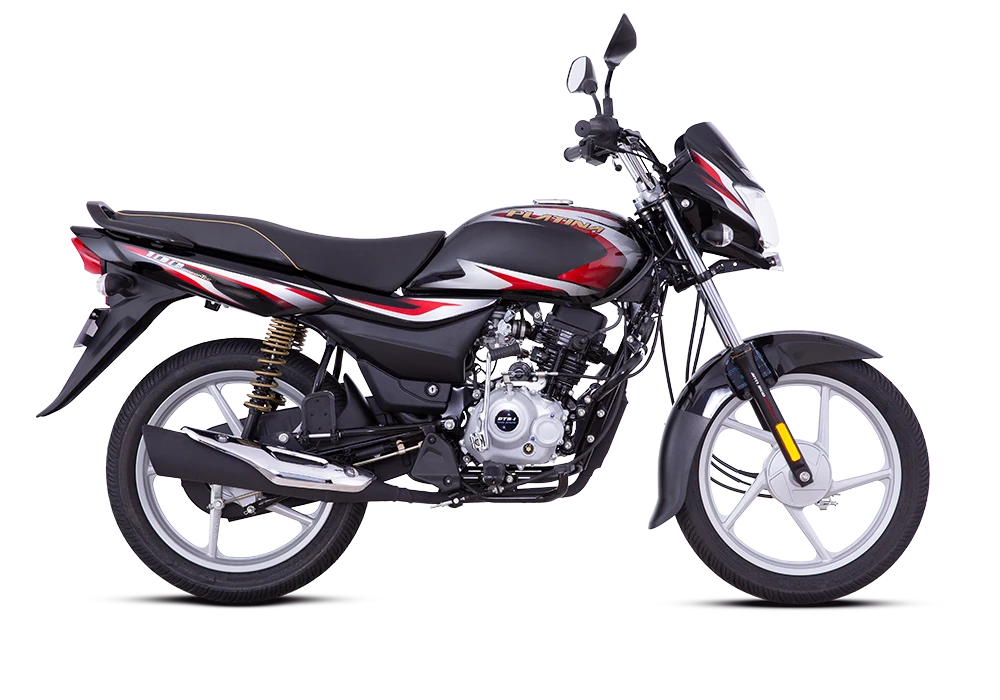
Bajaj Platina 100
- 99.59 cc Air-Cooled, 2-valve
- 8.2 PS @ 7500 rpm
- 70–75 km/l (Owner Reported)
- 11-litre tank
- 1 variant available
- Best-in-class 200 mm ground clearance
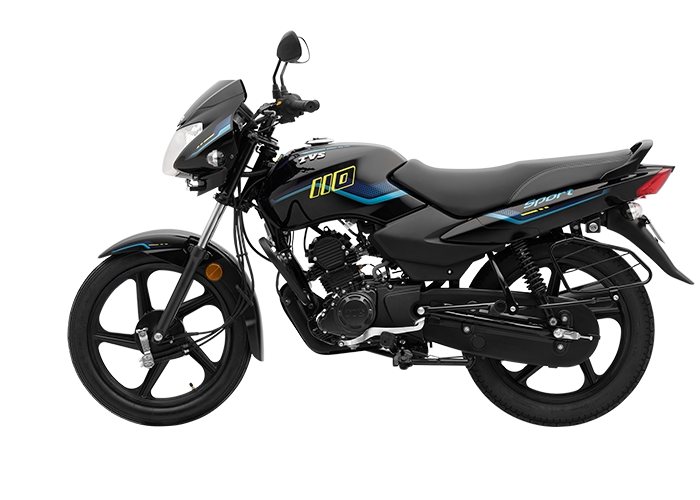
TVS Sport
- 109.7 cc Air-Cooled, 2-valve
- 8.19 PS @ 7350 rpm
- 80 km/l (ARAI)
- 10-litre tank
- 2 variants available
- Lower price from ₹62,143
Full Specification Comparison
Every number that matters — side by side
| Specification | Bajaj Platina 100 | TVS Sport |
|---|---|---|
| Engine & Performance | ||
| Displacement | 99.59 cc | 109.7 cc |
| Cooling System | Air-Cooled | Air-Cooled |
| Max Power | 8.2 PS @ 7500 rpm | 8.19 PS @ 7350 rpm |
| Max Torque | 8.3 Nm @ 5500 rpm | 8.7 Nm @ 4500 rpm |
| Valves per Cylinder | 2 | 2 |
| Compression Ratio | 9.5 : 1 | 9.5 : 1 |
| Bore × Stroke | 47 × 57.4 mm | 53.5 × 48.8 mm |
| Emission Standard | BS6 Phase 2 | BS6 Phase 2 (OBD2) |
| Transmission | 4-Speed Manual | 4-Speed Manual |
| Top Speed | ~90 km/h | ~90 km/h |
| Riding Modes | No | No |
| Traction Control | No | No |
| Fuel & Range | ||
| Mileage (Claimed) | 70–75 km/l (Owner Reported) | 80 km/l (ARAI) |
| Mileage (Real-world) | 70–75 km/l | 65–75 km/l |
| Fuel Tank | 11 litres | 10 litres |
| Reserve Capacity | 2 litres | 2 litres |
| Riding Range | ~770–825 km | ~650–750 km |
| Brakes & Wheels | ||
| Braking System | Combined Braking System (CBS) | Combi Brake System (CBS) |
| Front Brake | Drum – 130 mm | Drum – 130 mm |
| Rear Brake | Drum – 110 mm | Drum – 130 mm |
| Tyre Type | Tube Type | Tubeless |
| Tyre Size (F / R) | 2.75×17 / 3.00×17 | 80/100-17 / 80/100-17 |
| Wheel Type | Alloy | Alloy |
| Suspension & Chassis | ||
| Front Suspension | 135 mm Hydraulic Telescopic | Telescopic Hydraulic |
| Rear Suspension | Spring-in-Spring (110 mm) | 5-Step Adjustable Hydraulic |
| Chassis | Tubular Single Down Tube with Lower Cradle | Single Cradle Tubular Frame |
| Rear Preload Adjuster | No | Yes (5-step) |
| Dimensions & Weight | ||
| Kerb Weight | 117 kg | 112 kg |
| Seat Height | 807 mm | 790 mm |
| Ground Clearance | 200 mm | 175 mm |
| Wheelbase | 1255 mm | 1236 mm |
| Overall L × W × H | 2003 × 704 × 1069 mm | 1950 × 705 × 1080 mm |
| Features & Electronics | ||
| Instrument Console | Analogue | Analogue |
| Headlight Type | Halogen (12V, 35/35W HS1) | Halogen |
| DRLs | LED DRLs | No |
| Turn Signals | Bulb | Bulb |
| Hazard Warning Lights | No | No |
| Bluetooth Connectivity | No | No |
| USB Charging Port | No | Yes (ES+ variant only) |
| Tachometer | No | No |
| Gear Indicator | No | No |
| Side Stand Engine Cut-off | No | Yes |
| Kill Switch | No | Yes |
| Start Type | Electric Start | Electric & Kick Start |
| Price & Warranty | ||
| Starting Price (ex-showroom) | ₹66,593 | ₹62,143 |
| Top Variant Price | ₹66,593 | ₹63,626 |
| Number of Variants | 1 | 2 |
| Standard Warranty | 5 Years / 75,000 km | 5 Years / 60,000 km |
★ Green highlights indicate the stronger value in each row. Prices are ex-showroom India averages and may vary by city.
Variant-wise Price Comparison
All variants laid out — find the right one for your budget
Bajaj Platina 100 Variants
TVS Sport Variants
Pros & Cons
Honest strengths and weaknesses of each bike
Pros
- Outstanding 200 mm ground clearance — best in segment
- Larger 11-litre fuel tank for longer riding range
- Spring-in-spring rear suspension for superior comfort
- Longer wheelbase (1255 mm) for better stability
- LED DRL for improved visibility
- Superior warranty — 5 years / 75,000 km
- More power — 8.2 PS vs 8.19 PS
- Wider rear tyre (3.00×17) for better grip
Cons
- Higher starting price (₹66,593 vs ₹62,143)
- No official ARAI mileage figure
- Heavier at 117 kg vs 112 kg
- No rear preload adjuster
- Tube-type tyres (not tubeless)
- Smaller rear drum brake (110 mm vs 130 mm)
- No kick start backup
- No side stand engine cut-off or kill switch
- Only 1 variant — no choice
Pros
- Highest ARAI mileage — 80 kmpl certified
- Lower starting price (₹62,143 vs ₹66,593)
- Lighter at 112 kg — easier to handle
- 5-step adjustable rear suspension
- Tubeless tyres — safer in case of puncture
- Larger rear drum brake (130 mm vs 110 mm)
- Side stand engine cut-off and kill switch
- Electric + kick start for added reliability
- USB charging on ES+ variant
- More torque available lower (8.7 Nm @ 4500 rpm)
Cons
- Lower ground clearance (175 mm vs 200 mm)
- Smaller 10-litre tank, shorter range
- Weaker warranty — 5 years / 60,000 km
- No LED DRLs on any variant
- Narrower rear tyre (80/100-17)
- Shorter wheelbase (1236 mm) — slightly less stable
Key Differences Explained
What really sets these two bikes apart
Engine Character
Both are air-cooled, 2-valve, 4-speed commuter engines tuned for efficiency — but they differ in architecture. The Bajaj Platina 100's 99.59cc DTS-i engine uses a long-stroke layout (47 × 57.4 mm) that produces 8.2 PS and 8.3 Nm, with torque peaking higher at 5500 rpm. The TVS Sport's 109.7cc ETFi engine uses a shorter-stroke, larger-bore layout (53.5 × 48.8 mm) producing 8.19 PS and a slightly higher 8.7 Nm at a lower 4500 rpm — giving it punchier, more accessible torque for city stop-and-go riding.
Fuel Efficiency & Range
The TVS Sport holds a clear official advantage with an ARAI-certified 80 kmpl — one of the highest mileage figures in the Indian two-wheeler segment. The Bajaj Platina 100 does not publish an ARAI figure, with owner-reported efficiency at 70–75 kmpl. However, with a larger 11-litre tank, the Platina delivers a theoretical riding range of ~770–825 km versus ~650–750 km for the TVS Sport's 10-litre unit — a range advantage of over 100 km per fill despite lower mileage.
Ground Clearance & Road Ability
This is the Platina 100's most decisive advantage. Its 200 mm ground clearance towers over the TVS Sport's 175 mm — a 25 mm difference that translates directly into the ability to navigate deep potholes, speed breakers, and waterlogged roads without scraping the underside. For riders in semi-urban or rural areas where road quality is unpredictable, the Platina's ground clearance is a genuinely practical benefit. Its spring-in-spring rear suspension also provides a more cushioned ride over rough surfaces compared to the TVS Sport's hydraulic dampers.
Suspension & Ride Quality
Both bikes are set up for comfort over sportiness, but with different approaches. The Platina uses a distinctive spring-in-spring rear suspension design that Bajaj claims provides additional cushioning for bumpy roads. The TVS Sport offers a 5-step adjustable hydraulic rear suspension, allowing riders to tune preload based on load — useful for those regularly carrying a pillion or light luggage. The adjustability gives the TVS Sport a practical edge for varied riding conditions.
Warranty & Ownership
Both bikes offer a 5-year warranty, but the Platina 100 covers 75,000 km while the TVS Sport covers 60,000 km. The Platina's 25% higher kilometre coverage is meaningful for daily commuters who rack up 15,000–20,000 km per year, potentially covering 1–2 extra years of protection against repair costs. The TVS Sport adds a kick start backup alongside the electric starter — a small but practical reliability advantage, especially in colder conditions when batteries can struggle.
Price & Value
The TVS Sport starts ₹4,450 cheaper (₹62,143 vs ₹66,593) and tops out at just ₹63,626 for the ES+ variant — nearly ₹3,000 less than the Platina 100's single variant. At both base and top levels, the TVS Sport is the more affordable option. For buyers on the tightest of budgets, this price difference can be decisive. The Platina 100 justifies its premium with better ground clearance, a larger tank, LED DRLs and a superior warranty.
Expert Verdict
Which one should you actually buy?
Buy the Bajaj Platina 100 if…
- You ride on rough, broken, or rural roads regularly
- Ground clearance (200 mm) is a top priority for you
- You want a larger 11-litre tank for fewer fill-ups
- The superior 5-year / 75,000 km warranty matters
- A comfortable spring-in-spring suspension is important
- LED DRLs for better road visibility appeal to you
- Long-term ownership cost certainty is a priority
Buy the TVS Sport if…
- Maximum certified mileage (80 kmpl ARAI) is your goal
- Budget is the decisive factor — ₹4,450 cheaper
- You want a lighter 112 kg motorcycle for easier handling
- Adjustable rear suspension is useful for your loads
- Tubeless tyres and a kick start backup are important
- You ride mainly on city and town roads
- USB charging on the go matters (ES+ variant)
A closely matched segment — choose based on your roads. Both the Bajaj Platina 100 and TVS Sport are equally rated at 4.3 stars and serve their purpose excellently as budget commuters. The TVS Sport is the better pick for city and town riders who prioritise maximum official mileage, a lower purchase price, lighter weight and adjustable suspension. The Bajaj Platina 100 is the stronger choice for riders on rougher roads who need greater ground clearance, a larger fuel tank for longer range, better warranty coverage and a more cushioned spring-in-spring suspension. In the end, the decision comes down to whether you need the best official mileage (TVS Sport) or the best capability on India's varied road surfaces (Bajaj Platina 100).
Frequently Asked Questions
Common questions answered by our experts
Both are closely matched, but they cater to different needs. The TVS Sport is better for city riders who want the highest official mileage (80 kmpl ARAI), a lower starting price (₹62,143), lighter weight and adjustable rear suspension. The Bajaj Platina 100 is better for riders on rough or rural roads who need exceptional ground clearance (200 mm), a larger 11-litre tank, spring-in-spring suspension comfort and a superior 5-year / 75,000 km warranty.
The TVS Sport starts at ₹62,143 while the Bajaj Platina 100 starts at ₹66,593 ex-showroom — the TVS Sport is ₹4,450 cheaper. The TVS Sport ES+ tops out at ₹63,626, while the Platina 100 has a single variant at ₹66,593. Even at the top trim comparison, the TVS Sport is approximately ₹2,967 cheaper. Both prices are approximate India averages and may vary by city.
The TVS Sport has an ARAI-certified mileage of 80 kmpl, while the Bajaj Platina 100 does not publish an official ARAI figure — owner- reported mileage for the Platina is typically 70–75 kmpl. In terms of riding range, the Platina leads despite lower mileage because of its larger 11-litre tank (~770–825 km) versus the TVS Sport's 10-litre unit (~650–750 km). For pure mileage certification, TVS Sport wins; for range per fill, Platina 100 wins.
The Bajaj Platina 100 has significantly better ground clearance at 200 mm compared to the TVS Sport's 175 mm — a difference of 25 mm. The Platina's 200 mm ground clearance is among the highest in the entire commuter segment, making it ideal for rough village roads, deep potholes, and speed breakers. Riders who frequently encounter poor road conditions should strongly favour the Platina 100.
Yes. The TVS Sport comes with tubeless tyres on both wheels, which are safer in the event of a puncture as they deflate slowly rather than suddenly. The Bajaj Platina 100 uses tube-type tyres, which are more common in the entry-level commuter segment but can deflate more rapidly when punctured.
The Bajaj Platina 100 offers a better warranty at 5 years / 75,000 km compared to the TVS Sport's 5 years / 60,000 km. Both bikes offer identical time coverage, but the Platina covers 15,000 km more — the equivalent of roughly one year of typical commuting. For high-mileage riders covering 15,000–20,000 km annually, this additional kilometre coverage can prevent expensive out-of-warranty repairs.