At a Glance
Key differences that define each motorcycle
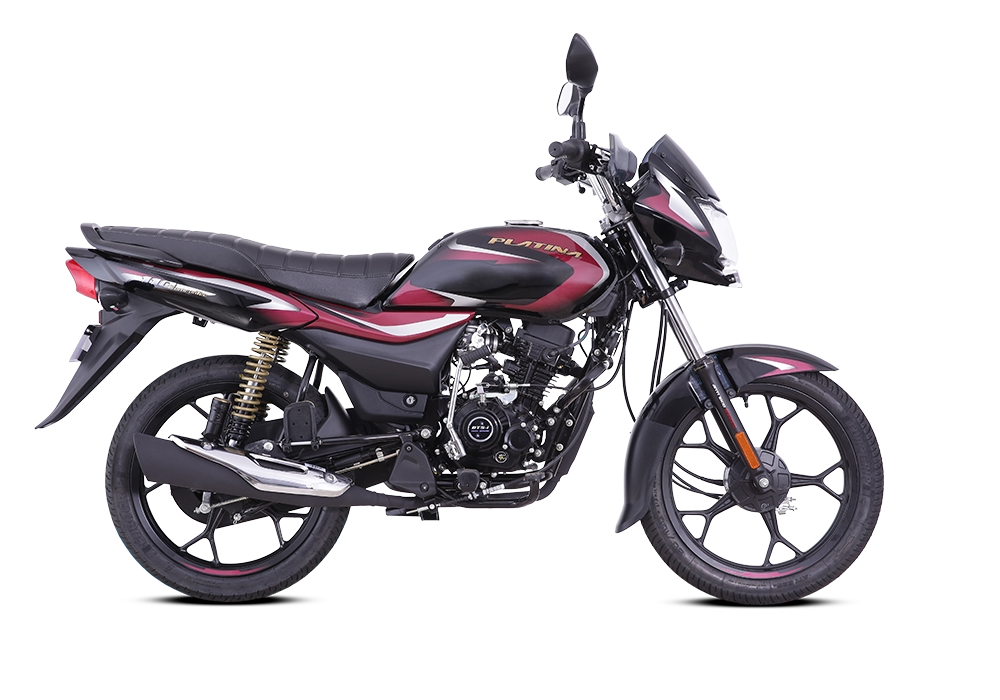
Bajaj Platina 110
- 115.06 cc Air-Cooled, 2-valve
- 9.5 PS @ 7500 rpm
- 70 km/l (ARAI)
- 11-litre tank
- 1 variant available
- 200 mm ground clearance
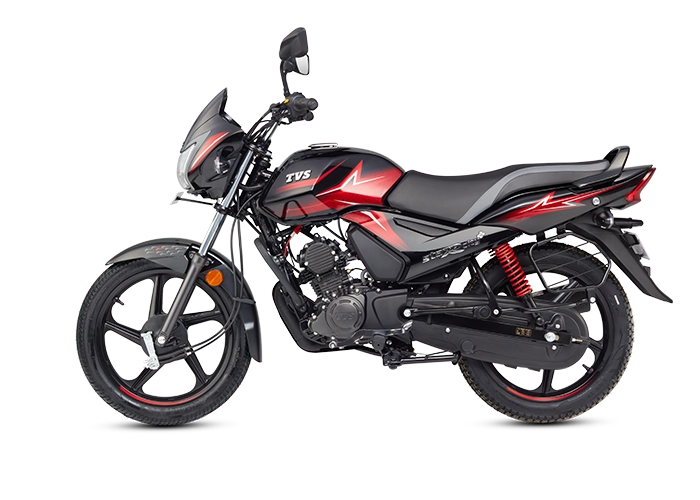
TVS Star City Plus
- 109.7 cc Air-Cooled, 2-valve
- 8.19 PS @ 7350 rpm
- 83.09 km/l (ARAI)
- 10-litre tank
- 2 variants available
- Disc brake upgrade available
Full Specification Comparison
Every number that matters — side by side
| Specification | Bajaj Platina 110 | TVS Star City Plus |
|---|---|---|
| Engine & Performance | ||
| Displacement | 115.06 cc | 109.7 cc |
| Cooling System | Air-Cooled | Air-Cooled |
| Max Power | 9.5 PS @ 7500 rpm | 8.19 PS @ 7350 rpm |
| Max Torque | 9.9 Nm @ 5500 rpm | 8.7 Nm @ 4500 rpm |
| Valves per Cylinder | 2 | 2 |
| Compression Ratio | 9.5 : 1 | 10.0 : 1 |
| Bore × Stroke | 50 × 58.8 mm | 53.5 × 48.8 mm |
| Emission Standard | BS6 Phase 2 (OBD2) | BS6 Phase 2 |
| Transmission | 4-Speed Manual | 4-Speed Manual |
| Top Speed | ~90 km/h | ~90 km/h |
| Riding Modes | No | No |
| Fuel & Range | ||
| Mileage (ARAI) | 70 km/l | 83.09 km/l |
| Fuel Tank | 11 litres | 10 litres |
| Reserve Capacity | 2 litres | 1.6 litres |
| Riding Range | ~630–700 km | ~600–680 km |
| Brakes & Wheels | ||
| Braking System | Combi Braking System (CBS) | Synchronized Braking System (SBS) |
| Front Brake | Drum – 130 mm | Drum 130 mm / Disc 240 mm |
| Rear Brake | Drum – 110 mm | Drum – 110 mm |
| Tyre Type | Tubeless | Tubeless |
| Tyre Size (F / R) | 80/100-17 / 80/100-17 | 2.75×17 / 3.0×17 |
| Wheel Size | 17 inch (F & R) | 18 inch (F & R) |
| Wheel Type | Alloy | Alloy |
| Suspension & Chassis | ||
| Front Suspension | Hydraulic Telescopic (135 mm travel) | Telescopic Hydraulic |
| Rear Suspension | SOS with Nitrox Canister | 5-step Adjustable Hydraulic Shock |
| Chassis | Tubular Single Down Tube with Lower Cradle | Single Cradle Tubular Frame |
| Rear Preload Adjuster | No | Yes (5-step) |
| Dimensions & Weight | ||
| Kerb Weight | 116 kg | 115–116 kg |
| Seat Height | 807 mm | 785 mm |
| Ground Clearance | 200 mm | 172 mm |
| Wheelbase | 1255 mm | 1260 mm |
| Overall L × W × H | 2006 × 729 × 1100 mm | 1984 × 750 × 1080 mm |
| Features & Electronics | ||
| Instrument Console | Analogue | Analogue + Digital |
| Headlight | Halogen | Halogen |
| DRLs | Yes (DRL System) | No |
| Odometer | Analogue | Digital |
| Tripmeter | Analogue | Digital |
| Clock | No | Yes |
| Low Fuel Indicator | Yes | Yes |
| Bluetooth Connectivity | No | No |
| USB Charging Port | No | No |
| Tachometer | No | No |
| Gear Indicator | No | No |
| Side Stand Engine Cut-off | Yes | Yes |
| Price & Warranty | ||
| Starting Price (ex-showroom) | ₹69,941 | ₹72,025 |
| Top Variant Price | ₹69,941 (single variant) | ₹75,548 (Disc variant) |
| Number of Variants | 1 | 2 |
| Standard Warranty | 5 Years / 75,000 km | 5 Years / 60,000 km |
★ Green highlights indicate the stronger value in each row. Prices are ex-showroom India averages and may vary by city.
Variant-wise Price Comparison
All variants laid out — find the right one for your budget
Platina 110 Variants
Star City Plus Variants
Pros & Cons
Honest strengths and weaknesses of each bike
Pros
- More powerful engine — 9.5 PS and 9.9 Nm torque
- Outstanding 200 mm ground clearance for rough roads
- Larger 11-litre fuel tank for longer absolute range
- Nitrox rear suspension for improved ride comfort
- DRL (Daytime Running Light) system as standard
- Lower starting price (₹69,941 vs ₹72,025)
- Superior warranty — 5 years / 75,000 km
- Longer front suspension travel (135 mm)
Cons
- Significantly lower mileage (70 km/l vs 83.09 km/l)
- No disc brake option on any variant
- Fully analogue instrument console
- No clock on instrument panel
- No rear preload adjustment
- Only 1 variant — no buyer flexibility
Pros
- Exceptional ARAI mileage — 83.09 km/l (best in class)
- Disc brake upgrade available (₹75,548)
- Analogue + digital console with clock
- Digital odometer and tripmeter
- 5-step adjustable rear preload
- 2 variants to suit budget and braking preference
- 5-year / 60,000 km warranty
- Slightly longer wheelbase (1260 mm) for stability
Cons
- Less power (8.19 PS vs 9.5 PS)
- Less torque (8.7 Nm vs 9.9 Nm)
- Lower ground clearance (172 mm vs 200 mm)
- No DRLs on any variant
- Shorter warranty km coverage (60,000 vs 75,000 km)
- Higher starting price (₹72,025 vs ₹69,941)
- Smaller 10-litre fuel tank
Key Differences Explained
What really sets these two bikes apart
Engine & Performance
The Bajaj Platina 110 uses a 115.06 cc engine producing 9.5 PS and 9.9 Nm of torque, while the TVS Star City Plus uses a smaller 109.7 cc unit making 8.19 PS and 8.7 Nm. The Platina's engine is tuned for both commuter efficiency and usable pull, particularly helpful when carrying a pillion or riding uphill. The Star City Plus compensates with a higher compression ratio (10.0:1 vs 9.5:1) focused on squeezing maximum efficiency from its smaller engine.
Fuel Efficiency & Range
The Star City Plus is the clear winner here with an ARAI-certified 83.09 km/l against the Platina 110's 70 km/l — a remarkable 13 km/l advantage. For a rider covering 40 km daily, this translates to noticeably lower monthly fuel costs. However, the Platina's larger 11-litre tank (vs 10 litres) means absolute riding range is broadly similar for both bikes, approximately 630–700 km per full tank.
Braking
Both bikes use drum brakes at the base level, but the Star City Plus offers a meaningful upgrade path with a front disc (240 mm) available on its Disc variant at ₹75,548. The Platina 110 is only available with drum brakes and offers no disc option at all. Both use linked/synchronized braking systems — the Platina with CBS (Combi Braking System) and the Star City Plus with SBS (Synchronized Braking System).
Ground Clearance & Ride Comfort
The Bajaj Platina 110 has a commanding 200 mm ground clearance — one of the highest in the commuter segment — compared to the Star City Plus's 172 mm. This 28 mm difference is highly significant on Indian roads with potholes, speed bumps and waterlogged patches. The Platina also features Nitrox rear suspension and 135 mm front travel, making it the comfort-focused choice for uneven roads and longer daily rides.
Features & Instrumentation
Both are basic commuter bikes with minimal electronics. The Star City Plus edges ahead with a combined analogue + digital console that includes a digital odometer, digital tripmeter and a clock — practical for daily commuters. The Platina 110's console is fully analogue. The Platina counters with a DRL system. Neither bike offers Bluetooth, USB charging, gear indicator or tachometer.
Price & Warranty
The Platina 110 starts ₹2,084 cheaper at ₹69,941 versus the Star City Plus's ₹72,025. Its single-variant simplicity keeps things straightforward. The Platina also offers a superior warranty at 5 years / 75,000 km versus the Star City Plus's 5 years / 60,000 km — a 25% higher kilometre coverage that benefits high-mileage daily commuters significantly.
Expert Verdict
Which one should you actually buy?
Buy the Bajaj Platina 110 if…
- You ride on rough, uneven or rural roads frequently
- The 200 mm ground clearance advantage is important for your route
- You want a more powerful engine for pillion riding or hills
- Lower starting price (₹69,941) is a deciding factor
- You value a superior 5-year / 75,000 km warranty
- You want a larger 11-litre fuel tank for more range
- Nitrox rear suspension for a cushioned ride matters to you
Buy the Star City Plus if…
- Maximum fuel efficiency is your top priority (83.09 km/l)
- You want to minimise monthly petrol spend above all else
- A disc brake upgrade option matters for your confidence
- You prefer a digital readout for odometer and tripmeter
- A clock on the instrument panel is useful in your daily ride
- You ride mostly on city roads where ground clearance is less critical
- 5-step rear preload adjustment suits your riding load
Overall Winner: It Depends on Your Priority. These are both strong value commuters serving slightly different riders. The TVS Star City Plus wins for city riders who prioritise maximum fuel economy — its 83.09 km/l ARAI mileage is exceptional and directly reduces running costs every day. The disc brake upgrade option also makes it the safer braking choice. Choose the Bajaj Platina 110 if you regularly ride on rough roads, carry a pillion, or want the added comfort of 200 mm ground clearance, a more powerful engine, a lower price tag and a superior 75,000 km warranty — it is the better all-rounder for mixed terrain daily commuting.
Frequently Asked Questions
Common questions answered by our experts
The answer depends on your priority. Choose the Bajaj Platina 110 if you ride on rough roads and value superior ground clearance (200 mm), a more powerful engine (9.5 PS), a lower price (₹69,941) and a better warranty (5 years / 75,000 km). Choose the TVS Star City Plus if maximum fuel economy is your priority — its 83.09 km/l ARAI mileage is significantly better, and it also offers a disc brake upgrade option at ₹75,548.
The Bajaj Platina 110 starts at ₹69,941 while the TVS Star City Plus starts at ₹72,025 ex-showroom — the Platina is ₹2,084 cheaper at base level. The Star City Plus Disc variant tops out at ₹75,548, which is ₹5,607 more than the Platina's single variant. Both prices are approximate ex-showroom India averages and may vary by city.
The TVS Star City Plus has significantly better ARAI-certified mileage at 83.09 km/l compared to the Bajaj Platina 110's 70 km/l — a difference of over 13 km/l. This makes the Star City Plus one of the most fuel-efficient motorcycles in India. However, the Platina's larger 11-litre tank versus the Star City's 10-litre tank means both bikes offer a broadly similar absolute riding range per full tank.
The Bajaj Platina 110 makes more power at 9.5 PS @ 7500 rpm and more torque at 9.9 Nm @ 5500 rpm, compared to the TVS Star City Plus's 8.19 PS @ 7350 rpm and 8.7 Nm @ 4500 rpm. The Platina's larger 115.06 cc engine gives it a noticeable performance advantage, which is helpful when carrying a pillion or climbing inclines.
Yes, the Bajaj Platina 110 has significantly better ground clearance at 200 mm compared to the TVS Star City Plus's 172 mm — a 28 mm difference. This is a major advantage on Indian roads with potholes, speed humps and waterlogged patches. The Platina is one of the highest ground-clearance motorcycles in the commuter segment.
Yes, the TVS Star City Plus is available with a front disc brake (240 mm) on its Disc variant priced at ₹75,548 ex-showroom. The Bajaj Platina 110 only comes with drum brakes and does not offer a disc brake option on any variant. If disc brakes are important to you, the Star City Plus Disc variant is the choice in this comparison.
Both bikes offer a 5-year warranty, but the Bajaj Platina 110 covers 75,000 km while the TVS Star City Plus covers 60,000 km — the Platina's warranty covers 25% more kilometres. For daily commuters who ride 15,000–20,000 km per year, this additional coverage is a meaningful long-term advantage that can reduce unexpected repair costs.