At a Glance
Key differences that define each motorcycle
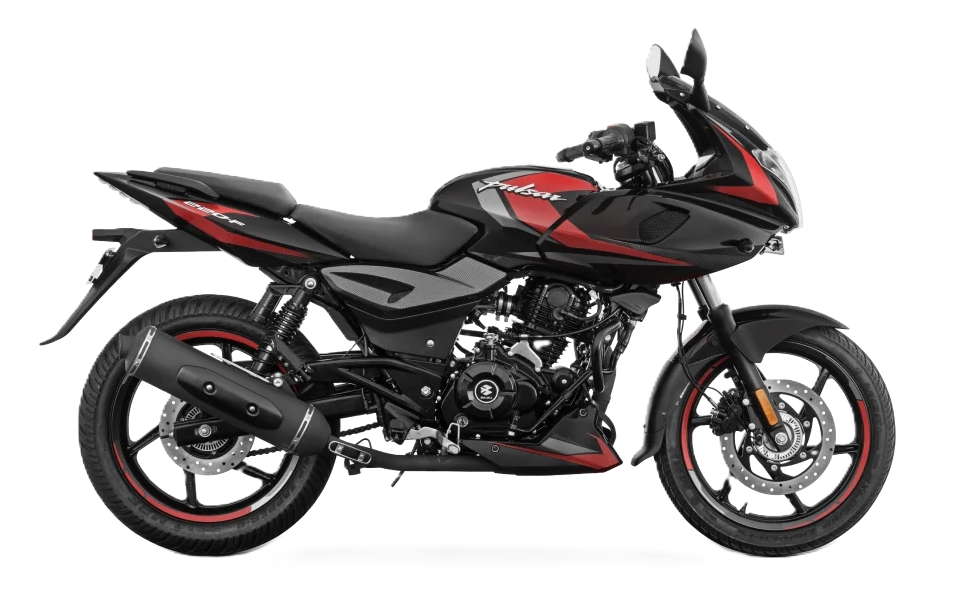
Bajaj Pulsar 220F
- 220.4 cc Oil-Cooled, 2-valve
- 20.4 PS @ 8500 rpm
- 40 km/l (Claimed)
- 15-litre tank
- 1 variant available
- Single-channel ABS
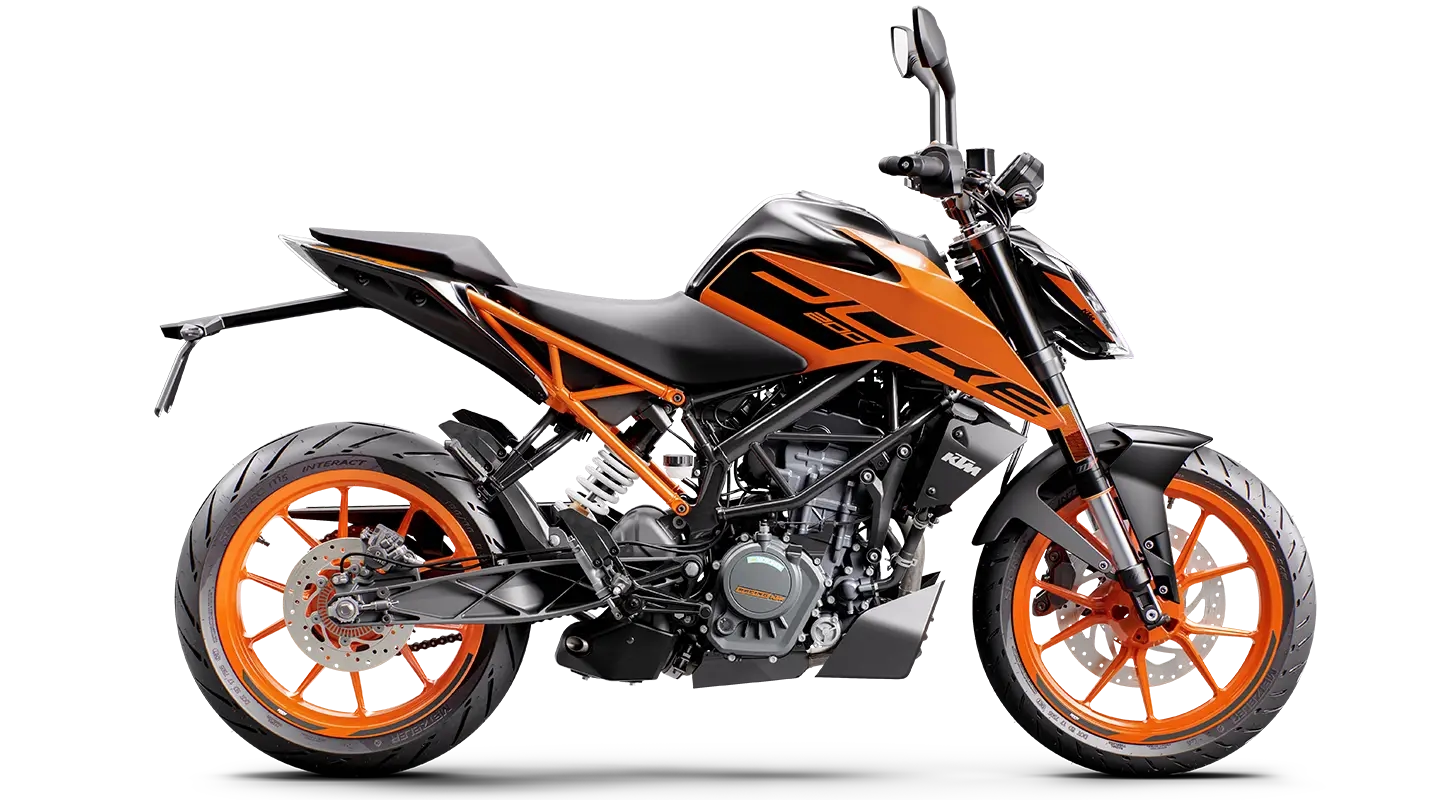
KTM 200 Duke
- 199.5 cc Liquid-Cooled, 4-valve DOHC
- 25 PS @ 10000 rpm
- 35 km/l (Claimed)
- 13.5-litre tank
- 1 variant available
- Supermoto Dual-Channel ABS
Full Specification Comparison
Every number that matters — side by side
| Specification | Bajaj Pulsar 220F | KTM 200 Duke |
|---|---|---|
| Engine & Performance | ||
| Displacement | 220.4 cc | 199.5 cc |
| Cooling System | Oil-Cooled | Liquid-Cooled (Radiator) |
| Max Power | 20.4 PS @ 8500 rpm | 25 PS @ 10000 rpm |
| Max Torque | 18.55 Nm @ 7000 rpm | 19.3 Nm @ 8000 rpm |
| Valves per Cylinder | 2 | 4 (DOHC) |
| Compression Ratio | 9.5 : 1 | 11.3 : 1 |
| Bore × Stroke | 67 × 62.4 mm | 72 × 49 mm |
| Emission Standard | BS6 | BS6 Phase 2B |
| Transmission | 5-Speed Manual | 6-Speed Manual |
| Clutch | Wet Multi-Plate | Assist & Slipper Clutch |
| Top Speed | ~135 km/h | ~140 km/h |
| Riding Modes | No | No |
| Traction Control | No | No |
| Fuel & Range | ||
| Mileage (Claimed) | 40 km/l | 35 km/l |
| Fuel Tank | 15 litres | 13.5 litres |
| Reserve Capacity | 3.2 litres | 2.7 litres |
| Riding Range | ~600 km | ~469 km |
| Brakes & Wheels | ||
| Braking System | Single Channel ABS | Supermoto Dual-Channel ABS |
| Front Brake | Disc – 280 mm | Disc – 300 mm (Radial Caliper) |
| Rear Brake | Disc – 230 mm | Disc – 230 mm |
| Tyre Type | Tubeless | Tubeless |
| Tyre Size (F / R) | 90/90-17 / 120/80-17 | 110/70-17 / 150/60-17 |
| Wheel Type | Alloy | Alloy |
| Suspension & Chassis | ||
| Front Suspension | Telescopic Fork | WP APEX USD Forks, 43 mm |
| Rear Suspension | Nitrox Twin Shock Absorber | WP APEX Monoshock (10-step adjustable) |
| Chassis | Double Cradle Frame | Split-Trellis Frame (Tubular) |
| Rear Preload Adjuster | Yes | Yes |
| Dimensions & Weight | ||
| Kerb Weight | 160 kg | 159 kg |
| Seat Height | 795 mm | 822 mm |
| Ground Clearance | 165 mm | 155 mm |
| Wheelbase | 1350 mm | 1357 mm |
| Overall L × W × H | 2035 × 750 × 1165 mm | 2072 × 831 × 1109 mm |
| Features & Electronics | ||
| Instrument Console | Semi-Digital | 5-inch TFT Display |
| Headlight | Halogen Projector | Dual LED |
| DRLs | No | Yes |
| Turn Signals | Halogen Bulb | LED |
| Hazard Warning Lights | No | No |
| Bluetooth Connectivity | No | Yes |
| Call & SMS Alerts | No | Yes |
| USB Charging Port | No | Yes |
| Distance to Empty | No | No |
| Gear Indicator | No | Yes |
| Tachometer | Analogue | Digital (TFT) |
| Service Reminder | No | Yes |
| Keyless Ignition | No | No |
| Price & Warranty | ||
| Ex-Showroom Price | ₹1,29,924 | ₹1,97,980 |
| Number of Variants | 1 | 1 |
| Standard Warranty | 5 Years / 75,000 km | 2 Years / 30,000 km |
★ Green highlights indicate the stronger value in each row. Prices are ex-showroom India averages and may vary by city.
Variant-wise Price Comparison
Both bikes available in single variants — clear and simple
Pulsar 220F Variants
KTM 200 Duke Variants
Pros & Cons
Honest strengths and weaknesses of each bike
Pros
- Higher displacement 220.4 cc for strong mid-range torque
- Better fuel efficiency at ~40 km/l claimed
- Larger 15-litre fuel tank for longer range (~600 km)
- Significantly lower price (₹1,29,924 vs ₹1,97,980)
- Outstanding 5-year / 75,000 km warranty
- Comfortable semi-faired design for highway touring
- Higher ground clearance (165 mm vs 155 mm)
- Proven, reliable engine platform
- Wide service network across India
Cons
- Lower peak power (20.4 PS vs 25 PS)
- Only single-channel ABS — no dual-channel
- Outdated semi-digital instrument cluster
- No Bluetooth or mobile connectivity
- No LED headlight or DRLs
- 5-speed gearbox vs 6-speed on Duke
- Heavier feel in city traffic
Pros
- Higher peak power – 25 PS @ 10000 rpm
- Liquid-cooled DOHC 4-valve engine — high-rev thrill
- Premium 5-inch TFT display with Bluetooth
- Supermoto Dual-Channel ABS (rear ABS defeatable)
- WP APEX USD forks and adjustable monoshock
- Assist & slipper clutch for sporty riding
- 6-speed gearbox for better performance spread
- Lightweight trellis frame — sharper handling
- LED headlight, DRLs, USB charging & gear indicator
Cons
- Significantly higher price (₹1,97,980 vs ₹1,29,924)
- Lower claimed mileage (35 km/l vs 40 km/l)
- Smaller 13.5-litre tank, shorter range (~469 km)
- Shorter warranty — only 2 years / 30,000 km
- Firm suspension reduces comfort on bad roads
- Higher maintenance and spare parts cost
- Less ground clearance (155 mm vs 165 mm)
Key Differences Explained
What really sets these two bikes apart
Engine Character
The Pulsar 220F uses a 220.4 cc oil-cooled, 2-valve engine producing 20.4 PS — tuned for accessible mid-range grunt and relaxed highway cruising. The KTM 200 Duke's 199.5 cc liquid-cooled, DOHC 4-valve unit makes 25 PS at a screaming 10,000 rpm, delivering a high-revving, sharper character inspired by KTM's motorsport pedigree. The Duke also adds an assist & slipper clutch and a 6-speed gearbox, giving it a clear performance edge.
Fuel Efficiency & Range
The Pulsar 220F leads with a claimed 40 km/l versus the Duke's 35 km/l. With a larger 15-litre tank, the 220F offers a theoretical riding range of ~600 km compared to ~469 km for the Duke's 13.5-litre unit. For daily commuters and highway tourers, the Pulsar 220F offers meaningfully lower running costs and fewer fuel stops.
Braking & Safety
The KTM 200 Duke holds a clear braking advantage. Its 300 mm front disc with radial caliper is 20 mm larger than the Pulsar 220F's 280 mm unit, and it comes with Supermoto Dual-Channel ABS that even allows rear ABS to be disabled for aggressive riding. The Pulsar 220F offers only single-channel ABS, which is a notable limitation at this price point.
Suspension & Handling
The Duke's WP APEX USD 43 mm front forks and 10-step adjustable monoshock represent a significant hardware advantage over the Pulsar 220F's conventional telescopic fork and Nitrox twin-shock setup. Combined with a lightweight trellis frame and wider rear tyre, the Duke delivers far sharper cornering and handling dynamics — though at the cost of ride comfort on rough surfaces.
Features & Technology
The KTM 200 Duke is significantly ahead in electronics and features with its 5-inch TFT display, Bluetooth connectivity, call/SMS alerts, USB charging, gear indicator, service reminder, LED headlight with DRLs, and LED turn indicators. The Pulsar 220F makes do with a semi-digital cluster, halogen projector headlight, and no connectivity features — reflecting its older platform.
Price, Value & Warranty
The Pulsar 220F is priced at ₹1,29,924 — a full ₹68,056 less than the KTM 200 Duke at ₹1,97,980. That is a 52% premium for the Duke. The Pulsar also delivers a vastly superior warranty of 5 years / 75,000 km versus just 2 years / 30,000 km on the KTM. For budget- conscious buyers who want long-term ownership peace of mind, the 220F is the clear winner on value.
Expert Verdict
Which one should you actually buy?
Buy the Pulsar 220F if…
- Budget is your primary concern — saves ₹68,056
- You want better fuel efficiency and longer riding range
- Highway touring and long-distance comfort matter to you
- The superior 5-year / 75,000 km warranty is a priority
- You prefer a proven, reliable engine with wide service access
- You're upgrading from a 125cc–160cc bike for more power
- You want a practical semi-faired everyday performance bike
Buy the KTM 200 Duke if…
- You want the most performance in the 200cc class (25 PS)
- Supermoto dual-channel ABS with WP suspension excites you
- A premium TFT display and Bluetooth connectivity are important
- Sharp handling and spirited corner-carving define your rides
- You enjoy high-revving engines and premium bike character
- Weekend riding and performance-focused ownership suit your lifestyle
- Budget is secondary to best-in-class performance and features
Overall: Two very different bikes for very different buyers. The Bajaj Pulsar 220F is the sensible, value-driven choice — lower price, better fuel efficiency, a larger tank, longer riding range, and an outstanding 5-year / 75,000 km warranty make it the smarter buy for daily commuters and budget-conscious riders. The KTM 200 Duke, however, is the clear winner if outright performance, premium technology, and a razor-sharp riding experience are what you're after. At ₹68,056 more, the Duke's 25 PS liquid-cooled engine, WP suspension, TFT display, and Supermoto ABS justify the premium for enthusiasts who ride for the thrill. Know your priority — and choose accordingly.
Frequently Asked Questions
Common questions answered by our experts
The Bajaj Pulsar 220F is better for most budget-conscious buyers who prioritise fuel efficiency (40 km/l), a larger 15-litre tank, longer range (~600 km) and an outstanding 5-year / 75,000 km warranty at a price of just ₹1,29,924. The KTM 200 Duke is better if you want stronger performance (25 PS), Supermoto dual-channel ABS, WP premium suspension, a TFT display with Bluetooth, and a sharper, more exciting riding character — at a significantly higher price of ₹1,97,980.
The Bajaj Pulsar 220F is priced at ₹1,29,924 ex-showroom while the KTM 200 Duke costs ₹1,97,980 — a difference of ₹68,056, making the Duke approximately 52% more expensive. Both are single-variant bikes. The large price gap reflects the Duke's premium engineering, WP suspension, TFT display, and liquid-cooled performance engine. Prices are ex-showroom India averages and may vary by city.
The Bajaj Pulsar 220F has better claimed mileage at around 40 km/l compared to the KTM 200 Duke's 35 km/l. Combined with a larger 15-litre fuel tank (vs 13.5 litres), the Pulsar delivers a considerably longer riding range of ~600 km versus ~469 km for the Duke. For daily commuters, the Pulsar 220F offers significantly lower running costs.
The KTM 200 Duke makes significantly more power at 25 PS @ 10,000 rpm compared to the Bajaj Pulsar 220F's 20.4 PS @ 8,500 rpm — a difference of 4.6 PS (over 22% more). The Duke also produces more torque at 19.3 Nm vs 18.55 Nm, and its liquid-cooled DOHC 4-valve engine with slipper clutch and 6-speed gearbox gives it a distinctly more performance-focused character than the Pulsar's oil-cooled 2-valve motor.
Yes, the KTM 200 Duke has significantly better brakes. It features a larger 300 mm front disc with a radial caliper versus the Pulsar 220F's 280 mm front disc, and crucially, the Duke comes with Supermoto Dual-Channel ABS — which even allows rear ABS to be switched off for track-style riding. The Pulsar 220F only offers single-channel ABS, making the Duke the clear winner on braking hardware and safety technology.
The Bajaj Pulsar 220F offers a vastly superior warranty at 5 years / 75,000 km compared to the KTM 200 Duke's 2 years / 30,000 km. That's 3 extra years and 45,000 more kilometres of warranty coverage. For high-mileage commuters clocking 15,000–20,000 km annually, the Pulsar's warranty advantage translates to significant savings on potential out-of-warranty repair costs.