At a Glance
Key differences that define each motorcycle
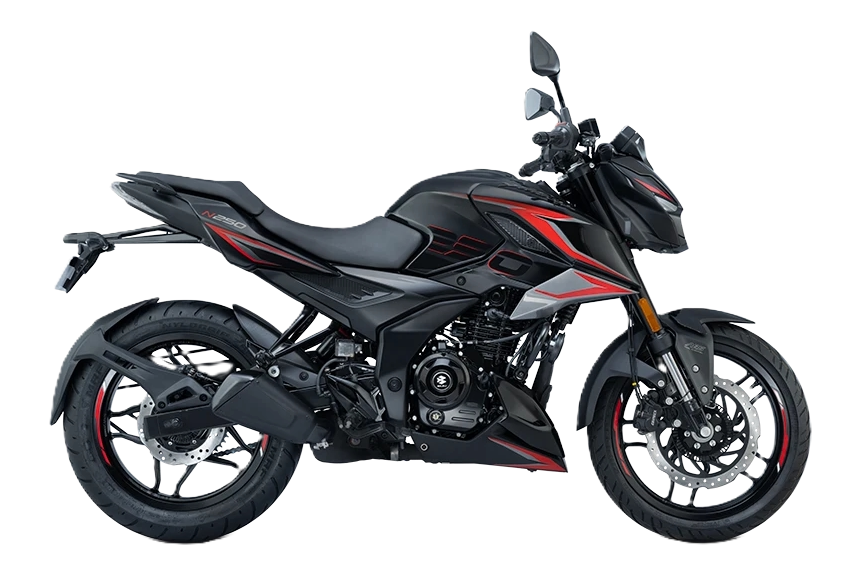
Bajaj Pulsar N250
- 249.07 cc Oil-Cooled, 2-valve
- 24.5 PS @ 8750 rpm
- 39 km/l (Owner Reported)
- 14-litre tank
- 1 variant available
- Dual-Ch ABS + Traction Control
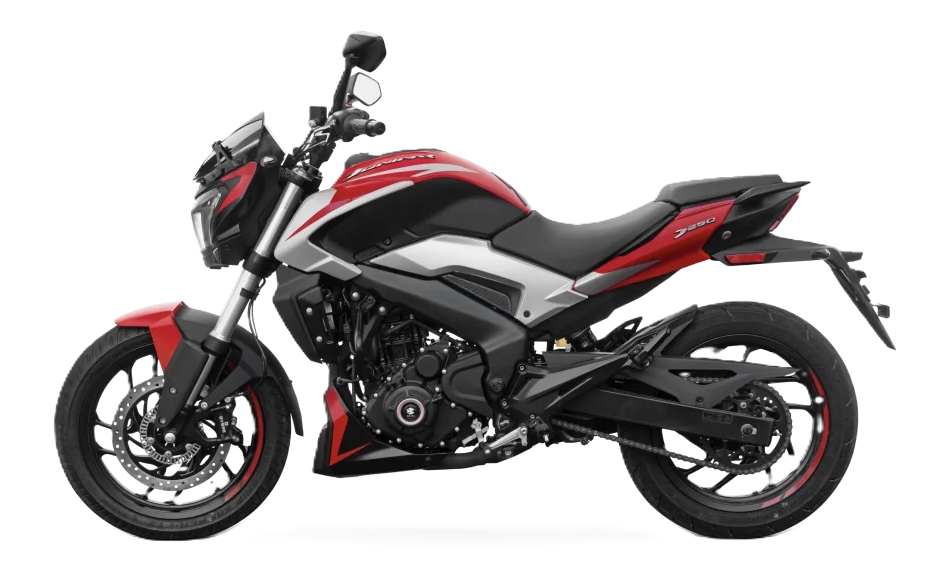
Bajaj Dominar 250
- 248.77 cc Liquid-Cooled, 4-valve
- 27 PS @ 8500 rpm
- 35 km/l (ARAI)
- 13-litre tank
- 1 variant available
- 4 Riding Modes: Road, Rain, Sport, Off-Road
Full Specification Comparison
Every number that matters — side by side
| Specification | Bajaj Pulsar N250 | Bajaj Dominar 250 |
|---|---|---|
| Engine & Performance | ||
| Displacement | 249.07 cc | 248.77 cc |
| Cooling System | Oil-Cooled | Liquid-Cooled |
| Max Power | 24.5 PS @ 8750 rpm | 27 PS @ 8500 rpm |
| Max Torque | 21.5 Nm @ 6500 rpm | 23.5 Nm @ 6500 rpm |
| Valves per Cylinder | 2 | 4 |
| Compression Ratio | 10.5 : 1 | 11.9 : 1 |
| Bore × Stroke | 72 × 61 mm | 72 × 61.1 mm |
| Emission Standard | BS6 Phase 2 | BS6 Phase 2B |
| Transmission | 5-Speed Manual | 6-Speed Manual |
| Clutch | Slipper Clutch | Assist & Slipper Clutch |
| Top Speed | ~132 km/h | ~132 km/h |
| Riding Modes | Road, Rain, Off-Road (3 modes) | Road, Rain, Sport, Off-Road (4 modes) |
| Traction Control | Yes | Yes |
| Spark Plugs per Cylinder | 2 | 2 |
| Fuel & Range | ||
| Mileage (Claimed) | 39 km/l (Owner Reported) | 35 km/l (ARAI) |
| Fuel Tank | 14 litres | 13 litres |
| Reserve Capacity | 2.8 litres | 2.6 litres |
| Riding Range | ~546 km | ~416 km |
| Brakes & Wheels | ||
| Braking System | Dual Channel ABS | Dual Channel ABS |
| Front Brake | Disc – 300 mm | Disc – 300 mm |
| Rear Brake | Disc – 230 mm | Disc – 230 mm |
| Tyre Type | Tubeless | Tubeless |
| Tyre Size (F / R) | 110/70-17 / 140/70-17 | 100/80-17 / 130/70-17 |
| Wheel Type | Alloy | Alloy |
| Suspension & Chassis | ||
| Front Suspension | 37 mm USD Fork | 37 mm USD Fork, 135 mm travel |
| Rear Suspension | Nitrox Monoshock | Multi-step Nitrox Monoshock, 110 mm stroke |
| Chassis | Tubular Frame | Beam Type Perimeter Frame |
| Rear Preload Adjuster | Yes | Yes |
| Dimensions & Weight | ||
| Kerb Weight | 164 kg | 180 kg |
| Seat Height | 795 mm | 800 mm |
| Ground Clearance | 165 mm | 157 mm |
| Wheelbase | 1351 mm | 1453 mm |
| Overall L × W × H | 1989 × 743 × 1050 mm | 2156 × 836 × 1112 mm |
| Features & Electronics | ||
| Instrument Console | Fully Digital LCD | LCD Display |
| Headlight | LED Projector | LED |
| DRLs | Yes | Yes |
| Turn Signals | LED | LED |
| Hazard Warning Lights | Yes | No |
| Riding Modes | Road / Rain / Off-Road | Road / Rain / Sport / Off-Road |
| Traction Control | Yes | Yes |
| Bluetooth Connectivity | Yes | Yes |
| Navigation | Yes (Turn-by-Turn) | Yes (Turn-by-Turn) |
| Call & SMS Alerts | Yes | Yes |
| USB Charging Port | Yes | Yes (Front) |
| Distance to Empty | Yes | No |
| Gear Indicator | Yes | Yes |
| Service Reminder | Yes | Yes |
| Keyless Ignition | No | No |
| Price & Warranty | ||
| Ex-Showroom Price | ₹1,34,758 | ₹1,78,273 |
| Number of Variants | 1 | 1 |
| Standard Warranty | 5 Years / 75,000 km | 5 Years / 75,000 km |
★ Green highlights indicate the stronger value in each row. Prices are ex-showroom India averages and may vary by city.
Variant-wise Price Comparison
Both bikes available in single variants — a clear head-to-head choice
Pulsar N250 Variants
Dominar 250 Variants
Pros & Cons
Honest strengths and weaknesses of each bike
Pros
- Significantly lower price — ₹43,515 cheaper
- Better fuel efficiency (~39 km/l vs 35 km/l ARAI)
- Larger 14-litre fuel tank for longer range (~546 km)
- Lighter at 164 kg — more agile and city-friendly
- Higher ground clearance (165 mm vs 157 mm)
- Wider front and rear tyres (110/70 and 140/70)
- LED projector headlight for superior illumination
- Hazard warning lights standard
- Distance to empty indicator on console
- Turn-by-turn navigation via Bluetooth
- Same 5-year / 75,000 km warranty
Cons
- Lower peak power (24.5 PS vs 27 PS)
- Lower torque (21.5 Nm vs 23.5 Nm)
- Oil-cooled 2-valve engine vs liquid-cooled 4-valve
- Only 5-speed gearbox vs 6-speed on Dominar
- Only 3 riding modes vs 4 (no Sport mode)
- Shorter wheelbase (1351 mm) — less highway stability
- Naked streetfighter style — no touring-oriented build
Pros
- Higher peak power — 27 PS @ 8500 rpm
- Higher torque — 23.5 Nm @ 6500 rpm
- Liquid-cooled 4-valve engine — more refined, cooler running
- 6-speed gearbox for relaxed high-speed cruising
- Four riding modes including Sport mode
- Longer 1453 mm wheelbase for superior highway stability
- Perimeter frame for touring-grade structural rigidity
- Touring-focused ergonomics and muscular road presence
- ARAI-certified mileage of 35 km/l
- Same 5-year / 75,000 km warranty
Cons
- Much higher price (₹1,78,273 vs ₹1,34,758)
- Lower real-world mileage (~30–32 km/l)
- Smaller 13-litre tank — less riding range (~416 km)
- Heavier at 180 kg — cumbersome in city traffic
- Lower ground clearance (157 mm vs 165 mm)
- No hazard warning lights
- No distance to empty indicator
- Narrower tyres (100/80 front, 130/70 rear)
Key Differences Explained
What really sets these two bikes apart
Engine Character
This is where these two Bajaj siblings diverge sharply. The Pulsar N250 uses a 249.07 cc oil-cooled 2-valve engine producing 24.5 PS — a street-tuned, punchy mid-range unit. The Dominar 250 runs a 248.77 cc liquid-cooled 4-valve engine making 27 PS and 23.5 Nm, shared with the Bajaj-KTM platform. The liquid cooling keeps temperatures in check on long highway runs, and the higher compression ratio (11.9:1 vs 10.5:1) gives it a more performance-oriented character — especially with its 6-speed gearbox and Sport riding mode.
Fuel Efficiency & Range
The Pulsar N250 leads significantly here. Its owner-reported mileage of ~39 km/l betters the Dominar 250's ARAI-certified 35 km/l (with real-world figures of 30–32 km/l). Combined with a larger 14-litre tank versus the Dominar's 13-litre unit, the N250 achieves a riding range of ~546 km compared to ~416 km for the Dominar — a gap of 130 km per fill. For daily commuters this is a meaningful advantage.
Braking & Safety
Both bikes are evenly matched on braking hardware — each runs a 300 mm front disc and 230 mm rear disc with dual-channel ABS and traction control as standard. The N250 has an edge with a wider front tyre (110/70 vs 100/80) for a slightly larger contact patch, and both feature dual spark plugs per cylinder. The N250 additionally includes hazard warning lights for better safety in emergency situations.
Riding Modes & Technology
The Dominar 250 offers four riding modes — Road, Rain, Sport, and Off-Road — versus the Pulsar N250's three (Road, Rain, Off-Road). The additional Sport mode on the Dominar unlocks sharper throttle response for spirited riding. Both bikes share Bluetooth, turn-by-turn navigation, call/SMS alerts, USB charging, and traction control. The N250 goes further with a distance to empty indicator and hazard warning lights.
Highway & Touring Suitability
The Dominar 250 is built for touring. Its 1453 mm wheelbase (102 mm longer than the N250's 1351 mm) delivers outstanding straight-line stability at speed. The perimeter frame, 6-speed gearbox, liquid-cooled engine, and upright touring-oriented ergonomics make long-distance rides comfortable and confident. The Pulsar N250's naked streetfighter stance is better suited to city riding and shorter trips.
Price, Value & Warranty
The Pulsar N250 at ₹1,34,758 is ₹43,515 cheaper than the Dominar 250 at ₹1,78,273. That is a 32% premium for the Dominar. Crucially, both bikes share the same outstanding 5-year / 75,000 km warranty, meaning long-term ownership costs are equally protected. For city riders and budget-conscious buyers, the N250's value is exceptional. For those who regularly tour or commute long highway distances, the Dominar's added capability justifies the premium.
Expert Verdict
Which one should you actually buy?
Buy the Pulsar N250 if…
- Budget is your top priority — saves ₹43,515
- You ride mostly in the city and want a lighter bike (164 kg)
- Better fuel efficiency and longer range (~546 km) matter
- You want LED projector headlight and hazard warning lights
- Distance to empty indicator is useful for your riding style
- You're upgrading from a 150–160cc bike for more punch
- You want a sporty naked streetfighter look and feel
- The excellent 5-year / 75,000 km warranty seals the deal
Buy the Dominar 250 if…
- You regularly tour on highways and cover long distances
- More power and torque (27 PS, 23.5 Nm) appeals to you
- A liquid-cooled 4-valve engine feels more premium and refined
- The 6-speed gearbox helps you cruise at relaxed highway rpm
- Four riding modes including Sport mode suit your style
- A longer wheelbase (1453 mm) for rock-solid stability matters
- You prefer the muscular tourer design over a naked streetfighter
- You're willing to pay ₹43,515 more for superior touring capability
Overall: Two brilliant Bajaj 250s — your use case decides the winner. The Pulsar N250 wins on value — ₹43,515 cheaper, better fuel efficiency, a larger tank with longer range, lighter weight, higher ground clearance, and the same excellent 5-year / 75,000 km warranty. It is the smarter buy for city riders, daily commuters, and budget-conscious buyers who still want traction control, riding modes, USD forks, and navigation. The Dominar 250 wins where it counts for tourers — stronger engine (27 PS, liquid-cooled, 4-valve), a 6-speed gearbox, four riding modes including Sport, a much longer wheelbase for highway stability, and a build purpose-designed for long-distance riding. If you ride mostly in the city, choose the N250. If you spend your weekends covering 300+ km stretches, choose the Dominar 250.
Frequently Asked Questions
Common questions answered by our experts
It depends on your use case. The Bajaj Pulsar N250 is better for city riders and budget-conscious buyers — it costs ₹43,515 less, delivers better fuel efficiency (~39 km/l), has a larger 14-litre tank, weighs only 164 kg, and offers LED projector headlight with hazard lights. The Bajaj Dominar 250 is better for touring riders who want stronger performance (27 PS, 23.5 Nm), a liquid-cooled 4-valve engine, 6-speed gearbox, four riding modes including Sport, and a much longer 1453 mm wheelbase for superior highway stability. Both share the same excellent 5-year / 75,000 km warranty.
The Bajaj Pulsar N250 is priced at ₹1,34,758 ex-showroom while the Bajaj Dominar 250 costs ₹1,78,273 — a difference of ₹43,515, making the Dominar approximately 32% more expensive. Both are available in a single variant. Prices are ex-showroom India averages and may vary by city.
The Bajaj Pulsar N250 has better real-world mileage at approximately 39 km/l (owner reported) versus the Bajaj Dominar 250's ARAI-certified 35 km/l — which drops to around 30–32 km/l in real-world conditions. The N250 also has a larger 14-litre tank versus 13 litres on the Dominar, giving it a range of ~546 km compared to ~416 km — a gap of 130 km per tank.
The Bajaj Dominar 250 makes significantly more power at 27 PS @ 8500 rpm versus the Bajaj Pulsar N250's 24.5 PS @ 8750 rpm — a difference of 2.5 PS. The Dominar also produces more torque at 23.5 Nm versus 21.5 Nm. Its liquid-cooled 4-valve engine, higher compression ratio (11.9:1 vs 10.5:1), and 6-speed gearbox give it a more powerful and refined character, particularly at sustained highway speeds.
Yes. The Bajaj Dominar 250 offers four riding modes — Road, Rain, Sport, and Off-Road. The Bajaj Pulsar N250 offers three ABS-integrated riding modes — Road, Rain, and Off-Road. The Dominar's additional Sport mode sharpens throttle response for performance-oriented riding and is not available on the N250. Both bikes also include traction control as standard.
Both the Bajaj Pulsar N250 and the Bajaj Dominar 250 offer identical warranty coverage of 5 years / 75,000 km — one of the best warranty packages in the 250cc segment. This is a clear tie, and both bikes give buyers the same long-term ownership assurance. For high-mileage commuters clocking 15,000–20,000 km per year, this warranty covers 4–5 years of riding without out-of-warranty risk.