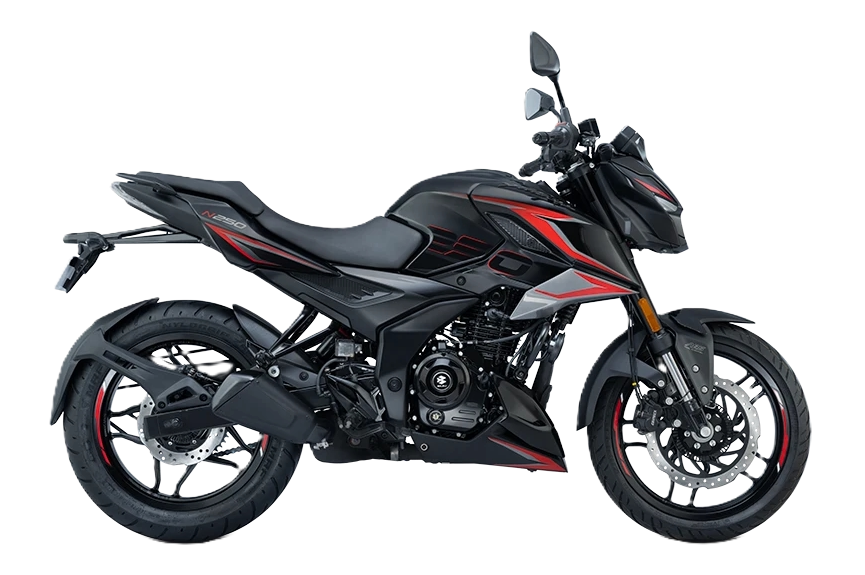
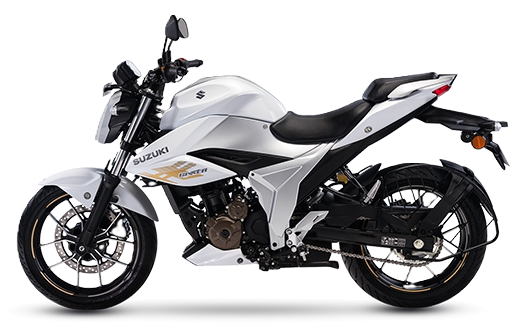
At a Glance
Key differences that define each motorcycle
Bajaj Pulsar N250
- 249.07 cc Oil-Cooled, 2-valve
- 24.5 PS @ 8750 rpm
- 39 km/l (Owner Reported)
- 14-litre tank
- 1 variant available
- Dual-channel ABS + Traction Control
Suzuki Gixxer 250
- 249 cc Oil-Cooled, 4-valve
- 26.5 PS @ 9300 rpm
- 38 km/l (ARAI)
- 12-litre tank
- 1 variant available
- 6-speed gearbox, refined engine
Full Specification Comparison
Every number that matters — side by side
| Specification | Bajaj Pulsar N250 | Suzuki Gixxer 250 |
|---|---|---|
| Engine & Performance | ||
| Displacement | 249.07 cc | 249 cc |
| Cooling System | Oil-Cooled | Oil-Cooled |
| Max Power | 24.5 PS @ 8750 rpm | 26.5 PS @ 9300 rpm |
| Max Torque | 21.5 Nm @ 6500 rpm | 22.2 Nm @ 7300 rpm |
| Valves per Cylinder | 2 | 4 |
| Compression Ratio | 10.5 : 1 | 10.7 : 1 |
| Bore × Stroke | 72 × 61 mm | 76 × 54.9 mm |
| Emission Standard | BS6 Phase 2 | BS6 |
| Transmission | 5-Speed Manual | 6-Speed Manual |
| Clutch | Slipper Clutch | Wet Multiplate |
| Top Speed | ~132 km/h | ~140 km/h |
| Riding Modes | Yes – Road, Rain, Off-Road | No |
| Traction Control | Yes | No |
| Fuel & Range | ||
| Mileage (Claimed) | 39 km/l (Owner Reported) | 38 km/l (ARAI) |
| Fuel Tank | 14 litres | 12 litres |
| Reserve Capacity | 2.8 litres | 2.4 litres |
| Riding Range | ~546 km | ~456 km |
| Brakes & Wheels | ||
| Braking System | Dual Channel ABS | Dual Channel ABS |
| Front Brake | Disc – 300 mm | Disc – 300 mm |
| Rear Brake | Disc – 230 mm | Disc – 220 mm |
| Tyre Type | Tubeless | Tubeless |
| Tyre Size (F / R) | 110/70-17 / 140/70-17 | 110/70 R17 / 150/60 R17 |
| Wheel Type | Alloy | Alloy (Cast) |
| Suspension & Chassis | ||
| Front Suspension | 37 mm USD Fork | Telescopic Fork |
| Rear Suspension | Nitrox Monoshock | Swing Arm |
| Chassis | Tubular Frame | Diamond Frame |
| Rear Preload Adjuster | Yes | Yes |
| Dimensions & Weight | ||
| Kerb Weight | 164 kg | 156 kg |
| Seat Height | 795 mm | 800 mm |
| Ground Clearance | 165 mm | 165 mm |
| Wheelbase | 1351 mm | 1340 mm |
| Overall L × W × H | 1989 × 743 × 1050 mm | 2010 × 805 × 1035 mm |
| Features & Electronics | ||
| Instrument Console | Fully Digital LCD | Fully Digital |
| Headlight | LED Projector | LED |
| DRLs | Yes | No |
| Turn Signals | LED | Halogen Bulb |
| Hazard Warning Lights | Yes | No |
| Riding Modes | Road / Rain / Off-Road | No |
| Traction Control | Yes | No |
| Bluetooth Connectivity | Yes | Yes |
| Navigation | Yes (Turn-by-Turn) | – |
| Call & SMS Alerts | Yes | Yes |
| USB Charging Port | Yes | No |
| Distance to Empty | Yes | No |
| Gear Indicator | Yes | Yes |
| Service Reminder | Yes | Yes |
| Spark Plugs per Cylinder | 2 | 1 |
| Keyless Ignition | No | No |
| Price & Warranty | ||
| Ex-Showroom Price | ₹1,34,758 | ₹1,83,994 |
| Number of Variants | 1 | 1 |
| Standard Warranty | 5 Years / 75,000 km | 2 Years / 30,000 km |
★ Green highlights indicate the stronger value in each row. Prices are ex-showroom India averages and may vary by city.
Variant-wise Price Comparison
Both bikes available in single variants — straightforward buying decision
Pulsar N250 Variants
Gixxer 250 Variants
Pros & Cons
Honest strengths and weaknesses of each bike
Pros
- Significantly lower price — ₹49,236 cheaper
- Traction control as standard — class-leading in price bracket
- Three riding modes: Road, Rain and Off-Road
- USD front forks for improved handling stability
- Larger 14-litre fuel tank for longer range (~546 km)
- Bluetooth with turn-by-turn navigation
- USB charging port standard
- Distance to Empty indicator
- LED projector headlight with DRLs and LED turn signals
- Hazard warning lights standard
- Dual spark plugs per cylinder
- Slipper clutch for smoother downshifts
- Outstanding 5-year / 75,000 km warranty
Cons
- Lower peak power (24.5 PS vs 26.5 PS)
- Lower peak torque (21.5 Nm vs 22.2 Nm)
- Only 5-speed gearbox vs 6-speed on Gixxer
- 2-valve engine less refined at high rpm
- Heavier at 164 kg vs 156 kg
- Lower top speed (~132 km/h vs ~140 km/h)
- Mileage figure is owner-reported, not ARAI certified
Pros
- Higher peak power – 26.5 PS @ 9300 rpm
- Higher peak torque – 22.2 Nm @ 7300 rpm
- 4-valve engine with smoother, more refined character
- 6-speed gearbox for relaxed highway cruising
- ARAI-certified mileage of 38 km/l
- Lighter at 156 kg — more agile feel
- Higher top speed (~140 km/h)
- Wider 150/60 rear tyre for road grip
- Suzuki brand reliability and service quality
Cons
- Much higher price (₹1,83,994 vs ₹1,34,758)
- No riding modes of any kind
- No traction control
- Smaller 12-litre tank — less riding range (~456 km)
- Short warranty — only 2 years / 30,000 km
- No USD front forks — conventional telescopic only
- No USB charging port
- No DRLs, halogen turn indicators
- No hazard warning lights
- No turn-by-turn navigation
- No distance to empty indicator
Key Differences Explained
What really sets these two bikes apart
Engine Character
The Gixxer 250's 249 cc oil-cooled 4-valve engine produces 26.5 PS and 22.2 Nm — a 2 PS and 0.7 Nm advantage over the N250's 249.07 cc 2-valve motor. The Gixxer also gains a 6-speed gearbox versus the N250's 5-speed, making it more relaxed at highway speeds. However, the Pulsar N250 compensates with a slipper clutch, dual spark plugs per cylinder, and a broader power delivery thanks to its large-bore, long-stroke tuning.
Fuel Efficiency & Range
Both bikes are closely matched on mileage — the Gixxer 250 claims 38 km/l (ARAI certified) while the N250 returns around 39 km/l in owner-reported real-world conditions. Where the N250 pulls decisively ahead is its 14-litre fuel tank versus the Gixxer's 12-litre unit, delivering a range of ~546 km versus ~456 km. For riders who frequently tour or cover long daily distances, the N250 extends its advantage by over 90 km per fill.
Braking & Safety
Both bikes come with dual-channel ABS and a 300 mm front disc as standard. However, the Pulsar N250 goes further with a larger 230 mm rear disc (vs 220 mm on the Gixxer) and critically adds traction control — a feature typically found on bikes costing far more. The N250's ABS modes also integrate with its Rain and Off-Road riding modes for a more comprehensive safety package.
Suspension & Handling
The Pulsar N250 holds a meaningful hardware advantage with its 37 mm USD front forks — upside-down forks typically reserved for more expensive motorcycles — paired with a Nitrox monoshock. The Gixxer 250 uses a conventional telescopic fork setup. At corners and on undulating roads, the N250's stiffer, more precise front end provides better feedback, though the Gixxer's lighter 156 kg kerb weight keeps it more nimble overall.
Features & Technology
The Pulsar N250 comprehensively leads on features. It offers traction control, three riding modes, turn-by-turn navigation, USB charging, distance to empty, LED projector headlight, DRLs, LED turn indicators, hazard warning lights, and dual spark plugs per cylinder. The Gixxer 250 offers Bluetooth and call alerts, but misses out on riding modes, traction control, USB port, DRLs, navigation, and hazard lights.
Price, Value & Warranty
The Pulsar N250 at ₹1,34,758 costs ₹49,236 less than the Gixxer 250 at ₹1,83,994 — a 37% premium for the Suzuki. Despite the price gap, the Gixxer does not offer traction control, riding modes, USD forks, or a larger tank. The N250 also backs this up with a vastly superior warranty: 5 years / 75,000 km versus just 2 years / 30,000 km on the Gixxer. On a pure value-per-rupee basis, the N250 is the stronger proposition.
Expert Verdict
Which one should you actually buy?
Buy the Pulsar N250 if…
- Value for money is your top priority — saves ₹49,236
- Traction control and riding modes matter to you
- You want USD forks at this price point
- A longer tank range (~546 km) suits your riding pattern
- Turn-by-turn navigation and USB charging are useful to you
- The 5-year / 75,000 km warranty gives you long-term peace of mind
- You ride through diverse conditions — roads, rain and off-road
- You want the most feature-loaded 250cc bike under ₹1.5 lakh
Buy the Gixxer 250 if…
- Outright performance matters — 26.5 PS and 22.2 Nm
- You want the smoother, more refined 4-valve engine feel
- A 6-speed gearbox for relaxed highway cruising appeals to you
- ARAI-certified mileage figures give you confidence
- You prefer a lighter, more agile bike (156 kg vs 164 kg)
- Suzuki's build quality and service reputation matter
- You want the wider 150/60 rear tyre for road stability
Overall Winner for Most Riders: Bajaj Pulsar N250. At ₹49,236 less than the Gixxer 250, the Pulsar N250 delivers an extraordinary feature set — traction control, three riding modes, USD front forks, turn-by-turn navigation, USB charging, LED projector headlight with DRLs, a larger 14-litre tank, and an outstanding 5-year / 75,000 km warranty. The Suzuki Gixxer 250 counters with more outright power (26.5 PS), a 4-valve engine with superior refinement, and a 6-speed gearbox — advantages that matter most to performance-focused riders with a higher budget. For the vast majority of buyers, the Pulsar N250's combination of tech, safety hardware, range, and value is simply unmatched at its price point.
Frequently Asked Questions
Common questions answered by our experts
The Bajaj Pulsar N250 is better for most buyers who prioritise value for money (₹1,34,758 vs ₹1,83,994), traction control, riding modes (Road, Rain, Off-Road), a larger 14-litre tank, USD forks, navigation, USB charging, and a superior 5-year / 75,000 km warranty. The Suzuki Gixxer 250 is the better choice for riders who want stronger outright performance (26.5 PS), a more refined 4-valve engine, a 6-speed gearbox, and ARAI-certified mileage — and are willing to pay a ₹49,236 premium for it.
The Bajaj Pulsar N250 is priced at ₹1,34,758 ex-showroom while the Suzuki Gixxer 250 costs ₹1,83,994 — a difference of ₹49,236, making the Gixxer approximately 37% more expensive. Both are single-variant bikes, making the comparison straightforward. Prices are ex-showroom India averages and may vary by city.
Both bikes return very similar mileage — the Suzuki Gixxer 250 claims 38 km/l (ARAI certified) while the Bajaj Pulsar N250 returns approximately 39 km/l in owner-reported conditions. However, the Pulsar N250's larger 14-litre tank (vs 12 litres on the Gixxer) gives it a significantly longer riding range of ~546 km versus ~456 km — a difference of 90 km per tank.
The Suzuki Gixxer 250 makes more power at 26.5 PS @ 9,300 rpm versus the Bajaj Pulsar N250's 24.5 PS @ 8,750 rpm — a difference of 2 PS. The Gixxer also produces more torque at 22.2 Nm versus 21.5 Nm. The Gixxer's 4-valve engine and 6-speed gearbox give it a more performance-oriented character, especially at higher rpm.
Yes, the Bajaj Pulsar N250 offers three ABS-integrated riding modes — Road, Rain, and Off-Road — as standard across its single variant. These modes adjust the ABS intervention threshold to suit different riding conditions. The Suzuki Gixxer 250 does not offer any riding modes. The N250 also includes traction control, which the Gixxer lacks entirely.
The Bajaj Pulsar N250 offers a vastly superior warranty at 5 years / 75,000 km compared to the Suzuki Gixxer 250's 2 years / 30,000 km — that's 3 extra years and 45,000 more kilometres of coverage. For daily commuters clocking 15,000–20,000 km per year, the Pulsar N250's warranty comfortably covers 4–5 years of riding without out-of-warranty risk, making it a far safer long-term ownership proposition.