At a Glance
Key differences that define each motorcycle
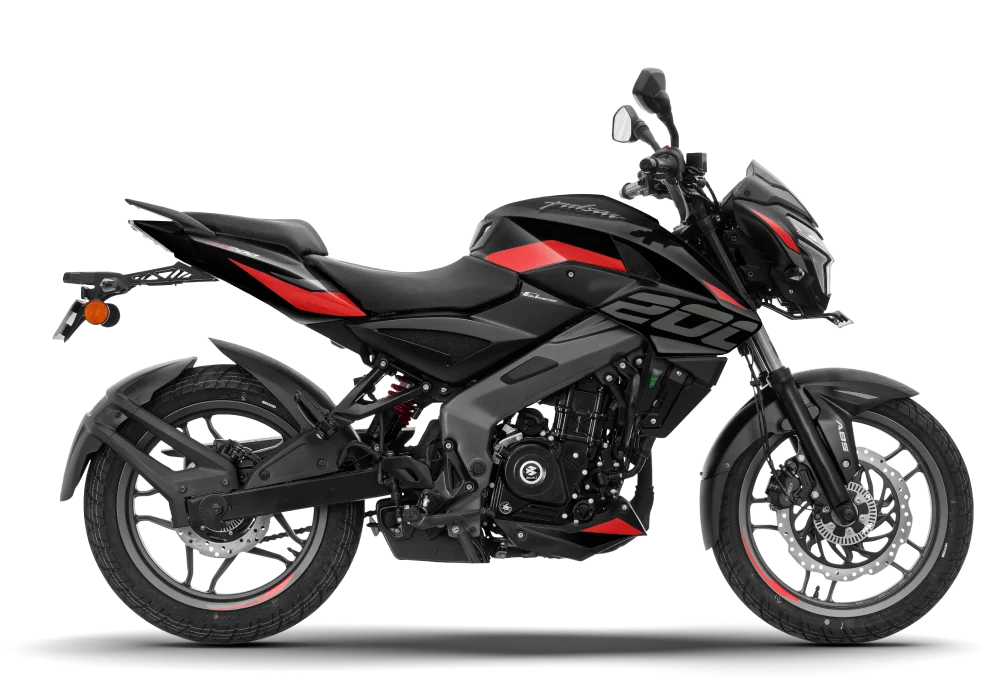
Bajaj Pulsar NS200
- 199.5 cc Liquid-Cooled
- 24.5 PS @ 9750 rpm
- 40.36 km/l (Claimed)
- 12-litre tank
- 2 variants available
- Dual-channel ABS (top variant)
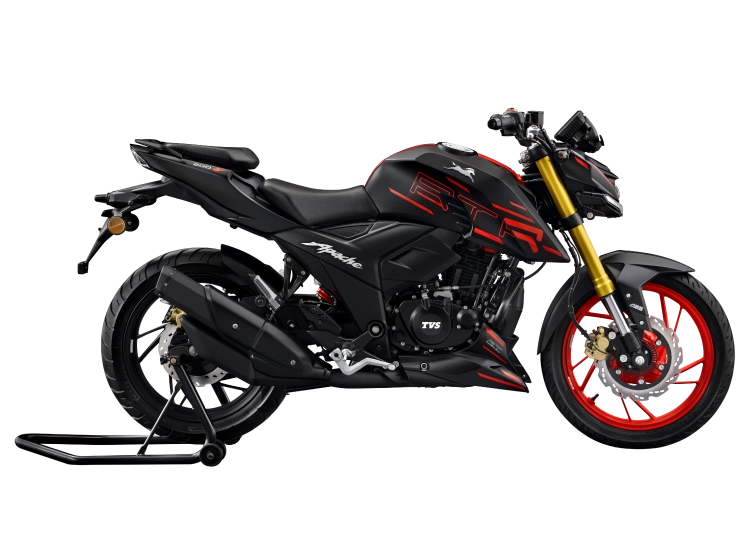
TVS Apache RTR 200 4V
- 197.75 cc Oil-Cooled
- 20.82 PS @ 9000 rpm
- 41.9 km/l (ARAI)
- 12-litre tank
- 3 variants available
- Dual-channel ABS (all variants)
Full Specification Comparison
Every number that matters — side by side
| Specification | Pulsar NS200 | Apache RTR 200 4V |
|---|---|---|
| Engine & Performance | ||
| Displacement | 199.5 cc | 197.75 cc |
| Cooling System | Liquid Cooled | Oil Cooled |
| Max Power | 24.5 PS @ 9750 rpm | 20.82 PS @ 9000 rpm |
| Max Torque | 18.74 Nm @ 8000 rpm | 17.25 Nm @ 7250 rpm |
| Valves per Cylinder | 4 | 4 |
| Compression Ratio | 11 : 1 | 9.7 : 1 |
| Bore × Stroke | 72 × 49 mm | 66 × 57.8 mm |
| Spark Plugs | Triple Spark | Single |
| Emission Standard | BS6 | BS6 OBD-2B |
| Transmission | 6-Speed Manual | 5-Speed Manual |
| Clutch | Wet Multi Plate | Assist & Slipper Clutch |
| Top Speed | ~130 km/h | ~127 km/h |
| Fuel & Range | ||
| Mileage (ARAI / Claimed) | 40.36 km/l | 41.9 km/l |
| Mileage (Real-world) | 34–38 km/l | ~38–42 km/l |
| Fuel Tank | 12 litres | 12 litres |
| Reserve Capacity | 2 litres | 2.5 litres |
| Riding Range | ~484 km | ~502 km |
| Brakes & Wheels | ||
| Braking System | Single / Dual Channel ABS | Dual Channel ABS (all variants) |
| Front Brake | Disc – 300 mm | Disc – 270 mm |
| Rear Brake | Disc – 230 mm | Disc – 240 mm |
| Tyre Type | Tubeless | Tubeless |
| Tyre Size (F / R) | 100/80-17 / 130/70-17 | 90/90-17 / 130/70-17 |
| Wheel Type | Alloy | Alloy |
| Suspension & Chassis | ||
| Front Suspension | Telescopic / USD Fork (top variant) | Telescopic / USD Fork (top 2 variants) |
| Rear Suspension | Nitrox Mono Shock | Mono Shock with Preload Adjust |
| Chassis | Perimeter Frame | Double Cradle Split Synchro Stiff |
| Rear Preload Adjuster | Yes | Yes |
| Dimensions & Weight | ||
| Kerb Weight | 158 kg | 152 kg |
| Seat Height | 805 mm | 800 mm |
| Ground Clearance | 167 mm | 180 mm |
| Wheelbase | 1363 mm | 1353 mm |
| Overall L × W × H | 2017 × 804 × 1075 mm | 2050 × 790 × 1050 mm |
| Features & Electronics | ||
| Instrument Console | Fully Digital LCD | Digital LCD / TFT (top variant) |
| Headlight | LED | LED Projector |
| DRLs | Yes | Yes |
| Turn Signals | LED | LED |
| Hazard Warning Lights | Yes | Yes |
| Bluetooth Connectivity | Yes | Yes |
| USB Charging Port | Yes | Yes |
| Gear Indicator | Yes | Yes |
| Traction Control | No | Yes (TFT variant) |
| Riding Modes | Road, Rain, Offroad | Sport, Urban, Rain |
| Voice Assist | No | Yes |
| Keyless Ignition | No | No |
| Price & Warranty | ||
| Starting Price (ex-showroom) | ₹1,32,962 | ₹1,38,407 |
| Top Variant Price | ₹1,43,146 | ₹1,47,582 |
| Number of Variants | 2 | 3 |
| Standard Warranty | 5 Years / 75,000 km | 5 Years / 60,000 km |
★ Green highlights indicate the stronger value in each row. Prices are ex-showroom India averages and may vary by city.
Variant-wise Price Comparison
All variants laid out — find the right one for your budget
Pulsar NS200 Variants
Apache RTR 200 4V Variants
Pros & Cons
Honest strengths and weaknesses of each bike
Pros
- Highest peak power in segment — 24.5 PS
- Strongest torque output — 18.74 Nm
- Liquid-cooled engine for consistent performance
- 6-speed gearbox for better highway cruising
- Triple spark DTS-i technology
- Lower starting price (₹1,32,962)
- Superior 5-year / 75,000 km warranty
- Larger 300 mm front disc brake
- Riding modes (Road, Rain, Offroad)
Cons
- Single-channel ABS on base variant
- No slipper clutch — heavier clutch operation
- Lower ARAI mileage (40.36 km/l)
- Heavier at 158 kg vs 152 kg
- Lower ground clearance (167 mm vs 180 mm)
- No traction control on any variant
- Only 2 variants — limited choice
Pros
- Dual-channel ABS across all 3 variants
- Assist & slipper clutch for smoother riding
- Three riding modes — Sport, Urban, Rain
- Traction control available (TFT variant)
- Superior ground clearance — 180 mm
- Lighter at 152 kg for more agile handling
- Better ARAI mileage (41.9 km/l)
- LED projector headlamp
- TFT display option for a premium instrument cluster
- 3 variants for greater buyer flexibility
- Voice assist feature
Cons
- Lower peak power (20.82 PS vs 24.5 PS)
- Oil-cooled engine less efficient at sustained high loads
- 5-speed gearbox only
- Higher starting price (₹1,38,407)
- Shorter warranty coverage (60,000 km vs 75,000 km)
- Smaller 270 mm front disc
- Styling considered dated by some riders
Key Differences Explained
What really sets these two bikes apart
Engine Character
The NS200 uses a 199.5 cc liquid-cooled, triple-spark engine producing a class-leading 24.5 PS. The Apache RTR 200 4V uses a 197.75 cc oil-cooled engine producing 20.82 PS, tuned for a broader, more accessible powerband with an assist & slipper clutch for easier riding.
Fuel Efficiency & Range
The Apache RTR 200 4V edges ahead with an ARAI-certified 41.9 km/l versus the NS200's claimed 40.36 km/l. Both share the same 12-litre tank, giving the Apache a slightly longer practical range of ~502 km against the NS200's ~484 km.
Braking & Safety
The Apache RTR 200 4V offers dual-channel ABS as standard across all three of its variants. The NS200 restricts dual-channel ABS to only its top variant — the base model gets single-channel ABS. The NS200 does have a larger 300 mm front disc versus the Apache's 270 mm.
Warranty & Ownership
Both bikes offer an impressive 5-year warranty, but the NS200 pulls ahead with a 75,000 km limit versus the Apache's 60,000 km. The NS200's warranty coverage is more suitable for high-mileage daily riders.
Price & Value
The NS200 starts at ₹1,32,962 — about ₹5,445 less than the Apache's ₹1,38,407 base price. The Apache, however, gives more variant options (3 vs 2) and includes dual-channel ABS on every variant, making its overall value proposition competitive.
Ride & Handling
The Apache RTR 200 4V's race-derived double cradle stiff frame, slipper clutch, 180 mm ground clearance and lighter 152 kg kerb weight give it a sharper, more composed feel through corners. The NS200's perimeter frame and longer wheelbase (1363 mm) offer excellent stability at high speed.
Expert Verdict
Which one should you actually buy?
Buy the Pulsar NS200 if…
- You want maximum power — 24.5 PS is class-leading
- A 6-speed gearbox matters for highway riding
- You want the lowest entry price in the 200cc segment
- Highest km warranty coverage (75,000 km) is important
- You prefer a liquid-cooled engine for consistent performance
- Riding modes including Offroad appeal to you
Buy the Apache RTR 200 4V if…
- You want dual-channel ABS without paying a premium
- Riding modes and traction control matter to you
- A slipper clutch for easier city and track riding is preferred
- You want better ground clearance for Indian roads (180 mm)
- A lighter, more agile bike is your priority
- You want a TFT display and advanced SmartXonnect features
- Better real-world fuel efficiency is important
Overall Winner: It's a Tie — Choose Based on Priority. The Bajaj Pulsar NS200 wins on raw performance with its 24.5 PS engine, 6-speed gearbox, lower starting price and superior km warranty. The TVS Apache RTR 200 4V wins on all-round sophistication — dual-channel ABS across every variant, a slipper clutch, traction control, better ground clearance and improved fuel efficiency. Performance-first buyers should choose the NS200; technology and safety-first buyers will be better served by the Apache RTR 200 4V.
Frequently Asked Questions
Common questions answered by our experts
Both are strong contenders. The Bajaj Pulsar NS200 is better if you want maximum power (24.5 PS), a 6-speed gearbox and a lower starting price. The TVS Apache RTR 200 4V is better if you want dual-channel ABS on all variants, a slipper clutch, riding modes, traction control (TFT variant), higher ground clearance and slightly better fuel efficiency. Choose based on whether performance or advanced electronics matter more to you.
The Bajaj Pulsar NS200 starts at ₹1,32,962 while the TVS Apache RTR 200 4V starts at ₹1,38,407 ex-showroom. The Apache is approximately ₹5,445 more expensive at the base variant level. At the top variant level, the NS200 Dual Channel USD is ₹1,43,146 while the Apache TFT Cluster is ₹1,47,582 — a difference of ₹4,436. Both prices are for India and may vary by city.
The TVS Apache RTR 200 4V has marginally better mileage at 41.9 km/l (ARAI certified) compared to the Bajaj Pulsar NS200's claimed 40.36 km/l. In real-world riding, the Apache typically returns slightly better fuel efficiency than the NS200 due to its lower-revving engine character.
The Bajaj Pulsar NS200 makes significantly more power at 24.5 PS @ 9750 rpm and 18.74 Nm torque compared to the TVS Apache RTR 200 4V's 20.82 PS @ 9000 rpm and 17.25 Nm. The NS200's liquid-cooled engine delivers stronger outright acceleration and a higher top speed.
Both bikes offer a 5-year standard warranty, but the Bajaj Pulsar NS200 provides better coverage with a 75,000 km limit compared to the TVS Apache RTR 200 4V's 60,000 km. This makes the NS200 a better long-term proposition for high-mileage daily riders.
The TVS Apache RTR 200 4V comes with dual-channel ABS as standard on all three of its variants. The Bajaj Pulsar NS200 only offers dual-channel ABS on its top variant (₹1,43,146) — the base Single Channel ABS variant gets single-channel ABS. If dual-channel ABS at a lower price point matters to you, the Apache is the better choice.