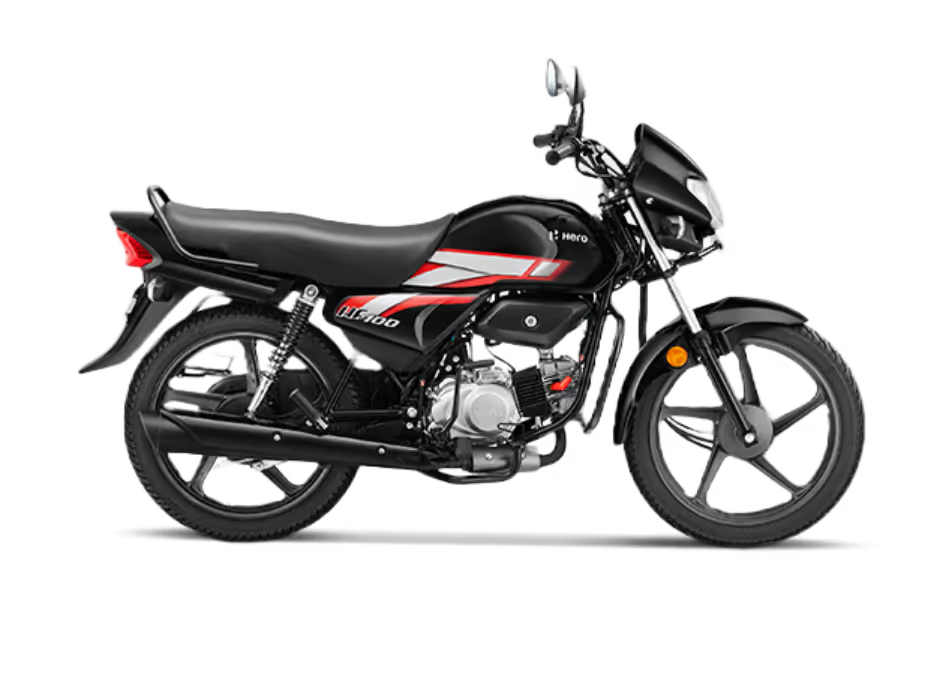
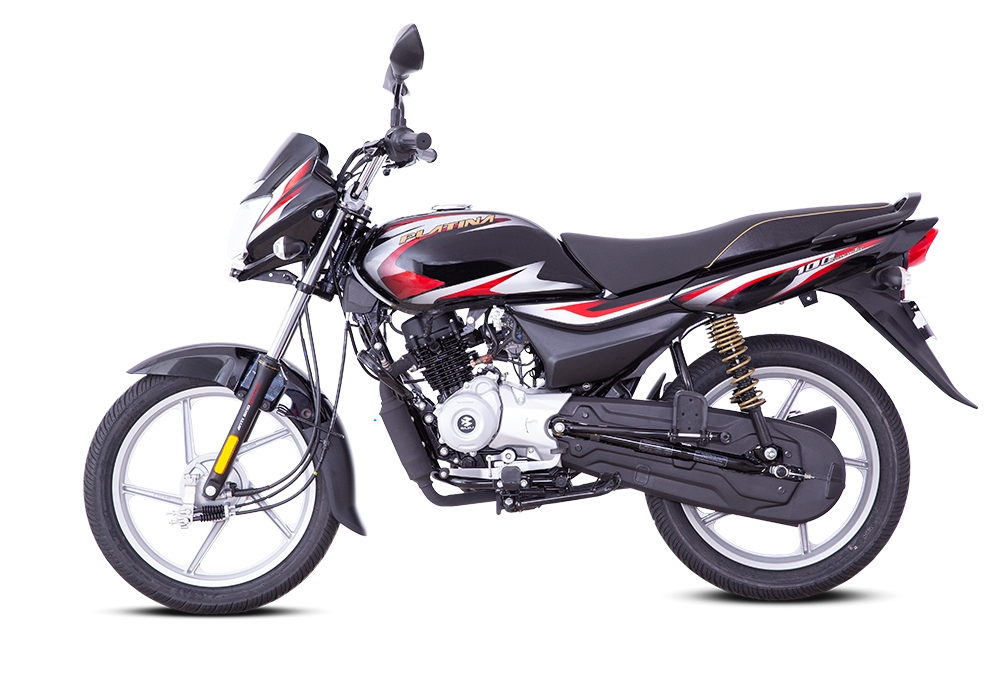
At a Glance
Key differences that define each motorcycle
Hero HF 100
- 97.2 cc Air-Cooled, 2-valve
- 8.02 PS @ 8000 rpm
- 70 kmpl (ARAI Certified)
- 9.1-litre tank
- 1 variant available
- Lowest price at ₹59,839
Bajaj Platina 100
- 99.59 cc Air-Cooled, 2-valve
- 8.2 PS @ 7500 rpm
- 70–75 kmpl (Owner Reported)
- 11-litre tank
- 1 variant available
- Electric start + 200 mm ground clearance
Full Specification Comparison
Every number that matters — side by side
| Specification | Hero HF 100 | Bajaj Platina 100 |
|---|---|---|
| Engine & Performance | ||
| Displacement | 97.2 cc | 99.59 cc |
| Cooling System | Air-Cooled | Air-Cooled |
| Max Power | 8.02 PS @ 8000 rpm | 8.2 PS @ 7500 rpm |
| Max Torque | 8.05 Nm @ 6000 rpm | 8.3 Nm @ 5500 rpm |
| Valves per Cylinder | 2 | 2 |
| Compression Ratio | 9.9 : 1 | 9.5 : 1 |
| Bore × Stroke | 50.0 × 49.5 mm | 47 × 57.4 mm |
| Emission Standard | BS6 Phase 2 (OBD2B) | BS6 Phase 2 |
| Transmission | 4-Speed Manual | 4-Speed Manual |
| Top Speed | 85 km/h | 90 km/h |
| Start Type | Kick Start only | Electric Start |
| Riding Modes | No | No |
| Fuel & Range | ||
| Mileage (Certified / Reported) | 70 kmpl (ARAI Certified) | 70–75 kmpl (Owner Reported) |
| Fuel Tank | 9.1 litres | 11 litres |
| Reserve Capacity | 1 litre | 2 litres |
| Riding Range (est.) | ~550–620 km | ~770–825 km |
| Brakes & Wheels | ||
| Braking System | CBS (Integrated Braking System) | CBS (Combined Braking System) |
| Front Brake | Drum – 130 mm | Drum – 130 mm |
| Rear Brake | Drum – 130 mm | Drum – 110 mm |
| Tyre Type | Tubeless | Tube Type |
| Tyre Size (F / R) | 80/100-18 | 2.75×17 / 3.00×17 |
| Wheel Size (F & R) | 18-inch | 17-inch |
| Wheel Type | Cast Alloy | Alloy |
| Suspension & Chassis | ||
| Front Suspension | Telescopic Hydraulic | 135 mm Hydraulic Telescopic |
| Rear Suspension | 2-Step Adjustable Hydraulic | 110 mm Spring-in-Spring |
| Rear Preload Adjuster | Yes | No |
| Chassis Type | Tubular Double Cradle | Tubular Single Down Tube with Lower Cradle |
| Dimensions & Weight | ||
| Kerb Weight | 110 kg | 117 kg |
| Seat Height | 805 mm | 807 mm |
| Ground Clearance | 165 mm | 200 mm |
| Wheelbase | 1235 mm | 1255 mm |
| Overall L × W × H | 1965 × 720 × 1045 mm | 2003 × 704 × 1069 mm |
| Features & Electronics | ||
| Instrument Console | Analogue | Analogue |
| Headlight Type | Halogen | Halogen |
| DRLs | No | LED DRLs |
| Brake / Tail Light | Bulb | Bulb |
| Turn Signals | Bulb | Bulb |
| Hazard Warning Lights | No | No |
| Bluetooth / Mobile Connectivity | No | No |
| USB Charging Port | No | No |
| Low Fuel Indicator | Yes | Yes |
| Side Stand Engine Cut-off | Yes | No |
| Kill Switch | Yes | No |
| Idle Stop-Start | No | No |
| Price & Warranty | ||
| Ex-Showroom Price | ₹59,839 | ₹66,593 |
| Number of Variants | 1 | 1 |
| Standard Warranty | 5 Years / 70,000 km | 5 Years / 75,000 km |
★ Green highlights indicate the stronger value in each row. Prices are ex-showroom India averages and may vary by city.
Variant-wise Price Comparison
All variants laid out — find the right one for your budget
Hero HF 100 Variants
Bajaj Platina 100 Variants
Pros & Cons
Honest strengths and weaknesses of each bike
Pros
- ₹6,754 cheaper than the Platina 100
- ARAI-certified 70 kmpl mileage — certified assurance
- Lightest in class at just 110 kg
- Tubeless tyres on 18-inch wheels for better puncture safety
- 2-step adjustable rear suspension for load tuning
- Side stand engine cut-off for safety
- Kill switch standard
- Widest Hero service network across India
- 5-year / 70,000 km warranty
- Ultra-low purchase and running costs
Cons
- No electric start — kick start only
- Smaller 9.1-litre tank and shorter riding range
- Lower ground clearance (165 mm vs 200 mm)
- Less power and torque
- No LED DRLs
- Lower top speed (85 km/h)
- Analogue instrument console only
- No digital features whatsoever
Pros
- Electric start for everyday convenience
- Larger 11-litre tank — much longer riding range (~800 km)
- Larger 2-litre reserve capacity
- Superior ground clearance at 200 mm
- More power (8.2 PS) and torque (8.3 Nm)
- Higher top speed (90 km/h vs 85 km/h)
- LED DRLs for better daytime visibility
- Spring-in-spring comfort-tuned rear suspension
- Superior 5-year / 75,000 km warranty
- Larger 99.59 cc displacement
Cons
- ₹6,754 more expensive than the HF 100
- No official ARAI mileage certification
- Heavier at 117 kg vs 110 kg
- Tube-type tyres (not tubeless)
- No adjustable rear suspension
- No side stand engine cut-off
- No kill switch
- Narrower Bajaj service network vs Hero
Key Differences Explained
What really sets these two bikes apart
Engine & Performance
The Platina 100's 99.59 cc engine produces 8.2 PS and 8.3 Nm — slightly more than the HF 100's 97.2 cc unit at 8.02 PS and 8.05 Nm. Both are tuned for smooth low-end commuter performance. The key real-world difference is the top speed advantage (90 km/h vs 85 km/h) and the Platina 100's electric start, which makes every cold-start and traffic-stop restart effortless. The HF 100's kick-start-only setup is a meaningful inconvenience in daily urban use.
Fuel Efficiency & Range
The HF 100 holds an ARAI-certified 70 kmpl advantage — giving certified peace of mind. The Platina 100 has no ARAI figure but owners report 70–75 kmpl, which can be comparable or better in practice. However, the Platina 100's decisive edge is its 11-litre tank versus the HF 100's 9.1 litres. This translates to an estimated range of ~770–825 km versus ~550–620 km — a difference of over 200 km per fill. For rural riders and long-distance commuters, this gap is very significant.
Ground Clearance & Rideability
The Platina 100 leads with a significant 200 mm ground clearance versus the HF 100's 165 mm — a 35 mm advantage that meaningfully reduces undercarriage scraping on speed breakers, broken patches, and rural roads. The Platina 100 also uses a longer wheelbase (1255 mm vs 1235 mm) for more stable straight-line riding. However, the HF 100 counters with 18-inch wheels and tubeless tyres, which offer better flat protection compared to the Platina's 17-inch tube-type setup.
Safety & Features
Both bikes are deliberately basic on features — no Bluetooth, USB, or digital console. The Platina 100 adds LED DRLs for better daytime visibility. The HF 100 counters with a side stand engine cut-off and a kill switch — safety essentials absent on the Platina 100. Both use CBS braking, halogen headlamps, and bulb turn signals. For feature-to-feature comparison, neither clearly dominates; both make different safety trade-offs for the price.
Warranty & Ownership
The Platina 100 holds an edge in warranty coverage: 5 years / 75,000 km versus the HF 100's 5 years / 70,000 km. The extra 5,000 km may seem minor, but for a commuter clocking 12,000–15,000 km per year, it adds up to meaningful additional protection. Hero's nationwide service network, however, is arguably the most extensive in India, which gives the HF 100 a strong ownership convenience advantage — especially in smaller towns and rural areas.
Price & Value
The HF 100 is ₹6,754 cheaper (₹59,839 vs ₹66,593) — a meaningful 10% price difference at this segment level. For buyers on the tightest possible budget, the HF 100 is the entry point. However, the Platina 100's ₹6,754 premium buys electric start, a 1.9-litre larger tank, significantly more range, 35 mm more ground clearance, LED DRLs, more power, and a longer warranty. For most buyers, the Platina 100 offers more tangible value per rupee spent.
Expert Verdict
Which one should you actually buy?
Buy the Hero HF 100 if…
- Absolute lowest purchase price (₹59,839) is the top priority
- You are comfortable with kick start for daily use
- Tubeless tyres for puncture safety matter to you
- You need the widest possible service network across India
- A lighter motorcycle (110 kg) is important for ease of handling
- You ride short daily distances (under 40 km) with frequent refuelling access
- ARAI-certified mileage assurance is a buying criterion
Buy the Bajaj Platina 100 if…
- Electric start convenience matters for daily use
- You ride long distances and want maximum range per fill (~800 km)
- High ground clearance (200 mm) suits your road conditions
- More power and higher top speed are useful for your commute
- LED DRLs for daytime visibility are a priority
- A superior 5-year / 75,000 km warranty adds peace of mind
- The ₹6,754 premium over the HF 100 is within your budget
Overall Winner for Most Riders: Bajaj Platina 100. For ₹6,754 more, the Platina 100 delivers a package that is meaningfully better for practical daily commuting: electric start, a significantly larger 11-litre fuel tank for over 200 km more range per fill, superior 200 mm ground clearance for Indian roads, more power, LED DRLs, and a longer 75,000 km warranty. The Hero HF 100 is the right choice only if the absolute lowest purchase price is the deciding factor and you are comfortable with kick start. For everyone else, the Platina 100 is the smarter long-term investment.
Frequently Asked Questions
Common questions answered by our experts
The Bajaj Platina 100 is the better choice for most buyers — it offers electric start, a much larger 11-litre tank for over 200 km more range, superior 200 mm ground clearance, more power, LED DRLs, and a longer 75,000 km warranty for ₹6,754 more. The Hero HF 100 is better only if the absolute lowest purchase price (₹59,839) is your primary requirement and you are comfortable with kick start.
The Hero HF 100 is priced at ₹59,839 while the Bajaj Platina 100 is priced at ₹66,593 ex-showroom — a difference of ₹6,754. Both are available in a single variant. Prices are ex-showroom India averages and may vary by city.
The Hero HF 100 has an ARAI-certified mileage of 70 kmpl. The Bajaj Platina 100 has no official ARAI figure but owner-reported mileage is 70–75 kmpl — comparable or slightly better in real-world use. Critically, the Platina 100 has a much larger 11-litre tank versus the HF 100's 9.1 litres, giving it a riding range of ~770–825 km compared to ~550–620 km for the HF 100.
No, the Hero HF 100 is available only with kick start. There is no electric start option on any HF 100 variant. The Bajaj Platina 100 comes with electric start as standard across its single variant. This is the most significant practical difference between the two bikes for everyday urban riding.
The Bajaj Platina 100 has significantly higher ground clearance at 200 mm compared to the Hero HF 100's 165 mm — a difference of 35 mm. For Indian road conditions with frequent speed breakers, potholes, and rough patches, the Platina 100's ground clearance is a practical advantage that reduces the risk of undercarriage scraping during daily commuting.
Both bikes offer a 5-year warranty, but the Bajaj Platina 100 covers 75,000 km while the Hero HF 100 covers 70,000 km. The Platina 100's additional 5,000 km of warranty coverage is a meaningful advantage for high-mileage daily commuters. However, Hero's nationwide service network is wider than Bajaj's, especially in rural and smaller towns, which gives the HF 100 a practical ownership convenience advantage.