At a Glance
Key differences that define each motorcycle
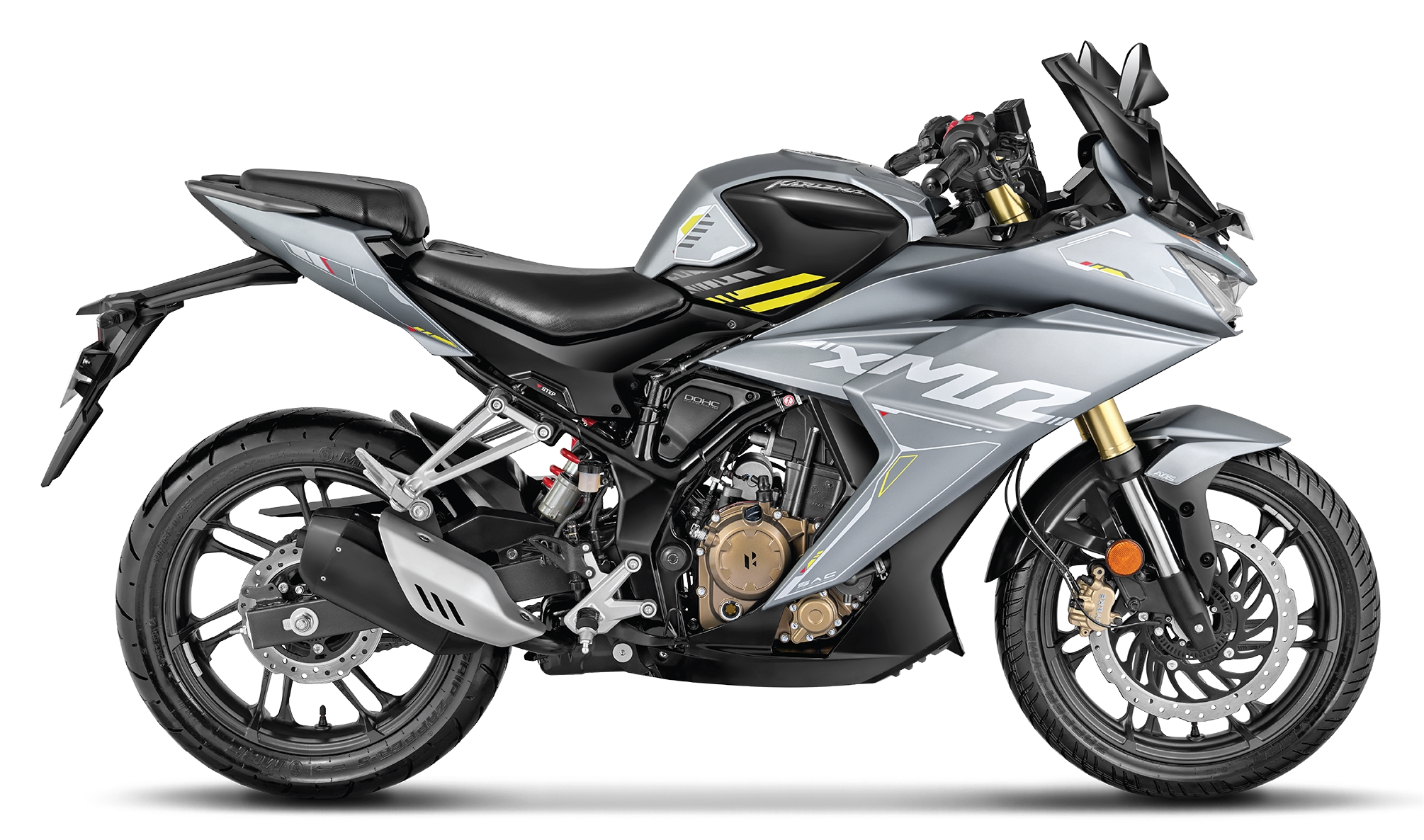
Hero Karizma XMR
- 210 cc Liquid-Cooled, DOHC 4-valve
- 25.5 PS @ 9250 rpm
- 41.55 km/l (ARAI)
- 11-litre tank
- 2 variants available
- Dual-channel ABS (standard)
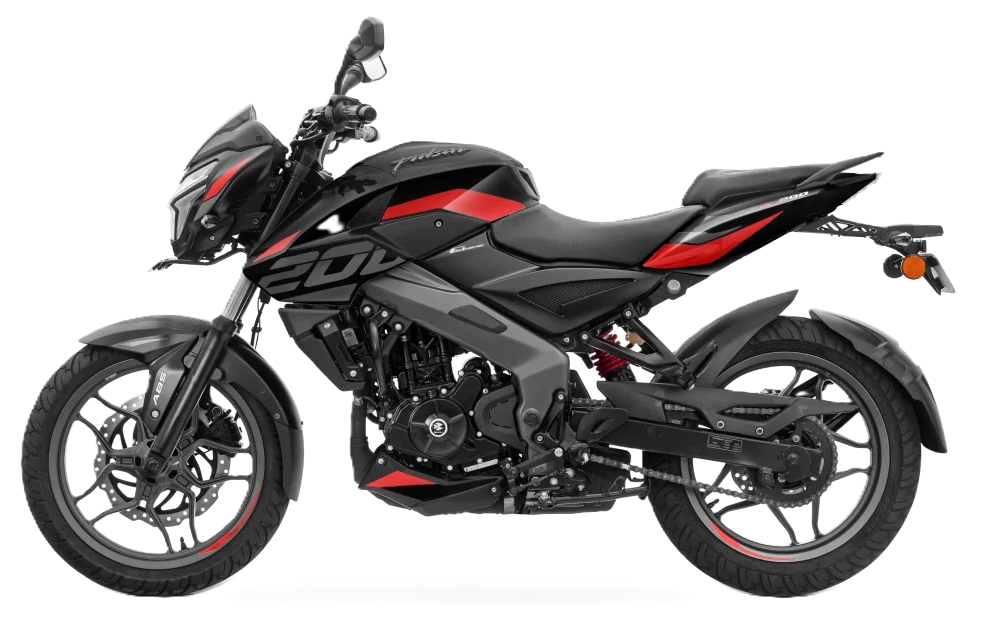
Bajaj Pulsar NS200
- 199.5 cc Liquid-Cooled, 4-valve
- 24.5 PS @ 9750 rpm
- 40.36 km/l (Claimed)
- 12-litre tank
- 2 variants available
- Ride modes: Road, Rain, Off-Road
Full Specification Comparison
Every number that matters — side by side
| Specification | Hero Karizma XMR | Bajaj Pulsar NS200 |
|---|---|---|
| Engine & Performance | ||
| Displacement | 210 cc | 199.5 cc |
| Cooling System | Liquid-Cooled | Liquid-Cooled |
| Engine Type | DOHC | SOHC |
| Max Power | 25.5 PS @ 9250 rpm | 24.5 PS @ 9750 rpm |
| Max Torque | 20.4 Nm @ 7250 rpm | 18.74 Nm @ 8000 rpm |
| Valves per Cylinder | 4 | 4 |
| Bore × Stroke | 73 × 50 mm | 72 × 49 mm |
| Compression Ratio | 12:1 | 11:1 |
| Spark Plugs | 1 | Triple Spark |
| Clutch | Wet Type Slip & Assist | Wet Multi Plate |
| Emission Standard | BS6 Phase 2 | BS6 |
| Transmission | 6-Speed Manual | 6-Speed Manual |
| Gear Pattern | 1 Down 5 Up | 1 Down 5 Up |
| Top Speed | ~130 km/h | ~130 km/h |
| Riding Modes | No | Road, Rain, Off-Road |
| Traction Control | No | No |
| Fuel & Range | ||
| Mileage (Claimed / ARAI) | 41.55 km/l (ARAI) | 40.36 km/l (Claimed) |
| Fuel Tank | 11 litres | 12 litres |
| Reserve Capacity | 2.2 litres | 2 litres (est.) |
| Riding Range | ~457 km | ~484 km |
| Brakes & Wheels | ||
| Braking System | Dual Channel ABS (standard) | Single / Dual Channel ABS |
| Front Brake | Petal Disc – 300 mm | Disc – 300 mm |
| Rear Brake | Petal Disc – 230 mm | Disc – 230 mm |
| Tyre Type | Tubeless | Tubeless |
| Tyre Size (F / R) | 100/80-17 / 140/70-17 | 100/80-17 / 130/70-17 |
| Rear Tyre Width | 140 mm | 130 mm |
| Wheel Type | Alloy | Alloy |
| Suspension & Chassis | ||
| Front Suspension | Dia 37 mm Telescopic (Top: USD) | Telescopic / USD Fork (top variant) |
| Rear Suspension | Gas Charged Monoshock (6-step adj.) | Nitrox Mono Shock |
| Chassis | Steel Trellis Frame | Perimeter Frame |
| Rear Preload Adjuster | Yes (6-step) | Yes |
| Dimensions & Weight | ||
| Kerb Weight | 163.5 kg | 158 kg |
| Seat Height | 810 mm | 805 mm |
| Ground Clearance | 160 mm | 167 mm |
| Wheelbase | 1351 mm | 1363 mm |
| Overall L × W × H | 2068 × 760 × 1110 mm | 2017 × 804 × 1075 mm |
| Features & Electronics | ||
| Instrument Console | Digital LCD (Top: TFT) | Fully Digital LCD |
| Headlight | LED Projector | LED |
| DRLs | Yes | Yes |
| Turn Signals | LED | LED |
| Hazard Warning Lights | Yes | Yes |
| Riding Modes | No | Road / Rain / Off-Road |
| Assist & Slipper Clutch | Yes | No |
| Bluetooth Connectivity | Yes | Yes |
| Call & SMS Alerts | Yes | Yes |
| USB Charging Port | Yes | Yes |
| Distance to Empty | Yes | Yes |
| Gear Indicator | Yes | Yes |
| Tachometer | Digital | Digital |
| Pass Light | Yes | Yes |
| Projector Headlamp | Yes | No |
| Keyless Ignition | No | No |
| Traction Control | No | No |
| Price & Warranty | ||
| Starting Price (ex-showroom) | ₹1,84,154 | ₹1,32,962 |
| Top Variant Price | ₹1,85,767 | ₹1,43,146 |
| Number of Variants | 2 | 2 |
| Standard Warranty | 5 Years / 70,000 km | 5 Years / 75,000 km |
★ Green highlights indicate the stronger value in each row. Prices are ex-showroom India averages and may vary by city.
Variant-wise Price Comparison
All variants laid out — find the right one for your budget
Karizma XMR Variants
Pulsar NS200 Variants
Pros & Cons
Honest strengths and weaknesses of each bike
Pros
- More powerful engine – 25.5 PS with higher torque (20.4 Nm)
- DOHC liquid-cooled engine for superior refinement
- Assist and slipper clutch for smoother, controlled shifts
- LED projector headlamp standard on both variants
- Full-fairing aerodynamic sports design
- Dual-channel ABS standard on both variants
- Wider 140/70-17 rear tyre for better grip
- Higher compression ratio (12:1) for better efficiency
- TFT display on Combat Edition variant
- Strong 5-year / 70,000 km warranty
Cons
- Significantly higher starting price (₹1,84,154 vs ₹1,32,962)
- No riding modes on any variant
- Smaller 11-litre tank — shorter riding range (~457 km)
- Less ground clearance (160 mm vs 167 mm)
- Heavier at 163.5 kg vs 158 kg
- Warranty km coverage slightly lower (70,000 vs 75,000 km)
- Only 2 variants — limited choice
Pros
- Significantly lower starting price (₹1,32,962)
- Ride modes: Road, Rain & Off-Road
- Larger 12-litre fuel tank and longer range (~484 km)
- Superior ground clearance (167 mm)
- Lighter at 158 kg for better agility
- Perimeter frame for sharp high-speed handling
- USD forks on top Dual Channel variant
- Triple spark DTS-i engine technology
- Outstanding 5-year / 75,000 km warranty
- Lower top variant price (₹1,43,146 vs ₹1,85,767)
Cons
- Lower peak power (24.5 PS vs 25.5 PS)
- Lower torque output (18.74 Nm vs 20.4 Nm)
- No assist and slipper clutch
- No full fairing — naked streetfighter only
- Single-channel ABS on base variant
- No LED projector headlamp
- Narrower 130/70-17 rear tyre
Key Differences Explained
What really sets these two bikes apart
Engine Character
The Karizma XMR uses a 210 cc liquid-cooled DOHC 4-valve engine producing 25.5 PS and 20.4 Nm — making it the more powerful option on paper. The assist and slipper clutch adds refinement to gear changes. The Pulsar NS200 uses a 199.5 cc liquid-cooled SOHC 4-valve engine with triple spark DTS-i technology producing 24.5 PS and 18.74 Nm — it revs slightly higher (9750 rpm vs 9250 rpm) and delivers a raw, aggressive streetfighter feel.
Fuel Efficiency & Range
The Karizma XMR edges ahead in ARAI mileage at 41.55 km/l versus the NS200's 40.36 km/l claim. However, the NS200's larger 12-litre tank outweighs this advantage — giving a theoretical range of ~484 km versus ~457 km for the Karizma XMR's 11-litre unit. For riders who cover long distances, the NS200's tank size makes a practical difference.
Braking & Safety
Both bikes sport a 300 mm front disc and 230 mm rear disc with similar stopping hardware. The Karizma XMR uses petal discs on both ends and offers dual-channel ABS as standard on all variants. The NS200 only gets dual-channel ABS on its top ₹1,43,146 variant — the base version runs single-channel ABS. The Karizma XMR holds a clear edge here for everyday safety.
Ride Modes & Technology
The Pulsar NS200 carries a clear advantage here with Road, Rain and Off-Road ride modes on both variants. These adjust power delivery and ABS behaviour for different road conditions — a meaningful feature for daily and touring riders. The Karizma XMR offers no ride modes at all, though it compensates with an assist and slipper clutch and a TFT display on the Combat Edition.
Warranty & Ownership
Both bikes offer a 5-year warranty, but the Pulsar NS200 covers 75,000 km while the Karizma XMR covers 70,000 km. The NS200's additional 5,000 km coverage gives it a slight edge for high-mileage commuters. Bajaj's extensive service network across India also ensures easy access to parts and service support for the NS200.
Price & Value
The NS200 starts at ₹1,32,962 — a substantial ₹51,192 cheaper than the Karizma XMR's ₹1,84,154. Even the NS200's top Dual Channel USD variant at ₹1,43,146 costs ₹41,008 less than the Karizma XMR's base variant. For budget-conscious buyers, the NS200 offers remarkable performance-per-rupee value. The Karizma XMR commands a premium justified mainly by its full fairing, DOHC engine and slipper clutch.
Expert Verdict
Which one should you actually buy?
Buy the Hero Karizma XMR if…
- You want a full-fairing sporty motorcycle under ₹2 lakh
- The DOHC liquid-cooled engine with more torque (20.4 Nm) excites you
- An assist and slipper clutch for smoother gear shifts matters
- Dual-channel ABS standard across all variants is important to you
- You prefer an LED projector headlamp and premium lighting
- Aerodynamic full-fairing design for highway stability appeals to you
- You want the iconic Karizma brand with a modern platform
Buy the Pulsar NS200 if…
- Budget is a priority — starts ₹51,192 cheaper
- Ride modes (Road, Rain, Off-Road) across both variants matter
- A larger 12-litre tank and ~484 km range are important
- You want USD forks and a perimeter frame for sharp handling
- Better ground clearance (167 mm) suits your riding roads
- The superior 75,000 km warranty coverage gives you peace of mind
- You prefer a naked streetfighter aesthetic over a full fairing
Overall Winner for Most Riders: Bajaj Pulsar NS200. A significantly lower price (starting ₹51,192 cheaper), ride modes on both variants, a larger 12-litre tank for longer range, better ground clearance, a lighter chassis, USD forks on the top variant and a superior 5-year / 75,000 km warranty make the Pulsar NS200 the more practical and better-value choice for the majority of Indian buyers. Choose the Hero Karizma XMR only if the sporty full-fairing design, DOHC engine refinement, assist and slipper clutch, and dual-channel ABS standard on all variants are your absolute top priorities and you have the extra budget to spend.
Frequently Asked Questions
Common questions answered by our experts
The Hero Karizma XMR is better for riders who want a full-fairing sports motorcycle with more power (25.5 PS), a DOHC liquid-cooled engine, an assist and slipper clutch, and dual-channel ABS as standard across all variants. The Bajaj Pulsar NS200 is better for most buyers who want significant savings (starting ₹51,192 cheaper), ride modes, a larger 12-litre tank, better ground clearance, lighter weight and a superior 5-year / 75,000 km warranty.
The Bajaj Pulsar NS200 starts at ₹1,32,962 while the Hero Karizma XMR starts at ₹1,84,154 ex-showroom — a base difference of ₹51,192. The gap remains substantial across the range: the NS200 tops out at ₹1,43,146 (Dual Channel USD variant) while the Karizma XMR tops out at ₹1,85,767 (Combat Edition). Both prices are for India and may vary by city.
The Hero Karizma XMR has slightly better ARAI-certified mileage at 41.55 km/l compared to the Bajaj Pulsar NS200's 40.36 km/l claimed figure. However, the NS200's larger 12-litre tank gives it a longer practical riding range of ~484 km versus ~457 km for the Karizma XMR's 11-litre tank — making the NS200 a better choice for long-distance riding.
The Hero Karizma XMR makes more power at 25.5 PS @ 9250 rpm and significantly more torque at 20.4 Nm @ 7250 rpm compared to the Bajaj Pulsar NS200's 24.5 PS @ 9750 rpm and 18.74 Nm @ 8000 rpm. The Karizma XMR's DOHC engine also revs more freely and delivers a more refined character compared to the NS200's SOHC motor.
Yes, the Bajaj Pulsar NS200 offers three rider-selectable modes — Road, Rain and Off-Road — on both variants. These modes adjust power delivery and ABS behaviour for different riding conditions. The Hero Karizma XMR does not offer any ride modes on either of its two variants.
Both bikes offer a 5-year warranty, but they differ slightly in kilometre coverage: the Bajaj Pulsar NS200 covers 75,000 km while the Hero Karizma XMR covers 70,000 km. For high-mileage commuters who clock 15,000–20,000 km per year, the NS200's additional 5,000 km of warranty coverage provides a useful safety net against out-of-warranty repair costs.