At a Glance
Key differences that define each motorcycle
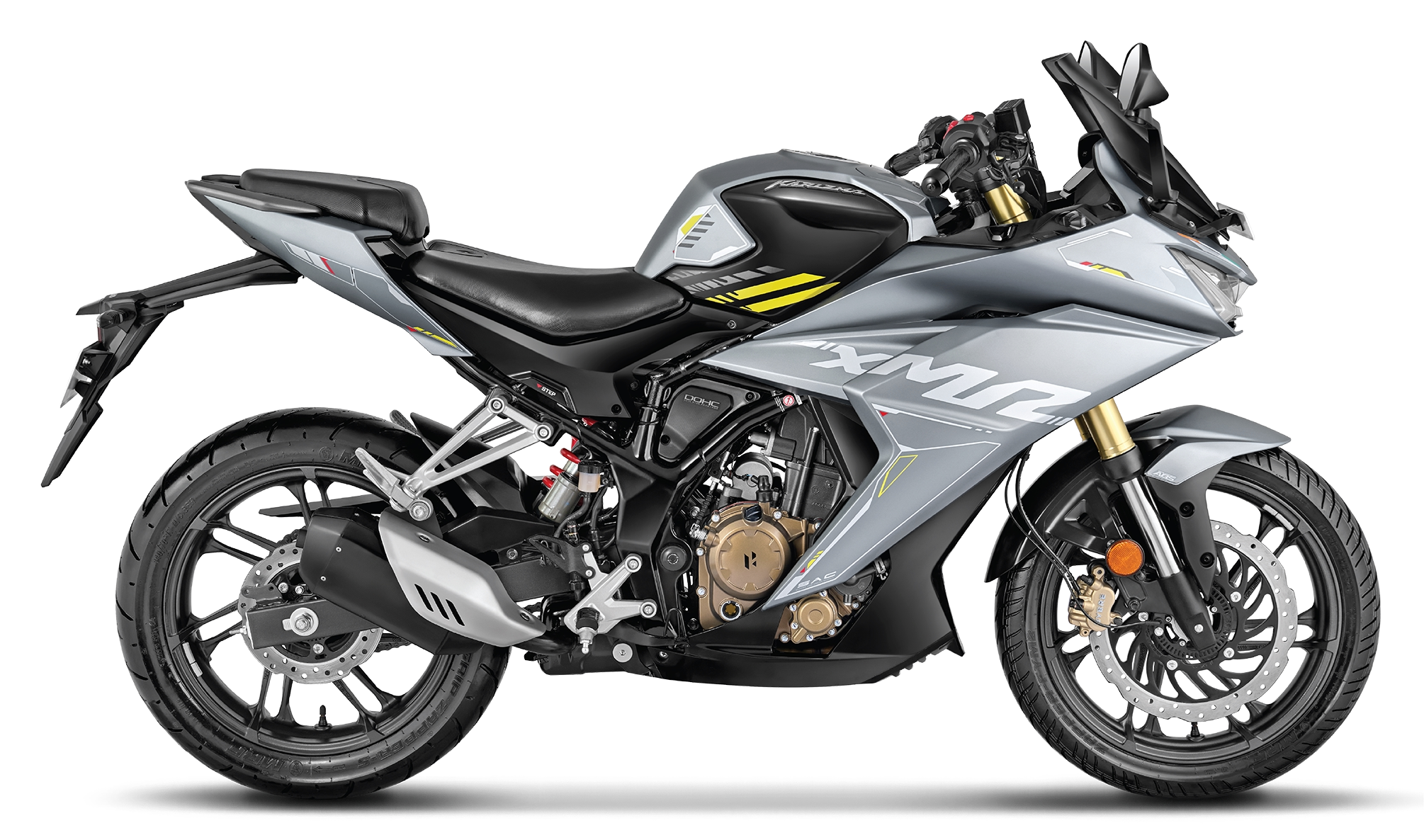
Hero Karizma XMR
- 210 cc Liquid-Cooled DOHC
- 25.5 PS @ 9250 rpm
- 41.55 km/l (ARAI)
- 11-litre tank
- 2 variants available
- Dual-channel ABS (standard)
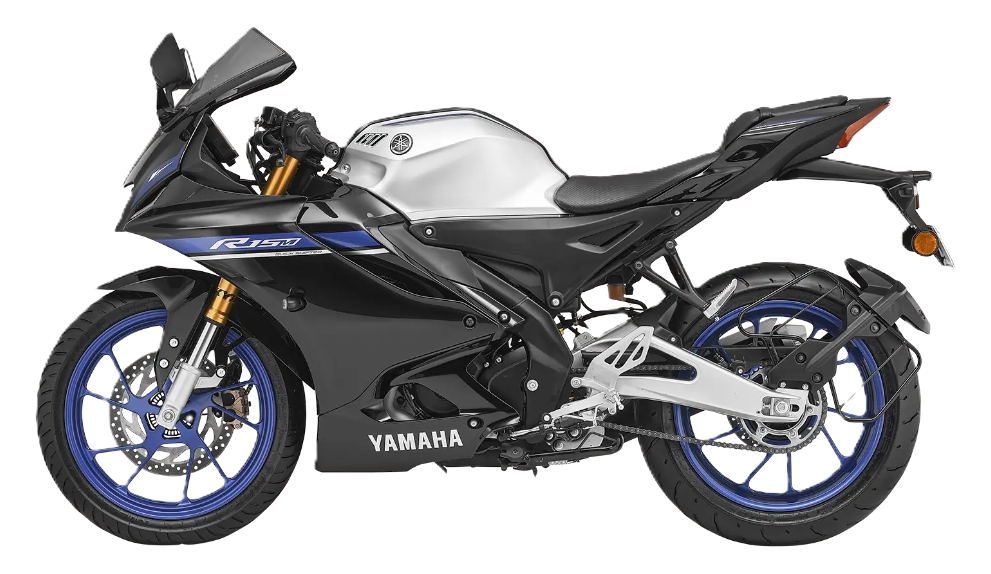
Yamaha R15 M
- 155 cc Liquid-Cooled VVA
- 18.4 PS @ 10000 rpm
- 45 km/l (ARAI)
- 11-litre tank
- 3 variants available
- Dual-channel ABS (standard)
Full Specification Comparison
Every number that matters — side by side
| Specification | Karizma XMR | Yamaha R15 M |
|---|---|---|
| Engine & Performance | ||
| Displacement | 210 cc | 155 cc |
| Cooling System | Liquid Cooled | Liquid Cooled |
| Max Power | 25.5 PS @ 9250 rpm | 18.4 PS @ 10000 rpm |
| Max Torque | 20.4 Nm @ 7250 rpm | 14.2 Nm @ 7500 rpm |
| Valves per Cylinder | 4 | 4 |
| Compression Ratio | 12 : 1 | 11.6 : 1 |
| Bore × Stroke | 73 × 50 mm | 58 × 58.7 mm |
| Emission Standard | BS6 Phase 2 | BS6 Phase 2 |
| Transmission | 6-Speed Manual | 6-Speed Manual |
| Clutch | Wet Type Slip & Assist | Wet Multiple Disc Assist & Slipper |
| Quick Shifter | No | Yes (Up-Shift) |
| Top Speed | ~130 km/h | ~140 km/h |
| Riding Modes | No | Track Mode, Street Mode |
| VVA Technology | No | Yes |
| Fuel & Range | ||
| Mileage (ARAI) | 41.55 km/l | 45 km/l |
| Fuel Tank | 11 litres | 11 litres |
| Reserve Capacity | 2.2 litres | 1.76 litres |
| Riding Range | ~457 km | ~495 km |
| Brakes & Wheels | ||
| Braking System | Dual Channel ABS | Dual Channel ABS |
| Front Brake | Petal Disc – 300 mm | Disc – 282 mm |
| Rear Brake | Petal Disc – 230 mm | Disc – 220 mm |
| Tyre Type | Tubeless | Tubeless |
| Tyre Size (F / R) | 100/80-17 / 140/70-17 | 100/80-17 / 140/70 R17 |
| Wheel Type | Alloy | Alloy |
| Suspension & Chassis | ||
| Front Suspension | 37 mm Telescopic Forks (Top) / USD (Combat Edition) | USD Fork (standard) |
| Rear Suspension | Gas Charged Monoshock (6-step adj.) | Linked-Type Monocross Suspension |
| Chassis | Steel Trellis Frame | Deltabox Frame |
| Rear Preload Adjuster | Yes | Yes |
| Dimensions & Weight | ||
| Kerb Weight | 163.5 kg | 141 kg |
| Seat Height | 810 mm | 815 mm |
| Ground Clearance | 160 mm | 170 mm |
| Wheelbase | 1351 mm | 1325 mm |
| Overall L × W × H | 2068 × 760 × 1110 mm | 1990 × 725 × 1135 mm |
| Features & Electronics | ||
| Instrument Console | Digital LCD | Fully Digital TFT |
| Headlight | LED Projector | LED Projector |
| DRLs | Yes | Yes |
| Turn Signals | LED | LED |
| Hazard Warning Lights | Yes | No |
| Bluetooth Connectivity | Yes | Yes (Y-Connect) |
| Turn-by-Turn Navigation | No | Yes |
| USB Charging Port | Yes | Accessory only |
| Gear Indicator | Yes | Yes |
| Distance to Empty | Yes | Yes |
| Traction Control | No | Yes |
| Quick Shifter | No | Yes (Up-Shift) |
| Shift Timing Light | No | Yes |
| Keyless Ignition | No | No |
| Price & Warranty | ||
| Starting Price (ex-showroom) | ₹1,84,154 | ₹1,81,753 |
| Top Variant Price | ₹1,85,767 | ₹1,92,100 |
| Number of Variants | 2 | 3 |
| Standard Warranty | 5 Years / 70,000 km | 2 Years / 30,000 km |
★ Green highlights indicate the stronger value in each row. Prices are ex-showroom India averages and may vary by city.
Variant-wise Price Comparison
All variants laid out — find the right one for your budget
Hero Karizma XMR Variants
Yamaha R15 M Variants
Pros & Cons
Honest strengths and weaknesses of each bike
Pros
- Significantly more power — 25.5 PS and 20.4 Nm from 210cc engine
- Larger petal disc brakes — 300 mm front, 230 mm rear
- Hazard warning lights included as standard
- USB charging port standard on both variants
- Outstanding 5-year / 70,000 km warranty
- Combat Edition gets USD forks and TFT display
- Larger fuel reserve (2.2L vs 1.76L)
- Assist & slipper clutch standard across variants
- Longer wheelbase (1351 mm) for stable highway riding
- Hero's wide service network across India
Cons
- Heavier at 163.5 kg vs R15 M's 141 kg
- Lower mileage (41.55 km/l vs 45 km/l)
- No traction control
- No quick shifter
- No riding modes
- Top variant (Top) only gets telescopic forks, not USD
- Lower ground clearance (160 mm vs 170 mm)
- Lower top speed (~130 km/h vs ~140 km/h)
Pros
- Traction control — segment-first safety feature
- Quick shifter (up-shift) for performance riding
- 2 riding modes (Track + Street) standard
- TFT display with Y-Connect and turn-by-turn navigation
- USD front forks across all 3 variants
- Significantly lighter — 141 kg vs 163.5 kg
- Better mileage (45 km/l ARAI) and longer range (~495 km)
- Higher ground clearance (170 mm) for better road handling
- 3 variants including a special MotoGP Edition
- Deltabox frame for class-leading cornering dynamics
Cons
- Much smaller engine — 155cc vs 210cc
- Lower power (18.4 PS vs 25.5 PS) and torque (14.2 Nm vs 20.4 Nm)
- No hazard warning lights
- No USB charging port (available as accessory only)
- Shorter warranty — only 2 years / 30,000 km
- Icon Performance variant is expensive at ₹1,92,100
- Smaller front disc (282 mm vs 300 mm)
- Aggressive posture may fatigue on long rides
Key Differences Explained
What really sets these two bikes apart
Engine & Power
The Karizma XMR runs a 210cc liquid-cooled DOHC engine producing 25.5 PS and 20.4 Nm — a massive 7.1 PS and 6.2 Nm advantage over the R15 M's 155cc VVA unit. The Karizma's larger displacement makes it feel noticeably punchier in real-world riding, especially at low and mid RPMs.
Electronics & Technology
The R15 M is a generation ahead in electronics — offering traction control, a quick shifter, 2 riding modes, TFT display, and turn-by-turn navigation as standard across all variants. The Karizma XMR base variant only gets a digital LCD; the Combat Edition adds TFT and USD forks but still lacks TC, quick shifter, and riding modes.
Weight & Handling
At 141 kg, the R15 M is 22.5 kg lighter than the Karizma XMR's 163.5 kg. Combined with Yamaha's Deltabox frame and USD forks standard across all variants, the R15 M delivers sharper, more agile handling — particularly in corners and during city rides.
Fuel Efficiency & Range
The R15 M returns 45 km/l (ARAI) versus the Karizma XMR's 41.55 km/l. With the same 11-litre tank, the R15 M offers a theoretical range of ~495 km versus ~457 km. However, the Karizma XMR has a slightly larger reserve (2.2L vs 1.76L) for a small buffer advantage.
Warranty & Ownership
The Karizma XMR's 5-year / 70,000 km warranty absolutely dwarfs the R15 M's 2-year / 30,000 km coverage. For buyers who plan to keep their bike long-term, this is a massive advantage — reducing out-of-pocket repair costs significantly over the ownership period.
Price & Value
The R15 M starts at ₹1,81,753 — about ₹2,401 less than the Karizma XMR's ₹1,84,154 base price. However, the R15 M's top Icon Performance variant reaches ₹1,92,100, well above the Karizma XMR Combat Edition's ₹1,85,767. Both bikes are broadly competitive, with value depending entirely on whether you prioritise power or electronics.
Expert Verdict
Which one should you actually buy?
Buy the Karizma XMR if…
- You want the most powerful engine in this price bracket
- Long-term warranty (5 years) matters to you
- You ride highways regularly and need strong mid-range torque
- Hazard lights and USB charging port are must-haves
- You want the Combat Edition's USD forks + TFT at ₹1,85,767
- Hero's nationwide service network is important to you
- You're drawn to the iconic Karizma heritage
Buy the Yamaha R15 M if…
- Traction control, quick shifter, and riding modes are priorities
- You want the sharpest handling sub-200cc sports bike
- Lightweight (141 kg) and agile city riding matters to you
- A TFT display with turn-by-turn navigation appeals to you
- Better fuel efficiency (45 km/l) is important
- You enjoy spirited cornering and track-inspired dynamics
- MotoGP Edition styling is something you care about
It's a genuine tie — and your riding style decides. The Hero Karizma XMR wins on raw power (25.5 PS vs 18.4 PS), torque, braking hardware, hazard lights, USB charging, and an exceptional 5-year warranty. The Yamaha R15 M wins on electronics (traction control, quick shifter, riding modes), lightweight agility, fuel efficiency, and cornering dynamics. Pick the Karizma XMR if you want more muscle and long-term ownership peace of mind. Pick the R15 M if you want cutting-edge tech and a razor-sharp riding experience.
Frequently Asked Questions
Common questions answered by our experts
Both bikes excel in different areas. The Hero Karizma XMR is better for riders who want more power (25.5 PS from 210cc), stronger brakes, hazard lights, USB charging, and an outstanding 5-year warranty. The Yamaha R15 M is better for riders who want advanced electronics (traction control, quick shifter, riding modes), lighter weight, better mileage, and class-leading cornering dynamics from its Deltabox frame.
The Yamaha R15 M starts at ₹1,81,753 while the Hero Karizma XMR starts at ₹1,84,154 ex-showroom — a difference of ₹2,401 at base variant level. However, the Yamaha R15 M's top Icon Performance variant reaches ₹1,92,100, which is ₹6,333 more than the Karizma XMR Combat Edition at ₹1,85,767. Both bikes are broadly priced in the same range.
The Yamaha R15 M has better mileage at 45 km/l (ARAI certified) compared to the Hero Karizma XMR's 41.55 km/l. Both bikes have an 11-litre fuel tank, giving the R15 M a theoretical range of ~495 km versus the Karizma XMR's ~457 km. The R15 M's lighter weight and smaller engine contribute to its efficiency advantage.
The Hero Karizma XMR has significantly more power at 25.5 PS @ 9250 rpm and more torque at 20.4 Nm @ 7250 rpm compared to the Yamaha R15 M's 18.4 PS @ 10000 rpm and 14.2 Nm @ 7500 rpm. The Karizma XMR's 210cc engine has a clear power and torque advantage, making it feel stronger in real-world riding, especially at city and highway speeds.
Yes, the Yamaha R15 M comes with traction control as standard across all 3 variants — a segment-first feature in the 150cc class. The Hero Karizma XMR does not offer traction control on either variant. The R15 M also adds a quick shifter and 2 riding modes (Track + Street), none of which are available on the Karizma XMR.
The Hero Karizma XMR offers a significantly better warranty of 5 years or 70,000 km compared to the Yamaha R15 M's 2 years or 30,000 km. This is a major long-term ownership advantage for the Karizma XMR, reducing repair costs and providing greater peace of mind across the ownership period.