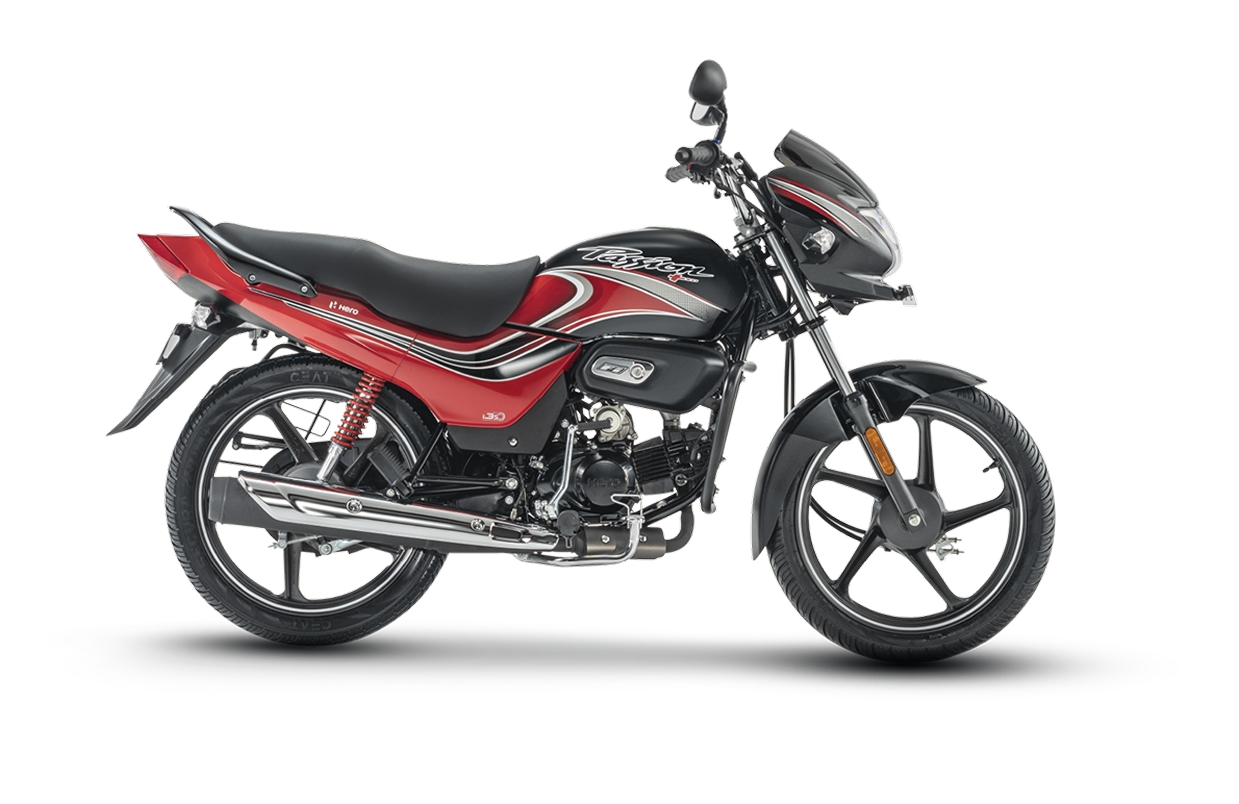
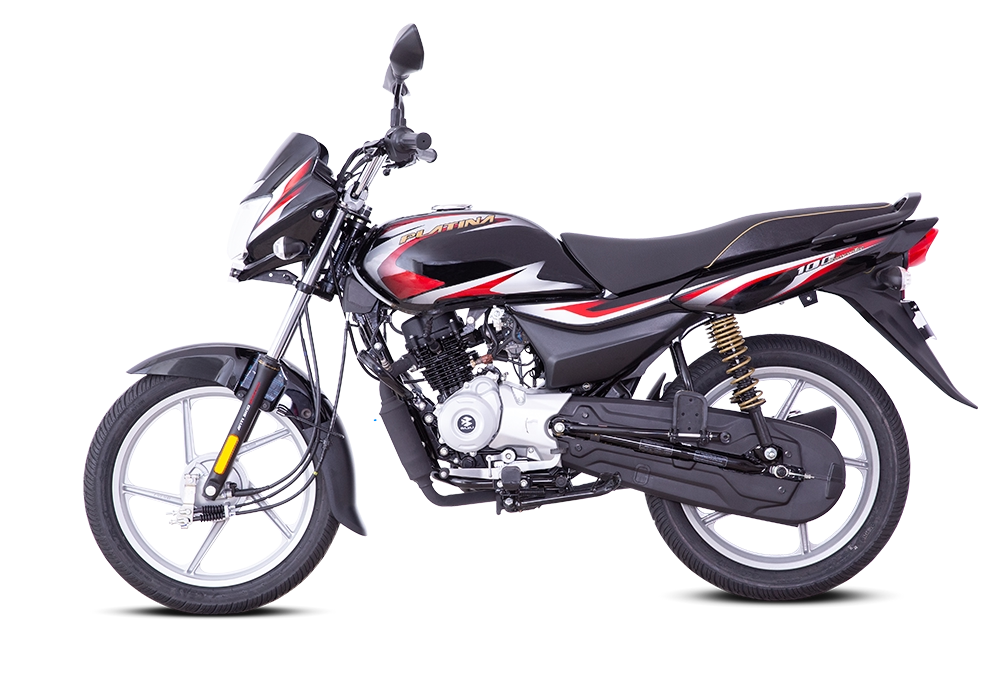
At a Glance
Key differences that define each motorcycle
Hero Passion Plus
- 97.2 cc Air-Cooled, 2-valve
- 8.02 PS @ 8000 rpm
- 70 km/l (ARAI)
- 11-litre tank
- 2 variants available
- LED headlamp & USB charging
Bajaj Platina 100
- 99.59 cc Air-Cooled, 2-valve
- 8.2 PS @ 7500 rpm
- 70–75 km/l (Owner Reported)
- 11-litre tank
- 1 variant available
- Best-in-class 200 mm ground clearance
Full Specification Comparison
Every number that matters — side by side
| Specification | Hero Passion Plus | Bajaj Platina 100 |
|---|---|---|
| Engine & Performance | ||
| Displacement | 97.2 cc | 99.59 cc |
| Cooling System | Air-Cooled | Air-Cooled |
| Max Power | 8.02 PS @ 8000 rpm | 8.2 PS @ 7500 rpm |
| Max Torque | 8.05 Nm @ 6000 rpm | 8.3 Nm @ 5500 rpm |
| Valves per Cylinder | 2 | 2 |
| Compression Ratio | 9.9 : 1 | 9.5 : 1 |
| Bore × Stroke | 50 × 49.5 mm | 47 × 57.4 mm |
| Emission Standard | BS6 Phase 2 (OBD2) | BS6 Phase 2 |
| Transmission | 4-Speed Manual | 4-Speed Manual |
| Top Speed | 87 kmph | 90 kmph |
| Idle Stop-Start | Yes (i3S) | No |
| Riding Modes | No | No |
| Fuel & Range | ||
| Mileage (ARAI) | 70 km/l (ARAI Certified) | Not Claimed |
| Mileage (Real-world) | 58–62 km/l | 70–75 km/l (Owner Reported) |
| Fuel Tank | 11 litres | 11 litres |
| Reserve Capacity | 1.8 litres | 2 litres |
| Riding Range | ~660 km | ~770–825 km |
| Brakes & Wheels | ||
| Braking System | CBS (Integrated Braking System) | CBS (Combined Braking System) |
| Front Brake Type | Drum | Drum |
| Front Brake Size | 130 mm | 130 mm |
| Rear Brake Type | Drum | Drum |
| Rear Brake Size | 130 mm | 110 mm |
| Tyre Type | Tubeless | Tube Type |
| Tyre Size (F / R) | 80/100-18 / 80/100-18 | 2.75×17 / 3.00×17 |
| Wheel Type | Alloy | Alloy |
| Suspension & Chassis | ||
| Front Suspension | Telescopic Hydraulic | 135 mm Hydraulic Telescopic |
| Rear Suspension | 5-step Adjustable Hydraulic | 110 mm Spring-in-Spring |
| Rear Preload Adjuster | Yes | No |
| Chassis | Tubular Double Cradle | Tubular Single Down Tube with Lower Cradle |
| Dimensions & Weight | ||
| Kerb Weight | 115 kg | 117 kg |
| Seat Height | 790 mm | 807 mm |
| Ground Clearance | 168 mm | 200 mm |
| Wheelbase | 1235 mm | 1255 mm |
| Overall L × W × H | 1982 × 770 × 1087 mm | 2003 × 704 × 1069 mm |
| Features & Electronics | ||
| Instrument Console | Digi-Analogue | Analogue |
| Headlight | LED | Halogen (12V, 35/35W HS1) |
| DRLs | No | Yes (LED) |
| Turn Signals | Bulb | Bulb |
| Hazard Warning Lights | No | No |
| USB Charging Port | Yes | No |
| Bluetooth Connectivity | No | No |
| Idle Stop-Start (i3S) | Yes | No |
| Low Fuel Indicator | Yes | Yes |
| Pass Light | Yes | Yes |
| Side Stand Engine Cut-off | Yes | No |
| Kill Switch | Yes | No |
| Start Type | Kick & Electric | Electric Start |
| Pillion Footrest | Yes | Yes |
| Price & Warranty | ||
| Starting Price (ex-showroom) | ₹77,439 | ₹66,593 |
| Top Variant Price | ₹78,829 | ₹66,593 |
| Number of Variants | 2 | 1 |
| Standard Warranty | 5 Years / 70,000 km | 5 Years / 75,000 km |
★ Green highlights indicate the stronger value in each row. Prices are ex-showroom India averages and may vary by city.
Variant-wise Price Comparison
All variants laid out — find the right one for your budget
Passion Plus Variants
Platina 100 Variants
Pros & Cons
Honest strengths and weaknesses of each bike
Pros
- LED headlamp standard on all variants
- USB mobile charging port standard
- i3S idle stop-start for better in-city fuel saving
- Digi-analogue instrument console
- Lower, more accessible seat height (790 mm vs 807 mm)
- Lighter at 115 kg vs 117 kg
- 5-step adjustable rear suspension
- Larger 130 mm rear drum brake
- Tubeless tyres — easier puncture management
- Side stand engine cut-off for safety
- ARAI-certified 70 km/l mileage figure for reference
Cons
- Higher purchase price (₹77,439 vs ₹66,593)
- Lower real-world mileage (58–62 km/l vs 70–75 km/l)
- Shorter riding range (~660 km vs ~770–825 km)
- Less ground clearance (168 mm vs 200 mm)
- Shorter warranty by km (70,000 km vs 75,000 km)
- No disc brake option
- No DRLs
Pros
- Lower purchase price at ₹66,593 — saves ₹10,846
- Best-in-class 200 mm ground clearance for rough roads
- Superior real-world mileage (70–75 km/l owner reported)
- Longer riding range (~770–825 km)
- Slightly more power (8.2 PS) and torque (8.3 Nm)
- Higher top speed (90 kmph vs 87 kmph)
- Better warranty by km (75,000 km vs 70,000 km)
- LED DRLs for daytime visibility
- Spring-in-spring rear suspension — comfort-focused
- Longer wheelbase (1255 mm) for straight-line stability
Cons
- Halogen headlamp — no LED main light
- No USB charging port
- No idle stop-start technology
- Basic analogue instrument console
- Tube-type tyres — less convenient puncture repair
- No side stand engine cut-off
- Higher seat height (807 mm) — less accessible
- No kill switch
- Only 1 variant — no choice
- No disc brake option
Key Differences Explained
What really sets these two bikes apart
Engine & Performance
The Platina 100 uses a 99.59cc long-stroke engine (47 × 57.4 mm) tuned for low-rpm pulling power, producing 8.2 PS and 8.3 Nm — marginally more than the Passion Plus's 97.2cc short-stroke unit (50 × 49.5 mm) at 8.02 PS and 8.05 Nm. The Platina's torque arrives earlier (5500 rpm vs 6000 rpm), making it feel easier in city traffic. The Passion Plus counters with its i3S idle stop-start, cutting the engine at prolonged halts to save fuel.
Fuel Efficiency & Range
The Passion Plus holds an ARAI-certified 70 km/l figure, but real-world returns of 58–62 km/l are significantly lower. The Platina 100 has no official ARAI claim, but owner-reported figures of 70–75 km/l suggest it is genuinely the more economical bike in daily use. Both carry an 11-litre tank, but the Platina's superior efficiency translates into a riding range of ~770–825 km against ~660 km for the Passion Plus — a difference of over 150 km per tank.
Features & Technology
This is the Passion Plus's strongest argument. It comes with a full LED headlamp, USB mobile charging port, i3S idle stop-start technology, and a digi-analogue console as standard. The Platina 100 uses a halogen headlamp (with LED DRLs), an analogue console, and has no USB charging or idle stop-start on any variant. For urban riders who value connectivity and modern safety lighting, the Passion Plus is clearly the more equipped motorcycle.
Ground Clearance & Road Ability
The Bajaj Platina 100 offers a standout 200 mm ground clearance — among the highest in its segment and 32 mm more than the Passion Plus's 168 mm. Combined with its spring-in-spring rear suspension designed specifically for Indian road conditions and a longer wheelbase of 1255 mm (vs 1235 mm), the Platina 100 is the more capable choice for semi-urban and rural roads with potholes, speed breakers, and uneven surfaces.
Braking & Tyre Safety
Both bikes use drum brakes with CBS. The Passion Plus has a 130 mm rear drum versus the Platina's smaller 110 mm unit. The Passion Plus also runs on tubeless tyres, which allow a slow deflation on puncture and are easier to repair roadside. The Platina 100 uses tube-type tyres, which can deflate suddenly and require a tube replacement. Neither bike offers a disc brake option in their respective lineups.
Price, Warranty & Value
The Platina 100 starts at ₹66,593 — ₹10,846 less than the Passion Plus at ₹77,439. It also carries a marginally better warranty of 5 years / 75,000 km against 5 years / 70,000 km for the Passion Plus. For budget-focused buyers, the Platina 100 delivers more economy per rupee. The Passion Plus, however, justifies its premium with LED lighting, USB charging, and modern features that improve daily usability.
Expert Verdict
Which one should you actually buy?
Buy the Passion Plus if…
- You want an LED headlamp for better night visibility
- USB charging for daily phone use is important to you
- A lower, more accessible seat height (790 mm) suits you
- You prefer tubeless tyres for puncture convenience
- i3S idle stop-start saves fuel at city signals
- A digi-analogue console matters for the ride experience
- You commute in city areas with mostly smooth roads
- Budget can accommodate ₹77,000–₹79,000
Buy the Platina 100 if…
- Lower purchase price (saves ₹10,846) is a priority
- You ride on rough, potholed, or rural roads daily
- Best real-world mileage (70–75 km/l) matters to you
- Maximum riding range per tank (~770–825 km) is needed
- 200 mm ground clearance is essential for your roads
- Longer warranty coverage (75,000 km) is important
- You prefer a longer-stroke engine for relaxed commuting
- Simple mechanics and low ownership costs are priorities
Overall Verdict: Two equally rated bikes for different riders. The Hero Passion Plus wins on features — LED headlamp, USB charging, i3S technology, tubeless tyres, and a more modern ownership experience. The Bajaj Platina 100 wins on economics — it costs ₹10,846 less, delivers better real-world mileage, covers more ground per tank, offers a best-in-class 200 mm ground clearance for rough Indian roads, and carries a slightly longer warranty. If you ride in cities and value modern features, choose the Passion Plus. If you prioritise the lowest total cost of ownership and tackle rough roads daily, the Platina 100 is the smarter buy.
Frequently Asked Questions
Common questions answered by our experts
Both bikes are equally rated for different needs. The Hero Passion Plus is better for feature-conscious city riders wanting an LED headlamp, USB charging, i3S idle stop-start, and tubeless tyres. The Bajaj Platina 100 is better for economy-focused buyers needing a lower purchase price (₹66,593 vs ₹77,439), superior real-world mileage (70–75 km/l), 200 mm ground clearance for rough roads, and a longer 5-year / 75,000 km warranty.
The Bajaj Platina 100 starts at ₹66,593 while the Hero Passion Plus starts at ₹77,439 ex-showroom — a difference of ₹10,846. The Platina 100 is available in a single variant, while the Passion Plus has two variants topping out at ₹78,829 (Million Edition). All prices are ex-showroom India averages and may vary by city.
The Hero Passion Plus has an ARAI-certified 70 km/l figure, but real-world returns are typically 58–62 km/l. The Bajaj Platina 100 does not publish an official ARAI figure, but owner-reported mileage of 70–75 km/l suggests it is the more fuel-efficient bike in everyday use. Combined with an identical 11-litre tank, the Platina 100 achieves a theoretical riding range of ~770–825 km vs ~660 km for the Passion Plus.
The Bajaj Platina 100 produces slightly more power at 8.2 PS @ 7500 rpm and 8.3 Nm @ 5500 rpm compared to the Hero Passion Plus's 8.02 PS @ 8000 rpm and 8.05 Nm @ 6000 rpm. The Platina 100 also has a marginally higher top speed of 90 kmph versus 87 kmph. Both differences are small in everyday riding.
Yes. The Hero Passion Plus comes standard with an LED headlamp, USB mobile charging port, i3S idle stop-start technology, digi-analogue instrument console, tubeless tyres, and a side stand engine cut-off. The Bajaj Platina 100 uses a halogen headlamp (with LED DRLs), an analogue console, tube-type tyres, and has no USB charging or idle stop-start system.
The Bajaj Platina 100 has a marginally better warranty at 5 years or 75,000 km compared to the Hero Passion Plus's 5 years or 70,000 km. For high-mileage daily riders, the Platina 100's additional 5,000 km of warranty coverage is a useful advantage.