At a Glance
Key differences that define each motorcycle
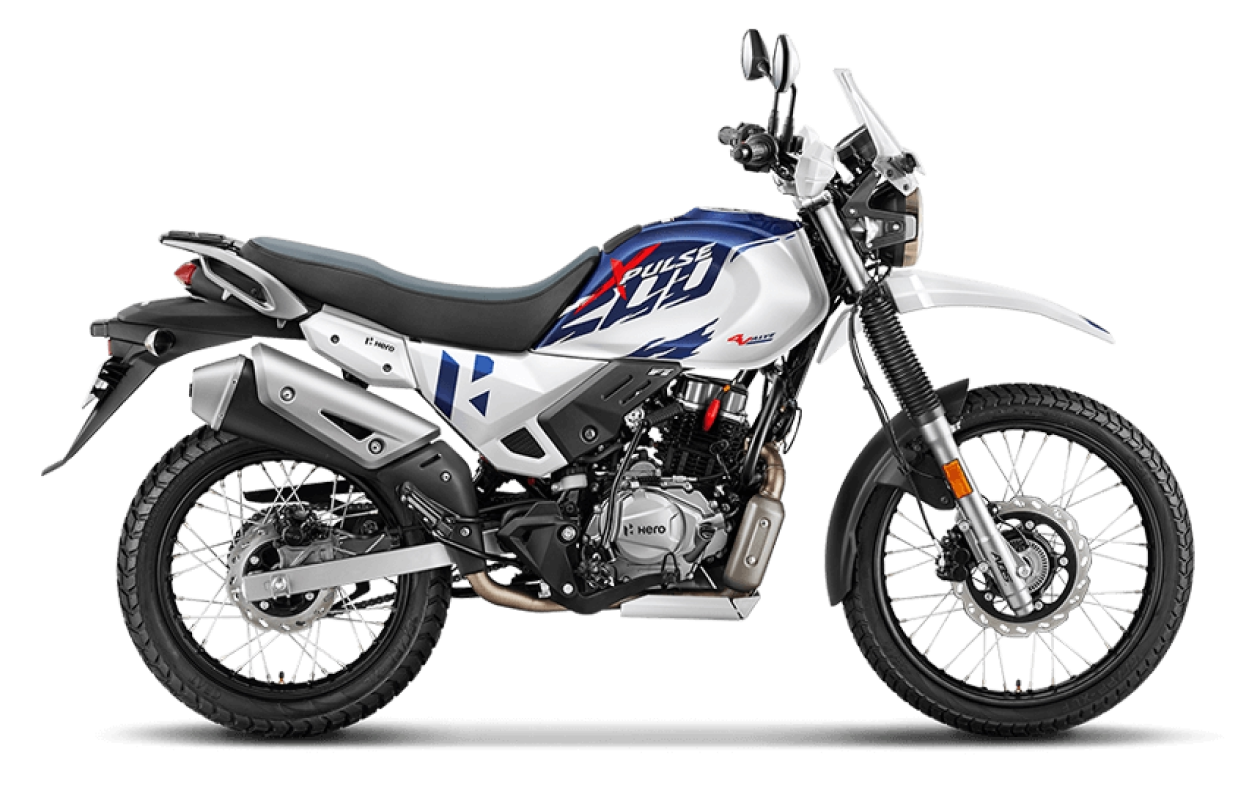
Hero Xpulse 200 4V
- 199.6 cc Oil-Cooled
- 19.16 PS @ 8500 rpm
- 32.9 km/l (ARAI)
- 13-litre tank
- 3 variants available
- Single-channel ABS + switchable rear ABS
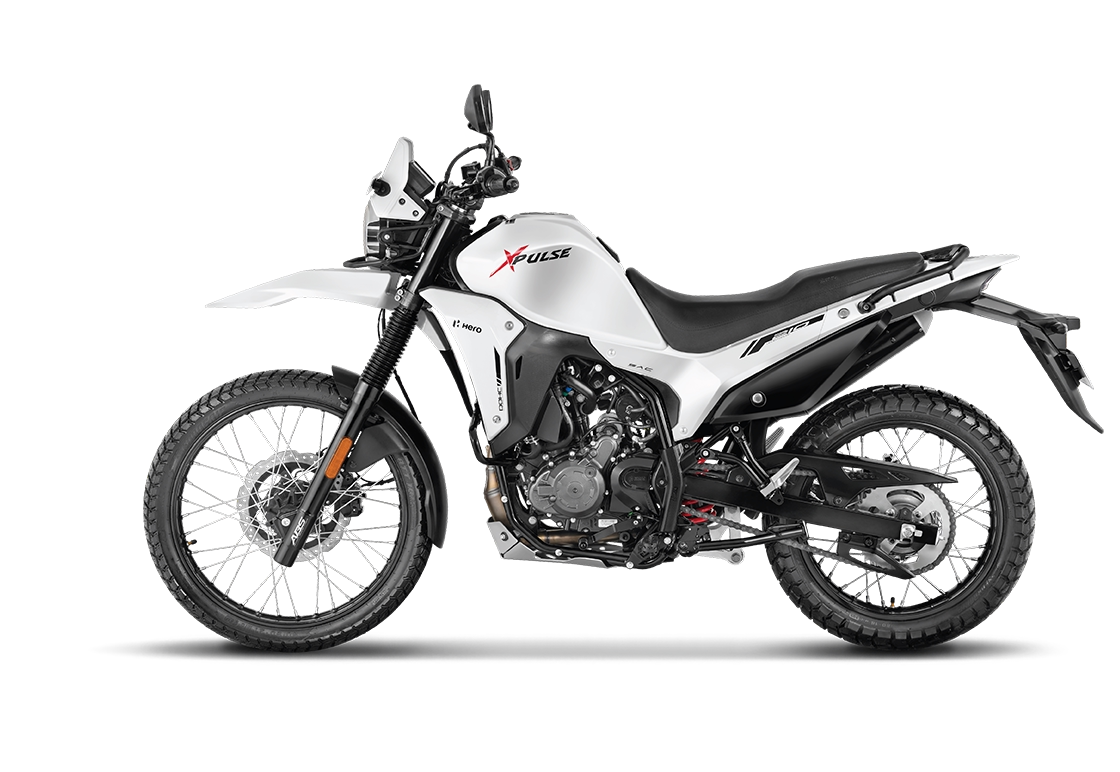
Hero Xpulse 210
- 210 cc Liquid-Cooled DOHC
- 24.6 PS @ 9250 rpm
- ~37 km/l (Owner reports)
- 13-litre tank
- 2 variants available
- Single / Dual-channel ABS with 3 modes
Full Specification Comparison
Every number that matters — side by side
| Specification | Xpulse 200 4V | Xpulse 210 |
|---|---|---|
| Engine & Performance | ||
| Displacement | 199.6 cc | 210 cc |
| Cooling System | Oil-Cooled | Liquid-Cooled |
| Engine Type | SOHC | DOHC |
| Max Power | 19.16 PS @ 8500 rpm | 24.6 PS @ 9250 rpm |
| Max Torque | 17.35 Nm @ 6500 rpm | 20.7 Nm @ 7250 rpm |
| Valves per Cylinder | 4 | 4 |
| Compression Ratio | 10.5 : 1 | 12 : 1 |
| Bore × Stroke | 66.5 × 57.5 mm | 73 × 50 mm |
| Emission Standard | BS6 Phase 2 | BS6 Phase 2 |
| Transmission | 5-Speed Manual | 6-Speed Manual |
| Clutch | Wet Multi-Plate | Assist & Slipper Clutch |
| Start Type | Electric + Kick | Electric |
| Top Speed | ~135 km/h | ~120 km/h |
| Fuel & Range | ||
| Mileage (ARAI) | 32.9 km/l | Not Claimed |
| Mileage (Real-world) | ~30–33 km/l | ~37 km/l |
| Fuel Tank | 13 litres | 13 litres |
| Reserve Capacity | 2.6 litres | 2.6 litres |
| Riding Range | ~427 km | ~481 km |
| Brakes & Wheels | ||
| Braking System | Single-Channel ABS (switchable rear) | Single / Dual-Ch ABS with 3 modes |
| Front Brake | Disc – 276 mm | Disc – 276 mm |
| Rear Brake | Disc – 220 mm | Disc – 220 mm |
| Wheel Type | Spoke | Spoke |
| Tyre Type | Tube Type | Tube Type |
| Front Wheel Size | 21 inch | 21 inch |
| Rear Wheel Size | 18 inch | 18 inch |
| Tyre Size (F / R) | 90/90-21 / 120/80-18 | 90/90-21 / 120/80-18 |
| Suspension & Chassis | ||
| Front Suspension | Telescopic Fork | Telescopic Fork 41mm (Anti-Friction Bush) |
| Front Suspension Travel | 190 mm (Std) / 250 mm (Pro) | 250 mm (long travel) |
| Rear Suspension | Mono Shock | 10-Step Adj Gas Mono Shock |
| Rear Suspension Travel | 170 mm (Std) / 220 mm (Pro) | 220 mm |
| Rear Preload Adjuster | Yes | Yes (10-step) |
| Chassis | Diamond Frame | Semi Double Cradle (High Tensile Steel) |
| Dimensions & Weight | ||
| Kerb Weight | 159 kg | 168–170 kg |
| Seat Height | 825 mm (Std) / 891 mm (Pro) | 830 mm |
| Ground Clearance | 220 mm (Std) / 270 mm (Pro) | 220 mm |
| Wheelbase | 1410 mm | 1446 mm |
| Overall L × W × H | 2222 × 850 × 1258 mm | 2254 × 872 × 1230 mm (Base) |
| Features & Electronics | ||
| Instrument Console | Fully Digital LCD | 4.2" Digital LCD / TFT (top) |
| Headlight | LED | LED Projector with DRL |
| DRLs | Yes | Yes |
| Turn Signals | Halogen | LED |
| Hazard Warning Lights | Yes | Yes |
| Bluetooth Connectivity | Yes | Yes |
| USB Charging Port | Yes | Yes |
| Gear Indicator | Yes | Yes |
| Traction Control | No | No |
| ABS Modes | Switchable Rear ABS | 3 ABS Modes |
| Windscreen | No | Yes (top variant) |
| Knuckle Guards | No | Yes (top variant) |
| Keyless Ignition | No | No |
| Price & Warranty | ||
| Starting Price (ex-showroom) | ₹1,41,059 | ₹1,62,901 |
| Top Variant Price | ₹1,55,816 | ₹1,71,821 |
| Number of Variants | 3 | 2 |
| Standard Warranty | 5 Years / 70,000 km | 5 Years / 70,000 km |
★ Green highlights indicate the stronger value in each row. Prices are ex-showroom India averages and may vary by city.
Variant-wise Price Comparison
All variants laid out — find the right one for your budget
Xpulse 200 4V Variants
Xpulse 210 Variants
Pros & Cons
Honest strengths and weaknesses of each bike
Pros
- Significantly lower starting price (₹1,41,059)
- ARAI-certified mileage of 32.9 km/l
- Lighter at 159 kg — easier to handle off-road
- 3 variant options including Pro and Dakar Edition
- Electric + kick start for reliability off-road
- Pro variant gets 270 mm ground clearance
- Strong Hero service network and low maintenance costs
- Same 5-year / 70,000 km warranty as the 210
Cons
- Lower peak power (19.16 PS vs 24.6 PS)
- Oil-cooled engine less refined at higher rpm
- 5-speed gearbox (vs 6-speed on 210)
- No assist & slipper clutch
- Halogen turn signals (not LED)
- Standard variant has shorter suspension travel (190 mm)
- No windscreen or knuckle guards on any variant
Pros
- More powerful engine – 24.6 PS (28% more than 200 4V)
- Liquid-cooled DOHC engine — better thermal management
- 6-speed gearbox for relaxed highway cruising
- Assist & slipper clutch for smoother downshifts
- 3 switchable ABS modes for on-road and off-road
- LED turn signals throughout
- Better owner-reported mileage (~37 km/l)
- TFT console, windscreen & knuckle guards on top variant
- 10-step adjustable rear monoshock
- LED projector headlight with DRL
Cons
- Higher starting price (₹1,62,901) — ₹21,842 more
- No ARAI mileage claim
- Heavier at 168–170 kg
- Only 2 variants — limited choice
- No kick-start option
- No traction control on any variant
- Tube tyres make roadside puncture repair slower
Key Differences Explained
What really sets these two bikes apart
Engine & Performance
The Xpulse 200 4V uses a 199.6cc oil-cooled SOHC engine producing 19.16 PS and 17.35 Nm. The Xpulse 210 gets a completely new 210cc liquid-cooled DOHC unit making 24.6 PS and 20.7 Nm — roughly 28% more power and 19% more torque. The 210 also benefits from a 6-speed gearbox and an assist & slipper clutch for a more refined riding experience.
Fuel Efficiency & Range
The Xpulse 200 4V has an ARAI-certified figure of 32.9 km/l, while the Xpulse 210 claims ~37 km/l based on owner reports with no official ARAI figure. Both share an identical 13-litre tank, but the 210's better real-world efficiency gives it a longer estimated range of ~481 km vs ~427 km for the 200 4V.
Suspension & Off-Road Capability
Both bikes use a 21-inch front wheel and spoke wheels with tube tyres — ideal for off-road use. The Xpulse 210 delivers 250 mm front travel and 220 mm rear travel as standard, whereas the 200 4V's base Standard variant only offers 190 mm / 170 mm travel (matching the 210 only in its Pro variant). The 210 also gets a more sophisticated 10-step adjustable rear monoshock.
Braking & Safety
Both bikes share the same 276 mm front and 220 mm rear disc setup. The Xpulse 200 4V offers single-channel ABS with switchable rear ABS. The Xpulse 210 goes further with 3 switchable ABS modes — Road, Off-Road and Combined — with the top variant upgrading to full dual-channel ABS.
Price & Value
The Xpulse 200 4V starts at ₹1,41,059 — a substantial ₹21,842 less than the Xpulse 210's ₹1,62,901 base price. Both carry the same 5-year / 70,000 km warranty. The 200 4V also offers 3 variants vs 2 for the 210, giving buyers more choice. At the top end, the 200 4V Pro Dakar Edition (₹1,55,816) undercuts the 210 Top (₹1,71,821) by ₹16,005.
Features & Technology
The Xpulse 210 pulls ahead in features: LED turn signals, an LED projector headlight, 3-mode ABS, and the top variant gains a TFT console, windscreen and knuckle guards. The 200 4V uses halogen turn signals and a standard LCD console, but does offer electric + kick start — a handy backup for serious off-road riders.
Expert Verdict
Which one should you actually buy?
Buy the Xpulse 200 4V if…
- Budget is your primary concern — saves ~₹22,000
- You want a lighter (159 kg) and more flickable bike
- Electric + kick start gives you peace of mind off-road
- The Pro variant's 270 mm ground clearance suits your trails
- You want 3 variant choices including the Dakar Edition
- Low ownership costs and Hero's massive service network matter
- You mostly ride moderate off-road trails and daily commuting
Buy the Xpulse 210 if…
- You want maximum performance from a Hero adventure bike
- Highway touring matters — 6-speed + 24.6 PS makes a difference
- Better real-world mileage (~37 km/l) is a priority
- 3-mode ABS adds meaningful off-road safety
- The assist & slipper clutch improves your riding experience
- You want LED turn signals and a projector headlight
- TFT console, windscreen & knuckle guards suit your touring style
Overall Winner for Most Riders: Hero Xpulse 210. The Xpulse 210's liquid-cooled DOHC engine, 28% more power, 6-speed gearbox, assist & slipper clutch, 3-mode ABS, LED turn signals and better real-world mileage make it the more complete and future-proof adventure motorcycle. At ~₹22,000 more, the upgrade is well justified for riders who ride regularly. Choose the Xpulse 200 4V only if budget is the primary concern — it remains an excellent adventure motorcycle in its own right, especially in Pro trim.
Frequently Asked Questions
Common questions answered by our experts
The Hero Xpulse 210 is the better overall package for most riders, offering 28% more power (24.6 PS vs 19.16 PS), a liquid-cooled DOHC engine, 6-speed gearbox, assist & slipper clutch, 3-mode ABS and better real-world mileage (~37 km/l). The Xpulse 200 4V is better for budget-conscious buyers — it starts ₹21,842 cheaper, weighs 9 kg less, and offers 3 variant choices including the popular Pro and Dakar Edition trims.
The Hero Xpulse 200 4V starts at ₹1,41,059 while the Hero Xpulse 210 starts at ₹1,62,901 ex-showroom. The Xpulse 210 is approximately ₹21,842 more expensive at the base level. At the top end, the Xpulse 200 4V Pro Dakar Edition costs ₹1,55,816 versus ₹1,71,821 for the Xpulse 210 Top — a difference of ₹16,005. Prices may vary by city.
The Hero Xpulse 200 4V has an ARAI-certified mileage of 32.9 km/l. The Hero Xpulse 210 does not claim an official ARAI figure but delivers approximately 37 km/l based on owner reports — higher than the 200 4V in real-world conditions. Both bikes have a 13-litre fuel tank, giving the 210 a longer estimated riding range of ~481 km versus ~427 km for the 200 4V.
The Hero Xpulse 210 makes significantly more power at 24.6 PS @ 9250 rpm compared to the Xpulse 200 4V's 19.16 PS @ 8500 rpm — roughly 28% more power. Torque is also higher at 20.7 Nm vs 17.35 Nm. The Xpulse 210 uses a liquid-cooled DOHC engine with a higher compression ratio (12:1 vs 10.5:1) and comes with a 6-speed gearbox and assist & slipper clutch for a more engaging performance.
Both bikes are purpose-built for off-road use with 21-inch front wheels and spoke wheels. For standard off-road riding, the Xpulse 210 has an edge as it offers 250 mm front and 220 mm rear suspension travel from the base variant, plus 3 switchable ABS modes for better trail control. The Xpulse 200 4V's Pro variant closes the gap with 250 mm / 220 mm travel and 270 mm ground clearance, but that costs ₹1,53,043 — close to the Xpulse 210 base price. For the same money, the 210 delivers better capability overall.
The Hero Xpulse 200 4V comes with single-channel ABS with switchable rear ABS across all three variants. The Hero Xpulse 210 offers 3 switchable ABS modes (Road, Off-Road and Combined) on its base variant, with the top variant upgrading to full dual-channel ABS. The Xpulse 210 provides more versatile ABS control for different riding conditions.