At a Glance
Key differences that define each motorcycle
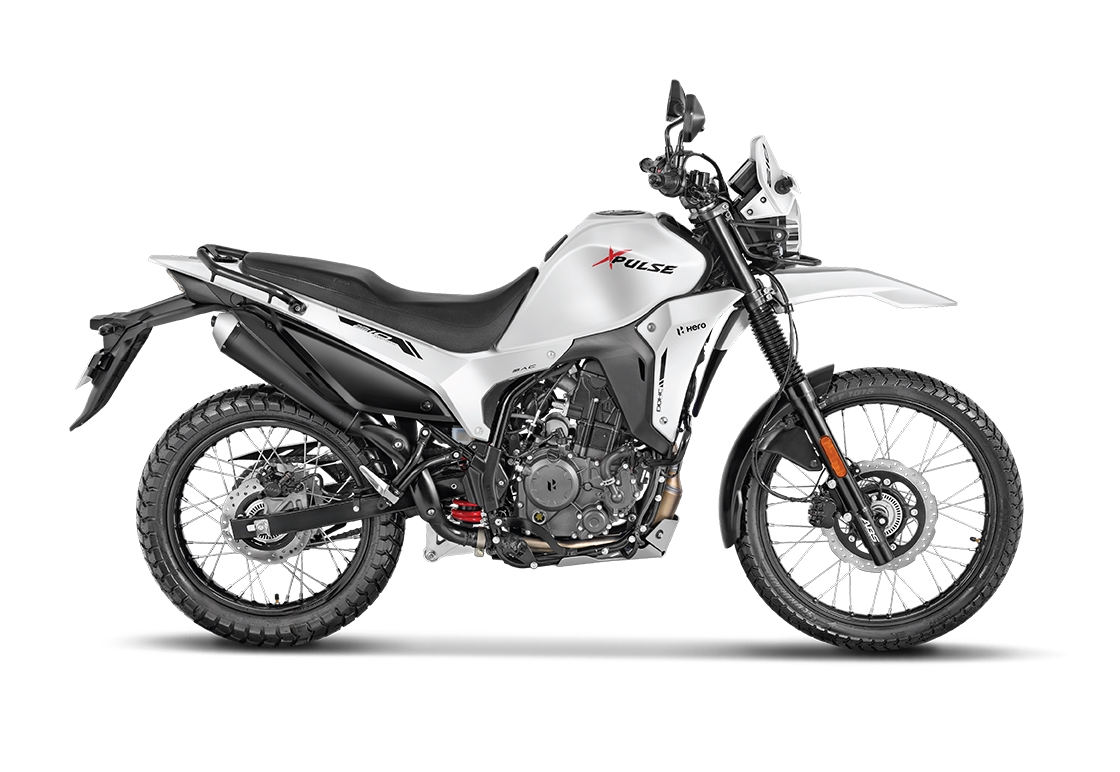
Hero Xpulse 210
- 210 cc Liquid-Cooled DOHC
- 24.6 PS @ 9250 rpm
- 37 km/l (Owner Reported)
- 13-litre tank
- 2 variants available
- 21-inch wheel, 220 mm clearance
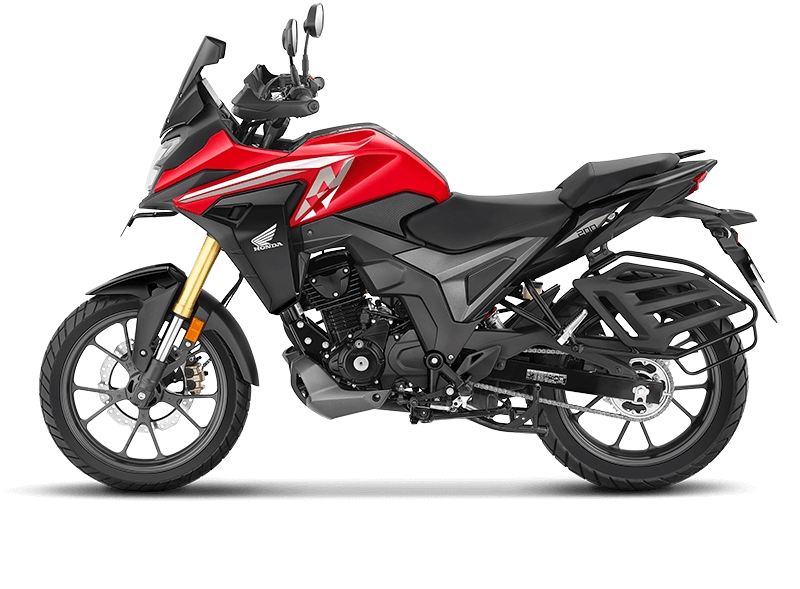
Honda NX200
- 184.4 cc Air-Cooled, 2-valve
- 16.9 PS @ 8500 rpm
- 42 km/l (Owner Reported)
- 12-litre tank
- 1 variant available
- USD forks, TFT display, 148 kg
Full Specification Comparison
Every number that matters — side by side
| Specification | Hero Xpulse 210 | Honda NX200 |
|---|---|---|
| Engine & Performance | ||
| Displacement | 210 cc | 184.4 cc |
| Cooling System | Liquid-Cooled | Air-Cooled |
| Max Power | 24.6 PS @ 9250 rpm | 16.9 PS @ 8500 rpm |
| Max Torque | 20.7 Nm @ 7250 rpm | 15.7 Nm @ 6000 rpm |
| Valves per Cylinder | 4 | 2 |
| Compression Ratio | 12 : 1 | 9.5 : 1 |
| Bore × Stroke | 73 × 50 mm | 61.0 × 63.096 mm |
| Emission Standard | BS6 Phase 2 | BS6 Phase 2 |
| Transmission | 6-Speed Manual | 5-Speed Manual |
| Clutch | Assist & Slip | Multiplate Wet |
| Top Speed | ~120 km/h | ~130 km/h |
| Riding Modes | ABS Modes (switchable) | No |
| Traction Control | No | No |
| Fuel & Range | ||
| Mileage (Claimed) | 37 km/l (Owner Reported) | 42 km/l (Owner Reported) |
| Fuel Tank | 13 litres | 12 litres |
| Reserve Capacity | 2.6 litres | 1.9 litres |
| Riding Range | ~481 km | ~504 km |
| Brakes & Wheels | ||
| Braking System | Single / Dual Channel ABS (variant) | Dual Channel ABS (standard) |
| Front Brake | Disc – 276 mm | Disc – 276 mm |
| Rear Brake | Disc – 220 mm | Disc – 220 mm |
| Tyre Type | Tube | Tubeless |
| Tyre Size (F / R) | 90/90-21 / 120/80-18 | 110/70-17 / 140/70-17 |
| Wheel Type | Spoke | Alloy |
| Front Wheel Size | 21 inch | 17 inch |
| Suspension & Chassis | ||
| Front Suspension | Telescopic 41 mm with Anti-Friction Bush | USD (Upside Down) Fork |
| Rear Suspension | 10-Step Adjustable Gas Monoshock | Monoshock |
| Chassis | Semi Double Cradle High Tensile Steel | Diamond Type |
| Rear Preload Adjuster | Yes | No |
| Dimensions & Weight | ||
| Kerb Weight | 168 kg | 148 kg |
| Seat Height | 830 mm | 810 mm |
| Ground Clearance | 220 mm | 167 mm |
| Wheelbase | 1446 mm | 1355 mm |
| Overall L × W × H | 2254 × 872 × 1230 mm | 2035 × 843 × 1248 mm |
| Features & Electronics | ||
| Instrument Console | 4.2 inch Digital LCD / TFT (top variant) | Fully Digital TFT (standard) |
| Headlight | LED Projector with DRL | LED |
| DRLs | Yes | Yes |
| Turn Signals | LED | LED |
| Hazard Warning Lights | Yes | Yes |
| Riding Modes | ABS Modes (switchable) | No |
| Traction Control | No | No |
| Bluetooth Connectivity | Yes | Yes |
| Call & SMS Alerts | Yes | Yes |
| USB Charging Port | Yes | Yes |
| Distance to Empty | Yes | Yes |
| Gear Indicator | Yes | Yes |
| Tachometer | Digital | Digital |
| Windscreen | Yes (Top variant) | No |
| Knuckle Guards | Yes (Top variant) | No |
| Keyless Ignition | No | No |
| Price & Warranty | ||
| Starting Price (ex-showroom) | ₹1,62,901 | ₹1,57,748 |
| Top Variant Price | ₹1,71,821 | ₹1,57,748 |
| Number of Variants | 2 | 1 |
| Standard Warranty | 5 Years / 70,000 km | 3 Years / 42,000 km |
★ Green highlights indicate the stronger value in each row. Prices are ex-showroom India averages and may vary by city.
Variant-wise Price Comparison
All variants laid out — find the right one for your budget
Hero Xpulse 210 Variants
Honda NX200 Variants
Pros & Cons
Honest strengths and weaknesses of each bike
Pros
- Significantly more powerful — 24.6 PS vs 16.9 PS
- Larger 210cc liquid-cooled DOHC engine
- Best-in-class off-road capability with 21-inch front wheel
- Superior ground clearance — 220 mm vs 167 mm
- Long-travel suspension for trails and rough roads
- Switchable ABS modes optimised for off-road use
- Assist & slipper clutch for smoother downshifts
- 6-speed gearbox for relaxed highway cruising
- LED projector headlight with DRL
- Windscreen and knuckle guards on top variant
- Exceptional 5-year / 70,000 km warranty
- Larger 13-litre fuel tank
Cons
- More expensive — starts ₹5,153 above NX200
- Heavier at 168 kg vs 148 kg
- Taller seat height — 830 mm vs 810 mm
- Spoke wheels require tube tyres (slower puncture repair)
- Lower fuel efficiency — 37 km/l vs 42 km/l
- Dual-channel ABS only on top variant
- TFT console only on top variant
- No USD forks on any variant
Pros
- Lower starting price — ₹1,57,748 vs ₹1,62,901
- Lighter at 148 kg — easier city manoeuvring
- Lower seat height — 810 mm, accessible for more riders
- Better fuel efficiency — 42 km/l vs 37 km/l
- USD front forks standard on the only variant
- TFT display standard from the base
- Dual-channel ABS standard on the only variant
- Tubeless alloy wheels — easy puncture repair
- Honda engine refinement and long-term reliability
- Longer estimated riding range (~504 km)
Cons
- Much less power — 16.9 PS vs 24.6 PS
- Smaller 184.4cc air-cooled 2-valve engine
- Only 17-inch front wheel — no off-road capability
- Far lower ground clearance — 167 mm vs 220 mm
- No switchable ABS modes or ride settings
- 5-speed gearbox vs 6-speed on Xpulse 210
- No rear preload adjuster
- Shorter warranty — 3 years / 42,000 km only
- Single variant — no choice flexibility
Key Differences Explained
What really sets these two bikes apart
Engine & Performance
The performance gap between these two is substantial. The Xpulse 210's 210cc liquid-cooled DOHC engine produces 24.6 PS and 20.7 Nm — a 45% power advantage over the NX200's 184.4cc air-cooled 2-valve motor which makes 16.9 PS and 15.7 Nm. The Xpulse also gains a 6-speed gearbox and an assist & slipper clutch. For any rider seeking spirited performance, the Xpulse 210 wins this comparison decisively.
Off-Road Capability
The Xpulse 210 is built for adventure — its 21-inch front spoke wheel, 220 mm ground clearance, long-travel 41 mm forks with anti-friction bush, 10-step adjustable gas monoshock, and switchable ABS modes designed for trails give it a decisive off-road advantage. The NX200's 17-inch alloy wheels, 167 mm clearance and road-biased suspension make it unsuitable for anything beyond light unpaved roads. This is the defining difference between these two motorcycles.
Fuel Efficiency & Range
The Honda NX200's smaller, air-cooled engine returns a better owner-reported 42 km/l versus the Xpulse 210's 37 km/l. With its 12-litre tank, the NX200 achieves a slightly longer estimated range of ~504 km versus ~481 km for the Xpulse's 13-litre tank. For daily urban commuters focused on fuel economy, the NX200's efficiency advantage is a genuine real-world benefit, saving roughly ₹3,000–5,000 per year at average usage.
Braking & City Usability
Both bikes share identical braking hardware — 276 mm front disc and 220 mm rear disc. However, the NX200 holds practical city advantages: it's 20 kg lighter (148 kg vs 168 kg), has a lower 810 mm seat height, and comes with dual-channel ABS and USD forks as standard on its single variant. Tubeless alloy wheels also mean faster, easier roadside puncture repairs — a significant real-world advantage for city riders over the Xpulse's tube-type spoke wheels.
Warranty & Ownership
The Xpulse 210 offers a dramatically superior 5-year / 70,000 km warranty against the NX200's 3-year / 42,000 km coverage. That's 67% more time and 67% more kilometre coverage. For a rider clocking 15,000 km annually, the Xpulse warranty lasts nearly 5 years; the NX200's expires in under 3. Hero's wide service network also rivals Honda's across Tier 2 and Tier 3 cities, making ownership convenient in either case.
Price & Value
The NX200 is priced ₹5,153 cheaper at entry level (₹1,57,748 vs ₹1,62,901). For that saving you get USD forks and a TFT display as standard — features the Xpulse reserves for its top variant at ₹1,71,821. However, the Xpulse packs dramatically more power, off-road capability, a slipper clutch and a longer warranty. The value question depends entirely on your use case: the NX200 is cheaper to buy and run in the city; the Xpulse offers more motorcycle for weekend adventure riders.
Expert Verdict
Which one should you actually buy?
Buy the Hero Xpulse 210 if…
- You want a genuine off-road capable dual-sport motorcycle
- Power matters — you need the extra 24.6 PS vs 16.9 PS
- You ride mixed city, highway and trail conditions
- Ground clearance and suspension travel are priorities
- You want a slipper clutch and 6-speed gearbox
- The 5-year / 70,000 km warranty is important to you
- You'll use the windscreen and knuckle guards (top variant)
- Weekend adventure riding is part of your lifestyle
Buy the Honda NX200 if…
- You primarily ride in cities and want a lighter bike
- Lower seat height (810 mm) is important for you
- Fuel efficiency and running costs are a top priority
- You want USD forks and TFT display at a lower price
- Tubeless alloy wheels for easy puncture handling matter
- Honda's engine refinement and brand reliability appeal to you
- Dual-channel ABS standard from the base variant is preferred
- Your riding is 90% or more road-focused
Overall Winner for Most Riders: Hero Xpulse 210. Despite costing ₹5,153 more at the entry level, the Hero Xpulse 210 delivers 45% more power, a liquid-cooled DOHC engine, genuine off-road capability with a 21-inch front wheel and 220 mm ground clearance, a slipper clutch, switchable ABS modes, a longer 5-year / 70,000 km warranty, and a bigger fuel tank. The Honda NX200 is the smarter choice only if you are an exclusively urban rider who values the lighter weight, lower seat height, better fuel economy, and Honda's proven city-commuter refinement — or if the ₹5,153 lower starting price is a meaningful budget constraint.
Frequently Asked Questions
Common questions answered by our experts
The Hero Xpulse 210 is better for riders who want off-road capability, more power (24.6 PS vs 16.9 PS), switchable ABS modes, a slipper clutch and a superior 5-year / 70,000 km warranty. The Honda NX200 is better for purely urban riders who want a lighter bike (148 kg), lower seat height (810 mm), better fuel efficiency (42 km/l), USD forks, a TFT display at a lower starting price, and tubeless alloy wheels.
The Honda NX200 starts at ₹1,57,748 while the Hero Xpulse 210 starts at ₹1,62,901 — making the NX200 ₹5,153 cheaper at entry level. However, the NX200 has only a single variant, while the Xpulse 210's top variant at ₹1,71,821 adds a TFT console, dual-channel ABS, windscreen and knuckle guards. Both prices are approximate ex-showroom India figures and may vary by city.
The Honda NX200 has better fuel efficiency at an owner-reported 42 km/l compared to the Hero Xpulse 210's 37 km/l. Neither motorcycle has an official ARAI-certified figure. Despite the Xpulse's larger 13-litre tank, the NX200's better efficiency gives it a slightly longer estimated riding range of ~504 km versus ~481 km for the Xpulse 210.
The Hero Xpulse 210 makes significantly more power at 24.6 PS @ 9250 rpm compared to the Honda NX200's 16.9 PS @ 8500 rpm — a 45% advantage. The Xpulse also produces considerably more torque at 20.7 Nm vs 15.7 Nm. The Xpulse's 210cc liquid-cooled DOHC engine is a more advanced and powerful unit in every respect compared to the NX200's 184.4cc air-cooled 2-valve motor.
The Hero Xpulse 210 is far better for off-road riding. Its 21-inch front spoke wheel, 220 mm ground clearance, long-travel 41 mm telescopic forks, 10-step adjustable gas monoshock, and switchable ABS modes are all purpose-built for trail riding. The Honda NX200 uses 17-inch alloy wheels and has only 167 mm of ground clearance, making it a road-biased commuter with no serious off-road capability.
The Hero Xpulse 210 offers a substantially better warranty at 5 years / 70,000 km compared to the Honda NX200's 3 years / 42,000 km. The Xpulse's warranty covers 67% more time and 67% more distance. For riders doing 15,000 km annually, the Xpulse 210's warranty remains active nearly 5 years while the NX200's coverage would expire in under 3 years — a meaningful long-term ownership advantage.