At a Glance
Key differences that define each motorcycle
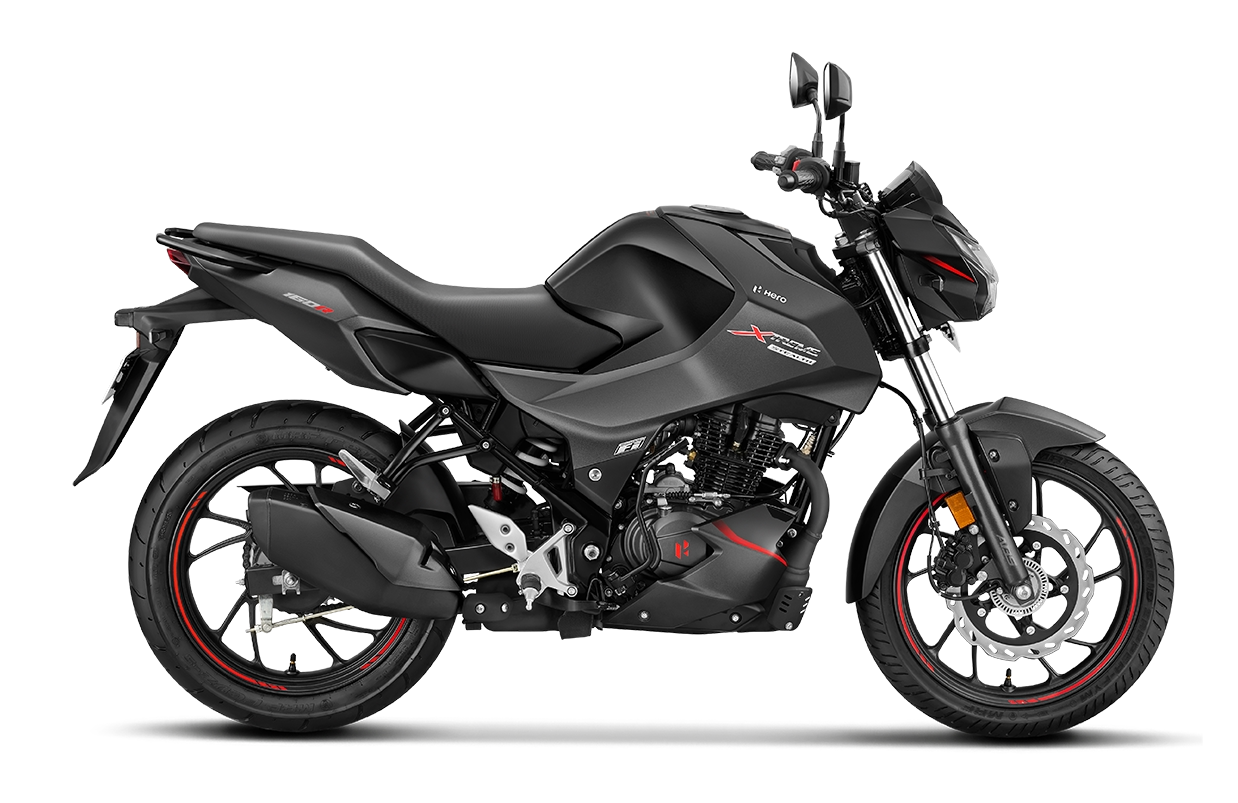
Hero Xtreme 160R
- 163.2 cc Air-Cooled, 2-valve
- 14.79 bhp @ 8500 rpm
- 49.65 km/l (ARAI)
- 12-litre tank
- 1 variant available
- Lightest at 138.5 kg
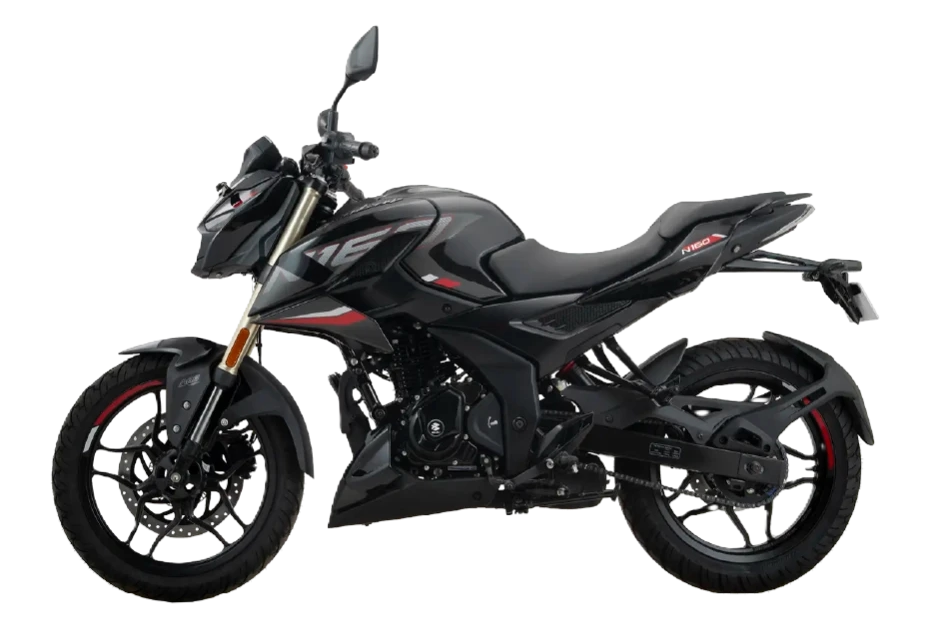
Bajaj Pulsar N160
- 164.82 cc Air-Cooled, 2-valve
- 16 PS @ 8750 rpm
- 51.6 km/l (ARAI)
- 14-litre tank
- 4 variants available
- Dual-channel ABS (most variants)
Full Specification Comparison
Every number that matters — side by side
| Specification | Hero Xtreme 160R | Bajaj Pulsar N160 |
|---|---|---|
| Engine & Performance | ||
| Displacement | 163.2 cc | 164.82 cc |
| Cooling System | Air-Cooled | Air-Cooled |
| Max Power | 14.79 bhp @ 8500 rpm | 16 PS @ 8750 rpm |
| Max Torque | 14 Nm @ 6500 rpm | 14.65 Nm @ 6750 rpm |
| Valves per Cylinder | 2 | 2 |
| Compression Ratio | 9.8:1 | 10.3 ± 0.3 : 1 |
| Bore × Stroke | 57.3 × 63.3 mm | 58 × 62.38 mm |
| Emission Standard | BS6 / OBD2B | BS6 Phase 2 |
| Transmission | 5-Speed Manual | 5-Speed Manual |
| Top Speed | 107 km/h | ~120 km/h |
| Riding Modes | No | No (Road/Rain/Off-Road on top variant) |
| Traction Control | No | No |
| Fuel & Range | ||
| Mileage (ARAI) | 49.65 km/l | 51.6 km/l |
| Mileage (Real-world) | ~44–48 km/l | 45–50 km/l |
| Fuel Tank | 12 litres | 14 litres |
| Reserve Capacity | 1.9 litres | 2.8 litres |
| Riding Range | ~596 km | ~722 km |
| Brakes & Wheels | ||
| Braking System | Single Channel ABS | Single / Dual Channel ABS |
| Front Brake | Disc – 276 mm | Disc – 300 mm |
| Rear Brake | Drum – 130 mm | Disc – 230 mm |
| Tyre Type | Tubeless | Tubeless |
| Tyre Size (F / R) | 100/80-17 / 130/70-17 | 100/80-17 / 130/70-17 |
| Wheel Type | Alloy | Alloy |
| Suspension & Chassis | ||
| Front Suspension | Telescopic Fork | Telescopic / USD Fork (top variants) |
| Rear Suspension | 7-Step Adjustable Monoshock | Monoshock |
| Chassis | Tubular Diamond Frame | Perimeter Frame |
| Rear Preload Adjuster | Yes (7-step) | Yes |
| Dimensions & Weight | ||
| Kerb Weight | 138.5 kg | 152–154 kg |
| Seat Height | 790 mm | 795 mm |
| Ground Clearance | 165 mm | 165 mm |
| Wheelbase | 1327 mm | 1358 mm |
| Overall L × W × H | 2029 × 793 × 1052 mm | 1989 × 743 × 1050 mm |
| Features & Electronics | ||
| Instrument Console | Fully Digital LCD | Digital |
| Headlight | LED | LED Projector |
| DRLs | Yes | Yes |
| Turn Signals | LED | LED |
| Hazard Warning Lights | Yes | Yes |
| Bluetooth Connectivity | No | Yes (all variants) |
| Call & SMS Alerts | No | Yes |
| USB Charging Port | No | Yes |
| Distance to Empty | No | Yes |
| Gear Indicator | No | Yes |
| Tachometer | Digital | Digital |
| Keyless Ignition | No | No |
| Price & Warranty | ||
| Starting Price (ex-showroom) | ₹1,05,667 | ₹1,14,840 |
| Top Variant Price | ₹1,05,667 | ₹1,27,333 |
| Number of Variants | 1 | 4 |
| Standard Warranty | 5 Years / 70,000 km | 5 Years / 75,000 km |
★ Green highlights indicate the stronger value in each row. Prices are ex-showroom India averages and may vary by city.
Variant-wise Price Comparison
All variants laid out — find the right one for your budget
Hero Xtreme 160R Variants
Bajaj Pulsar N160 Variants
Pros & Cons
Honest strengths and weaknesses of each bike
Pros
- Significantly lower starting price (₹1,05,667)
- Lightest in class at only 138.5 kg — easiest to handle
- Lower seat height (790 mm) — more accessible for shorter riders
- 7-step adjustable rear monoshock for ride customisation
- Good ARAI mileage at 49.65 km/l
- LED lighting with hazard warning lights standard
- Simpler ownership with one variant — no complex choice
- Sharp streetfighter styling
Cons
- Lower power output (14.79 bhp vs 16 PS)
- Only single-channel ABS — no dual-channel option
- Rear drum brake on only variant
- Smaller 276 mm front disc vs 300 mm on N160
- No Bluetooth connectivity
- No USB charging port
- No gear indicator on instrument console
- Smaller 12-litre tank gives shorter range (~596 km)
- No distance-to-empty display
- Shorter warranty km coverage (70,000 km)
- Diamond frame vs sportier perimeter frame on N160
- Lower top speed (~107 km/h)
Pros
- More powerful engine — 16 PS @ 8750 rpm
- Higher top speed (~120 km/h)
- Dual-channel ABS available from ₹1,17,619
- Larger 300 mm front disc brake
- Rear disc brake (230 mm) on all variants
- Superior 14-litre fuel tank (~722 km range)
- Better ARAI mileage (51.6 km/l)
- Bluetooth connectivity on all variants
- USB charging port standard
- Distance to Empty display
- Gear indicator standard
- Perimeter frame for better rigidity
- USD forks available on top variants
- Riding modes on top split-seat variant
- Superior 5-year / 75,000 km warranty
- 4 variant choices for different budgets
Cons
- Higher starting price — ₹9,173 more than Xtreme 160R
- Heavier at 152–154 kg vs 138.5 kg
- Higher seat height (795 mm)
- No traction control on any variant
- Instrument console not TFT
Key Differences Explained
What really sets these two bikes apart
Engine & Performance
Both bikes use air-cooled, 2-valve, single-cylinder engines of nearly identical displacement. The Bajaj Pulsar N160's 164.82 cc engine produces 16 PS @ 8750 rpm and 14.65 Nm — meaningfully ahead of the Hero Xtreme 160R's 163.2 cc unit at 14.79 bhp @ 8500 rpm and 14 Nm. The N160's higher compression ratio (10.3:1 vs 9.8:1) and larger top speed (~120 km/h vs 107 km/h) make it the stronger performer, particularly on highways where the extra power is most felt.
Fuel Efficiency & Range
The Pulsar N160 leads on both efficiency and range. It delivers a better ARAI-certified 51.6 km/l versus 49.65 km/l for the Xtreme 160R. More significantly, the N160's 14-litre tank versus the Xtreme 160R's 12-litre tank gives it a theoretical range of ~722 km against just ~596 km. For riders who travel long distances or live in areas with fewer fuel stations, this 126 km range advantage is substantial.
Braking & Safety
The Pulsar N160 is decisively ahead in braking hardware. It features a larger 300 mm front disc (vs 276 mm on the Xtreme 160R), a rear disc brake on all variants (vs rear drum on the Xtreme 160R), and offers dual-channel ABS from just ₹1,17,619. The Hero Xtreme 160R only offers single-channel ABS with a rear drum brake in its sole variant. For riders who prioritise emergency braking confidence, the N160 is clearly the safer motorcycle.
Weight & Handling
The Hero Xtreme 160R has a decisive edge here. At just 138.5 kg, it is 13.5–15.5 kg lighter than the N160's 152–154 kg. This makes the Xtreme 160R significantly more nimble in slow city traffic and easier to manoeuvre in tight spaces. Its lower seat height of 790 mm (vs 795 mm) also makes it more accessible to shorter riders. The N160's perimeter frame gives it better high-speed stability, but the Xtreme 160R's lightweight advantage is very real in everyday urban riding.
Features & Connectivity
The Pulsar N160 wins convincingly on features. It offers Bluetooth connectivity, USB charging, distance-to-empty display, call & SMS alerts, and a gear indicator — all standard across every variant. The Hero Xtreme 160R has none of these connected features. Both bikes offer LED lighting and hazard warning lights, but the N160 adds an LED projector headlight to its superior specification. The Xtreme 160R's fully digital LCD is well laid out but lacks the connectivity hooks of the N160's console.
Price & Value
The Hero Xtreme 160R starts ₹9,173 cheaper at ₹1,05,667 — a meaningful saving in the budget-sensitive 160cc segment. For buyers who need basic commuting capability and want to spend as little as possible, the Xtreme 160R is a straightforward choice. However, the Pulsar N160's ₹1,17,619 Dual Channel ABS variant offers dramatically better braking safety, Bluetooth, USB, longer range and more power for only ₹11,952 more than the Xtreme 160R — making it arguably the stronger value for safety- and feature-conscious buyers.
Expert Verdict
Which one should you actually buy?
Buy the Hero Xtreme 160R if…
- Budget is tight — it's ₹9,173 cheaper to enter
- Lightweight handling (138.5 kg) is important to you daily
- A lower seat height (790 mm) helps you reach the ground
- You want simple, fuss-free ownership without variant choices
- City-only usage where the power gap matters less
- You're a beginner rider wanting an easy-to-manage motorcycle
Buy the Bajaj Pulsar N160 if…
- Dual-channel ABS for maximum braking safety matters to you
- You want better highway performance (16 PS, ~120 km/h)
- Longer riding range (~722 km) suits your commute pattern
- Bluetooth and USB charging are daily-use necessities
- A rear disc brake improves your confidence
- The superior 5-year / 75,000 km warranty is a priority
- You want multiple variant choices to suit your budget
- USD forks or riding modes are future upgrades you want
Overall Winner for Most Riders: Bajaj Pulsar N160. More power (16 PS), dual-channel ABS from just ₹1,17,619, a larger 300 mm front disc, a rear disc brake, a bigger 14-litre fuel tank for 126 km more range, better mileage (51.6 km/l ARAI), Bluetooth and USB charging standard on all variants, a perimeter frame for better stability, a superior 5-year / 75,000 km warranty, and four variant choices make the Pulsar N160 the better-equipped and more capable machine for the majority of Indian riders. The Hero Xtreme 160R is the right choice only if the ₹9,173 lower starting price or its class-leading 138.5 kg lightweight is your single most important criterion.
Frequently Asked Questions
Common questions answered by our experts
The Bajaj Pulsar N160 is better for most buyers — it offers more power (16 PS vs 14.79 bhp), dual-channel ABS from ₹1,17,619, a larger 300 mm front disc, a rear disc brake, Bluetooth and USB charging on all variants, a bigger 14-litre tank with ~722 km range, better mileage (51.6 km/l), and a superior 5-year / 75,000 km warranty. The Hero Xtreme 160R is better only if you need the lowest starting price (₹1,05,667) or value its class-leading lightweight 138.5 kg chassis for city manoeuvrability.
The Hero Xtreme 160R starts at ₹1,05,667 while the Bajaj Pulsar N160 starts at ₹1,14,840 ex-showroom — a base difference of ₹9,173. The Xtreme 160R is only available in one variant, while the N160 ranges from ₹1,14,840 to ₹1,27,333 across four variants. Notably, the N160's second variant with Dual Channel ABS at ₹1,17,619 is only ₹11,952 more than the Xtreme 160R, making it a compelling upgrade for the braking safety improvement alone.
The Bajaj Pulsar N160 has marginally better ARAI-certified mileage at 51.6 km/l versus the Hero Xtreme 160R's 49.65 km/l. The real-world difference is small. However, the N160's 14-litre tank versus the Xtreme 160R's 12-litre tank means the N160 can travel approximately 722 km on a full tank compared to around 596 km for the Xtreme 160R — a significant 126 km range advantage that matters for longer commutes.
The Bajaj Pulsar N160 makes more power at 16 PS @ 8750 rpm and 14.65 Nm @ 6750 rpm, compared to the Hero Xtreme 160R's 14.79 bhp @ 8500 rpm and 14 Nm @ 6500 rpm. The N160 also has a higher compression ratio (10.3:1 vs 9.8:1) and a higher top speed of approximately 120 km/h versus 107 km/h for the Xtreme 160R. The performance gap is most noticeable at highway speeds above 80 km/h.
No. The Hero Xtreme 160R is only available with single-channel ABS in its single variant. It also uses a rear drum brake. The Bajaj Pulsar N160 offers dual-channel ABS from its second variant at ₹1,17,619, and all N160 variants come with a rear disc brake. For maximum braking safety, the Pulsar N160's Dual Channel ABS variant is the significantly safer choice.
The Bajaj Pulsar N160 offers a better warranty at 5 years / 75,000 km compared to the Hero Xtreme 160R's 5 years / 70,000 km. Both cover 5 years but the N160 provides an extra 5,000 km of warranty coverage. For high-mileage commuters travelling 15,000–20,000 km per year, the N160's additional coverage reduces the risk of paying for out-of-warranty repairs during the final year of heavy use.
The Hero Xtreme 160R is significantly lighter at 138.5 kg compared to the Bajaj Pulsar N160 at 152–154 kg — a difference of 13.5–15.5 kg. This makes the Xtreme 160R considerably more agile in city traffic, easier to pick up if dropped and more manageable for shorter or lighter riders. The N160's extra weight is partly due to its larger fuel tank, rear disc brake setup and perimeter frame construction.