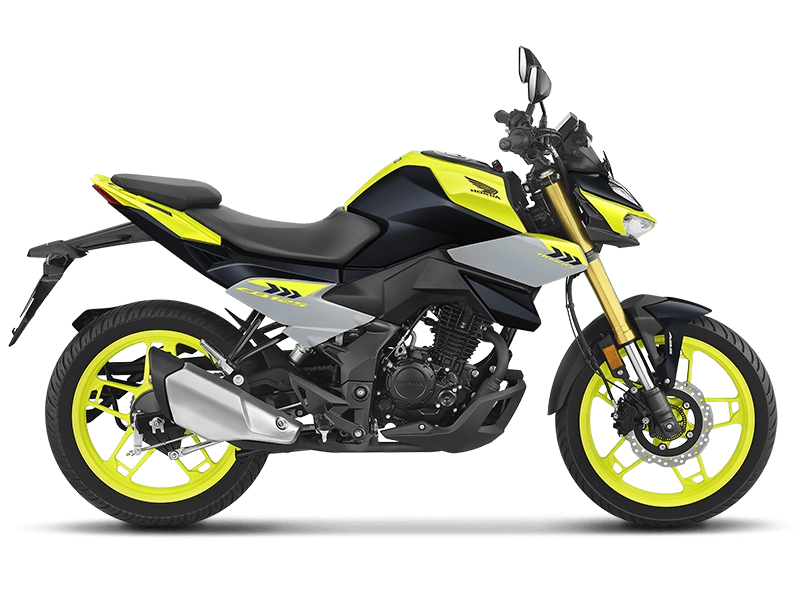
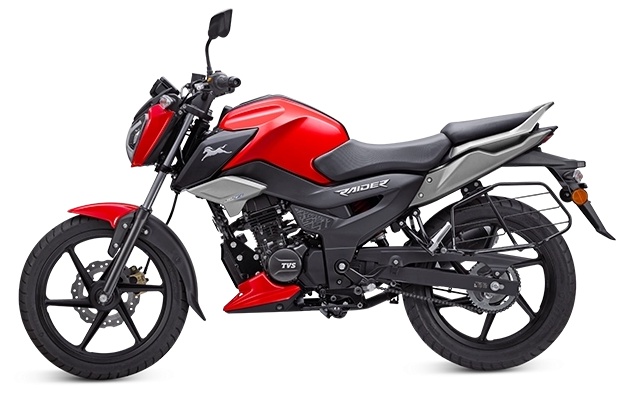
At a Glance
Key differences that define each motorcycle
Honda CB 125 Hornet
- 123.94 cc Air-Cooled
- 11.14 PS @ 7500 rpm
- ~48 km/l (Claimed)
- 12-litre tank
- 1 variant available
- Single-channel ABS
TVS Raider 125
- 124.8 cc Air & Oil Cooled
- 11.38 PS @ 7500 rpm
- 71.94 km/l (ARAI)
- 10-litre tank
- 7 variants available
- CBS on disc variants
Full Specification Comparison
Every number that matters — side by side
| Specification | CB 125 Hornet | Raider 125 |
|---|---|---|
| Engine & Performance | ||
| Displacement | 123.94 cc | 124.8 cc |
| Cooling System | Air Cooled | Air & Oil Cooled |
| Max Power | 11.14 PS @ 7500 rpm | 11.38 PS @ 7500 rpm |
| Max Torque | 11.2 Nm @ 6000 rpm | 11.75 Nm @ 6000 rpm |
| Valves per Cylinder | 2 | 3 |
| Compression Ratio | 10.0:1 | 10.3:1 |
| Bore × Stroke | 50.0 × 63.121 mm | 53.5 × 55.5 mm |
| Emission Standard | BS6 Phase 2 | BS6 Phase 2 |
| Transmission | 5-Speed Manual | 5-Speed Manual |
| Top Speed | ~95 kmph | 99 kmph |
| Riding Modes | No | Eco & Power (select variants) |
| Fuel & Range | ||
| Mileage (ARAI / Claimed) | ~48 km/l (Claimed) | 71.94 km/l (ARAI) |
| Mileage (Real-world est.) | 42–46 km/l | 58–65 km/l |
| Fuel Tank | 12 litres | 10 litres |
| Reserve Capacity | 2 litres | 1.6 litres |
| Riding Range (est.) | ~660 km | ~650–700 km |
| Brakes & Wheels | ||
| Braking System | Single Channel ABS | CBS (Synchronized Braking) |
| Front Brake | Disc – 240 mm | Disc – 240 mm (Drum on base) |
| Rear Brake | Drum – 130 mm | Drum / Disc (variant dependent) |
| Tyre Type | Tubeless | Tubeless |
| Tyre Size (F / R) | 80/100-17 / 110/80-17 | 80/100-17 / 100/90-17 |
| Wheel Type | Alloy | Alloy |
| Suspension & Chassis | ||
| Front Suspension | Upside Down Fork (USD) | Telescopic Fork |
| Rear Suspension | Monoshock | Monoshock (5-step adjustable) |
| Chassis | Diamond Type | Single Cradle Tubular Frame |
| Rear Preload Adjuster | No | Yes |
| Dimensions & Weight | ||
| Kerb Weight | 124 kg | 123–125 kg |
| Seat Height | 796 mm | 780 mm |
| Ground Clearance | 166 mm | 180 mm |
| Wheelbase | 1330 mm | 1326 mm |
| Overall L × W × H | 2015 × 783 × 1087 mm | 2070 × 785 × 1028 mm |
| Features & Electronics | ||
| Instrument Console | 4.2-inch TFT Digital | Digital Reverse LCD / 5-inch TFT (top variant) |
| Headlight | LED | LED |
| DRLs | Yes | Yes |
| Turn Signals | LED | Bulb |
| Hazard Warning Lights | No | Yes |
| Bluetooth Connectivity | Yes (standard) | Yes (select variants) |
| USB Charging Port | Yes (standard) | Yes (select variants) |
| Call & SMS Alerts | Yes (standard) | Yes (Bluetooth variants) |
| Distance to Empty | Yes (standard) | Yes (TFT variant only) |
| Gear Indicator | Yes | Yes |
| Idle Stop-Start | No | Yes (iGO variant) |
| Riding Modes | No | Eco & Power (select variants) |
| Traction Control | No | No |
| Keyless Ignition | No | No |
| Price & Warranty | ||
| Starting Price (ex-showroom) | ₹1,14,423 | ₹84,490 |
| Top Variant Price | ₹1,14,423 (single variant) | ₹97,719 |
| Number of Variants | 1 | 7 |
| Standard Warranty | 3 Years | 5 Years / 60,000 km |
★ Green highlights indicate the stronger value in each row. Prices are ex-showroom India averages and may vary by city.
Variant-wise Price Comparison
All variants laid out — find the right one for your budget
Honda CB 125 Hornet Variants
TVS Raider 125 Variants
Pros & Cons
Honest strengths and weaknesses of each bike
Pros
- Segment-first USD front forks for superior handling
- 4.2-inch TFT display as standard on the only variant
- Bluetooth, USB charging and call alerts standard
- Single-channel ABS for improved braking safety
- LED turn signals for better visibility
- Honda's renowned refinement and reliability
- Larger 12-litre fuel tank
Cons
- Much lower mileage (~48 km/l vs 71.94 km/l ARAI)
- Significantly higher price — ₹1,14,423 vs ₹84,490
- Only 1 variant — no budget or mid-range option
- Shorter warranty — 3 years vs 5 years
- No hazard warning lights
- Rear drum brake only
- Lower ground clearance (166 mm vs 180 mm)
Pros
- Best-in-class ARAI mileage of 71.94 km/l
- 7 variants covering a wide price range
- Much lower starting price (₹84,490)
- Higher torque (11.75 Nm) for stronger city pull
- Air & oil cooled engine for better thermal management
- 5-year / 60,000 km warranty
- Better ground clearance (180 mm)
- 5-step adjustable rear monoshock
- Hazard warning lights standard
- Riding modes and idle stop-start on select variants
Cons
- No ABS — CBS braking only
- Conventional telescopic fork (no USD)
- Bulb turn signals (not LED)
- TFT and Bluetooth only on top-tier variants
- Smaller 10-litre fuel tank
- Firm seat on longer rides
Key Differences Explained
What really sets these two bikes apart
Engine Character
The CB 125 Hornet uses a 123.94 cc air-cooled, 2-valve Honda engine known for smooth, refined power delivery. The Raider 125 uses a 124.8 cc air & oil-cooled, 3-valve unit with stronger torque (11.75 Nm vs 11.2 Nm), better mid-range pull, and marginally more power (11.38 PS vs 11.14 PS).
Fuel Efficiency & Range
The Raider 125 dominates with an ARAI-certified 71.94 km/l versus the Hornet's claimed 48 km/l — a massive gap of nearly 24 km/l. The Hornet's larger 12-litre tank partially offsets this, giving both bikes a similar estimated range of around 650–700 km.
Suspension & Handling
The CB 125 Hornet's biggest hardware advantage is its USD (Upside Down) front fork — a first in the 125cc commuter segment — offering superior front-end stability, reduced unsprung weight and sharper steering feedback. The Raider uses conventional forks but has a 5-step adjustable rear monoshock.
Braking & Safety
The CB 125 Hornet has a clear edge here with single-channel ABS as standard — a critical safety feature the Raider 125 does not offer on any variant. The Raider uses CBS (Synchronized Braking Technology) on disc variants. Both share the same 240 mm front disc size.
Technology & Features
Both bikes offer TFT displays and Bluetooth, but with an important difference: the Hornet includes a 4.2-inch TFT, Bluetooth, USB charging, call/SMS alerts and distance-to-empty as standard on its only variant. The Raider requires stepping up to the ₹95,862+ SXC or TFT variants to access similar connectivity.
Price & Value
The Raider 125 starts at ₹84,490 — nearly ₹30,000 less than the Hornet's ₹1,14,423. Even the fully loaded Raider TFT variant at ₹97,719 costs ₹16,704 less. With a longer 5-year warranty versus Honda's 3 years, the Raider also scores better on long-term value.
Expert Verdict
Which one should you actually buy?
Buy the CB 125 Hornet if…
- Handling and front-end feel matter — you want USD forks
- ABS braking safety is a non-negotiable priority
- You want TFT and Bluetooth as guaranteed standard features
- Honda reliability and refinement are important to you
- You prefer a refined, smooth engine character
- A larger fuel tank (12 litres) is preferred
Buy the Raider 125 if…
- You want the best fuel economy in the 125cc segment
- Budget is a priority — nearly ₹30,000 cheaper at base
- You want variant flexibility across 7 price points
- A longer 5-year warranty matters for peace of mind
- Better ground clearance for rough roads is important
- Stronger mid-range torque for city riding
- You prefer riding modes and idle stop-start tech
Overall Winner for Most Riders: TVS Raider 125. A near ₹30,000 lower starting price, vastly superior ARAI mileage, more variant options, longer warranty, better ground clearance and stronger torque make the Raider the more practical everyday choice. Choose the Honda CB 125 Hornet only if USD forks, ABS safety and guaranteed TFT connectivity as standard — backed by Honda's refinement — justify its significant price premium for you.
Frequently Asked Questions
Common questions answered by our experts
The TVS Raider 125 is better for most buyers due to its superior ARAI mileage (71.94 km/l vs ~48 km/l claimed), much lower price, 7 variant choices, stronger torque, and a longer 5-year warranty. The Honda CB 125 Hornet is better if you want USD front forks for superior handling, ABS braking safety, guaranteed TFT display with Bluetooth as standard, and Honda's renowned refinement and reliability.
The TVS Raider 125 starts at ₹84,490 while the Honda CB 125 Hornet is priced at ₹1,14,423 ex-showroom (single variant). The CB 125 Hornet is approximately ₹29,933 more expensive than the Raider's base variant. Even the fully loaded Raider TFT Dual Disc at ₹97,719 remains ₹16,704 cheaper than the Hornet. Both prices are for India and may vary by city.
The TVS Raider 125 has significantly better mileage at 71.94 km/l (ARAI certified), while the Honda CB 125 Hornet delivers a claimed mileage of only ~48 km/l. In real-world conditions, the Raider typically returns 58–65 km/l versus approximately 42–46 km/l for the Hornet. For daily commuters, the Raider's mileage advantage translates to substantial fuel savings over time.
Yes — the Honda CB 125 Hornet features Upside Down (USD) front forks as standard, which is a first in the 125cc commuter segment and a key differentiator over rivals. The TVS Raider 125 uses conventional telescopic forks on all its variants. The USD forks on the Hornet provide better front-end stability, reduced weight and sharper handling response.
Yes — the Honda CB 125 Hornet comes with single-channel ABS as standard. The TVS Raider 125 does not offer ABS on any of its 7 variants; instead it uses CBS (Synchronized Braking Technology) on all disc-equipped variants. If ABS is a priority for safety, the Honda CB 125 Hornet is the clear choice.
The TVS Raider 125 offers a significantly better warranty of 5 years or 60,000 km compared to the Honda CB 125 Hornet's 3-year warranty. This is a notable advantage for the Raider, especially given that Honda's bike also costs considerably more. The Raider's longer warranty reduces long-term ownership risk and repair costs.