At a Glance
Key differences that define each motorcycle
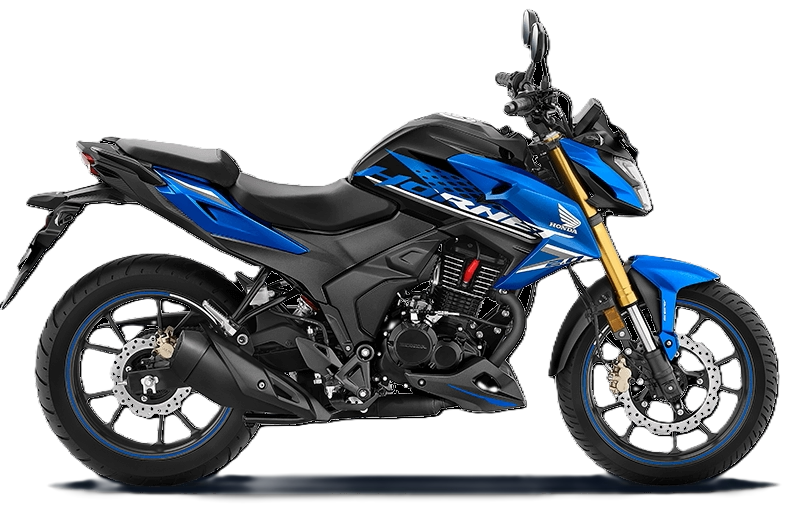
Honda Hornet 2.0
- 184.4 cc Air-Cooled, 2-valve
- 17.03 PS @ 8500 rpm
- 42.3 km/l (ARAI)
- 12-litre tank
- 1 variant available
- USD front forks standard
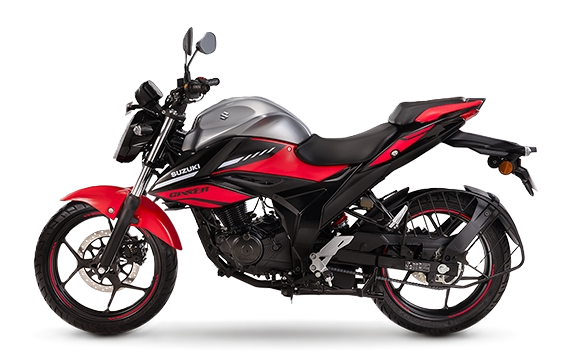
Suzuki Gixxer
- 155 cc Air-Cooled, 2-valve
- 13.6 PS @ 8000 rpm
- 45 km/l (Claimed)
- 12-litre tank
- 1 variant available
- Bluetooth connectivity
Full Specification Comparison
Every number that matters — side by side
| Specification | Honda Hornet 2.0 | Suzuki Gixxer |
|---|---|---|
| Engine & Performance | ||
| Displacement | 184.4 cc | 155 cc |
| Cooling System | Air-Cooled | Air-Cooled |
| Max Power | 17.03 PS @ 8500 rpm | 13.6 PS @ 8000 rpm |
| Max Torque | 16.1 Nm @ 6000 rpm | 13.8 Nm @ 6000 rpm |
| Valves per Cylinder | 2 | 2 |
| Compression Ratio | 9.5 : 1 | 9.8 : 1 |
| Bore × Stroke | 61 × 63.1 mm | 56 × 62.9 mm |
| Emission Standard | BS6 OBD2 | BS6 Phase 2 |
| Transmission | 5-Speed Manual | 5-Speed Manual |
| Top Speed | 130 km/h | 115 km/h |
| Riding Modes | No | No |
| Traction Control | No | No |
| Fuel & Range | ||
| Mileage (Claimed) | 42.3 km/l (ARAI) | 45 km/l (Claimed) |
| Fuel Tank | 12 litres | 12 litres |
| Reserve Capacity | 1.9 litres | 2.4 litres |
| Riding Range | ~504 km | ~540 km |
| Brakes & Wheels | ||
| Braking System | Single Channel ABS | Single Channel ABS |
| Front Brake | Disc – 276 mm | Disc – 266 mm |
| Rear Brake | Disc – 220 mm | Disc – 240 mm |
| Tyre Type | Tubeless | Tubeless |
| Tyre Size (F / R) | 110/70-17 / 140/70-17 | 100/80-17 / 140/60R17 |
| Wheel Size | 17 inch (F & R) | 17 inch (F & R) |
| Wheel Type | Alloy | Alloy |
| Suspension & Chassis | ||
| Front Suspension | USD Fork | Telescopic |
| Rear Suspension | Monoshock | Swing Arm Monoshock |
| Chassis | Diamond Type Frame | Diamond Frame |
| Front Preload Adjuster | No | No |
| Rear Preload Adjuster | Yes | Yes |
| Dimensions & Weight | ||
| Kerb Weight | 142 kg | 141 kg |
| Seat Height | 790 mm | 795 mm |
| Ground Clearance | 168 mm | 160 mm |
| Wheelbase | 1355 mm | 1335 mm |
| Overall L × W × H | 2047 × 783 × 1064 mm | 2020 × 800 × 1035 mm |
| Features & Electronics | ||
| Instrument Console | Fully Digital LCD | Fully Digital LCD |
| Headlight | LED | LED |
| DRLs | Yes | Yes |
| Tail Light | LED | LED |
| Turn Signals | LED | Halogen |
| Hazard Warning Lights | Yes | No |
| Riding Modes | No | No |
| Traction Control | No | No |
| Bluetooth Connectivity | No | Yes |
| Call & SMS Alerts | No | Yes |
| USB Charging Port | No | No |
| Gear Indicator | Yes | Yes |
| Service Reminder | Yes | No |
| Tachometer | Digital | Digital |
| Keyless Ignition | No | No |
| Price & Warranty | ||
| Starting Price (ex-showroom) | ₹1,47,151 | ₹1,28,892 |
| Number of Variants | 1 | 1 |
| Standard Warranty | 3 Years | 2 Years / 30,000 km |
★ Green highlights indicate the stronger value in each row. Prices are ex-showroom India averages and may vary by city.
Variant-wise Price Comparison
All variants laid out — find the right one for your budget
Honda Hornet 2.0 Variants
Suzuki Gixxer Variants
Pros & Cons
Honest strengths and weaknesses of each bike
Pros
- Significantly more powerful — 17.03 PS vs 13.6 PS
- Larger 184.4 cc engine with stronger torque (16.1 Nm)
- Premium USD front forks for superior handling
- Higher top speed — 130 km/h vs 115 km/h
- Larger 276 mm front disc brake
- Better ground clearance (168 mm vs 160 mm)
- Full LED lighting — headlight, tail light & turn signals
- Hazard warning lights standard
- Service reminder on instrument console
- Longer wheelbase (1355 mm) for greater stability
- Longer standard warranty — 3 years
Cons
- Significantly more expensive — ₹18,259 higher than Gixxer
- Lower fuel efficiency (42.3 km/l vs 45 km/l)
- No Bluetooth connectivity or call/SMS alerts
- No USB charging port
- Smaller rear disc (220 mm vs 240 mm)
- Shorter riding range (~504 km vs ~540 km)
Pros
- Significantly lower price — ₹18,259 cheaper
- Better claimed fuel efficiency (45 km/l)
- Bluetooth connectivity with call & SMS alerts
- Larger rear disc brake (240 mm vs 220 mm)
- Wider rear tyre (140/60R17) for better grip
- Slightly lighter at 141 kg vs 142 kg
- Longer riding range (~540 km)
- Reliable Suzuki engine with low maintenance
Cons
- Significantly less power (13.6 PS vs 17.03 PS)
- Conventional telescopic forks vs USD on Hornet
- Halogen turn indicators (Hornet has full LED)
- No hazard warning lights
- No service reminder on console
- Lower top speed (115 km/h vs 130 km/h)
- Shorter warranty — 2 years / 30,000 km
- Less ground clearance (160 mm vs 168 mm)
Key Differences Explained
What really sets these two bikes apart
Engine & Performance
This is the most defining difference between these two bikes. The Honda Hornet 2.0's 184.4 cc engine produces 17.03 PS and 16.1 Nm — a 25% power advantage over the Suzuki Gixxer's 155 cc motor at 13.6 PS and 13.8 Nm. The Hornet pulls strongly from low revs, delivers a top speed of 130 km/h and suits riders who want genuine performance headroom. The Gixxer, while refined and smooth, is tuned more for effortless daily commuting than outright excitement.
Fuel Efficiency & Range
The Suzuki Gixxer has the fuel economy edge, returning a claimed 45 km/l versus the Hornet 2.0's ARAI-certified 42.3 km/l. Both bikes share a 12-litre tank, giving the Gixxer a slightly longer theoretical range of ~540 km against ~504 km for the Hornet. The Gixxer's reserve capacity (2.4 litres) also slightly exceeds the Hornet's 1.9 litres, adding a small extra buffer when the fuel light comes on.
Suspension & Handling
The Hornet 2.0's standout hardware advantage is its USD (upside-down) front forks — a premium component rarely seen at this price point. USD forks offer better rigidity, reduced unsprung weight, improved front-end feedback and sharper handling compared to the Gixxer's conventional telescopic forks. The Hornet also has 8 mm more ground clearance (168 mm vs 160 mm) and a longer wheelbase (1355 mm vs 1335 mm) for greater high-speed stability.
Lighting & Features
The Hornet 2.0 has a clear advantage in lighting — full LED on headlight, tail light and turn signals, plus hazard warning lights and a service reminder. The Gixxer has LED headlight and tail light but retains halogen turn signals and lacks hazard lights. However, the Gixxer flips the script on connectivity: it offers Bluetooth with call and SMS alerts through its digital console, a feature entirely absent on the Hornet 2.0. Neither bike offers a USB charging port.
Braking
Both bikes use single-channel ABS with disc brakes at both ends — a meaningful advantage for the Gixxer over typical drum-rear rivals. The Hornet 2.0 has a larger 276 mm front disc versus the Gixxer's 266 mm, but the Gixxer counters with a larger 240 mm rear disc against the Hornet's 220 mm. Overall braking hardware is closely matched, with each bike leading in one position.
Price & Value
The Suzuki Gixxer starts at ₹1,28,892 versus the Hornet 2.0's ₹1,47,151 — a gap of ₹18,259. For that premium, the Hornet delivers substantially more power, USD forks, full LED lighting, greater ground clearance and a longer warranty. For buyers upgrading from a 150cc bike who want genuine performance growth, the Hornet justifies its price. Buyers who primarily want a refined, economical commuter with Bluetooth at a lower outlay will find better value in the Gixxer.
Expert Verdict
Which one should you actually buy?
Buy the Honda Hornet 2.0 if…
- You want significantly more power for confident overtaking
- USD front forks and premium handling matter to you
- Full LED lighting including turn signals is a priority
- A higher top speed (130 km/h) suits your riding needs
- You value hazard warning lights for safety
- Better ground clearance for Indian road conditions is important
- You want a longer 3-year warranty from Honda
- Upgrading from a 125–150cc bike and want real performance growth
Buy the Suzuki Gixxer if…
- Budget is a primary concern — saves you ₹18,259
- Better fuel efficiency (45 km/l) suits your daily commute
- Bluetooth connectivity and call alerts matter to you
- A refined 155cc engine is sufficient for your city riding
- You want a slightly longer riding range (~540 km)
- A sporty streetfighter look at a more accessible price appeals
- Low maintenance and Suzuki reliability are priorities
Overall Winner for Performance Seekers: Honda Hornet 2.0. A 25% power advantage, premium USD front forks, superior lighting (full LED including indicators), hazard warning lights, better ground clearance and a longer 3-year warranty make the Hornet 2.0 the stronger motorcycle overall. However, the Suzuki Gixxer offers compelling value for budget-conscious commuters — it costs nearly ₹18,260 less, returns better fuel efficiency, and adds Bluetooth connectivity that the Hornet lacks entirely. If you can justify the premium and want real performance growth, buy the Hornet 2.0. If you want a refined, economical and connected daily rider at a significantly lower price, the Gixxer makes excellent sense.
Frequently Asked Questions
Common questions answered by our experts
The Honda Hornet 2.0 is better for riders who want more power (17.03 PS vs 13.6 PS), premium USD front forks, full LED lighting, greater ground clearance, a higher top speed (130 km/h) and a longer 3-year warranty. The Suzuki Gixxer is the better choice for budget-conscious buyers who want a more fuel-efficient (45 km/l), lower-priced motorcycle with Bluetooth connectivity and a refined 155cc engine suited to city commuting.
The Honda Hornet 2.0 is priced at ₹1,47,151 while the Suzuki Gixxer starts at ₹1,28,892 ex-showroom — a difference of ₹18,259. Both bikes are available in a single standard variant. The Hornet's premium reflects its larger engine, USD forks and more comprehensive feature set. Prices are India averages and may vary by city.
The Suzuki Gixxer has better fuel efficiency at a claimed 45 km/l compared to the Honda Hornet 2.0's ARAI-certified 42.3 km/l. Both bikes have a 12-litre fuel tank, but the Gixxer offers a slightly longer riding range of ~540 km versus ~504 km for the Hornet. The Gixxer is the better choice for riders who prioritise fuel economy and lower running costs.
The Honda Hornet 2.0 has a significant power advantage at 17.03 PS @ 8500 rpm and 16.1 Nm of torque compared to the Suzuki Gixxer's 13.6 PS @ 8000 rpm and 13.8 Nm. The Hornet's larger 184.4 cc engine also delivers a considerably higher top speed of 130 km/h versus 115 km/h for the Gixxer, making it the clear winner for performance-oriented riders.
Yes, the Honda Hornet 2.0 is equipped with USD (upside-down) front forks as standard. These premium golden forks offer better rigidity, reduced unsprung weight and sharper handling compared to conventional telescopic forks. The Suzuki Gixxer uses standard telescopic forks. USD forks at this price point are a notable distinguishing feature of the Hornet 2.0.
Yes, the Suzuki Gixxer features Bluetooth connectivity through its fully digital LCD instrument console, enabling call and SMS alerts on the display. The Honda Hornet 2.0 does not offer Bluetooth or any mobile connectivity in its standard variant. For riders who rely on their phone for navigation or calls while riding, the Gixxer's Bluetooth integration is a meaningful advantage.