At a Glance
Key differences that define each motorcycle
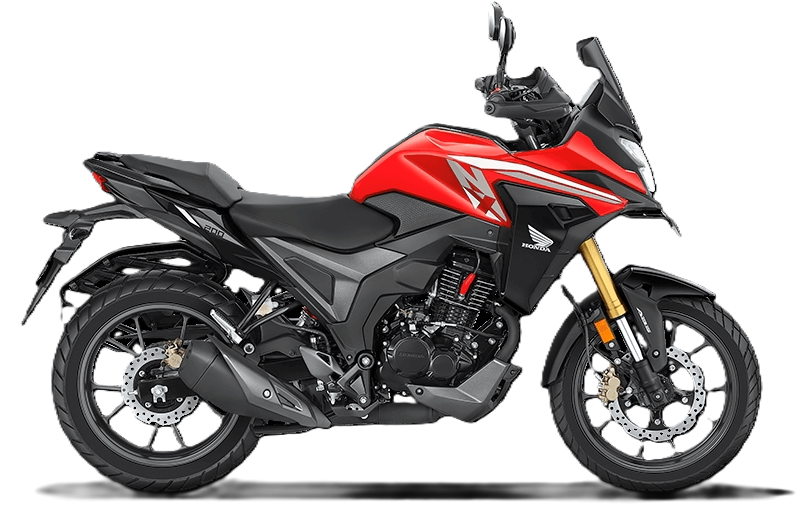
Honda NX200
- 184.4 cc Air-Cooled, 2-valve
- 16.9 PS @ 8500 rpm
- ~42 km/l (Owner Reported)
- 12-litre tank
- 1 variant available
- Dual-channel ABS standard
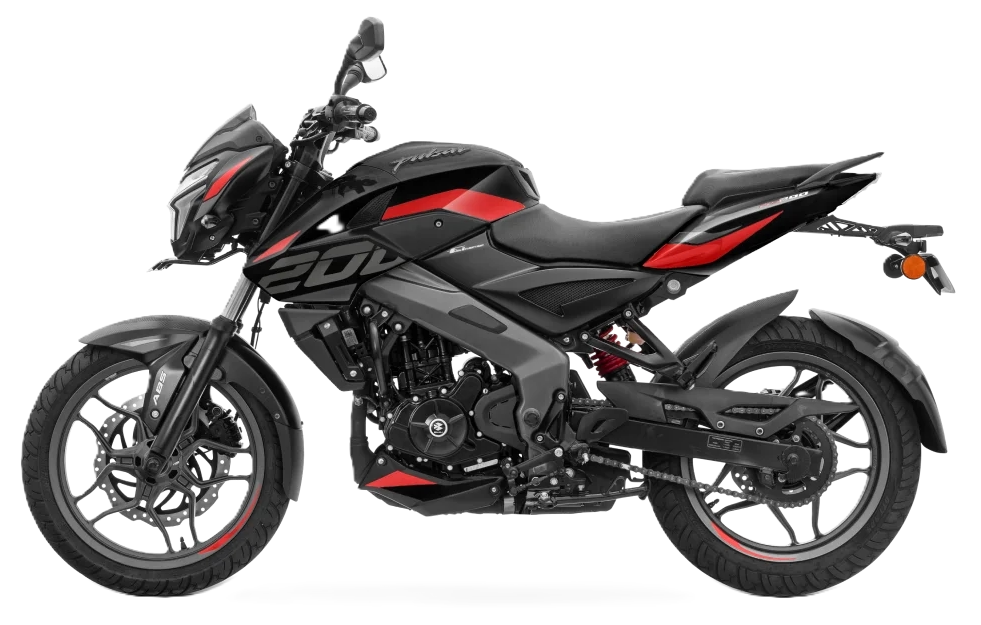
Bajaj Pulsar NS200
- 199.5 cc Liquid-Cooled, 4-valve
- 24.5 PS @ 9750 rpm
- 40.36 km/l (Claimed)
- 12-litre tank
- 2 variants available
- Riding modes: Road, Rain, Off-Road
Full Specification Comparison
Every number that matters — side by side
| Specification | Honda NX200 | Bajaj Pulsar NS200 |
|---|---|---|
| Engine & Performance | ||
| Displacement | 184.4 cc | 199.5 cc |
| Cooling System | Air-Cooled | Liquid-Cooled |
| Max Power | 16.9 PS @ 8500 rpm | 24.5 PS @ 9750 rpm |
| Max Torque | 15.7 Nm @ 6000 rpm | 18.74 Nm @ 8000 rpm |
| Valves per Cylinder | 2 | 4 |
| Compression Ratio | 9.5 : 1 | 11 : 1 |
| Bore × Stroke | 61 × 63.1 mm | 72 × 49 mm |
| Emission Standard | BS6 Phase 2 | BS6 |
| Transmission | 5-Speed Manual | 6-Speed Manual |
| Top Speed | ~130 km/h | ~130 km/h |
| Riding Modes | No | Road, Rain, Off-Road |
| Traction Control | No | No |
| Fuel & Range | ||
| Mileage (Claimed) | ~42 km/l (Owner Reported) | 40.36 km/l (Claimed) |
| Fuel Tank | 12 litres | 12 litres |
| Reserve Capacity | 1.9 litres | 2 litres |
| Riding Range | ~504 km | ~484 km |
| Brakes & Wheels | ||
| Braking System | Dual Channel ABS | Single / Dual Channel ABS (variant) |
| Front Brake | Disc – 276 mm | Disc – 300 mm |
| Rear Brake | Disc – 220 mm | Disc – 230 mm |
| Tyre Type | Tubeless | Tubeless |
| Tyre Size (F / R) | 110/70-17 / 140/70-17 | 100/80-17 / 130/70-17 |
| Wheel Size | 17 inch (F & R) | 17 inch (F & R) |
| Wheel Type | Alloy | Alloy |
| Suspension & Chassis | ||
| Front Suspension | USD Fork (standard) | Telescopic / USD (top variant) |
| Rear Suspension | Monoshock | Nitrox Monoshock |
| Chassis | Diamond Type | Perimeter Frame |
| Rear Preload Adjuster | No | Yes |
| Dimensions & Weight | ||
| Kerb Weight | 148 kg | 158 kg |
| Seat Height | 810 mm | 805 mm |
| Ground Clearance | 167 mm | 167 mm |
| Wheelbase | 1355 mm | 1363 mm |
| Overall L × W × H | 2035 × 843 × 1248 mm | 2017 × 804 × 1075 mm |
| Features & Electronics | ||
| Instrument Console | Fully Digital TFT | Fully Digital LCD |
| Headlight | LED | LED |
| DRLs | Yes | Yes |
| Turn Signals | LED | LED |
| Hazard Warning Lights | Yes | Yes |
| Riding Modes | No | Road / Rain / Off-Road |
| Traction Control | No | No |
| Bluetooth Connectivity | Yes | Yes |
| Call & SMS Alerts | Yes | Yes |
| USB Charging Port | Yes | Yes |
| Distance to Empty | Yes | Yes |
| Gear Indicator | Yes | Yes |
| Service Reminder | Yes | Yes |
| Tachometer | Digital | Digital |
| Keyless Ignition | No | No |
| Price & Warranty | ||
| Starting Price (ex-showroom) | ₹1,57,748 | ₹1,32,962 |
| Top Variant Price | ₹1,57,748 | ₹1,43,146 |
| Number of Variants | 1 | 2 |
| Standard Warranty | 3 Years / 42,000 km | 5 Years / 75,000 km |
★ Green highlights indicate the stronger value in each row. Prices are ex-showroom India averages and may vary by city.
Variant-wise Price Comparison
All variants laid out — find the right one for your budget
Honda NX200 Variants
Pulsar NS200 Variants
Pros & Cons
Honest strengths and weaknesses of each bike
Pros
- Dual-channel ABS standard on single variant — no upgrade needed
- Premium TFT display — sharper and more feature-rich than LCD
- USD front forks standard (no extra cost)
- Lighter at 148 kg vs 158 kg
- Better fuel efficiency (~42 km/l vs ~40.36 km/l)
- Longer riding range (~504 km vs ~484 km)
- Honda's renowned long-term reliability and refinement
- Adventure-inspired design with wide handlebar ergonomics
Cons
- Significantly less power (16.9 PS vs 24.5 PS)
- Air-cooled 2-valve engine less thrilling at high rpm
- No riding modes on any variant
- Significantly more expensive — ₹24,786 above NS200 base
- Single variant only — no price flexibility
- Shorter warranty: 3 years / 42,000 km vs 5 years / 75,000 km
- Smaller disc brakes (276 mm front vs 300 mm)
- No rear preload adjuster
Pros
- Dramatically more powerful — 24.5 PS, 45% more than NX200
- Liquid-cooled 4-valve engine with 6-speed gearbox
- Riding modes: Road, Rain and Off-Road
- Lower starting price — ₹24,786 cheaper than NX200
- 2 variants — price flexibility from ₹1,32,962 to ₹1,43,146
- Larger 300 mm front disc and 230 mm rear disc
- Perimeter frame for superior high-speed stability
- Rear preload adjuster on monoshock
- Outstanding 5-year / 75,000 km warranty
- Higher compression (11:1) for more energetic performance
Cons
- Dual-channel ABS only on top variant (₹1,43,146)
- Heavier at 158 kg vs 148 kg
- LCD console less premium than NX200's TFT display
- Lower real-world mileage (34–38 km/l typical)
- Engine vibrations noticeable at higher rpm
- No traction control on either variant
Key Differences Explained
What really sets these two bikes apart
Engine & Performance
This is the most decisive gap between these two motorcycles. The Bajaj Pulsar NS200's 199.5 cc liquid-cooled, 4-valve engine produces 24.5 PS and 18.74 Nm — roughly 45% more power than the Honda NX200's air-cooled 16.9 PS. The NS200's higher compression ratio (11:1 vs 9.5:1), liquid cooling and 6-speed gearbox give it a significantly more performance-oriented character. The NX200 focuses on smooth, relaxed power delivery suited to touring and commuting, not outright excitement.
Braking & ABS
The Honda NX200 has a meaningful safety advantage: it comes with dual-channel ABS as standard on its only variant. On the NS200, dual-channel ABS is available only on the top ₹1,43,146 variant — the base ₹1,32,962 version makes do with single-channel. The NS200 counters with larger disc brakes (300 mm front vs 276 mm; 230 mm rear vs 220 mm), but the NX200's guaranteed dual-ABS from the outset is a meaningful safety edge at the entry price.
Display & Technology
Both bikes offer Bluetooth, call/SMS alerts, USB charging, distance to empty, gear indicator and service reminder. The defining difference is the display: the NX200 uses a fully digital TFT screen — sharper, colour-rich and more legible in daylight — while the NS200 uses a fully digital LCD. The NS200, however, offers riding modes (Road, Rain, Off-Road), a feature entirely absent on the NX200, giving it a tangible electronics edge for riders who want adjustable power delivery.
Chassis & Handling
The Pulsar NS200's perimeter frame is engineered for high-speed stability and aggressive cornering — it keeps the bike planted even when pushing hard. The NX200 uses a standard diamond-type frame suited to its comfort and touring focus. Both have USD forks (NX200 standard; NS200 on top variant only), and the NX200's lighter kerb weight (148 kg vs 158 kg) makes it more manageable in traffic. Ground clearance is identical at 167 mm.
Warranty & Ownership
The Bajaj Pulsar NS200 offers an exceptional 5-year / 75,000 km warranty — significantly better than the Honda NX200's 3-year / 42,000 km coverage. For daily commuters clocking 15,000–20,000 km per year, the NS200's additional 2 years and 33,000 km of warranty coverage provides meaningful long-term financial protection. Honda counters with its widespread service network and proven long-term reliability.
Price & Value
The Pulsar NS200 starts at ₹1,32,962 — a full ₹24,786 less than the NX200's ₹1,57,748. Even the NS200's fully loaded Dual Channel USD variant at ₹1,43,146 still costs ₹14,602 less than the NX200. For most performance-seeking buyers, the NS200 delivers dramatically more power, riding modes, larger brakes and a longer warranty at a lower price — making it an exceptional value proposition. The NX200 justifies its premium only for buyers who specifically want guaranteed dual ABS at entry level, a TFT display, or Honda's brand assurance.
Expert Verdict
Which one should you actually buy?
Buy the Honda NX200 if…
- Dual-channel ABS from the entry price is non-negotiable
- A premium TFT display matters to you over an LCD
- You want a lighter, more manageable 148 kg motorcycle
- Adventure-touring ergonomics and relaxed riding posture suit you
- Honda's reliability and refinement are top priorities
- You ride mostly in the city and need smooth, predictable power
- Better real-world fuel efficiency and longer riding range matter
Buy the Pulsar NS200 if…
- Outright performance (24.5 PS) is your top priority
- Riding modes for Road, Rain and Off-Road appeal to you
- Saving ₹14,602–₹24,786 vs the NX200 is important
- Liquid-cooled engine character and high-rpm thrills excite you
- The superior 5-year / 75,000 km warranty is a key factor
- You want a performance streetfighter with larger brakes
- Spirited weekend riding alongside daily commuting is your usage
Overall Winner for Most Riders: Bajaj Pulsar NS200. A 45% power advantage, liquid-cooled 4-valve engine, riding modes, significantly larger brakes, a perimeter frame, an exceptional 5-year / 75,000 km warranty and a starting price nearly ₹25,000 lower make the Pulsar NS200 the stronger choice for the majority of performance-seeking buyers. Choose the Honda NX200 only if guaranteed dual-channel ABS at entry level, a premium TFT display, Honda reliability, lighter weight, or adventure-touring ergonomics are your absolute top priorities — and you are comfortable paying a meaningful premium for them.
Frequently Asked Questions
Common questions answered by our experts
The Bajaj Pulsar NS200 is better for most performance-seeking buyers — it offers 24.5 PS (vs 16.9 PS), riding modes, a perimeter frame, larger brakes, a 5-year / 75,000 km warranty and starts nearly ₹25,000 cheaper. The Honda NX200 is the better choice for riders who want dual-channel ABS guaranteed at entry level, a premium TFT display, Honda reliability, lighter weight (148 kg) and a more refined, touring-friendly riding experience.
The Bajaj Pulsar NS200 starts at ₹1,32,962 while the Honda NX200 is priced at ₹1,57,748 ex-showroom — a difference of ₹24,786. The NS200 also comes in a higher Dual Channel USD variant at ₹1,43,146, which is still ₹14,602 less than the NX200. Both are single-variant bikes in the NX200's case; the NS200 offers two variants for price flexibility. Prices are India averages and may vary by city.
The Honda NX200 has a slight fuel efficiency edge at an owner-reported ~42 km/l compared to the Pulsar NS200's claimed 40.36 km/l. Both share a 12-litre tank, giving the NX200 a marginally longer riding range (~504 km vs ~484 km). In real-world riding, the NS200's liquid-cooled performance engine typically returns 34–38 km/l, notably lower than its claimed figure, particularly under spirited riding conditions.
The Bajaj Pulsar NS200 has a decisive power advantage at 24.5 PS @ 9750 rpm and 18.74 Nm of torque versus the Honda NX200's 16.9 PS @ 8500 rpm and 15.7 Nm. That is nearly 45% more peak power. The NS200 achieves this through its larger 199.5 cc liquid-cooled 4-valve engine and higher 11:1 compression ratio, making it significantly more performance-oriented than the NX200's refined air-cooled 2-valve motor.
Yes, the Honda NX200 comes with dual-channel ABS as standard on its single variant at ₹1,57,748. The Bajaj Pulsar NS200 offers dual-channel ABS only on its top Dual Channel USD variant (₹1,43,146); the base Single Channel ABS variant (₹1,32,962) has single-channel ABS only. If dual-channel ABS is a must-have at the lowest price, the NX200 delivers it outright, albeit at a higher overall cost.
Yes, the Bajaj Pulsar NS200 offers three riding modes — Road, Rain and Off-Road — across both its variants. Road mode delivers full performance, Rain mode softens power delivery for wet conditions, and Off-Road mode adjusts the ABS and power mapping for loose surfaces. The Honda NX200 does not offer any riding modes on its standard variant, making this a clear technology advantage for the NS200.