At a Glance
Key differences that define each motorcycle
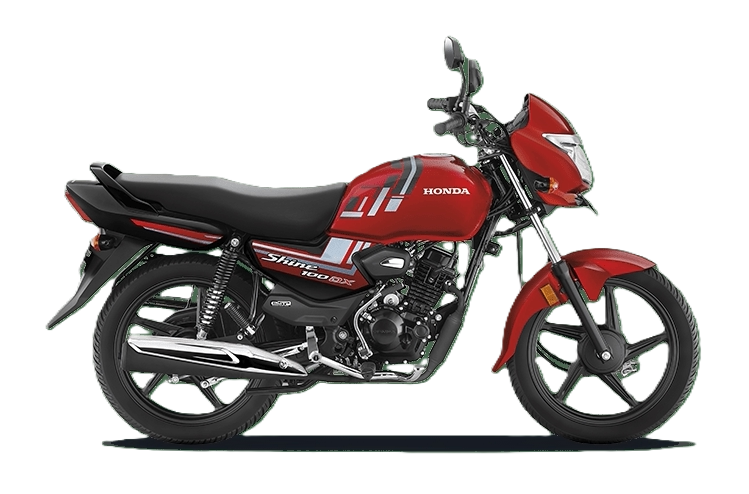
Honda Shine 100
- 98.98 cc Air-Cooled, 2-valve
- 7.28 PS @ 7500 rpm
- 65 kmpl (Owner Reported)
- 10-litre tank
- 1 variant available
- CBS — 103 kg lightweight
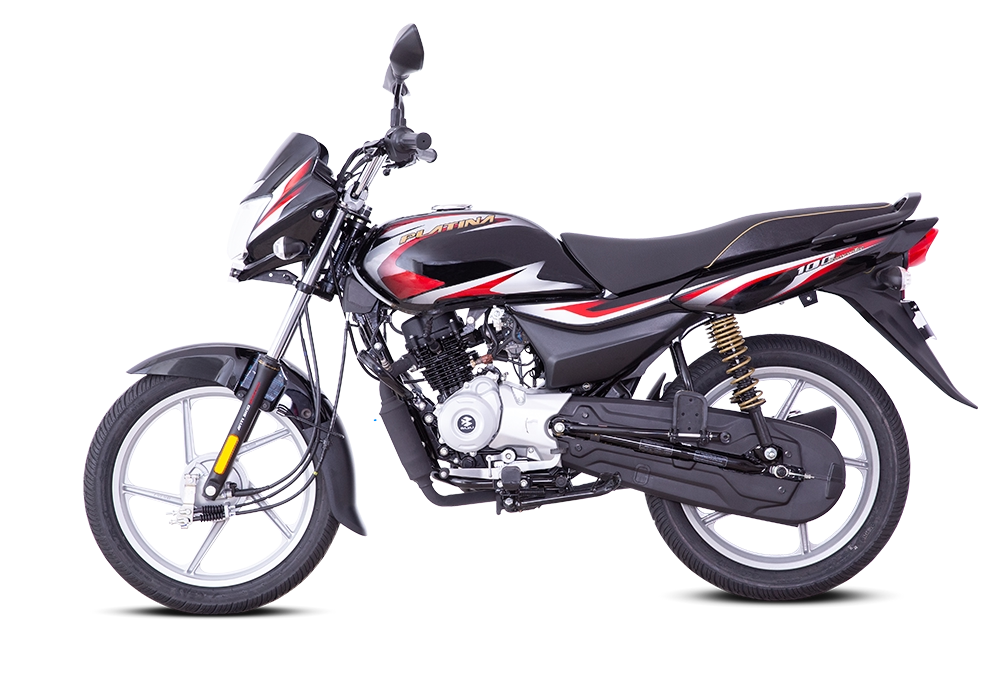
Bajaj Platina 100
- 99.59 cc Air-Cooled, 2-valve
- 8.2 PS @ 7500 rpm
- 70–75 kmpl (Owner Reported)
- 11-litre tank
- 1 variant available
- 200 mm clearance + 5yr/75,000 km warranty
Full Specification Comparison
Every number that matters — side by side
| Specification | Honda Shine 100 | Bajaj Platina 100 |
|---|---|---|
| Engine & Performance | ||
| Displacement | 98.98 cc | 99.59 cc |
| Cooling System | Air-Cooled | Air-Cooled |
| Max Power | 7.28 PS @ 7500 rpm | 8.2 PS @ 7500 rpm |
| Max Torque | 8.04 Nm @ 5000 rpm | 8.3 Nm @ 5500 rpm |
| Valves per Cylinder | 2 | 2 |
| Compression Ratio | 9.7:1 | 9.5:1 |
| Bore × Stroke | 47.0 × 57.5 mm | 47 × 57.4 mm |
| Emission Standard | BS6 Phase 2 (OBD2) | BS6 Phase 2 |
| Transmission | 4-Speed Manual | 4-Speed Manual |
| Top Speed | ~85 km/h | ~90 km/h |
| Riding Modes | No | No |
| Start Type | Electric Start | Electric Start |
| DRL | No | LED DRL |
| Fuel & Range | ||
| Mileage (Owner Reported) | ~65 kmpl | 70–75 kmpl |
| ARAI Claim | Not Claimed | Not Claimed |
| Fuel Tank | 10 litres | 11 litres |
| Reserve Capacity | 1.4 litres | 2 litres |
| Riding Range | ~600 km (estimated) | ~770–825 km (estimated) |
| Brakes & Wheels | ||
| Braking System | CBS (Combined Braking System) | CBS (Combined Braking System) |
| Front Brake | Drum – 130 mm | Drum – 130 mm |
| Rear Brake | Drum – 130 mm | Drum – 110 mm |
| Tyre Type | Tubeless | Tube Type |
| Tyre Size (F / R) | 80/100-17 / 100/80-17 | 2.75×17 / 3.00×17 |
| Wheel Type | Alloy | Alloy |
| Wheel Size | 17-inch | 17-inch |
| Suspension & Chassis | ||
| Front Suspension | Telescopic Fork | 135 mm Hydraulic Telescopic |
| Rear Suspension | Twin Hydraulic Shock Absorbers | 110 mm Spring-in-Spring |
| Chassis | Diamond Type Frame | Tubular Single Down Tube with Lower Cradle |
| Rear Preload Adjuster | No | No |
| Dimensions & Weight | ||
| Kerb Weight | 103 kg | 117 kg |
| Seat Height | 786 mm | 807 mm |
| Ground Clearance | 168 mm | 200 mm |
| Wheelbase | 1245 mm | 1255 mm |
| Overall L × W × H | 1955 × 754 × 1050 mm | 2003 × 704 × 1069 mm |
| Features & Electronics | ||
| Instrument Console | Analogue | Analogue |
| Headlight | Halogen | Halogen (12V, 35/35W HS1) |
| DRLs | No | LED DRL |
| Bluetooth Connectivity | No | No |
| USB Charging Port | No | No |
| Low Fuel Indicator | Yes | Yes |
| Side Stand Engine Cut-off | Yes | No |
| Kill Switch | Yes | No |
| Pass Light | Yes | Yes |
| Price & Warranty | ||
| Ex-Showroom Price | ₹65,557 | ₹66,593 |
| Number of Variants | 1 | 1 |
| Standard Warranty | 3 Years / 42,000 km | 5 Years / 75,000 km |
★ Green highlights indicate the stronger value in each row. Prices are ex-showroom India averages and may vary by city.
Variant-wise Price Comparison
Both bikes are available in a single variant — separated by just ₹1,036
Shine 100 Variants
Platina 100 Variants
Pros & Cons
Honest strengths and weaknesses of each bike
Pros
- Significantly lighter at 103 kg — easiest to handle in class
- Lower seat height (786 mm) — more accessible for shorter riders
- Slightly lower price (₹65,557 vs ₹66,593)
- Tubeless tyres standard — puncture repairs easier
- Honda's renowned engine refinement and smoothness
- Larger 130 mm rear drum brake
- Side stand engine cut-off for added safety
- Kill switch included
- Higher ground clearance than most 100cc rivals (168 mm)
Cons
- Lower power output (7.28 PS vs 8.2 PS)
- Shorter warranty — only 3 years / 42,000 km
- Smaller 10-litre tank and lower riding range (~600 km)
- Lower mileage (~65 kmpl vs 70–75 kmpl)
- No LED DRL
- Standard twin shock absorbers — less comfort than spring-in-spring
- Less ground clearance (168 mm vs 200 mm)
Pros
- Best-in-class owner-reported mileage of 70–75 kmpl
- Exceptional 5-year / 75,000 km warranty
- Best-in-class ground clearance at 200 mm
- Larger 11-litre tank for longer range (~770–825 km)
- Spring-in-spring rear suspension — superior bump absorption
- Higher power and torque (8.2 PS, 8.3 Nm)
- LED DRL for better daytime visibility
- Higher top speed (~90 km/h vs ~85 km/h)
- Longer wheelbase for more highway stability
Cons
- Heavier at 117 kg — 14 kg more than Shine 100
- Higher seat height (807 mm) — less accessible for short riders
- Tube-type tyres — puncture repairs more involved
- Smaller 110 mm rear drum brake
- No side stand engine cut-off
- No kill switch
- Slightly higher price (₹66,593 vs ₹65,557)
Key Differences Explained
What really sets these two bikes apart
Engine Character
Both bikes use a 100cc air-cooled, 2-valve single-cylinder engine with fuel injection, but the Bajaj Platina 100 has an edge in outright numbers — 8.2 PS and 8.3 Nm versus the Honda Shine 100's 7.28 PS and 8.04 Nm. This also gives the Platina a marginally higher top speed of ~90 km/h versus ~85 km/h. However, the Honda engine is widely regarded for its smoother, more refined character at low and mid speeds — a Honda trait that earns consistent praise from daily commuters.
Fuel Efficiency & Range
The Platina 100 has a meaningful mileage advantage — owner-reported figures of 70–75 kmpl versus the Shine 100's ~65 kmpl (neither bike has an official ARAI claim). The gap widens further when considering tanks: the Platina's 11-litre unit gives a theoretical range of ~770–825 km, while the Shine 100's 10-litre tank yields ~600 km. For cost-conscious daily riders, the Platina's fuel advantage translates directly to lower monthly spending.
Braking & Tyres
Both bikes use 130 mm front drums with CBS. The Honda Shine 100 edges ahead at the rear with a 130 mm rear drum compared to the Platina's smaller 110 mm unit. More importantly, the Shine 100 comes with tubeless tyres as standard — a practical advantage since roadside puncture repairs are far simpler without inner tubes. The Platina uses tube-type tyres, which require carrying spare tubes and are harder to fix quickly on rural roads.
Ride Comfort & Ground Clearance
The Platina 100's headline feature is its spring-in-spring rear suspension — a setup specifically engineered to absorb rough road surfaces, potholes, and speed breakers more effectively than conventional twin shocks. Combined with a class-leading 200 mm ground clearance (versus 168 mm on the Shine 100), the Platina is noticeably better suited for pothole-ridden city roads, village roads, and uneven surfaces commonly encountered across India.
Weight & Ergonomics
The Honda Shine 100 is significantly lighter at 103 kg compared to the Platina's 117 kg — a 14 kg difference that is noticeable when manoeuvring in tight spaces, parking, or handling the bike at slow speeds. The Shine 100 also has a lower seat height of 786 mm versus 807 mm on the Platina, making it more comfortable for shorter riders or those new to motorcycles.
Warranty & Value
Despite near-identical prices (a gap of only ₹1,036), the Bajaj Platina 100 offers a 5-year / 75,000 km warranty versus the Honda Shine 100's 3-year / 42,000 km cover. For daily commuters riding 15,000–20,000 km per year, Honda's warranty runs out in under 3 years, while Bajaj's cover lasts well beyond 3.5 years. Bajaj's widespread service network also ensures low maintenance costs.
Expert Verdict
Which one should you actually buy?
Buy the Honda Shine 100 if…
- You want the lightest possible bike for city manoeuvring (103 kg)
- A lower seat height (786 mm) suits your height or confidence level
- Tubeless tyres are important for quick roadside puncture fixes
- Honda's engine refinement and smooth character appeal to you
- You prefer the Honda brand's reliability track record
- You ride mostly smooth city roads and ground clearance is less of a concern
- A slightly lower price matters (₹1,036 cheaper)
Buy the Bajaj Platina 100 if…
- Maximum fuel efficiency is your top priority (70–75 kmpl)
- You ride rough roads and need the best ground clearance (200 mm)
- Longer riding range from a bigger tank (~770–825 km) appeals to you
- Superior comfort on uneven roads via spring-in-spring suspension
- The 5-year / 75,000 km warranty gives you long-term peace of mind
- You commute heavy daily distances and want lower running costs
- Slightly more power (8.2 PS) is preferable for pillion riding
Overall Winner for Most Riders: Bajaj Platina 100. For just ₹1,036 more than the Honda Shine 100, the Platina 100 delivers noticeably better mileage (70–75 kmpl vs ~65 kmpl), a larger fuel tank and dramatically longer riding range (~800 km vs ~600 km), class-leading 200 mm ground clearance, superior spring-in-spring comfort for rough roads, more power (8.2 PS), an LED DRL, and an outstanding 5-year / 75,000 km warranty. The Honda Shine 100 remains the right choice only if lighter weight, a lower seat height, tubeless tyres, and Honda's refined engine character are priorities over raw practicality and long-term value.
Frequently Asked Questions
Common questions answered by our experts
The Bajaj Platina 100 is the better overall value for most riders — for just ₹1,036 more, it offers higher owner-reported mileage (70–75 kmpl vs ~65 kmpl), a larger 11-litre tank with ~800 km range, class-leading 200 mm ground clearance, superior spring-in-spring comfort, more power (8.2 PS), an LED DRL and a far superior warranty (5yr/75,000 km vs 3yr/42,000 km). The Honda Shine 100 is better if you prioritise lighter weight (103 kg), a lower seat height (786 mm), tubeless tyres and Honda's smooth engine refinement.
The Honda Shine 100 costs ₹65,557 ex-showroom while the Bajaj Platina 100 is priced at ₹66,593 — a difference of just ₹1,036. Both bikes are available in a single variant in India. Given this near-identical pricing, the comparison hinges almost entirely on features and ownership value rather than budget.
The Bajaj Platina 100 has better mileage with owner-reported figures of 70–75 kmpl compared to the Honda Shine 100's ~65 kmpl. Neither bike has an official ARAI mileage claim. The Platina also has a larger 11-litre fuel tank, giving it an estimated riding range of ~770–825 km versus the Shine 100's ~600 km — a very significant difference for long-distance commuters.
The Bajaj Platina 100 is significantly more comfortable on rough roads, thanks to its spring-in-spring rear suspension specifically tuned to absorb potholes and broken surfaces, and its class-leading ground clearance of 200 mm versus the Shine 100's 168 mm. The Platina's longer wheelbase also improves stability. For urban roads with good surfaces, the Honda Shine 100's lighter weight and lower seat height can feel more nimble and manageable.
No. The Honda Shine 100 comes with tubeless tyres as standard, making roadside puncture repairs quicker and simpler. The Bajaj Platina 100 uses tube-type tyres, which require carrying a spare tube and are more involved to repair on the road. This is a practical advantage of the Shine 100 for riders in areas where punctures are common.
The Bajaj Platina 100 has a significantly better warranty of 5 years or 75,000 km compared to the Honda Shine 100's 3 years or 42,000 km. For high-mileage daily commuters covering 15,000–20,000 km per year, Honda's warranty expires in just over 2 years, while Bajaj's cover lasts nearly 4 years or more. This is one of the Platina's most compelling long-term ownership advantages.