At a Glance
Key differences that define each motorcycle
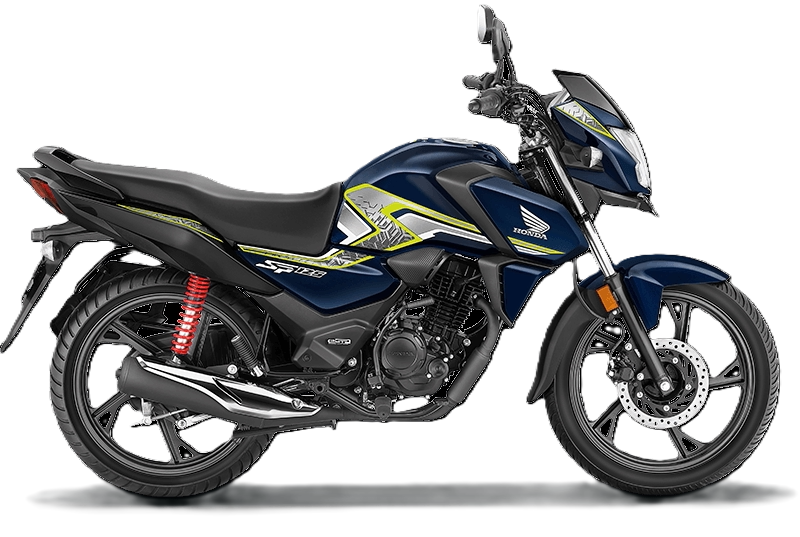
Honda SP 125
- 123.94 cc Air-Cooled, 2-valve
- 10.87 PS @ 7500 rpm
- 65 km/l (ARAI)
- 11.2-litre tank
- 2 variants available
- Silent ACG start & digital console
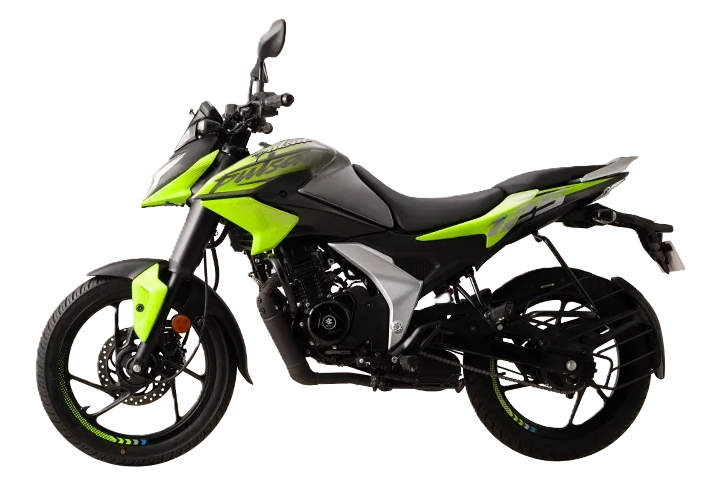
Bajaj Pulsar N125
- 124.58 cc Air-Cooled, 2-valve
- 12 PS @ 8500 rpm
- 60 km/l (ARAI)
- 9.5-litre tank
- 2 variants available
- Full LED lighting, monoshock & 198 mm clearance
Full Specification Comparison
Every number that matters — side by side
| Specification | Honda SP 125 | Bajaj Pulsar N125 |
|---|---|---|
| Engine & Performance | ||
| Displacement | 123.94 cc | 124.58 cc |
| Cooling System | Air-Cooled | Air-Cooled |
| Max Power | 10.87 PS @ 7500 rpm | 12 PS @ 8500 rpm |
| Max Torque | 10.9 Nm @ 6000 rpm | 11 Nm @ 6000 rpm |
| Valves per Cylinder | 2 | 2 |
| Compression Ratio | 10.0:1 | 10.05 ± 0.3:1 |
| Bore × Stroke | 50.0 × 63.1 mm | 54 × 54.4 mm |
| Emission Standard | BS6 Phase 2 (OBD2) | BS6 Phase 2 |
| Transmission | 5-Speed Manual | 5-Speed Manual |
| Top Speed | 100 km/h | ~100 km/h |
| Riding Modes | No | No |
| Traction Control | No | No |
| Silent Start | Yes (ACG Motor) | No |
| Fuel & Range | ||
| Mileage (ARAI) | 65 km/l (ARAI) | 60 km/l (ARAI) |
| Mileage (Real-world) | 55–60 km/l | ~50–55 km/l |
| Fuel Tank | 11.2 litres | 9.5 litres |
| Reserve Capacity | 1.76 litres | 1.5 litres |
| Riding Range | ~650–700 km | ~570 km |
| Brakes & Wheels | ||
| Braking System | CBS | CBS |
| Front Brake | Drum / Disc – 240 mm (variant dependent) | Disc – 240 mm (both variants) |
| Rear Brake | Drum – 130 mm | Drum – 130 mm |
| Tyre Type | Tubeless | Tubeless |
| Tyre Size (F / R) | 80/100-18 / 80/100-18 | 80/100-17 / 110/80-17 |
| Wheel Size | 18-inch (F & R) | 17-inch (F & R) |
| Wheel Type | Alloy | Alloy |
| Suspension & Chassis | ||
| Front Suspension | Telescopic Fork | Telescopic Fork |
| Rear Suspension | Hydraulic Twin Shock | Mono-shock |
| Rear Preload Adjuster | No | Yes |
| Chassis | Diamond Type Frame | Diamond Frame |
| Dimensions & Weight | ||
| Kerb Weight | 116–117 kg | 125 kg |
| Seat Height | 790 mm | 795 mm |
| Ground Clearance | 160 mm | 198 mm |
| Wheelbase | 1285 mm | 1295 mm |
| Overall L × W × H | 2020 × 785 × 1103 mm | 2018 × 810 × 1078 mm |
| Features & Electronics | ||
| Instrument Console | Digital (Drum) / TFT (Disc) | Fully Digital LCD |
| Headlight | – | LED |
| DRLs | – | Yes |
| Tail Light | – | LED |
| Turn Signals | – | LED |
| Hazard Warning Lights | – | Yes |
| Tachometer | No | Yes (Digital) |
| Gear Indicator | Yes | Yes |
| Distance to Empty | No | Yes |
| Service Reminder | Yes | Yes |
| Clock | Yes | Yes |
| Bluetooth Connectivity | No | Yes (BT variant) |
| Call & SMS Alerts | No | Yes (BT variant) |
| USB Charging Port | No | Yes |
| Silent Start | Yes (ACG) | No |
| Side Stand Engine Cut-off | Yes | Yes |
| Price & Warranty | ||
| Starting Price (ex-showroom) | ₹88,750 | ₹93,668 |
| Top Variant Price | ₹95,611 | ₹94,661 |
| Number of Variants | 2 | 2 |
| Standard Warranty | 3 Years / 42,000 km | 5 Years / 75,000 km |
★ Green highlights indicate the stronger value in each row. Prices are ex-showroom India averages and may vary by city.
Variant-wise Price Comparison
All variants laid out — find the right one for your budget
SP 125 Variants
Pulsar N125 Variants
Pros & Cons
Honest strengths and weaknesses of each bike
Pros
- Higher ARAI-certified mileage — 65 kmpl vs 60 kmpl
- Lower starting price — ₹88,750 vs ₹93,668
- Larger 11.2-litre fuel tank for 650–700 km range
- Lighter at 116–117 kg vs 125 kg
- Silent ACG starter — no ignition noise
- TFT console on Disc variant — premium readouts
- Refined Honda PGM-FI engine with low vibration
- 18-inch wheels for a softer, more cushioned ride
- Proven Honda long-term reliability
Cons
- Lower power — 10.87 PS vs 12 PS
- Base drum variant has no front disc brake
- No LED headlight, DRLs, or LED turn signals
- No hazard warning lights
- No USB charging port on any variant
- No Bluetooth connectivity on any variant
- No tachometer
- No distance to empty display
- Twin-shock rear suspension less sporty
- No rear preload adjuster
- Less ground clearance — 160 mm vs 198 mm
- Shorter warranty — 3 years / 42,000 km
Pros
- More power — 12 PS for stronger city performance
- Front disc brake standard on both variants
- Full LED lighting — headlight, tail light, turn signals, DRLs
- Hazard warning lights standard
- USB charging port standard on both variants
- Bluetooth connectivity on BT variant (₹94,661)
- Tachometer and distance to empty on digital console
- Monoshock rear suspension for sportier ride
- Rear preload adjuster
- Exceptional 198 mm ground clearance for rough roads
- Wider rear tyre (110/80-17) for better grip
- Outstanding 5-year / 75,000 km warranty
- Sporty Pulsar design with aggressive styling
Cons
- Higher starting price — ₹93,668 vs ₹88,750
- Lower ARAI mileage — 60 kmpl vs 65 kmpl
- Smaller 9.5-litre tank — shorter riding range (~570 km)
- Heavier at 125 kg vs 116–117 kg
- No silent start feature
- No ABS on any variant
- Bluetooth only on more expensive BT variant
Key Differences Explained
What really sets these two bikes apart
Engine & Performance
The Pulsar N125's 124.58 cc engine produces 12 PS @ 8500 rpm — around 10% more than the SP 125's 123.94 cc unit making 10.87 PS @ 7500 rpm. The Pulsar revs higher and feels more energetic, delivering the sporty character its design promises. The SP 125 responds to Honda's PGM-FI tuning philosophy — smooth, linear, and vibration-free. Its ACG starter also means near-silent ignition, a premium touch that the Pulsar lacks.
Fuel Efficiency & Range
The SP 125 leads on certified efficiency with 65 kmpl ARAI versus the Pulsar N125's 60 kmpl ARAI. Its larger 11.2-litre tank — 18% more capacity than the Pulsar's 9.5 litres — translates to an estimated range of 650–700 km versus ~570 km for the Pulsar. For riders who prioritise fewer fuel stops and lower running costs, the SP 125 holds a meaningful advantage.
Lighting & Features
The Pulsar N125 wins convincingly here. Both variants come with a full LED setup — headlight, tail light, LED turn signals, and DRLs — along with hazard warning lights, a USB charging port, tachometer, and distance to empty on the digital console. The SP 125 does not specify LED lighting and lacks hazard lights, USB charging, tachometer, and distance to empty. The Pulsar's BT variant adds Bluetooth for smartphone alerts — unavailable on any SP 125.
Braking & Safety
The Pulsar N125 comes with a 240 mm front disc brake standard on both variants, including the base ₹93,668 LED Disc. The SP 125 only gets a disc on its pricier ₹95,611 Disc variant; the base Drum OBD2 at ₹88,750 uses drum brakes front and rear. Both use CBS with no ABS on either bike. The Pulsar's wider rear tyre (110/80-17 vs 80/100-18) also provides better grip during cornering.
Suspension & Ground Clearance
The Pulsar N125 carries a significant structural advantage with 198 mm ground clearance — 38 mm more than the SP 125's 160 mm — making it dramatically better on rough, potholed, or uneven Indian roads. Its monoshock rear suspension with a preload adjuster is also more capable and sporty than the SP 125's conventional hydraulic twin-shock setup.
Warranty & Ownership
The Pulsar N125 has a decisive advantage with a 5-year / 75,000 km warranty versus the SP 125's 3 years / 42,000 km. That is 67% more warranty years and 79% more kilometre coverage. For a daily commuter covering 15,000–18,000 km per year, the Pulsar's warranty covers the full practical ownership period. The SP 125 also starts ₹4,918 cheaper, which partially offsets its shorter warranty, but high-mileage riders will feel the Pulsar's advantage keenly.
Expert Verdict
Which one should you actually buy?
Buy the SP 125 if…
- Best ARAI mileage (65 kmpl) and longest riding range matter
- A lower starting price of ₹88,750 suits your budget
- Smoother, more refined engine character is important to you
- Lighter weight (116–117 kg) for easy city manoeuvring
- Silent ACG start — no noise on ignition
- Honda's proven long-term reliability is a priority
- 18-inch wheels for a more cushioned, plush ride
- TFT display on the Disc variant suits your needs
Buy the Pulsar N125 if…
- More power (12 PS) and sportier Pulsar character excite you
- Front disc brake standard from the base variant is important
- Full LED lighting, DRLs, and LED turn signals matter to you
- A USB charging port and Bluetooth (BT variant) are priorities
- Superior ground clearance (198 mm) suits your road conditions
- Monoshock suspension with preload adjustment appeals to you
- The outstanding 5-year / 75,000 km warranty is important
- Sporty Pulsar styling and aggressive design suit your taste
Overall Winner for Most Riders: Bajaj Pulsar N125. More power, front disc brake standard on both variants, full LED lighting with DRLs and hazard lights, a USB charging port, Bluetooth connectivity on the BT variant, superior 198 mm ground clearance, a monoshock rear suspension, wider tyres, and an outstanding 5-year / 75,000 km warranty make the Pulsar N125 the more feature-complete and better-equipped premium 125cc commuter for most buyers. Choose the Honda SP 125 only if best-in-class ARAI mileage, a lower starting price, a larger fuel tank, Honda's engine refinement, lighter weight, or the silent ACG start are your non-negotiable priorities.
Frequently Asked Questions
Common questions answered by our experts
The Bajaj Pulsar N125 is better for most buyers thanks to more power (12 PS), front disc brake on both variants, full LED lighting, a USB charging port, 198 mm ground clearance, a monoshock suspension, and an outstanding 5-year / 75,000 km warranty. The Honda SP 125 is better if you prioritise the highest ARAI mileage (65 kmpl), a larger 11.2-litre fuel tank, a lower starting price (₹88,750), lighter weight, engine smoothness, or Honda's long-term reliability.
The Honda SP 125 starts at ₹88,750 (Drum OBD2) while the Bajaj Pulsar N125 starts at ₹93,668 (LED Disc) — a base difference of ₹4,918 in favour of the SP 125. Interestingly, the top variant comparison is closer: the SP 125 Disc tops out at ₹95,611 while the Pulsar N125 BT caps at ₹94,661 — making the Pulsar's top variant ₹950 cheaper than the SP 125's top variant. Both prices are ex-showroom and may vary by city.
The Honda SP 125 has better official mileage at 65 kmpl (ARAI certified) versus the Bajaj Pulsar N125's 60 kmpl (ARAI certified). Both figures are ARAI certified, making this a genuine, verifiable gap. The SP 125's larger 11.2-litre tank also gives it an estimated range of 650–700 km compared to ~570 km for the Pulsar N125's 9.5-litre tank.
The Bajaj Pulsar N125 makes more power at 12 PS @ 8500 rpm, compared to the Honda SP 125's 10.87 PS @ 7500 rpm. Both bikes produce similar torque (11 Nm vs 10.9 Nm). The Pulsar's higher-revving engine delivers a more spirited, performance- oriented feel, while the SP 125's engine is tuned for smoothness and efficiency rather than peak output.
Yes, both Bajaj Pulsar N125 variants — the LED Disc (₹93,668) and LED Disc BT (₹94,661) — come with a 240 mm front disc brake as standard. The Honda SP 125 only gets a front disc brake on its Disc OBD2 variant at ₹95,611; the base Drum OBD2 at ₹88,750 uses drum brakes front and rear. Neither bike offers ABS.
The Bajaj Pulsar N125 has a considerably better warranty at 5 years or 75,000 km, compared to the Honda SP 125's 3 years or 42,000 km. That is 67% more warranty years and 79% more kilometre coverage. For a daily commuter covering 40–50 km per day (roughly 15,000–18,000 km per year), the Pulsar's warranty covers the entire practical ownership period — significantly reducing the risk of expensive out-of-warranty repairs.