At a Glance
Key differences that define each motorcycle
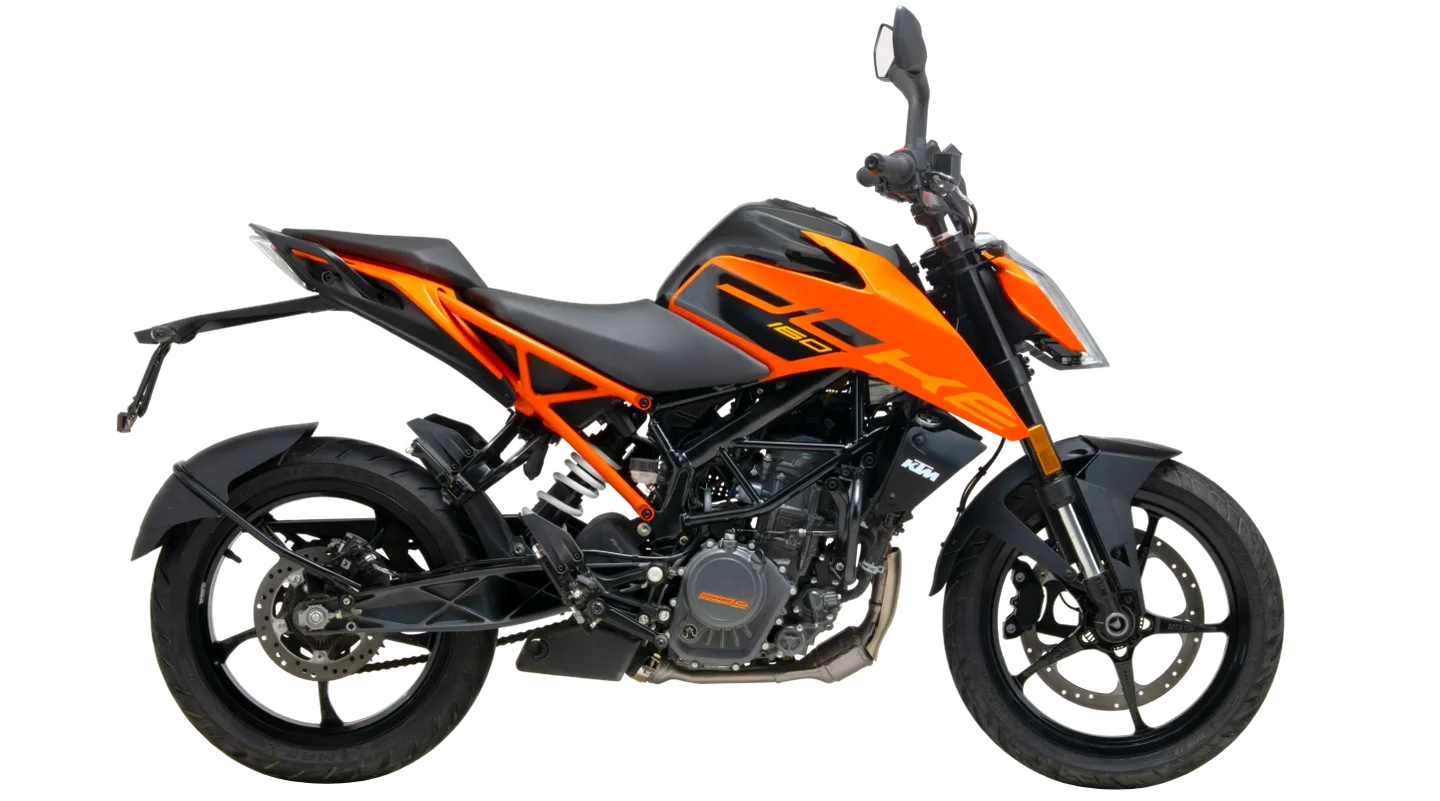
KTM 160 Duke
- 164.2 cc Liquid-Cooled, 4-valve
- 19 PS @ 9500 rpm
- 36.5 km/l (Claimed)
- 10.1-litre tank
- 2 variants available
- Dual-Ch ABS + SuperMoto Mode
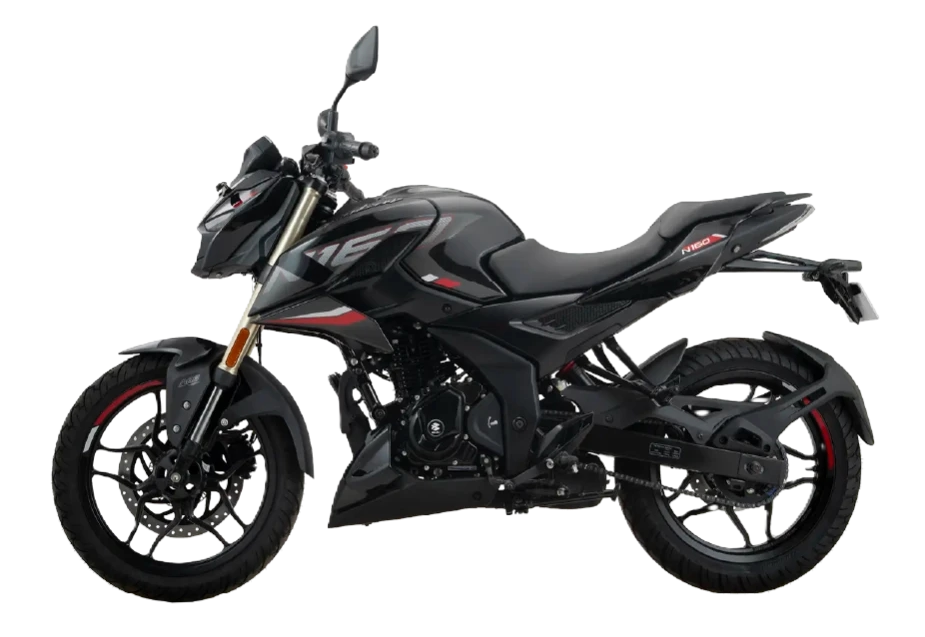
Bajaj Pulsar N160
- 164.82 cc Air-Cooled, 2-valve
- 16 PS @ 8750 rpm
- 51.6 km/l (ARAI)
- 14-litre tank
- 4 variants available
- Dual-channel ABS (most variants)
Full Specification Comparison
Every number that matters — side by side
| Specification | KTM 160 Duke | Bajaj Pulsar N160 |
|---|---|---|
| Engine & Performance | ||
| Displacement | 164.2 cc | 164.82 cc |
| Cooling System | Liquid-Cooled | Air-Cooled |
| Max Power | 19 PS @ 9500 rpm | 16 PS @ 8750 rpm |
| Max Torque | 15.5 Nm @ 7500 rpm | 14.65 Nm @ 6750 rpm |
| Valves per Cylinder | 4 | 2 |
| Compression Ratio | 11.97 : 1 | 10.3 ± 0.3 : 1 |
| Bore × Stroke | 66 × 48 mm | 58 × 62.38 mm |
| Emission Standard | BS6 Phase 2 | BS6 Phase 2 |
| Transmission | 6-Speed Manual | 5-Speed Manual |
| Clutch | Assist & Slipper Clutch | Wet Multi-Plate |
| Top Speed | 125 km/h | ~120 km/h |
| Riding Modes | SuperMoto Mode | No (Road/Rain/Off-Road on top variant) |
| Traction Control | No | No |
| Fuel & Range | ||
| Mileage (Claimed) | 36.5 km/l | 51.6 km/l (ARAI) |
| Fuel Tank | 10.1 litres | 14 litres |
| Reserve Capacity | 1.5 litres | 2.8 litres |
| Riding Range | ~363 km | ~722 km |
| Brakes & Wheels | ||
| Braking System | Dual Channel ABS + SuperMoto | Single / Dual Channel ABS |
| Front Brake | Disc – 320 mm | Disc – 300 mm |
| Rear Brake | Disc – 230 mm | Disc – 230 mm |
| Tyre Type | Tubeless | Tubeless |
| Tyre Size (F / R) | 110/70-17 / 140/60-17 | 100/80-17 / 130/70-17 |
| Wheel Type | Alloy | Alloy |
| Suspension & Chassis | ||
| Front Suspension | USD Front Fork | Telescopic / USD Fork (top variants) |
| Rear Suspension | Monoshock | Monoshock |
| Chassis | Split Trellis Frame | Perimeter Frame |
| Rear Preload Adjuster | Yes | Yes |
| Dimensions & Weight | ||
| Kerb Weight | 147 kg | 152–154 kg |
| Seat Height | 815 mm | 795 mm |
| Ground Clearance | 174 mm | 165 mm |
| Wheelbase | 1357 mm | 1358 mm |
| Overall L × W × H | 2020 × 873 × 822 mm | 1989 × 743 × 1050 mm |
| Features & Electronics | ||
| Instrument Console | LCD / TFT (top variant) | Digital |
| Headlight | LED Projector | LED Projector |
| DRLs | Yes | Yes |
| Turn Signals | LED | LED |
| Hazard Warning Lights | Yes | Yes |
| Riding Modes | SuperMoto Mode | No (Road/Rain/Off-Road on top variant) |
| Traction Control | No | No |
| Bluetooth Connectivity | Yes (TFT variant only) | Yes (all variants) |
| Call & SMS Alerts | Yes | Yes |
| USB Charging Port | Yes | Yes |
| Distance to Empty | Yes | Yes |
| Gear Indicator | Yes | Yes |
| Service Reminder | Yes | Yes |
| Keyless Ignition | No | No |
| Navigation | Yes (TFT variant) | No |
| Price & Warranty | ||
| Starting Price (ex-showroom) | ₹1,70,875 | ₹1,14,840 |
| Top Variant Price | ₹1,78,756 | ₹1,27,333 |
| Number of Variants | 2 | 4 |
| Standard Warranty | 2 Years / 30,000 km | 5 Years / 75,000 km |
★ Green highlights indicate the stronger value in each row. Prices are ex-showroom India averages and may vary by city.
Variant-wise Price Comparison
All variants laid out — find the right one for your budget
KTM 160 Duke Variants
Pulsar N160 Variants
Pros & Cons
Honest strengths and weaknesses of each bike
Pros
- Significantly more power – 19 PS vs 16 PS (18.75% more)
- Liquid-cooled 4-valve engine for better thermal management
- 6-speed gearbox with assist & slipper clutch
- USD forks standard on all variants
- Superior split trellis frame for sharper handling
- Larger 320 mm front disc brake
- Dual-Ch ABS with SuperMoto mode on all variants
- Lighter at 147 kg vs 152–154 kg
- Higher ground clearance (174 mm vs 165 mm)
- TFT display with navigation on top variant
- Wider rear tyre (140/60-17) for better grip
Cons
- Significantly more expensive – starts ₹56,035 higher
- Much lower mileage (36.5 km/l vs 51.6 km/l)
- Smaller 10.1-litre tank, very limited range (~363 km)
- Only 2 variants – limited choice
- Weak warranty: only 2 years / 30,000 km
- Higher maintenance and running costs
- Stiff suspension on rough roads
- Bluetooth only on TFT variant
Pros
- Superior ARAI-certified mileage of 51.6 km/l
- Much larger 14-litre tank for ~722 km range
- Significantly lower starting price (₹1,14,840)
- Dual-channel ABS available from ₹1,17,619
- Exceptional 5-year / 75,000 km warranty
- Bluetooth and USB charging standard on all variants
- Larger 300 mm front disc brake
- 4 variants – more choices for every budget
- LED turn signals and hazard warning lights
- Lower running and ownership costs
Cons
- Lower peak power (16 PS vs 19 PS)
- Air-cooled 2-valve engine, less sporty at high rpm
- Only 5-speed gearbox (vs 6-speed on Duke)
- No assist and slipper clutch
- Heavier at 152–154 kg
- Lesser ground clearance (165 mm vs 174 mm)
- No TFT display with navigation (on any variant)
- Riding modes only on top split-seat variant
Key Differences Explained
What really sets these two bikes apart
Engine Character
The KTM 160 Duke uses a 164.2 cc liquid-cooled, 4-valve engine producing 19 PS — nearly 19% more than the N160's 16 PS. Paired with a 6-speed gearbox and an assist & slipper clutch, it delivers an aggressive, rev-happy character that KTM is globally known for. The Pulsar N160's 164.82 cc air-cooled, 2-valve engine is tuned for smooth, usable mid-range torque and fuel efficiency, making it a more relaxed everyday performer.
Fuel Efficiency & Range
The Pulsar N160 wins by a wide margin here. Its ARAI-certified 51.6 km/l against the KTM's claimed 36.5 km/l represents a 41% efficiency advantage. More importantly, the N160's 14-litre tank delivers a theoretical range of ~722 km versus only ~363 km for the KTM's 10.1-litre tank. For daily commuters who cover long distances, the N160 requires far fewer fuel stops and offers meaningfully lower fuel costs.
Braking & Safety
The KTM 160 Duke holds a hardware edge with its larger 320 mm front disc (vs N160's 300 mm) and standard USD forks on both variants. It also adds SuperMoto mode to its dual-channel ABS. However, the Pulsar N160 makes dual-channel ABS accessible from just ₹1,17,619 — over ₹53,000 less than the cheapest Duke. For value-conscious buyers wanting safer braking, the N160 is the practical choice.
Chassis & Handling
The KTM 160 Duke's split trellis frame combined with standard USD forks and a lighter 147 kg kerb weight gives it a significant handling advantage. It feels sharper, more responsive, and more confidence-inspiring through corners. The Pulsar N160's perimeter frame is stable and predictable but tuned more for everyday comfort than outright sporting agility. Higher N160 variants do get USD forks, but the overall chassis dynamics still favour the Duke.
Warranty & Ownership
The Pulsar N160 overwhelmingly wins on warranty. Bajaj offers an exceptional 5 years / 75,000 km while KTM provides only 2 years / 30,000 km. That is a 2.5× longer time coverage and a 2.5× higher kilometre ceiling. For daily commuters clocking 15,000–20,000 km per year, the N160's warranty can save significantly on out-of-warranty repair costs. Bajaj's far larger service network in India also means easier access to authorised centres.
Price & Value
The price gap here is enormous. The N160 starts at ₹1,14,840 versus the Duke's ₹1,70,875 — a difference of ₹56,035 at the base level. Even comparing the N160's top variant (₹1,27,333) against the Duke's base variant (₹1,70,875), the N160 is ₹43,542 cheaper. The KTM does justify some premium with superior hardware, but for most Indian commuters the price difference is too large to ignore, especially when the N160 also offers better mileage and warranty.
Expert Verdict
Which one should you actually buy?
Buy the KTM 160 Duke if…
- You want the most powerful engine in the 160cc segment
- Sporty, aggressive riding character is your top priority
- Superior handling and chassis dynamics excite you
- You plan spirited weekend rides more than daily commuting
- A liquid-cooled engine and 6-speed gearbox matter to you
- TFT display with navigation is a must-have feature
- Budget is not a constraint and brand prestige matters
Buy the Pulsar N160 if…
- Fuel economy and low running costs are your priority
- You cover 30+ km daily and want maximum riding range
- Dual-channel ABS safety at a lower price matters
- The exceptional 5-year / 75,000 km warranty gives you peace of mind
- Budget is a consideration — saves ₹56,000+ over the Duke
- Bluetooth and USB charging standard from base are important
- Lower maintenance and ownership costs suit your needs
Overall Winner for Most Riders: Bajaj Pulsar N160. The ₹56,000+ price gap, 41% better fuel efficiency, nearly double the riding range, a far superior 5-year / 75,000 km warranty, and Bluetooth standard on all variants make the Pulsar N160 the more practical, better-value choice for the majority of Indian buyers. The KTM 160 Duke is a genuinely exciting motorcycle that delivers best-in-class performance, handling, and hardware — but at a premium that few daily commuters can justify. Choose the KTM 160 Duke only if outright performance, sporty riding character, and premium brand value are your absolute top priorities.
Frequently Asked Questions
Common questions answered by our experts
The KTM 160 Duke is better for performance enthusiasts who want stronger power (19 PS), a liquid-cooled engine, superior handling with USD forks and trellis frame, and an assist & slipper clutch. The Bajaj Pulsar N160 is better for most buyers who prioritise fuel efficiency (51.6 km/l), a larger 14-litre tank with nearly double the riding range, a much lower starting price, and an outstanding 5-year / 75,000 km warranty.
The Bajaj Pulsar N160 starts at ₹1,14,840 while the KTM 160 Duke starts at ₹1,70,875 ex-showroom — a base difference of ₹56,035. The gap at the top variant level is even wider: the N160 tops out at ₹1,27,333 while the KTM's TFT variant reaches ₹1,78,756, a difference of ₹51,423. Both prices are ex-showroom India averages and may vary by city.
The Bajaj Pulsar N160 has significantly better mileage at 51.6 km/l (ARAI certified) compared to the KTM 160 Duke's claimed 36.5 km/l — a 41% efficiency advantage. Combined with its much larger 14-litre fuel tank, the N160 delivers approximately 722 km of riding range versus only ~363 km for the KTM. For daily commuters, this translates to dramatically fewer fuel stops and lower monthly fuel expenditure.
The KTM 160 Duke makes significantly more power at 19 PS @ 9500 rpm compared to the Bajaj Pulsar N160's 16 PS @ 8750 rpm. The KTM also produces more torque at 15.5 Nm vs 14.65 Nm. Its liquid-cooled, 4-valve engine with 6-speed gearbox and assist & slipper clutch gives it a far more performance-oriented character compared to the N160's air-cooled, 2-valve 5-speed motor.
The KTM 160 Duke has a larger 320 mm front disc versus the N160's 300 mm, and both bikes offer dual-channel ABS. The KTM further adds a SuperMoto mode which lets experienced riders disable rear ABS for more control. However, the Pulsar N160 makes dual-channel ABS accessible from just ₹1,17,619, while even the cheapest KTM Duke costs ₹1,70,875 — making the N160's braking safety a significantly better value proposition.
The Bajaj Pulsar N160 has a dramatically better warranty at 5 years / 75,000 km compared to the KTM 160 Duke's 2 years / 30,000 km. That is 2.5 times longer time coverage and 2.5 times the kilometre limit. For a daily commuter clocking 15,000–20,000 km per year, the N160's warranty runs to 3.75–5 years under normal usage, providing significant long-term ownership security that the KTM simply cannot match.