At a Glance
Key differences that define each motorcycle
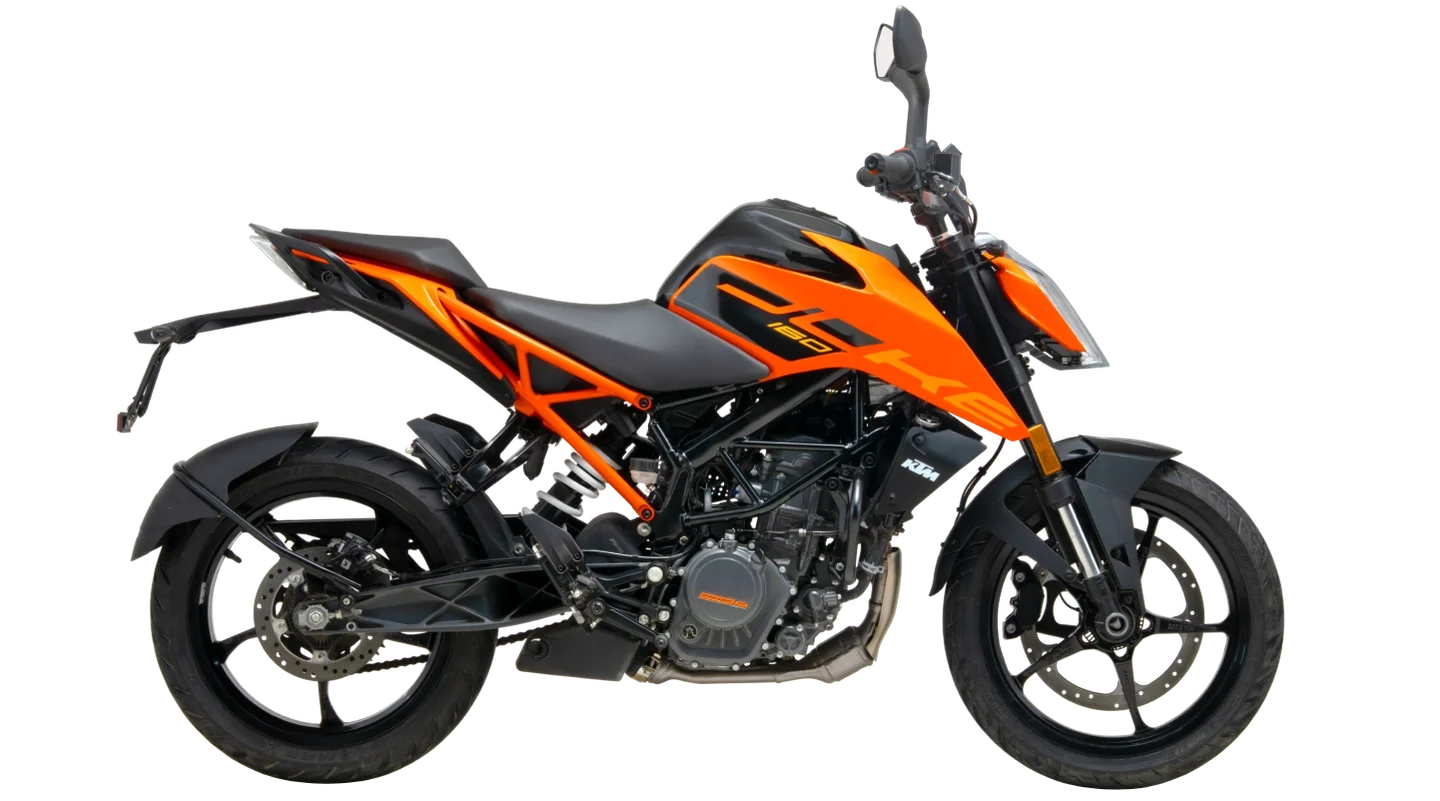
KTM 160 Duke
- 164.2 cc Liquid-Cooled, 4-valve
- 19 PS @ 9500 rpm
- 36.5 km/l (Claimed)
- 10.1-litre tank
- 2 variants available
- Dual-Ch ABS + SuperMoto Mode
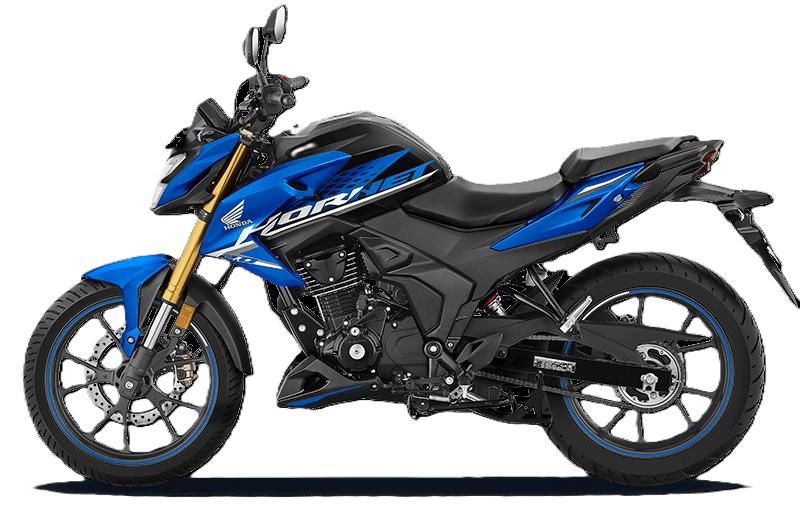
Honda Hornet 2.0
- 184.4 cc Air-Cooled, 2-valve
- 17.03 PS @ 8500 rpm
- 42.3 km/l (ARAI)
- 12-litre tank
- 1 variant available
- Single-Channel ABS, USD Forks
Full Specification Comparison
Every number that matters — side by side
| Specification | KTM 160 Duke | Honda Hornet 2.0 |
|---|---|---|
| Engine & Performance | ||
| Displacement | 164.2 cc | 184.4 cc |
| Cooling System | Liquid-Cooled | Air-Cooled |
| Max Power | 19 PS @ 9500 rpm | 17.03 PS @ 8500 rpm |
| Max Torque | 15.5 Nm @ 7500 rpm | 16.1 Nm @ 6000 rpm |
| Valves per Cylinder | 4 | 2 |
| Compression Ratio | 11.97 : 1 | 9.5 : 1 |
| Bore × Stroke | 66 × 48 mm | 61 × 63.1 mm |
| Emission Standard | BS6 Phase 2 | BS6 OBD2 |
| Transmission | 6-Speed Manual | 5-Speed Manual |
| Clutch | Assist & Slipper Clutch | Wet Multi-Plate |
| Top Speed | 125 km/h | 130 km/h |
| Riding Modes | SuperMoto Mode | No |
| Traction Control | No | No |
| Fuel & Range | ||
| Mileage (Claimed) | 36.5 km/l | 42.3 km/l (ARAI) |
| Fuel Tank | 10.1 litres | 12 litres |
| Reserve Capacity | 1.5 litres | 1.9 litres |
| Riding Range | ~363 km | ~504 km |
| Brakes & Wheels | ||
| Braking System | Dual-Channel ABS + SuperMoto | Single-Channel ABS |
| Front Brake | Disc – 320 mm | Disc – 276 mm |
| Rear Brake | Disc – 230 mm | Disc – 220 mm |
| Tyre Type | Tubeless | Tubeless |
| Tyre Size (F / R) | 110/70-17 / 140/60-17 | 110/70-17 / 140/70-17 |
| Wheel Type | Alloy | Alloy |
| Suspension & Chassis | ||
| Front Suspension | USD Front Fork | USD Fork |
| Rear Suspension | Monoshock | Monoshock |
| Chassis | Split Trellis Frame | Diamond Type Frame |
| Rear Preload Adjuster | Yes | Yes |
| Dimensions & Weight | ||
| Kerb Weight | 147 kg | 142 kg |
| Seat Height | 815 mm | 790 mm |
| Ground Clearance | 174 mm | 168 mm |
| Wheelbase | 1357 mm | 1355 mm |
| Overall L × W × H | 2020 × 873 × 822 mm | 2047 × 783 × 1064 mm |
| Features & Electronics | ||
| Instrument Console | LCD / TFT (top variant) | Fully Digital LCD |
| Headlight | LED Projector | LED (Non-Projector) |
| DRLs | Yes | Yes |
| Turn Signals | LED | LED |
| Hazard Warning Lights | Yes | Yes |
| Riding Modes | SuperMoto Mode | No |
| Traction Control | No | No |
| Bluetooth Connectivity | Yes (TFT variant) | No |
| Call & SMS Alerts | Yes (TFT variant) | No |
| USB Charging Port | Yes | No |
| Distance to Empty | Yes | No |
| Gear Indicator | Yes | Yes |
| Service Reminder | Yes | Yes |
| Navigation | Yes (TFT variant) | No |
| Keyless Ignition | No | No |
| Price & Warranty | ||
| Starting Price (ex-showroom) | ₹1,70,875 | ₹1,47,151 |
| Top Variant Price | ₹1,78,756 | ₹1,47,151 |
| Number of Variants | 2 | 1 |
| Standard Warranty | 2 Years / 30,000 km | 3 Years |
★ Green highlights indicate the stronger value in each row. Prices are ex-showroom India averages and may vary by city.
Variant-wise Price Comparison
All variants laid out — find the right one for your budget
KTM 160 Duke Variants
Honda Hornet 2.0 Variants
Pros & Cons
Honest strengths and weaknesses of each bike
Pros
- Higher peak power – 19 PS vs 17.03 PS
- Liquid-cooled 4-valve engine for better thermal performance
- 6-speed gearbox with assist & slipper clutch
- Dual-channel ABS with SuperMoto mode on all variants
- Superior 320 mm front disc brake (vs 276 mm)
- Standard USD forks with superior trellis frame chassis
- Higher ground clearance (174 mm vs 168 mm)
- LED projector headlight (vs non-projector on Hornet)
- TFT display with Bluetooth and navigation on top variant
- USB charging port and Distance-to-Empty on all variants
Cons
- Significantly more expensive – starts ₹23,724 higher
- Much lower fuel efficiency (36.5 km/l vs 42.3 km/l)
- Smaller 10.1-litre tank, shorter range (~363 km)
- Weaker warranty – only 2 years / 30,000 km
- Smaller displacement (164.2 cc vs 184.4 cc)
- Less low-end torque (15.5 Nm vs 16.1 Nm)
- Stiffer suspension on rough city roads
- Higher running and maintenance costs
- No Bluetooth on base LCD variant
Pros
- Larger 184.4 cc engine — more displacement
- Higher torque at lower rpm (16.1 Nm @ 6000 rpm)
- Better ARAI-certified mileage (42.3 km/l)
- Larger 12-litre tank for longer range (~504 km)
- Significantly lower price (₹1,47,151 vs ₹1,70,875)
- Lighter at 142 kg — lightest in this comparison
- USD front forks standard — improves handling
- 3-year warranty — better time coverage than KTM
- Honda's renowned reliability and service network
- Lower ownership and maintenance costs
Cons
- Lower peak power (17.03 PS vs 19 PS)
- Only single-channel ABS — no rear ABS protection
- Air-cooled 2-valve engine, less sporty at high rpm
- Only 5-speed gearbox (vs 6-speed on Duke)
- No assist and slipper clutch
- No Bluetooth, USB charging or smartphone connectivity
- No riding modes or SuperMoto capability
- Smaller 276 mm front disc brake
- Single variant only — no choice for the buyer
- Non-projector LED headlight
Key Differences Explained
What really sets these two bikes apart
Engine Character
The KTM 160 Duke's 164.2 cc liquid-cooled, 4-valve engine produces 19 PS and revs freely to 9500 rpm, delivering an aggressive, high-strung character that KTM is globally known for. The Honda Hornet 2.0 counters with a 184.4 cc air-cooled, 2-valve unit producing 17.03 PS but a stronger 16.1 Nm of torque at just 6000 rpm. This makes the Hornet feel more muscular and effortless at everyday commuting speeds, while the Duke demands higher revs to unlock its best performance.
Fuel Efficiency & Range
The Honda Hornet 2.0 leads clearly on economy. Its ARAI-certified 42.3 km/l easily outpaces the KTM's claimed 36.5 km/l — a 16% efficiency advantage. Combine this with the Hornet's larger 12-litre tank versus the KTM's 10.1 litres, and the Hornet stretches to ~504 km per fill against only ~363 km for the KTM. For daily commuters, this means nearly 40% more riding range between stops.
Braking & Safety
The KTM 160 Duke holds a decisive edge here. Its 320 mm front disc is 44 mm larger than the Hornet's 276 mm unit, and critically it offers dual-channel ABS — protecting both wheels — while the Honda Hornet 2.0 only has single-channel ABS, meaning the rear wheel has no ABS protection. The KTM further adds SuperMoto mode, allowing experienced riders to disable rear ABS for enhanced control. For safety-conscious buyers, the Duke's braking system is significantly superior.
Chassis & Handling
Both bikes feature USD front forks, but the KTM's split trellis frame is a more advanced and stiffer architecture compared to the Hornet's conventional diamond-type frame. The Duke is also tuned more aggressively for dynamic riding, with higher ground clearance (174 mm vs 168 mm). The Hornet 2.0 compensates with its lighter 142 kg kerb weight — 5 kg less than the Duke — making it feel marginally more nimble in slow city traffic.
Features & Technology
The KTM 160 Duke offers considerably more technology. Its TFT variant includes Bluetooth connectivity, smartphone navigation, call and SMS alerts, and a USB charging port. Even the base LCD variant includes a Distance-to-Empty display and USB charging. The Honda Hornet 2.0 has none of these connected features — no Bluetooth, no USB charging, no smartphone integration — keeping it more traditional but falling behind on modern convenience.
Price & Value
The Honda Hornet 2.0 at ₹1,47,151 is ₹23,724 cheaper than the base KTM 160 Duke at ₹1,70,875 — and ₹31,605 cheaper than the KTM's TFT top variant. The Hornet also offers a 3-year warranty against the KTM's 2 years / 30,000 km. For riders who want a premium streetfighter without the KTM price premium, the Hornet 2.0 delivers solid hardware including USD forks, a bigger engine, and Honda reliability at a meaningfully lower cost.
Expert Verdict
Which one should you actually buy?
Buy the KTM 160 Duke if…
- Maximum performance and a sporty riding experience matter most
- Dual-channel ABS for full braking safety is non-negotiable
- A 6-speed gearbox with slipper clutch excites you
- You want TFT display with Bluetooth and navigation
- Weekend spirited riding is as important as daily commuting
- Premium KTM brand value and chassis engineering appeal to you
- SuperMoto mode and an aggressive riding character are priorities
Buy the Honda Hornet 2.0 if…
- A lower price (₹23,724 cheaper) matters to your budget
- Better fuel efficiency and longer riding range are important
- Honda's legendary reliability and long-term durability appeal to you
- The bigger 184.4 cc engine with stronger low-end torque suits your riding
- You prefer a lighter, more manageable 142 kg motorcycle
- You want premium USD forks without the KTM price tag
- Lower maintenance costs and a wider service network matter
Overall Winner for Most Riders: KTM 160 Duke. Despite costing ₹23,724 more, the KTM 160 Duke delivers a meaningfully superior package for this segment — significantly more peak power, dual-channel ABS with SuperMoto mode (versus single-channel on the Hornet), a larger 320 mm front disc, a 6-speed gearbox with assist and slipper clutch, higher ground clearance, a projector LED headlight, USB charging, and an available TFT display with Bluetooth and navigation. The Honda Hornet 2.0 remains a compelling choice for buyers who prioritise Honda reliability, better mileage, a larger-displacement engine with stronger low-end torque, and a lower purchase price — especially if dual-channel ABS and connected features are not a priority.
Frequently Asked Questions
Common questions answered by our experts
The KTM 160 Duke is better for performance enthusiasts who want 19 PS, dual-channel ABS with SuperMoto mode, a 6-speed gearbox with slipper clutch, and connected features like Bluetooth and navigation. The Honda Hornet 2.0 is better for riders who value a larger 184.4 cc engine with strong low-end torque (16.1 Nm), better fuel efficiency (42.3 km/l ARAI), a longer riding range (~504 km), Honda reliability, and a significantly lower starting price of ₹1,47,151.
The Honda Hornet 2.0 starts at ₹1,47,151 while the KTM 160 Duke starts at ₹1,70,875 ex-showroom — a base difference of ₹23,724. The KTM's top TFT variant reaches ₹1,78,756, making it ₹31,605 more than the Hornet 2.0's single variant. The Hornet 2.0 is available in only one variant, while the KTM offers an LCD and a TFT variant. All prices are ex-showroom India averages and may vary by city.
The Honda Hornet 2.0 has better fuel efficiency at 42.3 km/l (ARAI certified) compared to the KTM 160 Duke's claimed 36.5 km/l. Combined with the Hornet's larger 12-litre tank versus the KTM's 10.1-litre unit, the Hornet delivers approximately 504 km of riding range per fill against only ~363 km for the KTM. This makes the Hornet 2.0 noticeably more practical for daily commuting and highway riding in terms of fuel costs and refuelling frequency.
The KTM 160 Duke makes more peak power at 19 PS @ 9500 rpm compared to the Honda Hornet 2.0's 17.03 PS @ 8500 rpm. However, the Honda produces more torque at 16.1 Nm @ 6000 rpm versus 15.5 Nm @ 7500 rpm for the KTM. This means the Hornet 2.0 feels punchier at everyday commuting speeds, while the Duke delivers its power higher in the rev range with a more energetic, performance-focused character. The KTM's liquid-cooled 4-valve engine also benefits from better thermal management compared to the Hornet's air-cooled 2-valve motor.
Yes, the KTM 160 Duke has significantly better brakes. It uses a 320 mm front disc against the Hornet's 276 mm — a 44 mm advantage — and offers dual-channel ABS across all variants, protecting both wheels during emergency braking. The Honda Hornet 2.0 only has single-channel ABS, which means only the front wheel benefits from anti-lock protection. The KTM also adds SuperMoto mode to its ABS system, a useful feature for experienced riders who want more rear-wheel control.
The Honda Hornet 2.0 offers a 3-year standard warranty compared to the KTM 160 Duke's 2 years / 30,000 km. Honda's extra year of time-based warranty, combined with its widely praised long-term reliability and extensive service network across India, gives the Hornet 2.0 a meaningful ownership security advantage. KTM also has a well-established service network in India, but its shorter warranty period and comparatively higher maintenance costs make long-term ownership slightly more expensive.