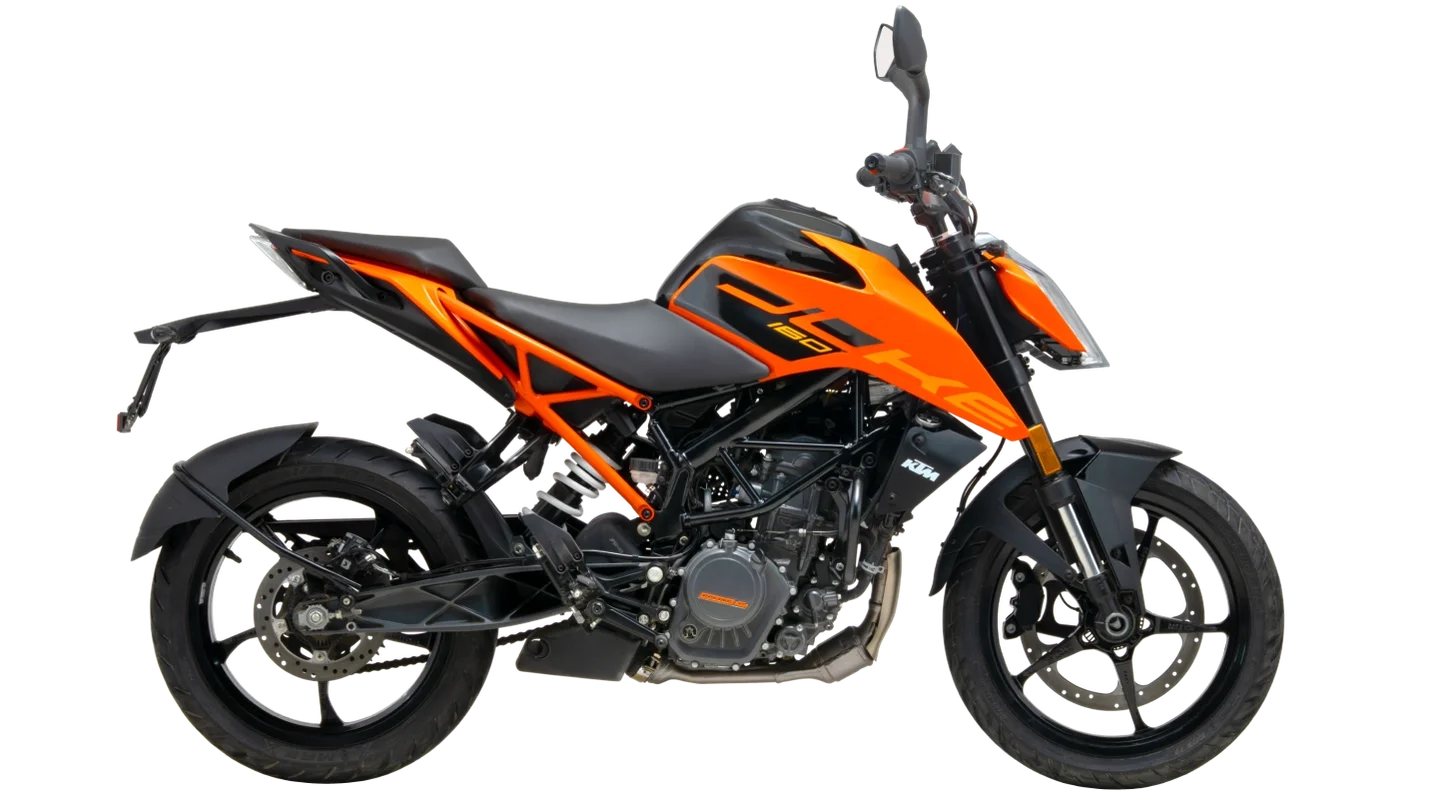
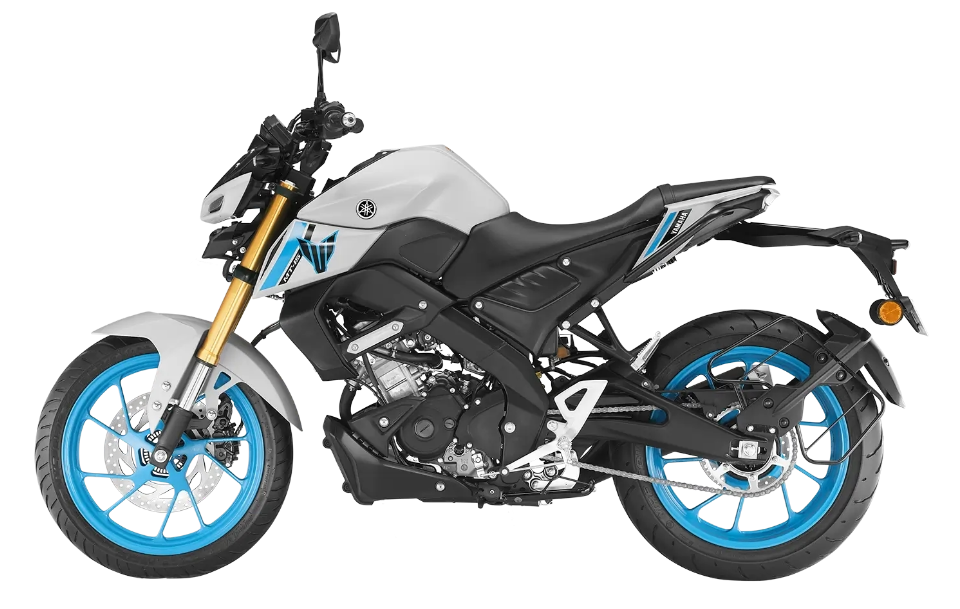
At a Glance
Key differences that define each motorcycle
KTM 160 Duke
- 164.2 cc Liquid-Cooled, 4-valve
- 19 PS @ 9500 rpm
- 36.5 km/l (Claimed)
- 10.1-litre tank
- 2 variants available
- Dual-Ch ABS + SuperMoto Mode
Yamaha MT-15 V2
- 155 cc Liquid-Cooled, 4-valve (VVA)
- 18.4 PS @ 10,000 rpm
- 56.87 km/l (ARAI)
- 10-litre tank
- 2 variants available
- Traction Control standard
Full Specification Comparison
Every number that matters — side by side
| Specification | KTM 160 Duke | Yamaha MT-15 V2 |
|---|---|---|
| Engine & Performance | ||
| Displacement | 164.2 cc | 155 cc |
| Cooling System | Liquid-Cooled | Liquid-Cooled |
| Max Power | 19 PS @ 9500 rpm | 18.4 PS @ 10,000 rpm |
| Max Torque | 15.5 Nm @ 7500 rpm | 14.1 Nm @ 7500 rpm |
| Valves per Cylinder | 4 | 4 |
| Compression Ratio | 11.97:1 | 11.6:1 |
| Bore × Stroke | 66 × 48 mm | 58.0 × 58.7 mm |
| Emission Standard | BS6 Phase 2 | BS6 OBD2 |
| Transmission | 6-Speed Manual | 6-Speed Manual |
| Clutch | Assist & Slipper | Assist & Slipper |
| Top Speed | ~125 km/h | ~122 km/h |
| Riding Modes | SuperMoto Mode (ABS) | No |
| Traction Control | No | Yes (standard) |
| Variable Valve Actuation | No | Yes (VVA) |
| Fuel & Range | ||
| Mileage (Claimed / ARAI) | 36.5 km/l (Claimed) | 56.87 km/l (ARAI) |
| Mileage (Real-world) | ~30–33 km/l | 45–50 km/l |
| Fuel Tank | 10.1 litres | 10 litres |
| Reserve Capacity | 1.5 litres | 1.6 litres |
| Riding Range | ~363 km | ~568 km |
| Brakes & Wheels | ||
| Braking System | Dual Channel ABS + SuperMoto | Dual Channel ABS |
| Front Brake | Disc – 320 mm | Disc – 282 mm |
| Rear Brake | Disc – 230 mm | Disc – 220 mm |
| Tyre Type | Tubeless | Tubeless |
| Tyre Size (F / R) | 110/70-17 / 140/60-17 | 100/80-17 / 140/70-17 |
| Wheel Type | Alloy | Alloy |
| Suspension & Chassis | ||
| Front Suspension | USD Front Fork | USD Front Fork |
| Rear Suspension | Monoshock | Linked-Type Monoshock |
| Chassis | Split Trellis Frame | Deltabox Frame |
| Rear Preload Adjuster | Yes | Yes |
| Dimensions & Weight | ||
| Kerb Weight | 147 kg | 141 kg |
| Seat Height | 815 mm | 810 mm |
| Ground Clearance | 174 mm | 170 mm |
| Wheelbase | 1357 mm | 1325 mm |
| Overall L × W × H | 2020 × 873 × 822 mm | 2015 × 800 × 1070 mm |
| Features & Electronics | ||
| Instrument Console | Digital LCD / TFT (top variant) | Fully Digital LCD |
| Headlight | LED Projector | LED |
| DRLs | Yes | Yes |
| Turn Signals | LED | LED |
| Hazard Warning Lights | Yes | Yes (DLX variant) |
| Riding Modes | SuperMoto Mode | No |
| Traction Control | No | Yes |
| Bluetooth Connectivity | Yes (TFT variant) | Yes (DLX variant) |
| Navigation | Yes (TFT variant) | Yes, Turn-by-Turn (DLX variant) |
| Call & SMS Alerts | Yes | Yes (DLX variant) |
| USB Charging Port | Yes | No |
| Distance to Empty | Yes | Yes |
| Gear Indicator | Yes | Yes |
| Tachometer | Digital | Digital |
| Keyless Ignition | No | No |
| Price & Warranty | ||
| Starting Price (ex-showroom) | ₹1,70,875 | ₹1,60,096 |
| Top Variant Price | ₹1,78,756 (TFT) | ₹1,68,507 (DLX) |
| Number of Variants | 2 | 2 |
| Standard Warranty | 2 Years / 30,000 km | 2 Years / 30,000 km |
★ Green highlights indicate the stronger value in each row. Prices are ex-showroom India averages and may vary by city.
Variant-wise Price Comparison
All variants laid out — find the right one for your budget
KTM 160 Duke Variants
Yamaha MT-15 V2 Variants
Pros & Cons
Honest strengths and weaknesses of each bike
Pros
- Highest peak power — 19 PS @ 9500 rpm
- More torque — 15.5 Nm vs 14.1 Nm
- Larger 320 mm front disc — strongest braking in class
- SuperMoto ABS mode for experienced rider control
- Premium Split Trellis frame for sharp handling
- LED projector headlamp for superior illumination
- Larger displacement (164.2 cc) — more engine grunt
- USB charging port standard across all variants
- Wider front tyre (110/70) for better grip
- TFT display with full connectivity on top variant
Cons
- Significantly lower mileage (~36.5 km/l vs 56.87 km/l)
- Much shorter riding range (~363 km vs ~568 km)
- Higher starting price (₹10,779 more than Yamaha STD)
- No traction control on any variant
- Heavier at 147 kg vs 141 kg
- No ARAI-certified mileage figure — only claimed
- Bluetooth only on TFT variant (not base LCD)
- Higher maintenance / running costs
Pros
- Outstanding ARAI-certified mileage — 56.87 km/l
- Much longer riding range — ~568 km per tank
- Traction control standard across both variants
- Lower starting price — ₹1,60,096 (saves ₹10,779)
- Lightest in class at just 141 kg kerb weight
- VVA technology for strong low and high rpm performance
- Deltabox frame for precise, predictable handling
- Lower top variant price (₹1,68,507 vs ₹1,78,756)
- Proven Yamaha long-term reliability
Cons
- Slightly lower peak power (18.4 PS vs 19 PS)
- Less torque (14.1 Nm vs 15.5 Nm)
- Smaller 282 mm front disc — less stopping bite
- No SuperMoto ABS mode
- No USB charging port on any variant
- Bluetooth only on DLX variant, not STD
- Hazard warning lights only on DLX variant
- Shorter wheelbase (1325 mm) — less high-speed stability
Key Differences Explained
What really sets these two bikes apart
Engine Character
Both bikes use liquid-cooled, 4-valve single-cylinder engines, but with distinct philosophies. The KTM 160 Duke's 164.2 cc unit makes 19 PS and 15.5 Nm — a punchy, high-revving motor with short-stroke bore (66×48 mm) tuned for raw performance. The Yamaha MT-15 V2's 155 cc VVA engine makes 18.4 PS and 14.1 Nm but adds Variable Valve Actuation, delivering strong torque at low rpm and free-revving power at the top end — a more versatile everyday character.
Fuel Efficiency & Range
This is the Yamaha's most decisive advantage. Its ARAI-certified 56.87 km/l is more than 55% better than the KTM's claimed 36.5 km/l — a gap that is extraordinary between two bikes in the same class. Real-world riding range is approximately 568 km for the MT-15 V2 versus just ~363 km for the Duke. For daily commuters who fill up every week, the Yamaha can mean significantly lower running costs over ownership.
Braking & Safety Electronics
The KTM 160 Duke leads on hardware with a massive 320 mm front disc — 38 mm larger than the Yamaha's 282 mm unit — and a SuperMoto ABS mode that lets experienced riders lock the rear wheel independently. The Yamaha counters with traction control as standard on both variants, a safety net the KTM entirely lacks. Both offer dual-channel ABS; the choice here depends on whether you prioritise stopping power or on-acceleration safety.
Weight & Handling
The Yamaha MT-15 V2 is the lightest bike in its class at just 141 kg, giving it a 6 kg advantage over the KTM's 147 kg. This translates to sharper lane changes and easier low-speed maneuvering. The KTM compensates with its longer 1357 mm wheelbase (vs 1325 mm) and the distinctive Split Trellis frame that provides immense rigidity and feedback. Both have USD forks — they match here at a premium component level.
Technology & Features
The KTM 160 Duke offers a USB charging port as standard and a TFT display with Bluetooth and navigation on its top variant. The Yamaha MT-15 V2's DLX variant includes Bluetooth and turn-by-turn navigation via the Y-Connect system but lacks a USB port entirely. The KTM's SuperMoto ABS mode and the Yamaha's traction control each add exclusive electronics — the KTM suits performance riders while the Yamaha suits safety- conscious daily commuters.
Price & Value
The Yamaha MT-15 V2 STD at ₹1,60,096 undercuts the KTM 160 Duke LCD by ₹10,779, and includes traction control that the KTM doesn't offer at any price. The top-spec MT-15 V2 DLX is ₹1,68,507 versus ₹1,78,756 for the KTM TFT — a saving of ₹10,249. Both bikes share an identical 2-year / 30,000 km warranty. For everyday value, the Yamaha's combination of lower price, better fuel economy and traction control makes it the more rational choice.
Expert Verdict
Which one should you actually buy?
Buy the KTM 160 Duke if…
- Maximum power and KTM's raw performance character excite you
- The 320 mm front disc and SuperMoto ABS mode appeal to you
- You want a Split Trellis frame for sharp, sporty handling
- LED projector headlamp and aggressive KTM styling matter
- You want a USB charging port built in as standard
- Brand prestige and KTM's performance pedigree are important
- You enjoy spirited weekend riding more than daily commuting
- The TFT variant's full connectivity setup appeals to you
Buy the Yamaha MT-15 V2 if…
- Fuel efficiency and lower running costs are a priority
- Traction control as standard gives you confidence
- You want the lightest bike in this segment (141 kg)
- The ARAI-certified 56.87 km/l mileage matters to you
- Daily commuting and long-range riding are your primary use
- Lower starting price (₹10,779 cheaper) suits your budget
- Yamaha's long-term reliability is important to you
- VVA technology's broad power band appeals for city riding
Overall Winner for Most Riders: Yamaha MT-15 V2. The Yamaha MT-15 V2 wins on the metrics that matter most to the majority of Indian buyers — it costs ₹10,779 less, delivers a class-leading 56.87 km/l ARAI-certified mileage (over 55% more than the KTM), offers traction control as standard at any price point, and is lighter at 141 kg. Its 568 km riding range versus the Duke's ~363 km means fewer fuel stops and substantially lower running costs. However, if you are an enthusiast who values the KTM 160 Duke's 320 mm disc, SuperMoto ABS mode, projector headlamp, and raw performance pedigree over everyday frugality, the Duke absolutely justifies its ₹10,779 premium.
Frequently Asked Questions
Common questions answered by our experts
For most buyers, the Yamaha MT-15 V2 offers better overall value — it is cheaper to buy (₹10,779 less), dramatically more fuel-efficient (56.87 km/l ARAI vs 36.5 km/l claimed), lighter at 141 kg, and includes traction control as standard. The KTM 160 Duke is the better choice for performance enthusiasts who want the segment's highest power output (19 PS), a 320 mm front disc, SuperMoto ABS mode, and KTM's aggressive character.
The Yamaha MT-15 V2 STD starts at ₹1,60,096 while the KTM 160 Duke LCD starts at ₹1,70,875 ex-showroom — the KTM is ₹10,779 more expensive at the base level. The top variants maintain a similar gap: Yamaha MT-15 V2 DLX at ₹1,68,507 versus KTM 160 Duke TFT at ₹1,78,756 — a difference of ₹10,249 in Yamaha's favour. Both prices may vary by city.
The Yamaha MT-15 V2 has significantly better mileage with an ARAI-certified 56.87 km/l, compared to the KTM 160 Duke's claimed 36.5 km/l. This difference — over 55% — is one of the largest efficiency gaps between two comparable performance motorcycles in India. The Yamaha's VVA engine technology is a key contributor to this advantage. Real-world MT-15 V2 mileage is typically 45–50 km/l, still far ahead of the Duke's estimated 30–33 km/l in real use.
The KTM 160 Duke makes more power at 19 PS @ 9500 rpm compared to the Yamaha MT-15 V2's 18.4 PS @ 10,000 rpm — a difference of 0.6 PS that is small but real. The KTM also produces more torque at 15.5 Nm versus 14.1 Nm, and its larger 164.2 cc displacement contributes to stronger mid-range pull. In practice, the power difference is felt more in aggressive riding than in everyday use.
Yes, the Yamaha MT-15 V2 comes with traction control as standard on both STD and DLX variants — making it one of very few 155 cc motorcycles to offer this feature. The KTM 160 Duke does not offer traction control on any variant. Instead, the KTM offers a SuperMoto ABS mode which allows the rear wheel to lock independently under braking, a feature for experienced riders rather than a daily safety aid.
Both the KTM 160 Duke and Yamaha MT-15 V2 offer identical standard warranties of 2 years or 30,000 km, whichever comes first. Neither bike has an advantage here. However, ongoing service costs may differ — Yamaha's widespread service network and straightforward engine design typically result in lower maintenance costs than the KTM, which can have higher parts costs for its performance components.