At a Glance
Key differences that define each motorcycle
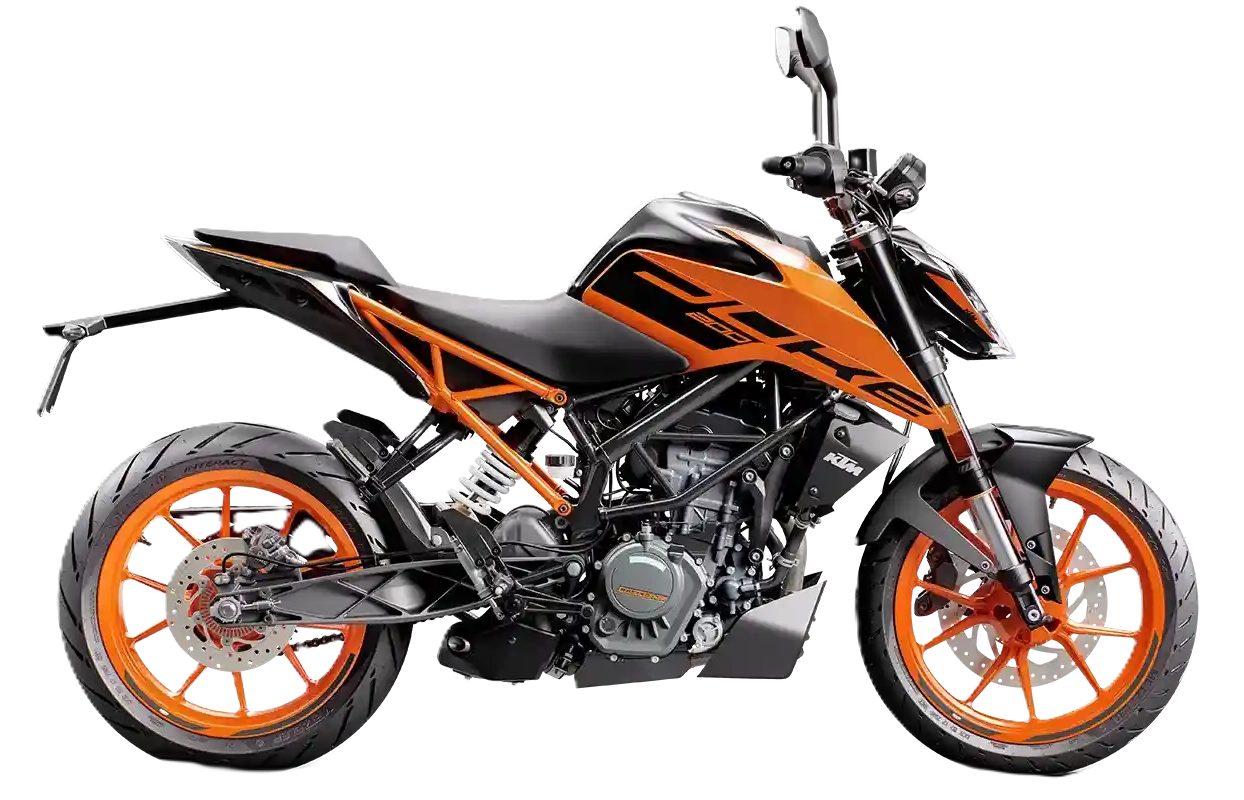
KTM 200 Duke
- 199.5 cc Liquid-Cooled, 4-valve DOHC
- 25 PS @ 10000 rpm
- 35 km/l (Claimed)
- 13.5-litre tank
- 1 variant available
- Supermoto Dual-Ch ABS, WP Suspension
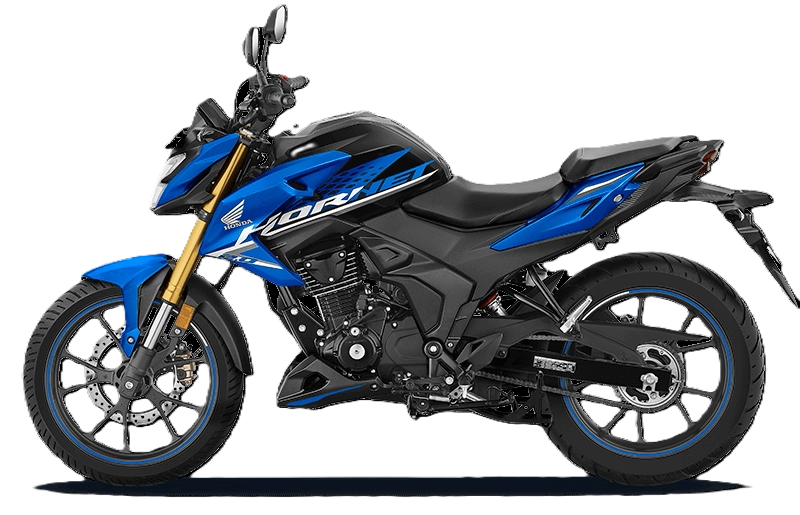
Honda Hornet 2.0
- 184.4 cc Air-Cooled, 2-valve
- 17.03 PS @ 8500 rpm
- 42.3 km/l (ARAI)
- 12-litre tank
- 1 variant available
- Single-Channel ABS, USD Forks
Full Specification Comparison
Every number that matters — side by side
| Specification | KTM 200 Duke | Honda Hornet 2.0 |
|---|---|---|
| Engine & Performance | ||
| Displacement | 199.5 cc | 184.4 cc |
| Cooling System | Liquid-Cooled | Air-Cooled |
| Max Power | 25 PS @ 10000 rpm | 17.03 PS @ 8500 rpm |
| Max Torque | 19.3 Nm @ 8000 rpm | 16.1 Nm @ 6000 rpm |
| Valves per Cylinder | 4 (DOHC) | 2 |
| Compression Ratio | 11.3 : 1 | 9.5 : 1 |
| Bore × Stroke | 72 × 49 mm | 61 × 63.1 mm |
| Emission Standard | BS6 Phase 2B | BS6 OBD2 |
| Transmission | 6-Speed Manual | 5-Speed Manual |
| Clutch | Assist & Slipper Clutch | Wet Multi-Plate |
| Top Speed | ~140 km/h | ~130 km/h |
| Riding Modes | No | No |
| Traction Control | No | No |
| Fuel & Range | ||
| Mileage (Claimed) | 35 km/l | 42.3 km/l (ARAI) |
| Fuel Tank | 13.5 litres | 12 litres |
| Reserve Capacity | 2.7 litres | 1.9 litres |
| Riding Range | ~469 km | ~504 km |
| Brakes & Wheels | ||
| Braking System | Supermoto Dual-Channel ABS | Single-Channel ABS |
| Front Brake | Disc – 300 mm | Disc – 276 mm |
| Rear Brake | Disc – 230 mm | Disc – 220 mm |
| Tyre Type | Tubeless | Tubeless |
| Tyre Size (F / R) | 110/70-17 / 150/60-17 | 110/70-17 / 140/70-17 |
| Wheel Type | Alloy | Alloy |
| Suspension & Chassis | ||
| Front Suspension | WP APEX USD Forks (43 mm) | USD Fork |
| Rear Suspension | WP APEX Monoshock (10-step adj.) | Monoshock |
| Chassis | Split-Trellis Frame (Tubular) | Diamond Type Frame |
| Rear Preload Adjuster | Yes (10-step) | Yes |
| Dimensions & Weight | ||
| Kerb Weight | 159 kg | 142 kg |
| Seat Height | 822 mm | 790 mm |
| Ground Clearance | 155 mm | 168 mm |
| Wheelbase | 1357 mm | 1355 mm |
| Overall L × W × H | 2072 × 831 × 1109 mm | 2047 × 783 × 1064 mm |
| Features & Electronics | ||
| Instrument Console | 5-inch TFT Display | Fully Digital LCD |
| Headlight | Dual LED | LED |
| DRLs | Yes | Yes |
| Turn Signals | LED | LED |
| Hazard Warning Lights | No | Yes |
| Riding Modes | No | No |
| Traction Control | No | No |
| Bluetooth Connectivity | Yes | No |
| Call & SMS Alerts | Yes | No |
| USB Charging Port | Yes | No |
| Distance to Empty | No | No |
| Gear Indicator | Yes | Yes |
| Service Reminder | Yes | Yes |
| Keyless Ignition | No | No |
| Price & Warranty | ||
| Starting Price (ex-showroom) | ₹1,97,980 | ₹1,47,151 |
| Top Variant Price | ₹1,97,980 | ₹1,47,151 |
| Number of Variants | 1 | 1 |
| Standard Warranty | 2 Years / 30,000 km | 3 Years |
★ Green highlights indicate the stronger value in each row. Prices are ex-showroom India averages and may vary by city.
Variant-wise Price Comparison
All variants laid out — find the right one for your budget
KTM 200 Duke Variants
Honda Hornet 2.0 Variants
Pros & Cons
Honest strengths and weaknesses of each bike
Pros
- Dominant peak power – 25 PS vs 17.03 PS (47% more)
- High-revving 199.5 cc liquid-cooled DOHC 4-valve engine
- 6-speed gearbox with assist & slipper clutch
- Premium WP APEX USD forks and 10-step monoshock
- Supermoto dual-channel ABS on all variants
- Superior 300 mm front disc with radial caliper
- Wider 150/60-17 rear tyre for better grip
- 5-inch TFT display with Bluetooth and call alerts
- USB charging port standard
- Higher top speed (~140 km/h vs ~130 km/h)
- Larger 13.5-litre fuel tank
Cons
- Costs ₹50,829 more than the Hornet 2.0
- Much lower fuel efficiency (35 km/l vs 42.3 km/l)
- Shorter riding range (~469 km vs ~504 km)
- Weaker warranty – 2 years / 30,000 km
- Heavier at 159 kg vs 142 kg
- Lower ground clearance (155 mm vs 168 mm)
- No hazard warning lights
- Stiff suspension and firm seat on rough roads
- Higher maintenance and running costs
- Power delivery can feel aggressive for beginners
Pros
- ₹50,829 less expensive — major budget advantage
- Superior ARAI-certified fuel efficiency (42.3 km/l)
- Longer riding range (~504 km vs ~469 km)
- Much lighter at 142 kg — easiest to handle
- Better ground clearance (168 mm vs 155 mm)
- USD front forks — premium handling on a budget
- Honda's legendary reliability and low running costs
- 3-year warranty — beats KTM's 2-year coverage
- Hazard warning lights standard
- Stronger torque at accessible low rpm (16.1 Nm @ 6000 rpm)
- Forgiving power delivery suits beginners well
Cons
- Far less peak power (17.03 PS vs 25 PS)
- Only single-channel ABS — no rear wheel protection
- Air-cooled 2-valve engine — limited high-rpm performance
- Only 5-speed gearbox (vs 6-speed on Duke)
- No assist and slipper clutch
- No Bluetooth, USB charging or smartphone connectivity
- Standard LCD cluster — no TFT display
- Smaller 276 mm front disc with conventional caliper
- Narrower rear tyre (140/70-17 vs 150/60-17)
- Lower top speed (~130 km/h vs ~140 km/h)
Key Differences Explained
What really sets these two bikes apart
Engine Character
This is the most dramatic gap in the comparison. The KTM 200 Duke's 199.5 cc liquid-cooled DOHC 4-valve engine produces 25 PS at 10000 rpm — a full 47% more than the Hornet's 17.03 PS. Its 6-speed gearbox with assist and slipper clutch completes the performance package. The Honda Hornet 2.0's 184.4 cc air-cooled 2-valve engine makes a more modest 17.03 PS but delivers 16.1 Nm of torque at just 6000 rpm, making it feel effortlessly strong in everyday traffic. These are fundamentally different motorcycles in terms of character.
Fuel Efficiency & Range
The Honda Hornet 2.0 leads on economy with an ARAI-certified 42.3 km/l against the KTM's claimed 35 km/l — a 21% efficiency advantage. Despite the KTM having a larger 13.5-litre tank versus the Hornet's 12 litres, the Hornet actually delivers a longer riding range of ~504 km versus ~469 km for the Duke. For daily commuters, this means lower fuel costs every month and the added peace of mind of fewer fuel stops.
Braking & Safety
The KTM 200 Duke wins clearly on braking hardware. Its 300 mm front disc (vs 276 mm) is paired with a radial caliper and premium WP suspension for superior feel and stopping confidence. Crucially, the Duke offers Supermoto dual-channel ABS — protecting both wheels — while the Hornet 2.0 only has single-channel ABS, leaving the rear wheel without anti-lock protection. The Duke's SuperMoto mode also allows experienced riders to disable rear ABS for more dynamic control on track or smooth roads.
Suspension & Chassis
The KTM 200 Duke fields WP APEX premium suspension — 43 mm USD forks at the front and a 10-step adjustable WP APEX monoshock at the rear — mounted on a tubular split-trellis frame. This is a qualitative step above the Hornet 2.0's USD forks on a conventional diamond-type frame. The KTM setup is track-derived and significantly more adjustable. However, the Hornet's lighter 142 kg kerb weight (vs 159 kg for the Duke) and greater 168 mm ground clearance (vs 155 mm) give it a practical edge on rough Indian city roads.
Features & Technology
The KTM 200 Duke's 5-inch TFT display with Bluetooth connectivity, call and SMS alerts, and a USB charging port puts it in a completely different technology league from the Hornet 2.0. The Hornet offers a basic fully digital LCD cluster with no smartphone connectivity, no Bluetooth, and no USB charging. The Hornet does counter with hazard warning lights — absent on the Duke. For connected, tech-forward riders, the KTM's feature set justifies a premium.
Price & Value
The Honda Hornet 2.0 at ₹1,47,151 is ₹50,829 cheaper than the KTM 200 Duke at ₹1,97,980 — a massive 34% price difference. That ₹50,000+ gap can buy you a year's worth of fuel, a quality riding jacket and helmet, or simply stay in your pocket. The Hornet also offers a 3-year warranty vs the KTM's 2 years / 30,000 km. While the KTM genuinely delivers more performance and technology, the Hornet offers extraordinary value considering its USD forks, Honda reliability, and lower running costs.
Expert Verdict
Which one should you actually buy?
Buy the KTM 200 Duke if…
- Maximum performance is your top priority — 25 PS is hard to beat
- Dual-channel ABS with Supermoto mode is non-negotiable for you
- Premium WP APEX suspension and a 6-speed slipper clutch gearbox excite you
- A 5-inch TFT with Bluetooth and Bluetooth connectivity are must-haves
- You plan frequent spirited riding or occasional track days
- Budget is not a constraint — you can absorb the ₹50,000+ premium
- The KTM brand experience and community matter to you
Buy the Honda Hornet 2.0 if…
- Saving ₹50,829 without major compromises on daily use matters
- Better fuel economy and longer riding range suit your commuting needs
- Honda reliability and a lower cost of ownership are priorities
- The lightweight 142 kg chassis makes it easier to handle daily
- Better ground clearance (168 mm) is important for your roads
- You want USD forks and premium styling at a significantly lower price
- A 3-year warranty provides greater long-term peace of mind
Overall Winner for Performance Riders: KTM 200 Duke. The 200 Duke's 25 PS liquid-cooled DOHC engine, premium WP APEX suspension, Supermoto dual-channel ABS, 5-inch TFT with Bluetooth, 6-speed gearbox with slipper clutch, and wider rear tyre make it the most complete performance motorcycle in this comparison — and one of the best 200cc streetfighters available in India in 2026. However, the ₹50,829 price gap is enormous, and for the majority of daily commuters who don't need 25 PS or track-capable hardware, the Honda Hornet 2.0 offers exceptional value — better fuel efficiency, a longer riding range, a lighter and more manageable chassis, greater ground clearance, Honda reliability and a 3-year warranty, all for ₹50,000+ less. Choose based on your riding priorities: pure performance versus practical everyday value.
Frequently Asked Questions
Common questions answered by our experts
The KTM 200 Duke is better for performance-focused riders who want 25 PS, Supermoto dual-channel ABS, premium WP APEX suspension, a 5-inch TFT with Bluetooth, and a 6-speed gearbox with slipper clutch. The Honda Hornet 2.0 is better for daily commuters who value saving ₹50,829, better fuel efficiency (42.3 km/l ARAI), a longer riding range, a lighter 142 kg chassis, greater ground clearance, Honda reliability, and a 3-year warranty.
The Honda Hornet 2.0 starts at ₹1,47,151 while the KTM 200 Duke starts at ₹1,97,980 ex-showroom — a difference of ₹50,829. Both bikes are available in a single variant each. This 34% price premium for the KTM reflects its significantly more powerful engine, premium WP APEX suspension, Supermoto dual-channel ABS, and 5-inch TFT display with Bluetooth. All prices are ex-showroom India averages and may vary by city.
The Honda Hornet 2.0 has significantly better fuel efficiency at 42.3 km/l (ARAI certified) compared to the KTM 200 Duke's claimed 35 km/l — a 21% advantage. Despite the KTM having a larger 13.5-litre tank, the Hornet's superior mileage means it actually delivers more range (~504 km vs ~469 km). For a daily commuter covering 40 km per day, the Hornet could save ₹3,000–4,000 annually in fuel costs alone.
The KTM 200 Duke makes dramatically more peak power at 25 PS @ 10000 rpm compared to the Honda Hornet 2.0's 17.03 PS @ 8500 rpm — a 47% advantage. The KTM also produces more torque at 19.3 Nm @ 8000 rpm versus 16.1 Nm @ 6000 rpm. The Honda's torque arrives much earlier in the rev range, making it feel strong and accessible for everyday commuting, while the KTM's liquid-cooled DOHC engine delivers its power in a more aggressive, high-revving manner suited to spirited and performance-focused riding.
Yes, the KTM 200 Duke has significantly better brakes. It uses a larger 300 mm front disc with a radial caliper (vs the Hornet's 276 mm with a conventional caliper) and offers Supermoto dual-channel ABS, which protects both wheels during emergency braking. The Honda Hornet 2.0 only has single-channel ABS, meaning only the front wheel is protected. The KTM's Supermoto mode also allows experienced riders to selectively disable rear ABS for more dynamic control. The Duke's premium WP APEX suspension further enhances braking confidence and feel.
The Honda Hornet 2.0 offers a 3-year standard warranty while the KTM 200 Duke covers 2 years / 30,000 km. Honda's extra year of coverage is meaningful, and when combined with Honda's widely recognised long-term engine reliability and extensive service network across India, the Hornet 2.0 provides greater ownership security. The KTM's shorter warranty and comparatively higher maintenance costs mean long-term ownership of the 200 Duke is more expensive, though KTM's service network in India is also well established in major cities.