At a Glance
Key differences that define each motorcycle
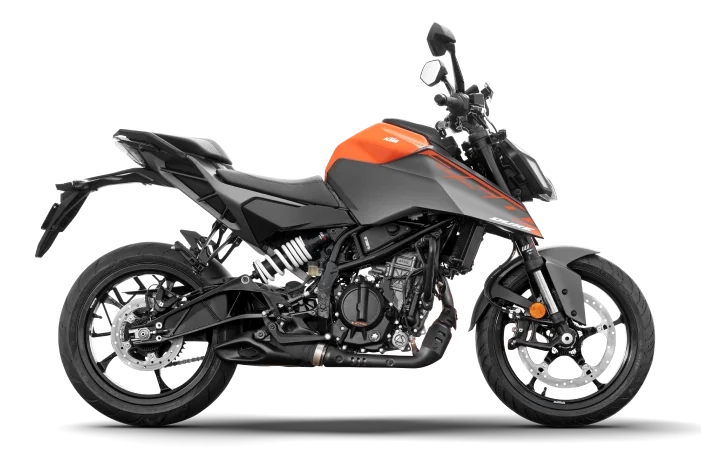
KTM 250 Duke
- 249.07 cc Liquid-Cooled, 4-valve
- 30.57 bhp @ 9250 rpm
- 31 km/l (Owner Reported)
- 15-litre tank
- Riding Modes: Track & Street
- ₹28,695 cheaper than the Adventure
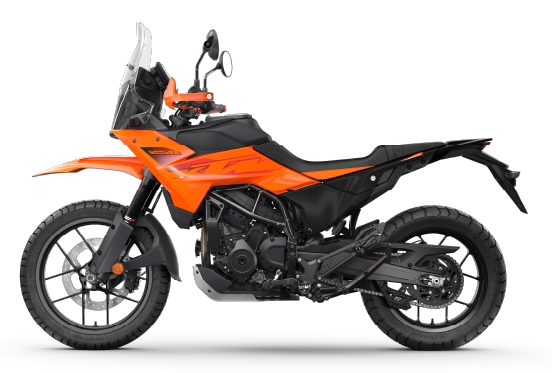
KTM 250 Adventure
- 248.76 cc Liquid-Cooled, 4-valve
- 30.5 bhp @ 9250 rpm
- 32 km/l (Owner Reported)
- 14.5-litre tank
- 227 mm ground clearance
- Dual-Ch ABS with off-road mode
Full Specification Comparison
Every number that matters — side by side
| Specification | KTM 250 Duke | KTM 250 Adventure |
|---|---|---|
| Engine & Performance | ||
| Displacement | 249.07 cc | 248.76 cc |
| Cooling System | Liquid-Cooled | Liquid-Cooled |
| Max Power | 30.57 bhp @ 9250 rpm | 30.5 bhp @ 9250 rpm |
| Max Torque | 25 Nm @ 7250 rpm | 25 Nm @ 7250 rpm |
| Valves per Cylinder | 4 | 4 |
| Bore × Stroke | 72 × 61.1 mm | 72 × 61.1 mm |
| Compression Ratio | 12.63 : 1 | 12.5 : 1 |
| Emission Standard | BS6 Phase 2B | BS6 Phase 2 |
| Transmission | 6-Speed Manual | 6-Speed Manual |
| Clutch | Assist & Slipper Clutch | Assist & Slipper Clutch |
| Quickshifter | Quickshifter+ | Quickshifter+ |
| Top Speed | 148 km/h | 140 km/h |
| Riding Modes | Track & Street | No |
| Traction Control | No | No |
| Fuel & Range | ||
| Mileage (Owner Reported) | 31 km/l | 32 km/l |
| Fuel Tank | 15 litres | 14.5 litres |
| Reserve Capacity | 3 litres | 2.9 litres |
| Riding Range | ~465 km | ~464 km |
| Brakes & Wheels | ||
| Braking System | Supermoto ABS | Dual Channel ABS (with Off-Road Mode) |
| Front Brake | Disc – 320 mm | Disc – 320 mm |
| Rear Brake | Disc – 240 mm | Disc – 230 mm |
| Tyre Type | Tubeless | Tubeless |
| Front Tyre | 110/70-R17 | 100/90-19 |
| Rear Tyre | 150/60-R17 | 130/80-17 |
| Front Wheel Size | 17 inch | 19 inch |
| Wheel Type | Alloy | Alloy |
| Suspension & Chassis | ||
| Front Suspension | WP APEX USD Forks, 43 mm | USD Forks (Long-Travel) |
| Rear Suspension | WP APEX Monoshock, 10-step Adjustable | WP APEX Monoshock |
| Chassis | Split-Trellis Frame | Steel Trellis Frame |
| Rear Preload Adjuster | Yes | Yes |
| Dimensions & Weight | ||
| Kerb Weight | 162.8 kg | 177 kg |
| Seat Height | 800 mm | 825 mm |
| Ground Clearance | 176 mm | 227 mm |
| Wheelbase | 1370 mm | 1430 mm |
| Overall Dimensions (L × W × H) | – | 2154 × 900 × 825 mm |
| Features & Electronics | ||
| Instrument Console | 5-inch TFT Display | 5-inch TFT Display |
| Headlight | Dual LED | Dual LED Projector |
| DRLs | Yes | Yes |
| Turn Signals | LED | LED |
| Hazard Warning Lights | Yes | No |
| Riding Modes | Track & Street | No |
| Off-Road ABS Mode | No | Yes |
| Traction Control | No | No |
| Bluetooth Connectivity | Yes | Yes |
| Call & SMS Alerts | Yes | Yes |
| USB Charging Port | Yes | Yes |
| Distance to Empty | No | Yes |
| Gear Indicator | Yes | Yes |
| Quickshifter | Yes (Quickshifter+) | Yes (Quickshifter+) |
| Keyless Ignition | No | No |
| Price & Warranty | ||
| Starting Price (ex-showroom) | ₹2,17,445 | ₹2,46,140 |
| Top Variant Price | ₹2,17,445 | ₹2,46,140 |
| Number of Variants | 1 | 1 |
| Standard Warranty | 2 Years / 30,000 km | 2 Years / 30,000 km |
★ Green highlights indicate the stronger value in each row. Prices are ex-showroom India averages and may vary by city.
Variant-wise Price Comparison
All variants laid out — find the right one for your budget
KTM 250 Duke Variants
KTM 250 Adventure Variants
Pros & Cons
Honest strengths and weaknesses of each bike
Pros
- ₹28,695 cheaper — meaningful saving within the same KTM family
- Lighter at 162.8 kg — 14.2 kg less than the Adventure
- Higher top speed of 148 km/h vs 140 km/h
- Riding modes: Track and Street — adjusts power and ABS behaviour
- Hazard warning lights standard
- Larger rear disc (240 mm vs 230 mm)
- Wider, grippier rear tyre (150/60-R17) for sportier road performance
- Slightly larger 15-litre tank with larger 3-litre reserve
- More aggressive, streetfighter styling
- Agile, responsive chassis for city and canyon riding
Cons
- Less ground clearance (176 mm vs 227 mm) — limits off-road ability
- Aggressive ergonomics fatiguing on long tours
- 17-inch front wheel limits terrain capability
- No off-road ABS mode
- No distance-to-empty readout
- Shorter wheelbase (1370 mm) means less straight-line stability at high speed
Pros
- Exceptional ground clearance of 227 mm — best for rough roads
- Dual-channel ABS with switchable off-road mode for loose surfaces
- 19-inch front wheel for superior terrain stability and obstacle clearance
- Comfortable upright ergonomics designed for long-distance touring
- Longer wheelbase (1430 mm) for better high-speed stability on highways
- Distance-to-empty display for touring practicality
- Dual LED projector headlamp for better night visibility
- Adventure-ready styling with broader appeal for touring riders
Cons
- ₹28,695 more expensive than the 250 Duke
- Heavier at 177 kg — less nimble in tight city traffic
- Lower top speed (140 km/h vs 148 km/h)
- No riding modes — no Track or Street settings
- No hazard warning lights
- Narrower rear tyre (130/80-17) less grippy on dry tarmac
- Tall seat height of 825 mm may challenge shorter riders
Key Differences Explained
What really sets these two KTMs apart
Engine & Performance
Both bikes share virtually the same 249 cc liquid-cooled 4-valve single-cylinder engine, producing 30.5–30.57 bhp and 25 Nm at near-identical rpm points. The Duke edges the Adventure by a hair in power (30.57 vs 30.5 bhp) and has a higher top speed (148 km/h vs 140 km/h) thanks to its lighter weight and more aerodynamic stance. Both feature a quickshifter+ and assist and slipper clutch, making them equally smooth to ride. Performance is a near-tie; the Duke wins on outright speed, the Adventure on long-haul stamina.
Fuel Efficiency & Range
The 250 Adventure marginally edges the Duke on owner-reported efficiency — 32 km/l vs 31 km/l — likely owing to its more upright, aerodynamically relaxed riding posture at highway speeds. However, the Duke's larger 15-litre tank (vs 14.5 litres) nearly equalises the riding range at ~465 km vs ~464 km. Both bikes have a reserve of ~3 litres. For practical purposes, fuel efficiency and range are a draw.
Braking & Off-Road Capability
Both bikes share identical 320 mm front discs. The Duke has a marginally larger 240 mm rear disc (vs 230 mm on the Adventure). However, the Adventure's dual-channel ABS includes a dedicated off-road mode that permits controlled rear wheel slip on loose surfaces — a critical capability for dirt, gravel, and mud riding. The Duke's Supermoto ABS is better tuned for aggressive on-road riding with more front-biased stopping. For pure tarmac performance, the Duke wins; for mixed terrain capability, the Adventure wins decisively.
Riding Modes & Electronics
The 250 Duke offers two selectable riding modes — Track and Street — which adjust throttle response, power delivery, and ABS behaviour for different riding conditions. The Adventure lacks selectable riding modes but compensates with its off-road ABS toggle. The Duke also features hazard warning lights (absent on the Adventure) and distance-to-empty is found on the Adventure but not the Duke. Both share the same impressive 5-inch TFT display with Bluetooth, USB charging, quickshifter+, and LED lighting.
Ergonomics & Touring Capability
This is the Adventure's defining advantage. Its upright handlebar position, 227 mm ground clearance (51 mm more than the Duke), 19-inch front wheel, longer wheelbase (1430 mm vs 1370 mm), and softer long-travel suspension make it dramatically better suited to highway touring, rough roads, and light off-road use. The Duke's forward-leaning sportbike posture is exhilarating for short spirited rides but becomes fatiguing over long distances.
Price & Value
The 250 Duke is ₹28,695 cheaper at ₹2,17,445 versus the Adventure's ₹2,46,140. Both bikes share the same warranty (2 years / 30,000 km) and service schedule. The Duke's premium is justified for performance-focused buyers who ride primarily on good roads. The Adventure's ₹28,695 premium delivers a meaningfully different — and more versatile — motorcycle with touring comfort, off-road capability, and a much higher ground clearance. Neither represents poor value; it is entirely about intended use.
Expert Verdict
Which one should you actually buy?
Buy the KTM 250 Duke if…
- You primarily ride in the city and on well-paved roads
- Aggressive streetfighter performance and handling excite you
- Riding modes (Track and Street) are important for your riding style
- Lighter weight (162.8 kg) makes city traffic easier to manage
- The ₹28,695 saving over the Adventure is meaningful for your budget
- A higher top speed of 148 km/h suits your riding needs
- You prefer sporty ergonomics and track-day capability
Buy the KTM 250 Adventure if…
- Highway touring and long-distance comfort are your priorities
- You ride on rough roads or occasionally venture off-road
- 227 mm ground clearance genuinely helps on your daily commute
- An upright, fatigue-free riding posture suits your riding schedule
- The 19-inch front wheel and off-road ABS add real-world confidence
- Greater highway stability from the longer 1430 mm wheelbase appeals
- A versatile bike that handles city, highway, and light trail equally well
Overall Winner: KTM 250 Duke for performance riders; KTM 250 Adventure for touring riders. Unlike most comparisons, this is a genuine split verdict — both bikes are excellent in their intended roles and share the same KTM DNA. The 250 Duke is the better buy if you want a sharper, lighter, more affordable streetfighter with riding modes and a higher top speed. The 250 Adventure is the better buy if you want a versatile, comfortable, terrain-capable motorcycle for long-distance touring and mixed-road use. Ask yourself one question: do you plan to take weekend highway touring trips or mixed-surface rides? If yes, the Adventure's ₹28,695 premium is completely justified. If your riding is primarily urban and sporting, the Duke delivers more thrills for less money.
Frequently Asked Questions
Common questions answered by our experts
Both are excellent bikes that serve different purposes. The KTM 250 Duke is better for riders who prioritise sporty city and road performance, lighter weight, riding modes, a higher top speed, and a lower price. The KTM 250 Adventure is better for riders who want touring comfort, a 227 mm ground clearance for rough roads, a 19-inch front wheel, off-road ABS, and a more upright riding position for long-distance use. Choose based on your riding style — not the badge.
The KTM 250 Duke is priced at ₹2,17,445 ex-showroom, while the KTM 250 Adventure is priced at ₹2,46,140 — a difference of ₹28,695 in favour of the Duke. Both bikes are available in single variants in India, with identical 2-year / 30,000 km warranties. Prices are ex-showroom India averages and may vary by city.
The KTM 250 Adventure has marginally better owner-reported mileage at 32 km/l versus the KTM 250 Duke's 31 km/l — a difference of just 1 km/l. The Duke has a slightly larger 15-litre tank (vs 14.5 litres) with a larger 3-litre reserve, making riding ranges virtually identical at approximately 465 km (Duke) vs 464 km (Adventure). For practical purposes, both bikes offer similar fuel economy and range.
The KTM 250 Duke is faster with a top speed of 148 km/h compared to the KTM 250 Adventure's 140 km/h. Both bikes share a near-identical engine producing approximately 30.5 bhp and 25 Nm. The Duke's higher top speed is attributable to its lighter weight (162.8 kg vs 177 kg) and more aerodynamic, lower riding position. The Duke also has riding modes including a Track setting that optimises performance.
Yes, the KTM 250 Duke comes with two rider-selectable modes — Track and Street — which adjust power delivery and ABS behaviour to suit different riding conditions. Track mode is optimised for aggressive riding with sharper throttle response and modified ABS settings. Street mode is tuned for smooth everyday riding. The KTM 250 Adventure does not offer selectable riding modes, though it does have a switchable off-road ABS setting.
The KTM 250 Adventure is significantly better for touring. It offers an upright riding posture, 227 mm ground clearance (51 mm more than the Duke), a 19-inch front wheel for terrain stability, a longer 1430 mm wheelbase for high-speed stability, long-travel suspension for road surface absorption, a distance-to-empty display, and off-road ABS for confident riding on gravel or dirt roads. The Duke's sportbike ergonomics become uncomfortable on rides beyond 2–3 hours.