At a Glance
Key differences that define each motorcycle
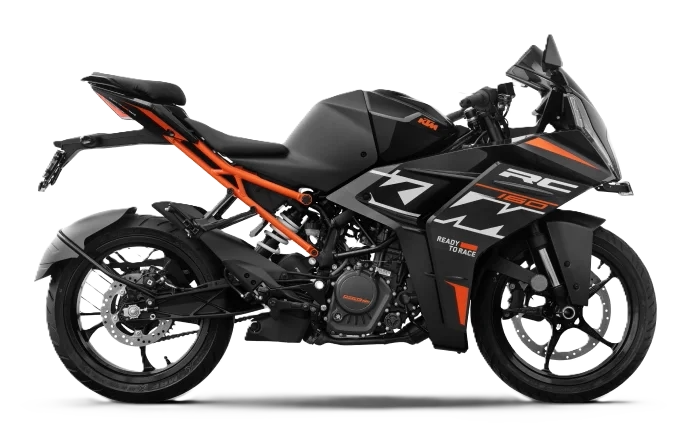
KTM RC 160
- 164.2 cc Liquid-Cooled, 4-valve
- 19 PS @ 9500 rpm
- 36 km/l (ARAI)
- 13.7-litre tank
- 1 variant available
- WP APEX USD Forks + Slipper Clutch
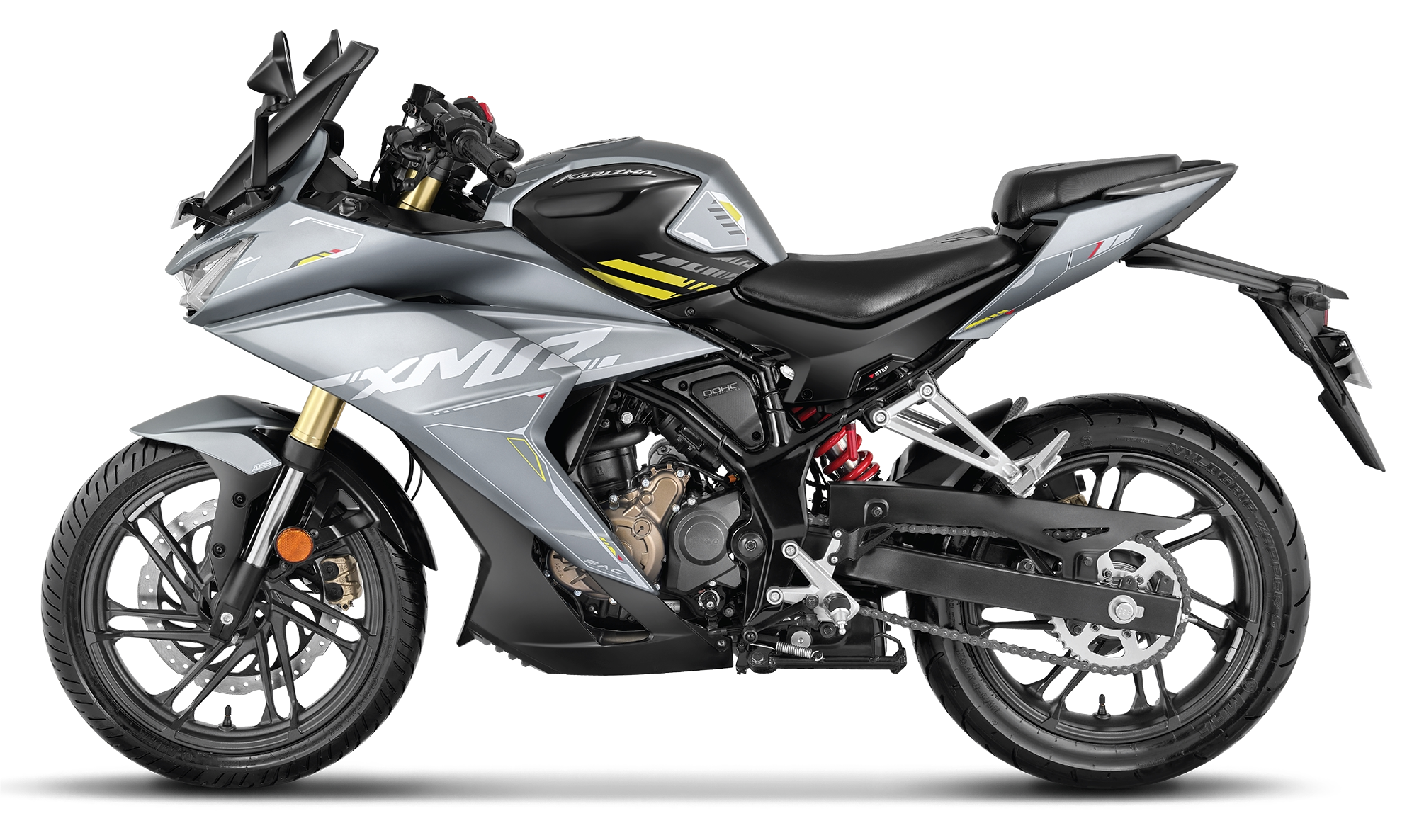
Hero Karizma XMR
- 210 cc Liquid-Cooled DOHC, 4-valve
- 25.5 PS @ 9250 rpm
- 41.55 km/l (ARAI)
- 11-litre tank
- 2 variants available
- 5-year / 70,000 km warranty
Full Specification Comparison
Every number that matters — side by side
| Specification | KTM RC 160 | Hero Karizma XMR |
|---|---|---|
| Engine & Performance | ||
| Displacement | 164.2 cc | 210 cc |
| Engine Type | Liquid-Cooled, SOHC | Liquid-Cooled, DOHC |
| Max Power | 19 PS @ 9500 rpm | 25.5 PS @ 9250 rpm |
| Max Torque | 15.5 Nm @ 7500 rpm | 20.4 Nm @ 7250 rpm |
| Valves per Cylinder | 4 | 4 |
| Bore × Stroke | 66 × 48 mm | 73 × 50 mm |
| Compression Ratio | 11.97 : 1 | 12 : 1 |
| Emission Standard | BS6 Phase 2 | BS6 Phase 2 |
| Transmission | 6-Speed Manual | 6-Speed Manual |
| Clutch | Assist & Slipper Clutch | Slip & Assist Clutch |
| Top Speed | 118 km/h | 130 km/h |
| Riding Modes | No | No |
| Traction Control | No | No |
| Fuel & Range | ||
| Mileage (ARAI) | 36 km/l | 41.55 km/l |
| Fuel Tank | 13.7 litres | 11 litres |
| Reserve Capacity | ~1.5–2 litres | 2.2 litres |
| Riding Range | ~493 km | ~457 km |
| Brakes & Wheels | ||
| Braking System | Dual Channel ABS | Dual Channel ABS |
| Front Brake | Disc – 320 mm | Petal Disc – 300 mm |
| Rear Brake | Disc – 230 mm | Petal Disc – 230 mm |
| Tyre Type | Tubeless | Tubeless |
| Tyre Size (F / R) | 110/70-17 / 140/60-17 | 100/80-17 / 140/70-17 |
| Wheel Type | Alloy | Alloy |
| Suspension & Chassis | ||
| Front Suspension | WP APEX USD Forks, 37 mm | Telescopic Forks, 37 mm (USD on Combat Edition) |
| Rear Suspension | Canister Monoshock, 6-step Adjustable | Gas Charged Monoshock, 6-step Adjustable |
| Chassis | Trellis Frame | Steel Trellis Frame |
| Rear Preload Adjuster | Yes | Yes |
| Dimensions & Weight | ||
| Kerb Weight | 155 kg | 163.5 kg |
| Seat Height | 830 mm | 810 mm |
| Ground Clearance | 168 mm | 160 mm |
| Wheelbase | 1347 mm | 1351 mm |
| Overall L × W × H | 1965 × 701 × 1150 mm | 2068 × 760 × 1110 mm |
| Features & Electronics | ||
| Instrument Console | 5-inch LCD | Digital LCD (TFT on Combat Edition) |
| Headlight | LED | LED Projector |
| DRLs | Yes | Yes |
| Turn Signals | LED | LED |
| Hazard Warning Lights | No | Yes |
| Bluetooth Connectivity | Yes | Yes |
| Call & SMS Alerts | Yes | Yes |
| USB Charging Port | No | Yes |
| Distance to Empty | Yes | Yes |
| Gear Indicator | Yes | Yes |
| Tachometer | Digital | Digital |
| Service Reminder | Yes | Yes |
| Keyless Ignition | No | No |
| Traction Control | No | No |
| Price & Warranty | ||
| Starting Price (ex-showroom) | ₹1,84,998 | ₹1,84,154 |
| Top Variant Price | ₹1,84,998 | ₹1,85,767 |
| Number of Variants | 1 | 2 |
| Standard Warranty | 2 Years / 30,000 km | 5 Years / 70,000 km |
★ Green highlights indicate the stronger value in each row. Prices are ex-showroom India averages and may vary by city.
Variant-wise Price Comparison
All variants laid out — find the right one for your budget
KTM RC 160 Variants
Hero Karizma XMR Variants
Pros & Cons
Honest strengths and weaknesses of each bike
Pros
- Premium WP APEX USD forks standard on single variant
- Larger 320 mm front disc — strongest in this comparison
- Lighter at 155 kg for sharper handling
- Greater ground clearance (168 mm vs 160 mm)
- Larger 13.7-litre fuel tank for longer riding range (~493 km)
- Assist and slipper clutch standard
- Aggressive fully-faired supersport design with KTM DNA
- Bluetooth connectivity with 5-inch LCD display
Cons
- Significantly less power (19 PS vs 25.5 PS)
- Lower torque (15.5 Nm vs 20.4 Nm)
- Much lower mileage — 36 km/l vs 41.55 km/l
- Very short warranty: only 2 years / 30,000 km
- Single variant — no choice in trim or features
- No USB charging port
- No hazard warning lights
- Aggressive ergonomics uncomfortable for daily commuting
- Higher maintenance costs vs commuter-style rivals
Pros
- More powerful — 25.5 PS from 210 cc DOHC engine
- Higher torque at 20.4 Nm for stronger acceleration
- Better ARAI mileage at 41.55 km/l
- Outstanding 5-year / 70,000 km warranty
- LED projector headlamp standard
- Hazard warning lights and USB charging port included
- Two variants — Combat Edition adds USD forks and TFT display
- Higher top speed of 130 km/h
- More comfortable ergonomics for daily use
- Strong Hero service network across India
Cons
- Heavier at 163.5 kg — 8.5 kg more than the RC 160
- Smaller 11-litre tank despite good mileage
- Smaller front disc (300 mm vs 320 mm)
- Less ground clearance (160 mm vs 168 mm)
- No riding modes or traction control
- Telescopic forks on base variant (USD only on Combat Edition)
Key Differences Explained
What really sets these two bikes apart
Engine Character
The RC 160 uses a 164.2 cc liquid-cooled SOHC 4-valve engine producing 19 PS — tuned for free-revving, high-rpm performance with a sports bike character. The Karizma XMR's 210 cc DOHC 4-valve liquid-cooled unit puts out a class-leading 25.5 PS and 20.4 Nm — over 34% more power and 32% more torque. The larger bore and stroke of the Karizma make it a noticeably stronger machine in real-world acceleration and highway overtaking situations.
Fuel Efficiency & Range
The Karizma XMR leads clearly on efficiency with 41.55 km/l (ARAI) against the RC 160's 36 km/l. However, the RC 160's significantly larger 13.7-litre tank gives it a theoretical range of ~493 km versus ~457 km for the Karizma's 11-litre unit. For daily commuters who prioritise fewer fuel stops, the Karizma wins on efficiency; the RC 160 wins on tank-to-tank range.
Braking & Safety
The RC 160 holds a meaningful hardware edge in braking: its 320 mm front disc is 20 mm larger than the Karizma's 300 mm petal disc, and both bikes come with dual-channel ABS as standard. The Karizma counters with petal-type discs at both ends — a design that aids heat dissipation and offers better bite feel during repeated braking. Overall braking safety is strong on both bikes, but the RC 160's larger rotor gives it a slight stopping-distance advantage.
Suspension & Handling
The RC 160 ships with KTM's own WP APEX USD forks as standard — premium hardware that gives it a significant handling edge over most competitors. The Karizma XMR base variant uses conventional telescopic forks; only the Combat Edition gets USD forks. The RC 160's lighter kerb weight (155 kg vs 163.5 kg) and tighter chassis further sharpen its cornering ability, making it the more agile machine of the two.
Warranty & Ownership
This is the Karizma XMR's biggest ownership advantage. Hero offers a remarkable 5 years / 70,000 km warranty versus KTM's 2 years / 30,000 km — more than double the time and over double the kilometre coverage. For a daily rider clocking 15,000 km/year, the Karizma stays under warranty for 4+ years longer. Hero's wider service network across India also reduces the hassle of ownership for riders outside major cities.
Price & Value
Both bikes are priced within ₹1,000–2,000 of each other at base level (₹1,84,998 for RC 160 vs ₹1,84,154 for Karizma XMR Top). The Karizma's Combat Edition at ₹1,85,767 adds USD forks and a TFT display for just ₹769 more than the RC 160. When value is measured in power, mileage, warranty, and features-per-rupee, the Karizma XMR wins decisively despite the near-identical sticker prices.
Expert Verdict
Which one should you actually buy?
Buy the KTM RC 160 if…
- Track-inspired riding dynamics and handling are your priority
- You want WP APEX USD forks as standard — not an upgrade
- The RC's fully-faired supersport styling is what drew you to biking
- You want the largest front disc in this class (320 mm)
- A larger fuel tank (13.7 litres) and longer tank range (~493 km) matters
- You primarily do weekend sporting rides over daily commuting
- KTM's brand DNA and service quality in your city is a priority
Buy the Hero Karizma XMR if…
- You want significantly more power (25.5 PS) for highway overtakes
- Better mileage (41.55 km/l) reduces your daily running costs
- The 5-year / 70,000 km warranty gives you long-term peace of mind
- More comfortable ergonomics suit daily commuting better
- USB charging, hazard lights, and LED projector headlamp are priorities
- You want the option of a TFT display and USD forks via the Combat Edition
- Hero's wider service network makes ownership easier across India
Overall Winner for Most Riders: Hero Karizma XMR. More power, more torque, better fuel efficiency, a substantially superior 5-year / 70,000 km warranty, USB charging, hazard warning lights, an LED projector headlamp, and a slightly lower starting price collectively make the Karizma XMR the more practical, more capable, and better-value choice for the majority of Indian buyers at this price point. Choose the KTM RC 160 only if sharper handling, track ergonomics, premium WP USD forks as standard, and KTM's supersport styling are your absolute top priorities over outright power and ownership value.
Frequently Asked Questions
Common questions answered by our experts
For most buyers, the Hero Karizma XMR is the better all-round choice: it delivers more power (25.5 PS vs 19 PS), better mileage (41.55 km/l vs 36 km/l), a far superior 5-year / 70,000 km warranty, USB charging, hazard warning lights, and a more usable riding posture — all at a similar price. The KTM RC 160 is the better pick for riders prioritising handling precision, WP APEX USD forks as standard, a larger 320 mm front disc, and the track-inspired RC experience.
The KTM RC 160 is priced at ₹1,84,998 ex-showroom in a single variant. The Hero Karizma XMR starts at ₹1,84,154 (Top variant) and goes up to ₹1,85,767 for the Combat Edition. The base price difference is just ₹844 in favour of the Karizma XMR, making this one of the closest price matchups in the segment. Prices may vary by city.
The Hero Karizma XMR has significantly better ARAI-certified mileage at 41.55 km/l compared to the KTM RC 160's 36 km/l — a gap of over 5 km/l. However, the RC 160's larger 13.7-litre tank still gives it a slightly longer riding range (~493 km vs ~457 km for the Karizma). For daily commuters watching fuel costs, the Karizma XMR is the more economical choice despite the smaller tank.
The Hero Karizma XMR makes substantially more power at 25.5 PS @ 9250 rpm compared to the KTM RC 160's 19 PS @ 9500 rpm. The Karizma also produces significantly more torque at 20.4 Nm vs 15.5 Nm, and reaches a higher top speed of 130 km/h versus 118 km/h for the RC 160. The larger 210 cc DOHC engine of the Karizma is in a different class of performance versus the 164.2 cc SOHC unit of the RC 160.
The Hero Karizma XMR offers a dramatically better warranty at 5 years / 70,000 km, compared to the KTM RC 160's 2 years / 30,000 km. This is more than double the time period and more than double the kilometre coverage. For daily riders clocking 15,000–20,000 km per year, the Karizma's warranty could cover them through the bike's entire useful life before costly out-of-warranty repairs arise.
Yes, the KTM RC 160 comes with WP APEX USD (upside-down) forks as standard on its single variant. This is a significant hardware advantage over the Hero Karizma XMR's base Top variant, which uses conventional telescopic forks. The Karizma XMR only gets USD forks on its Combat Edition variant (₹1,85,767). If USD suspension is important to you, the RC 160 delivers it at a lower price than the Karizma Combat Edition.