At a Glance
Key differences that define each motorcycle
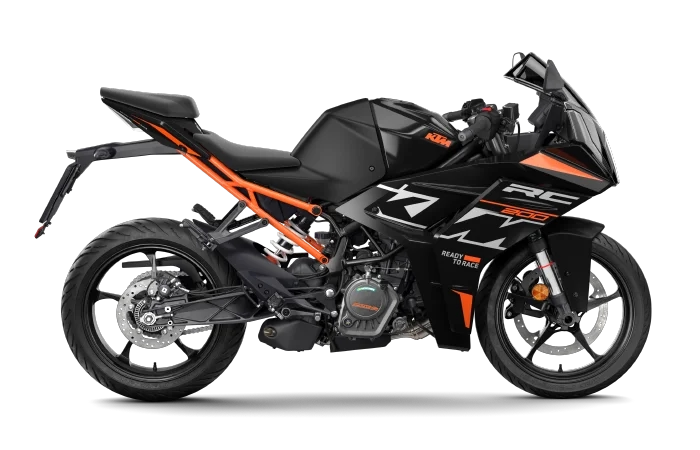
KTM RC 200
- 199.5 cc Liquid-Cooled DOHC
- 25 PS @ 10000 rpm
- 43.5 km/l (ARAI)
- 13.7-litre tank
- 2 variants available
- Dual-channel ABS + Supermoto mode
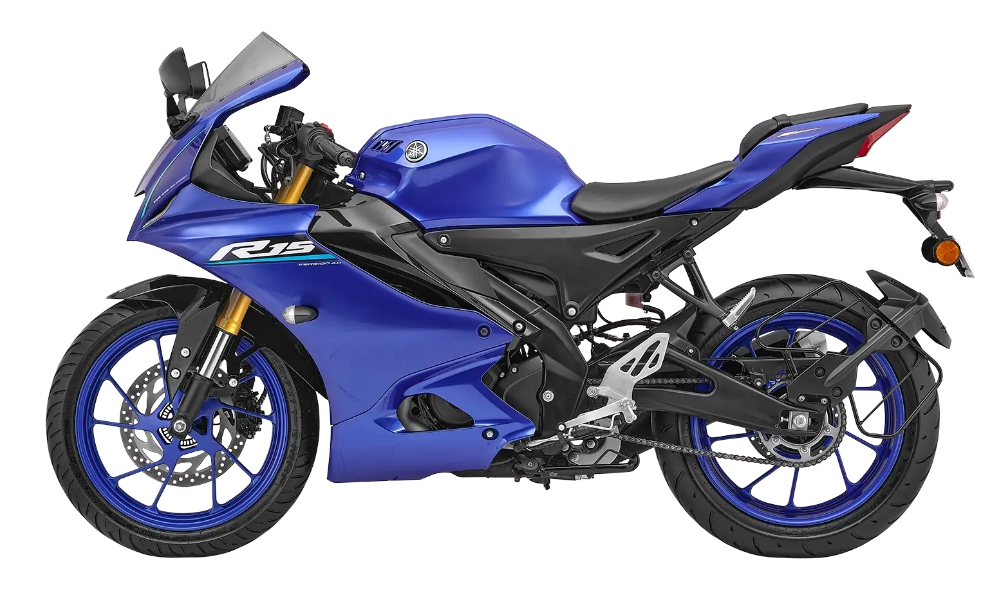
Yamaha R15 V4
- 155 cc Liquid-Cooled VVA
- 18.4 PS @ 10000 rpm
- 45 km/l (ARAI)
- 11-litre tank
- 3 variants available
- Dual-channel ABS + Traction Control
Full Specification Comparison
Every number that matters — side by side
| Specification | KTM RC 200 | Yamaha R15 V4 |
|---|---|---|
| Engine & Performance | ||
| Displacement | 199.5 cc | 155 cc |
| Cooling System | Liquid Cooled | Liquid Cooled |
| Engine Type | DOHC | SOHC with VVA |
| Max Power | 25 PS @ 10000 rpm | 18.4 PS @ 10000 rpm |
| Max Torque | 19.2 Nm @ 8000 rpm | 14.2 Nm @ 7500 rpm |
| Valves per Cylinder | 4 | 4 |
| Compression Ratio | 13.3 : 1 | 11.6 : 1 |
| Bore × Stroke | 72 × 49 mm | 58.0 × 58.7 mm |
| Emission Standard | BS6 Phase 2B | BS6 Phase 2 |
| Transmission | 6-Speed Manual | 6-Speed Manual |
| Clutch | Wet Multiplate | Assist & Slipper Clutch |
| Top Speed | ~140 km/h | ~140 km/h |
| Fuel & Range | ||
| Mileage (ARAI) | 43.5 km/l | 45 km/l |
| Fuel Tank | 13.7 litres | 11 litres |
| Reserve Capacity | 1.5 litres | 1.76 litres |
| Riding Range | ~596 km | ~495 km |
| Brakes & Wheels | ||
| Braking System | Dual Channel ABS | Dual Channel ABS |
| ABS Special Mode | Supermoto Mode | Standard |
| Front Brake | Disc – 320 mm | Disc – 282 mm |
| Rear Brake | Disc – 230 mm | Disc – 220 mm |
| Tyre Type | Tubeless | Tubeless |
| Tyre Size (F / R) | 110/70-17 / 150/60-17 | 100/80-17 / 140/70-17 |
| Wheel Type | Alloy | Alloy |
| Suspension & Chassis | ||
| Front Suspension | WP APEX USD Forks – 43 mm | USD Fork |
| Rear Suspension | WP APEX Monoshock | Linked Monoshock |
| Chassis | Steel Trellis Frame | Deltabox Frame |
| Rear Preload Adjuster | Yes | Yes |
| Dimensions & Weight | ||
| Kerb Weight | 160 kg | 141 kg |
| Seat Height | 835 mm | 815 mm |
| Ground Clearance | 158 mm | 170 mm |
| Wheelbase | 1341 mm | 1325 mm |
| Overall L × W × H | 1980 × 688 × 1340 mm | 1990 × 725 × 1135 mm |
| Features & Electronics | ||
| Instrument Console | Fully Digital TFT | Fully Digital LCD |
| Headlight | LED Projector | LED Projector |
| DRLs | Yes | Yes |
| Turn Signals | LED | LED |
| Hazard Warning Lights | No | Yes |
| Bluetooth Connectivity | No | Yes |
| USB Charging Port | No | No |
| Gear Indicator | Yes | Yes |
| Traction Control | No | Yes |
| Riding Modes | No | Track & Street |
| Quick Shifter | No | Optional (Up-Shift) |
| Keyless Ignition | No | No |
| Price & Warranty | ||
| Starting Price (ex-showroom) | ₹2,20,907 | ₹1,67,085 |
| Top Variant Price | ₹2,20,907 | ₹1,71,686 |
| Number of Variants | 2 | 3 |
| Standard Warranty | 2 Years / 30,000 km | 2 Years / 30,000 km |
★ Green highlights indicate the stronger value in each row. Prices are ex-showroom India averages and may vary by city.
Variant-wise Price Comparison
All variants laid out — find the right one for your budget
KTM RC 200 Variants
Yamaha R15 V4 Variants
Pros & Cons
Honest strengths and weaknesses of each bike
Pros
- Significantly more powerful engine (25 PS vs 18.4 PS)
- Larger 199.5cc displacement for more overtaking ability
- Premium WP APEX suspension components
- Larger 320 mm front disc for superior braking
- Supermoto ABS mode for spirited riding
- Fully digital TFT instrument display
- Wider rear tyre (150/60-17) for better grip
Cons
- Significantly higher price (₹53,822 more than R15 V4)
- No traction control or riding modes
- No Bluetooth connectivity
- Slightly lower ARAI mileage (43.5 vs 45 km/l)
- Smaller fuel tank range (~596 km vs R15's ~495 km)
- Only 2 variants — limited choice
Pros
- Far more affordable starting price (₹1,67,085)
- Advanced traction control as standard
- Track & Street riding modes
- Bluetooth connectivity & call/SMS alerts
- Assist & slipper clutch standard
- Optional quick shifter (up-shift)
- Better ARAI mileage (45 km/l)
- 3 variants for more choice
- Lighter kerb weight (141 kg)
- Hazard warning lights standard
Cons
- Lower peak power (18.4 PS vs 25 PS)
- Smaller 155cc engine
- Smaller front disc (282 mm vs 320 mm)
- No Supermoto ABS mode
- Smaller 11-litre fuel tank
Key Differences Explained
What really sets these two bikes apart
Engine & Power
The RC 200 uses a 199.5cc liquid-cooled DOHC engine producing 25 PS, making it a full 6.6 PS stronger than the R15 V4's 155cc VVA unit at 18.4 PS. The RC 200 is the clear choice for riders who demand raw acceleration and overtaking muscle.
Electronics & Tech
The R15 V4 leads by a wide margin on electronics — offering traction control, Track & Street riding modes, Bluetooth connectivity, optional quick shifter and an assist & slipper clutch. The RC 200 counters with a TFT display and Supermoto ABS mode, but lacks these rider aids.
Fuel Efficiency & Range
The R15 V4 edges ahead with a 45 km/l ARAI rating vs 43.5 km/l for the RC 200. However, the RC 200's larger 13.7-litre tank gives it a longer theoretical range (~596 km vs ~495 km). Day-to-day fuel costs will be similar.
Braking & Safety
The RC 200 has a larger 320 mm front disc with Supermoto ABS mode for track-style riding. The R15 V4 uses a 282 mm front disc but adds traction control for enhanced safety in slippery conditions — a feature absent on the RC 200.
Price & Value
The R15 V4 starts at ₹1,67,085 — about ₹53,822 less than the RC 200's ₹2,20,907. Given that the R15 V4 also offers more electronics and 3 variants, the value proposition strongly favours Yamaha for budget-conscious buyers.
Ride & Handling
Both bikes feature USD forks and monoshock rear suspension. The RC 200 gets premium WP APEX components and a wider rear tyre for better grip. The R15 V4 is lighter at 141 kg vs 160 kg, making it more nimble and easier to flick through corners.
Expert Verdict
Which one should you actually buy?
Buy the KTM RC 200 if…
- Raw power and engine performance are your top priority
- You enjoy track-day sessions or aggressive riding
- You want Supermoto ABS mode for spirited riding
- A larger 199.5cc engine matters to you psychologically
- You value the KTM brand heritage and orange identity
- Premium WP suspension components are important
Buy the Yamaha R15 V4 if…
- You want the best value-for-money in the segment
- Advanced electronics (traction control, riding modes) matter
- You plan to use Bluetooth connectivity and tech features
- A lighter, more nimble bike suits your riding style
- Budget is a key concern — saves ₹53,822 vs RC 200
- You want an optional quick shifter for enhanced performance
- Better ARAI fuel efficiency is important
Overall Winner for Most Riders: Yamaha R15 V4. The R15 V4 wins on price, electronics, traction control, riding modes, weight and Bluetooth connectivity — delivering a more technologically advanced package at nearly ₹54,000 less. Choose the KTM RC 200 only if outright engine power, the DOHC character and track-focused pedigree of a 200cc machine are non-negotiable for you.
Frequently Asked Questions
Common questions answered by our experts
The KTM RC 200 is better if you want more raw power (25 PS vs 18.4 PS), a larger engine and premium WP suspension. The Yamaha R15 V4 is better for most buyers due to its significantly lower price (₹53,822 cheaper), advanced electronics (traction control, riding modes, Bluetooth), lighter weight and better fuel efficiency.
The Yamaha R15 V4 starts at ₹1,67,085 while the KTM RC 200 starts at ₹2,20,907 ex-showroom. The RC 200 is approximately ₹53,822 more expensive at the base variant level. Both prices are for India and may vary by city.
The Yamaha R15 V4 has marginally better mileage at 45 km/l (ARAI certified) compared to the KTM RC 200's 43.5 km/l (ARAI certified). However, the RC 200's larger 13.7-litre tank gives it a greater overall riding range (~596 km vs ~495 km).
The KTM RC 200 makes significantly more power at 25 PS @ 10000 rpm compared to the Yamaha R15 V4's 18.4 PS @ 10000 rpm — a difference of 6.6 PS. The RC 200's larger 199.5cc DOHC engine also produces more torque: 19.2 Nm vs 14.2 Nm.
No, the KTM RC 200 does not have traction control. The Yamaha R15 V4, however, comes with traction control as standard — making it safer in slippery conditions and adding a significant electronic advantage over the RC 200 in this regard.
Both bikes feature USD (upside-down) front forks and monoshock rear suspension. The KTM RC 200 has a slight edge with its premium WP APEX suspension components — the same brand used on KTM's higher-end motorcycles — offering superior damping characteristics compared to the R15 V4's unnamed USD setup.