At a Glance
Key differences that define each motorcycle
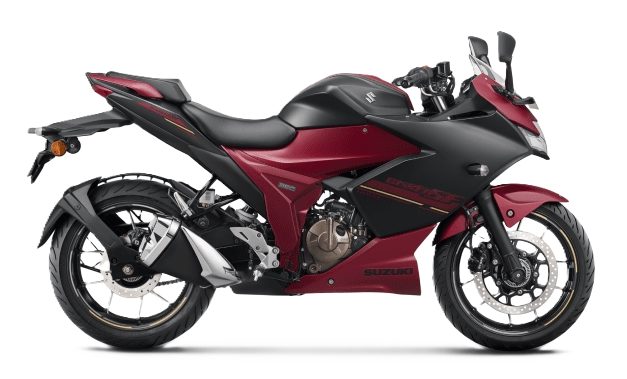
Suzuki Gixxer SF 250 Flex Fuel
- 249cc Oil-Cooled, 4-valve, SOCS
- 26.13 bhp @ 9300 rpm
- 35 km/l (ARAI)
- 12-litre tank
- 1 variant, 2 colour options
- E20 Flex Fuel Compatible
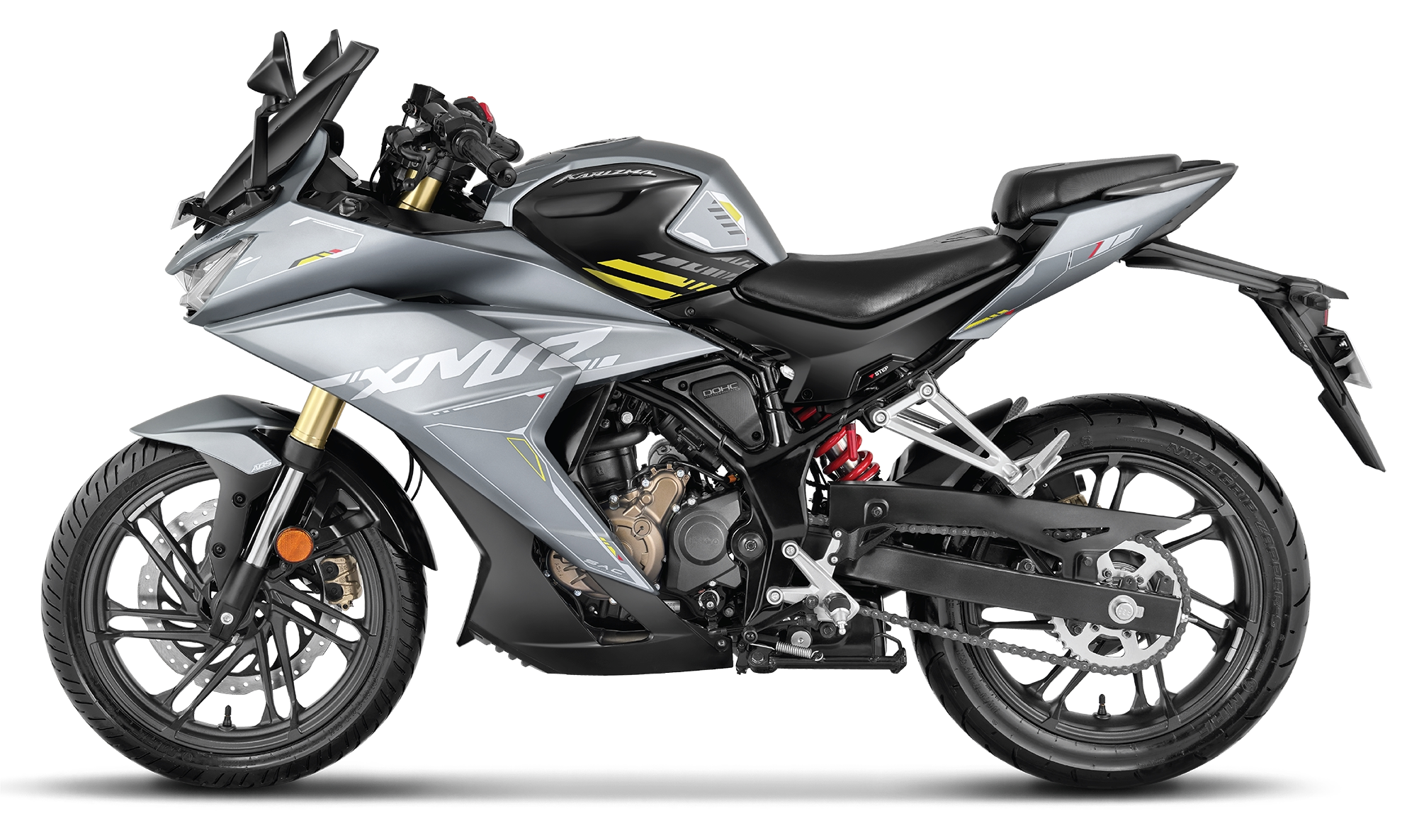
Hero Karizma XMR
- 210cc Liquid-Cooled, 4-valve, DOHC
- 25.5 PS @ 9250 rpm
- 41.55 km/l (ARAI)
- 11-litre tank
- 2 variants available
- Slipper Clutch + USB Charging
Full Specification Comparison
Every number that matters — side by side
| Specification | Suzuki Gixxer SF 250 Flex Fuel | Hero Karizma XMR |
|---|---|---|
| Engine & Performance | ||
| Displacement | 249 cc | 210 cc |
| Cooling System | Oil-Cooled (SOCS) | Liquid-Cooled |
| Engine Type | SOHC | DOHC |
| Max Power | 26.13 bhp @ 9300 rpm | 25.5 PS @ 9250 rpm |
| Max Torque | 22.2 Nm @ 7300 rpm | 20.4 Nm @ 7250 rpm |
| Valves per Cylinder | 4 | 4 |
| Compression Ratio | 10.7:1 | 12:1 |
| Bore × Stroke | 76 × 54.9 mm | 73 × 50 mm |
| Flex Fuel (E20) | Yes | No |
| Emission Standard | BS6 Phase 2B | BS6 Phase 2 |
| Transmission | 6-Speed Manual | 6-Speed Manual |
| Clutch | Wet Multiplate | Wet Type Slip & Assist |
| Top Speed | ~150 km/h | ~130 km/h |
| Riding Modes | No | No |
| Traction Control | No | No |
| Fuel & Range | ||
| Mileage (ARAI) | 35 km/l | 41.55 km/l |
| Fuel Tank | 12 litres | 11 litres |
| Reserve Capacity | 2.4 litres | 2.2 litres |
| Riding Range | ~420 km | ~457 km |
| Brakes & Wheels | ||
| Braking System | Dual Channel ABS | Dual Channel ABS |
| Front Brake | Disc – 300 mm | Petal Disc – 300 mm |
| Rear Brake | Disc – 220 mm | Petal Disc – 230 mm |
| Tyre Type | Tubeless | Tubeless |
| Tyre Size (F / R) | 110/70 R17 / 150/60 R17 | 100/80-17 / 140/70-17 |
| Wheel Type | Alloy | Alloy |
| Suspension & Chassis | ||
| Front Suspension | Telescopic Fork | Telescopic / USD (Combat Edition) |
| Rear Suspension | Monoshock | Gas Charged Monoshock (6-step adj.) |
| Chassis | Diamond Frame | Steel Trellis Frame |
| Rear Preload Adjuster | Yes | Yes (6-step) |
| Dimensions & Weight | ||
| Kerb Weight | 161 kg | 163.5 kg |
| Seat Height | 800 mm | 810 mm |
| Ground Clearance | 165 mm | 160 mm |
| Wheelbase | 1345 mm | 1351 mm |
| Overall L × W × H | 2010 × 740 × 1035 mm | 2068 × 760 × 1110 mm |
| Features & Electronics | ||
| Instrument Console | Digital Display | Digital LCD / TFT (Combat Edition) |
| Headlight | LED | LED Projector |
| DRLs | No | Yes |
| Turn Signals | LED | LED |
| Hazard Warning Lights | No | Yes |
| Riding Modes | No | No |
| Traction Control | No | No |
| Bluetooth Connectivity | Yes | Yes |
| Call & SMS Alerts | Yes | Yes |
| USB Charging Port | No | Yes |
| Distance to Empty | No | Yes |
| Slipper Clutch | No | Yes |
| Flex Fuel (E20) | Yes | No |
| Gear Indicator | Yes | Yes |
| Tachometer | Digital | Digital |
| Keyless Ignition | No | No |
| Price & Warranty | ||
| Starting Price (ex-showroom) | ₹2,00,791 | ₹1,84,154 |
| Top Variant Price | ₹2,00,791 | ₹1,85,767 |
| Number of Variants | 1 | 2 |
| Standard Warranty | 2 Years / 30,000 km | 5 Years / 70,000 km |
★ Green highlights indicate the stronger value in each row. Prices are ex-showroom India averages and may vary by city.
Variant-wise Price Comparison
All variants laid out — find the right one for your budget
Gixxer SF 250 Flex Fuel Variants
Hero Karizma XMR Variants
Pros & Cons
Honest strengths and weaknesses of each bike
Pros
- Larger 249cc engine — more power and torque
- Higher peak power — 26.13 bhp vs 25.5 PS
- More torque — 22.2 Nm vs 20.4 Nm
- Higher top speed (~150 km/h vs ~130 km/h)
- Wider rear tyre (150/60 R17) for better grip
- E20 flex-fuel compatible — future-ready technology
- Larger 12-litre fuel tank
- Slightly lighter at 161 kg vs 163.5 kg
- Better ground clearance (165 mm vs 160 mm)
- Suzuki SOCS oil-cooling reliability
Cons
- Significantly more expensive — ₹16,637 costlier than base XMR
- Lower ARAI mileage (35 km/l vs 41.55 km/l)
- Shorter riding range (~420 km vs ~457 km)
- No slipper clutch
- No USB charging port
- No hazard warning lights
- No DRLs (Daytime Running Lights)
- No distance-to-empty display
- Significantly weaker warranty — 2 yrs / 30,000 km
- Single variant only — no trim flexibility
- No projector headlamp
Pros
- Lower starting price — ₹1,84,154 (₹16,637 cheaper)
- Better ARAI mileage — 41.55 km/l vs 35 km/l
- Longer riding range (~457 km)
- Slipper and assist clutch for smoother gear shifts
- USB charging port standard
- Hazard warning lights and DRLs
- Distance-to-empty display
- LED projector headlamp
- Outstanding 5-year / 70,000 km warranty
- 2 variants — including Combat Edition with USD forks and TFT
- Steel trellis frame for superior rigidity
- Liquid-cooled DOHC engine with higher 12:1 compression
- Larger 230 mm rear petal disc
Cons
- Less displacement — 210cc vs 249cc
- Slightly less peak power (25.5 PS vs 26.13 bhp)
- Less torque (20.4 Nm vs 22.2 Nm)
- Lower top speed (~130 km/h vs ~150 km/h)
- Narrower rear tyre (140/70-17 vs 150/60 R17)
- No flex-fuel (E20) compatibility
- Slightly heavier at 163.5 kg vs 161 kg
- Less ground clearance (160 mm vs 165 mm)
Key Differences Explained
What really sets these two bikes apart
Engine & Performance
The Gixxer SF 250 Flex Fuel holds the displacement advantage with its 249cc oil-cooled SOCS engine producing 26.13 bhp and 22.2 Nm — slightly ahead of the Karizma XMR's 210cc liquid-cooled DOHC engine making 25.5 PS and 20.4 Nm. In real-world performance, the gap translates to a meaningfully higher top speed of ~150 km/h versus ~130 km/h for the Karizma XMR. However, the Karizma XMR's DOHC architecture and 12:1 compression ratio give it a technically more advanced engine design for its displacement.
Fuel Efficiency & Range
The Karizma XMR wins clearly on efficiency with 41.55 km/l ARAI versus the Gixxer SF 250 Flex Fuel's 35 km/l — a gap of 6.55 km/l. Despite having a smaller 11-litre tank, the Karizma XMR achieves a longer riding range of ~457 km versus ~420 km for the Gixxer SF 250 Flex Fuel's 12-litre unit. The Gixxer SF 250 Flex Fuel's E20 compatibility is a future-facing advantage, allowing it to run on ethanol-blended fuel — potentially more economical when E20 petrol is widely available.
Braking & Tyres
Both bikes use 300 mm front discs with dual-channel ABS, but the Karizma XMR uses a petal disc design and has a slightly larger 230 mm rear petal disc versus 220 mm on the Gixxer SF 250 Flex Fuel. The Gixxer SF 250 Flex Fuel holds a meaningful grip advantage with its wider 150/60 R17 rear tyre versus the Karizma XMR's 140/70-17 — a larger contact patch that improves high-speed stability and cornering traction, particularly relevant at the Gixxer's higher performance ceiling.
Features & Technology
The Karizma XMR packs a noticeably richer feature set. It adds a slipper and assist clutch, USB charging port, hazard warning lights, DRLs, LED projector headlamp and distance-to-empty — none of which are available on the Gixxer SF 250 Flex Fuel. The Combat Edition upgrades to USD forks and a TFT display, creating a genuinely premium specification. The Gixxer SF 250 Flex Fuel exclusively offers E20 flex-fuel compatibility, which is a unique and forward-looking technology advantage.
Warranty & Ownership
The Hero Karizma XMR wins comprehensively on warranty with 5 years / 70,000 km coverage compared to the Suzuki Gixxer SF 250 Flex Fuel's 2 years / 30,000 km. That is 3 additional years and 40,000 extra km of protection — a massive difference for daily commuters. Hero's widespread service network across India also makes ownership more convenient in smaller cities where Suzuki may have fewer authorised dealers.
Price & Value
The Karizma XMR at ₹1,84,154 is ₹16,637 cheaper than the Gixxer SF 250 Flex Fuel at ₹2,00,791 — and delivers a longer feature list, better mileage and a far superior 5-year warranty at that lower price. The Combat Edition at ₹1,85,767 adds USD forks and TFT display for just ₹1,613 more, making it extraordinary value. The Gixxer SF 250 Flex Fuel's premium is justified primarily by its 249cc engine, higher top speed and flex-fuel technology.
Expert Verdict
Which one should you actually buy?
Buy the Suzuki Gixxer SF 250 Flex Fuel if…
- Maximum engine displacement and top speed matter most
- E20 flex-fuel compatibility is important to you
- The wider 150/60 R17 rear tyre for grip appeals
- Highway touring at higher speeds is your primary use
- You value Suzuki's smooth, refined oil-cooled engine
- Budget is not a significant constraint
- You want the largest-displacement bike in this comparison
Buy the Hero Karizma XMR if…
- Value and lower price (₹16,637 cheaper) are important
- Better fuel efficiency (41.55 km/l) and longer range matter
- The 5-year / 70,000 km warranty is a key consideration
- A slipper clutch for smoother riding is important
- USB charging port is needed for daily commuting
- The Combat Edition's USD forks and TFT display appeal
- Hero's extensive service network matters for your city
- LED projector headlamp and hazard lights are important
Overall Winner for Most Riders: Hero Karizma XMR. At ₹16,637 less than the Gixxer SF 250 Flex Fuel, the Karizma XMR delivers better fuel efficiency (41.55 km/l ARAI), longer range, a slipper clutch, USB charging, hazard lights, DRLs, a LED projector headlamp, distance-to-empty display and an outstanding 5-year / 70,000 km warranty. The Combat Edition's USD forks and TFT display at just ₹1,85,767 make it an exceptional proposition. Choose the Suzuki Gixxer SF 250 Flex Fuel only if the 249cc engine's extra displacement, higher top speed (~150 km/h), wider rear tyre and E20 flex-fuel compatibility are your absolute priorities — it remains the superior highway performance machine and the only flex-fuel option in this comparison.
Frequently Asked Questions
Common questions answered by our experts
The Hero Karizma XMR is better for most buyers thanks to its lower price (₹1,84,154 vs ₹2,00,791), better ARAI mileage (41.55 km/l vs 35 km/l), slipper clutch, USB charging, hazard lights, DRLs, LED projector headlamp and an outstanding 5-year / 70,000 km warranty. The Combat Edition adds USD forks and TFT display for just ₹1,613 more. The Suzuki Gixxer SF 250 Flex Fuel is better if you specifically want a larger 249cc engine, higher top speed (~150 km/h), wider rear tyre (150/60 R17) and E20 flex-fuel compatibility.
The Hero Karizma XMR starts at ₹1,84,154 (Top variant) and goes up to ₹1,85,767 (Combat Edition) ex-showroom. The Suzuki Gixxer SF 250 Flex Fuel is priced at ₹2,00,791 in a single standard variant. The Gixxer SF 250 Flex Fuel is approximately ₹16,637 more expensive than the base Karizma XMR, and ₹15,024 more than the Combat Edition. All prices are ex-showroom India averages and may vary by city.
The Hero Karizma XMR has significantly better ARAI-certified mileage at 41.55 km/l compared to the Suzuki Gixxer SF 250 Flex Fuel's 35 km/l. Despite having a smaller 11-litre tank versus the Gixxer SF 250 Flex Fuel's 12-litre unit, the Karizma XMR achieves a longer riding range of ~457 km versus ~420 km. Note that the Gixxer SF 250 Flex Fuel's E20 flex-fuel capability may provide some cost advantage when ethanol-blended fuel is widely available.
The Suzuki Gixxer SF 250 Flex Fuel makes more power at 26.13 bhp @ 9300 rpm and 22.2 Nm @ 7300 rpm, compared to the Hero Karizma XMR's 25.5 PS @ 9250 rpm and 20.4 Nm @ 7250 rpm. The Gixxer SF 250 Flex Fuel's 249cc engine also has a significantly higher top speed of ~150 km/h versus ~130 km/h for the Karizma XMR — a 20 km/h advantage that is clearly felt on highways.
Yes, the Suzuki Gixxer SF 250 Flex Fuel is E20 compatible, allowing it to run on petrol blended with up to 20% ethanol content. This aligns with India's national flex-fuel policy and could offer running cost benefits as E20 fuel becomes more widely available. The Hero Karizma XMR does not offer flex-fuel compatibility, making this a unique advantage for the Gixxer SF 250 Flex Fuel.
The Hero Karizma XMR offers a substantially better warranty at 5 years / 70,000 km compared to the Suzuki Gixxer SF 250 Flex Fuel's 2 years / 30,000 km. That is 3 additional years and 40,000 extra km of protection. For riders covering 15,000–20,000 km annually, the Karizma XMR's warranty advantage translates into meaningful peace of mind and potential savings on out-of-warranty repair costs.