At a Glance
Key differences that define each motorcycle
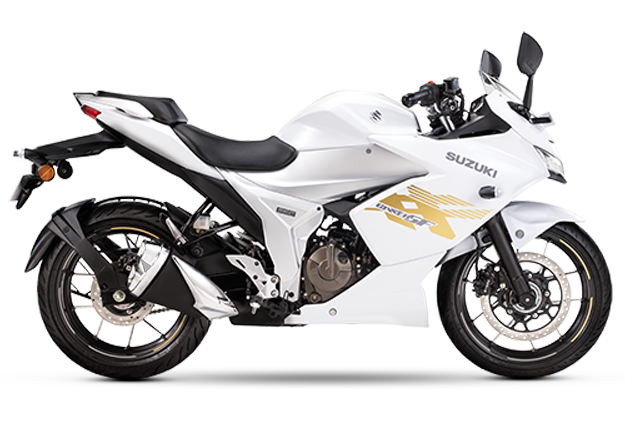
Suzuki Gixxer SF 250
- 249 cc Oil-Cooled, 4-valve
- 26.13 bhp @ 9300 rpm
- 35 km/l (ARAI)
- 12-litre tank
- LED Projector Headlamp + DRLs
- Lower price at ₹1,92,245
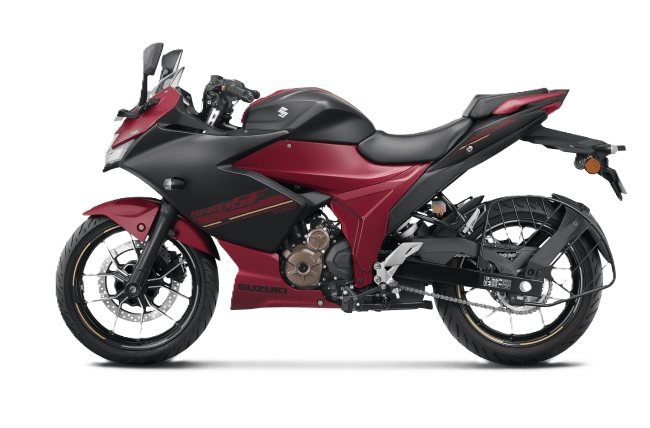
Suzuki Gixxer SF 250 Flex Fuel
- 249 cc Oil-Cooled, 4-valve
- 26.13 bhp @ 9300 rpm
- 35 km/l (ARAI)
- 12-litre tank
- Bluetooth + Call & SMS Alerts
- E20 Flex Fuel Compatible
Full Specification Comparison
Every number that matters — side by side
| Specification | Suzuki Gixxer SF 250 | Suzuki Gixxer SF 250 Flex Fuel |
|---|---|---|
| Engine & Performance | ||
| Displacement | 249 cc | 249 cc |
| Cooling System | Oil-Cooled (SOCS) | Oil-Cooled (SOCS) |
| Max Power | 26.13 bhp @ 9300 rpm | 26.13 bhp @ 9300 rpm |
| Max Torque | 22.2 Nm @ 7300 rpm | 22.2 Nm @ 7300 rpm |
| Valves per Cylinder | 4 | 4 |
| Compression Ratio | 10.7 : 1 | 10.7 : 1 |
| Bore × Stroke | 76 × 54.9 mm | 76 × 54.9 mm |
| Emission Standard | BS6 Phase 2B | BS6 Phase 2B |
| Transmission | 6-Speed Manual | 6-Speed Manual |
| Top Speed | 150 km/h | 150 km/h |
| Flex Fuel (E20) Compatible | No | Yes |
| Riding Modes | No | No |
| Traction Control | No | No |
| Fuel & Range | ||
| Mileage (ARAI) | 35 km/l | 35 km/l |
| Fuel Tank | 12 litres | 12 litres |
| Reserve Capacity | 2.4 litres | 2.4 litres |
| Riding Range | ~420 km | ~420 km |
| Brakes & Wheels | ||
| Braking System | Dual Channel ABS | Dual Channel ABS |
| Front Brake | Disc – 300 mm | Disc – 300 mm |
| Rear Brake | Disc – 220 mm | Disc – 220 mm |
| Tyre Type | Tubeless | Tubeless |
| Tyre Size (F / R) | 110/70 R17 / 150/60 R17 | 110/70 R17 / 150/60 R17 |
| Wheel Type | Alloy | Alloy |
| Suspension & Chassis | ||
| Front Suspension | Telescopic | Telescopic |
| Rear Suspension | Monoshock | Monoshock |
| Rear Preload Adjuster | Yes | Yes |
| Chassis Type | Diamond | Diamond |
| Dimensions & Weight | ||
| Kerb Weight | 161 kg | 161 kg |
| Seat Height | 800 mm | 800 mm |
| Ground Clearance | 165 mm | 165 mm |
| Wheelbase | 1345 mm | 1345 mm |
| Overall L × W × H | 2010 × 740 × 1035 mm | 2010 × 740 × 1035 mm |
| Features & Electronics | ||
| Instrument Console | Fully Digital | Digital Display |
| Headlight | LED Projector | LED |
| DRLs | Yes | No |
| Turn Signals | Bulb | LED |
| Brake / Tail Light | LED | LED |
| Hazard Warning Lights | No | No |
| Bluetooth Connectivity | No | Yes |
| Call & SMS Alerts | No | Yes |
| USB Charging Port | No | No |
| Distance to Empty | No | No |
| Gear Indicator | Yes | Yes |
| Service Reminder | Yes | Yes |
| Silent Start | Yes | No |
| Keyless Ignition | No | No |
| Traction Control | No | No |
| Start Type | Electric | Self Start |
| Price & Warranty | ||
| Ex-Showroom Price | ₹1,92,245 | ₹2,00,791 |
| Number of Variants | 1 | 1 |
| Standard Warranty | 2 Years / 30,000 km | 2 Years / 30,000 km |
★ Green highlights indicate the stronger value in each row. Prices are ex-showroom India averages and may vary by city.
Variant-wise Price Comparison
All variants laid out — find the right one for your budget
Gixxer SF 250 Variants
Gixxer SF 250 Flex Fuel Variants
Pros & Cons
Honest strengths and weaknesses of each bike
Pros
- Lower price — ₹8,546 cheaper than Flex Fuel
- LED projector headlamp for better road illumination
- DRLs (Daytime Running Lights) for improved visibility
- Silent Start system for quieter ignition
- Identical 249cc engine, power and torque
- Same dual-channel ABS braking setup
- Same suspension, dimensions and riding range
- Suzuki Easy Start system
- Refined ownership experience with lower upfront cost
Cons
- No Bluetooth connectivity or call/SMS alerts
- No E20 flex fuel compatibility
- Bulb turn signals instead of LED
- No mobile app connectivity features
Pros
- Bluetooth connectivity with call & SMS alerts
- E20 ethanol flex fuel compatibility — future-ready
- LED turn signals for better visibility
- Same powerful 249cc oil-cooled engine
- Identical braking with dual-channel ABS and 300 mm disc
- Same suspension, dimensions and riding range
- Useful for riders in E20 fuel availability zones
Cons
- ₹8,546 more expensive than the standard SF 250
- No LED projector headlamp (standard LED only)
- No DRLs
- No Silent Start feature
- No USB charging port on either variant
- No traction control or riding modes
Key Differences Explained
What really sets these two bikes apart
Engine & Performance
Both bikes are powered by the identical 249cc oil-cooled 4-valve SOCS engine, producing 26.13 bhp @ 9300 rpm and 22.2 Nm @ 7300 rpm. The 6-speed gearbox, clutch, compression ratio, bore and stroke are all the same. The only powertrain difference is that the Flex Fuel variant supports E20 ethanol-blended fuel, making it compatible with India's increasing ethanol fuel rollout. Performance numbers are identical under pure petrol.
Fuel Efficiency & Range
Both bikes share an identical ARAI-certified mileage of 35 km/l and a 12-litre fuel tank, delivering the same theoretical riding range of approximately 420 km. There is no mileage difference between the two variants. The only fuel-related edge the Flex Fuel holds is its ability to run on ethanol blends, which may offer cost savings in areas where E20 fuel is cheaper than standard petrol.
Braking & Safety
Both bikes are completely identical on braking — dual-channel ABS, 300 mm front disc, 220 mm rear disc, and the same alloy wheels with 110/70 R17 and 150/60 R17 radial tyres. There is no performance or safety difference in braking between the two models. Buyers choosing between them purely on braking grounds will find no distinction whatsoever.
Connectivity & Features
This is the most meaningful differentiator. The Flex Fuel adds Bluetooth connectivity with call and SMS alerts — absent on the standard SF 250 entirely. In return, the standard SF 250 carries a LED projector headlamp and DRLs that the Flex Fuel lacks, along with a Silent Start system. LED turn signals go to the Flex Fuel; the standard gets bulb indicators. Neither has USB charging, traction control, or riding modes.
Lighting
The standard Gixxer SF 250 has the better lighting package on the front end: a LED projector headlamp and DRLs, compared to the Flex Fuel's standard LED headlamp with no DRLs. However, the Flex Fuel counters with LED turn signals versus the standard's bulb indicators. Both have identical LED brake and tail lights. For night-time front visibility, the standard SF 250 has the clear advantage.
Price & Value
The standard Gixxer SF 250 is ₹8,546 cheaper (₹1,92,245 vs ₹2,00,791). For that premium, the Flex Fuel adds Bluetooth, call/SMS alerts, LED turn signals, and E20 fuel compatibility — but loses the projector headlamp, DRLs, and Silent Start. Whether the trade-off is worth it depends entirely on how much you value smartphone connectivity and future ethanol fuel readiness versus a superior headlamp setup at a lower price.
Expert Verdict
Which one should you actually buy?
Buy the Gixxer SF 250 if…
- Saving ₹8,546 over the Flex Fuel matters to you
- A superior LED projector headlamp is important for your riding
- You frequently ride at night and want DRLs for visibility
- Bluetooth connectivity is not a priority for you
- You prefer Silent Start for quieter morning starts
- You ride only in areas where standard petrol is readily available
- You want the most refined headlamp setup in this comparison
Buy the Gixxer SF 250 Flex Fuel if…
- Bluetooth connectivity and call/SMS alerts are useful to you
- You want E20 ethanol fuel compatibility for future savings
- LED turn signals appeal to you over bulb indicators
- You frequently travel through areas where E20 fuel is available
- Staying connected to your phone while riding matters
- You are comfortable spending ₹8,546 more for these features
Overall Winner for Most Riders: Suzuki Gixxer SF 250 Flex Fuel. For just ₹8,546 more, the Flex Fuel variant adds genuinely useful everyday features — Bluetooth connectivity with call and SMS alerts and LED turn signals — while also future-proofing the motorcycle with E20 ethanol compatibility as India's fuel landscape evolves. The trade-offs (losing the projector headlamp, DRLs, and Silent Start) are real but secondary for most buyers. However, if night-time visibility and the projector headlamp experience matter most to you, the standard Gixxer SF 250 remains an excellent choice at a lower price.
Frequently Asked Questions
Common questions answered by our experts
For most buyers, the Suzuki Gixxer SF 250 Flex Fuel is the better choice for ₹8,546 more — it adds Bluetooth connectivity with call and SMS alerts, LED turn signals, and E20 ethanol fuel compatibility. The standard Gixxer SF 250 is better if you prefer a lower price, a superior LED projector headlamp, DRLs, and Silent Start. Both bikes are mechanically identical with the same engine, braking, suspension, and mileage.
The Suzuki Gixxer SF 250 is priced at ₹1,92,245 while the Suzuki Gixxer SF 250 Flex Fuel is priced at ₹2,00,791 ex-showroom. The Flex Fuel variant costs ₹8,546 more. Both are available in a single Standard variant. Prices are India averages and may vary by city.
The core mechanicals — engine, power, torque, braking, suspension, dimensions, mileage, and warranty — are completely identical. The differences are: the Flex Fuel adds E20 ethanol compatibility, Bluetooth with call/SMS alerts, and LED turn signals; the standard SF 250 counters with a projector LED headlamp, DRLs, and a Silent Start system that the Flex Fuel lacks.
Yes, the Suzuki Gixxer SF 250 Flex Fuel comes with Bluetooth connectivity that supports call and SMS alerts. The standard Gixxer SF 250 does not have Bluetooth or any mobile connectivity. This is one of the most practical differences between the two variants for everyday riders.
For ₹8,546 more, the Flex Fuel adds Bluetooth with call and SMS alerts, LED turn signals, and E20 flex fuel compatibility. If smartphone connectivity is important to you, or if you ride in areas where E20 fuel is available and potentially cheaper, the Flex Fuel is worth the premium. If you ride primarily at night and value a superior projector headlamp and DRLs, or want to save money, the standard SF 250 is the better value.
Yes, both the Suzuki Gixxer SF 250 and Gixxer SF 250 Flex Fuel share an identical ARAI-certified mileage of 35 km/l. The 12-litre fuel tank and approximately 420 km riding range are also the same on both variants. The Flex Fuel variant may offer a marginal cost-per-kilometre saving when running on ethanol-blended E20 fuel where it is available and priced lower than standard petrol.