At a Glance
Key differences that define each motorcycle
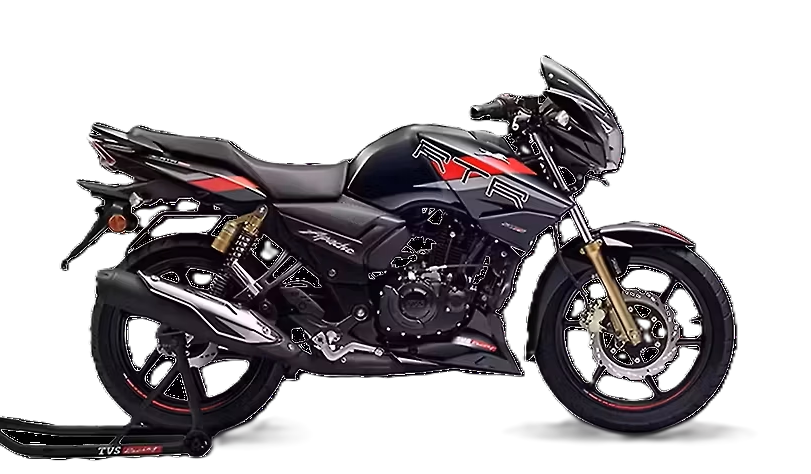
TVS Apache RTR 180
- 177.4 cc Oil-Cooled
- 17.02 PS @ 9000 rpm
- 15.5 Nm @ 7000 rpm
- 45 km/l (ARAI)
- 140 kg (lightest)
- Single-Channel ABS
- Sport / Urban / Rain Modes
- 5 Years / 60,000 km Warranty
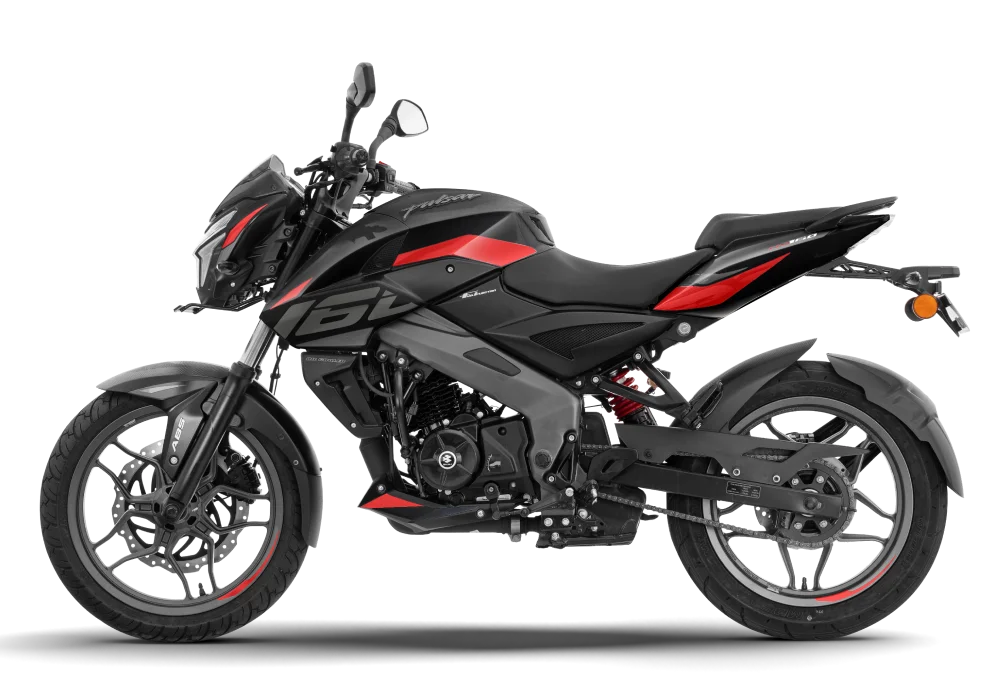
Bajaj Pulsar NS160
- 160.3 cc Oil-Cooled
- 17.2 PS @ 9000 rpm
- 14.6 Nm @ 7250 rpm
- ~44 km/l (Owner reports)
- 12-litre tank
- Dual-Channel ABS (top variant)
- Perimeter Frame Chassis
- 2 variants available
Full Specification Comparison
Every number that matters — side by side
| Specification | Apache RTR 180 | Pulsar NS160 |
|---|---|---|
| Engine & Performance | ||
| Displacement | 177.4 cc | 160.3 cc |
| Cooling System | Oil Cooled | Oil Cooled |
| Max Power | 17.02 PS @ 9000 rpm | 17.2 PS @ 9000 rpm |
| Max Torque | 15.5 Nm @ 7000 rpm | 14.6 Nm @ 7250 rpm |
| Valves per Cylinder | 2 | 4 |
| Compression Ratio | 10.0 : 1 | 9.8 ± 0.5 : 1 |
| Bore × Stroke | 62 × 58 mm | 58 × 60.7 mm |
| Emission Standard | BS6 Phase 2 | BS6 Phase 2 |
| Transmission | 5-Speed Manual | 5-Speed Manual |
| Top Speed | ~113 km/h | ~120 km/h |
| Riding Modes | Sport / Urban / Rain | No |
| Fuel & Range | ||
| Mileage (ARAI) | 45 km/l | Not Claimed |
| Mileage (Real-world) | ~45 km/l | ~44 km/l |
| Fuel Tank | 12 litres | 12 litres |
| Reserve Capacity | 2 litres | 2.4 litres |
| Riding Range | ~504 km | ~528 km |
| Brakes & Wheels | ||
| Braking System | Single Channel ABS | Single / Dual Channel ABS |
| Front Brake | Disc – 270 mm | Disc – 300 mm |
| Rear Brake | Disc – 200 mm | Disc – 230 mm |
| Tyre Type | Tubeless | Tubeless |
| Front Tyre | 90/90-17 | 100/80-17 |
| Rear Tyre | 120/70-17 | 130/70-17 |
| Wheel Type | Alloy | Alloy |
| Suspension & Chassis | ||
| Front Suspension | Telescopic Fork | Telescopic / USD Fork (top variant) |
| Rear Suspension | Monotube Inverted Gas Filled Shock | Nitrox Monoshock |
| Chassis | Double Cradle Synchro-Stiff | Perimeter Frame |
| Rear Preload Adjuster | Yes | Yes |
| Dimensions & Weight | ||
| Kerb Weight | 140 kg | 152 kg |
| Seat Height | 790 mm | 805 mm |
| Ground Clearance | 165 mm | 170 mm |
| Wheelbase | 1326 mm | 1372 mm |
| Overall L × W × H | 2085 × 730 × 1105 mm | 2017 × 804 × 1060 mm |
| Features & Electronics | ||
| Instrument Console | Fully Digital LCD | Digital LCD |
| Headlight | Halogen | LED Projector |
| DRLs | Yes | Yes |
| Turn Signals | Halogen | Halogen |
| Hazard Warning Lights | Yes | No |
| Bluetooth Connectivity | Yes (SmartXonnect) | Yes |
| USB Charging Port | No | Yes |
| Gear Indicator | Yes | Yes |
| Traction Control | No | No |
| Riding Modes | Sport / Urban / Rain | No |
| Keyless Ignition | No | No |
| Start Type | Electric + Kick | Electric Start |
| Price & Warranty | ||
| Starting Price (ex-showroom) | ₹1,26,245 | ₹1,21,109 |
| Top Variant Price | ₹1,26,245 | ₹1,29,487 |
| Number of Variants | 1 | 2 |
| Standard Warranty | 5 Years / 60,000 km | 2 Years / 30,000 km |
★ Green highlights indicate the stronger value in each row. Prices are ex-showroom India averages and may vary by city.
Variant-wise Price Comparison
All variants laid out — find the right one for your budget
Apache RTR 180 Variants
Pulsar NS160 Variants
Pros & Cons
Honest strengths and weaknesses of each bike
Pros
- Larger 177.4 cc engine for more displacement punch
- Significantly lighter at 140 kg vs 152 kg
- ARAI-certified mileage of 45 km/l
- Three riding modes: Sport, Urban, Rain
- SmartXonnect Bluetooth with call & SMS alerts
- Excellent 5-year / 60,000 km warranty
- Hazard warning lights included
Cons
- Only single-channel ABS — no dual-channel option
- Smaller front disc (270 mm vs 300 mm)
- No USB charging port
- Halogen headlamp, not LED projector
- Single variant — limited choice
- 2-valve engine vs NS160's 4-valve unit
- Higher starting price (₹1,26,245)
Pros
- Lower starting price at ₹1,21,109
- 4-valve oil-cooled engine for better high-rpm breathing
- Dual-channel ABS available on top variant
- Larger brakes: 300 mm front, 230 mm rear
- Wider tyres for better grip and stability
- Perimeter frame chassis for sharper cornering
- LED projector headlamp
- USB charging port included
- Higher top speed (~120 km/h)
Cons
- Heavier at 152 kg vs 140 kg
- No ARAI-certified mileage figure
- No riding modes
- No hazard warning lights
- Shorter warranty (2 years vs 5 years)
- Dual-channel ABS only on more expensive top variant
Key Differences Explained
What really sets these two bikes apart
Engine Character
The Apache RTR 180 uses a 177.4 cc oil-cooled, 2-valve engine delivering 17.02 PS and a class-leading 15.5 Nm torque. The NS160 uses a 160.3 cc oil-cooled, 4-valve unit making 17.2 PS, revving more freely for a sportier top-end feel. The Apache wins on displacement and low-end grunt; the NS160 wins on peak power and high-rpm excitement.
Weight & Agility
At just 140 kg, the Apache RTR 180 is 12 kg lighter than the Pulsar NS160 (152 kg). This weight advantage makes the Apache feel nimbler in city traffic, easier to manoeuvre in tight spaces and more responsive when changing direction quickly.
Braking & Safety
The NS160 has a clear edge here with a 300 mm front disc (vs 270 mm) and 230 mm rear disc (vs 200 mm). The NS160's top variant also offers dual-channel ABS, while the Apache RTR 180 only offers single-channel ABS across its sole variant.
Chassis & Handling
The NS160's perimeter frame is a stronger, stiffer platform than the Apache's double cradle frame, resulting in better cornering precision and high-speed stability. The NS160 also has a longer wheelbase (1372 mm vs 1326 mm) and more ground clearance (170 mm vs 165 mm).
Features & Electronics
The Apache RTR 180 leads on electronics with three riding modes (Sport, Urban, Rain) and SmartXonnect Bluetooth with call & SMS alerts. The NS160 counters with a USB charging port and an LED projector headlamp. Both have Bluetooth connectivity and hazard lights — only on the Apache's side.
Warranty & Ownership
The Apache RTR 180 comes with a 5-year / 60,000 km warranty versus the NS160's 2-year / 30,000 km coverage. This is a significant long-term ownership advantage for the Apache, considerably reducing repair risk and cost over the years.
Expert Verdict
Which one should you actually buy?
Buy the Apache RTR 180 if…
- You want a lighter, more nimble motorcycle (140 kg)
- Riding modes matter to you for varied road conditions
- Long-term warranty coverage is a priority
- You prefer the Apache's race-inspired heritage and styling
- You want SmartXonnect Bluetooth with call alerts
- You do daily commuting and want ARAI-certified mileage
Buy the Pulsar NS160 if…
- You want a lower starting price (₹1,21,109)
- Dual-channel ABS is important for safety
- You enjoy spirited riding and sharp cornering
- A perimeter frame chassis and wider tyres appeal to you
- You prefer a LED projector headlamp and USB charging
- Highway stability and higher top speed are priorities
Overall Winner for Most Riders: Bajaj Pulsar NS160. The NS160 edges ahead for most buyers thanks to its lower starting price, larger brakes, dual-channel ABS availability, wider tyres, LED projector headlamp and sharper perimeter frame handling. However, the TVS Apache RTR 180 is the better all-rounder if you value riding modes, lighter weight, a longer warranty and proven TVS SmartXonnect technology. Both are excellent motorcycles — your choice ultimately comes down to whether you prioritise handling and value (NS160) or features, lightness and warranty (Apache RTR 180).
Frequently Asked Questions
Common questions answered by our experts
Both are strong performers in the 160–180cc streetfighter segment. The Apache RTR 180 is better if you want a lighter bike (140 kg), three riding modes, a 5-year warranty and ARAI-certified mileage. The Pulsar NS160 is better if you want a lower starting price, dual-channel ABS, sharper perimeter frame handling, a LED projector headlamp and bigger brakes.
The Bajaj Pulsar NS160 starts at ₹1,21,109 while the TVS Apache RTR 180 is priced at ₹1,26,245 ex-showroom — a difference of approximately ₹5,136 in favour of the NS160. However, the NS160's top dual-channel ABS USD variant at ₹1,29,487 is ₹3,242 more expensive than the Apache. Both prices are ex-showroom India averages and may vary by city.
Mileage is very close between the two. The TVS Apache RTR 180 has an ARAI-certified figure of 45 km/l. The Bajaj Pulsar NS160 returns approximately 44 km/l in real-world conditions with no official ARAI figure. For practical purposes, both bikes deliver comparable fuel economy.
The Pulsar NS160 makes marginally more peak power at 17.2 PS @ 9000 rpm versus the Apache RTR 180's 17.02 PS @ 9000 rpm. However, the Apache produces more torque at 15.5 Nm compared to the NS160's 14.6 Nm, and also has a larger 177.4 cc displacement. The Apache delivers more grunt, while the NS160 revs harder at the top end.
The TVS Apache RTR 180 offers a significantly better warranty of 5 years or 60,000 km compared to the Pulsar NS160's 2 years or 30,000 km. This is a major long-term ownership advantage for the Apache, especially for buyers who plan to keep the motorcycle for many years.
No. The TVS Apache RTR 180 comes only with single-channel ABS across its sole variant. The Bajaj Pulsar NS160 offers single-channel ABS on the base variant (₹1,21,109) and dual-channel ABS on the top USD variant (₹1,29,487). If dual-channel ABS is important to you, the NS160 is the only option between the two.
Yes. The TVS Apache RTR 180 comes equipped with three riding modes — Sport, Urban and Rain — which adjust throttle response and power delivery to suit different road conditions. The Bajaj Pulsar NS160 does not offer any riding modes.