At a Glance
Key differences that define each motorcycle
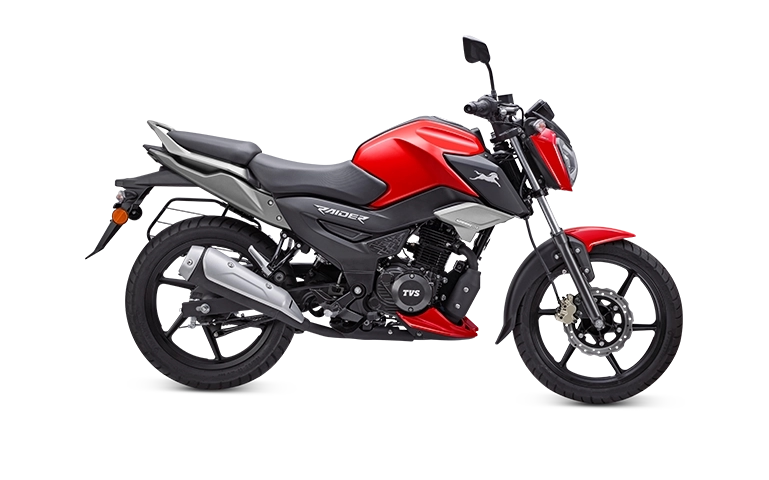
TVS Raider 125
- 124.8 cc Air & Oil-Cooled
- 11.38 PS @ 7500 rpm
- 71.94 km/l (ARAI)
- 10-litre tank
- 7 variants available
- CBS · Disc / Dual Disc options
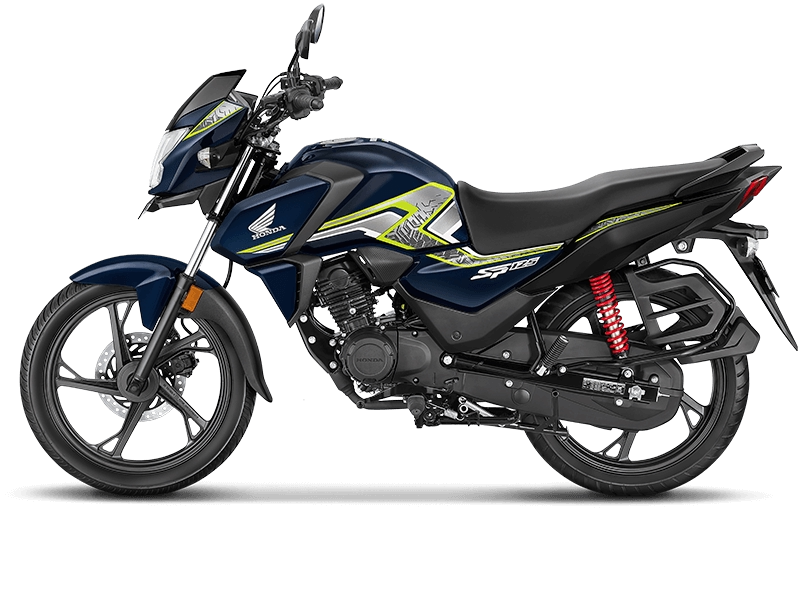
Honda SP 125
- 123.94 cc Air-Cooled
- 10.87 PS @ 7500 rpm
- 65 km/l (ARAI)
- 11.2-litre tank
- 2 variants available
- CBS · Drum / Disc options
Full Specification Comparison
Every number that matters — side by side
| Specification | Raider 125 | SP 125 |
|---|---|---|
| Engine & Performance | ||
| Displacement | 124.8 cc | 123.94 cc |
| Cooling System | Air & Oil Cooled | Air Cooled |
| Max Power | 11.38 PS @ 7500 rpm | 10.87 PS @ 7500 rpm |
| Max Torque | 11.75 Nm @ 6000 rpm | 10.9 Nm @ 6000 rpm |
| Valves per Cylinder | 3 | 2 |
| Compression Ratio | 10.3 : 1 | 10.0 : 1 |
| Bore × Stroke | 53.5 × 55.5 mm | 50.0 × 63.1 mm |
| Emission Standard | BS6 Phase 2 | BS6 Phase 2 (OBD2) |
| Transmission | 5-Speed Manual | 5-Speed Manual |
| Top Speed | 99 km/h | 100 km/h |
| Riding Modes | Eco & Power (select variants) | No |
| Idle Stop-Start | Yes (iGO variant) | No |
| Fuel & Range | ||
| Mileage (ARAI) | 71.94 km/l | 65 km/l |
| Mileage (Real-world) | ~60–65 km/l | ~55–60 km/l |
| Fuel Tank | 10 litres | 11.2 litres |
| Reserve Capacity | 1.6 litres | 1.76 litres |
| Riding Range (approx.) | ~650–700 km | ~650–700 km |
| Brakes & Wheels | ||
| Braking System | CBS (Synchronized Braking Technology) | CBS |
| Front Brake | Drum / Disc 240 mm (variant dependent) | Drum / Disc 240 mm (variant dependent) |
| Rear Brake | Drum 130 mm / Disc 200 mm (variant dependent) | Drum 130 mm |
| Tyre Type | Tubeless | Tubeless |
| Tyre Size (F / R) | 80/100-17 / 100/90-17 | 80/100-18 / 80/100-18 |
| Wheel Size | 17-inch alloy | 18-inch alloy |
| Suspension & Chassis | ||
| Front Suspension | Telescopic Fork | Telescopic |
| Rear Suspension | Mono-shock, 5-step adjustable | Hydraulic Type |
| Chassis | Single Cradle Tubular Frame | Diamond Type |
| Rear Preload Adjuster | Yes | No |
| Dimensions & Weight | ||
| Kerb Weight | 123–125 kg | 116–117 kg |
| Seat Height | 780 mm | 790 mm |
| Ground Clearance | 180 mm | 160 mm |
| Wheelbase | 1326 mm | 1285 mm |
| Overall L × W × H | 2070 × 785 × 1028 mm | 2020 × 785 × 1103 mm |
| Features & Electronics | ||
| Instrument Console | Reverse LCD / 5-inch TFT (variant) | Fully Digital |
| Headlight | LED | Not specified (halogen on base) |
| DRLs | Yes | No |
| Tail Light | LED | Not specified |
| Hazard Warning Lights | Yes | No |
| Bluetooth Connectivity | Yes (SXC & TFT variants) | No |
| USB Charging Port | Yes (select variants) | No |
| Gear Indicator | Yes | Yes |
| Tachometer | Yes | No |
| Service Reminder | Yes | Yes |
| Traction Control | No | No |
| Keyless Ignition | No | No |
| Price & Warranty | ||
| Starting Price (ex-showroom) | ₹84,490 | ₹88,750 |
| Top Variant Price | ₹97,719 | ₹95,611 |
| Number of Variants | 7 | 2 |
| Standard Warranty | 5 Years / 60,000 km | 3 Years / 42,000 km |
★ Green highlights indicate the stronger value in each row. Prices are ex-showroom India averages and may vary by city.
Variant-wise Price Comparison
All variants laid out — find the right one for your budget
TVS Raider 125 Variants
Honda SP 125 Variants
Pros & Cons
Honest strengths and weaknesses of each bike
Pros
- Higher power (11.38 PS) and torque (11.75 Nm)
- Better ARAI mileage — 71.94 km/l vs 65 km/l
- Lower starting price (₹84,490 vs ₹88,750)
- 7 variants covering every budget and preference
- TFT display with Bluetooth & navigation on top variant
- LED headlamp, DRLs, and LED tail light as standard
- Dual disc brake option available
- Riding modes (Eco & Power) on select variants
- Longer 5-year / 60,000 km warranty
- Superior ground clearance (180 mm vs 160 mm)
- Tachometer included on all variants
- Hazard warning lights as standard
Cons
- Sporty seat can feel firm on very long rides
- Smaller 10-litre fuel tank
- Heavier at 123–125 kg vs 116–117 kg
- Top TFT variant is pricier than SP 125 Disc
- 17-inch wheels (vs 18-inch on SP 125)
Pros
- Exceptional engine refinement — Honda's trademark smoothness
- Larger 11.2-litre fuel tank for longer trips
- Lighter at 116–117 kg for easier handling
- 18-inch wheels for a smoother ride feel
- Fully digital console clean and clear
- Honda PGM-FI fuel injection reliability
- Lower ground pressure — better stability feel
Cons
- Lower ARAI mileage (65 km/l vs 71.94 km/l)
- Less powerful — 10.87 PS and 10.9 Nm
- Only 2 variants — very limited choice
- Higher starting price (₹88,750)
- No Bluetooth connectivity on either variant
- No USB charging port
- No hazard warning lights or DRLs
- No riding modes
- Shorter warranty (3 years / 42,000 km)
- No rear disc brake option
- Lower ground clearance (160 mm)
Key Differences Explained
What really sets these two bikes apart
Engine Character
The Raider 125 uses a 3-valve, air & oil-cooled 124.8 cc engine making 11.38 PS and 11.75 Nm — more than the SP 125's 2-valve air-cooled 123.94 cc unit at 10.87 PS and 10.9 Nm. The Raider revs with more urgency and feels more spirited in city traffic, while the SP 125 prioritises Honda's renowned silky-smooth power delivery.
Fuel Efficiency & Range
The Raider 125 leads on ARAI mileage at 71.94 km/l versus the SP 125's 65 km/l. However, the SP 125's larger 11.2-litre tank gives it roughly comparable riding range. For daily fuel savings, the Raider's efficiency advantage adds up meaningfully over months of commuting.
Braking & Safety
The Raider 125 gives buyers more flexibility — it offers single and dual disc configurations, with rear disc available on SXC and TFT variants. The SP 125 tops out with a front disc only, and the rear always stays drum. The Raider also benefits from LED tail lighting and hazard warning lights standard across the range.
Features & Technology
The Raider 125 dominates on features — its TFT variant offers Bluetooth connectivity, turn-by-turn navigation, call/SMS alerts, riding modes, USB charging, and a tachometer. The SP 125 has no Bluetooth, no USB charging, no riding modes, and no hazard lights on any variant. For tech-savvy riders, the Raider wins this round comprehensively.
Price & Value
The Raider 125 starts ₹4,260 cheaper at ₹84,490 and spans a wide range across 7 variants up to ₹97,719. The SP 125 starts at ₹88,750 with just 2 variants topping at ₹95,611. The Raider offers far more choice and generally better value — more power, better mileage, more features, and a lower entry price.
Ride Refinement & Handling
The SP 125 is where Honda truly shines — its PGM-FI engine is remarkably smooth and vibration-free, with a lighter 116–117 kg kerb weight making it feel more agile. The Raider's sporty chassis and 180 mm ground clearance make it better for rough patches, but for pure smoothness and refinement, the SP 125 is the benchmark in this segment.
Expert Verdict
Which one should you actually buy?
Buy the TVS Raider 125 if…
- You want more power and better ARAI mileage
- Bluetooth connectivity and a TFT display appeal to you
- You want riding modes and dual disc brakes
- Budget matters — starts ₹4,260 cheaper
- You ride on rough roads (180 mm clearance helps)
- Longer warranty coverage (5 years) is a priority
- You want variety — 7 variants to choose from
Buy the Honda SP 125 if…
- Silky engine refinement is your top priority
- You value Honda's brand reliability and after-sales trust
- A lighter, more manageable motorcycle suits you
- You prefer a larger fuel tank (11.2 litres)
- You don't need connectivity or tech features
- 18-inch wheels give you a more comfortable ride feel
Overall Winner for Most Riders: TVS Raider 125. Better ARAI mileage, more power, a lower starting price, 7 variants, LED lighting across the range, superior ground clearance, a dual disc option, Bluetooth on top variants, riding modes, and a longer 5-year warranty make the Raider 125 the objectively stronger package for most buyers. Choose the Honda SP 125 only if engine refinement and Honda's unmatched brand trust are non-negotiable for you — it is genuinely smoother and lighter, but gives up a great deal in features, value, and performance.
Frequently Asked Questions
Common questions answered by our experts
The TVS Raider 125 is better for most buyers offering more power, better mileage (71.94 vs 65 km/l ARAI), a lower starting price, 7 variants, LED lighting, Bluetooth on top variants, riding modes, dual disc brakes, and a longer 5-year warranty. The Honda SP 125 is better if you specifically want Honda's class-leading engine refinement, a lighter kerb weight, and brand reliability above all else.
The TVS Raider 125 starts at ₹84,490 while the Honda SP 125 starts at ₹88,750 ex-showroom. The Raider is approximately ₹4,260 cheaper at the base variant level. At the top end, the Raider TFT (₹97,719) is pricier than the SP 125 Disc (₹95,611), but offers significantly more features including a TFT display, Bluetooth, and dual disc brakes.
The TVS Raider 125 has better mileage with an ARAI-certified 71.94 km/l compared to the Honda SP 125's 65 km/l. In real-world conditions, the Raider delivers approximately 60–65 km/l while the SP 125 returns 55–60 km/l. Despite the SP 125 having a larger 11.2-litre tank, both bikes deliver a similar riding range of approximately 650–700 km per fill.
The TVS Raider 125 makes more power at 11.38 PS @ 7500 rpm and more torque at 11.75 Nm @ 6000 rpm compared to the Honda SP 125's 10.87 PS and 10.9 Nm. The Raider also benefits from a 3-valve, oil-cooled engine versus the SP 125's 2-valve air-cooled unit, giving it a clear performance edge for city acceleration and overall riding engagement.
The TVS Raider 125 offers Bluetooth connectivity on its SXC Dual Disc (₹95,862) and TFT Dual Disc (₹97,719) variants, enabling smartphone pairing, navigation, and call/SMS alerts. The Honda SP 125 does not offer Bluetooth connectivity on any variant. If connected features matter to you, the Raider 125 is the clear choice.
The TVS Raider 125 offers a significantly better warranty at 5 years or 60,000 km compared to the Honda SP 125's 3 years or 42,000 km. This is a meaningful advantage for the Raider, covering almost double the duration and 18,000 km more, which reduces long-term repair risk considerably for high-mileage commuters.