At a Glance
Key differences that define each motorcycle
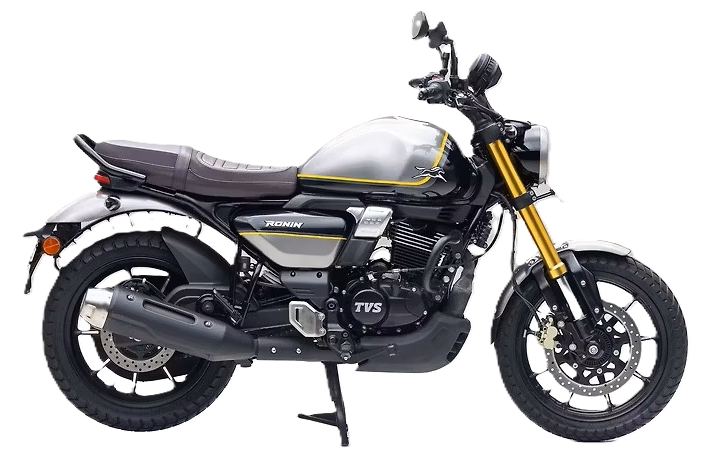
TVS Ronin 225
- 225.9 cc Oil-Cooled, 4-valve
- 20.4 PS @ 7750 rpm
- 42.95 km/l (ARAI)
- 14-litre tank
- 7 variants available
- Dual-channel ABS (mid & top variants)
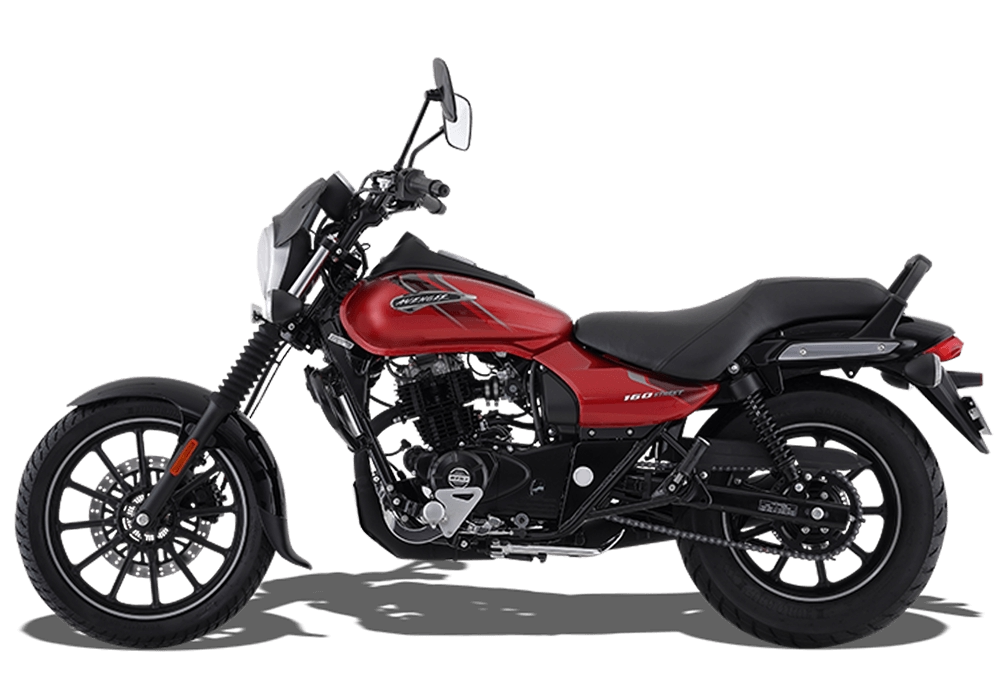
Bajaj Avenger Street 160
- 160 cc Air-Cooled, 2-valve DTS-i
- 15 PS @ 8500 rpm
- 45 km/l (ARAI)
- 13-litre tank
- 1 variant available
- 5-year / 75,000 km warranty
Full Specification Comparison
Every number that matters — side by side
| Specification | TVS Ronin 225 | Bajaj Avenger Street 160 |
|---|---|---|
| Engine & Performance | ||
| Displacement | 225.9 cc | 160 cc |
| Cooling System | Oil-Cooled | Air-Cooled |
| Max Power | 20.4 PS @ 7750 rpm | 15 PS @ 8500 rpm |
| Max Torque | 19.93 Nm @ 3750 rpm | 13.7 Nm @ 7000 rpm |
| Valves per Cylinder | 4 | 2 |
| Compression Ratio | 10.14 ± 0.5 : 1 | 9.8 ± 0.3 : 1 |
| Bore × Stroke | 66 × 66 mm | 58 × 60.7 mm |
| Emission Standard | BS6 Phase 2 | BS6 |
| Transmission | 5-Speed Manual | 5-Speed Manual |
| Clutch | Assist & Slipper | Wet Multi Plate |
| Top Speed | 120 km/h | 105 km/h |
| Riding Modes | Urban, Rain | No |
| Traction Control | No | No |
| Fuel & Range | ||
| Mileage (ARAI) | 42.95 km/l | 45 km/l |
| Mileage (Real-world) | 38–42 km/l | 40–45 km/l |
| Fuel Tank | 14 litres | 13 litres |
| Reserve Capacity | 2.8 litres | 3.8 litres |
| Riding Range | ~560 km | ~585 km |
| Brakes & Wheels | ||
| Braking System | Single / Dual Channel ABS | Single Channel ABS |
| Front Brake | Disc – 300 mm | Disc – 280 mm |
| Rear Brake | Disc – 240 mm | Drum – 130 mm |
| Tyre Type | Tubeless | Tubeless |
| Tyre Size (F / R) | 110/70-17 / 130/70-17 | 90/90-17 / 130/90-15 |
| Rear Wheel Size | 17 inch | 15 inch |
| Wheel Type | 9-Spoke Alloy | Alloy |
| Suspension & Chassis | ||
| Front Suspension | 41 mm USD Fork | Telescopic Fork |
| Rear Suspension | Monoshock, 7-step Preload | Twin Shock Absorbers |
| Chassis | Double Cradle Split Synchro Stiff Frame | Tubular Double Cradle |
| Rear Preload Adjuster | Yes | Yes |
| Dimensions & Weight | ||
| Kerb Weight | 160 kg | 156 kg |
| Seat Height | 795 mm | 737 mm |
| Ground Clearance | 181 mm | 169 mm |
| Wheelbase | 1357 mm | 1490 mm |
| Overall L × W × H | 2040 × 805 × 1170 mm | 2210 × 806 × 1070 mm |
| Features & Electronics | ||
| Instrument Console | Fully Digital | Semi-Digital |
| Headlight | LED | Halogen |
| DRLs | Yes | No |
| Turn Signals | LED | Bulb |
| Hazard Warning Lights | Yes | No |
| Riding Modes | Urban / Rain | No |
| Traction Control | No | No |
| Bluetooth Connectivity | Yes (top variants) | No |
| Navigation | Yes (top variants) | No |
| Call & SMS Alerts | Yes (top variants) | No |
| USB Charging Port | Yes | No |
| Distance to Empty | Yes | No |
| Gear Indicator | Yes | No |
| Tachometer | Digital | No |
| Speedometer | Digital | Analogue |
| Silent Start | Yes | No |
| Pillion Backrest | No | Yes |
| Price & Warranty | ||
| Starting Price (ex-showroom) | ₹1,26,690 | ₹1,12,280 |
| Top Variant Price | ₹1,60,140 | ₹1,12,280 (single variant) |
| Number of Variants | 7 | 1 |
| Standard Warranty | 5 Years / 60,000 km | 5 Years / 75,000 km |
★ Green highlights indicate the stronger value in each row. Prices are ex-showroom India averages and may vary by city.
Variant-wise Price Comparison
All variants laid out — find the right one for your budget
Ronin 225 Variants
Avenger Street 160 Variants
Pros & Cons
Honest strengths and weaknesses of each bike
Pros
- Significantly more powerful — 20.4 PS vs 15 PS (36% more)
- Much more torque — 19.93 Nm delivered low at 3750 rpm
- Larger 225.9 cc oil-cooled 4-valve engine
- USD front forks standard on all variants
- Larger 300 mm front disc and 240 mm rear disc brake
- Dual-channel ABS from mid variant (₹1,48,040)
- Better ground clearance (181 mm vs 169 mm)
- Riding modes (Urban & Rain) standard
- Full LED lighting including headlamp and indicators
- DRLs, hazard warning lights
- Fully digital instrument console with tachometer
- Gear indicator, USB charging port
- Distance to empty indicator
- Silent start and assist & slipper clutch
- Bluetooth and navigation on top variants
- 7 variants — widest choice
- Higher top speed (120 km/h vs 105 km/h)
Cons
- Higher starting price (₹1,26,690 vs ₹1,12,280)
- Slightly lower ARAI mileage (42.95 km/l vs 45 km/l)
- Heavier at 160 kg vs 156 kg
- Higher seat height (795 mm vs 737 mm)
- Shorter warranty (5yr / 60,000 km vs 5yr / 75,000 km)
- No traction control on any variant
- Bluetooth only on top two variants
- No pillion backrest
Pros
- Significantly lower starting price (₹1,12,280)
- Very low 737 mm seat height — ideal for shorter riders
- Classic cruiser riding posture for relaxed commuting
- Long 1490 mm wheelbase for stable highway cruising
- Large 3.8-litre reserve fuel capacity
- Better ARAI mileage (45 km/l vs 42.95 km/l)
- Superior 5-year / 75,000 km warranty
- Pillion backrest standard
- Lighter at 156 kg
- Simpler ownership and lower maintenance costs
- Bajaj's extensive service network across India
Cons
- Much lower power output (15 PS vs 20.4 PS)
- Much less torque (13.7 Nm vs 19.93 Nm)
- Smaller 160 cc air-cooled 2-valve engine
- Rear drum brake — no rear disc option
- Smaller 280 mm front disc
- No dual-channel ABS option
- Only telescopic front forks — no USD upgrade
- No Bluetooth, navigation, or digital connectivity
- No riding modes on any variant
- Halogen headlamp — no LED
- No DRLs, no hazard warning lights
- Semi-digital console with analogue speedometer
- No gear indicator, no tachometer
- No USB charging port
- Lower top speed (105 km/h vs 120 km/h)
- Only 1 variant — zero choice
- 15-inch rear wheel vs 17-inch — fewer tyre options
Key Differences Explained
What really sets these two bikes apart
Engine & Performance
The difference in engine character here is fundamental. The Ronin 225 uses a 225.9 cc oil-cooled 4-valve engine producing 20.4 PS and 19.93 Nm — with the full torque arriving at a very low 3750 rpm, making city riding effortless. The Avenger Street 160 uses Bajaj's 160 cc air-cooled 2-valve DTS-i engine producing 15 PS and 13.7 Nm — tuned for smooth, reliable everyday use rather than performance. The Ronin's engine is in a different class entirely.
Price & Value
The Avenger Street 160 starts at just ₹1,12,280 — ₹14,410 less than the Ronin's ₹1,26,690 base. For buyers on a tight budget, the Avenger offers a credible cruiser experience at a very accessible price. However, at that same ₹1,26,690–₹1,30,990 price point, the Ronin's base and Agonda Edition variants offer dramatically more engine capacity, USD forks, LED lighting, riding modes and a fully digital console — making the Ronin outstanding value for the marginal extra spend.
Braking & Safety
The Ronin 225 leads decisively here. Its 300 mm front disc outperforms the Avenger's 280 mm unit, and crucially, the Ronin has a rear disc brake (240 mm) while the Avenger uses a basic 130 mm rear drum. The Ronin also offers dual-channel ABS from ₹1,48,040. The Avenger offers only single-channel ABS with a rear drum — adequate for its speed range, but significantly behind on safety hardware.
Comfort & Ergonomics
Both bikes target comfort but in very different ways. The Avenger Street 160's standout strength is its 737 mm seat height — 58 mm lower than the Ronin's 795 mm — combined with a stretched 1490 mm wheelbase. This makes it the easier, more relaxed motorcycle for shorter riders and all-day city cruising. The Ronin is more upright and versatile but sits notably higher. The Avenger also includes a pillion backrest — absent on the Ronin.
Features & Technology
The Ronin 225 is substantially more modern in every feature. LED headlamp, LED indicators, DRLs, hazard warning lights, fully digital console with tachometer, gear indicator, USB charging port, distance to empty, riding modes, silent start, slipper clutch, and Bluetooth with navigation on top variants. The Avenger Street 160 offers a halogen headlamp, bulb indicators, analogue speedometer, semi-digital console with no tachometer or gear indicator, and no connectivity whatsoever.
Warranty & Ownership
The Bajaj Avenger Street 160 has one meaningful edge: its 5-year / 75,000 km warranty outperforms the Ronin's 5-year / 60,000 km coverage by 15,000 km. Both bikes have strong service networks. For high-mileage commuters, Bajaj's extra 15,000 km of warranty protection is a practical advantage that can save on out-of-warranty repair costs.
Expert Verdict
Which one should you actually buy?
Buy the Ronin 225 if…
- You want a significantly more powerful engine (20.4 PS)
- Modern features — LED lighting, Bluetooth, digital console — matter
- USD front forks and dual-channel ABS are important for safety
- Better ground clearance (181 mm) suits your daily roads
- Riding modes (Urban & Rain) add useful versatility
- A higher 120 km/h top speed is relevant for highway use
- You want 7 variant choices across different budgets
- You ride 795 mm seat height without difficulty
Buy the Avenger Street 160 if…
- Budget is the primary factor — starts ₹14,410 cheaper
- A very low 737 mm seat height is essential for you
- Classic cruiser styling and relaxed stretched ergonomics appeal
- You ride mostly in the city at relaxed speeds
- Simplicity and easy maintenance without modern tech suits you
- The superior 5-year / 75,000 km warranty is important
- Pillion comfort with backrest is a priority
- You prefer the longest possible wheelbase for highway stability
Overall Winner: TVS Ronin 225. The Ronin 225 outperforms the Avenger Street 160 on almost every measurable specification — 36% more power, significantly more torque available at low RPM, USD forks, rear disc brake, dual-channel ABS option, far superior LED lighting and digital features, riding modes, higher top speed, and better ground clearance. The ₹14,410 price gap at base level is modest relative to everything extra the Ronin delivers. The Bajaj Avenger Street 160 earns its place as the right pick only if the lowest possible price point, the segment-defining 737 mm seat height for shorter riders, or the absolute simplicity of a single-variant no-frills cruiser is what you are specifically looking for. For the vast majority of buyers in this segment, the Ronin 225 is the better motorcycle by a wide margin.
Frequently Asked Questions
Common questions answered by our experts
The TVS Ronin 225 is better for most buyers — it offers significantly more power (20.4 PS vs 15 PS), a larger 225.9 cc oil-cooled engine, USD front forks, dual-channel ABS option, rear disc brake, riding modes, full LED lighting, digital features and Bluetooth on top variants, all for ₹14,410 more at base. The Bajaj Avenger Street 160 is better if your priorities are the lowest possible price, the segment's lowest 737 mm seat height, classic cruiser simplicity, or the superior 5-year / 75,000 km warranty.
The Bajaj Avenger Street 160 starts at ₹1,12,280 while the TVS Ronin 225 starts at ₹1,26,690 — a gap of ₹14,410. The Avenger is available in only one standard variant, while the Ronin extends up to ₹1,60,140 for its top connected variants. Both prices are ex-showroom India averages and may vary by city.
The Bajaj Avenger Street 160 has marginally better ARAI-certified mileage at 45 km/l compared to the TVS Ronin 225's 42.95 km/l. Real-world mileage is 40–45 km/l for the Avenger versus 38–42 km/l for the Ronin. However, the Ronin's 14-litre tank versus the Avenger's 13-litre unit partially offsets this, with the Avenger offering ~585 km range versus ~560 km for the Ronin. The Avenger also has a larger 3.8-litre reserve versus the Ronin's 2.8 litres.
The TVS Ronin 225 makes considerably more power at 20.4 PS @ 7750 rpm compared to the Bajaj Avenger Street 160's 15 PS @ 8500 rpm — a gap of 5.4 PS (36% more). The Ronin also produces significantly more torque at 19.93 Nm @ 3750 rpm versus 13.7 Nm @ 7000 rpm. The Ronin's torque arriving much earlier in the rev range gives it a noticeably more effortless character in everyday city riding.
No. The Bajaj Avenger Street 160 uses a 130 mm rear drum brake paired with a 280 mm front disc and single-channel ABS. The TVS Ronin 225, in contrast, has a 240 mm rear disc brake standard across all variants, along with a larger 300 mm front disc. Mid and top Ronin variants also feature dual-channel ABS from ₹1,48,040.
The Bajaj Avenger Street 160 has a better warranty at 5 years / 75,000 km compared to the TVS Ronin 225's 5 years / 60,000 km — an extra 15,000 km of coverage. For daily commuters who clock 15,000–20,000 km per year, the Avenger's extended kilometre coverage provides meaningful protection against out-of-warranty repair costs. Both brands have extensive service networks across India.