At a Glance
Key differences that define each motorcycle
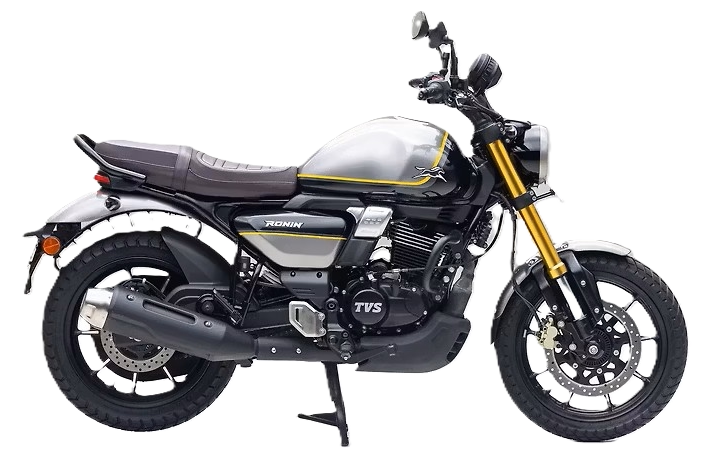
TVS Ronin 225
- 225.9 cc Oil-Cooled, 4-valve
- 20.4 PS @ 7750 rpm
- 42.95 km/l (ARAI)
- 14-litre tank
- 7 variants available
- Ride modes: Urban, Rain
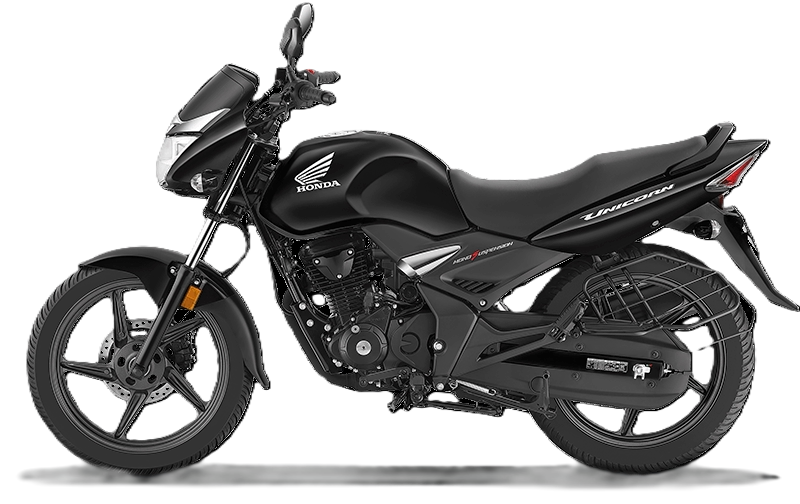
Honda Unicorn
- 162.71 cc Air-Cooled, 2-valve
- 13.18 PS @ 7500 rpm
- 50 km/l (ARAI)
- 13-litre tank
- 1 variant available
- Single-channel ABS standard
Full Specification Comparison
Every number that matters — side by side
| Specification | TVS Ronin 225 | Honda Unicorn |
|---|---|---|
| Engine & Performance | ||
| Displacement | 225.9 cc | 162.71 cc |
| Cooling System | Oil-Cooled | Air-Cooled |
| Max Power | 20.4 PS @ 7750 rpm | 13.18 PS @ 7500 rpm |
| Max Torque | 19.93 Nm @ 3750 rpm | 14.8 Nm @ 5250 rpm |
| Valves per Cylinder | 4 | 2 |
| Compression Ratio | 10.14 ± 0.5 : 1 | 10 ± 0.2 : 1 |
| Bore × Stroke | 66 × 66 mm | 57.3 × 63.1 mm |
| Emission Standard | BS6 Phase 2 | BS6 Phase 2 (OBD2) |
| Transmission | 5-Speed Manual | 5-Speed Manual |
| Clutch | Assist & Slipper | Wet Multiplate |
| Top Speed | ~120 km/h | ~106 km/h |
| Riding Modes | Urban, Rain (mid & top variants) | No |
| Traction Control | No | No |
| Fuel & Range | ||
| Mileage (ARAI) | 42.95 km/l | 50 km/l |
| Fuel Tank | 14 litres | 13 litres |
| Reserve Capacity | 2.8 litres | 2 litres |
| Riding Range | ~560 km | ~650 km |
| Brakes & Wheels | ||
| Braking System | Dual Channel ABS (mid & top variants) | Single Channel ABS |
| Front Brake | Disc – 300 mm | Disc – 240 mm |
| Rear Brake | Disc – 240 mm | Drum – 130 mm |
| Tyre Type | Tubeless | Tubeless |
| Tyre Size (F / R) | 110/70-17 / 130/70-17 | 80/100-18 / 100/90-18 |
| Wheel Type | 9-Spoke Alloy | Alloy |
| Wheel Size | 17 inch (F & R) | 18 inch (F & R) |
| Suspension & Chassis | ||
| Front Suspension | 41 mm USD Fork | Telescopic |
| Rear Suspension | Monoshock (7-step adjustable) | Monoshock |
| Chassis | Double Cradle Split Synchro Stiff Frame | Diamond Type |
| Rear Preload Adjuster | Yes (7-step) | No |
| Dimensions & Weight | ||
| Kerb Weight | 160 kg | 139 kg |
| Seat Height | 795 mm | 798 mm |
| Ground Clearance | 181 mm | 187 mm |
| Wheelbase | 1357 mm | 1335 mm |
| Overall L × W × H | 2040 × 805 × 1170 mm | 2081 × 756 × 1103 mm |
| Features & Electronics | ||
| Instrument Console | Fully Digital | Digi-Analog |
| Headlight | LED | Halogen |
| DRLs | Yes | No |
| Turn Signals | LED | – |
| Hazard Warning Lights | Yes | No |
| Riding Modes | Urban / Rain (mid & top variants) | No |
| Bluetooth Connectivity | Yes (top variants) | No |
| Call & SMS Alerts | Yes (top variants) | No |
| USB Charging Port | Yes | Yes (Type-C) |
| Distance to Empty | Yes | No |
| Navigation | Yes (top variants) | No |
| Gear Indicator | Yes | No |
| Tachometer | Digital | Yes (analog) |
| Keyless Ignition | No | No |
| Price & Warranty | ||
| Starting Price (ex-showroom) | ₹1,26,690 | ₹1,12,898 |
| Top Variant Price | ₹1,60,140 | ₹1,12,898 (single variant) |
| Number of Variants | 7 | 1 |
| Standard Warranty | 5 Years / 60,000 km | 3 Years / 42,000 km |
★ Green highlights indicate the stronger value in each row. Prices are ex-showroom India averages and may vary by city.
Variant-wise Price Comparison
All variants laid out — find the right one for your budget
TVS Ronin 225 Variants
Honda Unicorn Variants
Pros & Cons
Honest strengths and weaknesses of each bike
Pros
- Much larger 225.9 cc engine — 54% more power (20.4 PS vs 13.18 PS)
- Massively more torque (19.93 Nm vs 14.8 Nm)
- Premium 41 mm USD front forks
- Larger 300 mm front disc and 240 mm rear disc brakes
- Dual-channel ABS on mid and top variants
- LED headlight, DRLs, LED turn signals
- Hazard warning lights standard
- Ride modes: Urban and Rain
- Assist and slipper clutch
- Bluetooth and navigation on top variants
- Fully digital instrument console with gear indicator
- Distance to empty display
- 7 variants — wide choice across budgets
- Superior 5-year / 60,000 km warranty
- Higher top speed (~120 km/h vs ~106 km/h)
- Larger 14-litre fuel tank
Cons
- Lower fuel efficiency (42.95 km/l vs 50 km/l)
- Heavier at 160 kg vs 139 kg
- Higher starting price (₹1,26,690 vs ₹1,12,898)
- Base variants have only single-channel ABS
- Bluetooth only on expensive top variants
- No traction control on any variant
- Less practical ground clearance (181 mm vs 187 mm)
Pros
- Best-in-class ARAI mileage of 50 km/l
- Longest riding range (~650 km) from 13-litre tank
- Lower starting price (₹1,12,898)
- Significantly lighter at 139 kg
- Excellent ground clearance (187 mm)
- Honda's legendary reliability and build quality
- Low vibration and refined engine for daily commuting
- USB Type-C charging port standard
- Strong low-end torque delivery for city riding
- Simple, fuss-free ownership experience
- Wide Honda service network across India
Cons
- Much less power (13.18 PS vs 20.4 PS)
- Only single-channel ABS — no dual-channel option
- Rear drum brake — no rear disc on any variant
- Halogen headlight — no LED
- No DRLs or LED lighting
- No Bluetooth or smart connectivity
- No riding modes
- Digi-analog console — no fully digital display
- No hazard warning lights
- No gear indicator
- Conventional telescopic forks — no USD upgrade
- Weak 3-year / 42,000 km warranty
- Single variant — no choice
Key Differences Explained
What really sets these two bikes apart
Engine Character
These two bikes occupy fundamentally different positions. The TVS Ronin 225 uses a 225.9 cc oil-cooled, 4-valve engine making 20.4 PS and a massive 19.93 Nm of torque at just 3750 rpm — designed for a relaxed, torquey riding experience with strong urban pull. The Honda Unicorn uses a 162.71 cc air-cooled, 2-valve commuter engine producing 13.18 PS and 14.8 Nm, tuned for smoothness, minimal vibration and outstanding fuel economy. The Ronin is a lifestyle motorcycle; the Unicorn is a refined daily workhorse.
Fuel Efficiency & Range
The Honda Unicorn comprehensively wins on efficiency with a class-leading ARAI-certified 50 km/l against the Ronin's 42.95 km/l. With a 13-litre tank the Unicorn achieves approximately 650 km per fill — meaningfully more than the Ronin's ~560 km despite having a smaller 14-litre tank. For cost-conscious daily commuters clocking 50–80 km per day, the Unicorn's superior efficiency translates to tangible fuel savings every month.
Braking & Safety
The TVS Ronin 225 holds a decisive braking hardware advantage. Its 300 mm front disc (vs 240 mm) and 240 mm rear disc (vs 130 mm drum) are significantly larger, and dual-channel ABS is available from ₹1,48,040 (mid variant). The Honda Unicorn has only single-channel ABS and retains a rear drum brake — meaning no path to a rear disc or dual-channel ABS exists. Both bikes also have 17-inch vs 18-inch wheels respectively, with the Ronin's wider rubber providing better contact patch.
Features & Technology
The TVS Ronin 225 is in a completely different league for features. It offers LED lighting throughout, a fully digital console with gear indicator, distance to empty, hazard warning lights, USD front forks, an adjustable rear monoshock, ride modes on mid variants and Bluetooth with navigation on top variants. The Honda Unicorn offers a basic digi-analog console, halogen headlight, no DRLs, no Bluetooth, no gear indicator and no riding modes. The Unicorn's only notable feature advantage is its USB Type-C charging port standard on the single variant.
Warranty & Ownership
The TVS Ronin 225 offers a meaningfully better 5-year / 60,000 km warranty against the Honda Unicorn's 3-year / 42,000 km warranty. The Ronin provides two extra years and 18,000 km more coverage. However, it is worth noting that Honda engines carry an exceptional real-world reliability reputation — the Unicorn is likely to require fewer unplanned repairs within and beyond the warranty period, partially offsetting the shorter warranty on paper.
Price & Value
The Honda Unicorn starts ₹13,792 cheaper at ₹1,12,898 versus the Ronin's ₹1,26,690. For a pure commuter buyer focused on efficiency, reliability and low running costs, the Unicorn's lower price is a significant advantage. For buyers who can stretch to the Ronin's base at ₹1,26,690, they gain a 225 cc engine, premium forks, better brakes and far more features — making it excellent relative value at its price point. The comparison is less about which is better value, and more about which segment of the market each buyer is shopping in.
Expert Verdict
Which one should you actually buy?
Buy the TVS Ronin 225 if…
- You want significantly more power and torque for enjoyable riding
- Modern LED lighting and a fully digital console matter to you
- Dual-channel ABS for safety is a priority
- Ride modes, USD forks and premium hardware appeal to you
- You want Bluetooth and navigation for connected riding
- A neo-retro lifestyle motorcycle suits your personality
- The 5-year / 60,000 km warranty provides peace of mind
Buy the Honda Unicorn if…
- You want the best fuel efficiency — 50 km/l ARAI certified
- Lowest possible running cost is the priority
- Budget is a hard constraint — ₹1,12,898 is the target
- Honda's legendary reliability gives you the most confidence
- You do heavy daily commuting and fuel economy is critical
- A simple, no-frills, low-maintenance commuter is what you need
- The lightest possible motorcycle (139 kg) matters for your use case
Overall Winner for Most Riders: TVS Ronin 225. The Ronin 225 is the more complete motorcycle — significantly more power, premium USD forks, larger disc brakes with dual-channel ABS, LED lighting throughout, ride modes, a fully digital console with gear indicator, and a much better 5-year warranty — all for a modest ₹13,792 premium over the Unicorn's base price. Choose the Honda Unicorn only if maximising fuel efficiency (50 km/l), keeping the purchase price as low as possible, or prioritising Honda's exceptional long-term reliability above everything else are your absolute top priorities.
Frequently Asked Questions
Common questions answered by our experts
The TVS Ronin 225 is the better motorcycle overall for most buyers, offering significantly more power (20.4 PS vs 13.18 PS), torque (19.93 Nm vs 14.8 Nm), premium USD forks, larger disc brakes, ride modes, LED lighting, a fully digital console and a superior 5-year / 60,000 km warranty. The Honda Unicorn is better if fuel efficiency (50 km/l ARAI), a lower price (₹1,12,898), a lighter chassis (139 kg) and Honda's legendary reliability are your top priorities.
The Honda Unicorn is priced at ₹1,12,898 ex-showroom in a single standard variant. The TVS Ronin 225 starts at ₹1,26,690 for its base Lightning Black variant and goes up to ₹1,60,140 for top variants. The Unicorn is ₹13,792 cheaper than the Ronin's entry price. However, for the small premium, the Ronin's base variant offers a considerably larger engine, premium forks, better brakes and LED lighting. Prices are ex-showroom India averages and may vary by city.
The Honda Unicorn has significantly better mileage at an ARAI-certified 50 km/l compared to the TVS Ronin 225's ARAI-certified 42.95 km/l. The Unicorn's 7 km/l efficiency advantage is meaningful for daily commuters. The Unicorn's 13-litre tank at 50 km/l also provides a longer riding range of approximately 650 km versus the Ronin's 560 km — making the Unicorn superior on both efficiency and range despite a smaller fuel tank.
The TVS Ronin 225 makes dramatically more power at 20.4 PS @ 7750 rpm compared to the Honda Unicorn's 13.18 PS @ 7500 rpm — over 54% more peak power. The Ronin also produces more torque at 19.93 Nm vs 14.8 Nm, available at a much lower 3750 rpm vs 5250 rpm. These are fundamentally different motorcycles — the Ronin is a lifestyle neo-retro motorcycle with strong performance, while the Unicorn is a refined commuter tuned for smoothness and fuel economy rather than outright power.
Yes, the TVS Ronin 225 offers Urban and Rain ride modes on its mid and top variants (from ₹1,48,040 onwards). Urban mode optimises power delivery for city conditions while Rain mode softens response for wet roads. The Honda Unicorn does not offer any riding modes on its single variant — it has a fixed engine mapping focused entirely on smooth, efficient commuting.
The TVS Ronin 225 offers a substantially better 5-year / 60,000 km warranty compared to the Honda Unicorn's 3-year / 42,000 km warranty. The Ronin provides two extra years and 18,000 km additional coverage. However, Honda motorcycles have an outstanding long-term reliability track record, so the Unicorn's shorter warranty is partially offset by its lower likelihood of requiring warranty repairs in the first place. On paper, the Ronin's warranty coverage is significantly better.