At a Glance
Key differences that define each motorcycle
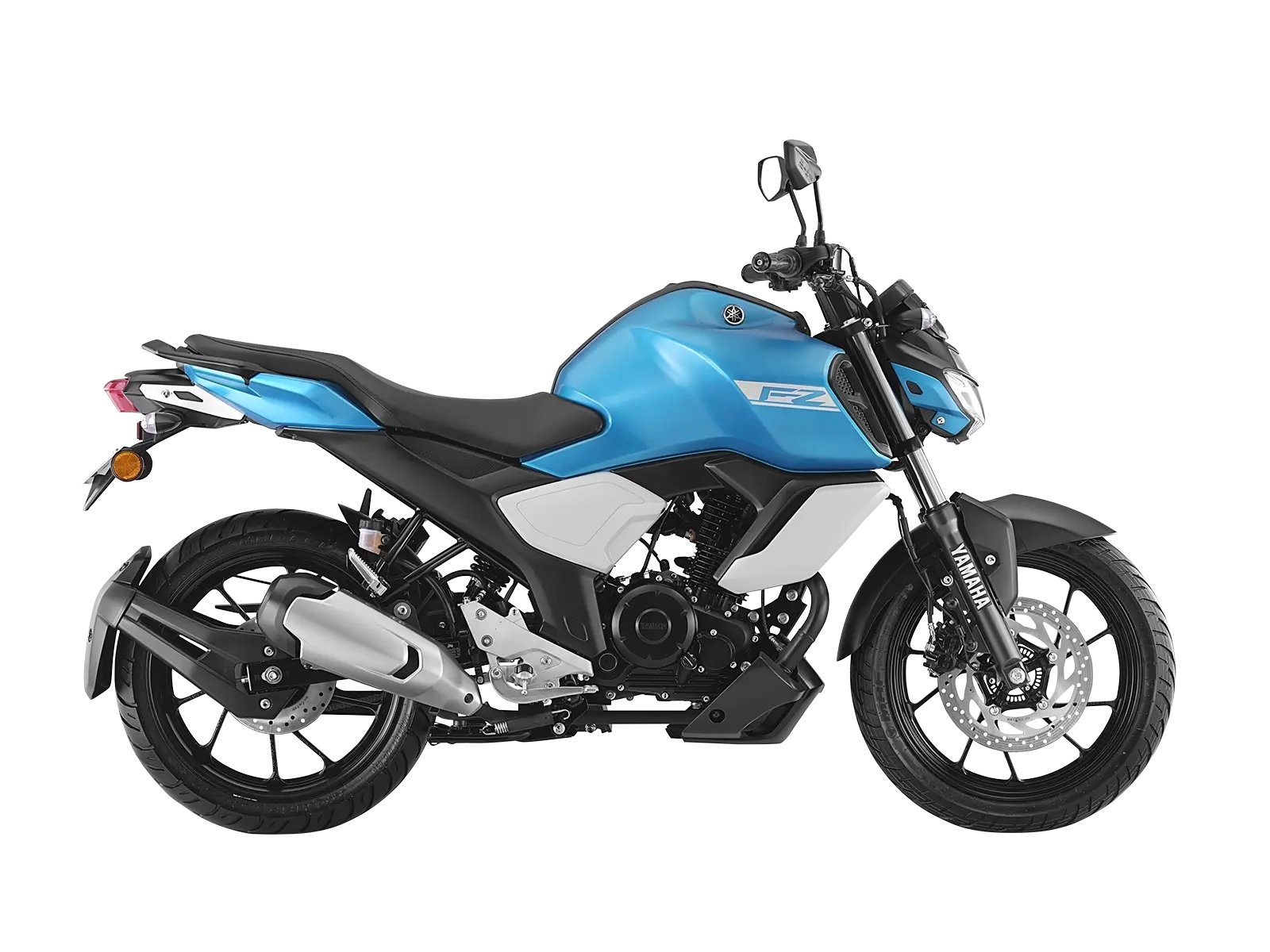
Yamaha FZ-FI
- 149 cc Air-Cooled, 2-valve
- 12.4 PS @ 7250 rpm
- 49.3 km/l (ARAI)
- 13-litre tank
- 1 variant available
- Bluetooth connectivity (Y-Connect)
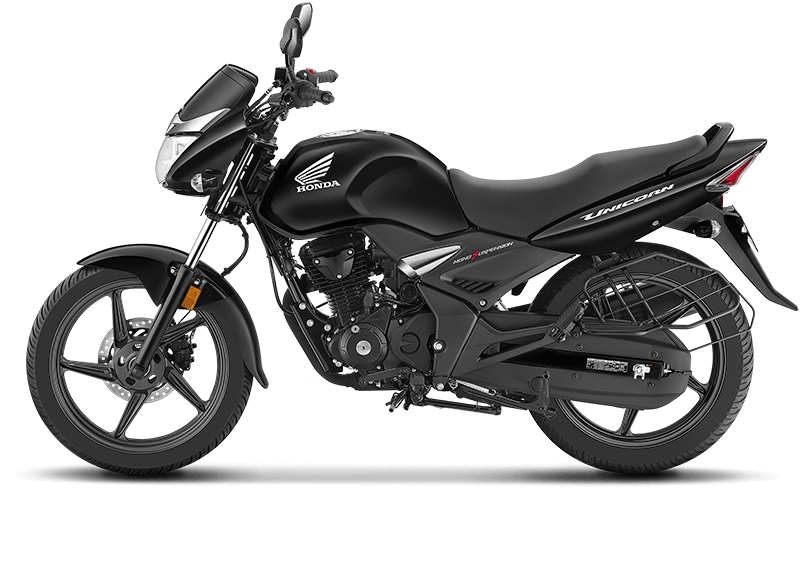
Honda Unicorn
- 162.71 cc Air-Cooled, 2-valve
- 13.18 PS @ 7500 rpm
- 50 km/l (ARAI)
- 13-litre tank
- 1 variant available
- 187 mm ground clearance
Full Specification Comparison
Every number that matters — side by side
| Specification | Yamaha FZ-FI | Honda Unicorn |
|---|---|---|
| Engine & Performance | ||
| Displacement | 149 cc | 162.71 cc |
| Cooling System | Air-Cooled | Air-Cooled |
| Max Power | 12.4 PS @ 7250 rpm | 13.18 PS @ 7500 rpm |
| Max Torque | 13.3 Nm @ 5500 rpm | 14.8 Nm @ 5250 rpm |
| Valves per Cylinder | 2 | 2 |
| Compression Ratio | 9.6 : 1 | 10 ± 0.2 : 1 |
| Bore × Stroke | 57.3 × 57.9 mm | 57.3 × 63.1 mm |
| Emission Standard | BS6 Phase 2 | BS6 Phase 2 (OBD2) |
| Transmission | 5-Speed Manual | 5-Speed Manual |
| Top Speed | ~115 km/h | 106 km/h |
| Riding Modes | No | No |
| Traction Control | No | No |
| Fuel & Range | ||
| Mileage (ARAI) | 49.3 km/l | 50 km/l |
| Mileage (Real-world) | 45–50 km/l | 45–50 km/l |
| Fuel Tank | 13 litres | 13 litres |
| Reserve Capacity | 2 litres | 2 litres |
| Riding Range | ~640 km | ~650 km |
| Brakes & Wheels | ||
| Braking System | Single Channel ABS | Single Channel ABS |
| Front Brake | Disc – 282 mm | Disc – 240 mm |
| Rear Brake | Disc – 220 mm | Drum – 130 mm |
| Tyre Type | Tubeless | Tubeless |
| Tyre Size (F / R) | 100/80-17 / 140/60-17 | 80/100-18 / 100/90-18 |
| Wheel Type | Alloy | Alloy |
| Suspension & Chassis | ||
| Front Suspension | Telescopic Fork | Telescopic |
| Rear Suspension | 7-Step Adjustable Monocross | Monoshock |
| Chassis | Diamond Frame | Diamond Type |
| Rear Preload Adjuster | Yes | No |
| Dimensions & Weight | ||
| Kerb Weight | 135 kg | 139 kg |
| Seat Height | 790 mm | 798 mm |
| Ground Clearance | 165 mm | 187 mm |
| Wheelbase | 1330 mm | 1335 mm |
| Overall L × W × H | 1990 × 780 × 1080 mm | 2081 × 756 × 1103 mm |
| Features & Electronics | ||
| Instrument Console | Fully Digital LCD | Digi-Analog |
| Headlight | LED | Halogen |
| DRLs | Yes | No |
| Brake / Tail Light | LED | – |
| Turn Signals | Halogen | – |
| Hazard Warning Lights | No | No |
| Bluetooth Connectivity | Yes (Y-Connect) | No |
| Call & SMS Alerts | Yes | No |
| USB Charging Port | No | Yes (Type-C) |
| Distance to Empty | Yes | No |
| Gear Indicator | Yes | No |
| Tachometer | Digital | Yes (Analog) |
| Service Reminder | Yes | No |
| Keyless Ignition | No | No |
| Price & Warranty | ||
| Price (ex-showroom) | ₹1,09,924 | ₹1,12,898 |
| Number of Variants | 1 | 1 |
| Standard Warranty | 2 Years / 30,000 km | 3 Years / 42,000 km |
★ Green highlights indicate the stronger value in each row. Prices are ex-showroom India averages and may vary by city.
Variant-wise Price Comparison
Both bikes are available in a single variant — straightforward buying decisions
Yamaha FZ-FI Variants
Honda Unicorn Variants
Pros & Cons
Honest strengths and weaknesses of each bike
Pros
- Bluetooth connectivity with call & SMS alerts
- Lighter kerb weight (135 kg vs 139 kg)
- Wider 140 mm rear tyre for better road presence
- Modern LED headlamp and tail lamp with DRLs
- Fully digital LCD instrument console
- 7-step adjustable rear suspension
- Larger front (282 mm) and rear disc (220 mm) brakes
- Lower price (₹1,09,924 vs ₹1,12,898)
- Distance to empty & gear indicator included
- Muscular streetfighter design with wide handlebar
Cons
- Smaller 149 cc engine — less power and torque
- No USB charging port
- Less ground clearance (165 mm vs 187 mm)
- Shorter warranty (2 years / 30,000 km)
- Halogen turn signals
- Only single-channel ABS
Pros
- Larger 162.71cc engine — more power and torque
- Higher ARAI mileage (50 km/l vs 49.3 km/l)
- Exceptional ground clearance of 187 mm
- USB Type-C charging port standard
- Longer warranty (3 years / 42,000 km)
- Honda's proven long-term reliability
- Comfortable suspension for rough road conditions
Cons
- No Bluetooth connectivity or smartphone alerts
- Halogen headlight (no LED)
- No DRLs
- Rear drum brake instead of disc
- Conservative styling — no muscular road presence
- No gear indicator
- Digi-Analog console feels less premium
- Higher price (₹1,12,898)
Key Differences Explained
What really sets these two bikes apart
Engine & Performance
The Honda Unicorn holds an engine advantage with its 162.71 cc motor producing 13.18 PS and 14.8 Nm — more power and significantly more torque than the Yamaha FZ-FI's 149 cc unit making 12.4 PS and 13.3 Nm. The Unicorn's torque arrives early at 5250 rpm, giving it stronger low-end pull that is particularly useful in city traffic.
Connectivity & Features
The Yamaha FZ-FI clearly leads on connected technology. It comes with Bluetooth via Yamaha's Y-Connect app — enabling call and SMS alerts, ride data tracking, a gear indicator and distance to empty — all standard. The Honda Unicorn has no Bluetooth or smartphone connectivity whatsoever, though it counters with a practical USB Type-C charging port that the FZ-FI lacks.
Fuel Efficiency & Range
Both bikes are closely matched on fuel efficiency. The Honda Unicorn edges ahead with 50 km/l ARAI versus the FZ-FI's 49.3 km/l — a marginal difference of 0.7 km/l. Both share identical 13-litre fuel tanks, giving them virtually the same estimated riding range of 640–650 km per fill.
Braking Setup
The FZ-FI runs a larger 282 mm front disc and a 220 mm rear disc — both significantly bigger than the Unicorn's 240 mm front disc and 130 mm rear drum. Both have single-channel ABS but the FZ-FI's disc-on-both-ends setup provides more consistent braking performance, particularly when the rear brake is needed on slippery surfaces.
Ground Clearance & Handling
The Honda Unicorn has a dominant lead in ground clearance at 187 mm against the FZ-FI's 165 mm — a 22 mm difference that matters significantly on Indian roads with speed bumps and uneven surfaces. The FZ-FI counters with a wider 140 mm rear tyre (vs the Unicorn's 100 mm) and a 7-step adjustable rear monocross suspension for better ride customisation.
Warranty & Price
The Yamaha FZ-FI is ₹2,974 cheaper (₹1,09,924 vs ₹1,12,898) but comes with a shorter 2-year / 30,000 km warranty. The Honda Unicorn offers a more comprehensive 3-year / 42,000 km warranty, providing an additional year of coverage and 12,000 extra km — meaningful for high-mileage daily commuters.
Expert Verdict
Which one should you actually buy?
Buy the Yamaha FZ-FI if…
- Bluetooth connectivity and smartphone alerts matter
- You want a lighter, easier-to-handle motorcycle
- Muscular streetfighter styling appeals to you
- LED lighting and a fully digital console are important
- You want disc brakes on both wheels for safer braking
- Budget is a priority — starts ₹2,974 cheaper
- 7-step adjustable rear suspension suits your preference
Buy the Honda Unicorn if…
- You want stronger engine performance and torque
- High ground clearance matters on your daily roads
- Long-term warranty and Honda reliability are important
- A USB Type-C charging port is useful daily
- You prefer a proven, dependable commuter motorcycle
- You cover high daily distances and want durability
Overall Winner for Most Riders: Honda Unicorn. A stronger 162.71cc engine with more torque, significantly better ground clearance (187 mm), a longer 3-year / 42,000 km warranty, a USB Type-C port and Honda's unmatched reliability record make the Unicorn the more practical and better-rounded choice for most Indian daily commuters. Choose the Yamaha FZ-FI if Bluetooth connectivity, sportier styling, LED lighting, dual disc brakes and a lower entry price are your top priorities.
Frequently Asked Questions
Common questions answered by our experts
The Honda Unicorn is better for most buyers who want stronger engine performance (13.18 PS and 14.8 Nm from a 162.71cc motor), superior ground clearance (187 mm), a longer 3-year warranty and Honda's proven reliability. The Yamaha FZ-FI is better if you want Bluetooth connectivity, sporty streetfighter styling, LED lighting, disc brakes on both ends and a lower starting price.
The Yamaha FZ-FI is priced at ₹1,09,924 while the Honda Unicorn is priced at ₹1,12,898 ex-showroom. The FZ-FI is approximately ₹2,974 cheaper. Both bikes are sold in a single variant each, making the buying decision straightforward. Both prices are for India and may vary by city.
The Honda Unicorn has a slightly better ARAI-certified mileage at 50 km/l compared to the Yamaha FZ-FI's 49.3 km/l. The difference is marginal — less than 1 km/l. Both bikes deliver similar real-world fuel efficiency of approximately 45–50 km/l and share an identical 13-litre fuel tank, giving them very similar riding ranges per fill.
The Honda Unicorn makes more power at 13.18 PS @ 7500 rpm compared to the Yamaha FZ-FI's 12.4 PS @ 7250 rpm. The Unicorn also produces significantly more torque at 14.8 Nm @ 5250 rpm versus 13.3 Nm @ 5500 rpm for the FZ-FI. The Unicorn's larger 162.71cc engine delivers this torque at lower rpm, making it feel more effortless in city stop-and-go conditions.
Yes, the Yamaha FZ-FI features Bluetooth connectivity via Yamaha's Y-Connect smartphone app. This enables call and SMS alerts, ride information tracking, and additional data on the digital console. The Honda Unicorn does not offer any Bluetooth or smartphone connectivity features on its single variant.
The Honda Unicorn offers a better warranty of 3 years or 42,000 km compared to the Yamaha FZ-FI's 2 years or 30,000 km. The Unicorn provides one additional year of coverage and 12,000 extra km of protection. For daily commuters covering 30–40 km per day, the Unicorn's warranty is likely to extend well into the third year of ownership before expiring.