At a Glance
Key differences that define each motorcycle
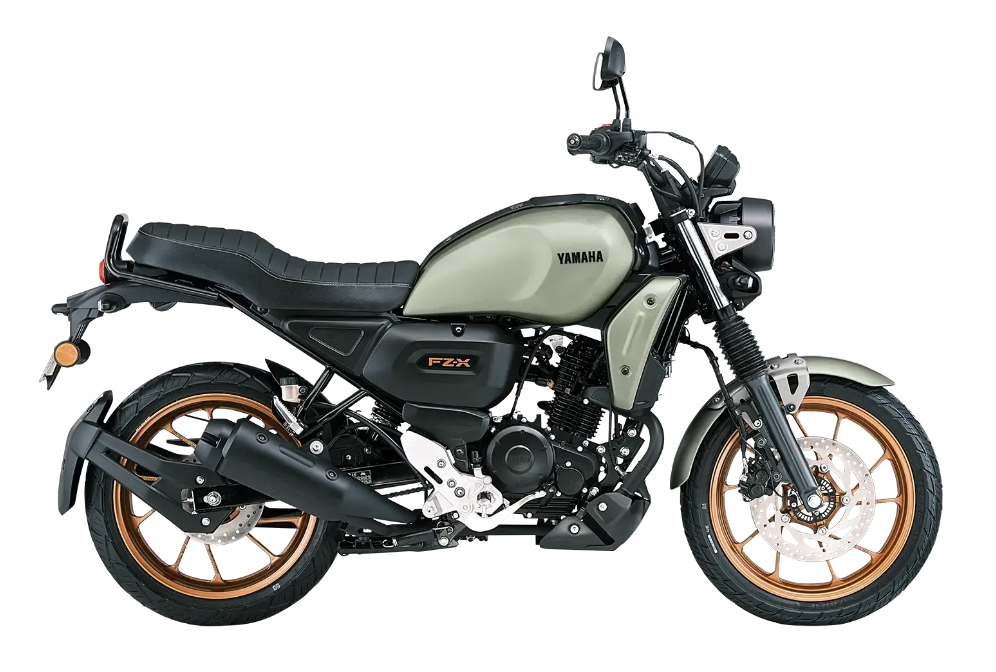
Yamaha FZ-X Hybrid
- 149 cc Air-Cooled, 2-valve
- 12.4 PS @ 7250 rpm
- 53 km/l (ARAI)
- 10-litre tank
- 1 variant available
- Hybrid assist + Traction Control
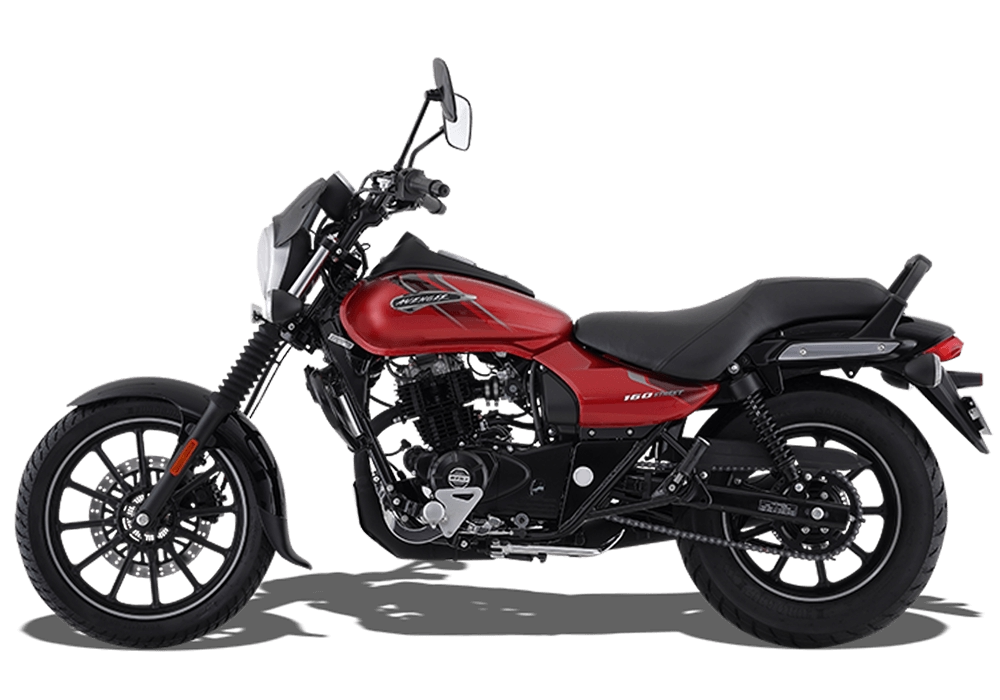
Bajaj Avenger Street 160
- 160 cc Air-Cooled, 2-valve
- 15 PS @ 8500 rpm
- 45 km/l (ARAI)
- 13-litre tank
- 1 variant available
- Cruiser ergonomics, 737 mm seat
Full Specification Comparison
Every number that matters — side by side
| Specification | Yamaha FZ-X Hybrid | Bajaj Avenger Street 160 |
|---|---|---|
| Engine & Performance | ||
| Displacement | 149 cc | 160 cc |
| Cooling System | Air-Cooled | Air-Cooled |
| Max Power | 12.4 PS @ 7250 rpm | 15 PS @ 8500 rpm |
| Max Torque | 13.3 Nm @ 5500 rpm | 13.7 Nm @ 7000 rpm |
| Valves per Cylinder | 2 | 2 |
| Bore × Stroke | 57.3 × 57.9 mm | 58 × 60.7 mm |
| Compression Ratio | 9.6 : 1 | 9.8 ± 0.3 : 1 |
| Emission Standard | BS6 Phase 2 | BS6 |
| Transmission | 5-Speed Manual | 5-Speed Manual |
| Top Speed | ~115 km/h | ~105 km/h |
| Hybrid Assist | Yes (Smart Motor Generator) | No |
| Riding Modes | No | No |
| Traction Control | Yes | No |
| Idle Stop-Start | Yes | No |
| Fuel & Range | ||
| Mileage (ARAI) | 53 km/l | 45 km/l |
| Fuel Tank | 10 litres | 13 litres |
| Reserve Capacity | 1.6 litres | 3.8 litres |
| Riding Range | ~530 km | ~585 km |
| Brakes & Wheels | ||
| Braking System | Single Channel ABS | Single Channel ABS |
| Front Brake | Disc – 282 mm | Disc – 280 mm |
| Rear Brake | Disc – 220 mm | Drum – 130 mm |
| Tyre Type | Tubeless | Tubeless |
| Tyre Size (F / R) | 100/80-17 / 140/60-17 | 90/90-17 / 130/90-15 |
| Wheel Type | Alloy | Alloy |
| Suspension & Chassis | ||
| Front Suspension | Telescopic Fork | Telescopic Fork |
| Rear Suspension | 7-Step Adjustable Monocross | Twin Shock Absorbers |
| Chassis | Diamond Frame | Tubular Double Cradle |
| Rear Preload Adjuster | Yes | Yes |
| Dimensions & Weight | ||
| Kerb Weight | 141 kg | 156 kg |
| Seat Height | 810 mm | 737 mm |
| Ground Clearance | 165 mm | 169 mm |
| Wheelbase | 1330 mm | 1490 mm |
| Overall L × W × H | 2020 × 785 × 1100 mm | 2210 × 806 × 1070 mm |
| Features & Electronics | ||
| Instrument Console | Fully Digital TFT | Semi-Digital |
| Headlight | LED | Halogen |
| DRLs | Yes | No |
| Turn Signals | Bulb | Bulb |
| Hazard Warning Lights | Yes | No |
| Bluetooth Connectivity | Yes (Y-Connect) | No |
| Call & SMS Alerts | Yes | No |
| USB Charging Port | Yes | No |
| Distance to Empty | Yes | No |
| Gear Indicator | Yes | No |
| Tachometer | Digital | No |
| Service Reminder | Yes | Yes |
| Pillion Backrest | No | Yes |
| Keyless Ignition | No | No |
| Price & Warranty | ||
| Starting Price (ex-showroom) | ₹1,39,969 | ₹1,12,280 |
| Number of Variants | 1 | 1 |
| Standard Warranty | 2 Years / 30,000 km | 5 Years / 75,000 km |
★ Green highlights indicate the stronger value in each row. Prices are ex-showroom India averages and may vary by city.
Variant-wise Price Comparison
Both bikes come in a single variant each — find the right one for your budget
FZ-X Hybrid Variants
Avenger Street 160 Variants
Pros & Cons
Honest strengths and weaknesses of each bike
Pros
- Superior ARAI mileage of 53 km/l
- Hybrid assist technology (Smart Motor Generator)
- Traction control for improved safety
- Full-colour TFT display with Yamaha Y-Connect Bluetooth
- Rear disc brake (220 mm) for better braking balance
- LED headlight with DRLs and hazard warning lights
- USB charging port and distance-to-empty display
- Idle stop-start system for city efficiency
- Lighter at 141 kg vs 156 kg
- Higher top speed of ~115 km/h
Cons
- Lower peak power (12.4 PS vs 15 PS)
- Significantly more expensive at ₹1,39,969 (₹27,689 premium)
- Smaller 10-litre tank — less riding range (~530 km)
- Shorter warranty: 2 years / 30,000 km only
- Higher seat height (810 mm) less accessible for shorter riders
- No riding modes
Pros
- Higher peak power – 15 PS @ 8500 rpm
- Very low seat height of 737 mm — accessible for all riders
- Larger 13-litre tank for longer range (~585 km)
- Comfortable cruiser ergonomics for long rides
- More affordable at ₹1,12,280 (₹27,689 less)
- Outstanding 5-year / 75,000 km warranty
- Pillion backrest for passenger comfort
- Greater ground clearance (169 mm vs 165 mm)
Cons
- Lower ARAI mileage (45 km/l vs 53 km/l)
- Rear drum brake — no rear disc
- No Bluetooth, TFT display or smartphone connectivity
- No traction control or hybrid assist
- Halogen headlight — no LED or DRLs
- No USB charging port
- Heavier at 156 kg
Key Differences Explained
What really sets these two bikes apart
Engine Character
The Avenger Street 160 uses a 160 cc air-cooled DTS-i engine producing 15 PS — tuned for relaxed, linear power delivery suited to cruiser riding. The FZ-X Hybrid pairs a 149 cc air-cooled engine with a Smart Motor Generator hybrid assist that supplements torque during acceleration, making it feel smoother in stop-and-go city conditions despite lower peak figures.
Fuel Efficiency & Range
The FZ-X Hybrid leads on mileage with an ARAI-certified 53 km/l against the Avenger's 45 km/l. However, the Avenger's larger 13-litre tank (vs 10 litres) gives it a longer riding range of ~585 km versus ~530 km for the FZ-X Hybrid. For daily city commuters, the FZ-X Hybrid's fuel savings are real; for highway riders, the Avenger's bigger tank means fewer stops.
Braking & Safety
The FZ-X Hybrid holds a clear hardware edge: it comes with disc brakes at both ends (282 mm front, 220 mm rear) and traction control as standard. The Avenger Street 160 offers a 280 mm front disc but retains a rear drum brake, and has no traction control. Both use single-channel ABS on the front wheel. For urban safety, the FZ-X Hybrid's setup is notably more capable.
Technology & Features
The FZ-X Hybrid wins this category comprehensively. It offers a full-colour TFT display, Yamaha Y-Connect Bluetooth, call and SMS alerts, USB charging, traction control, idle stop-start, distance-to-empty readout and LED lighting with DRLs. The Avenger Street 160 comes with a semi-digital instrument console, halogen headlight and no connectivity features whatsoever.
Ergonomics & Comfort
The Avenger Street 160 wins clearly on comfort with its 737 mm seat height, forward-set foot pegs, wide handlebars and pillion backrest — all classic cruiser hallmarks. It is significantly easier to flat-foot for shorter riders. The FZ-X Hybrid's 810 mm seat is more demanding, though its upright posture still suits city use. For long relaxed rides, the Avenger is the more comfortable choice.
Price & Warranty
The Avenger Street 160 starts at ₹1,12,280 — a full ₹27,689 less than the FZ-X Hybrid's ₹1,39,969. More significantly, Bajaj backs it with an industry-leading 5-year / 75,000 km warranty versus Yamaha's 2-year / 30,000 km coverage on the FZ-X Hybrid. For value-conscious buyers, the Avenger's combination of lower price and superior warranty is a compelling package.
Expert Verdict
Which one should you actually buy?
Buy the FZ-X Hybrid if…
- Modern technology is a priority — TFT, Bluetooth, traction control
- You want the best fuel economy (53 km/l ARAI) in the segment
- Rear disc brakes and superior braking hardware matter to you
- You appreciate hybrid assist for smoother city acceleration
- Neo-retro styling and a premium Yamaha finish appeal to you
- You want LED lighting, DRLs and a USB charging port standard
Buy the Avenger Street 160 if…
- Cruiser ergonomics and a low 737 mm seat height are essential
- Budget is a priority — saves ₹27,689 over the FZ-X Hybrid
- You want the longer 5-year / 75,000 km warranty
- Long riding range with a 13-litre tank suits your use
- You prefer relaxed highway cruising over sporty commuting
- A pillion backrest and comfortable two-up riding matter
Overall: Two very different bikes for very different riders. The Yamaha FZ-X Hybrid is the clear winner for technology-conscious city commuters who value fuel efficiency, modern safety features and connectivity — and are willing to pay a ₹27,689 premium for them. The Bajaj Avenger Street 160 is the better pick for riders who prioritise cruiser comfort, a lower seat height, a longer tank range, an affordable price and Bajaj's outstanding 5-year / 75,000 km warranty. If budget and warranty are your top concerns, choose the Avenger. If you want the most technologically advanced bike at this size, choose the FZ-X Hybrid.
Frequently Asked Questions
Common questions answered by our experts
The Yamaha FZ-X Hybrid is better for riders who want modern technology including a TFT display, Bluetooth, traction control and hybrid assist, along with superior ARAI mileage of 53 km/l. The Bajaj Avenger Street 160 is better for riders who prefer relaxed cruiser ergonomics, a very low 737 mm seat height, a larger 13-litre tank, an affordable price of ₹1,12,280 and an industry-leading 5-year / 75,000 km warranty.
The Bajaj Avenger Street 160 starts at ₹1,12,280 while the Yamaha FZ-X Hybrid is priced at ₹1,39,969 ex-showroom — a difference of approximately ₹27,689. Both bikes are available in a single variant each. Prices are for India and may vary by city.
The Yamaha FZ-X Hybrid delivers better mileage at 53 km/l (ARAI certified) against the Bajaj Avenger Street 160's 45 km/l. However, the Avenger's larger 13-litre tank gives it a longer estimated riding range of ~585 km compared to ~530 km for the FZ-X Hybrid's 10-litre tank.
The Bajaj Avenger Street 160 makes more peak power at 15 PS @ 8500 rpm compared to the Yamaha FZ-X Hybrid's 12.4 PS @ 7250 rpm. The Avenger also has slightly higher torque at 13.7 Nm versus 13.3 Nm. However, the FZ-X Hybrid's hybrid assist system helps smooth out throttle response in city riding conditions.
Yes, the Yamaha FZ-X Hybrid comes equipped with traction control as a standard feature on its single variant. The Bajaj Avenger Street 160 does not offer traction control. The FZ-X Hybrid also adds idle stop-start and rear disc brakes, making it the more safety-equipped option of the two.
The Bajaj Avenger Street 160 offers a significantly better warranty at 5 years / 75,000 km compared to the Yamaha FZ-X Hybrid's 2 years / 30,000 km. For daily commuters who clock 15,000–20,000 km per year, the Avenger's extended coverage is a considerable ownership advantage that can reduce the risk of expensive out-of-warranty repair costs.