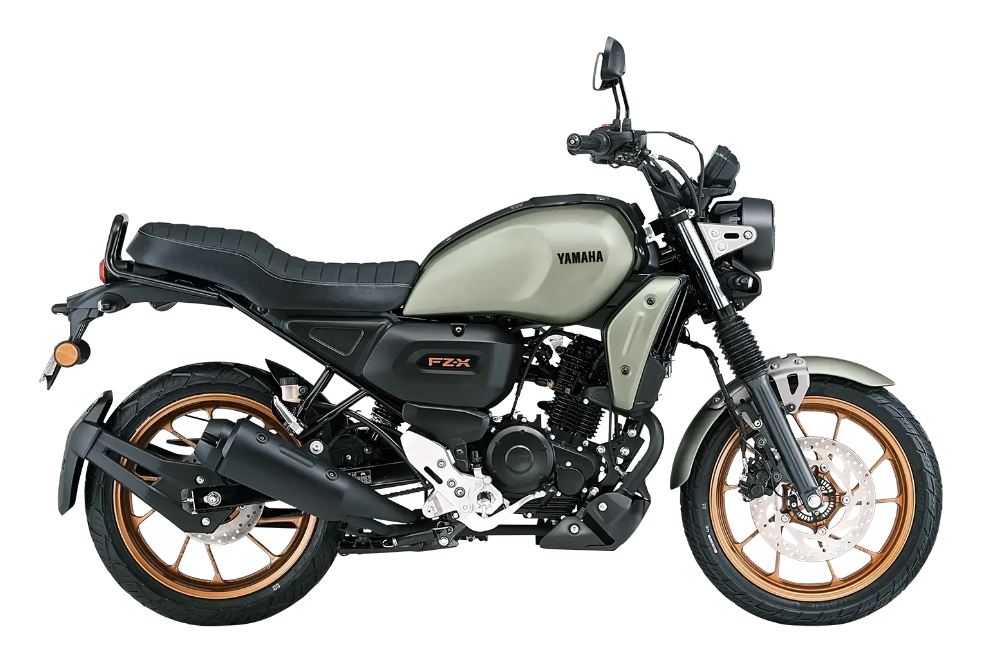
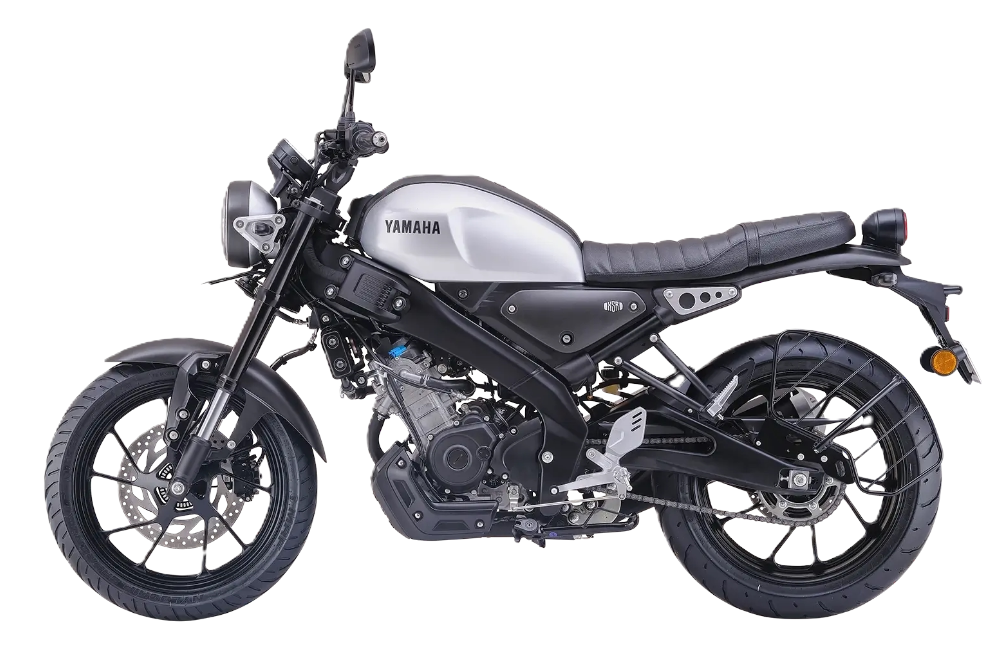
At a Glance
Key differences that define each motorcycle
Yamaha FZ-X Hybrid
- 149 cc Air-Cooled, 2-valve + SMG
- 12.4 PS @ 7250 rpm
- 53 km/l (ARAI)
- 10-litre tank
- 1 variant available
- TFT display + Idle Stop-Start
Yamaha XSR 155
- 155 cc Liquid-Cooled, 4-valve VVA
- 18.4 PS @ 10000 rpm
- 46 km/l (Claimed)
- 10-litre tank
- 5 colour variants
- Dual-channel ABS + USD Forks
Full Specification Comparison
Every number that matters — side by side
| Specification | Yamaha FZ-X Hybrid | Yamaha XSR 155 |
|---|---|---|
| Engine & Performance | ||
| Displacement | 149 cc | 155 cc |
| Cooling System | Air-Cooled | Liquid-Cooled |
| Max Power | 12.4 PS @ 7250 rpm | 18.4 PS @ 10000 rpm |
| Max Torque | 13.3 Nm @ 5500 rpm | 14.2 Nm @ 7500 rpm |
| Valves per Cylinder | 2 | 4 (VVA) |
| Hybrid System | Smart Motor Generator (SMG) | None |
| Compression Ratio | 9.6 : 1 | 11.6 : 1 |
| Bore × Stroke | 57.3 × 57.9 mm | 58.0 × 58.7 mm |
| Emission Standard | BS6 Phase 2 | BS6 Phase 2 |
| Transmission | 5-Speed Manual | 6-Speed Manual |
| Clutch | Wet Multiplate | Assist & Slipper Clutch |
| Top Speed | ~115 km/h | ~130 km/h |
| Riding Modes | No | No |
| Traction Control | Yes | Yes |
| Idle Stop-Start | Yes | No |
| Silent Start | Yes | No |
| Fuel & Range | ||
| Mileage (Claimed) | 53 km/l (ARAI) | 46 km/l |
| Mileage (Real-world) | 45–50 km/l | ~38–42 km/l |
| Fuel Tank | 10 litres | 10 litres |
| Reserve Capacity | 1.6 litres | 1.6 litres |
| Riding Range | ~530 km | ~460 km |
| Brakes & Wheels | ||
| Braking System | Single Channel ABS | Dual Channel ABS |
| Front Brake | Disc – 282 mm | Disc – 282 mm |
| Rear Brake | Disc – 220 mm | Disc – 220 mm |
| Tyre Type | Tubeless | Tubeless |
| Tyre Size (F / R) | 100/80-17 / 140/60-17 | 100/80-17 / 140/70-17 |
| Wheel Type | Alloy | Alloy |
| Suspension & Chassis | ||
| Front Suspension | Telescopic Fork | USD Fork |
| Rear Suspension | 7-Step Adjustable Monocross | Monoshock |
| Chassis | Diamond Frame | Deltabox Frame |
| Rear Preload Adjuster | Yes | Yes |
| Dimensions & Weight | ||
| Kerb Weight | 141 kg | 137 kg |
| Seat Height | 810 mm | 810 mm |
| Ground Clearance | 165 mm | 170 mm |
| Fuel Tank Capacity | 10 litres | 10 litres |
| Wheelbase | 1330 mm | 1330 mm |
| Overall L × W × H | 2020 × 785 × 1100 mm | 2007 × 804 × 1080 mm |
| Features & Electronics | ||
| Instrument Console | Fully Digital TFT | Fully Digital LCD |
| Headlight | LED | LED |
| DRLs | Yes | Yes |
| Turn Signals | Bulb | LED |
| Hazard Warning Lights | Yes | No |
| Traction Control | Yes | Yes |
| Bluetooth Connectivity | Yes | Yes |
| Call & SMS Alerts | Yes | Yes |
| USB Charging Port | Yes | No |
| Distance to Empty | Yes | No |
| Gear Indicator | Yes | Yes |
| Tachometer | Digital | Digital |
| Idle Stop-Start | Yes | No |
| Keyless Ignition | No | No |
| Price & Warranty | ||
| Starting Price (ex-showroom) | ₹1,39,969 | ₹1,49,990 |
| Top Variant Price | ₹1,39,969 | ₹1,58,990 |
| Number of Variants | 1 | 5 (colour variants) |
| Standard Warranty | 2 Years / 30,000 km | 2 Years / 30,000 km |
★ Green highlights indicate the stronger value in each row. Prices are ex-showroom India averages and may vary by city.
Variant-wise Price Comparison
All variants laid out — find the right one for your budget
FZ-X Hybrid Variants
XSR 155 Variants
Pros & Cons
Honest strengths and weaknesses of each bike
Pros
- Unique hybrid assist (SMG) for smoother acceleration
- Best-in-class ARAI mileage of 53 km/l
- Full-colour TFT instrument cluster
- Idle stop-start and silent start for urban riding
- Hazard warning lights as standard
- USB charging port standard
- Distance-to-empty display
- Lower starting price (₹1,39,969)
- Longer theoretical riding range (~530 km)
- 7-step adjustable rear suspension
Cons
- Significantly lower peak power (12.4 PS vs 18.4 PS)
- Air-cooled 2-valve engine — less sporty character
- Only single-channel ABS
- Conventional telescopic front forks
- 5-speed gearbox vs 6-speed on XSR 155
- Bulb turn signals (not LED)
- Single variant — no colour choice
Pros
- Higher peak power — 18.4 PS @ 10,000 rpm
- Liquid-cooled 4-valve VVA engine — premium character
- Dual-channel ABS as standard on all variants
- USD front forks for superior handling
- Deltabox frame for improved chassis rigidity
- Assist & slipper clutch
- 6-speed gearbox for refined performance
- LED turn signals
- 5 colour options to choose from
- R15-derived proven engine platform
Cons
- Lower claimed mileage (46 km/l vs 53 km/l)
- Higher starting price — ₹10,021 more than FZ-X Hybrid
- No TFT display — standard LCD cluster
- No USB charging port
- No distance-to-empty display
- No hazard warning lights
- No idle stop-start or silent start
Key Differences Explained
What really sets these two bikes apart
Hybrid Technology vs Raw Performance
The FZ-X Hybrid is powered by a 149 cc air-cooled, 2-valve engine augmented by a Smart Motor Generator (SMG) that assists during acceleration, enables idle stop-start and allows silent engine restarts. The XSR 155 takes a traditional high-performance approach with a 155 cc liquid-cooled, 4-valve VVA engine producing 18.4 PS — nearly 48% more power. For outright performance, the XSR 155 wins decisively; for urban tech and efficiency, the Hybrid leads.
Fuel Efficiency & Range
The FZ-X Hybrid leads with an ARAI-certified 53 km/l — boosted by the hybrid assist system — against the XSR 155's claimed 46 km/l. Despite sharing an identical 10-litre fuel tank, the Hybrid delivers a theoretical range of ~530 km versus ~460 km for the XSR 155 — roughly 70 km more per tank. For daily commuters covering high distances, this efficiency advantage translates to meaningful fuel savings over time.
Braking & Safety
Both bikes share identical brake hardware — 282 mm front disc and 220 mm rear disc — but the XSR 155 carries a clear safety advantage with dual-channel ABS standard on all variants. The FZ-X Hybrid is limited to single-channel ABS. Both offer traction control, but for total braking safety the XSR 155 is the stronger choice. The FZ-X Hybrid does add hazard warning lights, which the XSR 155 lacks.
Suspension & Chassis
The XSR 155 pulls ahead with USD (upside-down) front forks and a Deltabox frame — the same R15-derived platform — offering superior cornering feedback and chassis rigidity. The FZ-X Hybrid uses conventional telescopic forks and a diamond frame, but offers a 7-step adjustable rear monocross suspension for tuning to rider preference. The hardware difference is most felt on twisty roads and spirited riding.
Features & Technology
The FZ-X Hybrid takes a clear lead in everyday tech: it gets a full-colour TFT display, idle stop-start, silent start, a USB charging port, distance-to-empty, and hazard warning lights — all absent on the XSR 155. The XSR 155 counters with LED turn signals and a tachometer, but the Hybrid's TFT and hybrid-specific features make it the more technologically rich daily companion. Both support the Yamaha Y-Connect app via Bluetooth.
Price & Value
The FZ-X Hybrid is priced at ₹1,39,969 in a single variant — ₹10,021 less than the XSR 155's entry price of ₹1,49,990 and up to ₹19,021 less than the top XSR 155 colour at ₹1,58,990. Both carry identical 2-year / 30,000 km warranties. The Hybrid delivers exceptional technology-per-rupee with its SMG system, TFT display and idle stop-start. The XSR 155 justifies its premium through superior hardware, power and dual-channel ABS.
Expert Verdict
Which one should you actually buy?
Buy the Yamaha FZ-X Hybrid if…
- You want Yamaha's innovative hybrid assist technology
- Best-in-class ARAI mileage (53 km/l) is a priority
- A full-colour TFT display matters to you
- Idle stop-start improves your daily city commute
- USB charging and hazard lights are daily essentials
- Budget is important — saves ₹10,021–₹19,021 vs XSR 155
- You prefer smooth, relaxed city riding over sporty thrills
Buy the Yamaha XSR 155 if…
- You want significantly stronger outright performance (18.4 PS)
- Dual-channel ABS across all variants is a safety priority
- USD front forks and Deltabox frame appeal to you
- You enjoy spirited riding on weekends and highways
- The VVA liquid-cooled engine's refinement matters
- You're upgrading from a 125cc and want real performance headroom
- Multiple colour choices help you personalise your ride
This is a genuinely close contest between two very different approaches to retro-inspired motorcycling. The Yamaha XSR 155 wins on performance hardware — 18.4 PS, dual-channel ABS, USD forks, Deltabox chassis and an assist & slipper clutch give it a decisive edge for enthusiast riders. However, the Yamaha FZ-X Hybrid wins on technology, efficiency and value — its Smart Motor Generator hybrid system, full-colour TFT display, idle stop-start, silent start, USB charging and best-in-class 53 km/l ARAI mileage make it the smarter everyday commuter at ₹10,021–₹19,021 less. Choose the XSR 155 for performance and premium chassis hardware; choose the FZ-X Hybrid for cutting-edge city technology, fuel economy and daily convenience.
Frequently Asked Questions
Common questions answered by our experts
The Yamaha XSR 155 is better for performance-focused riders who want 18.4 PS of power, dual-channel ABS, USD front forks and a Deltabox chassis. The Yamaha FZ-X Hybrid is better for tech-savvy urban commuters who want hybrid assist technology, a TFT display, idle stop-start, 53 km/l ARAI mileage, a USB port and a lower starting price of ₹1,39,969.
The Yamaha FZ-X Hybrid is priced at ₹1,39,969 (single variant) while the Yamaha XSR 155 starts at ₹1,49,990 (Metallic Blue) ex-showroom — a difference of ₹10,021. At the top end, the XSR 155's Metallic Black and Greyish Green Metallic variants are priced at ₹1,58,990, making them up to ₹19,021 more expensive than the Hybrid.
The Yamaha FZ-X Hybrid has significantly better mileage at 53 km/l (ARAI certified), aided by its hybrid assist system, compared to the Yamaha XSR 155's claimed 46 km/l. Both share a 10-litre fuel tank, but the Hybrid's superior efficiency gives it a theoretical range of ~530 km against ~460 km for the XSR 155 — approximately 70 km more per tank.
The Yamaha XSR 155 makes considerably more power at 18.4 PS @ 10,000 rpm compared to the Yamaha FZ-X Hybrid's 12.4 PS @ 7,250 rpm — nearly 48% more. While the FZ-X Hybrid's SMG assists during acceleration for a smoother response, it does not increase peak power output. The XSR 155 also revs higher with a 6-speed gearbox, a slipper clutch and a liquid-cooled 4-valve VVA engine.
No, the Yamaha FZ-X Hybrid comes with single-channel ABS only, which controls only the front wheel during ABS activation. The Yamaha XSR 155 is equipped with dual-channel ABS as standard across all variants — providing braking intervention on both wheels — making it the safer choice in emergency braking scenarios.
Yamaha's Smart Motor Generator (SMG) hybrid system uses a motor-generator integrated with the engine to provide torque assistance during acceleration for smoother throttle response and improved efficiency. It also enables idle stop-start (engine shuts off automatically at traffic lights) and silent start (engine restarts without the starter motor noise), making city riding more refined and fuel-efficient.