At a Glance
Key differences that define each motorcycle
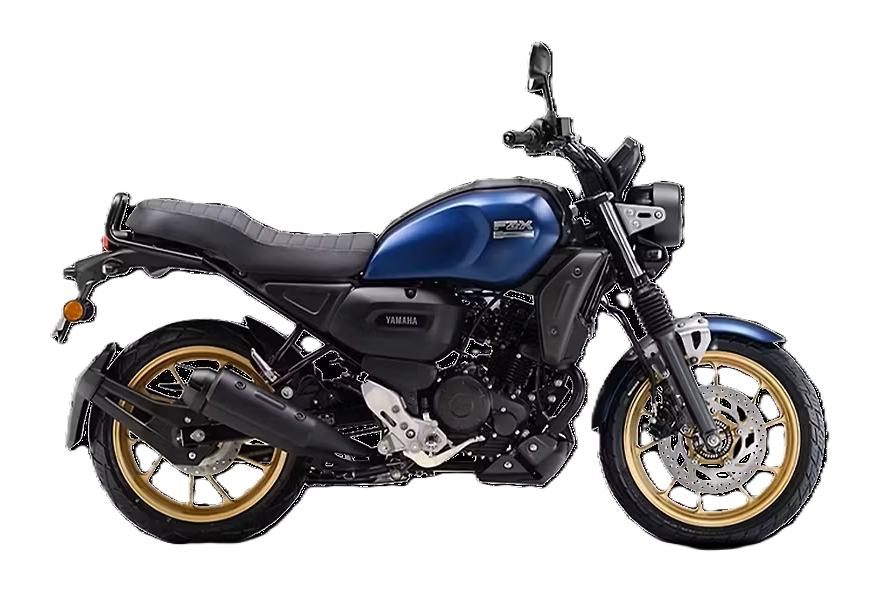
Yamaha FZ-X
- 149 cc Air-Cooled, 2-valve
- 12.4 PS @ 7250 rpm
- 55.11 km/l (ARAI)
- 10-litre tank
- 2 variants available
- Traction control standard
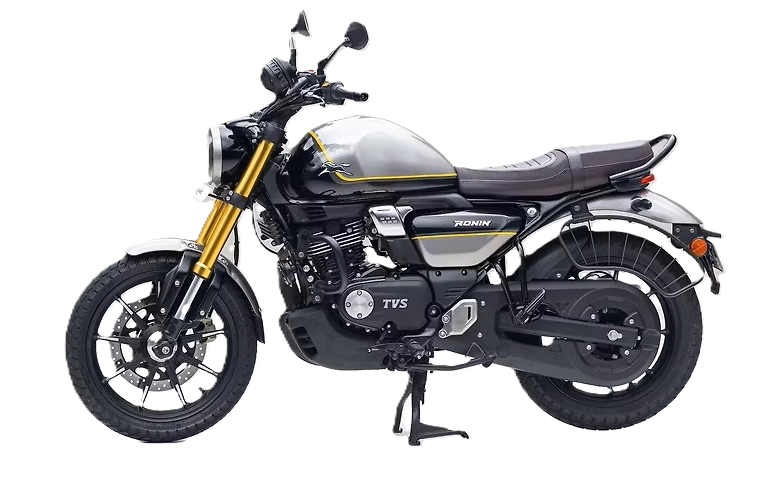
TVS Ronin 225
- 225.9 cc Oil-Cooled, 4-valve
- 20.4 PS @ 7750 rpm
- 42.95 km/l (ARAI)
- 14-litre tank
- 7 variants available
- Ride modes: Urban, Rain
Full Specification Comparison
Every number that matters — side by side
| Specification | Yamaha FZ-X | TVS Ronin 225 |
|---|---|---|
| Engine & Performance | ||
| Displacement | 149 cc | 225.9 cc |
| Cooling System | Air-Cooled | Oil-Cooled |
| Max Power | 12.4 PS @ 7250 rpm | 20.4 PS @ 7750 rpm |
| Max Torque | 13.3 Nm @ 5500 rpm | 19.93 Nm @ 3750 rpm |
| Valves per Cylinder | 2 | 4 |
| Compression Ratio | 9.6 : 1 | 10.14 ± 0.5 : 1 |
| Bore × Stroke | 57.3 × 57.9 mm | 66 × 66 mm |
| Emission Standard | BS6 Phase 2 | BS6 Phase 2 |
| Transmission | 5-Speed Manual | 5-Speed Manual |
| Clutch | Wet Multiplate | Assist & Slipper |
| Top Speed | ~115 km/h | ~120 km/h |
| Riding Modes | No | Urban, Rain (mid & top variants) |
| Traction Control | Yes (standard) | No |
| Fuel & Range | ||
| Mileage (ARAI) | 55.11 km/l | 42.95 km/l |
| Fuel Tank | 10 litres | 14 litres |
| Reserve Capacity | 1.6 litres | 2.8 litres |
| Riding Range | ~551 km | ~560 km |
| Brakes & Wheels | ||
| Braking System | Single Channel ABS | Dual Channel ABS (mid & top variants) |
| Front Brake | Disc – 282 mm | Disc – 300 mm |
| Rear Brake | Disc – 220 mm | Disc – 240 mm |
| Tyre Type | Tubeless | Tubeless |
| Tyre Size (F / R) | 100/80-17 / 140/60-17 | 110/70-17 / 130/70-17 |
| Wheel Type | Alloy | 9-Spoke Alloy |
| Suspension & Chassis | ||
| Front Suspension | Telescopic Fork | 41 mm USD Fork |
| Rear Suspension | 7-Step Adjustable Monocross | Monoshock (7-step adjustable) |
| Chassis | Diamond Frame | Double Cradle Split Synchro Stiff Frame |
| Rear Preload Adjuster | Yes (7-step) | Yes (7-step) |
| Dimensions & Weight | ||
| Kerb Weight | 139 kg | 160 kg |
| Seat Height | 810 mm | 795 mm |
| Ground Clearance | 165 mm | 181 mm |
| Wheelbase | 1330 mm | 1357 mm |
| Overall L × W × H | 2020 × 785 × 1115 mm | 2040 × 805 × 1170 mm |
| Features & Electronics | ||
| Instrument Console | Fully Digital LCD | Fully Digital |
| Headlight | LED | LED |
| DRLs | Yes | Yes |
| Turn Signals | Bulb | LED |
| Hazard Warning Lights | No | Yes |
| Riding Modes | No | Urban / Rain (mid & top variants) |
| Traction Control | Yes (standard) | No |
| Bluetooth Connectivity | Yes (standard, Y-Connect) | Yes (top variants only) |
| Call & SMS Alerts | Yes | Yes (top variants only) |
| USB Charging Port | Yes | Yes |
| Distance to Empty | Yes | Yes |
| Navigation | No | Yes (top variants) |
| Gear Indicator | Yes | Yes |
| Tachometer | No | Digital |
| Keyless Ignition | No | No |
| Price & Warranty | ||
| Starting Price (ex-showroom) | ₹1,21,667 | ₹1,26,690 |
| Top Variant Price | ₹1,30,054 | ₹1,60,140 |
| Number of Variants | 2 | 7 |
| Standard Warranty | 2 Years / 30,000 km | 5 Years / 60,000 km |
★ Green highlights indicate the stronger value in each row. Prices are ex-showroom India averages and may vary by city.
Variant-wise Price Comparison
All variants laid out — find the right one for your budget
Yamaha FZ-X Variants
TVS Ronin 225 Variants
Pros & Cons
Honest strengths and weaknesses of each bike
Pros
- Best-in-class ARAI mileage of 55.11 km/l
- Traction control standard on both variants
- Lower starting price (₹1,21,667 vs ₹1,26,690)
- Lighter at 139 kg — easier city handling
- Bluetooth Y-Connect standard from base variant
- USB charging port standard
- LED headlight and DRLs standard
- Higher seat height (810 mm) suits taller riders
- Wider rear tyre (140/60-17) for better grip
- Yamaha reliability and refined engine character
Cons
- Much less power (12.4 PS vs 20.4 PS) — over 64% less
- Much less torque (13.3 Nm vs 19.93 Nm)
- Only single-channel ABS — no dual-channel option
- Small 10-litre fuel tank — less fuel capacity
- Conventional telescopic forks — no USD upgrade
- No riding modes on either variant
- No hazard warning lights
- No tachometer on digital console
- No navigation features
- Very weak 2-year / 30,000 km warranty
- Only 2 variants — minimal choice
- Less ground clearance (165 mm vs 181 mm)
Pros
- Much larger 225.9 cc engine — 64% more power (20.4 PS)
- Massively more torque (19.93 Nm vs 13.3 Nm)
- Premium 41 mm USD front forks
- Larger 300 mm front disc and 240 mm rear disc
- Dual-channel ABS on mid and top variants
- Riding modes: Urban and Rain
- Hazard warning lights standard
- LED turn signals standard
- Digital tachometer on console
- Navigation on top variants
- Larger 14-litre fuel tank and 2.8-litre reserve
- Superior ground clearance (181 mm)
- Assist and slipper clutch standard
- Excellent 5-year / 60,000 km warranty
- 7 variants — wide choice across budgets
Cons
- No traction control on any variant
- Lower fuel efficiency (42.95 km/l vs 55.11 km/l)
- Heavier at 160 kg vs 139 kg
- Higher starting price (₹1,26,690 vs ₹1,21,667)
- Base variants have only single-channel ABS
- Bluetooth only on expensive top variants
Key Differences Explained
What really sets these two bikes apart
Engine Character
The gap here is significant. The TVS Ronin 225 uses a 225.9 cc oil-cooled, 4-valve engine making 20.4 PS and a massive 19.93 Nm of torque at just 3750 rpm. The Yamaha FZ-X uses a 149 cc air-cooled, 2-valve unit making 12.4 PS and 13.3 Nm — a 64% power disadvantage and 50% torque disadvantage for the FZ-X. Both are neo-retro commuters, but the Ronin is genuinely powered while the FZ-X is tuned entirely for efficiency and smoothness.
Fuel Efficiency & Range
The Yamaha FZ-X wins clearly on efficiency with an ARAI-certified 55.11 km/l — over 28% better than the Ronin's 42.95 km/l. However, the Ronin's 14-litre tank narrows the riding range gap significantly: the FZ-X manages approximately 551 km while the Ronin reaches approximately 560 km despite lower efficiency. So the Ronin actually covers more ground per fill thanks to its larger tank, while the FZ-X costs less per kilometre in fuel.
Braking & Safety
The TVS Ronin 225 has better braking hardware with larger discs (300 mm front vs 282 mm; 240 mm rear vs 220 mm) and dual-channel ABS available from ₹1,48,040 (mid variant). The Yamaha FZ-X has only single-channel ABS with no upgrade path. However, the FZ-X partially compensates with traction control as standard — a safety feature not available on any Ronin variant. For buyers who prioritise electronic safety nets, the FZ-X's traction control vs the Ronin's larger discs represents a genuine trade-off.
Ride Modes & Technology
The TVS Ronin 225 has more comprehensive features overall: Urban and Rain ride modes on mid/top variants, LED turn signals, hazard warning lights, a digital tachometer, navigation on top variants, and premium USD forks. The Yamaha FZ-X counters with traction control and Bluetooth Y-Connect as standard on both variants, while the Ronin restricts Bluetooth to its two most expensive top variants (₹1,60,140). Both bikes have USB charging and DRLs.
Warranty & Ownership
The TVS Ronin 225 offers a dramatically better 5-year / 60,000 km warranty against the Yamaha FZ-X's 2-year / 30,000 km warranty. The Ronin provides three extra years and double the kilometre coverage. For a rider averaging 12,000–15,000 km annually, the FZ-X's warranty can expire within just 2 years, while the Ronin's covers 4–5 years of typical usage. This is a decisive long-term ownership advantage for the Ronin.
Price & Value
The FZ-X starts ₹5,023 cheaper at ₹1,21,667. But at comparable price points — the Ronin's Agonda Edition at ₹1,30,990 vs the FZ-X's top Dark Matte Blue Purple at ₹1,30,054 — the Ronin delivers a 225 cc engine with 64% more power, USD forks, larger disc brakes, hazard lights and LED turn signals for just ₹936 more. Beyond ₹1,30,000, the Ronin is the only option with dual- channel ABS and ride modes. For pure budget buyers, the FZ-X base is cheaper; for almost everyone else, the Ronin's value at comparable spend is compelling.
Expert Verdict
Which one should you actually buy?
Buy the Yamaha FZ-X if…
- Fuel efficiency is the top priority — 55.11 km/l ARAI
- Traction control as standard is important for safety
- You want the lowest starting price (₹1,21,667)
- Bluetooth Y-Connect standard from base matters to you
- A lighter 139 kg chassis for easy city handling suits you
- Yamaha's proven reliability and engine refinement count
- You have a strict budget under ₹1,25,000
Buy the TVS Ronin 225 if…
- You want a genuinely powerful 225 cc engine with strong torque
- Premium USD forks and larger disc brakes are important
- Ride modes (Urban/Rain) on mid variants appeal to you
- A superior 5-year / 60,000 km warranty matters for peace of mind
- 7 variants let you choose exactly the right spec and budget
- You want navigation and Bluetooth on the top variants
- Ground clearance (181 mm) for Indian road conditions matters
Overall Winner for Most Riders: TVS Ronin 225. Despite its higher starting price, the Ronin 225 delivers a 225 cc oil-cooled engine with 64% more power, massively more torque, premium USD forks, larger disc brakes with dual-channel ABS on mid and top variants, ride modes, hazard warning lights, LED turn signals, a digital tachometer and an outstanding 5-year / 60,000 km warranty — making it the more complete and better-value motorcycle at every price point above ₹1,26,690. Choose the Yamaha FZ-X only if best-in-class fuel economy (55.11 km/l), standard traction control, Yamaha's brand reliability and a lower entry price are your absolute top priorities.
Frequently Asked Questions
Common questions answered by our experts
The TVS Ronin 225 is better for most buyers due to its far more powerful 225.9 cc engine (20.4 PS vs 12.4 PS), much stronger torque (19.93 Nm vs 13.3 Nm), premium USD forks, larger disc brakes, ride modes on mid/top variants and a dramatically superior 5-year / 60,000 km warranty. The Yamaha FZ-X is better if fuel efficiency (55.11 km/l ARAI), traction control as standard, a lower starting price (₹1,21,667) and Bluetooth Y-Connect from base are your top priorities.
The Yamaha FZ-X starts at ₹1,21,667 (Standard) and tops out at ₹1,30,054 (Dark Matte Blue Purple). The TVS Ronin 225 starts at ₹1,26,690 (Base Lightning Black) and goes up to ₹1,60,140 for top variants. The FZ-X is ₹5,023 cheaper at base level. However, at the Agonda Edition level (₹1,30,990 for Ronin vs ₹1,30,054 for FZ-X top), the two are within ₹936 of each other, where the Ronin provides dramatically more value per rupee. Prices are ex-showroom India and may vary by city.
The Yamaha FZ-X has significantly better fuel efficiency at an ARAI-certified 55.11 km/l compared to the TVS Ronin 225's 42.95 km/l — a 28% difference. However, in terms of actual riding range, the figures are close: the FZ-X gets approximately 551 km from its 10-litre tank, while the Ronin gets approximately 560 km from its 14-litre tank. So the FZ-X is more fuel-efficient per kilometre, but the Ronin travels slightly further before needing to refuel.
The TVS Ronin 225 makes dramatically more power at 20.4 PS @ 7750 rpm compared to the Yamaha FZ-X's 12.4 PS @ 7250 rpm — over 64% more peak power. The Ronin also produces significantly more torque at 19.93 Nm vs 13.3 Nm, available at a much lower 3750 rpm vs 5500 rpm. The Ronin's larger 225.9 cc oil-cooled engine makes it fundamentally more powerful in every measurable way. The FZ-X's smaller engine is tuned for efficiency and smoothness, not performance.
Yes, the Yamaha FZ-X comes with traction control as standard on both its variants. This is a meaningful safety advantage — the system prevents rear wheel spin on slippery or uneven surfaces. The TVS Ronin 225 does not offer traction control on any of its seven variants. While the Ronin offers dual-channel ABS from mid variants, it cannot match the FZ-X's standard traction control feature at any price point.
The TVS Ronin 225 offers a dramatically better 5-year / 60,000 km warranty compared to the Yamaha FZ-X's 2-year / 30,000 km warranty. The Ronin provides three extra years and double the kilometre coverage. For a typical Indian rider clocking 10,000–15,000 km annually, the FZ-X's warranty can expire in as little as 2 years, while the Ronin's warranty covers 4–6 years of normal use — a decisive advantage for long-term ownership peace of mind.