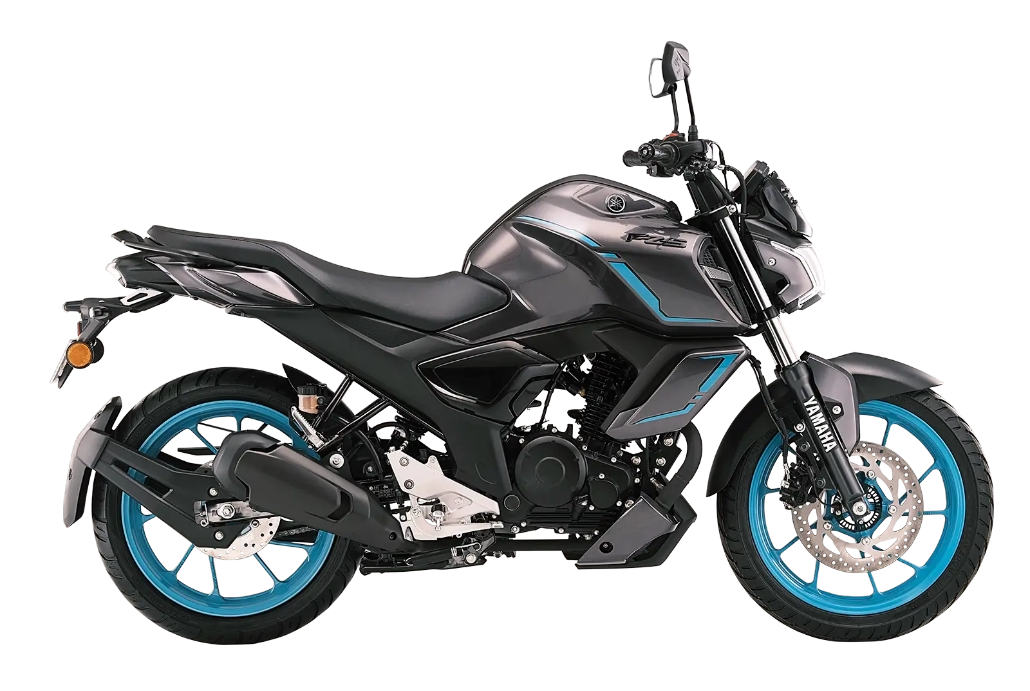
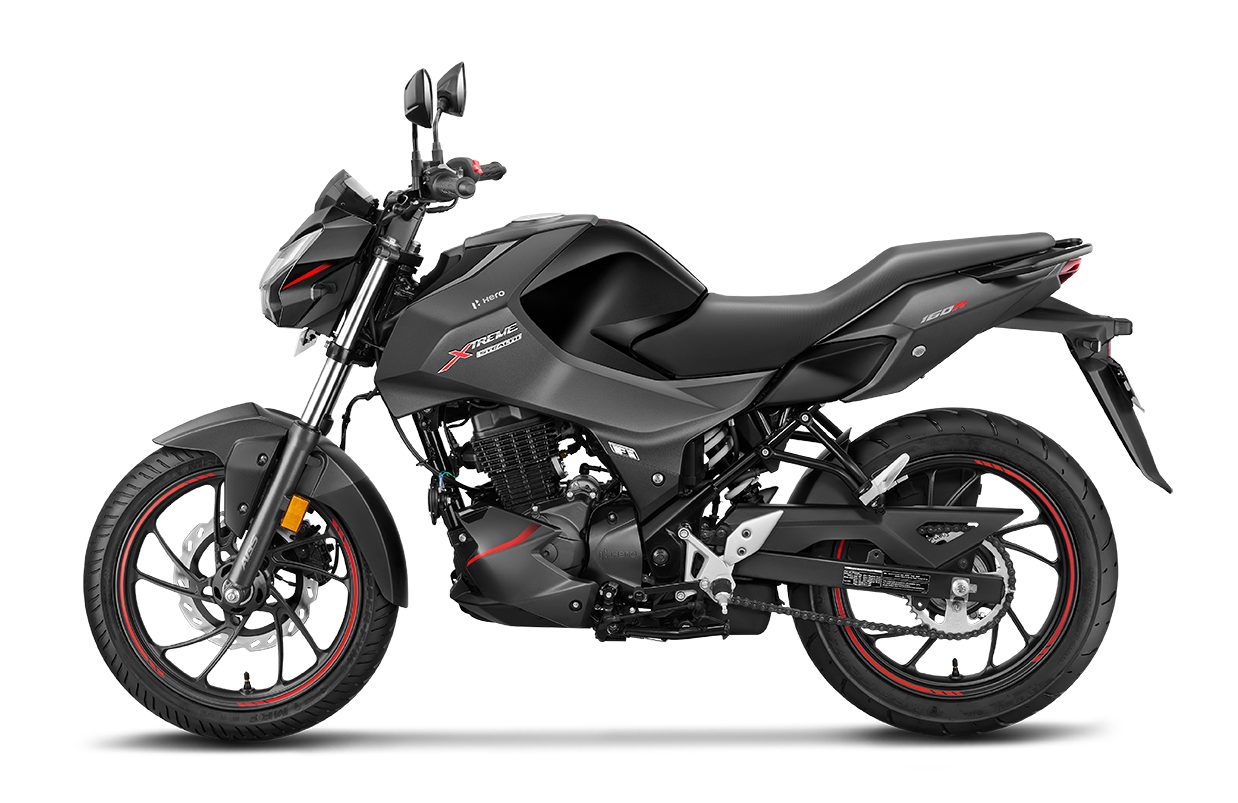
At a Glance
Key differences that define each motorcycle
Yamaha FZS Fi Hybrid
- 149 cc Air-Cooled + Hybrid SMG
- 12.4 PS @ 7250 rpm
- 60 km/l (ARAI)
- 13-litre tank
- 1 variant available
- Hybrid idle stop-start & traction control
Hero Xtreme 160R
- 163.2 cc Air-Cooled, 2-valve
- 14.79 bhp @ 8500 rpm
- 49.65 km/l (ARAI)
- 12-litre tank
- 1 variant available
- 5 Years / 70,000 km warranty
Full Specification Comparison
Every number that matters — side by side
| Specification | Yamaha FZS Fi Hybrid | Hero Xtreme 160R |
|---|---|---|
| Engine & Performance | ||
| Displacement | 149 cc | 163.2 cc |
| Cooling System | Air-Cooled | Air-Cooled |
| Max Power | 12.4 PS @ 7250 rpm | 14.79 bhp @ 8500 rpm |
| Max Torque | 13.3 Nm @ 5500 rpm | 14 Nm @ 6500 rpm |
| Valves per Cylinder | 2 | 2 |
| Bore × Stroke | 57.3 × 57.9 mm | 57.3 × 63.3 mm |
| Compression Ratio | 9.6 : 1 | 9.8 : 1 |
| Emission Standard | BS6 Phase 2 / OBD-2B | BS6 / OBD2B |
| Transmission | 5-Speed Manual | 5-Speed Manual |
| Top Speed | ~115 km/h | ~107 km/h |
| Hybrid System | Smart Motor Generator (SMG) | No |
| Idle Stop-Start | Yes | No |
| Traction Control | Yes | No |
| Riding Modes | No | No |
| Fuel & Range | ||
| Mileage (ARAI) | 60 km/l (ARAI) | 49.65 km/l (ARAI) |
| Fuel Tank | 13 litres | 12 litres |
| Reserve Capacity | 2 litres | 1.9 litres |
| Riding Range | ~780 km | ~596 km |
| Brakes & Wheels | ||
| Braking System | Single Channel ABS | Single Channel ABS |
| Front Brake | Disc – 282 mm | Disc – 276 mm |
| Rear Brake | Disc – 220 mm | Drum – 130 mm |
| Tyre Type | Tubeless | Tubeless |
| Tyre Size (F / R) | 100/80-17 / 140/60-17 | 100/80-17 / 130/70-17 |
| Wheel Type | Alloy | Alloy |
| Suspension & Chassis | ||
| Front Suspension | Telescopic Fork | Telescopic Fork |
| Rear Suspension | 7-Step Adjustable Monocross | 7-Step Adjustable Monoshock |
| Chassis | Diamond Frame | Tubular Diamond Frame |
| Rear Preload Adjuster | Yes | Yes |
| Dimensions & Weight | ||
| Kerb Weight | 138 kg | 138.5 kg |
| Seat Height | 790 mm | 790 mm |
| Ground Clearance | 165 mm | 165 mm |
| Wheelbase | 1330 mm | 1327 mm |
| Overall L × W × H | 2000 × 780 × 1080 mm | 2029 × 793 × 1052 mm |
| Features & Electronics | ||
| Instrument Console | Fully Digital LCD | Fully Digital LCD |
| Headlight | LED | LED |
| DRLs | Yes | Yes |
| Turn Signals | LED | LED |
| Hazard Warning Lights | Yes | Yes |
| Traction Control | Yes | No |
| Bluetooth Connectivity | Yes (Yamaha Y-Connect) | No |
| Call & SMS Alerts | Yes | No |
| USB Charging Port | No | No |
| Distance to Empty | Yes | No |
| Gear Indicator | Yes | No |
| Tachometer | Digital | Digital |
| Service Reminder | Yes | Yes |
| Idle Stop-Start | Yes | No |
| Silent Start | Yes | No |
| Side Stand Engine Cut-off | Yes | Yes |
| Keyless Ignition | No | No |
| Price & Warranty | ||
| Starting Price (ex-showroom) | ₹1,35,174 | ₹1,05,667 |
| Top Variant Price | ₹1,35,174 | ₹1,05,667 |
| Number of Variants | 1 | 1 |
| Standard Warranty | 2 Years / 30,000 km | 5 Years / 70,000 km |
★ Green highlights indicate the stronger value in each row. Prices are ex-showroom India averages and may vary by city.
Variant-wise Price Comparison
All variants laid out — find the right one for your budget
FZS Fi Hybrid Variants
Hero Xtreme 160R Variants
Pros & Cons
Honest strengths and weaknesses of each bike
Pros
- Segment-leading ARAI mileage of 60 km/l
- Mild hybrid Smart Motor Generator system
- Idle stop-start for city fuel savings
- Traction control as standard
- Rear disc brake on all variants
- Larger 282 mm front disc
- Bluetooth with Yamaha Y-Connect app
- Gear indicator and distance-to-empty display
- LED turn signals and hazard warning lights
- Longer ~780 km estimated range
- Higher top speed (~115 km/h)
Cons
- Significantly higher price (₹1,35,174 vs ₹1,05,667)
- Lower peak power (12.4 PS vs 14.79 bhp)
- Smaller 149cc engine displacement
- Very short warranty — only 2 years / 30,000 km
- No USB charging port
- Single variant — no choice
Pros
- Higher peak power (14.79 bhp) and torque (14 Nm)
- Larger 163.2cc engine with more displacement
- Significantly lower price — ₹1,05,667
- Outstanding 5-year / 70,000 km warranty
- Lightweight 138.5 kg chassis for agile city riding
- Good ARAI mileage at 49.65 km/l
- LED lighting and hazard warning lights
- Hero's wide service network across India
- Simple, proven air-cooled engine — low maintenance
Cons
- Lower ARAI mileage (49.65 km/l vs 60 km/l)
- No hybrid technology or idle stop-start
- No traction control
- Rear drum brake instead of disc
- No Bluetooth connectivity or smartphone integration
- No gear indicator or distance-to-empty display
- Lower top speed (~107 km/h)
Key Differences Explained
What really sets these two bikes apart
Hybrid Technology
The FZS Fi Hybrid's defining advantage is its Smart Motor Generator (SMG) mild hybrid system — the only one in its class. It assists the engine during initial acceleration, enables automatic idle stop-start at standstills, and delivers a silent electric start. The Hero Xtreme 160R runs a completely conventional air-cooled petrol engine with no hybrid assistance. For stop-and-go city riders, this technology gap translates directly into a 10+ km/l mileage advantage for the Yamaha.
Engine Performance
The Hero Xtreme 160R's 163.2cc engine produces a punchy 14.79 bhp and 14 Nm — meaningfully stronger than the FZS Hybrid's 12.4 PS and 13.3 Nm from its 149cc unit. The Xtreme 160R also delivers a more aggressive powerband tuned for quick urban acceleration, with the engine revving freer to its 8500 rpm power peak. On highways and open stretches, the Hero's performance advantage is clearly noticeable.
Fuel Efficiency & Range
The FZS Hybrid leads by a wide margin with an ARAI-certified 60 km/l against the Xtreme 160R's 49.65 km/l — a gap of over 10 km/l driven primarily by the hybrid system. With a 13-litre tank, the FZS Hybrid's estimated range of ~780 km comfortably outpaces the Xtreme 160R's ~596 km from its 12-litre tank. For a daily commuter logging 40–50 km a day, the Yamaha will visit the fuel pump noticeably less often.
Braking & Safety
The FZS Hybrid holds a clear braking advantage: it has a larger 282 mm front disc vs the Xtreme 160R's 276 mm, and critically, a rear disc brake as standard — while the Xtreme 160R uses a rear drum on its only variant. The Yamaha also adds traction control, which the Hero entirely lacks. Both bikes carry single-channel ABS, but the Yamaha's overall safety hardware package is stronger.
Warranty & Ownership
The Hero Xtreme 160R's warranty is exceptional: 5 years / 70,000 km versus the FZS Hybrid's 2 years / 30,000 km. The Hero's coverage is 2.5 times longer and spans more than double the kilometres. For a commuter clocking 15,000 km per year, the Yamaha's warranty expires at the 2-year mark while the Hero stays covered until year five. Hero also has one of India's largest service networks, reducing ownership anxiety across the country.
Price & Value
The Hero Xtreme 160R starts at ₹1,05,667 — a full ₹29,507 less than the FZS Hybrid's ₹1,35,174. That price gap is significant in this segment. The Yamaha's premium is justified by hybrid tech and additional features, but the Hero delivers more outright performance, a vastly superior warranty, and proven reliability at a far lower entry cost. For most budget-conscious buyers, the Xtreme 160R's value proposition is extremely hard to match.
Expert Verdict
Which one should you actually buy?
Buy the Yamaha FZS Fi Hybrid if…
- Fuel economy is your top priority — 60 km/l ARAI is class-leading
- You commute heavily in city traffic and want idle stop-start
- Traction control for safer city and wet-road riding matters
- A rear disc brake as standard is important to you
- Bluetooth and smartphone connectivity with Y-Connect appeals
- You want a higher top speed (~115 km/h) for occasional highway use
- Longer ~780 km range between fuel stops is a priority
Buy the Hero Xtreme 160R if…
- Budget is a key factor — starts ₹29,507 cheaper
- You want stronger engine performance (14.79 bhp)
- An outstanding 5-year / 70,000 km warranty matters most
- Hero's vast service network gives you peace of mind
- A lightweight, nimble city bike is what you need
- Simple, low-maintenance mechanics suit your lifestyle
- You don't need Bluetooth or advanced electronics
Overall Winner for Most Riders: Hero Xtreme 160R. A starting price nearly ₹30,000 lower, stronger engine performance at 14.79 bhp, an exceptional 5-year / 70,000 km warranty that dwarfs the Yamaha's 2-year coverage, a lighter chassis, and Hero's unmatched service network make the Xtreme 160R the more practical and better-value choice for the majority of Indian buyers. Choose the Yamaha FZS Fi Hybrid only if class-leading 60 km/l fuel efficiency, hybrid idle stop-start technology, traction control, rear disc braking, and Bluetooth connectivity are your absolute top priorities — and you are prepared to pay a significant premium and accept a much shorter warranty for them.
Frequently Asked Questions
Common questions answered by our experts
The Hero Xtreme 160R is better for most buyers who want stronger performance (14.79 bhp), a significantly lower price (₹1,05,667), an outstanding 5-year / 70,000 km warranty, and Hero's wide service network. The Yamaha FZS Fi Hybrid is the better choice for buyers who specifically want class-leading fuel efficiency (60 km/l ARAI), mild hybrid technology with idle stop-start, traction control, rear disc braking, and Bluetooth connectivity — and can justify the ₹29,507 premium.
The Hero Xtreme 160R is priced at ₹1,05,667 ex-showroom while the Yamaha FZS Fi Hybrid costs ₹1,35,174 — a difference of approximately ₹29,507. Both bikes are available in a single variant each, so there is no variant-level comparison to make. The Yamaha's premium entirely reflects its hybrid technology, additional safety features, and Bluetooth connectivity. Both prices may vary by city.
The Yamaha FZS Fi Hybrid has significantly better mileage at 60 km/l (ARAI certified) compared to the Hero Xtreme 160R's 49.65 km/l (ARAI certified). The FZS Hybrid's advantage is driven by its Smart Motor Generator hybrid system that reduces fuel consumption during city riding. With a 13-litre tank, the FZS Hybrid also has a longer estimated range of ~780 km versus ~596 km for the Xtreme 160R's 12-litre tank.
The Hero Xtreme 160R makes considerably more peak power at 14.79 bhp @ 8500 rpm compared to the Yamaha FZS Fi Hybrid's 12.4 PS @ 7250 rpm. The Xtreme 160R's 163.2cc engine also produces more torque at 14 Nm vs 13.3 Nm. The Hero's larger displacement and higher-revving engine give it a clear performance advantage, particularly during rapid acceleration and at highway speeds.
Yes, the Yamaha FZS Fi Hybrid features a Smart Motor Generator (SMG) mild hybrid system. This assists the 149cc petrol engine during acceleration, enables automatic idle stop-start at standstills in city traffic, and provides a quiet silent electric start. The Hero Xtreme 160R uses a conventional 163.2cc petrol engine with no hybrid assistance whatsoever.
The Hero Xtreme 160R has an outstanding warranty advantage: 5 years / 70,000 km compared to the Yamaha FZS Fi Hybrid's 2 years / 30,000 km. The Hero's warranty is 2.5 times longer and covers more than double the kilometres. For a daily commuter clocking 12,000–15,000 km per year, the Yamaha's warranty runs out well before the 3-year mark, while the Hero's protection extends through year five — a major long-term ownership advantage.