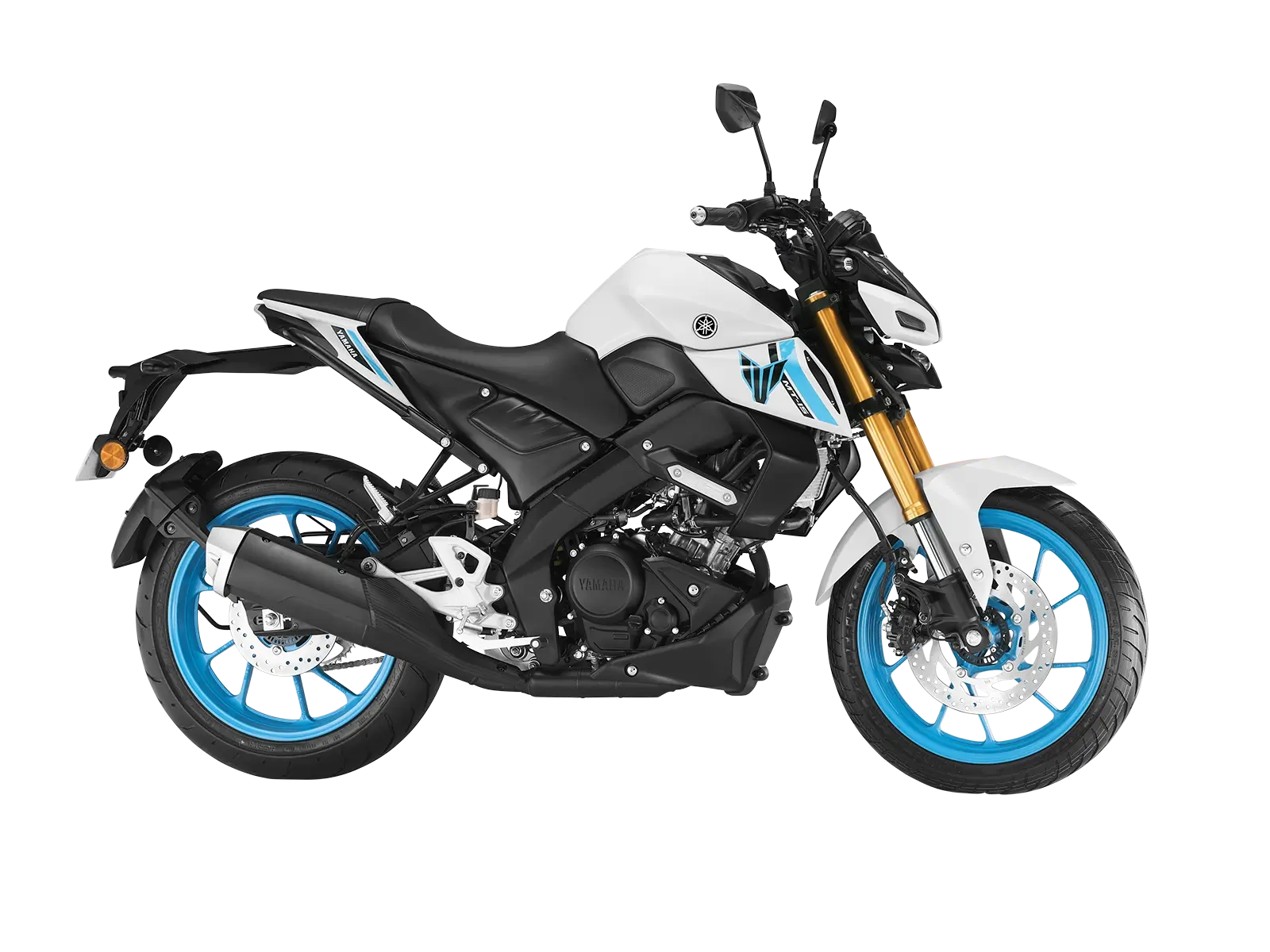
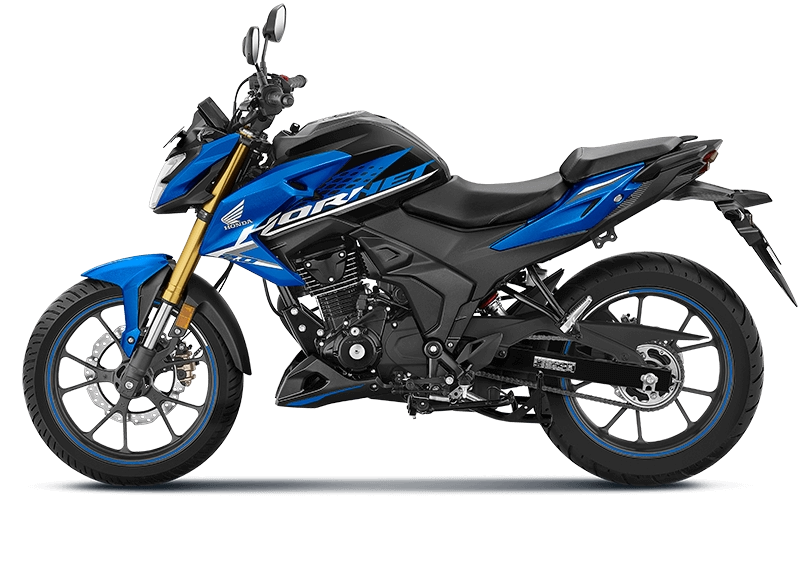
At a Glance
Key differences that define each motorcycle
Yamaha MT-15 V2
- 155 cc Liquid-Cooled
- 18.4 PS @ 10,000 rpm
- 56.87 km/l (ARAI)
- 10-litre tank
- 2 variants available
- Dual-channel ABS + Traction Control
Honda Hornet 2.0
- 184.4 cc Air-Cooled
- 17.03 PS @ 8500 rpm
- 42.3 km/l (ARAI)
- 12-litre tank
- 1 variant available
- Single-channel ABS
Full Specification Comparison
Every number that matters — side by side
| Specification | MT-15 V2 | Hornet 2.0 |
|---|---|---|
| Engine & Performance | ||
| Displacement | 155 cc | 184.4 cc |
| Cooling System | Liquid Cooled | Air Cooled |
| Max Power | 18.4 PS @ 10,000 rpm | 17.03 PS @ 8500 rpm |
| Max Torque | 14.1 Nm @ 7500 rpm | 16.1 Nm @ 6000 rpm |
| Valves per Cylinder | 4 | 2 |
| Compression Ratio | 11.6 : 1 | 9.5 : 1 |
| Bore × Stroke | 58.0 × 58.7 mm | 61.0 × 63.1 mm |
| Emission Standard | BS6 OBD2 | BS6 OBD2 |
| Transmission | 6-Speed Manual | 5-Speed Manual |
| Clutch | Assist & Slipper Clutch | Wet Multi Plate |
| Top Speed | ~122 km/h | ~130 km/h |
| Fuel & Range | ||
| Mileage (ARAI) | 56.87 km/l | 42.3 km/l |
| Mileage (Real-world) | 45–50 km/l | 40–45 km/l |
| Fuel Tank | 10 litres | 12 litres |
| Reserve Capacity | 1.6 litres | 1.9 litres |
| Riding Range | ~568 km | ~504 km |
| Brakes & Wheels | ||
| Braking System | Dual Channel ABS | Single Channel ABS |
| Front Brake | Disc – 282 mm | Disc – 276 mm |
| Rear Brake | Disc – 220 mm | Disc – 220 mm |
| Tyre Type | Tubeless | Tubeless |
| Tyre Size (F / R) | 100/80-17 / 140/70-17 | 110/70-17 / 140/70-17 |
| Wheel Type | Alloy | Alloy |
| Suspension & Chassis | ||
| Front Suspension | USD Fork | USD Fork |
| Rear Suspension | Linked-Type Monoshock | Monoshock |
| Chassis | Deltabox Frame | Diamond Type Frame |
| Rear Preload Adjuster | Yes | Yes |
| Dimensions & Weight | ||
| Kerb Weight | 141 kg | 142 kg |
| Seat Height | 810 mm | 790 mm |
| Ground Clearance | 170 mm | 168 mm |
| Wheelbase | 1325 mm | 1355 mm |
| Overall L × W × H | 2015 × 800 × 1070 mm | 2047 × 783 × 1064 mm |
| Features & Electronics | ||
| Instrument Console | Fully Digital LCD | Fully Digital LCD |
| Headlight | LED | LED |
| DRLs | Yes | Yes |
| Turn Signals | LED | LED |
| Hazard Warning Lights | Yes (DLX Variant) | Yes (Standard) |
| Bluetooth Connectivity | Yes (DLX Variant) | No |
| USB Charging Port | No | No |
| Gear Indicator | Yes | Yes |
| Traction Control | Yes | No |
| Riding Modes | No | No |
| Keyless Ignition | No | No |
| Price & Warranty | ||
| Starting Price (ex-showroom) | ₹1,60,096 | ₹1,47,151 |
| Top Variant Price | ₹1,68,507 | ₹1,47,151 |
| Number of Variants | 2 | 1 |
| Standard Warranty | 2 Years / 30,000 km | 3 Years |
★ Green highlights indicate the stronger value in each row. Prices are ex-showroom India averages and may vary by city.
Variant-wise Price Comparison
All variants laid out — find the right one for your budget
Yamaha MT-15 V2 Variants
Honda Hornet 2.0 Variants
Pros & Cons
Honest strengths and weaknesses of each bike
Pros
- Higher peak power – 18.4 PS with liquid-cooled engine
- Exceptional ARAI mileage of 56.87 km/l
- Dual-channel ABS across all variants
- Traction control for added safety
- Assist & slipper clutch for smooth gear shifts
- Lightweight Deltabox frame at just 141 kg
- 6-speed gearbox for better highway cruising
- Bluetooth connectivity (DLX variant)
Cons
- Higher starting price (₹1,60,096)
- Smaller 10-litre fuel tank
- Lower torque output (14.1 Nm vs 16.1 Nm)
- Higher seat height (810 mm) — less accessible
- Shorter warranty (2 years vs 3 years)
Pros
- Larger 184.4 cc engine with stronger torque (16.1 Nm)
- More accessible seat height of 790 mm
- Larger 12-litre fuel tank for longer range
- Lower starting price (₹1,47,151)
- 3-year standard warranty
- Honda's proven reliability and service network
- Higher top speed (~130 km/h)
Cons
- Only single-channel ABS
- No traction control
- Air-cooled engine runs hotter in traffic
- Lower ARAI mileage (42.3 km/l)
- Only 2 valves per cylinder
- No Bluetooth connectivity
- Only 1 variant — no choice for buyers
- 5-speed gearbox vs 6-speed on MT-15 V2
Key Differences Explained
What really sets these two bikes apart
Engine Character
The MT-15 V2 uses a 155 cc liquid-cooled, 4-valve engine derived from the R15, tuned for high-rpm performance and outstanding fuel efficiency. The Hornet 2.0 uses a 184.4 cc air-cooled, 2-valve motor focused on low-end torque and smooth, relaxed power delivery.
Fuel Efficiency & Range
The MT-15 V2 leads on ARAI mileage at 56.87 km/l versus Hornet 2.0's 42.3 km/l. However, the Hornet 2.0's 12-litre tank gives it a practical range of ~504 km compared to the MT-15 V2's ~568 km from the 10-litre tank.
Braking & Safety
The MT-15 V2 has a clear edge here — it offers dual-channel ABS on all variants and adds traction control, which is rare in this segment. The Hornet 2.0 makes do with single-channel ABS and no traction control.
Warranty & Ownership
The Hornet 2.0 offers a 3-year standard warranty while the MT-15 V2 provides 2 years / 30,000 km. Honda also has a slightly wider service network in smaller Indian cities, which can be a deciding factor for rural buyers.
Price & Value
The Hornet 2.0 starts at ₹1,47,151 — about ₹12,945 less than the MT-15 V2's base price of ₹1,60,096. However, the MT-15 V2 offers significantly more technology for the premium, making it strong value for performance-minded buyers.
Ride & Handling
Both bikes sport USD front forks, but the MT-15 V2's Deltabox frame and shorter wheelbase (1325 mm vs 1355 mm) make it more agile and razor-sharp through corners. The Hornet 2.0's longer wheelbase provides better straight-line stability and its lower seat height is more rider-friendly.
Expert Verdict
Which one should you actually buy?
Buy the Yamaha MT-15 V2 if…
- You want the most advanced technology in this segment
- Traction control and dual-channel ABS are priorities
- You prefer a sharper, more engaging riding experience
- Fuel economy matters — 56.87 km/l is class-leading
- You enjoy high-rpm performance and spirited riding
- You want Bluetooth connectivity (DLX variant)
Buy the Honda Hornet 2.0 if…
- Budget is your primary concern — starts ₹12,945 cheaper
- You want stronger low-end torque for city riding
- Honda reliability and wider service network matter
- You are a shorter rider and prefer a lower 790 mm seat
- A longer warranty (3 years) is important to you
- You want a single, no-frills variant to keep things simple
Overall Winner for Most Riders: Yamaha MT-15 V2. Superior ARAI mileage, dual-channel ABS on all variants, traction control, a sharper Deltabox chassis and a more powerful liquid-cooled engine make it the more technologically advanced and rewarding choice. However, budget-conscious buyers or those upgrading from a 150cc commuter will find the Honda Hornet 2.0 a compelling, reliable, and torquier alternative at a lower price point.
Frequently Asked Questions
Common questions answered by our experts
The Yamaha MT-15 V2 is better for most performance-focused buyers thanks to its higher peak power (18.4 PS), superior ARAI mileage (56.87 km/l), dual-channel ABS on all variants, and added traction control. The Honda Hornet 2.0 is better if you want a lower starting price, stronger low-end torque (16.1 Nm), a more accessible seat height, and Honda's 3-year warranty and reliable service network.
The Honda Hornet 2.0 starts at ₹1,47,151 while the Yamaha MT-15 V2 starts at ₹1,60,096 ex-showroom. The MT-15 V2 is approximately ₹12,945 more expensive at the entry level. Both prices are for India and may vary by city.
The Yamaha MT-15 V2 has significantly better mileage at 56.87 km/l (ARAI certified) with real-world figures of 45–50 km/l. The Honda Hornet 2.0 delivers an ARAI-certified 42.3 km/l with real-world figures of 40–45 km/l. For daily commuters, the MT-15 V2's mileage advantage translates to meaningful fuel savings over time despite its smaller tank.
The Yamaha MT-15 V2 makes more peak power at 18.4 PS @ 10,000 rpm compared to the Honda Hornet 2.0's 17.03 PS @ 8500 rpm. However, the Hornet 2.0 generates considerably more torque at 16.1 Nm @ 6000 rpm versus the MT-15 V2's 14.1 Nm @ 7500 rpm, making it punchier at lower revs for city riding.
The Honda Hornet 2.0 offers a better standard warranty of 3 years compared to the Yamaha MT-15 V2's 2 years / 30,000 km. This gives Hornet 2.0 owners an extra year of peace of mind and can help reduce long-term repair costs.
No. The Yamaha MT-15 V2 comes with dual-channel ABS as standard on both its STD and DLX variants. The Honda Hornet 2.0 is only available with single-channel ABS in its sole Standard variant. For maximum braking safety, the MT-15 V2 has a clear advantage.