At a Glance
Key differences that define each motorcycle
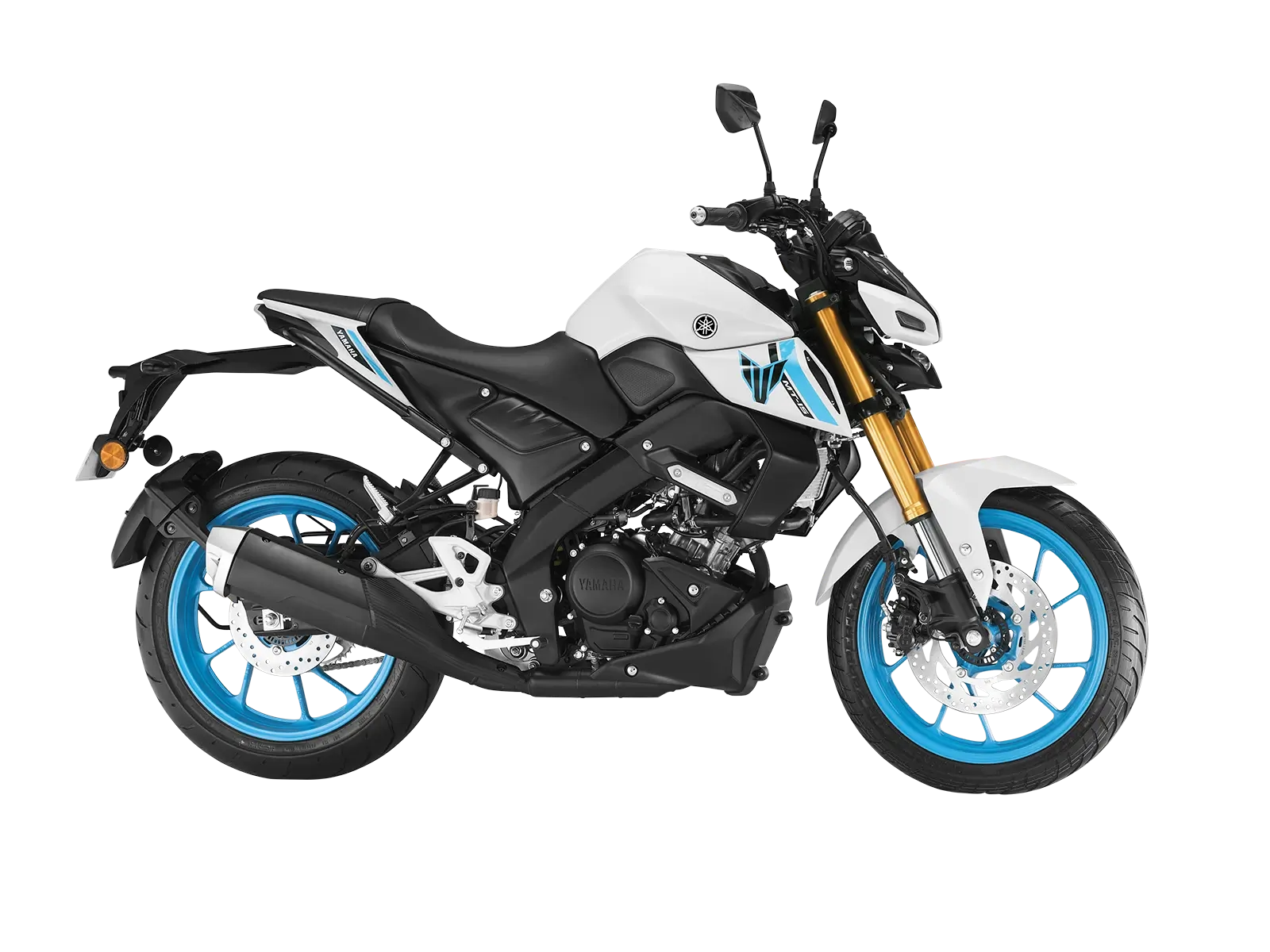
Yamaha MT-15 V2
- 155 cc Liquid-Cooled
- 18.4 PS @ 10,000 rpm
- 56.87 km/l (ARAI)
- 10-litre tank
- 2 variants available
- Dual-channel ABS + Traction Control
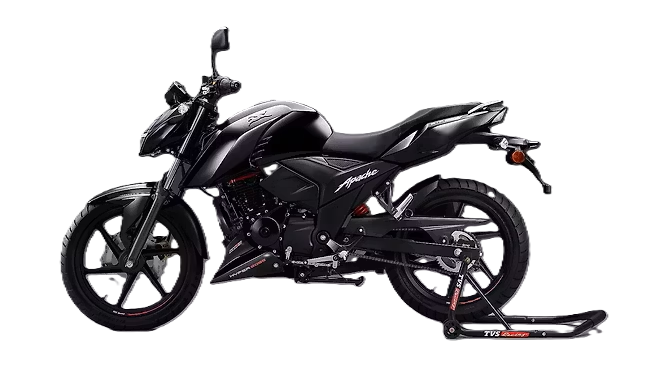
TVS Apache RTR 160 4V
- 159.7 cc Oil-Cooled
- 17.55 PS @ 9,250 rpm
- 47.61 km/l (Claimed)
- 12-litre tank
- 8 variants available
- Single / Dual-channel ABS (variant dependent)
Full Specification Comparison
Every number that matters — side by side
| Specification | Yamaha MT-15 V2 | TVS Apache RTR 160 4V |
|---|---|---|
| Engine & Performance | ||
| Displacement | 155 cc | 159.7 cc |
| Cooling System | Liquid Cooled | Oil Cooled |
| Max Power | 18.4 PS @ 10,000 rpm | 17.55 PS @ 9,250 rpm |
| Max Torque | 14.1 Nm @ 7,500 rpm | 14.73 Nm @ 7,500 rpm |
| Valves per Cylinder | 4 | 4 |
| Compression Ratio | 11.6 : 1 | N/A |
| Bore × Stroke | 58.0 × 58.7 mm | N/A |
| Emission Standard | BS6 OBD2 | BS6 Phase 2 |
| Transmission | 6-Speed Manual | 5-Speed Manual |
| Clutch | Assist & Slipper Clutch | Wet Multiplate |
| Riding Modes | No | Sport / Urban / Rain |
| Top Speed | ~122 km/h | ~114 km/h |
| Fuel & Range | ||
| Mileage (ARAI / Claimed) | 56.87 km/l (ARAI) | 47.61 km/l (Claimed) |
| Mileage (Real-world) | 45–50 km/l | ~41–45 km/l |
| Fuel Tank | 10 litres | 12 litres |
| Reserve Capacity | 1.6 litres | 2.5 litres |
| Riding Range | ~568 km | ~570 km |
| Brakes & Wheels | ||
| Braking System | Dual Channel ABS (Standard) | Single / Dual Channel ABS (Variant Dependent) |
| Front Brake | Disc – 282 mm | Disc – 270 mm |
| Rear Brake | Disc – 220 mm | Drum 130 mm / Disc 240 mm (Variant Dependent) |
| Tyre Type | Tubeless | Tubeless |
| Tyre Size (F / R) | 100/80-17 / 140/70-17 | 90/90-17 / 110/80-17 or 130/70-17 |
| Traction Control | Yes (Standard) | Yes (Top Variant Only) |
| Wheel Type | Alloy | Alloy |
| Suspension & Chassis | ||
| Front Suspension | USD Fork (Standard) | Telescopic / USD Fork (Top Variants) |
| Rear Suspension | Linked-Type Monoshock | Mono Shock |
| Chassis | Deltabox Frame | Double Cradle Split Synchro Stiff Frame |
| Rear Preload Adjuster | Yes | Yes |
| Dimensions & Weight | ||
| Kerb Weight | 141 kg | 143–146 kg |
| Seat Height | 810 mm | 800 mm |
| Ground Clearance | 170 mm | 180 mm |
| Wheelbase | 1325 mm | 1357 mm |
| Overall L × W × H | 2015 × 800 × 1070 mm | N/A |
| Features & Electronics | ||
| Instrument Console | Fully Digital LCD | Digital / TFT (Top Variant) |
| Headlight | LED | LED Projector |
| DRLs | Yes | Yes |
| Turn Signals | LED | LED |
| Hazard Warning Lights | Yes (DLX Variant) | N/A |
| Bluetooth Connectivity | Yes (DLX Variant) | Yes (Select Variants) |
| USB Charging Port | No | Yes (Select Variants) |
| Gear Indicator | Yes | Yes |
| Assist & Slipper Clutch | Yes | No |
| VVA Technology | Yes | No |
| Keyless Ignition | No | No |
| Price & Warranty | ||
| Starting Price (ex-showroom) | ₹1,60,096 | ₹1,16,491 |
| Top Variant Price | ₹1,68,507 | ₹1,37,521 |
| Number of Variants | 2 | 8 |
| Standard Warranty | 2 Years / 30,000 km | 5 Years / 60,000 km |
★ Green highlights indicate the stronger value in each row. Prices are ex-showroom India averages and may vary by city.
Variant-wise Price Comparison
All variants laid out — find the right one for your budget
Yamaha MT-15 V2 Variants
TVS Apache RTR 160 4V Variants
Pros & Cons
Honest strengths and weaknesses of each bike
Pros
- Best-in-class ARAI mileage of 56.87 km/l
- Higher peak power – 18.4 PS @ 10,000 rpm
- Lighter kerb weight (141 kg) for superior agility
- Dual-channel ABS and traction control as standard
- Assist & slipper clutch on all variants
- 6-speed gearbox for better highway cruising
- VVA technology for strong low and high-end power
- Lightweight Deltabox frame – proven handling platform
- USD forks standard on both variants
Cons
- Significantly higher starting price (₹1,60,096)
- Only 2 variants — very limited choice
- Smaller 10-litre fuel tank
- No riding modes
- No USB charging port
- Shorter warranty (2 years vs 5 years)
- Pillion comfort is limited
Pros
- Much lower starting price (₹1,16,491)
- 8 variants for maximum budget flexibility
- 3 riding modes – Sport, Urban, Rain
- Larger 12-litre fuel tank
- Better ground clearance (180 mm vs 170 mm)
- Excellent 5-year / 60,000 km warranty
- Higher torque (14.73 Nm vs 14.1 Nm)
- LED projector headlamp
- USB charging port on select variants
Cons
- Lower peak power (17.55 PS vs 18.4 PS)
- Lower claimed mileage (47.61 km/l vs 56.87 km/l)
- No assist & slipper clutch
- No VVA or equivalent valve timing tech
- Only 5-speed gearbox
- Dual-channel ABS only on higher variants
- Traction control limited to top TFT variant
- Heavier at 143–146 kg
Key Differences Explained
What really sets these two bikes apart
Engine Character
The MT-15 V2 uses a 155 cc liquid-cooled, 4-valve engine with VVA technology and an assist & slipper clutch, producing 18.4 PS with a silky smooth power delivery. The Apache RTR 160 4V uses a 159.7 cc oil-cooled, 4-valve unit with 17.55 PS and multi-mode character via Sport, Urban and Rain modes.
Fuel Efficiency & Range
The MT-15 V2 leads with a certified 56.87 km/l, though its smaller 10-litre tank limits range to around 568 km. The Apache's 47.61 km/l figure from a 12-litre tank delivers a similar ~570 km range, giving it a practical edge on long trips.
Braking & Safety
The MT-15 V2 comes with dual-channel ABS and traction control as standard across both variants. The Apache only offers dual-channel ABS from the sixth variant upward, and traction control only on the top-spec TFT model — making the MT-15 V2 the safer default.
Warranty & Ownership
The Apache RTR 160 4V offers a superior 5-year / 60,000 km warranty versus the MT-15 V2's 2-year / 30,000 km coverage. For long-term ownership peace of mind, the Apache wins decisively.
Price & Value
The Apache starts at ₹1,16,491 — approximately ₹43,605 less than the MT-15 V2's ₹1,60,096 base price. With 8 variants spanning a wide budget range, the Apache offers far more choice for cost-conscious buyers.
Ride & Handling
The MT-15 V2's Deltabox frame and USD forks (standard) give it exceptional agility at 141 kg. The Apache's longer 1357 mm wheelbase and 180 mm ground clearance provide more highway stability and better rough-road ability, plus ride modes adapt its handling character.
Expert Verdict
Which one should you actually buy?
Buy the Yamaha MT-15 V2 if…
- You want the best mileage in the 155–160cc streetfighter class
- Engine refinement and character matter to you
- You want dual-channel ABS and traction control without upgrades
- Assist & slipper clutch and 6-speed gearbox appeal to you
- You prefer Yamaha's build quality and brand reliability
- Daily commuting + weekend spirited riding is your use case
Buy the Apache RTR 160 4V if…
- Budget is a key factor — starts ₹43,000+ cheaper
- You want ride modes (Sport / Urban / Rain)
- A long 5-year warranty is important for peace of mind
- You want more variant options to match your exact budget
- Higher ground clearance for rough roads matters
- You plan to upgrade features over time via different variants
Overall Winner for Most Riders: TVS Apache RTR 160 4V. Its dramatically lower price, 8-variant lineup, ride modes, longer warranty and practical 12-litre tank make it the more accessible and versatile choice for the majority of Indian buyers. Choose the Yamaha MT-15 V2 only if you specifically want Yamaha's refinement, higher peak power, class-leading mileage and standard safety tech — and are willing to pay a significant premium for it.
Frequently Asked Questions
Common questions answered by our experts
The Yamaha MT-15 V2 is better for riders who prioritise fuel efficiency (56.87 km/l ARAI vs 47.61 km/l claimed), higher peak power (18.4 PS vs 17.55 PS), standard dual-channel ABS with traction control, and a refined liquid-cooled engine with VVA technology. The TVS Apache RTR 160 4V is better if you want a significantly lower price, ride modes, a 5-year warranty, and 8 variants to choose from.
The TVS Apache RTR 160 4V starts at ₹1,16,491 while the Yamaha MT-15 V2 starts at ₹1,60,096 ex-showroom. The MT-15 V2 is approximately ₹43,605 more expensive at the base variant level. Both prices are for India and may vary by city.
The Yamaha MT-15 V2 has significantly better ARAI-certified mileage at 56.87 km/l compared to the TVS Apache RTR 160 4V's claimed 47.61 km/l. In real-world conditions, the MT-15 V2 returns 45–50 km/l while the Apache typically delivers 41–45 km/l depending on riding style and traffic.
The Yamaha MT-15 V2 makes more peak power at 18.4 PS @ 10,000 rpm compared to the Apache RTR 160 4V's 17.55 PS @ 9,250 rpm. However, the Apache delivers slightly more torque (14.73 Nm vs 14.1 Nm) and offers ride modes that adjust power delivery for different riding conditions.
The TVS Apache RTR 160 4V offers a significantly better warranty of 5 years or 60,000 km compared to the Yamaha MT-15 V2's 2 years or 30,000 km. This is a major advantage for the Apache, especially given its lower purchase price.
Both bikes offer dual-channel ABS, but with very different access points. The Yamaha MT-15 V2 comes with dual-channel ABS as standard on both variants (starting from ₹1,60,096). The TVS Apache RTR 160 4V only offers dual-channel ABS from the sixth variant onward (₹1,26,472), with the base three variants getting only single-channel ABS.
No. The Yamaha MT-15 V2 does not offer riding modes on either variant. The TVS Apache RTR 160 4V has a clear advantage here, offering Sport, Urban and Rain modes on its higher variants, adjusting both power delivery and ABS behaviour.