At a Glance
Key differences that define each motorcycle
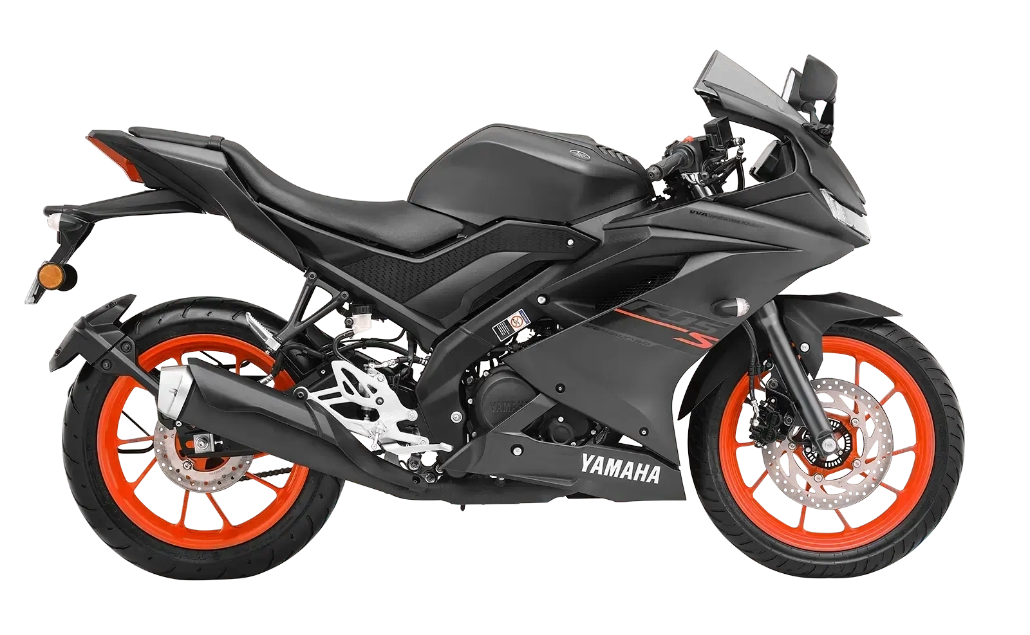
Yamaha R15S
- 155 cc Liquid-Cooled, 4-valve VVA
- 18.4 PS @ 10000 rpm
- 46 km/l (Owner Reported)
- 11-litre tank
- 1 variant available
- Dual-channel ABS standard
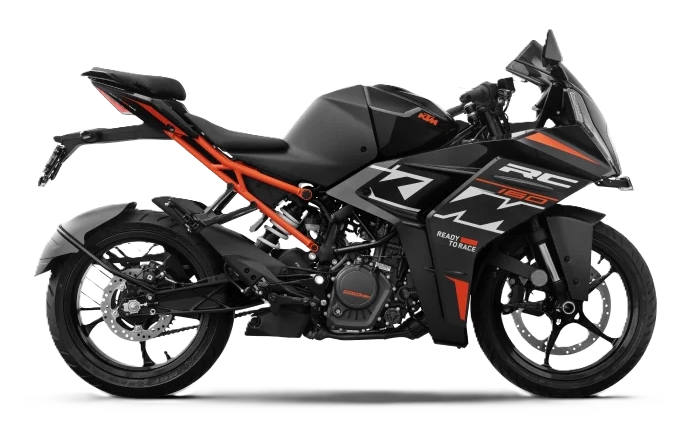
KTM RC 160
- 164.2 cc Liquid-Cooled, 4-valve
- 19 PS @ 9500 rpm
- 36 km/l (ARAI)
- 13.7-litre tank
- 1 variant available
- USD forks + 320 mm front disc
Full Specification Comparison
Every number that matters — side by side
| Specification | Yamaha R15S | KTM RC 160 |
|---|---|---|
| Engine & Performance | ||
| Displacement | 155 cc | 164.2 cc |
| Cooling System | Liquid-Cooled | Liquid-Cooled |
| Max Power | 18.4 PS @ 10000 rpm | 19 PS @ 9500 rpm |
| Max Torque | 14.2 Nm @ 7500 rpm | 15.5 Nm @ 7500 rpm |
| Valves per Cylinder | 4 | 4 |
| Compression Ratio | 11.6:1 | 11.97:1 |
| Bore × Stroke | 58.0 × 58.7 mm | 66 × 48 mm |
| Emission Standard | BS6 Phase 2 | BS6 Phase 2 |
| Transmission | 6-Speed Manual | 6-Speed Manual |
| Clutch | Assist & Slipper Clutch | Assist & Slipper Clutch |
| Top Speed | ~140 km/h | 118 km/h |
| Riding Modes | No | No |
| Traction Control | No | No |
| VVA Technology | Yes | No |
| Fuel & Range | ||
| Mileage (Claimed / Certified) | 46 km/l (Owner Reported) | 36 km/l (ARAI) |
| Fuel Tank | 11 litres | 13.7 litres |
| Reserve Capacity | 2.2 litres | ~1.5–2 litres |
| Riding Range | ~506 km | ~493 km |
| Brakes & Wheels | ||
| Braking System | Dual Channel ABS | Dual Channel ABS |
| Front Brake | Disc – 282 mm | Disc – 320 mm |
| Rear Brake | Disc – 220 mm | Disc – 230 mm |
| Tyre Type | Tubeless | Tubeless |
| Tyre Size (F / R) | 100/80-17 / 140/70R17 | 110/70-17 / 140/60-17 |
| Wheel Type | Alloy | Alloy |
| Suspension & Chassis | ||
| Front Suspension | Telescopic Fork | WP APEX USD Forks, 37 mm |
| Rear Suspension | Monocross | Canister Monoshock, 6-step Adjustable |
| Chassis | Deltabox Frame | Trellis Frame |
| Rear Preload Adjuster | Yes | Yes |
| Dimensions & Weight | ||
| Kerb Weight | 142 kg | 155 kg |
| Seat Height | 815 mm | 830 mm |
| Ground Clearance | 170 mm | 168 mm |
| Wheelbase | 1325 mm | 1347 mm |
| Overall L × W × H | 1990 × 725 × 1135 mm | 1965 × 701 × 1150 mm |
| Features & Electronics | ||
| Instrument Console | Fully Digital LCD | 5-inch LCD Display |
| Headlight | LED | LED |
| DRLs | Yes | Yes |
| Turn Signals | Bulb | LED |
| Hazard Warning Lights | No | No |
| Riding Modes | No | No |
| Traction Control | No | No |
| Bluetooth Connectivity | Yes | Yes |
| Call & SMS Alerts | Yes | Yes |
| USB Charging Port | No | No |
| Distance to Empty | Yes | Yes |
| Gear Indicator | Yes | Yes |
| Tachometer | Digital | Digital |
| Service Reminder | Yes | Yes |
| Keyless Ignition | No | No |
| Price & Warranty | ||
| Starting Price (ex-showroom) | ₹1,51,597 | ₹1,84,998 |
| Number of Variants | 1 | 1 |
| Standard Warranty | 2 Years / 30,000 km | 2 Years / 30,000 km |
★ Green highlights indicate the stronger value in each row. Prices are ex-showroom India averages and may vary by city.
Variant-wise Price Comparison
All variants laid out — find the right one for your budget
Yamaha R15S Variants
KTM RC 160 Variants
Pros & Cons
Honest strengths and weaknesses of each bike
Pros
- Significantly better fuel efficiency (~46 km/l vs 36 km/l)
- Lighter kerb weight at 142 kg vs 155 kg
- VVA technology for smooth power across rev range
- Lower starting price — ₹33,401 cheaper
- Higher claimed top speed (~140 km/h)
- Slightly better ground clearance (170 mm vs 168 mm)
- Proven Yamaha reliability and service network
- Shorter wheelbase for nimble city handling
Cons
- Lower peak power (18.4 PS vs 19 PS)
- Smaller 282 mm front disc vs 320 mm on RC 160
- Conventional telescopic forks vs USD on RC 160
- Smaller 11-litre fuel tank
- Bulb turn signals vs LED on RC 160
- Less torque (14.2 Nm vs 15.5 Nm)
Pros
- Higher peak power – 19 PS @ 9500 rpm
- More torque – 15.5 Nm @ 7500 rpm
- Premium WP APEX USD forks (37 mm)
- Larger 320 mm front disc for stronger braking
- 6-step adjustable rear monoshock
- Larger 13.7-litre fuel tank
- LED turn signals standard
- Aggressive fully-faired supersport styling
- Lightweight trellis frame
Cons
- Significantly lower fuel efficiency (36 km/l ARAI)
- Much higher price at ₹1,84,998
- Heavier at 155 kg vs 142 kg
- Aggressive ergonomics uncomfortable in city traffic
- Higher maintenance costs
- No USB charging port
- No VVA or variable valve technology
Key Differences Explained
What really sets these two bikes apart
Engine Character
Both bikes use liquid-cooled, 4-valve single-cylinder engines, but they're tuned very differently. The R15S runs a 155 cc VVA motor that produces 18.4 PS — the Variable Valve Actuation gives it a versatile character across the rev range. The RC 160 uses a 164.2 cc unit making 19 PS and 15.5 Nm, tuned for more outright punch. The KTM revs hard and rewards aggressive riding; the Yamaha is more refined and tractable in everyday use.
Fuel Efficiency & Range
The R15S leads by a wide margin on efficiency, with owners reporting around 46 km/l compared to the RC 160's ARAI-certified 36 km/l — a 28% advantage. Despite having a smaller 11-litre tank, the R15S still edges ahead on total riding range (~506 km vs ~493 km). For daily commuters, the R15S's fuel economy translates into meaningful savings over time.
Braking & Suspension
The RC 160 holds a clear hardware advantage: its 320 mm front disc is 38 mm larger than the R15S's 282 mm unit, providing more powerful stopping force. The RC 160 also benefits from WP APEX USD forks — premium suspension hardware not found on the R15S's conventional telescopic setup. Both have dual-channel ABS and a rear disc. For spirited riding and track days, the RC 160's setup is notably superior.
Weight & Agility
The R15S is 13 kg lighter at 142 kg versus 155 kg for the RC 160. Combined with its shorter wheelbase (1325 mm vs 1347 mm), the R15S feels noticeably more flickable and easier to manoeuvre in urban traffic. The RC 160's trellis frame offers rigidity benefits for cornering at speed, but the R15S's lighter weight makes it the more approachable package for most riders day-to-day.
Warranty & Ownership
Both the Yamaha R15S and KTM RC 160 offer identical warranty terms of 2 years / 30,000 km, so neither has an edge here. However, ongoing ownership costs differ: Yamaha's wide service network and proven engine platform keep maintenance predictable and affordable, while KTM's performance components typically command higher service costs. The R15S is the more budget-friendly bike to own over the long term.
Price & Value
The R15S at ₹1,51,597 is ₹33,401 cheaper than the RC 160 at ₹1,84,998. That's a substantial gap for bikes that are closely matched in everyday riding capability. The RC 160 justifies some of the premium with USD forks, a larger disc, and more outright power — but the R15S delivers 97% of the experience for 82% of the price, making it the stronger value proposition for most buyers.
Expert Verdict
Which one should you actually buy?
Buy the Yamaha R15S if…
- You want the best fuel economy in this segment (~46 km/l)
- Budget is a priority — saves ₹33,401 over the RC 160
- You do regular city commuting and value lighter handling
- VVA engine's smooth, versatile character suits your riding
- Long-term ownership cost and serviceability matter
- You prefer a lighter, more flickable 142 kg motorcycle
- You want Yamaha's proven reliability and wide service network
Buy the KTM RC 160 if…
- You want maximum performance — 19 PS and 15.5 Nm
- Premium WP APEX USD forks and sharper handling matter
- A 320 mm front disc and stronger braking is a priority
- Fully-faired aggressive supersport styling appeals to you
- You plan track days or spirited weekend rides
- The 6-step adjustable rear monoshock suits your riding style
- Budget is not a constraint and you want the best hardware
Overall Winner for Most Riders: Yamaha R15S. At ₹33,401 less, the Yamaha R15S delivers superior fuel efficiency, a lighter and more agile chassis, a competitive 18.4 PS VVA engine, dual-channel ABS, Bluetooth, and Yamaha's renowned long-term reliability — making it the smarter daily-use sportbike for the majority of Indian buyers. Choose the KTM RC 160 only if you genuinely need the extra performance, premium USD suspension hardware, and class-leading braking of the 320 mm front disc, and are prepared to pay the significant price premium.
Frequently Asked Questions
Common questions answered by our experts
The Yamaha R15S is better for most buyers who prioritise fuel efficiency (~46 km/l), a lower price (₹1,51,597), lighter weight (142 kg), Yamaha reliability and lower ownership costs. The KTM RC 160 is better if you want stronger performance (19 PS), premium WP APEX USD forks, a 320 mm front disc for stronger braking, and a fully-faired supersport riding experience — provided the ₹1,84,998 price point is within budget.
The Yamaha R15S starts at ₹1,51,597 while the KTM RC 160 starts at ₹1,84,998 ex-showroom — a difference of ₹33,401. Both are available in a single standard variant, so there is no variant overlap to compare. Prices are for India and may vary by city.
The Yamaha R15S delivers significantly better mileage at around 46 km/l (owner-reported) compared to the KTM RC 160's ARAI-certified 36 km/l. That is a 28% efficiency advantage for the R15S. Despite having a smaller 11-litre tank versus the RC 160's 13.7-litre unit, the R15S still provides a comparable riding range of approximately 506 km versus 493 km.
The KTM RC 160 makes more power at 19 PS @ 9500 rpm and more torque at 15.5 Nm @ 7500 rpm, compared to the Yamaha R15S's 18.4 PS @ 10000 rpm and 14.2 Nm @ 7500 rpm. The RC 160 also has a larger 164.2 cc displacement versus 155 cc. However, the R15S's VVA technology provides a broader, more tractable power delivery that suits varied riding conditions.
The KTM RC 160 has clearly superior suspension hardware. It features WP APEX USD (upside-down) forks at 37 mm and a 6-step adjustable canister monoshock at the rear — premium components typically found on much more expensive motorcycles. The Yamaha R15S uses conventional telescopic forks at the front and a Monocross rear setup. For spirited riding and cornering, the RC 160's suspension is a significant advantage.
Both the Yamaha R15S and KTM RC 160 offer identical warranty coverage of 2 years / 30,000 km, so neither holds an advantage on paper. However, in practice, Yamaha's wider service network across India and lower part costs make long-term ownership of the R15S more affordable and convenient compared to KTM's performance-oriented service requirements.