At a Glance
Key differences that define each motorcycle
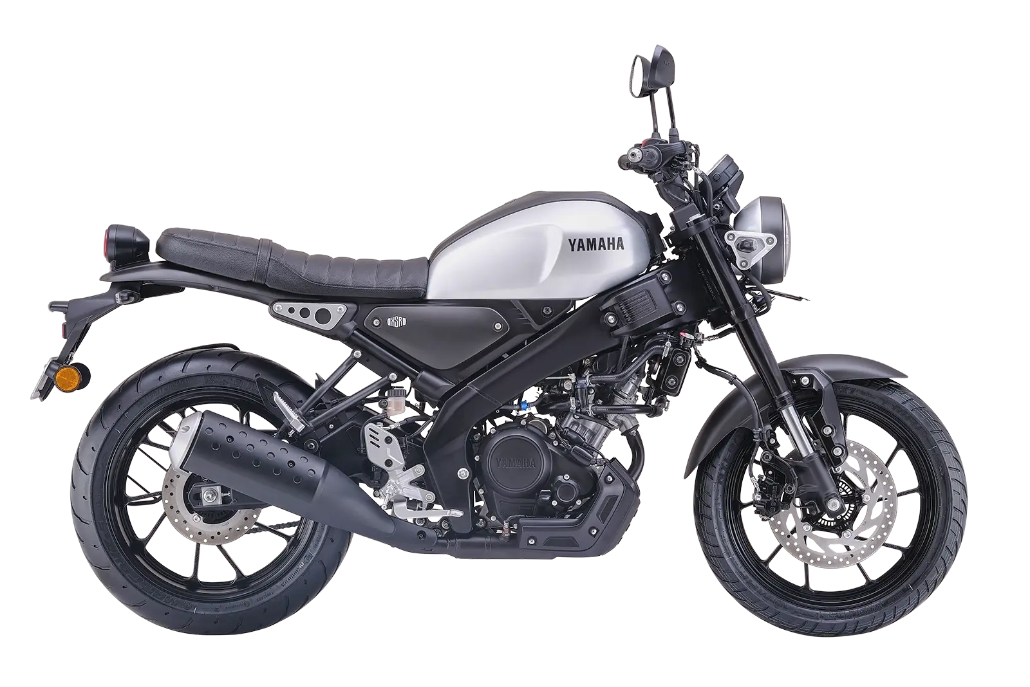
Yamaha XSR 155
- 155 cc Liquid-Cooled, 4-valve, VVA
- 18.4 PS @ 10000 rpm
- 46 km/l (Claimed)
- 10-litre tank
- 1 variant, 5 colour options
- Dual-channel ABS + Traction Control
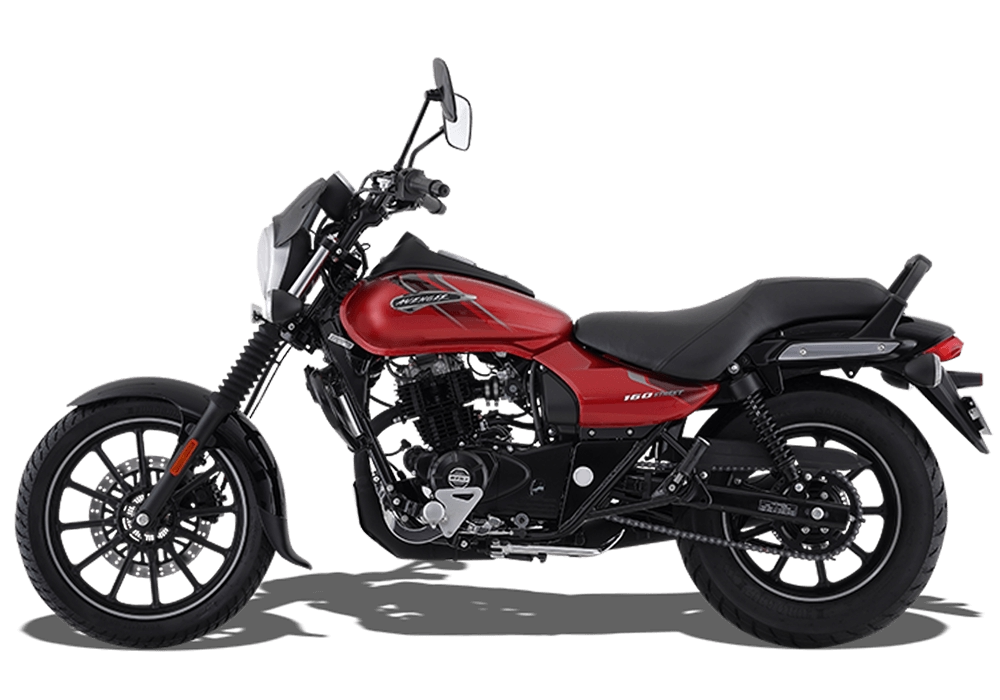
Bajaj Avenger Street 160
- 160 cc Air-Cooled, 2-valve, DTS-i
- 15 PS @ 8500 rpm
- 45 km/l (ARAI)
- 13-litre tank
- 1 variant, 2 colour options
- Cruiser ergonomics, 737 mm seat height
Full Specification Comparison
Every number that matters — side by side
| Specification | Yamaha XSR 155 | Bajaj Avenger Street 160 |
|---|---|---|
| Engine & Performance | ||
| Displacement | 155 cc | 160 cc |
| Cooling System | Liquid-Cooled | Air-Cooled |
| Max Power | 18.4 PS @ 10000 rpm | 15 PS @ 8500 rpm |
| Max Torque | 14.2 Nm @ 7500 rpm | 13.7 Nm @ 7000 rpm |
| Valves per Cylinder | 4 | 2 |
| Compression Ratio | 11.6:1 | 9.8 ± 0.3:1 |
| Bore × Stroke | 58.0 × 58.7 mm | 58 × 60.7 mm |
| Emission Standard | BS6 Phase 2 | BS6 |
| Transmission | 6-Speed Manual | 5-Speed Manual |
| Clutch | Assist & Slipper | Wet Multi Plate |
| VVA Technology | Yes | No |
| Top Speed | ~130 km/h | ~105 km/h |
| Riding Modes | No | No |
| Traction Control | Yes | No |
| Fuel & Range | ||
| Mileage (Claimed / ARAI) | 46 km/l (Claimed) | 45 km/l (ARAI) |
| Fuel Tank | 10 litres | 13 litres |
| Reserve Capacity | 1.6 litres | 3.8 litres |
| Riding Range | ~460 km | ~585 km |
| Brakes & Wheels | ||
| Braking System | Dual Channel ABS | Single Channel ABS |
| Front Brake | Disc – 282 mm | Disc – 280 mm |
| Rear Brake | Disc – 220 mm | Drum – 130 mm |
| Tyre Type | Tubeless | Tubeless |
| Tyre Size (F / R) | 100/80-17 / 140/70-17 | 90/90-17 / 130/90-15 |
| Rear Wheel Size | 17 inch | 15 inch |
| Wheel Type | Alloy | Alloy |
| Suspension & Chassis | ||
| Front Suspension | USD Fork | Telescopic Fork |
| Rear Suspension | Monoshock | Twin Shock Absorbers |
| Chassis | Deltabox Frame | Tubular Double Cradle |
| Rear Preload Adjuster | Yes | Yes |
| Dimensions & Weight | ||
| Kerb Weight | 137 kg | 156 kg |
| Seat Height | 810 mm | 737 mm |
| Ground Clearance | 170 mm | 169 mm |
| Wheelbase | 1330 mm | 1490 mm |
| Overall L × W × H | 2007 × 804 × 1080 mm | 2210 × 806 × 1070 mm |
| Features & Electronics | ||
| Instrument Console | Fully Digital LCD | Semi-Digital |
| Headlight | LED | Halogen |
| DRLs | Yes | No |
| Turn Signals | LED | Bulb |
| Hazard Warning Lights | No | No |
| Traction Control | Yes | No |
| Bluetooth Connectivity | Yes (Y-Connect) | No |
| Call & SMS Alerts | Yes | No |
| USB Charging Port | No | No |
| Gear Indicator | Yes | No |
| Tachometer | Digital | No |
| Assist & Slipper Clutch | Yes | No |
| Pillion Backrest | No | Yes |
| Keyless Ignition | No | No |
| Price & Warranty | ||
| Starting Price (ex-showroom) | ₹1,49,990 | ₹1,12,280 |
| Top Variant / Colour Price | ₹1,58,990 | ₹1,12,280 |
| Number of Variants | 5 colour options | 2 colour options |
| Standard Warranty | 2 Years / 30,000 km | 5 Years / 75,000 km |
★ Green highlights indicate the stronger value in each row. Prices are ex-showroom India averages and may vary by city.
Variant-wise Price Comparison
All variants laid out — find the right one for your budget
XSR 155 Colour Options
Avenger Street 160 Colour Options
Pros & Cons
Honest strengths and weaknesses of each bike
Pros
- Significantly more powerful — 18.4 PS vs 15 PS (23% more)
- Dual-channel ABS standard — safer braking on both wheels
- Traction Control System (TCS) standard
- Liquid-cooled engine with VVA — more refined, better performance range
- 6-speed gearbox with assist & slipper clutch
- Bluetooth connectivity (Y-Connect) standard
- USD front forks and Deltabox chassis — superior handling
- Full LED lighting with DRLs
- Lighter at 137 kg vs 156 kg
- Higher top speed (~130 km/h vs ~105 km/h)
- Rear disc brake — better stopping power
Cons
- Much higher price — ₹37,710 to ₹46,710 more expensive
- Smaller 10-litre tank — shorter riding range (~460 km)
- Very short warranty — 2 years / 30,000 km
- Higher seat height (810 mm) — less accessible for shorter riders
- No riding modes
- Sporty ergonomics — less relaxed for long cruising sessions
- No pillion backrest
Pros
- Significantly more affordable — starts at ₹1,12,280
- Outstanding 5-year / 75,000 km warranty
- Larger 13-litre fuel tank with longer range (~585 km)
- ARAI-certified 45 km/l mileage
- Very low 737 mm seat height — accessible for all riders
- Relaxed cruiser ergonomics — comfortable for long rides
- Pillion backrest included
- Wider 1490 mm wheelbase — stable cruiser feel
- Large 3.8-litre reserve tank capacity
Cons
- Much lower power at 15 PS — not for performance riders
- Single-channel ABS only — no rear ABS
- Rear drum brake — inferior stopping power
- No traction control
- No Bluetooth connectivity
- Halogen headlight — no LED or DRLs
- Semi-digital console — no gear indicator or tachometer
- Conventional telescopic forks — less precise handling
- Heavier at 156 kg vs 137 kg
- Low top speed (~105 km/h) limits highway confidence
Key Differences Explained
What really sets these two bikes apart
Engine & Performance
These two bikes occupy completely different performance tiers. The XSR 155's 155 cc liquid-cooled, 4-valve VVA engine produces 18.4 PS — 23% more than the Avenger Street 160's 160 cc air-cooled, 2-valve DTS-i engine at 15 PS. The XSR 155 reaches ~130 km/h; the Avenger is tuned for a relaxed ~105 km/h cruising limit. The Avenger is not designed to compete on performance — it prioritises smooth, effortless power delivery for comfortable daily riding.
Fuel Efficiency & Range
The Avenger Street 160 takes this category convincingly. Its ARAI-certified 45 km/l mileage and larger 13-litre tank deliver a riding range of ~585 km — 125 km more than the XSR 155's ~460 km from its 10-litre tank. The XSR 155 claims 46 km/l but this is not ARAI-certified. For daily commuters and riders who dislike frequent stops, the Avenger Street 160 is the more practical choice.
Braking & Safety
The XSR 155 leads decisively: dual-channel ABS covers both wheels, a rear disc brake improves stopping power, and traction control prevents wheel spin. The Avenger Street 160 has single-channel ABS on the front only, and a rear drum brake. For riders who encounter mixed road surfaces or wet conditions, the XSR 155's safety package is significantly superior.
Ergonomics & Riding Style
This is where the Avenger Street 160 shines for its target audience. The 737 mm seat height — 73 mm lower than the XSR 155's 810 mm — combined with forward foot pegs, wide handlebars and a pillion backrest creates a genuinely relaxed cruiser posture suited to long rides and everyday commuting. The XSR 155's upright-sporty stance is engaging but less forgiving over long distances.
Warranty & Ownership
The Avenger Street 160 dominates here. Bajaj offers an exceptional 5-year / 75,000 km warranty versus Yamaha's 2-year / 30,000 km cover on the XSR 155. That's 2.5× more time and 2.5× more kilometre coverage. Bajaj also has one of India's widest service networks, making maintenance easy even in smaller towns — a key advantage for high-mileage daily riders.
Price & Value
The Avenger Street 160 at ₹1,12,280 is ₹37,710 to ₹46,710 cheaper than any XSR 155 colour option. That is a significant gap. The XSR 155 justifies its premium with dual-channel ABS, traction control, Bluetooth, a 6-speed gearbox, USD forks and a slipper clutch — features that add genuine safety and performance value. However, for riders who don't need these features, the Avenger Street 160 delivers comfort and reliability at a far lower cost.
Expert Verdict
Which one should you actually buy?
Buy the Yamaha XSR 155 if…
- Performance and top-end power (18.4 PS) are priorities
- Dual-channel ABS and traction control matter to you
- You want Bluetooth connectivity and modern electronics
- Retro-modern styling with premium build quality appeals to you
- You enjoy spirited riding and want a 130 km/h capable motorcycle
- A 6-speed gearbox with assist & slipper clutch is important
- Budget allows for ₹1,49,990–₹1,58,990 investment
Buy the Avenger Street 160 if…
- Relaxed cruiser ergonomics for daily commuting suit you
- Budget is a key consideration — at ₹1,12,280, it saves ₹37,000+
- The outstanding 5-year / 75,000 km warranty gives you peace of mind
- A 737 mm low seat height is important for your build
- Longer riding range (~585 km) suits your usage pattern
- You prefer simple, low-maintenance ownership
- Relaxed highway cruising between 80–95 km/h is your style
These bikes serve very different riders. The Yamaha XSR 155 is the clear winner for performance, safety technology and premium features — dual-channel ABS, traction control, Bluetooth, USD forks and a 6-speed gearbox make it one of the most feature-loaded motorcycles under ₹1.60 lakh. Choose the Bajaj Avenger Street 160 if you want comfortable cruiser ergonomics, a very accessible price of ₹1,12,280, a longer fuel range, a much lower seat height and Bajaj's class-leading 5-year / 75,000 km warranty. The two bikes barely compete — your riding style and budget will make the decision easy.
Frequently Asked Questions
Common questions answered by our experts
These bikes target very different riders. The Yamaha XSR 155 is better for performance-oriented riders who want 18.4 PS, dual-channel ABS, traction control, Bluetooth and a premium feature set. The Bajaj Avenger Street 160 is better for comfort-focused riders who want relaxed cruiser ergonomics, a very low 737 mm seat height, a lower price (₹1,12,280), longer fuel range and Bajaj's exceptional 5-year / 75,000 km warranty.
The Bajaj Avenger Street 160 starts at ₹1,12,280 ex-showroom while the Yamaha XSR 155 starts at ₹1,49,990 (Metallic Blue) — a difference of approximately ₹37,710. At the highest XSR 155 colour option (₹1,58,990), the gap widens to ₹46,710. The Avenger Street 160 is priced significantly lower and both prices are ex-showroom India averages that may vary by city.
The Bajaj Avenger Street 160 has an ARAI-certified mileage of 45 km/l while the Yamaha XSR 155 claims 46 km/l (not ARAI certified). More importantly, the Avenger's larger 13-litre tank gives it a riding range of approximately 585 km — 125 km more than the XSR 155's ~460 km from its 10-litre tank. For daily commuters who want to refuel less frequently, the Avenger Street 160 has a clear practical advantage.
The Yamaha XSR 155 is significantly more powerful, producing 18.4 PS @ 10000 rpm compared to the Bajaj Avenger Street 160's 15 PS @ 8500 rpm — that's 23% more peak power. The XSR 155 also reaches a higher top speed of approximately 130 km/h versus the Avenger's ~105 km/h. However, the Avenger Street 160 is designed for cruiser-style comfort rather than performance, so this comparison is somewhat outside its intended purpose.
Yes, the Yamaha XSR 155 comes with a Traction Control System (TCS) as a standard feature across all colour options. The Bajaj Avenger Street 160 does not offer traction control. Combined with dual-channel ABS, the XSR 155 has a significantly more advanced safety electronics package than the Avenger Street 160.
The Bajaj Avenger Street 160 has a substantially better warranty at 5 years / 75,000 km compared to the Yamaha XSR 155's 2 years / 30,000 km. The Avenger offers 2.5× more time and 2.5× more kilometre coverage. For high-mileage commuters who clock 15,000–20,000 km per year, the Avenger Street 160's warranty extends well beyond typical annual usage, significantly reducing the risk of expensive out-of-warranty repair costs.