At a Glance
Key differences that define each motorcycle
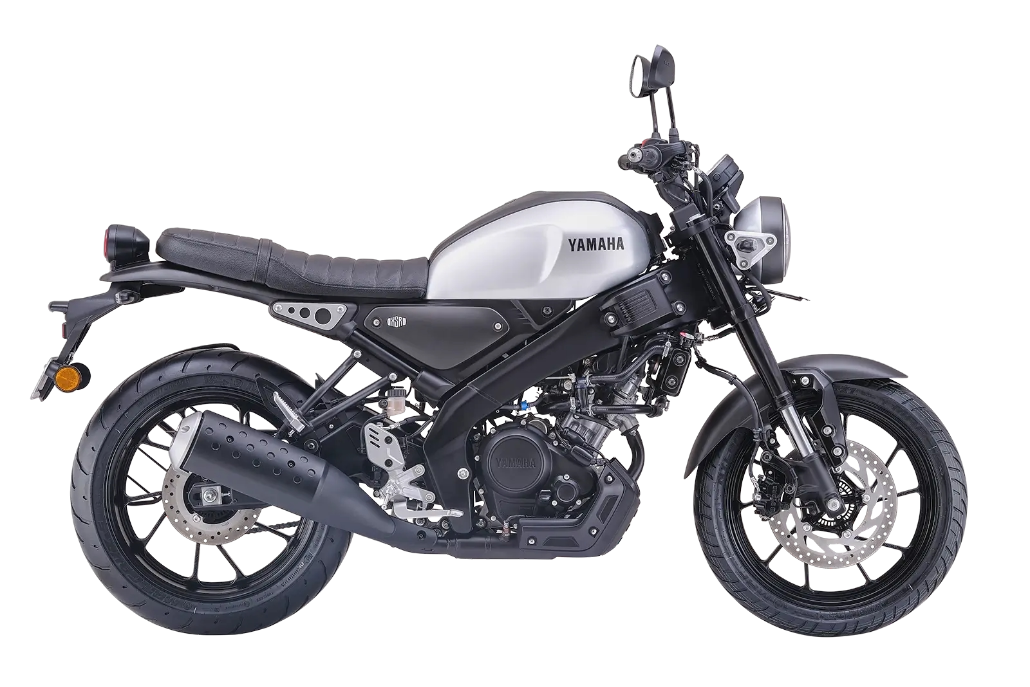
Yamaha XSR 155
- 155 cc Liquid-Cooled, 4-valve, VVA
- 18.4 PS @ 10000 rpm
- 46 km/l (Claimed)
- 10-litre tank
- 1 variant, 5 colour options
- Dual-channel ABS + Traction Control
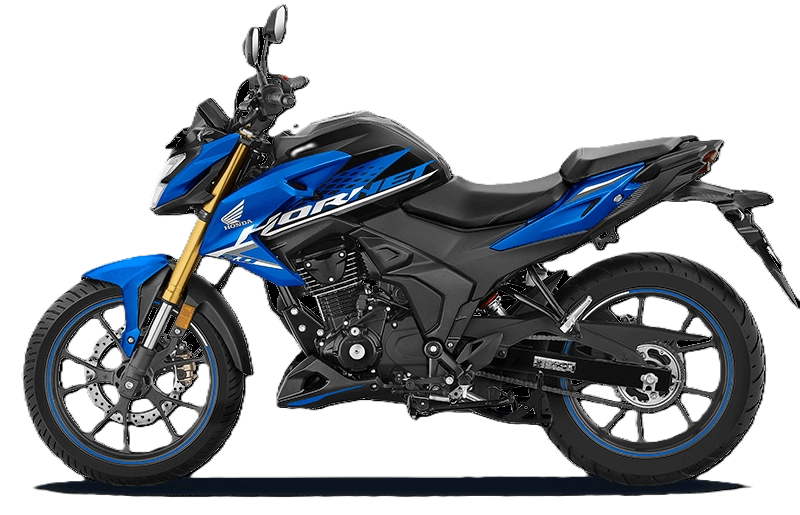
Honda Hornet 2.0
- 184.4 cc Air-Cooled, 2-valve
- 17.03 PS @ 8500 rpm
- 42.3 km/l (ARAI)
- 12-litre tank
- 1 variant, 4 colour options
- 16.1 Nm torque & USD forks
Full Specification Comparison
Every number that matters — side by side
| Specification | Yamaha XSR 155 | Honda Hornet 2.0 |
|---|---|---|
| Engine & Performance | ||
| Displacement | 155 cc | 184.4 cc |
| Cooling System | Liquid-Cooled | Air-Cooled |
| Max Power | 18.4 PS @ 10000 rpm | 17.03 PS @ 8500 rpm |
| Max Torque | 14.2 Nm @ 7500 rpm | 16.1 Nm @ 6000 rpm |
| Valves per Cylinder | 4 | 2 |
| Compression Ratio | 11.6:1 | 9.5:1 |
| Bore × Stroke | 58.0 × 58.7 mm | 61 × 63.1 mm |
| Emission Standard | BS6 Phase 2 | BS6 OBD2 |
| Transmission | 6-Speed Manual | 5-Speed Manual |
| Clutch | Assist & Slipper | Wet Multi Plate |
| Top Speed | ~130 km/h | ~130 km/h |
| VVA Technology | Yes | No |
| Riding Modes | No | No |
| Traction Control | Yes | No |
| Fuel & Range | ||
| Mileage (Claimed) | 46 km/l (Claimed) | 42.3 km/l (ARAI) |
| Fuel Tank | 10 litres | 12 litres |
| Reserve Capacity | 1.6 litres | 1.9 litres |
| Riding Range | ~460 km | ~504 km |
| Brakes & Wheels | ||
| Braking System | Dual Channel ABS | Single Channel ABS |
| Front Brake | Disc – 282 mm | Disc – 276 mm |
| Rear Brake | Disc – 220 mm | Disc – 220 mm |
| Tyre Type | Tubeless | Tubeless |
| Tyre Size (F / R) | 100/80-17 / 140/70-17 | 110/70-17 / 140/70-17 |
| Wheel Type | Alloy | Alloy |
| Suspension & Chassis | ||
| Front Suspension | USD Fork | USD Fork |
| Rear Suspension | Monoshock | Monoshock |
| Chassis | Deltabox Frame | Diamond Type Frame |
| Rear Preload Adjuster | Yes | Yes |
| Dimensions & Weight | ||
| Kerb Weight | 137 kg | 142 kg |
| Seat Height | 810 mm | 790 mm |
| Ground Clearance | 170 mm | 168 mm |
| Wheelbase | 1330 mm | 1355 mm |
| Overall L × W × H | 2007 × 804 × 1080 mm | 2047 × 783 × 1064 mm |
| Features & Electronics | ||
| Instrument Console | Fully Digital LCD | Fully Digital LCD |
| Headlight | LED | LED |
| DRLs | Yes | Yes |
| Turn Signals | LED | LED |
| Hazard Warning Lights | No | Yes |
| Traction Control | Yes | No |
| Bluetooth Connectivity | Yes (Y-Connect) | No |
| Call & SMS Alerts | Yes | No |
| USB Charging Port | No | No |
| Gear Indicator | Yes | Yes |
| Service Reminder | Yes | Yes |
| Assist & Slipper Clutch | Yes | No |
| Keyless Ignition | No | No |
| Price & Warranty | ||
| Starting Price (ex-showroom) | ₹1,49,990 | ₹1,47,151 |
| Top Variant / Colour Price | ₹1,58,990 | ₹1,47,151 |
| Number of Variants | 5 colour options | 4 colour options |
| Standard Warranty | 2 Years / 30,000 km | 3 Years |
★ Green highlights indicate the stronger value in each row. Prices are ex-showroom India averages and may vary by city.
Variant-wise Price Comparison
All variants laid out — find the right one for your budget
XSR 155 Colour Options
Hornet 2.0 Colour Options
Pros & Cons
Honest strengths and weaknesses of each bike
Pros
- Higher peak power at 18.4 PS from liquid-cooled engine
- Dual-channel ABS as standard — safer braking on all wheels
- Traction Control System (TCS) standard
- Variable Valve Actuation (VVA) for better performance range
- 6-speed gearbox with assist & slipper clutch
- Bluetooth connectivity (Y-Connect) standard
- Lighter at 137 kg vs 142 kg
- Iconic retro-modern Deltabox chassis design
- Better front brake disc (282 mm vs 276 mm)
Cons
- Lower torque (14.2 Nm vs 16.1 Nm) — weaker mid-range
- Smaller 10-litre tank — shorter riding range (~460 km)
- Higher starting price (₹1,49,990 vs ₹1,47,151)
- Shorter warranty at 2 years / 30,000 km
- No riding modes
- Higher seat height (810 mm) may challenge shorter riders
- Limited service network in smaller cities
Pros
- Larger 184.4 cc engine — more displacement
- Superior torque at 16.1 Nm — strong mid-range pull
- Larger 12-litre tank with longer range (~504 km)
- Lower starting price at ₹1,47,151
- ARAI-certified mileage of 42.3 km/l
- Lower seat height (790 mm) — accessible for more riders
- Longer warranty at 3 years
- Honda's proven after-sales network
- Hazard warning lights standard
Cons
- Single-channel ABS only — no dual-channel
- No traction control
- No Bluetooth connectivity
- Air-cooled 2-valve engine — less refined at high rpm
- 5-speed gearbox vs 6-speed on XSR 155
- No assist & slipper clutch
- Heavier at 142 kg vs 137 kg
Key Differences Explained
What really sets these two bikes apart
Engine Character
The XSR 155 runs a 155 cc liquid-cooled, 4-valve engine with VVA technology, producing 18.4 PS — over 7% more peak power than the Hornet 2.0. The Hornet counters with a 184.4 cc air-cooled, 2-valve engine delivering 16.1 Nm of torque — 14% more than the XSR 155's 14.2 Nm. The Hornet pulls harder in the mid-range; the XSR 155 rewards at higher revs with its free-revving liquid-cooled unit.
Fuel Efficiency & Range
The Hornet 2.0 holds an ARAI-certified 42.3 km/l figure while the XSR 155 claims 46 km/l (not ARAI certified). However, the Hornet's larger 12-litre tank gives it a clearly superior riding range of ~504 km versus ~460 km for the XSR 155's 10-litre unit. For daily commuters and weekend riders who dislike frequent refuelling stops, the Hornet 2.0 has a practical edge.
Braking & Safety
The XSR 155 leads significantly on braking safety: it gets dual-channel ABS as standard — stopping both wheels from locking. The Hornet 2.0 is equipped with single-channel ABS only, covering just the front wheel. Both bikes get USD front forks, but the XSR 155 adds traction control, giving it a considerable overall safety package advantage.
Technology & Features
The XSR 155 carries a clear advantage in electronics and connectivity: traction control, Bluetooth via Y-Connect for call/SMS alerts, a 6-speed gearbox and an assist & slipper clutch for smoother downshifts. The Hornet 2.0 has none of these, offering a more basic feature set. It does, however, include hazard warning lights which the XSR 155 lacks.
Warranty & Ownership
Honda offers a 3-year warranty on the Hornet 2.0 compared to Yamaha's 2-year / 30,000 km cover on the XSR 155. Honda also has a wider service network across India, particularly in smaller cities and towns. For buyers who prioritise peace of mind and easy servicing, the Hornet 2.0 has a meaningful ownership advantage.
Price & Value
The Hornet 2.0 starts at ₹1,47,151 — roughly ₹2,839–₹11,839 cheaper than XSR 155 colour options. As a single no-compromise variant, there are no upsell decisions. The XSR 155 justifies its premium with dual-channel ABS, traction control, Bluetooth and a slipper clutch — features that would cost far more to add to a bike. For performance-oriented buyers, the XSR 155 delivers better feature value per rupee.
Expert Verdict
Which one should you actually buy?
Buy the Yamaha XSR 155 if…
- You want higher peak power (18.4 PS) and a free-revving engine
- Dual-channel ABS and traction control are important to you
- Retro-modern styling and a premium build matter
- You value Bluetooth connectivity for daily use
- An assist & slipper clutch and 6-speed gearbox appeal to you
- You ride spiritedly and want the lighter, more agile option (137 kg)
- You're upgrading from a 125cc and want standout technology
Buy the Honda Hornet 2.0 if…
- You want more torque (16.1 Nm) for effortless city riding
- A lower starting price (₹1,47,151) is your priority
- Longer riding range (~504 km) matters for your commute
- Honda's reliability and wide service network are important
- A lower seat height (790 mm) suits your build
- You prefer a longer 3-year warranty
- Straightforward, no-fuss streetfighter styling is your style
Overall Winner for Tech-Savvy Riders: Yamaha XSR 155. Dual-channel ABS, traction control, Bluetooth connectivity, an assist & slipper clutch, 6-speed transmission and more peak power make the XSR 155 the more feature-rich and dynamically superior motorcycle. However, choose the Honda Hornet 2.0 if budget, stronger mid-range torque, a larger fuel tank, wider service availability and a no-frills ownership experience are your top priorities.
Frequently Asked Questions
Common questions answered by our experts
The Yamaha XSR 155 is better for riders who want stronger peak power (18.4 PS), dual-channel ABS, traction control, Bluetooth connectivity and a more premium feature set. The Honda Hornet 2.0 is better for riders who prioritise stronger torque (16.1 Nm), a lower price, a larger 12-litre tank, a longer 3-year warranty and Honda's established service network.
The Honda Hornet 2.0 starts at ₹1,47,151 ex-showroom while the Yamaha XSR 155 starts at ₹1,49,990 (Metallic Blue) and goes up to ₹1,58,990 for the Metallic Black and Greyish Green Metallic colours. The Hornet 2.0 is approximately ₹2,839 to ₹11,839 less expensive depending on which XSR 155 colour is chosen. Both prices are ex-showroom India averages and may vary by city.
The Yamaha XSR 155 claims 46 km/l while the Honda Hornet 2.0 has an ARAI-certified figure of 42.3 km/l. However, the Hornet 2.0's larger 12-litre tank gives it a considerably longer riding range of ~504 km compared to ~460 km for the XSR 155's 10-litre tank. For range between refuelling stops, the Hornet 2.0 has the practical advantage.
The Yamaha XSR 155 makes more peak power at 18.4 PS @ 10000 rpm compared to the Honda Hornet 2.0's 17.03 PS @ 8500 rpm. However, the Honda Hornet 2.0 generates significantly more torque at 16.1 Nm @ 6000 rpm versus the XSR 155's 14.2 Nm @ 7500 rpm. The Hornet delivers its pulling power earlier in the rev range, making it feel stronger for everyday city riding.
Yes, the Yamaha XSR 155 comes with a Traction Control System (TCS) as a standard feature across all colour options. The Honda Hornet 2.0 does not offer traction control on any variant, which is one of the significant technology advantages the XSR 155 holds over the Hornet 2.0.
The Honda Hornet 2.0 offers a longer warranty at 3 years compared to the Yamaha XSR 155's 2-year / 30,000 km coverage. For buyers who ride frequently and value the assurance of a longer manufacturer warranty, the Hornet 2.0 has an advantage. Honda also benefits from a wider and more accessible service network across India, particularly outside major cities.