Best 100cc Bikes in India (2026)
This guide is based on real owner forum data, dealer service quotes, and independent test rides — not manufacturer claims. Mileage figures reflect typical city riding conditions, not ARAI lab results. The 100cc segment spans everything from bare-bones entry commuters to feature-loaded daily riders — this guide covers the full range.
The 100cc segment is India's largest and most contested motorcycle category. It is the entry point for millions of first-time buyers and the backbone of daily urban and semi-urban commuting across the country. These bikes offer the lowest purchase price, the best fuel economy, the lightest kerb weights, and the most accessible running costs of any motorcycle segment — making them the practical choice for the vast majority of Indian riders.
This guide covers eight 100cc motorcycles that represent the best the segment has to offer in 2026 — ranked by overall value and split across budget, commuter, and feature-loaded sub-categories. Each entry includes honest pros, cons, and a clear recommendation on who the bike actually suits.
Quick Picks — Skip to Your Best Match
- Best overall 100cc: Hero Splendor Plus — India's best-selling bike, widest service network, proven reliability
- Best budget 100cc: Hero HF Deluxe — cheapest option, Hero reliability, no-frills daily commuter
- Best 100cc with features: Hero Splendor Plus XTEC — Bluetooth, USB, LED, semi-digital cluster
- Best Hero entry: Hero HF 100 — most affordable Hero with kick and self-start options
- Best Honda 100cc: Honda Shine 100 DX — CBS, alloy wheels, Honda reliability at a competitive price
- Best Honda budget: Honda Shine 100 — lowest-cost Honda, drum brakes, proven 98.9cc engine
- Best for comfort: Hero Passion Plus — highest ground clearance, best seat comfort in segment
- Best Bajaj 100cc: Bajaj Platina 100 — SNS suspension, ComforTec seat, best ride quality in segment
At a Glance — All 8 Bikes Compared
All eight bikes in this guide compared across price, mileage, and positioning — so you can see at a glance where each one sits before reading the full write-ups.
| Bike | Price (ex-showroom) | Engine | Mileage | Category | Standout Feature |
|---|---|---|---|---|---|
| Hero Splendor Plus | ₹74,958 | 97.2cc | 70 km/l | Commuter | India's best-selling bike |
| Hero HF Deluxe | ₹57,657 | 97.2cc | 65–70 km/l | Budget Commuter | Lowest price in segment |
| Hero HF 100 | ₹59,839 | 97.2cc | 70 km/l | Budget Commuter | Kick + self-start, lightest Hero |
| Hero Splendor Plus XTEC | ₹78,647 | 97.2cc | 70 km/l | Feature Commuter | Bluetooth, USB, LED, semi-digital |
| Hero Passion Plus | ₹77,439 | 97.2cc | 70 km/l | Comfort Commuter | Best ground clearance + seat comfort |
| Honda Shine 100 | ₹65,557 | 98.9cc | 65 km/l | Budget Commuter | Lightest bike in guide — 99 kg |
| Honda Shine 100 DX | ₹71,511 | 98.9cc | 65 km/l | Feature Commuter | CBS + alloy wheels + Honda quality |
| Bajaj Platina 100 | ₹66,593 | 102cc | 70 km/l | Comfort Commuter | SNS suspension, best ride quality |
1. Hero Splendor Plus
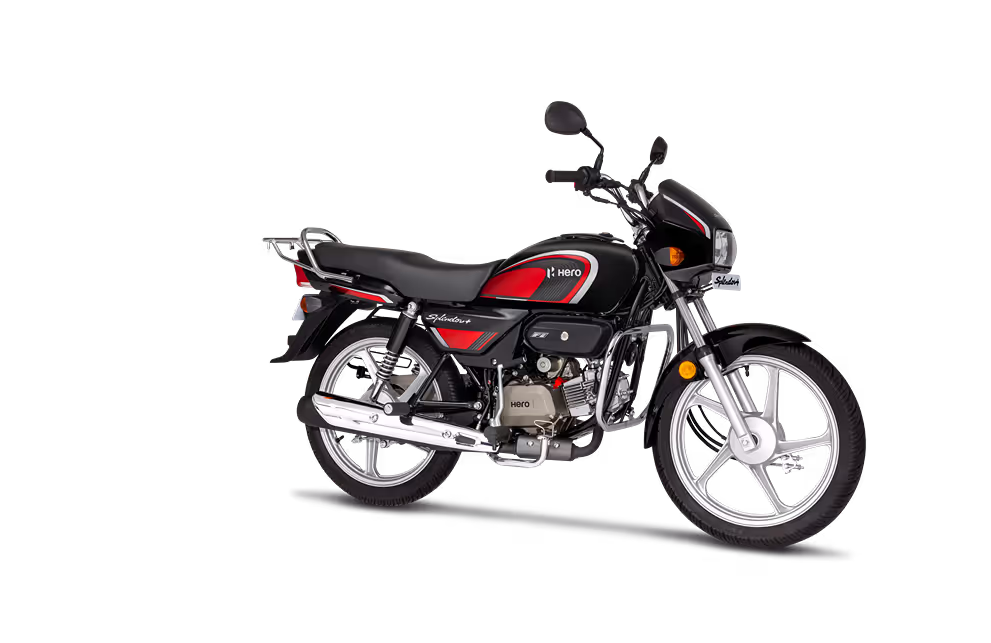
₹74,958 (ex-showroom) | 97.2cc | Mileage: 70 km/l
The Hero Splendor Plus is India's best-selling motorcycle — a title it has held for over two decades — and it has earned that position through a combination of unmatched reliability, the lowest running costs in the segment, and Hero's 6,000+ service network that reaches every corner of the country. If you are buying a 100cc motorcycle for practical daily commuting and long-term ownership, the Splendor Plus is the benchmark everything else is measured against.
Its 97.2cc air-cooled single-cylinder engine is among the most refined in the 100cc class — smooth at idle, consistently frugal at 70 km/l, and virtually indestructible with regular servicing. The engine has been continuously improved over the years without losing its character: it starts easily, pulls cleanly through traffic, and asks almost nothing of the rider in terms of maintenance attention between service intervals.
Build quality is solid for the price point. Panel gaps are acceptable, paint finish is durable, and Hero's choice of suppliers for rubber and electrical components has improved considerably in recent years. Resale value is the strongest of any 100cc motorcycle in India — a well-maintained 3-year-old Splendor Plus retains approximately 60–65% of its original price, which is exceptional for this segment.
Pros
- India's best-selling bike — proven over decades
- 70 km/l — among the best real-world figures in segment
- 6,000+ Hero service points — unmatched coverage nationwide
- Lowest spare part costs in the 100cc segment
- Best resale value — 60–65% retained after 3 years
Cons
- No disc brake — drum brakes on all variants
- No Bluetooth or USB — basic instrument cluster
- Conservative styling — less visually distinctive than rivals
- Suspension tuning prioritises comfort over handling
Who should buy: First-time buyers and daily commuters across urban, semi-urban, and rural India who want the most reliable, most economical, and most serviceable 100cc motorcycle available. The safest buy in the segment.
View Full Specs & On-Road Price
2. Hero HF Deluxe
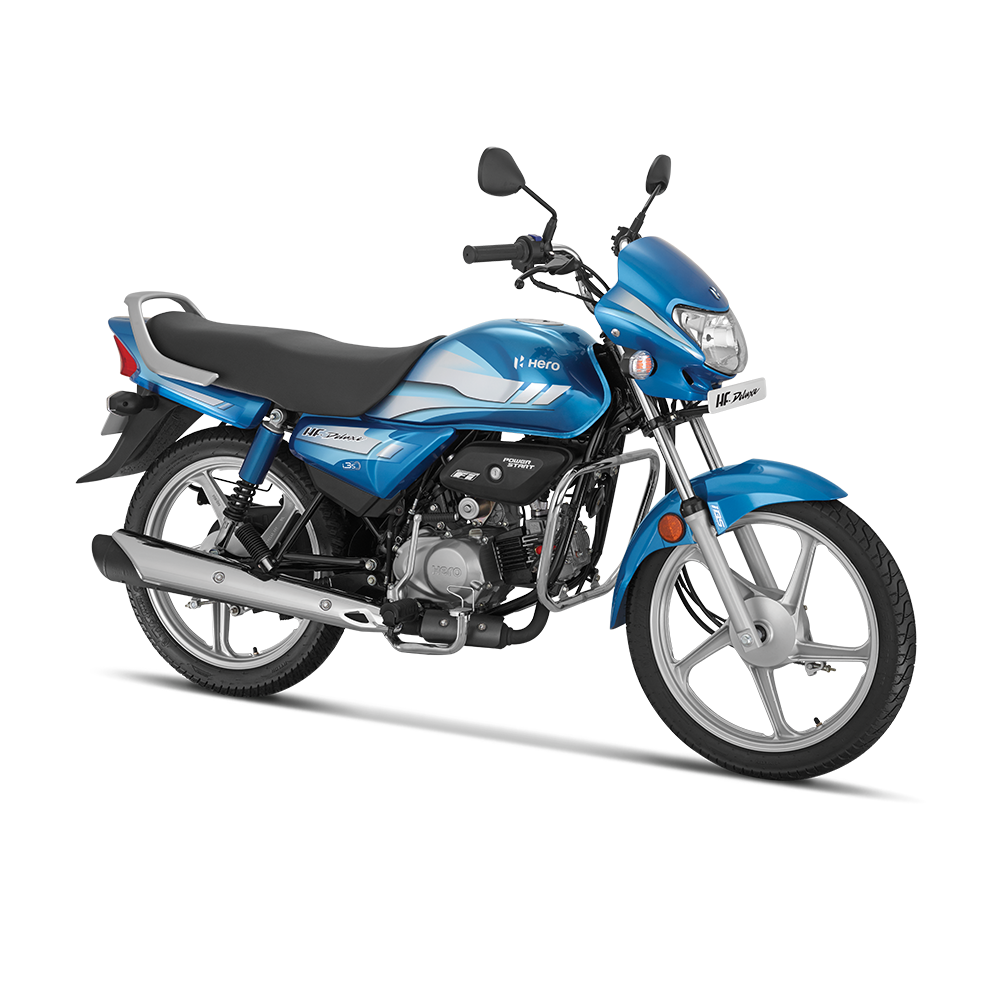
₹57,657 (ex-showroom) | 97.2cc | Mileage: 65–70 km/l
The Hero HF Deluxe is the most affordable motorcycle in this guide and one of the cheapest motorcycles available in India. At ₹57,657 ex-showroom, it brings Hero's 97.2cc engine, Hero's service network, and a basic but functional feature set to buyers who need bare-bones reliable transportation at the absolute lowest entry price. For agricultural workers, rural daily commuters, and first-time buyers on a tight budget, the HF Deluxe is often the only choice that makes financial sense.
The 97.2cc engine is shared with the Splendor Plus and delivers 65–70 km/l in real-world conditions — genuine fuel economy that meaningfully reduces running costs over the ownership period. The bike is available in both kick-start and self-start variants, with the kick-start version being the most affordable. Drum brakes front and rear, a basic analogue instrument cluster, and minimal body trim keep weight down and the price as low as possible.
What the HF Deluxe trades away for its low price is features, comfort, and styling. The seat is narrower than the Splendor Plus, the suspension is tuned firm, and there is nothing in the way of modern conveniences. Buyers who can stretch to ₹74,958 should seriously consider the Splendor Plus instead. But for buyers where that ₹17,000 gap genuinely matters, the HF Deluxe is the right call.
Pros
- Cheapest motorcycle in this guide at ₹57,657
- 65–70 km/l — strong real-world fuel economy
- Hero 97.2cc engine — proven, low-maintenance reliability
- Full Hero 6,000+ service network
- Kick-start option — ideal for rural use without reliable power
Cons
- No disc brake, no CBS, no USB — very basic spec
- Narrower seat — less comfortable on longer rides
- Analogue cluster only — no modern instrumentation
- Styling dated compared to Splendor Plus and Passion Plus
Who should buy: Budget-first buyers — especially in rural and semi-urban areas — who need the cheapest reliable motorcycle available. Also ideal for buyers who want a Hero kick-start option for areas with unreliable electrical supply.
View Full Specs & On-Road Price
3. Hero HF 100
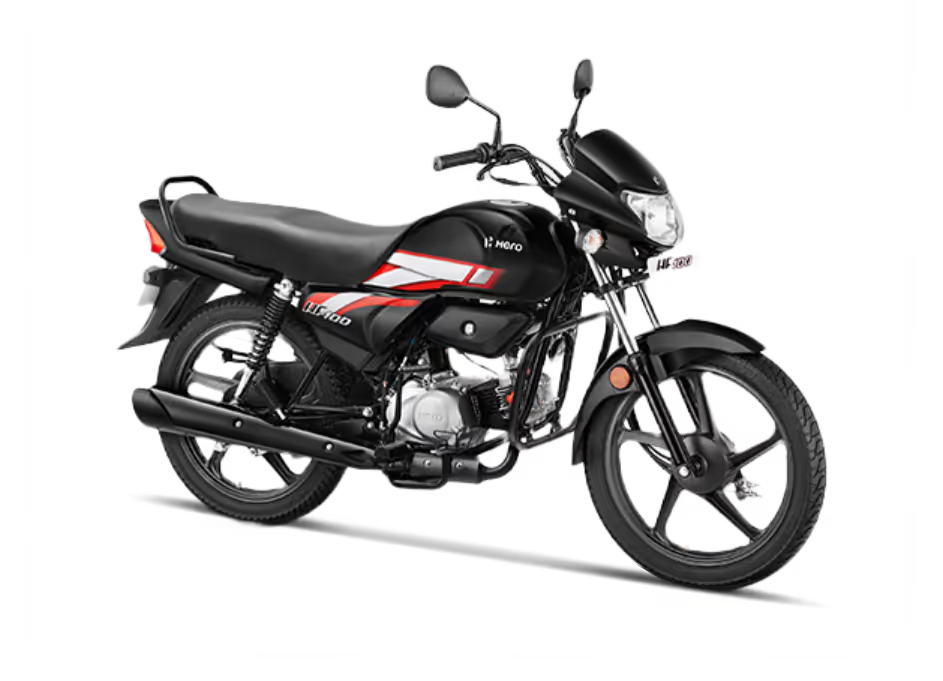
₹59,839 (ex-showroom) | 97.2cc | Mileage: 70 km/l
The Hero HF 100 sits just above the HF Deluxe in Hero's entry lineup and is positioned as the lightest, most straightforward motorcycle Hero sells. At 110 kg kerb weight, it is the lightest Hero in this guide — which translates to easier low-speed manoeuvrability, better handling in tight city traffic, and slightly improved agility for shorter urban commuters. The 97.2cc engine delivers 70 km/l, marginally better than the HF Deluxe's real-world figure due to the lower kerb weight.
Hero offers the HF 100 in both kick-start and self-start variants, making it accessible across a wider range of buyer profiles. The instrument cluster is analogue and basic, brakes are drum front and rear, and the design is clean and minimal — which is appropriate for a motorcycle at this price point. Hero's i3S idle stop-start system is not available on the HF 100, but at this displacement and price, the absence is understandable.
The HF 100 is priced just ₹2,182 above the HF Deluxe. For buyers choosing between the two, the HF 100 offers marginally better mileage and a slightly more modern design treatment at a negligible price premium — making it the more sensible choice between the two entry Hero models in most cases.
Pros
- Lightest Hero in this guide — 110 kg, easy to handle
- 70 km/l — best mileage figure of the Hero budget range
- Kick + self-start variants available
- Only ₹2,182 more than HF Deluxe for better spec
- Full Hero 6,000+ service network
Cons
- No disc brake, no CBS, no USB — basic spec like HF Deluxe
- Analogue cluster only
- Limited features compared to Splendor Plus at ₹15,000 more
- No i3S stop-start system
Who should buy: Entry-level buyers who want the lightest, most manoeuvrable Hero at the lowest possible price — and are choosing between the two HF models. The HF 100 is the better value choice over the HF Deluxe given the marginal price difference.
View Full Specs & On-Road Price
4. Hero Splendor Plus XTEC
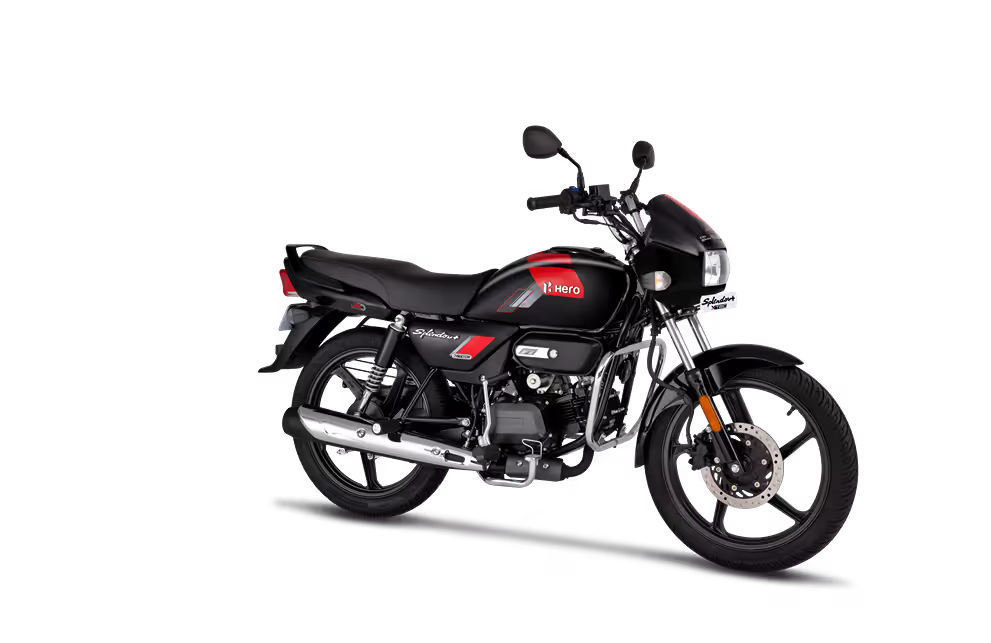
₹78,647 (ex-showroom) | 97.2cc | Mileage: 70 km/l
The Hero Splendor Plus XTEC is the most feature-loaded 100cc motorcycle in this guide — and arguably the most feature-loaded 100cc motorcycle available in India in 2026. It takes the proven Splendor Plus platform and adds Hero's full XTEC technology stack: Bluetooth connectivity via Hero's Connect app, USB charging, a semi-digital instrument cluster with turn-by-turn navigation alerts, and a full LED headlamp. For a 100cc commuter, this feature set is genuinely impressive.
The Bluetooth integration enables call and message notifications, trip data logging, and navigation prompts — making it meaningfully useful for urban commuters who rely on their smartphone throughout the day. The USB charging port keeps the phone topped up on longer commutes. The semi-digital cluster provides a cleaner, more legible readout than the analogue unit on the base Splendor Plus, and the LED headlamp is a significant improvement in night visibility.
The 97.2cc engine and 70 km/l mileage are unchanged from the base Splendor Plus. Hero's full 6,000+ service network applies. At ₹78,647, the XTEC is ₹3,689 more than the Splendor Plus — a very reasonable premium for the feature upgrade. It is the most compelling version of the Splendor Plus for urban buyers who want modern technology without stepping up to 125cc.
Pros
- Bluetooth + USB + LED + semi-digital cluster — best 100cc feature set
- 70 km/l — no mileage penalty for the feature upgrade
- Only ₹3,689 premium over base Splendor Plus
- Full Hero 6,000+ service network retained
- Navigation alerts via Hero Connect app — genuinely useful
Cons
- No disc brake — drum brakes even on XTEC variant
- Carbureted engine — no FI option at 100cc
- Conservative styling unchanged from base Splendor Plus
- Slightly heavier than HF 100 and Honda Shine 100
Who should buy: Urban daily commuters who want the Splendor Plus's proven reliability and Hero's service network but also need modern features — Bluetooth, USB, LED — at the lowest possible price. The best 100cc choice for technology-conscious buyers.
View Full Specs & On-Road Price
5. Hero Passion Plus
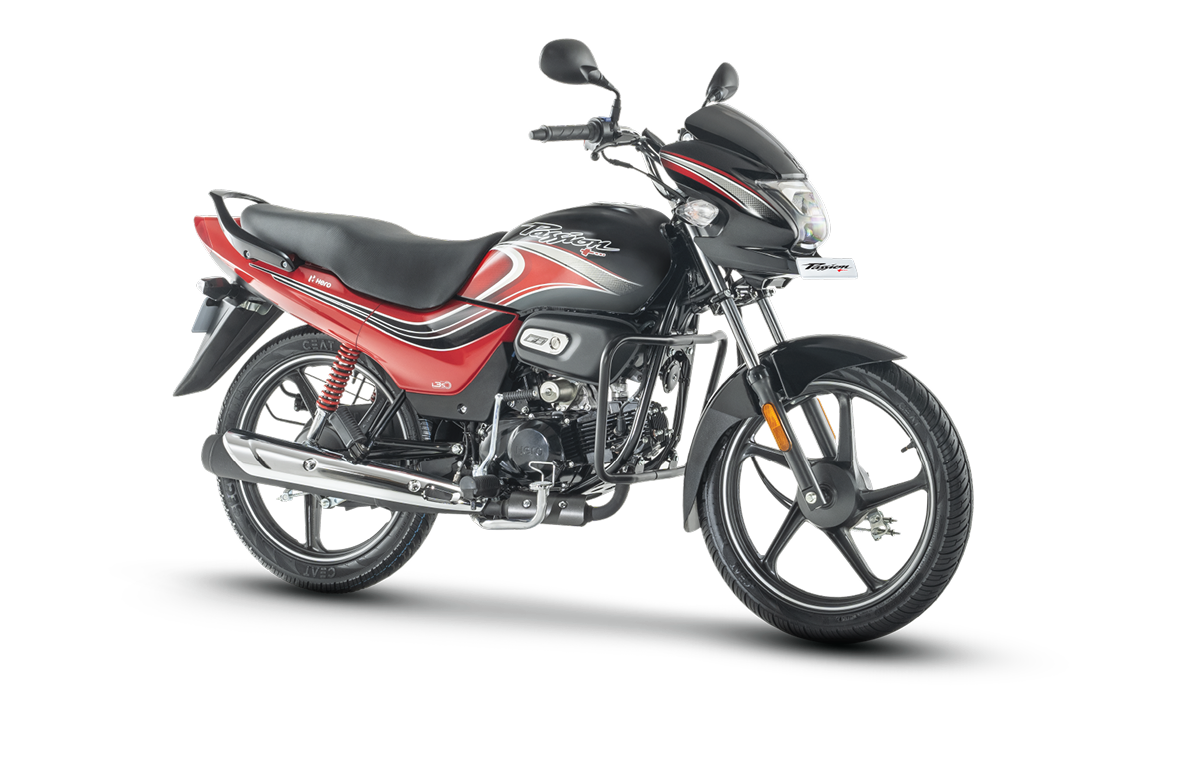
₹77,439 (ex-showroom) | 97.2cc | Mileage: 70 km/l
The Hero Passion Plus occupies a distinct niche in the 100cc segment — it is the most comfort-focused 100cc motorcycle Hero makes, designed for riders who cover longer daily distances and prioritise ride quality over feature count. Its higher ground clearance, wider and better-padded seat, and slightly more relaxed suspension tuning compared to the Splendor Plus make a genuine difference on rough urban roads and potholed semi-urban routes.
The 97.2cc engine delivers 70 km/l — identical to the Splendor Plus — with the same smooth, low-vibration character. The Passion Plus features alloy wheels on select variants, a more contemporary design language with body graphics that appeal to younger buyers, and a slightly taller seating position that reduces fatigue on 40–60 km daily commutes. It also offers Hero's i3S idle stop-start system on some variants, which meaningfully improves mileage in heavy stop-start city traffic.
At ₹77,439, the Passion Plus is priced ₹2,481 below the Splendor Plus XTEC and ₹2,481 above the base Splendor Plus. For buyers who want the Splendor engine and Hero reliability but spend more time in the saddle daily, the Passion Plus's comfort-oriented setup is the better choice over the base Splendor Plus.
Pros
- Best seat comfort and ground clearance in Hero 100cc range
- 70 km/l — same strong mileage as Splendor Plus
- i3S stop-start on select variants — improves urban mileage
- More contemporary styling than Splendor Plus base
- Full Hero 6,000+ service network
Cons
- No Bluetooth or USB — XTEC features not available on Passion Plus
- No disc brake option
- Priced close to XTEC — the XTEC offers better features for ₹1,208 more
- Slightly heavier than HF 100 and Honda Shine 100
Who should buy: Daily commuters who spend 45–60 minutes in the saddle and prioritise seat comfort and ride quality over modern features. Best suited to longer daily commutes on imperfect road surfaces. Note — buyers wanting features should step up to the XTEC for ₹1,208 more.
View Full Specs & On-Road Price
6. Honda Shine 100

₹65,557 (ex-showroom) | 98.9cc | Mileage: 65 km/l
The Honda Shine 100 is Honda's entry into the 100cc segment and the most affordable way to access Honda's engine refinement and build quality at this displacement. Its 98.9cc single-cylinder engine is the smoothest unit in the 100cc class — lower vibration, a cleaner idle, and a quieter engine note than the Hero and Bajaj equivalents — making it a noticeably more refined experience for daily riders who are sensitive to engine noise and feel.
At 99 kg kerb weight, the Honda Shine 100 is the lightest motorcycle in this guide — lighter even than the Hero HF 100. This makes it exceptionally easy to handle in slow urban traffic, park in tight spaces, and manoeuvre for shorter and lighter riders. The upright ergonomics are comfortable for daily use, and Honda's build quality means panel gaps and paint finish remain in good condition through the ownership period.
The base Shine 100 uses drum brakes front and rear and has a basic analogue cluster. Buyers wanting CBS braking and alloy wheels should step up to the Shine 100 DX. Mileage of 65 km/l is slightly below the Hero equivalent — Honda's engine tuning prioritises refinement over peak efficiency, which is a deliberate and reasonable trade-off for the target buyer.
Pros
- Lightest bike in this guide — 99 kg
- Smoothest engine in the 100cc segment — Honda refinement
- Honda build quality — best paint and panel durability
- Good resale value in urban markets
- Comfortable upright ergonomics for daily use
Cons
- 65 km/l — lower mileage than Hero and Bajaj 100cc bikes
- No CBS, no alloy wheels on base variant
- Thinner service network than Hero in rural areas
- Basic analogue cluster, no USB or Bluetooth
Who should buy: City commuters who want Honda build quality and engine refinement at the most accessible Honda price point. Especially well suited to shorter and lighter riders who appreciate the lowest kerb weight in the segment.
View Full Specs & On-Road Price
7. Honda Shine 100 DX

₹71,511 (ex-showroom) | 98.9cc | Mileage: 65 km/l
The Honda Shine 100 DX is the step-up variant of the Shine 100, adding CBS (Combined Braking System), alloy wheels, and a more premium finish over the base model at a ₹5,954 premium. These three additions meaningfully improve the everyday riding experience — CBS provides better braking balance for everyday riders, alloy wheels reduce unsprung weight for improved handling and easier tyre changes, and the premium finish gives the DX a more polished appearance that holds up better over time.
The 98.9cc engine is identical to the base Shine 100 — same Honda refinement, same 65 km/l mileage, same 99 kg kerb weight. What changes is the specification: the DX variant represents the correct way to buy a Shine 100 if budget allows, as CBS is a genuine safety improvement over the base drum-only setup, and alloy wheels are a practical long-term advantage over spoke wheels.
At ₹71,511, the Shine 100 DX competes closely with the Hero Splendor Plus at ₹74,958. The choice between the two is essentially Honda refinement and CBS braking (Shine 100 DX) versus Hero's service network depth and marginally better mileage (Splendor Plus). In metro cities where Honda's service coverage is comparable to Hero's, the DX is a genuinely strong alternative.
Pros
- CBS standard — best braking safety in budget 100cc
- Alloy wheels — better handling, easier tyre changes
- Honda engine refinement — smoothest 100cc in this guide
- Lightest bike in guide — 99 kg, same as base Shine 100
- Good urban resale value
Cons
- 65 km/l — lower mileage than Hero and Bajaj alternatives
- Thinner rural service network than Hero
- No Bluetooth, USB, or LED headlamp
- Priced close to Hero Splendor Plus with better resale
Who should buy: Urban commuters who want Honda's engine quality with CBS braking and alloy wheels — and are based in a city where Honda's service network is adequate. The DX is the version of the Shine 100 that most buyers should choose over the base model.
View Full Specs & On-Road Price
8. Bajaj Platina 100

₹66,593 (ex-showroom) | 102cc | Mileage: 70 km/l
The Bajaj Platina 100 is the most ride-comfort-focused 100cc motorcycle in this guide. Bajaj's SNS (Spring in Spring) rear suspension — a coil-within-coil design that absorbs small bumps within the inner spring and larger impacts through the outer spring — delivers a genuinely superior ride over broken urban roads compared to conventional single spring setups. For riders who commute daily on rough, potholed surfaces, this is a tangible real-world advantage over the Hero and Honda alternatives.
The ComforTec seat is wider and better padded than any seat in the 100cc segment — again, a meaningful advantage for riders covering 40–50 km daily. The 102cc single-cylinder engine delivers 70 km/l in real-world conditions, matching the best Hero figures. Bajaj's anti-skid braking on the rear wheel (on some variants) provides useful braking stability on wet roads.
Bajaj's service network is strong in tier-1 and tier-2 cities but notably thinner than Hero's in rural areas. Resale value trails Hero and Honda in most markets. But for urban and semi-urban buyers who commute on bad roads and spend significant time on the bike each day, the Platina 100's ride quality advantage is a compelling differentiator that the spec sheet alone does not capture.
Pros
- Best ride quality in segment — SNS suspension is genuinely superior
- ComforTec seat — widest, best-padded seat in 100cc class
- 70 km/l — matches best Hero mileage figures
- 102cc engine — marginally more displacement than rivals
- Anti-skid rear braking on select variants
Cons
- Weaker resale than Hero and Honda in most markets
- Thinner rural service network than Hero
- No Bluetooth, USB, disc brake, or CBS
- Heavier than Honda Shine 100 at 117 kg
Who should buy: Commuters in urban or semi-urban areas with rough road surfaces who spend 45–60 minutes daily on the bike and want the best ride comfort available in the 100cc segment. Best for city riders where Bajaj service coverage is adequate.
View Full Specs & On-Road Price
Side-by-Side Comparison
Here is how all eight bikes compare across the factors that matter most to 100cc buyers.
| Bike | Price (ex-showroom) | Engine | Mileage | Best For | Weakest Point |
|---|---|---|---|---|---|
| Hero Splendor Plus | ₹74,958 | 97.2cc | 70 km/l | Best overall — reliability + resale | No disc brake |
| Hero HF Deluxe | ₹57,657 | 97.2cc | 65–70 km/l | Lowest price — budget buyers | Very basic spec |
| Hero HF 100 | ₹59,839 | 97.2cc | 70 km/l | Lightest Hero, best entry value | No modern features |
| Hero Splendor Plus XTEC | ₹78,647 | 97.2cc | 70 km/l | Best 100cc feature set | No disc brake |
| Hero Passion Plus | ₹77,439 | 97.2cc | 70 km/l | Best comfort + ground clearance | No XTEC features |
| Honda Shine 100 | ₹65,557 | 98.9cc | 65 km/l | Lightest — 99 kg, best refinement | Lower mileage, thin rural network |
| Honda Shine 100 DX | ₹71,511 | 98.9cc | 65 km/l | CBS + alloy + Honda quality | Lower mileage, thin rural network |
| Bajaj Platina 100 | ₹66,593 | 102cc | 70 km/l | Best ride quality — SNS suspension | Weaker resale value |
Mileage & Running Costs
ARAI figures are measured under controlled lab conditions — real-world mileage in Indian city traffic is always lower. In typical urban riding with traffic lights, idling, and irregular speeds, expect 10–15% below ARAI claims.
Based on owner reports from popular Indian motorcycling forums:
- Hero Splendor Plus: 70 km/l city; most consistent performer in the segment
- Hero HF Deluxe: 65–70 km/l city; kick-start variant marginally better in rural stop-free conditions
- Hero HF 100: 70 km/l city; lighter weight contributes to consistent efficiency
- Hero Splendor Plus XTEC: 70 km/l city; added electronics add negligible weight and no mileage penalty
- Hero Passion Plus: 70 km/l city; i3S stop-start improves urban figure on select variants
- Honda Shine 100: 65 km/l city; lower than Hero but trades some efficiency for engine refinement
- Honda Shine 100 DX: 65 km/l city; alloy wheels offset any weight gain from CBS
- Bajaj Platina 100: 70 km/l city; matches Hero despite SNS suspension and heavier kerb weight
At ₹104/litre and a 35 km daily commute, the Hero Splendor Plus costs approximately ₹1,560 per month in fuel. The Honda Shine 100 costs approximately ₹1,870 for the same distance. Over three years, that gap adds up to approximately ₹11,000 in fuel costs alone — a meaningful consideration when the price difference between the bikes is similarly sized.
Service & Maintenance Costs
Typical servicing costs for 100cc bikes across major Indian cities (July 2026, based on authorised dealer quotes):
- Basic service (oil change + filters): ₹350–₹650
- Standard periodic service (every 3,000 km): ₹500–₹900
- Major service with parts (every 10,000 km): ₹1,200–₹2,000
- Clutch cable replacement: ₹80–₹150
- Tyre replacement (MRF/CEAT): ₹800–₹1,200 per tyre
- Brake shoe replacement (drum): ₹150–₹300
Hero models — the Splendor Plus, HF Deluxe, HF 100, Splendor Plus XTEC, and Passion Plus — come in at the lower end of these ranges, with the widest genuine parts availability and lowest dealer labour charges due to volume. Honda's 100cc bikes cost slightly more per service but Honda's build quality means some consumables last longer. The Bajaj Platina 100 falls between the two — Bajaj's SNS suspension components are proprietary and slightly more expensive to service than conventional setups.
Key Buying Factors for 100cc
- Daily commute distance: Under 20 km/day — any bike here suits you well. 30–50 km/day — mileage matters; lean toward Hero or Bajaj Platina. Over 50 km/day — consider stepping up to a 125cc motorcycle for better highway composure.
- Service network near you: Rural or semi-urban areas — Hero models are the clear choice; Hero's 6,000+ network has no equivalent. Metro cities — Honda and Bajaj coverage is adequate.
- Feature priorities: Need Bluetooth and USB? Only the Hero Splendor Plus XTEC offers this at 100cc. Need CBS braking? Honda Shine 100 DX. Happy with basics? HF Deluxe, HF 100, or Shine 100.
- Ride quality vs. efficiency: Want the smoothest engine? Honda Shine 100 or DX. Want the best suspension comfort? Bajaj Platina 100. Want the best mileage? Hero Splendor Plus, HF 100, or Platina 100 — all deliver 70 km/l.
- Resale plan: Selling within 3–4 years? Hero Splendor Plus holds value best at 60–65% after 3 years, followed by Honda models. Bajaj depreciates fastest in this segment.
- Weight and handleability: Lighter and shorter riders — Honda Shine 100 or DX at 99 kg is the easiest to handle in traffic. Taller riders — Hero Passion Plus offers the highest seat and best ergonomic fit.
When You Should Look Beyond 100cc
Consider stepping up to 125cc if: you regularly use highways at 60–80 km/h, carry a pillion frequently, or commute more than 50 km per day. At sustained speeds above 65 km/h, 100cc engines are working near their comfortable limit — vibration increases, overtaking becomes difficult, and the power margin for pillion loads shrinks noticeably.
In that case, a Hero Splendor Plus XTEC 2.0, Honda SP 125, Hero Glamour, or TVS Raider 125 — available between ₹78,000 and ₹96,000 — will make a material difference to your daily riding experience. The jump from 100cc to 125cc is more noticeable than many buyers expect, particularly for highway use and two-up riding.
Final Verdict
For most buyers in the 100cc segment, the Hero Splendor Plus remains the wisest overall choice. It leads the segment on reliability, service coverage, resale value, and mileage — and has done so for over two decades. The higher trust that comes with buying India's best-selling motorcycle is a real-world advantage that no specification comparison fully captures.
If you want modern features on a 100cc motorcycle, the Hero Splendor Plus XTEC is the only option that delivers them — Bluetooth, USB, LED, and semi-digital cluster at just ₹3,689 over the base Splendor Plus. For Honda buyers, the Honda Shine 100 DX is the right version to choose — CBS and alloy wheels at ₹5,954 over the base Shine 100 is a worthwhile upgrade.
Among the comfort-oriented options, the Bajaj Platina 100 delivers the best ride quality through its SNS suspension and ComforTec seat — a genuine differentiator on rough urban roads. The Hero Passion Plus offers a similar comfort-first approach with Hero's service advantage. And for absolute budget buyers, the Hero HF 100 edges out the HF Deluxe at just ₹2,182 more for better mileage and a more current design.
Before finalising, take a test ride. Seat height and handlebar reach vary more than the specification sheets suggest in this segment — and the bike that feels right on day one will keep you comfortable at year three.
Frequently Asked Questions
Which is the best 100cc bike in India in 2026?
The Hero Splendor Plus is the best overall 100cc bike for most buyers — leading the segment on reliability, real-world mileage (70 km/l), service coverage (6,000+ Hero service points), and resale value (60–65% retained after 3 years). For buyers who want modern features at 100cc, the Hero Splendor Plus XTEC is the top choice with Bluetooth, USB, and LED at just ₹3,689 more.
Which 100cc bike gives the best real-world mileage?
The Hero Splendor Plus, Hero HF 100, Hero Splendor Plus XTEC, Hero Passion Plus, and Bajaj Platina 100 all deliver 70 km/l in real-world city conditions — the best figures in the segment. Honda's Shine 100 and Shine 100 DX deliver 65 km/l, slightly lower due to Honda's engine tuning prioritising refinement over peak efficiency.
Hero Splendor Plus vs Honda Shine 100 DX — which should I choose?
Choose the Hero Splendor Plus if you live in a semi-urban or rural area (Hero's service network is far superior), want better mileage (70 km/l vs 65 km/l), or plan to keep the bike 3+ years for stronger resale. Choose the Honda Shine 100 DX if you are in a metro with good Honda coverage, want CBS braking and alloy wheels as standard, and prefer Honda's smoother, more refined engine character. The Splendor Plus is ₹3,447 more expensive but offers better long-term ownership value in most markets.
Which 100cc bike has the best features?
The Hero Splendor Plus XTEC is the only 100cc motorcycle in the segment with Bluetooth connectivity, USB charging, a semi-digital instrument cluster, and a full LED headlamp. No other 100cc bike matches this feature set. The Honda Shine 100 DX offers CBS braking and alloy wheels — the next best feature upgrade in the 100cc class — but does not offer Bluetooth or USB.
Which 100cc bike is best for rural areas?
Hero models — the Splendor Plus, HF Deluxe, HF 100, Splendor Plus XTEC, and Passion Plus — are the clear choices for rural and semi-urban buyers. Hero MotoCorp's 6,000+ service points and widest genuine parts availability in the country make Hero bikes significantly easier to maintain outside major cities. The Hero Splendor Plus is the specific recommendation for rural buyers — best service coverage, best mileage, lowest parts cost.
Which 100cc bike holds its resale value best?
The Hero Splendor Plus holds the best resale value in the 100cc segment — a well-maintained 3-year-old Splendor Plus typically retains 60–65% of its original price. Honda models (Shine 100, Shine 100 DX) come second, retaining approximately 55–62% in urban markets. Bajaj Platina 100 generally retains 50–58% after three years in most markets.
Hero HF Deluxe vs Hero HF 100 — which is better?
The Hero HF 100 is the better choice between the two in most cases. At just ₹2,182 more than the HF Deluxe, it offers better real-world mileage (70 km/l vs 65–70 km/l), a more contemporary design, and the same engine and service network. The HF Deluxe is only worth choosing if you specifically need the absolute lowest possible purchase price or require the kick-start variant for areas with unreliable electrical supply.
Is the Bajaj Platina 100 worth buying over the Hero Splendor Plus?
The Bajaj Platina 100 is worth considering if you commute daily on rough, potholed roads and spend 40–60 minutes in the saddle — its SNS suspension and ComforTec seat deliver a genuinely superior ride experience compared to the Splendor Plus. However, for most buyers, the Splendor Plus's stronger resale, wider service network, and better long-term ownership economics make it the safer overall choice. The Platina 100 is the right pick on comfort grounds alone; the Splendor Plus wins on everything else.
What is the approximate EMI for 100cc bikes?
At a standard 10% down payment and 24-month tenure at approximately 10.5% interest, monthly EMIs range from roughly ₹2,400 (Hero HF Deluxe) to approximately ₹3,300 (Hero Splendor Plus XTEC). Many dealers offer zero-processing-fee schemes through manufacturer-backed lenders. Always compare offers from at least two lenders — rates can vary by 0.5–1% between lenders on the same vehicle.
Should I buy a 100cc or 125cc motorcycle?
Choose 100cc if your daily commute is under 40 km, you rarely use highways, and budget is a primary consideration — the best 100cc bikes cost ₹57,000–₹79,000, significantly less than the ₹78,000–₹96,000 range of comparable 125cc options. Choose 125cc if you regularly ride at 65–80 km/h on highways, carry a pillion frequently, or cover more than 50 km per day — the extra displacement makes a genuine difference in these use cases that the fuel cost difference rarely compensates for.