Best Bikes for Daily Commuting in India (2026)
This guide is based on real owner forum data, dealer service quotes, and independent test rides — not manufacturer claims. Mileage figures reflect typical city riding conditions, not ARAI lab results. Commuting suitability scores are based on a composite of mileage, comfort, service accessibility, running cost, and pillion capability.
A daily commuter bike is judged by different standards than a weekend tourer or a track-day machine. You need it to start reliably every morning, remain comfortable across 30–60 minutes of city riding, cost as little as possible per kilometre, and be easy to service close to home. The bike that wins a performance comparison may be the worst choice for 300 days a year of stop-start city use.
This guide covers 14 motorcycles across four budget tiers — from India's most affordable commuters to premium daily riders — ranked and reviewed specifically for commuting use. We weigh the factors that matter most to riders who clock 25–60 km every working day: mileage, seat comfort, vibration, service network reach, and total monthly running cost.
Quick Picks — Skip to Your Best Match
- Tightest budget: Hero HF 100 — India's cheapest bike, near-class-leading mileage
- Budget reliability: Hero HF Deluxe — bare-bones Hero dependability
- Best mileage commuter: Bajaj Platina 100 — 60–68 km/l, softest suspension
- Best overall commuter: Hero Splendor Plus — lowest lifetime ownership cost
- Most refined budget ride: Honda Shine 100 — least vibration under ₹70k
- Best comfort commuter: TVS Radeon — softest seat, mobile charging
- Best 125cc for rural areas: Hero Glamour — Hero's network at 125cc
- Best 125cc overall: Honda SP 125 — FI, best mileage, disc, digital cluster
- Best features 125cc: TVS Raider 125 — Bluetooth, USB-C, TFT display
- Best long-distance commuter: Honda Unicorn — smooth 160cc, low fatigue
- Best cruiser commuter: Bajaj Avenger Street 160 — relaxed posture for long rides
- Best premium daily: Yamaha FZ-S Fi V4 — best build quality under ₹1.3L
- Best naked premium: Suzuki Gixxer — balanced, all-day comfort
- Most distinctive commuter: TVS Ronin — retro-modern style, long-ride ergonomics
At a Glance — All 14 Bikes Compared
All fourteen bikes ranked by commuting suitability across budget tiers.
| Bike | Price (ex-show.) | Engine | City Mileage | Commute Tier | Commuting Strength |
|---|---|---|---|---|---|
| Hero HF 100 | ₹57,000 | 97.2cc | 60–65 km/l | Budget | Lowest total cost of ownership |
| Hero HF Deluxe | ₹60,000 | 97cc | 55–63 km/l | Budget | Hero reliability at rock-bottom price |
| Bajaj Platina 100 | ₹67,000 | 102cc | 60–68 km/l | Budget | Best mileage + softest suspension |
| Hero Splendor Plus | ₹75,000 | 97.2cc | 55–62 km/l | Mid | Best long-term ownership value |
| Honda Shine 100 | ₹66,000 | 98.98cc | 52–60 km/l | Mid | Least vibration, Honda refinement |
| TVS Radeon | ₹72,000 | 109.7cc | 55–62 km/l | Mid | Most comfortable seat in segment |
| Hero Glamour | ₹85,000 | 124.7cc | 55–63 km/l | Mid | Best 125cc rural serviceability |
| Honda SP 125 | ₹96,000 | 123.94cc FI | 60–65 km/l | Mid | Best 125cc mileage + features |
| TVS Raider 125 | ₹98,000 | 124.8cc | 55–62 km/l | Mid | Best connected 125cc commuter |
| Honda Unicorn | ₹1,10,000 | 162.71cc FI | 45–52 km/l | Upper | Smoothest 160cc for long daily rides |
| Bajaj Avenger Street 160 | ₹1,22,000 | 160cc | 40–48 km/l | Upper | Best cruiser posture for long commutes |
| Yamaha FZ-S Fi V4 | ₹1,25,000 | 149cc | 42–50 km/l | Upper | Best build quality premium commuter |
| Suzuki Gixxer | ₹1,35,000 | 154.9cc | 40–47 km/l | Premium | Most balanced all-day naked |
| TVS Ronin | ₹1,45,000 | 225.9cc | 35–42 km/l | Premium | Most distinctive + highway-capable |
1. Hero HF 100
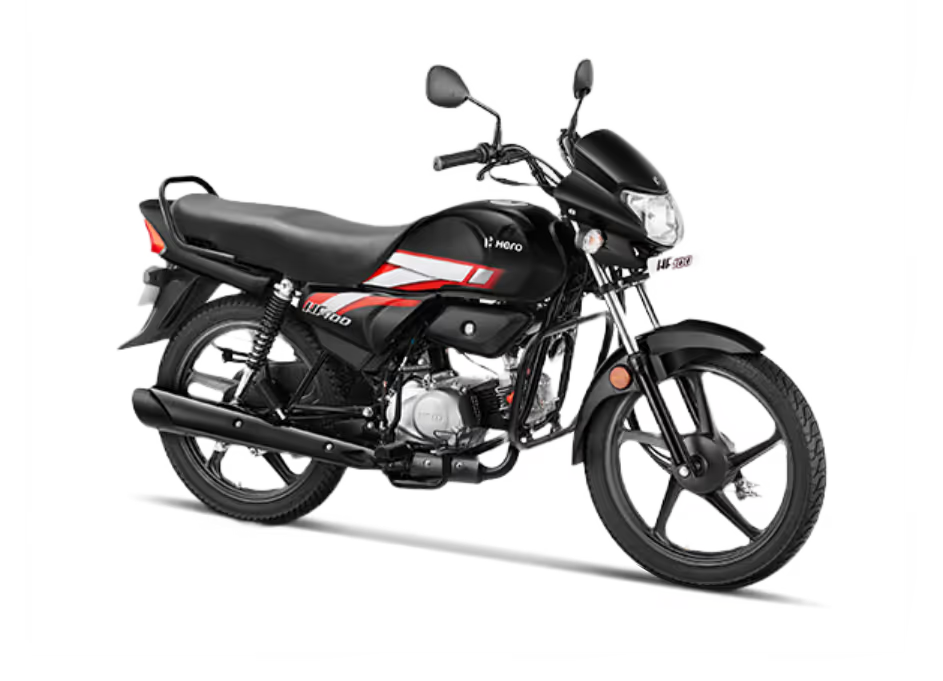
₹57,000 (ex-showroom) | 97.2cc | City mileage: 60–65 km/l
India's most affordable motorcycle makes a compelling commuting argument purely on numbers. At ₹57,000 ex-showroom and 60–65 km/l real-world mileage, the Hero HF 100 offers the lowest monthly ownership cost of any motorcycle in this guide. A basic service costs ₹400–₹700, spare parts are available at virtually every mechanic in the country, and Hero's 6,000+ authorised service network means help is rarely far away.
For buyers whose primary concern is getting from point A to point B at the absolute lowest daily cost, the HF 100 is the mathematically correct answer. The 97.2cc engine is unhurried but perfectly suited to city speeds of 40–60 km/h, and the gearbox and clutch are light enough to make stop-start traffic manageable without fatigue.
What the HF 100 does not offer is comfort on rough roads, modern features of any kind, or a riding experience that goes beyond purely functional. The suspension is firmer than the Bajaj Platina's, and the seat is narrow and basic. But for a buyer on the tightest budget who needs reliable daily transport, none of that matters as much as reliability and cost.
Pros
- Lowest purchase price and running cost in this guide
- 60–65 km/l — near class-leading mileage
- Hero's 6,000+ service network — best rural coverage
- Cheapest spare parts of any bike in India
Cons
- No modern features — drum brakes, analogue cluster
- Firm ride on rough roads — no comfort suspension
- Very dated styling
- Not suitable for highway commuting
Who should buy: Buyers on the tightest budget who need reliable A-to-B commuting at the lowest possible monthly cost. Ideal for rural commuters and first-time bike owners.
View Full Specs & On-Road Price
2. Hero HF Deluxe
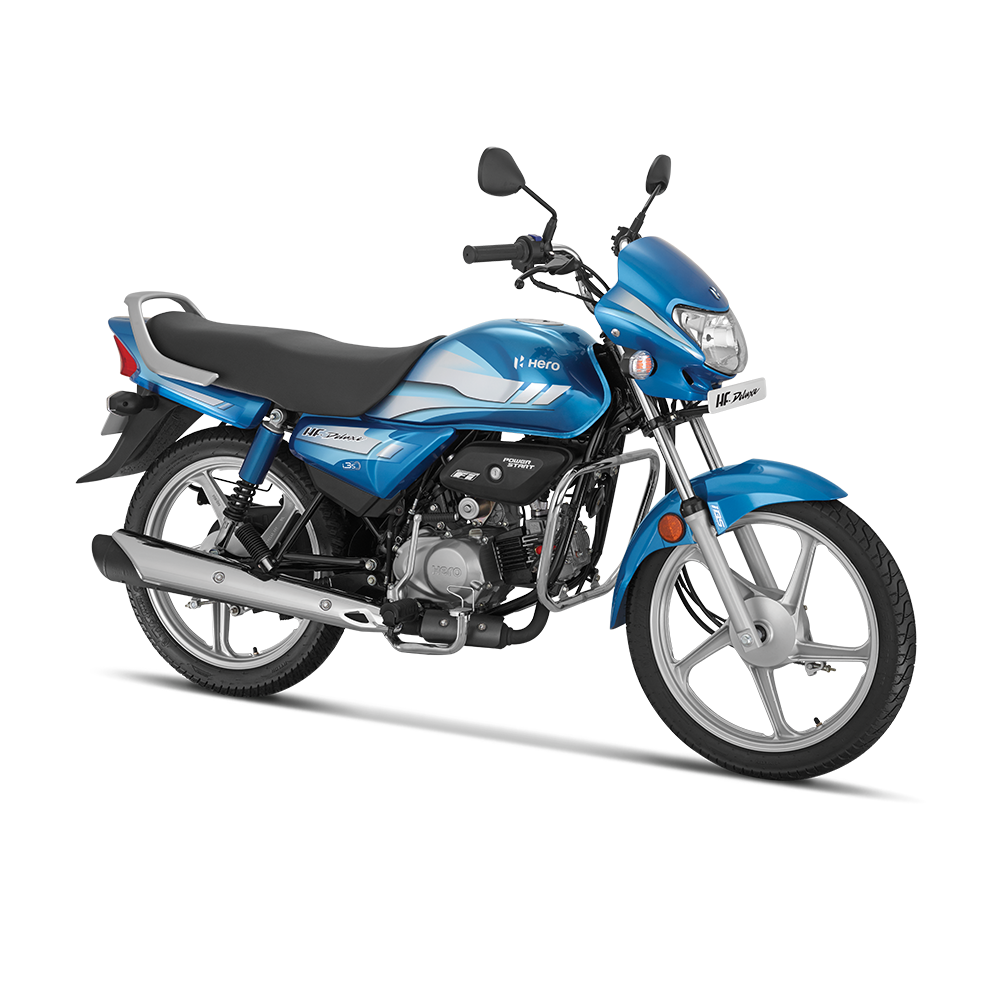
₹60,000 (ex-showroom) | 97cc | City mileage: 55–63 km/l
The Hero HF Deluxe is the HF 100 with a slightly more complete specification — a marginally wider seat, alloy wheel option on some variants, and a small step up in finish quality. At ₹60,000 it is only ₹3,000 more than the HF 100, and for most buyers that ₹3,000 represents worthwhile improvement in daily livability.
The 97cc engine is the same proven unit found across Hero's commuter range — one of the most widely serviced engines in the country. Real-world mileage of 55–63 km/l remains excellent. The HF Deluxe inherits all of Hero's service and parts advantages: over 6,000 authorised service points, sub-₹800 full services, and genuine spare parts that cost less than almost any other motorcycle in India.
Like the HF 100, the HF Deluxe is honest about what it is — a no-frills commuter built for low-cost reliability. It does not offer disc brakes, a digital cluster, or any modern features. But for a commuter covering 20–30 km of city roads daily, it delivers exactly what matters: starts every morning, rarely needs attention between services, and costs almost nothing to run.
Pros
- ₹3,000 more than HF 100 with marginally better finish
- Same proven Hero reliability and service network
- 55–63 km/l — strong commuting mileage
- Alloy wheel option on select variants
Cons
- No disc brake or modern features
- Rougher ride than the Bajaj Platina on bad roads
- Styling is very dated
- Lower resale value than the Splendor Plus
Who should buy: Budget buyers who want the HF 100's ownership advantages with a marginally more complete spec. The ₹3,000 premium is easy to justify.
View Full Specs & On-Road Price
3. Bajaj Platina 100

₹67,000 (ex-showroom) | 102cc | City mileage: 60–68 km/l
If you ride 40+ km every day on roads that aren't always smooth, the Bajaj Platina 100 is the most commuting-optimised bike in the budget segment. It leads the entire guide on real-world city mileage at 60–68 km/l, and its SNS (Spring in Spring) suspension is the softest in the sub-₹70k segment — a meaningful difference on pothole-heavy urban roads that adds up to noticeably less fatigue over a 45-minute commute.
At ₹104/litre and a 40 km daily commute, the Platina 100 costs approximately ₹1,600–₹1,800 per month in fuel. That is ₹300–₹400 less than the Honda Shine 100 on the same route — ₹4,000–₹5,000 saved per year. Over three years of daily commuting, the Platina's fuel advantage translates to ₹12,000–₹15,000 in real savings compared to less efficient rivals.
The trade-offs are build quality — panel fit and finish are a step below Honda — and resale value, which trails both Hero and Honda models. But for a buyer who will ride this bike hard every day and measures its value in cost-per-kilometre, the Platina 100 is the most financially optimised commuter in this segment.
Pros
- Best real-world city mileage in this guide — 60–68 km/l
- SNS suspension — softest ride on rough/pothole roads
- Best pillion comfort for regular two-up commuting
- Competitive price at ₹67,000
Cons
- Build quality and finish below Honda's level
- Weaker resale than Hero and Honda
- Slower throttle response — sluggish off the line
- Bajaj service network thinner than Hero in rural areas
Who should buy: Daily riders covering 40+ km on rough roads who prioritise fuel savings and suspension comfort. Also the best budget choice for regular pillion riding.
View Full Specs & On-Road Price
4. Hero Splendor Plus
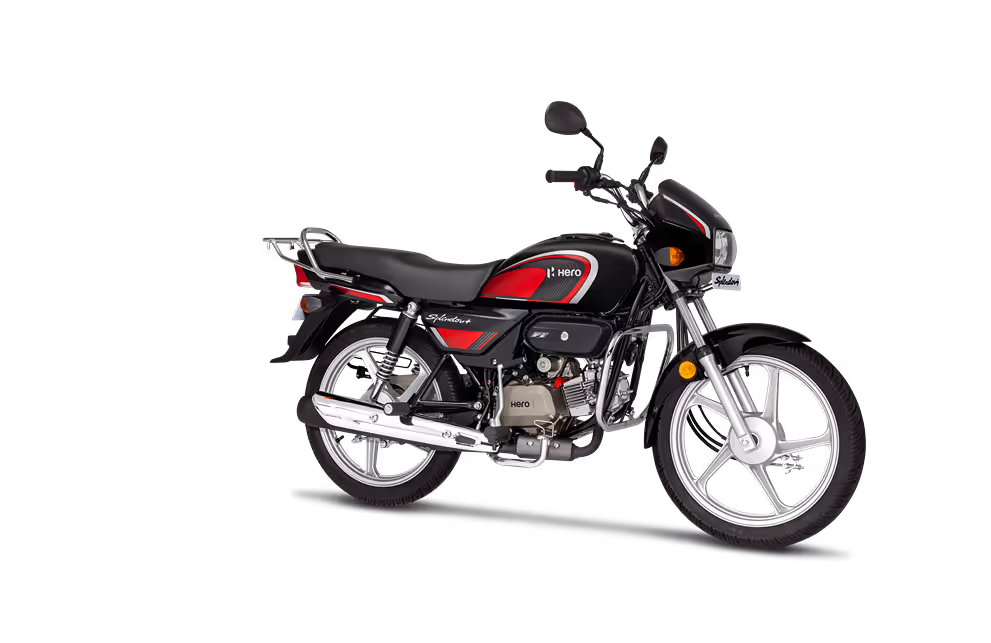
₹75,000 (ex-showroom) | 97.2cc | City mileage: 55–62 km/l
India's best-selling motorcycle for over two decades earns that status through a combination that no rival has fully replicated: the lowest long-term running cost in its class, the widest service network in the country, and a resale value that beats every other commuter here. A well-maintained three-year-old Splendor Plus typically sells for 65–72% of its original price — more than the Platina, the Shine 100, or any TVS commuter.
For daily commuting specifically, the Splendor Plus is in its element. The 97.2cc engine cruises contentedly at 50–60 km/h — exactly the range most city riders occupy — with a light clutch pull and smooth gearbox that reduce hand fatigue in stop-start traffic. A basic service at any Hero workshop costs ₹350–₹500, and the clutch plates, brake shoes, and cables that wear fastest on a commuter cost less on this bike than on virtually any other motorcycle in India.
It has a meaningful weakness for a commuter: no disc brake option. Drum brakes on both ends require more lever pressure and offer less modulation than disc setups. For buyers who want the Splendor's advantages with a disc brake, the Splendor Plus XTEC at ₹82,000 adds exactly that — along with Bluetooth and LED.
Pros
- Lowest long-term ownership cost in the mid segment
- Widest service network — 6,000+ Hero centres
- Best resale value in this guide's commuter tier
- Light clutch and smooth gearbox — low fatigue in traffic
- Low seat height (785mm) — accessible for shorter riders
Cons
- Drum brakes only — no disc option at this trim
- No digital cluster, Bluetooth, or USB charging
- Styling unchanged for many years
- Mileage drops in very heavy stop-start conditions
Who should buy: The default recommendation for most daily commuters. Best if you prioritise total ownership cost, service accessibility, and resale value over features or ride excitement.
View Full Specs & On-Road Price
5. Honda Shine 100

₹66,000 (ex-showroom) | 98.98cc | City mileage: 52–60 km/l
The Honda Shine 100 is the commuter for riders who notice vibration. Honda has tuned the 99cc engine specifically to minimise harshness — the result is the smoothest-feeling sub-₹70k commuter in this guide, and that smoothness translates directly into less hand and foot fatigue over a 45-minute city commute. For riders doing two long stints daily, the Shine 100's refinement advantage over the Hero HF range is tangible.
Build quality is another Honda strength that matters for a daily commuter: panel gaps stay tight, the finish holds up better to daily abrasion, and the engine note remains clean for longer between services than competing sub-₹70k bikes. The fuel-injected variant maintains consistent mileage across varying temperatures — a real advantage for year-round commuting in cities with temperature extremes.
The trade-off versus the Splendor Plus is a smaller service network in rural areas and slightly higher parts costs. For metro and tier-1 city riders, this rarely matters. For anyone beyond a tier-2 city, the Splendor Plus's service depth is a stronger long-term argument.
Pros
- Least vibration in sub-₹70k class — lowest commute fatigue
- Strong Honda build quality and paint durability
- FI option for consistent year-round mileage
- Competitive price — among the most affordable here
Cons
- Smaller service network than Hero in rural areas
- Parts slightly more expensive than Hero equivalents
- No Bluetooth or USB
- Mileage slightly below Platina and HF 100
Who should buy: City commuters who cover 30–50 km daily and notice vibration on longer rides. Best for metro and tier-1 city riders with easy access to Honda service.
View Full Specs & On-Road Price
6. TVS Radeon

₹72,000 (ex-showroom) | 109.7cc | City mileage: 55–62 km/l
The TVS Radeon is the comfort specialist in this guide's mid-range. Its seat is genuinely the most cushioned in the commuter segment — wider than the Splendor Plus, better padded than the Shine 100, and shaped to distribute weight more evenly across longer rides. For a rider spending 45–60 minutes in the saddle each day, this is not a minor point: seat quality has a direct and cumulative effect on how you feel when you arrive at work.
TVS has also added practical touches that most commuters lack: a mobile charging socket is standard, and the side stand indicator prevents the embarrassment of pulling away with the stand down. The retro-classic styling ages better than standard Hero commuters and stands out in traffic. The 109.7cc engine, shared with the TVS Sport, is more responsive off the line than Hero's 97cc unit, making city filtering noticeably easier.
For commuters who spend long periods daily in the saddle and value comfort above all else — particularly those doing two-way commutes exceeding 40 km — the Radeon's seat and ergonomics put it in a different class to its price-point rivals.
Pros
- Most comfortable seat in the commuter segment — widest and best cushioned
- Mobile charging socket standard
- Side stand indicator — practical safety feature
- More responsive 109.7cc engine than Hero's 97cc
- Distinctive retro-classic styling
Cons
- Lower resale than Hero models
- Smaller rural service network than Hero
- Slightly heavier than the TVS Sport
Who should buy: Riders who spend 45+ minutes daily in the saddle and prioritise physical comfort. If you arrive home with a sore back on your current bike, the Radeon's seat makes a real daily difference.
View Full Specs & On-Road Price
7. Hero Glamour
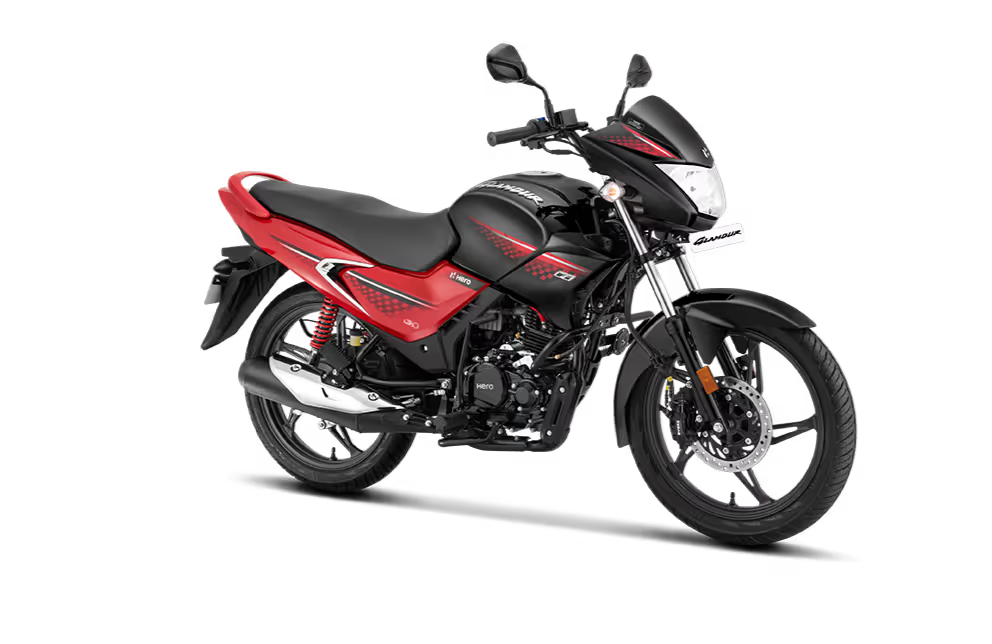
₹85,000 (ex-showroom) | 124.7cc | City mileage: 55–63 km/l
The Hero Glamour is the commuter for riders who need more than a 100cc engine but refuse to sacrifice Hero's service network. Its 124.7cc engine provides meaningful headroom over 100cc bikes at 60–70 km/h — important for commuters who mix city riding with short highway stretches between suburbs. The i3S idle stop-start system reduces engine wear and marginally improves mileage in heavy stop-start traffic.
The Glamour's commuting case rests primarily on Hero's 6,000+ service network. Outside India's largest cities, this matters enormously for a daily commuter: you need your bike serviced quickly and inexpensively, without waiting days for parts. The Glamour gives you 125cc performance with the same service certainty as the Splendor Plus. No Honda, Bajaj, or TVS 125cc can claim that.
Bluetooth connectivity on the XTEC variant adds practical urban features — navigation alerts and call notifications — without pushing the price past ₹90,000. Hero's parts pricing is the cheapest in the 125cc class, and resale value is strong: second only to the Honda SP 125 in this displacement bracket.
Pros
- 125cc performance with Hero's 6,000+ service network
- i3S stop-start — improves urban mileage and reduces wear
- Cheapest 125cc parts and service costs
- Strong resale — best after Honda SP 125 in 125cc class
- Bluetooth on XTEC variant — navigation and call alerts
Cons
- Carbureted — less mileage consistency than Honda SP 125 FI
- No disc brake on base variant
- Conservative styling — not a head-turner
Who should buy: Commuters in semi-urban or rural areas upgrading from 100cc who need 125cc capability with Hero's service certainty. Also ideal for anyone stepping up from the Splendor Plus who wants to stay in the Hero ecosystem.
View Full Specs & On-Road Price
8. Honda SP 125

₹96,000 (ex-showroom) | 123.94cc FI | City mileage: 60–65 km/l
The Honda SP 125 is the benchmark 125cc commuter in India and earns that label specifically for daily use. Its PGM-FI engine delivers 60–65 km/l real-world city mileage — matching the best 100cc bikes — while providing meaningfully better performance on highway stretches, pillion loads, and inclines. Critically for a daily commuter, the FI system maintains mileage consistency across seasons: your fuel bill in winter is the same as in summer.
Honda's build quality has direct commuting implications. Panel gaps that stay tight mean less water ingress during monsoon riding. Paint that holds its durability means you can lean the bike without wincing. An engine that stays clean for longer between services means fewer unplanned workshop visits. For a bike you ride every day for years, these accumulate.
The SP 125 also leads the 125cc class on resale — a well-maintained three-year-old SP 125 returns 62–68% of its original price. For a commuter bike bought and sold on a 3–4 year cycle, this effectively reduces the net cost of ownership further than the purchase price difference over the Hero Glamour.
Pros
- 60–65 km/l FI mileage — best in 125cc class
- FI consistency across all conditions and seasons
- Best build quality and paint durability in 125cc class
- Strongest resale — 62–68% after 3 years
- Full features: digital cluster, LED, disc, CBS
Cons
- Most expensive bike in the mid-range tier at ₹96,000
- No Bluetooth — Hero Glamour X and TVS Raider offer this
- Smaller rural service network than Hero
Who should buy: City and tier-1 riders who want the best long-term 125cc commuter — and can justify the higher upfront cost through lower fuel bills and better resale. The financially smartest 125cc for heavy daily use.
View Full Specs & On-Road Price
9. TVS Raider 125

₹98,000 (ex-showroom) | 124.8cc | City mileage: 55–62 km/l
The TVS Raider 125 is the commuter for urban riders who use their phone as a navigation tool. SmartXonnect Bluetooth links the bike to your smartphone for turn-by-turn navigation alerts on the semi-digital cluster — the most practical connected feature a daily commuter can use. USB Type-C charging means you arrive at work with a charged phone. These are not gimmicks; for a rider covering 40 km of unfamiliar city roads daily, navigation and charging are genuinely useful.
The 124.8cc engine delivers 55–62 km/l in real-world city conditions — strong mileage for a bike with this feature set and sporty character. The ride is more engaging than commuter-tuned 125cc rivals, making the daily ride feel less monotonous. TVS's service network in metro and tier-1 cities is solid and expanding.
Pros
- SmartXonnect Bluetooth — navigation alerts on cluster
- USB Type-C charging — phone charged at destination
- Strong 55–62 km/l mileage despite sporty character
- Most feature-rich 125cc commuter in this guide
Cons
- Weaker resale than Hero and Honda
- Smaller rural service network
- Slightly sportier ergonomics — less comfortable on very long rides
Who should buy: Urban commuters who rely on phone navigation and need daily charging. The Raider 125 is the most practically connected commuter under ₹1 lakh.
View Full Specs & On-Road Price
10. Honda Unicorn
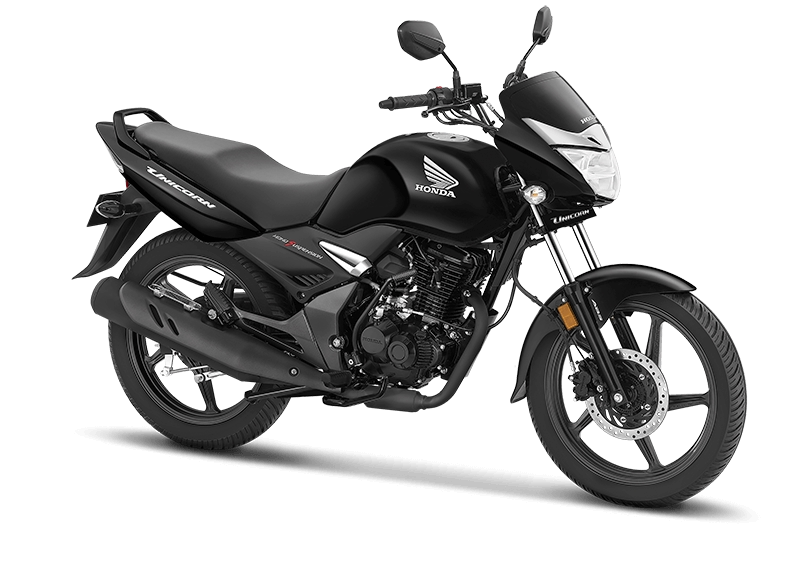
₹1,10,000 (ex-showroom) | 162.71cc FI | City mileage: 45–52 km/l
The Honda Unicorn is specifically engineered for long-distance daily commuters. Its 162.71cc FI engine is tuned for a broad, flat power delivery — not sporty, not exciting, but deeply relaxed and unstressed at 70–90 km/h. For commuters who cover 50–80 km each way on mixed city-highway routes, this character makes the Unicorn the least fatiguing bike in this guide to ride at sustained speeds.
Honda has always prioritised the Unicorn's seat and ergonomic comfort over sportiness — the result is a bike that feels lighter and less tiring than its 160cc peers after a long ride. A well-padded seat, upright riding position, and engine vibration levels so low they barely register at highway cruise make it the closest thing to a touring bike in this price bracket.
Mileage of 45–52 km/l is lower than the 125cc bikes in this guide, but for a 160cc FI motorcycle it is class-competitive — and the FI system maintains that figure consistently across seasons. Honda's 4,500+ service centres are strong in urban and tier-1 cities, and the Unicorn's build quality is the best of any 160cc in the guide.
Pros
- Most comfortable 160cc commuter — best for 50–80 km daily rides
- Lowest fatigue at highway speeds — broad, relaxed power delivery
- FI engine for year-round mileage consistency
- Honda build quality — best finish in 160cc class
- Strong urban resale value
Cons
- 45–52 km/l — higher monthly fuel cost than 125cc bikes
- No ride modes or Bluetooth
- Smaller rural service network than Hero
Who should buy: Commuters covering 50–80 km daily on mixed city-highway routes who want the most relaxed, fatigue-free 160cc experience. The Honda Unicorn is built specifically for this use case.
View Full Specs & On-Road Price
11. Bajaj Avenger Street 160
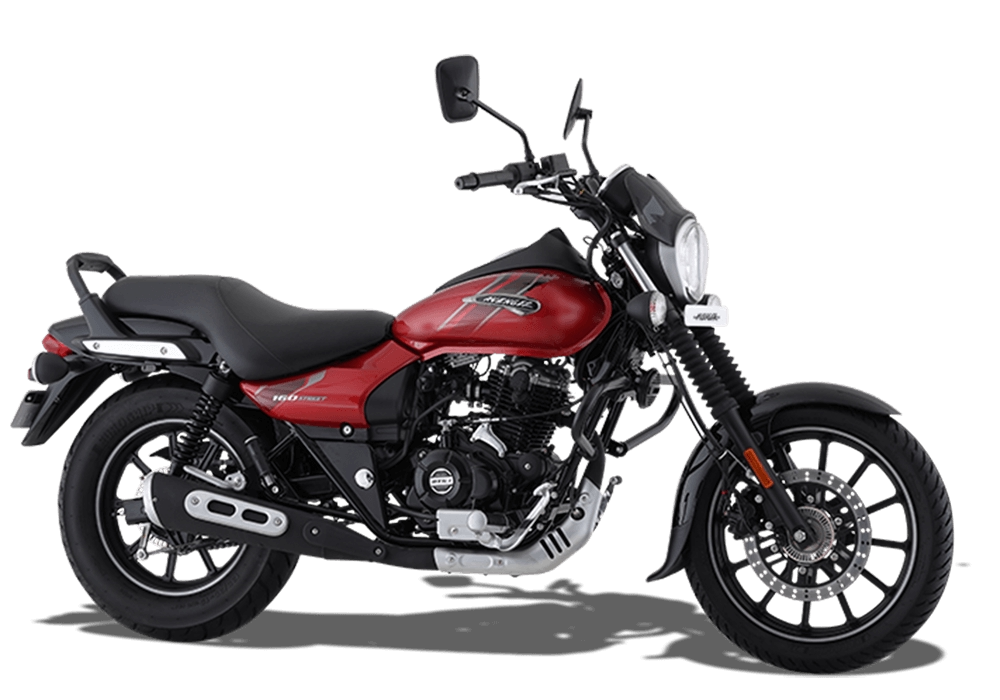
₹1,22,000 (ex-showroom) | 160cc | City mileage: 40–48 km/l
The Bajaj Avenger Street 160 brings something genuinely different to the daily commuting conversation: a cruiser riding position on a practical, affordable budget. The low seat height, forward-set footpegs, and wide handlebar allow a relaxed, legs-forward posture that distributes body weight differently to a conventional upright commuter — and for riders who develop lower back fatigue or wrist pain on standard bikes, this can be a meaningful ergonomic solution.
It is the only sub-₹1.3L cruiser in the Indian market, and for a specific type of commuter — those who spend 45+ minutes daily in the saddle and have discovered that standard ergonomics cause chronic discomfort — the Avenger Street 160 may be the most practically correct choice regardless of its mileage score.
The 160cc engine pulls smoothly at low revs, which suits the relaxed riding character. Mileage of 40–48 km/l is the lowest of the upper-range bikes, and city maneuverability is slightly compromised by the longer wheelbase. But for riders who want to commute in comfort rather than haste, the trade-offs make sense.
Pros
- Only affordable cruiser for daily commuting — unique ergonomics
- Low seat height — accessible for shorter riders
- Relaxed riding posture reduces wrist and back fatigue
- Smooth low-rev power delivery suits city riding pace
Cons
- Lowest mileage in the upper tier — 40–48 km/l
- Longer wheelbase — less agile in tight city traffic
- No Bluetooth or modern connectivity
- Weaker resale than Honda and Yamaha in this price range
Who should buy: Commuters who experience back, wrist, or posture fatigue on conventional upright bikes, or those who simply prefer the relaxed cruiser riding position for long daily rides.
View Full Specs & On-Road Price
12. Yamaha FZ-S Fi V4
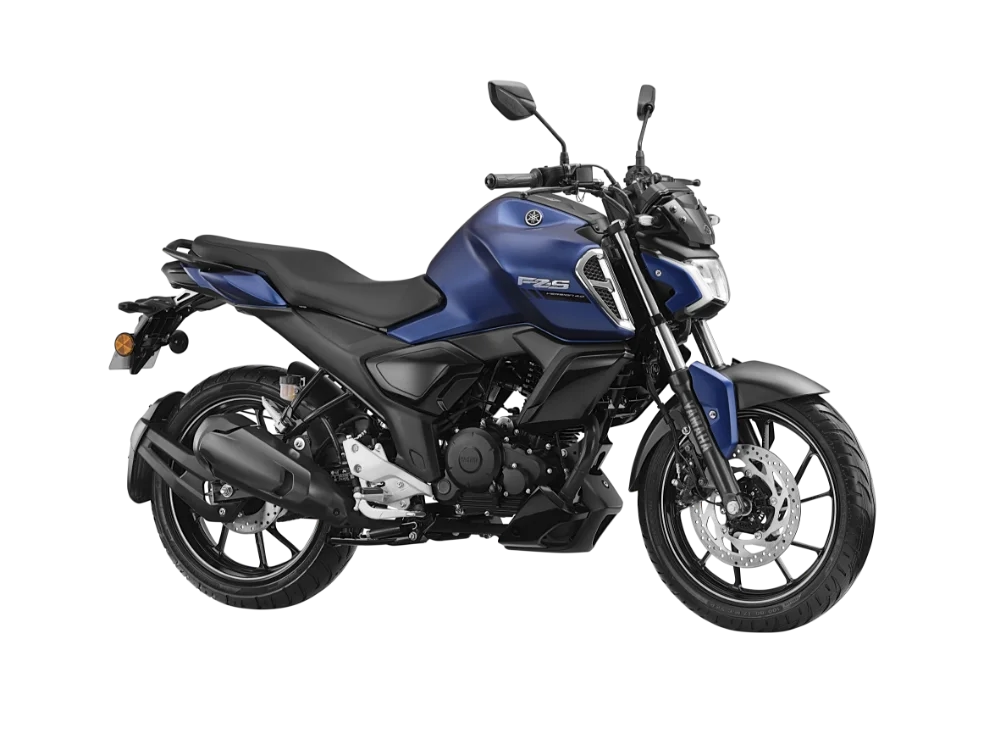
₹1,25,000 (ex-showroom) | 149cc | City mileage: 42–50 km/l
The Yamaha FZ-S Fi V4 is the daily commuter that feels like more than a commuter. Over four generations Yamaha has refined the FZ into a motorcycle that genuinely punches above its price in build quality, finish, and daily ride satisfaction. The 149cc FI engine is linear and smooth, Y-Connect Bluetooth links your phone for navigation and call alerts, and the quality of every component — switchgear, mirrors, instrument cluster, paint — is consistently above what its price would suggest.
For the commuter who spends a lot of time on their bike and derives some pleasure from the quality of the machine they ride, the FZ-S V4 delivers something the Splendor Plus and SP 125 cannot: a premium feel that makes the daily ride genuinely enjoyable rather than merely functional. It is also the strongest-performing urban resale in this tier — comparable to Honda in city markets.
Mileage of 42–50 km/l is the trade-off for the larger displacement and premium character. Monthly fuel costs run ₹500–₹800 higher than the SP 125 on the same commute — a real consideration for heavy daily users covering 50+ km.
Pros
- Best build quality in this guide — premium feel every day
- Y-Connect Bluetooth — navigation and call alerts
- Smooth, versatile 149cc FI engine — city and highway capable
- Strong urban resale — competitive with Honda
Cons
- 42–50 km/l — higher fuel cost than 125cc bikes
- Yamaha service network thinner than Hero in rural areas
- Drum rear brake on base variant
Who should buy: Urban commuters who value the quality of their daily ride as much as its cost, and want a motorcycle that feels genuinely premium at a commuter price point.
View Full Specs & On-Road Price
13. Suzuki Gixxer
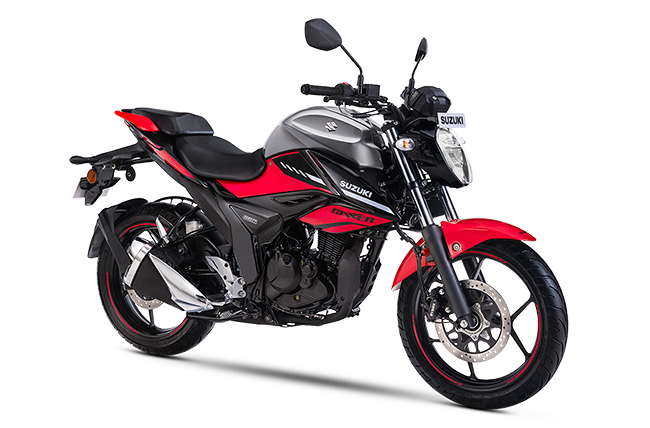
₹1,35,000 (ex-showroom) | 154.9cc | City mileage: 40–47 km/l
The Suzuki Gixxer is the all-rounder's commuter — the bike that does everything well without excelling in any single area. Its 154.9cc FI engine has a broad, manageable power band that suits both slow city riding and 80–90 km/h highway stretches equally. The lightweight chassis makes it easy to filter through traffic. SEP technology keeps mileage competitive for the displacement. Suzuki's engineering quality means the bike holds together reliably over years of daily use.
What makes the Gixxer particularly compelling as a daily commuter is its balance. It is not too sport-oriented to be comfortable in traffic, not too heavy to manoeuvre easily, not too thirsty for its performance level, and not too spartan in features. For commuters who are tired of the trade-offs that come with segment-specific bikes — "this mileage king is uncomfortable" or "this sporty bike is exhausting in traffic" — the Gixxer simply avoids them all.
Pros
- Most balanced ride character — suits all commuting conditions
- Lightweight chassis — easy city filtering and parking
- SEP technology — competitive mileage for displacement
- Excellent long-term build quality and reliability
Cons
- No Bluetooth connectivity
- Suzuki service network thinner than Hero in rural areas
- Lower resale than Yamaha FZ-S V4 in urban markets
Who should buy: Experienced daily riders who want a no-compromise, no-excuses commuter — a bike that handles every commuting scenario competently without asking you to accept any single major weakness.
View Full Specs & On-Road Price
14. TVS Ronin
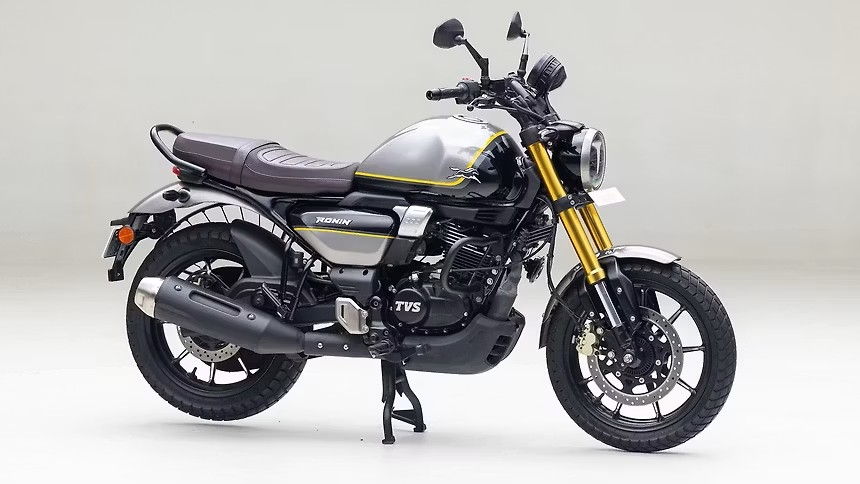
₹1,45,000 (ex-showroom) | 225.9cc | City mileage: 35–42 km/l
The TVS Ronin is the most unconventional commuter in this guide — and deliberately so. Its 225.9cc single-cylinder engine, retro-modern styling, wide handlebar, and upright long-travel suspension make it a true multi-surface commuter that handles broken city roads, gravel patches, and waterlogged streets with composure that no other bike in this guide can claim. For riders whose daily route regularly involves poor road quality, the Ronin's ground clearance and suspension travel are meaningfully practical advantages.
SmartXonnect Bluetooth with the most comprehensive connectivity suite TVS offers — navigation, music control, call alerts, trip statistics, service reminders — makes it the best-connected commuter in this guide. The glide-through technology allows clutchless upshifts, reducing hand fatigue in heavy traffic. The retro-modern design is genuinely distinctive in a way that makes daily riding feel less routine.
The honest caveat: at 35–42 km/l, the Ronin has the lowest mileage in this guide. Its 225.9cc engine and heavier weight are the reasons. For commuters covering 50+ km daily, the monthly fuel premium over the Gixxer or FZ-S is significant. The Ronin makes the most sense for riders whose commute involves varied road surfaces and who want the most distinctive, capable, and connected commuter available under ₹1.5L.
Pros
- 225.9cc — most capable on rough roads and mixed surfaces
- Best SmartXonnect connectivity in this guide
- Glide-through clutchless upshifts — reduces traffic fatigue
- Most distinctive styling — genuinely stands out daily
- Long-travel suspension — handles bad roads best in class
Cons
- Lowest mileage in this guide — 35–42 km/l
- Heaviest bike in this guide — less nimble in tight traffic
- Higher running cost than all other bikes here
Who should buy: Urban commuters on consistently rough, uneven, or waterlogged roads who want the most capable and connected premium daily rider available — and can accept the higher fuel cost for those advantages.
View Full Specs & On-Road Price
Monthly Running Cost Comparison
Estimated monthly fuel cost for a 35 km daily commute (300 working km/month) at ₹104/litre. Service cost averaged over 12 months based on a 3,000 km service interval.
| Bike | City Mileage | Monthly Fuel Cost | Avg Monthly Service | Est. Monthly Total |
|---|---|---|---|---|
| Hero HF 100 | 60–65 km/l | ~₹1,490 | ~₹300 | ~₹1,790 |
| Hero HF Deluxe | 55–63 km/l | ~₹1,560 | ~₹310 | ~₹1,870 |
| Bajaj Platina 100 | 60–68 km/l | ~₹1,470 | ~₹330 | ~₹1,800 |
| Hero Splendor Plus | 55–62 km/l | ~₹1,570 | ~₹300 | ~₹1,870 |
| Honda Shine 100 | 52–60 km/l | ~₹1,660 | ~₹360 | ~₹2,020 |
| TVS Radeon | 55–62 km/l | ~₹1,570 | ~₹350 | ~₹1,920 |
| Hero Glamour | 55–63 km/l | ~₹1,560 | ~₹310 | ~₹1,870 |
| Honda SP 125 | 60–65 km/l | ~₹1,490 | ~₹370 | ~₹1,860 |
| TVS Raider 125 | 55–62 km/l | ~₹1,570 | ~₹360 | ~₹1,930 |
| Honda Unicorn | 45–52 km/l | ~₹1,950 | ~₹420 | ~₹2,370 |
| Bajaj Avenger Street 160 | 40–48 km/l | ~₹2,190 | ~₹410 | ~₹2,600 |
| Yamaha FZ-S Fi V4 | 42–50 km/l | ~₹2,080 | ~₹430 | ~₹2,510 |
| Suzuki Gixxer | 40–47 km/l | ~₹2,200 | ~₹450 | ~₹2,650 |
| TVS Ronin | 35–42 km/l | ~₹2,530 | ~₹460 | ~₹2,990 |
What Actually Matters for Daily Commuting
- Daily distance: Under 25 km — any budget bike is fine. 25–50 km — mileage and seat comfort both matter; consider the SP 125 or Radeon. Over 50 km — step up to the Honda Unicorn or Yamaha FZ-S V4 for sustained comfort.
- Road quality: Smooth city tarmac — any bike here works. Consistently rough, potholed, or mixed-surface roads — the Bajaj Platina's SNS suspension or TVS Ronin's long-travel suspension are the most forgiving options.
- Pillion riding: Daily two-up commuting favours the Bajaj Platina 100 (best suspension and seat for two), Honda Unicorn (most relaxed two-up highway riding), and Bajaj Avenger (best pillion seat position).
- Service location: Outside a tier-1 city or in a rural/semi-urban area — Hero's network (Splendor, Glamour, HF range) is the most important long-term factor. Don't choose a Yamaha or Suzuki if you're more than 30 km from a service centre.
- Highway segments: If your commute includes more than 10 km of highway at 70+ km/h, step up to at least 125cc FI (Honda SP 125) or 160cc (Honda Unicorn). Sub-100cc bikes are uncomfortable at sustained highway speeds.
- Monsoon riding: CBS or ABS matters more in wet conditions. Most bikes here offer CBS; the TVS Ronin and Suzuki Gixxer offer ABS options. LED lighting improves visibility in heavy rain — present on most upper-range bikes here.
Worth Considering Beyond This Guide
If your commuting needs don't fit squarely within this list, these bikes are also worth evaluating:
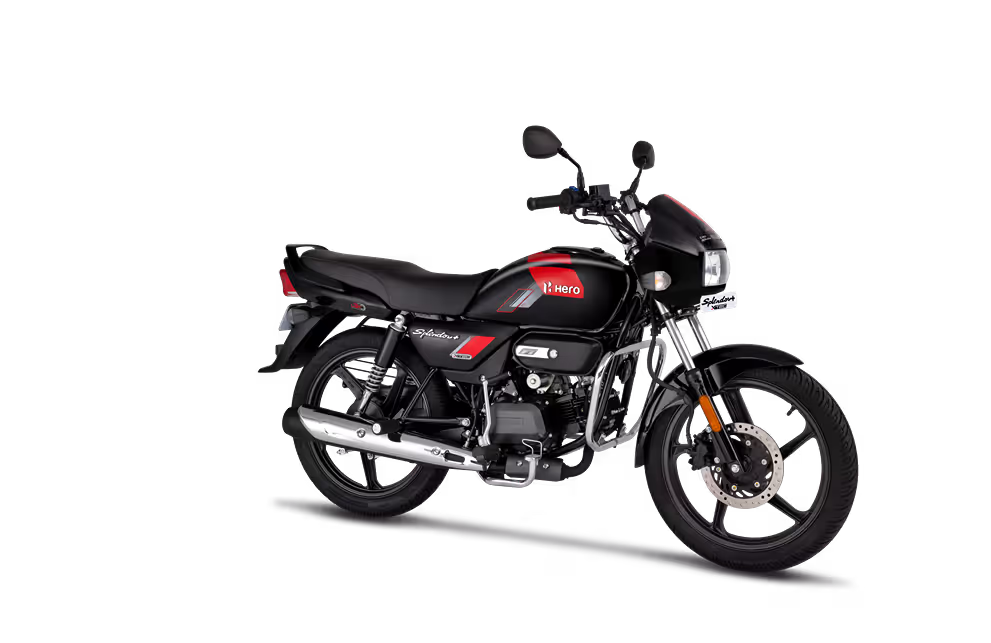
Hero Splendor Plus XTEC
Splendor reliability with disc brake, Bluetooth, LED, USB. The most complete sub-₹85k commuter available.
View specs →
Bajaj Platina 110
Same class-leading Platina mileage and SNS suspension — but with a front disc brake option for ₹8,000 more.
View specs →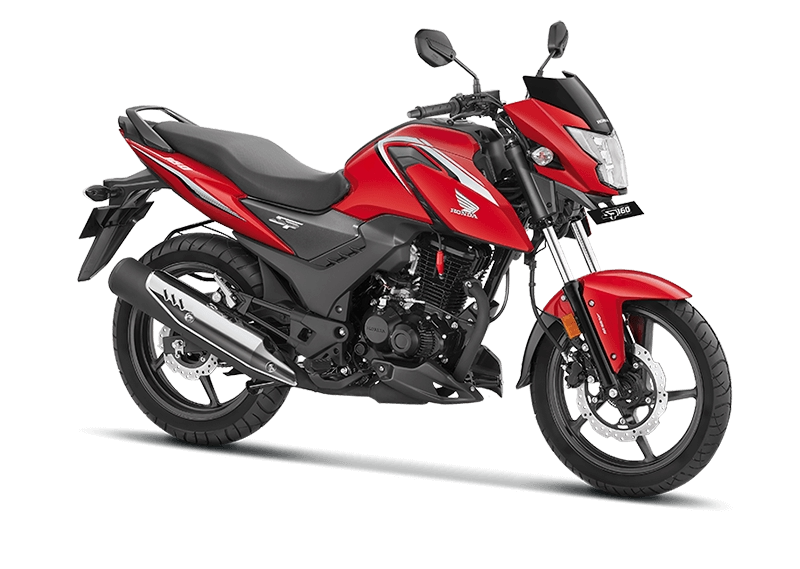
Honda SP160
Best mileage in the 160cc class at 45–53 km/l. Most refined 160cc commuter if budget extends to ₹1.25L.
View specs →Final Verdict
The best commuter bike is not always the fastest, the most featured, or the best-looking. It is the one that costs the least to run, fatigues you the least over repeated use, and causes the least disruption when it needs service. That definition points in slightly different directions depending on your budget and riding context.
For most buyers, the Hero Splendor Plus remains India's most commute-optimised motorcycle on a total cost basis. Nothing in this guide costs less per kilometre over a three-to-five year ownership period when you factor in fuel, service, parts, and resale. The Hero HF 100 and Bajaj Platina 100 make compelling cases at even lower price points — the HF 100 for the absolute tightest budget, the Platina 100 if your roads are rough and you ride 40+ km daily.
Stepping up, the Honda SP 125 is the best 125cc commuter over a 3-year ownership cycle — its FI mileage and resale value recover the upfront premium over the Hero Glamour. The TVS Raider 125 is the right choice if smartphone navigation and charging are daily priorities. The Honda Unicorn is the standout recommendation for commuters covering 50+ km daily on mixed routes.
For premium daily riders, the Yamaha FZ-S Fi V4 offers the best combination of quality, refinement, and urban resale. The Suzuki Gixxer is the all-rounder that never disappoints. And if your roads are rough and you want the most distinctive, capable commuter available, the TVS Ronin stands alone — just budget for higher fuel costs.
Before buying, take a test ride. The difference in seat height, handlebar reach, and clutch feel between a 100cc commuter and a 150cc naked is significant — and the right ergonomic fit at purchase predicts satisfaction at month twenty-four.
Frequently Asked Questions
Which is the best bike for daily commuting in India in 2026?
For most buyers, the Hero Splendor Plus offers the best total value for daily commuting — lowest running cost, widest service network, and strongest resale in its price range. If budget allows stepping up to 125cc, the Honda SP 125 leads on mileage, refinement, and long-term ownership value. Choose based on your daily distance, road quality, and service access.
Which commuter bike has the best mileage?
The Bajaj Platina 100 delivers the best real-world city mileage in this guide at 60–68 km/l — beating every other commuter in actual city conditions. The Honda SP 125 and Hero HF 100 follow closely at 60–65 km/l. Among 160cc bikes, the Honda Unicorn leads with 45–52 km/l.
Which bike is best for a 50 km daily commute?
For 50 km daily, the Honda SP 125 is the best balance of mileage, comfort, and capability at a commuter price. If the route includes highway sections at 70+ km/h, the Honda Unicorn is a more comfortable choice with its wider power band. For the lowest monthly running cost at this distance, the Bajaj Platina 100's mileage advantage saves meaningful money over a year.
Is a 125cc bike better than 100cc for commuting?
Yes, for most commuters — especially those covering 30+ km daily or using highway stretches. A 125cc FI bike like the Honda SP 125 actually matches some 100cc bikes on mileage while offering meaningfully better performance at 60–80 km/h. The step up is particularly valuable for pillion riding, inclines, and overtaking safely on mixed routes.
Which commuter bike is best for rough roads?
The Bajaj Platina 100 has the softest suspension in the budget segment — SNS (Spring in Spring) technology significantly reduces impact from potholes compared to Hero commuters. In the premium tier, the TVS Ronin's long-travel suspension handles rough and mixed-surface roads better than any other bike in this guide. For purely rough urban roads on a budget, the Platina is the best value answer.
Which bike is best for commuting in rural areas?
Hero bikes — the Splendor Plus, HF Deluxe, HF 100, and Glamour — are unmatched for rural commuting. Hero's 6,000+ service points and universal parts availability mean you are never far from help. The Hero Glamour is the specific recommendation for rural commuters who want 125cc capability — it combines Hero's service depth with the better performance of a 125cc engine.
Is the Bajaj Avenger good for daily commuting?
Yes, for a specific type of commuter. The Avenger Street 160's cruiser ergonomics — low seat, forward footpegs, wide handlebar — reduce back and wrist fatigue for riders who find conventional upright bikes uncomfortable over long daily rides. The trade-off is lower mileage and slightly less agility in tight city traffic. If standard bikes cause posture fatigue, the Avenger is worth serious consideration.
What is the monthly running cost for a commuter bike?
On a 35 km daily commute at ₹104/litre, monthly running costs (fuel + service averaged) range from approximately ₹1,790 for the Hero HF 100 to ₹2,990 for the TVS Ronin. The Hero HF 100, Bajaj Platina 100, and Hero HF Deluxe are consistently under ₹1,900/month. The 160cc and 150cc premium bikes cost ₹2,400–₹2,700/month. Always factor in EMI, insurance, and tyre costs when comparing total monthly ownership cost.