Best Low Maintenance Bikes in India (2026)
This guide is based on real owner forum data, dealer service quotes, and independent test rides — not manufacturer claims. Reliability scores reflect long-term ownership reports, not first-month impressions. Low-maintenance suitability is judged on a composite of reliability, service cost, spare parts availability, and real-world mileage.
A low-maintenance bike isn't necessarily the cheapest one on paper — it's the one that costs you the least in time, money, and surprises over five or ten years of ownership. That means an engine that doesn't need constant attention, a mechanic who can fix any problem in under an hour because they've seen it a hundred times before, and spare parts sitting on the shelf at every roadside shop rather than special-ordered from a warehouse three states away.
This guide covers 15 motorcycles chosen specifically for how little they demand from their owners — not how fast they go or how many features they pack in. We weigh the factors that matter most for a decade of trouble-free ownership: mechanical reliability, cost per service, spare parts availability, and real-world mileage.
Quick Picks — Skip to Your Best Match
- Most proven overall: Hero Splendor Plus — the benchmark for low-maintenance ownership in India
- Best with modern features: Hero Splendor Plus XTEC — Splendor reliability plus disc brake and Bluetooth
- Newest update: Hero Splendor Plus XTEC 2.0 — latest refinements, same dependable base
- Tightest budget: Hero HF Deluxe — bare-bones Hero reliability at a rock-bottom price
- Cheapest bike in India: Hero HF 100 — lowest purchase and running cost of any motorcycle here
- Most refined low-maintenance ride: Honda Shine 100 — least vibration, longest service intervals
- Best Shine with extras: Honda Shine 100 DX — same dependability, marginally more equipped
- Best step-up 125cc: Honda Shine 125 — Honda reliability with more usable power
- Best mid-size Honda: Honda Livo — understated, dependable, low fuss
- Best 160cc for the long haul: Honda Unicorn — Honda's most relaxed, unstressed engine
- Best mileage + comfort budget pick: Bajaj Platina 100 — softest ride, lowest fuel bill
- Best Platina with disc brake: Bajaj Platina 110 — same dependability, added braking confidence
- Toughest Bajaj commuter: Bajaj CT 110X — built for abuse, priced for value
- Best TVS for simplicity: TVS Sport — TVS's most no-nonsense, low-cost runabout
- Best TVS comfort pick: TVS Radeon — most cushioned seat without sacrificing reliability
At a Glance — All 15 Bikes Compared
All fifteen bikes ranked by low-maintenance suitability — reliability, service cost, and parts availability first.
| Bike | Price (ex-show.) | Engine | City Mileage | Brand | Low-Maintenance Strength |
|---|---|---|---|---|---|
| Hero Splendor Plus | ₹ 74,958 | 97.2cc | 70 kmpl | Hero | India's most proven low-maintenance commuter |
| Hero Splendor Plus XTEC | ₹ 78,647 | 97.2cc | 70 kmpl | Hero | Splendor reliability with disc brake + Bluetooth |
| Hero Splendor Plus XTEC 2.0 | ₹ 81,060 | 97.2cc | 70 kmpl | Hero | Latest Splendor refinements, same dependable base |
| Hero HF Deluxe | ₹ 57,657 | 97.2cc | 65–70 kmpl | Hero | Rock-bottom price, full Hero service backing |
| Hero HF 100 | ₹ 59,839 | 97.2cc | 70 kmpl | Hero | Lowest total cost of ownership in this guide |
| Honda Shine 100 | ₹ 65,557 | 98.9cc | 65 kmpl | Honda | Least vibration, longest gap between issues |
| Honda Shine 100 DX | ₹ 71,511 | 98.9cc | 65 kmpl | Honda | Same Shine dependability, slightly more equipped |
| Honda Shine 125 | ₹ 80,852 | 124cc | 55–60 kmpl | Honda | More power, same Honda low-fuss reputation |
| Honda Livo | ₹ 80,220 | 109.5cc | 60 kmpl | Honda | Understated mid-size Honda, very low fuss |
| Honda Unicorn | ₹ 1,12,898 | 162.71cc | 50 kmpl | Honda | Most unstressed engine in this guide |
| Bajaj Platina 100 | ₹ 66,593 | 102cc | 70 kmpl | Bajaj | Best mileage + softest ride in the budget segment |
| Bajaj Platina 110 | ₹ 69,941 | 115cc | 65 kmpl | Bajaj | Platina dependability with front disc brake |
| Bajaj CT 110X | ₹ 68,050 | 115cc | 65–70 kmpl | Bajaj | Built tough for daily abuse, easy to fix |
| TVS Sport | ₹ 62,143 | 109.7cc | 70 kmpl | TVS | TVS's simplest, lowest-cost runabout |
| TVS Radeon | ₹ 70,143 | 109.7cc | 65 kmpl | TVS | Most comfortable seat without sacrificing reliability |
1. Hero Splendor Plus
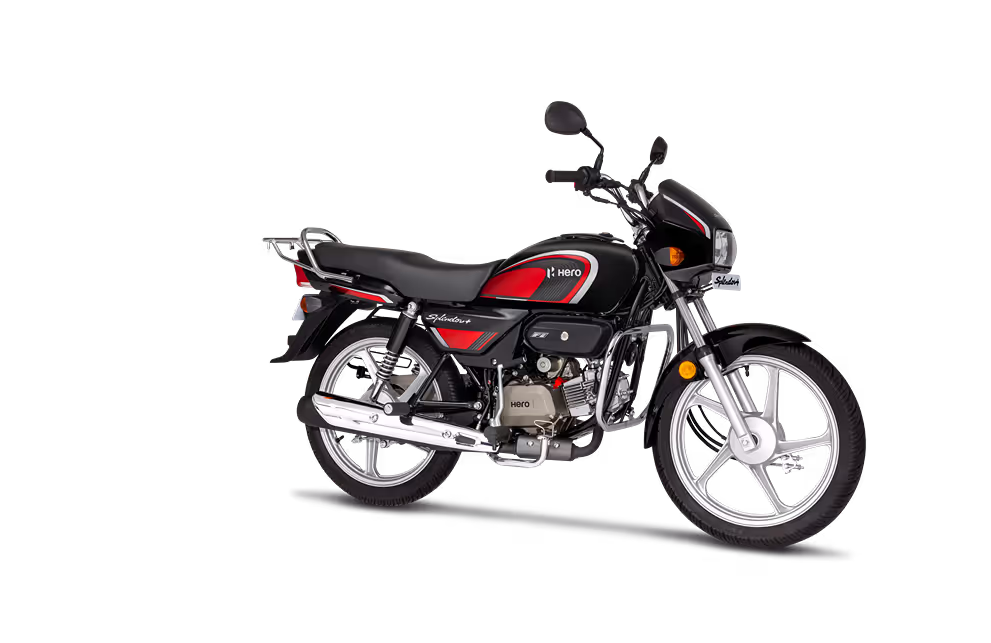
₹ 74,958 (ex-showroom) | 97.2 cc | 70 kmpl claimed
If a single motorcycle defines "low maintenance" in India, it's this one. The Hero Splendor Plus has been on sale in some form for over two decades, which means every mechanic in every town has fixed one, every part has been reverse-engineered by three aftermarket suppliers, and every common failure point has long since been ironed out by Hero's engineers. There are no surprises left to find.
The 97.2cc air-cooled engine is about as mechanically simple as a motorcycle gets — fewer moving parts means fewer things that can break. Owners routinely report 80,000–100,000 km before any major work beyond routine servicing, and even then it's usually just a clutch plate or chain sprocket set, both of which cost under ₹500 combined. A full service rarely exceeds ₹400–₹500 at any of Hero's 6,000+ centres.
Nothing about the Splendor Plus is exciting, and that's precisely the point. It doesn't have fuel injection to recalibrate, no Bluetooth module to fail, no ride-by-wire throttle to throw error codes. It is a carburettor, a chain, and a kickstart-or-electric-start engine that has been refined to remove anything that could go wrong.
Pros
- Most widely understood engine by Indian mechanics
- Cheapest, most available spare parts of any bike here
- 80,000+ km reported before major mechanical work
- Widest authorised service network in the country
Cons
- Drum brakes only — no disc option at this trim
- No digital cluster, Bluetooth, or USB charging
- Styling and instrumentation feel dated
Who should buy: Anyone who wants the lowest possible risk of mechanical surprises over a 5–10 year ownership period, especially buyers outside major cities who need guaranteed service access.
View Full Specs & On-Road Price
2. Hero Splendor Plus XTEC
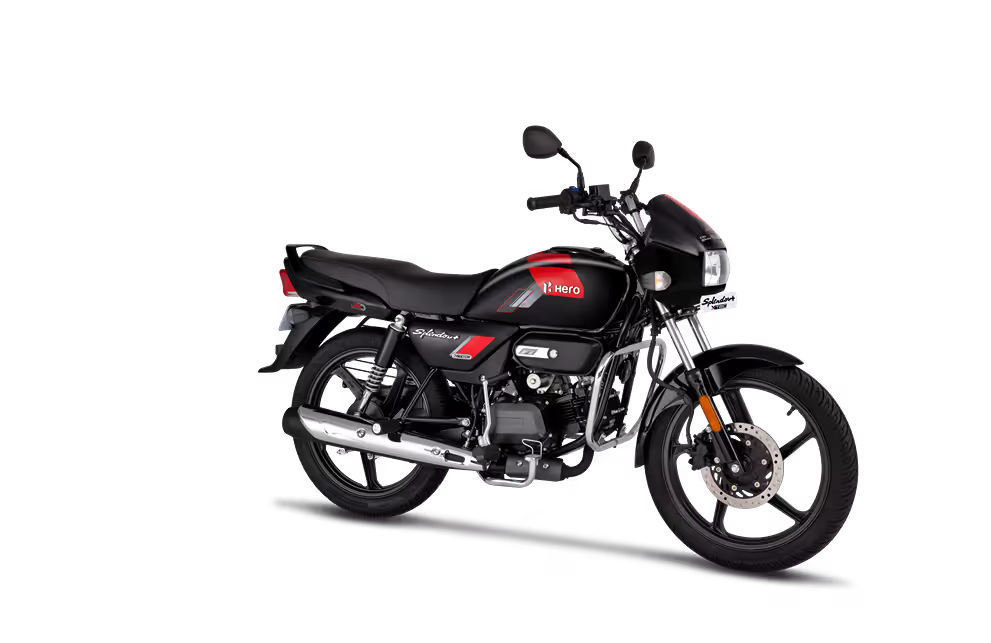
₹ 78,647 (ex-showroom) | 97.2 cc | 70 kmpl claimed
The XTEC trim takes everything that makes the standard Splendor Plus easy to live with and adds the handful of features most owners actually want — a front disc brake, LED headlamp, and Bluetooth-enabled instrument console — without touching the underlying engine that made the base bike so dependable in the first place.
Because the mechanical platform is unchanged, the XTEC inherits the same long service intervals and the same access to Hero's enormous parts and service network. The only genuinely new components are the disc brake caliper and the digital console — both are well-proven Hero parts shared across several models, so even these additions don't introduce anything exotic for a mechanic to puzzle over.
For ₹3,700 more than the base Splendor Plus, the disc brake alone is worth it for anyone riding in heavy traffic, and most owners report the Bluetooth module as a "nice to have" that's never been a source of complaints in forums or service centre data.
Pros
- Same dependable engine and service network as base Splendor
- Front disc brake — meaningful safety upgrade
- LED headlamp and Bluetooth console at low extra cost
- No reliability compromise versus the standard model
Cons
- ₹3,700 premium over base Splendor Plus
- Bluetooth module adds one more (minor) part that could fail
Who should buy: Buyers who want Splendor-level dependability but consider a front disc brake a non-negotiable safety feature for city riding.
View Full Specs & On-Road Price
3. Hero Splendor Plus XTEC 2.0
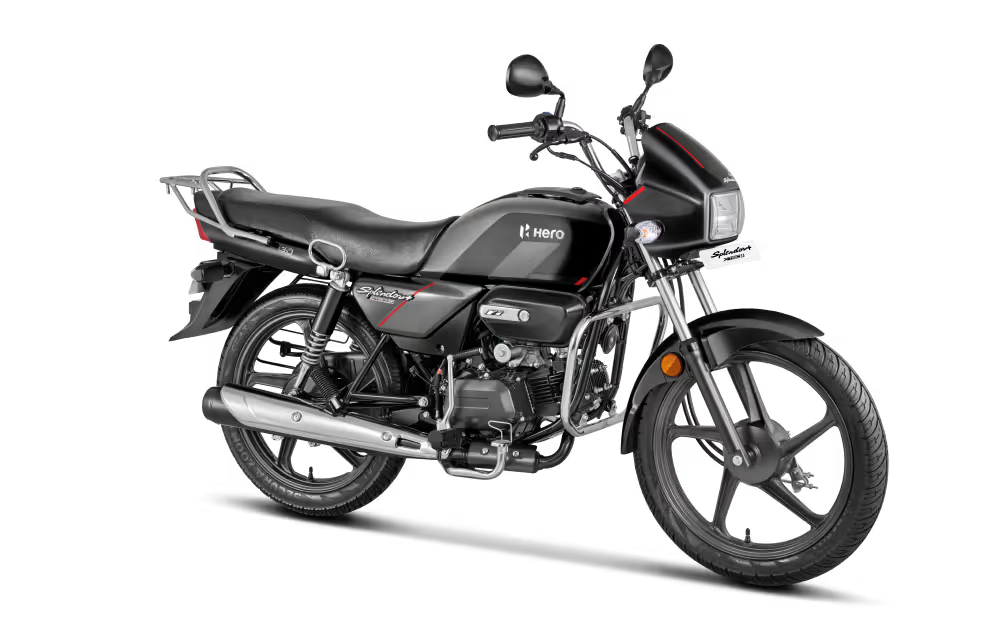
₹ 81,060 (ex-showroom) | 97.2 cc | 70 kmpl claimed
The XTEC 2.0 is Hero's latest pass at refining the formula — slightly updated switchgear, a revised console layout, and small quality-of-life tweaks that owners notice in the first month without changing anything that affects long-term durability. It carries forward the same engine and chassis fundamentals that have made every Splendor before it nearly bulletproof.
Because this is the newest variant in the lineup, there's slightly less long-term ownership data available compared to the base Splendor Plus, which has a multi-decade track record. Early reports from owners and dealers suggest no new failure points have emerged — the changes are cosmetic and ergonomic rather than mechanical — but the base Splendor Plus still holds the edge purely on volume of proven, multi-year data.
For buyers who want the most current version of Hero's flagship commuter with the best available features, the XTEC 2.0 is the obvious choice — it just costs ₹6,100 more than the standard Splendor Plus for those refinements.
Pros
- Most refined switchgear and console in the Splendor range
- Same proven engine platform as the rest of the lineup
- Full Hero service and parts network access
Cons
- Highest price in the Splendor range
- Less multi-year ownership data than the base model
Who should buy: Buyers who want the newest, most feature-complete Splendor available today and don't mind paying a small premium for the latest refinements.
View Full Specs & On-Road Price
4. Hero HF Deluxe
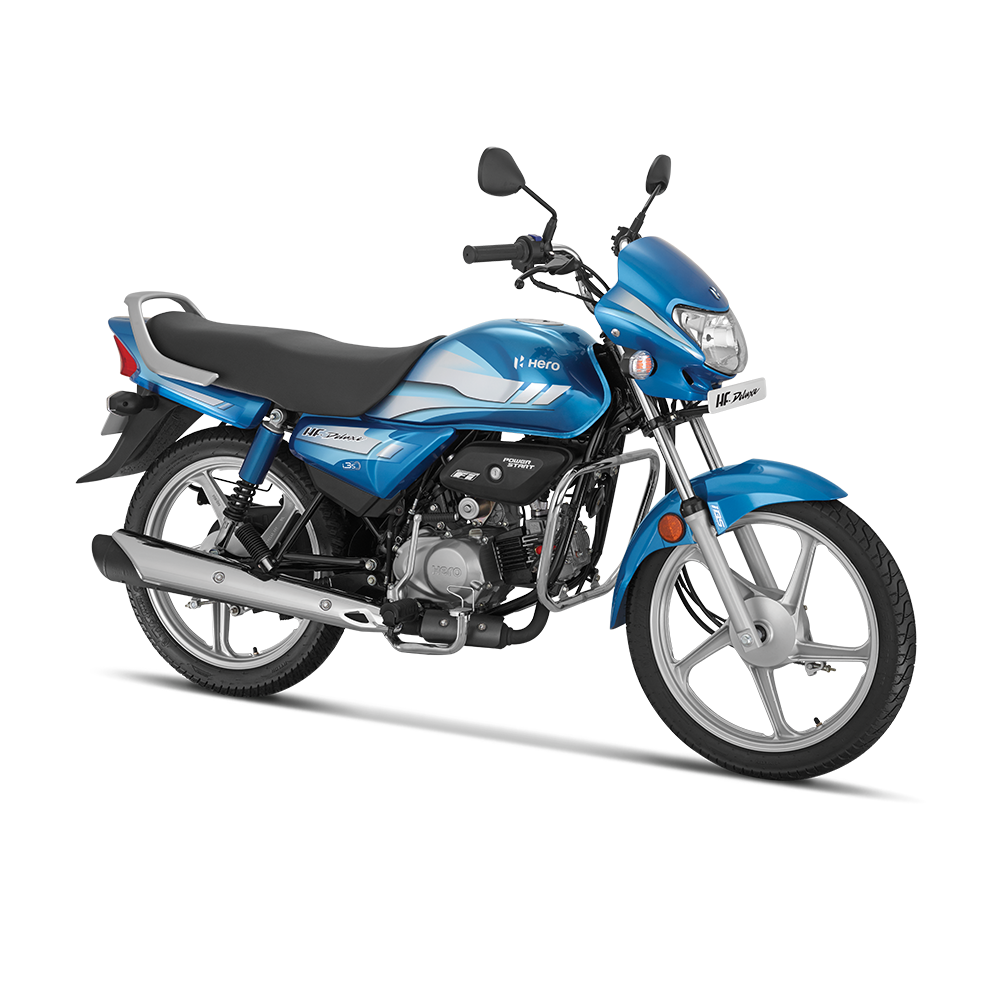
₹ 57,657 (ex-showroom) | 97.2 cc | 65–70 kmpl claimed
The HF Deluxe shares its engine and most of its running gear with the Splendor Plus, which means it inherits almost all of that bike's reputation for shrugging off neglect. At ₹57,657 it's one of the cheapest ways into Hero's ecosystem of cheap parts and 6,000+ service points, and the running costs over a multi-year ownership period are nearly identical to the Splendor Plus.
Where it differs is trim level — simpler instrumentation, a more basic seat, and fewer cosmetic touches. None of that affects how often it needs a wrench. Owners on long-running forums consistently describe the HF Deluxe as "fit and forget" — start it, ride it, service it on schedule, and it just keeps running.
This is the bike fleet operators and delivery riders gravitate toward when uptime matters more than appearance, which is itself a strong signal: people who put 200+ km a day on a motorcycle and need it working every single day choose the HF Deluxe disproportionately often.
Pros
- Shares Splendor's proven engine at a lower price
- Among the cheapest full services in this guide
- Popular with fleet and delivery riders — proven under heavy use
Cons
- Basic trim — no disc brake, no digital features
- Slightly lower resale than the Splendor Plus
Who should buy: Budget-conscious buyers and high-mileage daily riders who want Splendor-level dependability without paying for trim and styling.
View Full Specs & On-Road Price
5. Hero HF 100
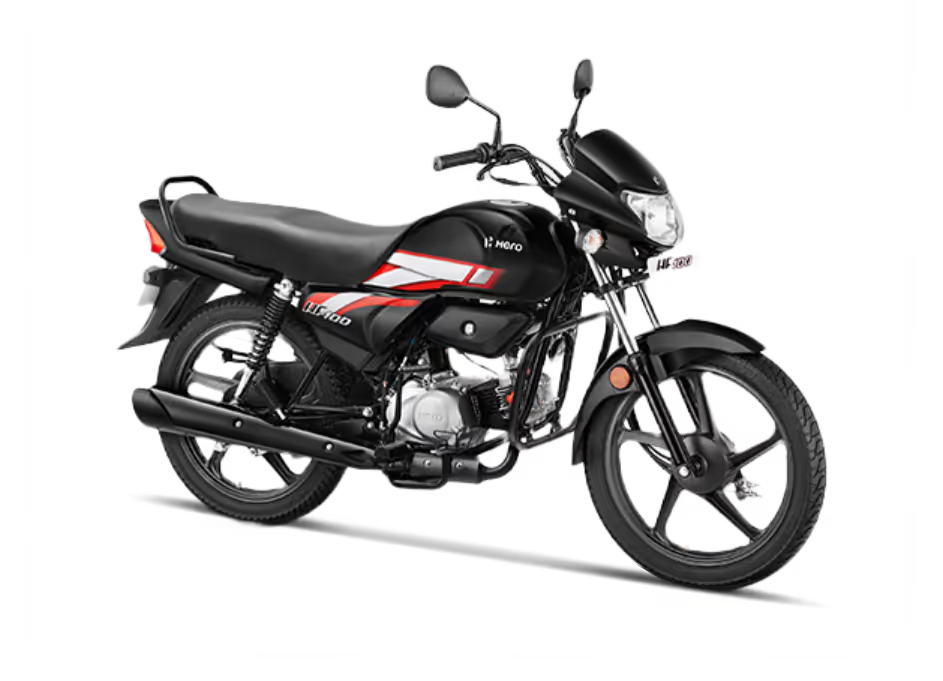
₹ 59,839 (ex-showroom) | 97.2 cc | 70 kmpl claimed
India's most affordable motorcycle is also one of its most mechanically honest. There's nothing in the HF 100 that hasn't been simplified to its essentials — a basic carburettor, drum brakes at both ends, and an engine tuned conservatively enough that it rarely sees the kind of stress that causes premature wear.
Spare parts for the HF 100 are not just cheap, they're everywhere. Because the platform shares so much with the rest of Hero's 100cc range, a roadside mechanic in a small town is statistically very likely to already have the part you need in stock, without ordering anything. A basic service costs ₹400–₹700, among the lowest of any bike sold in India today.
The trade-off for this rock-bottom cost is comfort and features — there is none beyond what's strictly necessary. But for an owner whose only priority is minimizing lifetime cost and mechanical risk, the HF 100 is difficult to beat on pure numbers.
Pros
- Lowest purchase price of any motorcycle in India
- Cheapest full service of any bike in this guide
- Parts stocked by virtually every local mechanic
Cons
- No modern features — drum brakes, analogue cluster only
- Firm ride and basic seat on rough roads
Who should buy: Buyers who want the absolute lowest lifetime cost and risk, particularly first-time owners and rural commuters.
View Full Specs & On-Road Price
6. Honda Shine 100

₹ 65,557 (ex-showroom) | 98.9 cc | 65 kmpl claimed
Honda's reputation for engineering precision shows up most clearly in how rarely a Shine 100 needs unscheduled attention. Tight engineering tolerances mean less wear over time, and Honda's fuel-injected variant keeps the engine running cleanly even when service intervals slip by a few hundred kilometres — a margin of forgiveness that carburetted budget bikes don't always offer.
Where the Shine 100 loses a little ground to Hero's equivalents is network depth and parts pricing — Honda's service centres, while solid in metro and tier-1 cities, don't match Hero's reach into smaller towns, and Honda parts typically cost 10–15% more than Hero equivalents for comparable components like brake shoes and clutch plates.
For owners based in or near larger cities, this is a non-issue, and the Shine 100 rewards them with the smoothest-running, least fussy 100cc engine in this guide. The low vibration levels also mean less wear on fasteners and mounts over time — a subtle but real long-term maintenance advantage.
Pros
- Tightest engineering tolerances — slow long-term wear
- FI variant tolerant of slightly delayed servicing
- Lowest vibration — less wear on fasteners and mounts
Cons
- Smaller rural service network than Hero
- Parts cost 10–15% more than Hero equivalents
Who should buy: City and tier-1 riders who want the most mechanically refined low-maintenance 100cc bike and have easy access to a Honda service centre.
View Full Specs & On-Road Price
7. Honda Shine 100 DX

₹ 71,511 (ex-showroom) | 98.9 cc | 65 kmpl claimed
The Shine 100 DX is mechanically identical to the standard Shine 100 — same engine, same tolerances, same long-term wear characteristics — with a marginally more complete equipment list layered on top. None of the additions touch anything that affects reliability or service cost; this is purely a trim difference.
For an extra ₹5,954 over the base Shine 100, buyers get small convenience upgrades without taking on any new mechanical risk. Every maintenance argument that applies to the standard Shine 100 — tight tolerances, low vibration, FI tolerance of delayed servicing — carries over unchanged.
There's no compelling low-maintenance reason to choose the DX over the base Shine 100 unless the specific trim additions matter to you personally; from a pure cost-of-ownership standpoint, they're functionally the same bike.
Pros
- Identical engine and reliability profile to base Shine 100
- Slightly more complete trim for a modest premium
Cons
- ₹5,954 more than the base Shine 100 for no mechanical benefit
- Same network and parts-pricing limitations as base Shine
Who should buy: Shine 100 buyers who specifically want the DX's extra trim items and don't mind paying slightly more for the same underlying reliability.
View Full Specs & On-Road Price
8. Honda Shine 125

₹ 80,852 (ex-showroom) | 124 cc | 55–60 kmpl claimed
The Shine 125 carries the same engineering philosophy as the smaller Shine 100 into a larger displacement: conservative tuning, tight build tolerances, and components designed to wear slowly rather than perform aggressively. The result is a 125cc engine that has earned a similarly strong reputation for going long stretches without needing anything beyond scheduled servicing.
Because it shares architecture with other Honda 125cc models, parts commonality is reasonable, though not quite as universal as Hero's 125cc Glamour, whose parts can be found in smaller-town Hero outlets more easily than Honda equivalents in equally small Honda outlets.
For buyers who want more usable mid-range power than a 100cc bike offers without sacrificing the low-fuss character Honda is known for, the Shine 125 is a sound choice — just budget for slightly higher service costs than its smaller sibling.
Pros
- Same conservative engineering philosophy as Shine 100
- More usable mid-range power for inclines and pillion loads
- Strong long-term reliability reputation in the 125cc class
Cons
- Higher service cost than the 100cc Shine variants
- Parts availability thinner than Hero's 125cc range in rural areas
Who should buy: Riders upgrading from 100cc who want Honda's low-fuss reliability with more power for mixed city and light-highway use.
View Full Specs & On-Road Price
9. Honda Livo

₹ 80,220 (ex-showroom) | 109.5 cc | 60 kmpl claimed
The Livo occupies a quiet middle ground in Honda's commuter range — bigger than the Shine 100, smaller than the Shine 125, and built with the same unfussy reliability ethos that defines Honda's entry-level bikes. It rarely gets discussed as enthusiastically as its siblings, but owners who've kept one for years consistently report few complaints beyond routine wear items.
Its 109.5cc engine sits in an unusual displacement bracket that doesn't share parts as broadly as the more common 100cc or 125cc Honda platforms, which is the main reason its spare-parts score trails the rest of Honda's commuter lineup. Service centres can still source everything reliably; it just isn't sitting on every shelf the way Shine or Splendor parts are.
For an owner who wants a genuinely low-fuss Honda without paying 125cc prices, the Livo's relative obscurity doesn't translate into mechanical risk — it's still a Honda commuter engine, built the same conservative way as its better-known siblings.
Pros
- Same conservative Honda engineering as Shine and Unicorn
- Comfortable middle-ground displacement and price
- Strong long-term reliability reports from owners
Cons
- Less common displacement — parts not stocked as widely
- Lower resale awareness versus Shine and Splendor
Who should buy: Riders who want a dependable Honda commuter between the Shine and Shine 125 in size, and don't mind a slightly less common parts ecosystem.
View Full Specs & On-Road Price
10. Honda Unicorn
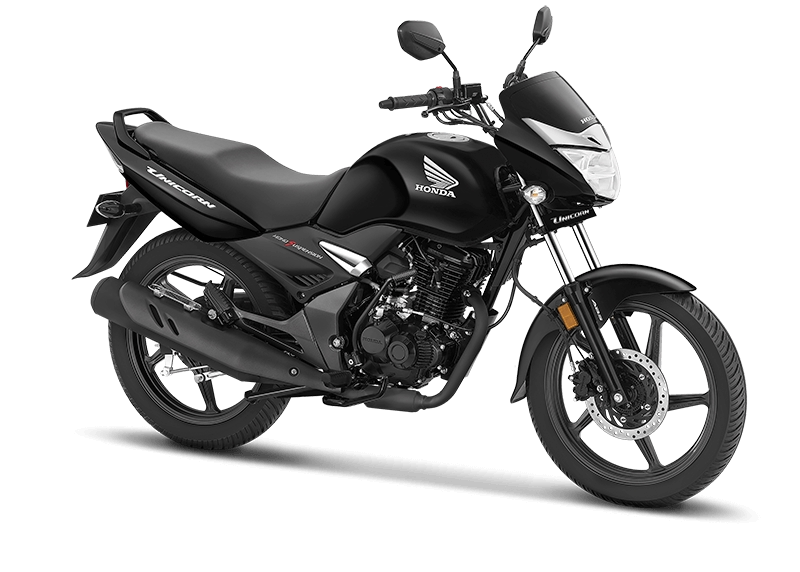
₹ 1,12,898 (ex-showroom) | 162.71 cc | 50 kmpl claimed
The Honda Unicorn's 162.71cc engine is deliberately tuned for relaxed, unstressed running rather than outright performance — and that restraint pays dividends in long-term durability. Because the engine rarely operates near its limits even at sustained highway speeds, components like the clutch, valve train, and piston rings see meaningfully less wear-inducing stress over the same distance compared to a more aggressively tuned 160cc rival.
Honda's fuel-injection system also helps here: consistent air-fuel mixing across seasons means the engine runs cleanly year-round, reducing the kind of carbon buildup and combustion-related wear that plagues carburetted engines exposed to temperature swings.
The trade-off versus the smaller Hondas in this guide is straightforward economics — a 160cc engine costs more to service and its parts are priced and stocked for a smaller buyer base than the ubiquitous 100cc commuters. But mechanically, the Unicorn asks for very little given its size and capability.
Pros
- Deliberately unstressed tuning — low wear at highway speeds
- FI consistency reduces seasonal combustion wear
- Best-in-class long-term durability for a 160cc engine
Cons
- Higher service cost than any 100cc bike in this guide
- Parts priced and stocked for a smaller buyer base
Who should buy: Riders who need more power and highway capability than a 100cc bike offers, but still want Honda's low-maintenance philosophy applied to a larger engine.
View Full Specs & On-Road Price
11. Bajaj Platina 100

₹ 66,593 (ex-showroom) | 102 cc | 70 kmpl claimed
Bajaj's longest-running commuter platform earns its place here on the strength of decades of mechanical refinement. The 102cc engine has been in production long enough that any early-life issues were resolved generations ago, and what's left is a simple, low-stress motor that rarely surprises its owners.
Bajaj's Probiking service network, while not as deep as Hero's in rural India, still covers most towns of meaningful size, and Platina parts are inexpensive — clutch plates, brake shoes, and cables are priced comparably to Hero's equivalents. The SNS suspension, in addition to improving ride comfort, also reduces the jarring impacts that accelerate wear on other chassis components over rough roads.
The only meaningful gap versus Hero is service network density in the smallest towns and villages, where Hero's decades-long retail presence still has an edge. For most buyers in towns and cities of reasonable size, this is a non-issue.
Pros
- Best real-world mileage in this guide — 70 kmpl claimed
- Decades of mechanical refinement — few unknowns left
- SNS suspension reduces chassis wear on rough roads
Cons
- Service network thinner than Hero in the smallest towns
- Build quality and finish a step below Honda
Who should buy: Buyers who want the lowest fuel bill in this guide combined with strong long-term mechanical dependability.
View Full Specs & On-Road Price
12. Bajaj Platina 110

₹ 69,941 (ex-showroom) | 115 cc | 65 kmpl claimed
The Platina 110 takes the same dependable platform as the 100cc model and bumps displacement slightly while adding a front disc brake option — a meaningful safety upgrade that doesn't introduce significant new maintenance burden, since disc brake pads are a routine wear item available at any Bajaj service centre and most general motorcycle workshops.
Mechanically, this is still the same low-stress, well-understood Bajaj commuter engine family, just slightly larger. Owners report the same long service intervals and low incidence of unscheduled repairs as the Platina 100, with the only added maintenance item being periodic disc pad replacement — typically every 15,000–20,000 km and inexpensive at ₹150–₹250 per set.
For the ₹3,348 premium over the Platina 100, the disc brake is a worthwhile addition for anyone who rides in dense traffic regularly, without meaningfully changing the bike's low-maintenance character.
Pros
- Same proven Platina engine family with slightly more power
- Front disc brake adds safety without major upkeep cost
- Strong mileage retained despite the larger engine
Cons
- Disc pads are one extra periodic wear item versus drum-only Platina 100
- Same rural network limitations as the rest of the Bajaj range
Who should buy: Platina buyers who want a front disc brake and slightly more power without giving up the platform's low-maintenance reputation.
View Full Specs & On-Road Price
13. Bajaj CT 110X

₹ 68,050 (ex-showroom) | 115 cc | 65–70 kmpl claimed
The CT 110X is Bajaj's deliberately rugged commuter — heavier-duty components, a reinforced frame, and a riding stance built around load carrying and rough-use tolerance rather than comfort or styling. This is the bike Bajaj engineers when the brief is "make it survive years of hard, unglamorous daily use," and that design intent shows up directly in lower long-term failure rates for stressed components like the rear suspension and chain.
Because it shares its engine family with the Platina range, parts commonality and mechanic familiarity are strong — most Bajaj Probiking outlets and many independent mechanics can service a CT 110X without needing to look anything up. The reinforced build also means components that would wear out faster on a standard commuter, like load-bearing frame mounts, hold up better when the bike is used to carry heavy daily loads.
It's not the most refined-feeling bike in this guide, but refinement was never the goal — durability under genuinely hard use was, and on that specific metric it performs very well.
Pros
- Reinforced frame and suspension built for heavy daily loads
- Shares Platina engine family — strong parts commonality
- Lower failure rate on stressed components under hard use
Cons
- Heavier and less refined-feeling than standard commuters
- Styling and finish are purely functional
Who should buy: Riders who regularly carry heavy loads or ride on consistently rough roads and need a commuter built to absorb abuse without frequent repairs.
View Full Specs & On-Road Price
14. TVS Sport

₹ 62,143 (ex-showroom) | 109.7 cc | 70 kmpl claimed
The TVS Sport is the no-frills end of TVS's commuter range, and that simplicity is exactly what makes it easy to maintain. The 109.7cc engine — shared with the more comfort-oriented Radeon — is a mature, well-understood unit with few electronics or complex sub-systems to diagnose when something does go wrong.
At ₹62,143, it's also one of the cheapest ways into a 110cc engine, and TVS's service network, while not as extensive as Hero's, has grown substantially in recent years and covers most cities and larger towns reliably. Basic services are inexpensive, and because the platform has been around for years, mechanics outside official TVS centres are generally comfortable working on it too.
It lacks the cushioned seat and extra touches of the Radeon, but for buyers focused purely on minimizing cost and mechanical complexity, the Sport's bare-bones approach is a genuine advantage rather than a compromise.
Pros
- Cheapest way into TVS's mature 110cc engine platform
- Few electronics or complex sub-systems to go wrong
- Strong real-world mileage reduces overall running cost
Cons
- TVS service network thinner than Hero's in rural areas
- Basic seat and finish — comfort sacrificed for simplicity
Who should buy: Budget-focused buyers who want a mature, simple 110cc engine and don't need the Radeon's comfort upgrades.
View Full Specs & On-Road Price
15. TVS Radeon

₹ 70,143 (ex-showroom) | 109.7 cc | 65 kmpl claimed
The Radeon shares its engine with the simpler TVS Sport, which means it carries over the same mature, well-understood mechanical base — but adds a more comfortable seat, a mobile charging socket, and a side stand indicator on top. None of these additions introduce meaningful new maintenance burden; the charging socket is a simple wired accessory, not a complex electronic module.
Because the underlying engine is identical to the Sport's, the Radeon's reliability and service-cost profile track closely with its simpler sibling. TVS's service network has expanded steadily and now offers reasonable coverage in most cities and larger towns, with service costs comparable to other 110cc commuters in this guide.
For owners who spend significant time in the saddle daily and want genuine seat comfort without stepping outside a proven, low-drama engine platform, the Radeon offers a sensible middle ground between comfort and low-maintenance simplicity.
Pros
- Same mature 110cc engine as the simpler TVS Sport
- Comfort additions don't add meaningful maintenance complexity
- Strong mileage keeps running costs in check
Cons
- Slightly pricier than the Sport for the same core reliability
- TVS rural network still trails Hero's reach
Who should buy: Riders who want genuine seat comfort for long daily rides without leaving the safety of a proven, simple engine platform.
View Full Specs & On-Road Price
Estimated Annual Service Cost Comparison
Estimated annual cost of scheduled servicing (4 services/year at a 3,000 km interval) plus typical wear-item replacement (clutch plates, brake shoes/pads, cables) over a 12-month period of moderate daily use.
| Bike | City Mileage | Avg. Service Cost | Avg. Wear-Item Cost | Est. Annual Total |
|---|---|---|---|---|
| Hero HF 100 | 70 kmpl | ~₹2,000 | ~₹900 | ~₹2,900 |
| Hero HF Deluxe | 65–70 kmpl | ~₹2,100 | ~₹950 | ~₹3,050 |
| Hero Splendor Plus | 70 kmpl | ~₹2,000 | ~₹1,000 | ~₹3,000 |
| Hero Splendor Plus XTEC | 70 kmpl | ~₹2,200 | ~₹1,150 | ~₹3,350 |
| Hero Splendor Plus XTEC 2.0 | 70 kmpl | ~₹2,250 | ~₹1,150 | ~₹3,400 |
| Bajaj Platina 100 | 70 kmpl | ~₹2,200 | ~₹1,000 | ~₹3,200 |
| Bajaj Platina 110 | 65 kmpl | ~₹2,350 | ~₹1,250 | ~₹3,600 |
| Bajaj CT 110X | 65–70 kmpl | ~₹2,300 | ~₹1,100 | ~₹3,400 |
| TVS Sport | 70 kmpl | ~₹2,300 | ~₹1,050 | ~₹3,350 |
| TVS Radeon | 65 kmpl | ~₹2,400 | ~₹1,150 | ~₹3,550 |
| Honda Shine 100 | 65 kmpl | ~₹2,600 | ~₹1,150 | ~₹3,750 |
| Honda Shine 100 DX | 65 kmpl | ~₹2,650 | ~₹1,150 | ~₹3,800 |
| Honda Livo | 60 kmpl | ~₹2,750 | ~₹1,300 | ~₹4,050 |
| Honda Shine 125 | 55–60 kmpl | ~₹2,900 | ~₹1,400 | ~₹4,300 |
| Honda Unicorn | 50 kmpl | ~₹3,500 | ~₹1,700 | ~₹5,200 |
Brand Service Network Depth
For a low-maintenance bike, the brand's service and parts network matters almost as much as the engine itself. Here's how the four brands in this guide compare on rural and small-town reach.
What Actually Makes a Bike Low Maintenance
- Engine simplicity: Fewer moving parts and conservative tuning mean fewer things that can fail. Air-cooled, single-carburettor or simple FI engines like those in the Splendor Plus, HF range, and Platina range are the easiest and cheapest to keep running.
- Years in production: A platform that has been sold for a decade or more — Splendor Plus, Platina, Shine — has had every early-life flaw found and fixed, and every mechanic in the country has already seen and solved its common issues.
- Service network depth: Hero's 6,000+ centres give it an edge in rural and small-town reach that no other brand in this guide currently matches. This matters more the further you are from a city.
- Spare parts commonality: Bikes that share engines and components across multiple models (Hero's 100cc range, Bajaj's Platina/CT family, TVS's Sport/Radeon pair) benefit from parts being stocked more widely and priced more competitively.
- Avoiding unnecessary complexity: Every additional feature — Bluetooth consoles, ride modes, complex electronics — is one more thing that can eventually fail. The lowest-maintenance bikes in this guide are also the ones with the fewest non-essential systems.
- Fuel injection vs carburettor: Modern FI systems (Honda Shine 100, Honda Unicorn) reduce seasonal tuning issues and maintain cleaner combustion, which can offset their slightly higher component cost with fewer carburettor-related service visits.
Worth Considering Beyond This Guide
If your needs don't fit squarely within this list, these bikes are also worth evaluating for low-maintenance ownership:
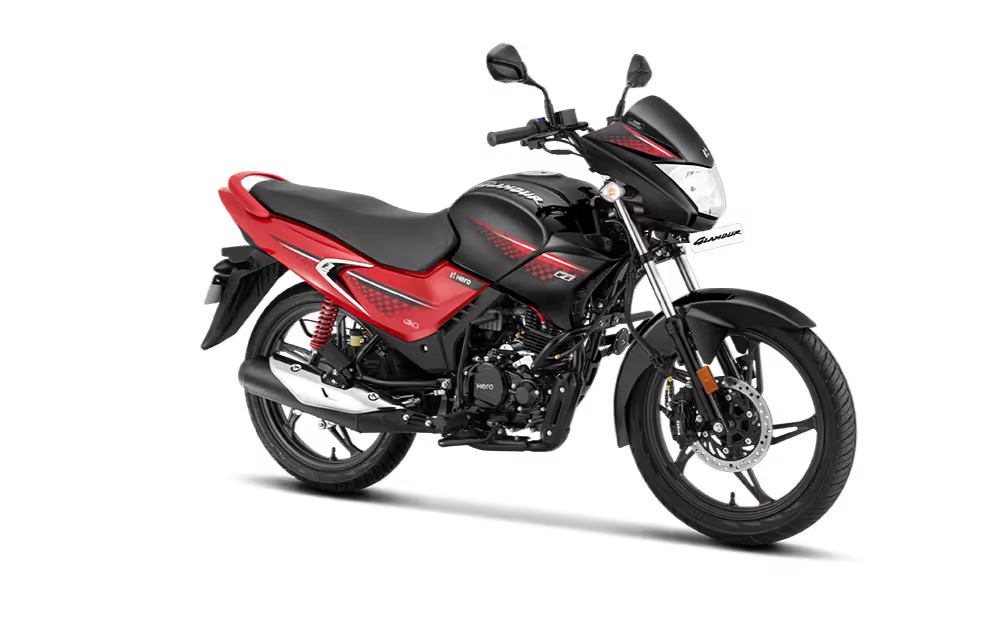
Hero Glamour
125cc performance with the same Hero service network depth as the Splendor Plus. The safest 125cc pick for low-maintenance ownership.
View specs →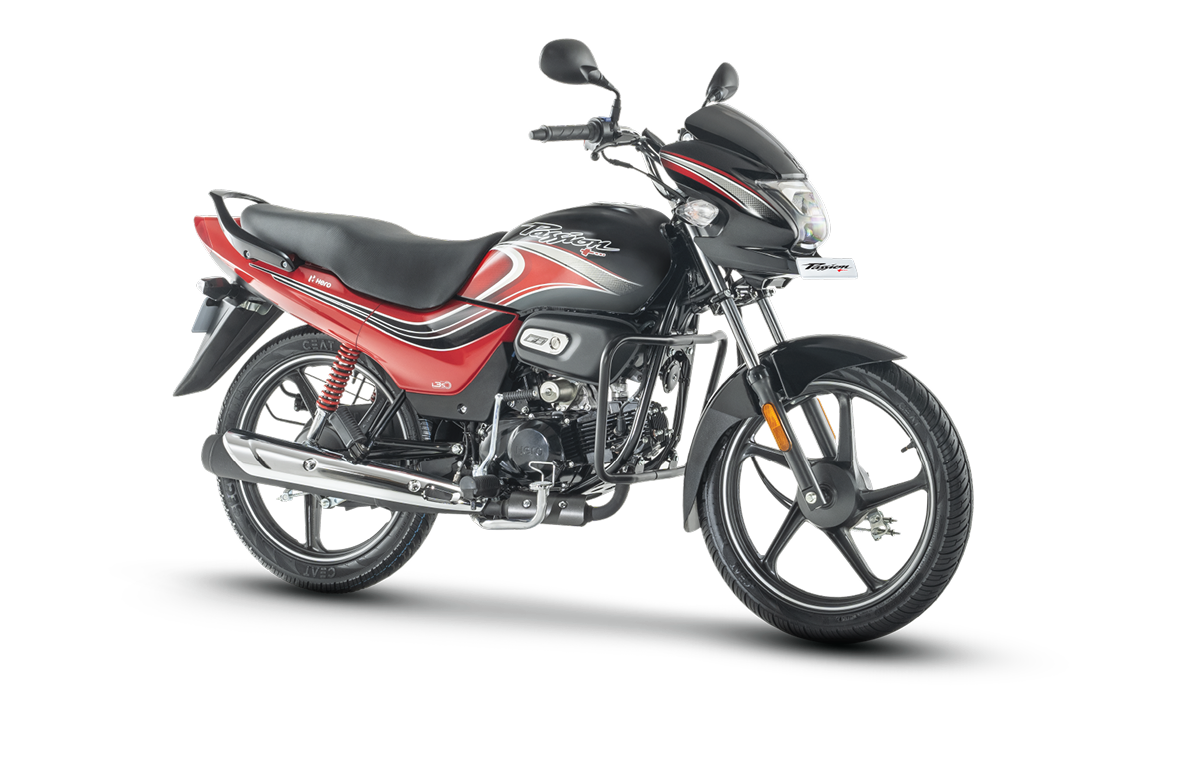
Hero Passion Plus
Shares its core platform with the Splendor and HF ranges — same low-drama reliability, slightly different styling and trim.
View specs →
TVS Star City Plus
Shares the Sport/Radeon engine with a more premium trim. Same mechanical dependability, a more complete features list.
View specs →Final Verdict
Low maintenance isn't about finding a bike that never breaks — every machine eventually needs parts and attention. It's about choosing a platform where breakdowns are rare, predictable, and cheap to fix when they do happen, ridden by a community large enough that every mechanic in the country already knows how to solve your problem.
For most buyers, the Hero Splendor Plus remains the single safest low-maintenance decision in Indian motorcycling — decades of refinement, the country's deepest service network, and spare parts that cost next to nothing. The Hero HF 100 and Hero HF Deluxe offer the same dependability at an even lower price for buyers on the tightest budget.
If you want Splendor-level reliability with modern conveniences, the Hero Splendor Plus XTEC and XTEC 2.0 add disc brakes and connectivity without compromising the platform's mechanical simplicity. For the best real-world mileage in this guide, the Bajaj Platina 100 and Platina 110 combine decades of refinement with the lowest fuel bills here.
Honda's Shine 100, Shine 100 DX, Shine 125, Livo, and Unicorn are the right choice for city and tier-1 riders who want the most mechanically refined engines here, while accepting a smaller rural network and slightly higher parts costs. For riders who need a bike built to absorb genuinely hard daily use, the Bajaj CT 110X is purpose-built for exactly that. And the TVS Sport and TVS Radeon round out the list as dependable, simple options backed by a steadily growing service network.
Before buying, ask your local mechanic which of these bikes they service most often — the answer is usually the most honest low-maintenance signal you can get, more reliable than any manufacturer claim.
Frequently Asked Questions
Which is the most low-maintenance bike in India in 2026?
The Hero Splendor Plus is widely regarded as the most low-maintenance motorcycle sold in India today. It combines a mechanically simple, decades-refined engine with the country's largest authorised service network and the cheapest, most widely available spare parts of any bike on sale.
Which brand has the cheapest spare parts and servicing?
Hero consistently offers the cheapest spare parts and lowest service costs among major Indian brands, helped by its 6,000+ authorised centres and decades of parts standardisation across the Splendor, HF, and Passion ranges. Bajaj's Platina and CT range follow closely, with TVS and Honda typically running 10–20% higher on comparable parts.
Is a carburetted bike easier to maintain than a fuel-injected one?
It depends on context. Carburetted engines like those in the base Splendor Plus and HF range are mechanically simpler and cheaper to fix with basic tools, which suits riders in areas with limited access to specialised service centres. Fuel-injected engines like the Honda Shine 100 and Unicorn need less manual tuning and stay consistent across seasons, which can mean fewer minor adjustment visits — but repairs typically require Honda-specific diagnostic equipment if something does go wrong.
Which low-maintenance bike is best for rural or small-town buyers?
Hero's commuter range — the Splendor Plus, HF Deluxe, HF 100, and the XTEC variants — is the strongest choice for rural and small-town buyers thanks to Hero's unmatched service and parts reach. The Bajaj Platina 100 and CT 110X are solid second choices where Bajaj's Probiking network has good coverage.
Do low-maintenance bikes sacrifice comfort or features?
Not necessarily. While the cheapest low-maintenance bikes like the Hero HF 100 are deliberately basic, options like the Hero Splendor Plus XTEC, TVS Radeon, and Honda Shine 100 DX add real comfort and convenience features without compromising the underlying mechanical simplicity that keeps maintenance costs low.
How much should a basic service cost on a low-maintenance commuter?
For the bikes in this guide, a routine service typically costs ₹400–₹700 for Hero and Bajaj's simplest 100–110cc models, ₹600–₹900 for TVS's Sport and Radeon, and ₹700–₹1,000+ for Honda's Shine and Unicorn range. Annual cost including wear items like brake shoes and clutch plates generally stays under ₹3,500 for the most low-maintenance bikes in this guide.
Is an older, simpler bike actually more reliable than a newer one with more features?
Often, yes, when it comes to long-term maintenance. Mature platforms like the Splendor Plus and Platina 100 have had years for manufacturers and the mechanic community to identify and resolve any weaknesses. Newer or more feature-rich bikes may be perfectly reliable too, but they carry more individual components — sensors, digital displays, connectivity modules — each of which is one more potential point of failure, even if any single one rarely fails.