Best Mileage Bikes in India (2026)
This guide is based on real owner forum data, dealer service quotes, and independent test rides — not manufacturer claims. All mileage figures reflect typical city riding conditions, not ARAI lab results. Real-world figures in Indian traffic run 10–18% below official claims.
Fuel cost is your biggest recurring expense after a bike's purchase price. On a 40 km daily commute at ₹104/litre, a difference of just 10 km/l between two bikes saves you roughly ₹6,000–₹7,000 a year — and over three years of ownership, that adds up to more than ₹20,000. Choosing the right bike for mileage is a financial decision, not just a spec-sheet preference.
This guide covers twelve bikes from across price segments that deliver the best real-world fuel efficiency in India. Each entry includes honest pros, cons, and a clear recommendation on who the bike actually suits.
Quick Picks — Skip to Your Best Match
- Best overall mileage: Bajaj Platina 100 — 60–68 km/l, cheapest per km to run
- Best budget mileage: Hero HF 100 — 60–65 km/l at the lowest price
- Best mileage + reliability: Hero Splendor Plus — 55–62 km/l, widest service network
- Best mileage + features: Hero Splendor Plus XTEC — Bluetooth, USB, LED at 54–60 km/l
- Best 110cc mileage: Bajaj Platina 110 — 60–65 km/l with disc brake option
- Best mileage + comfort: TVS Radeon — 55–62 km/l with the best seat in class
- Best mileage under ₹70k: TVS Sport — 58–65 km/l, lightest in segment
- Best 125cc mileage: Honda SP 125 — 60–65 km/l with FI and modern features
- Best mileage + style: TVS Raider 125 — 55–62 km/l, sporty design
- Best mileage 150cc: Bajaj Pulsar 150 — 45–52 km/l with highway ability
- Surprise package: Hero Passion Plus — 55–60 km/l with youthful styling
- Best Honda budget mileage: Honda Livo — 50–58 km/l with Honda refinement
- Best Honda entry mileage: Honda Shine 100 — 58–63 km/l with Honda refinement at a budget price
At a Glance — Ranked by Real-World City Mileage
All twelve bikes in this guide ranked by real-world city km/l, so you can immediately see where each stands before reading the full write-ups.
| Rank | Bike | Price (ex-showroom) | Engine | City Mileage | Highway Mileage |
|---|---|---|---|---|---|
| 🥇 1 | Bajaj Platina 100 | ₹67,000 | 102cc | 60–68 km/l | ~72 km/l |
| 🥈 2 | Hero HF 100 | ₹57,000 | 97.2cc | 60–65 km/l | ~68 km/l |
| 🥉 3 | Bajaj Platina 110 | ₹75,000 | 115cc | 60–65 km/l | ~68 km/l |
| 4 | TVS Sport | ₹65,000 | 109.7cc | 58–65 km/l | ~68 km/l |
| 5 | Honda Shine 100 | ₹72,000 | 97.2cc | 58–63 km/l | ~65 km/l |
| 6 | Honda SP 125 | ₹96,000 | 123.94cc | 60–65 km/l | ~70 km/l |
| 7 | Hero Splendor Plus | ₹75,000 | 97.2cc | 55–62 km/l | ~68 km/l |
| 8 | Hero HF Deluxe | ₹60,000 | 97cc | 55–63 km/l | ~66 km/l |
| 9 | TVS Radeon | ₹72,000 | 109.7cc | 55–62 km/l | ~66 km/l |
| 10 | Hero Splendor Plus XTEC | ₹82,000 | 97.2cc | 54–60 km/l | ~66 km/l |
| 11 | Hero Passion Plus | ₹73,000 | 113cc | 55–60 km/l | ~64 km/l |
| 12 | Honda Livo | ₹79,000 | 109.51cc | 50–58 km/l | ~62 km/l |
| 13 | TVS Raider 125 | ₹90,000 | 124.8cc | 55–62 km/l | ~65 km/l |
1. Bajaj Platina 100

₹67,000 (ex-showroom) | 102cc | Real-world mileage: 60–68 km/l
India's undisputed mileage champion. The Platina 100's 102cc engine has been tuned around a single priority: maximum fuel efficiency in Indian city conditions. Owners consistently report 60–68 km/l in real-world urban riding — 5–8 km/l better than most rivals in the commuter segment. On clean highways at a steady throttle, some owners have recorded up to 72 km/l.
Bajaj has paired this frugal engine with the softest suspension setup in the commuter segment. The front telescopic forks and rear twin shock absorbers are noticeably more compliant on pothole-heavy roads than competitors — which matters when you are covering 40+ km every day. Pillion comfort is a genuine highlight; the rear seat is wider and better padded than most bikes here.
The trade-offs are real. Build quality and panel fit are a step below Honda's standard, and resale value trails Hero models. The engine is also less responsive off the line — perfectly acceptable for calm commuting, but less satisfying if you want to filter quickly through traffic.
Pros
- Best real-world mileage in India's commuter segment
- Softest suspension — ideal for rough, pothole-heavy roads
- Best pillion comfort at this price
- Competitive purchase price
Cons
- Build quality and finish below Honda's level
- Weaker resale value than Hero and Honda
- Less responsive engine — slower off the line
Who should buy: Riders with 40+ km daily commutes on rough urban roads who want to minimise fuel bills. Also the best choice if you regularly carry a pillion passenger.
View Full Specs & On-Road Price
2. Hero HF 100
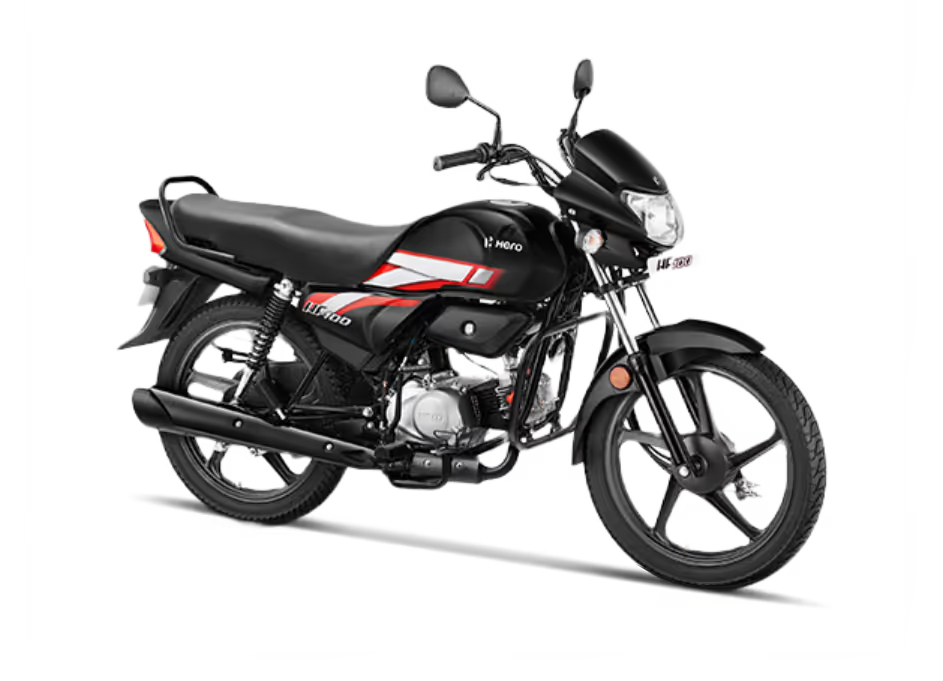
₹57,000 (ex-showroom) | 97.2cc | Real-world mileage: 60–65 km/l
The Hero HF 100 is India's most affordable motorcycle and yet delivers real-world mileage figures that rival the Platina 100 — typically 60–65 km/l in city conditions. For buyers where total cost of ownership is the only metric that matters, this combination of the country's lowest purchase price and near-class-leading fuel efficiency is a compelling argument that is very difficult to beat.
Being a Hero product, it benefits from the most extensive service network in India — 6,000+ authorised service points, with spare parts available at virtually every local mechanic across tier-1 cities, tier-3 towns, and rural areas alike. A basic service costs ₹400–₹700, and routine parts like brake pads and cables are among the cheapest of any motorcycle in the country.
What it gives up to achieve this: there are no features beyond the bare essentials — drum brakes all around, analogue instrument cluster, no USB charging, and styling that is purely functional. The ride quality on very rough roads is noticeably firmer than the Platina.
Pros
- Lowest purchase price of any bike in this guide
- 60–65 km/l real-world mileage — near class-leading
- Hero's 6,000+ service network — best rural coverage
- Cheapest spare parts and service costs in the segment
Cons
- Absolutely no modern features — bare-bones spec
- Drum brakes only, no disc option
- Firmer ride than the Platina on bad roads
- Lowest resale value in this guide
Who should buy: Buyers for whom purchase price and running cost are the only two criteria. Unbeatable value for rural commuters and first-time bike owners on a tight budget.
View Full Specs & On-Road Price
3. Bajaj Platina 110

₹75,000 (ex-showroom) | 115cc | Real-world mileage: 60–65 km/l
The Platina 110 is the step-up version of the mileage-leading Platina 100, and it makes a strong case for that extra spend. The 115cc engine is slightly more relaxed and refined at highway speeds while maintaining 60–65 km/l real-world city efficiency — almost identical to its smaller sibling. Crucially, the Platina 110 adds a front disc brake option, which the Platina 100 does not offer, meaningfully improving stopping confidence especially in wet conditions.
Bajaj's SNS (Spring in Spring) suspension is retained from the Platina 100 and remains the best in this price range for absorbing urban potholes. The ergonomics are upright and comfortable for long daily commutes, and the wider pillion seat continues to be a genuine practical advantage over most rivals.
Pros
- 60–65 km/l real-world mileage despite the larger 115cc engine
- Front disc brake option — missing on the Platina 100
- Best-in-class SNS suspension for rough road comfort
- More relaxed engine note at highway speeds
Cons
- Weaker resale value compared to Hero and Honda
- Build quality still a notch below Honda
- No modern features — no USB, no digital cluster
Who should buy: Buyers who want the Platina 100's exceptional mileage and ride comfort but also want the option of a front disc brake and a slightly more capable engine for occasional highway use.
View Full Specs & On-Road Price
4. TVS Sport

₹65,000 (ex-showroom) | 109.7cc | Real-world mileage: 58–65 km/l
The TVS Sport achieves something unusual: it has the largest engine in the budget commuter segment at 109.7cc, yet delivers 58–65 km/l in real-world city conditions — competitive with 97–102cc rivals. TVS has tuned the engine intelligently for efficiency without sacrificing the responsive throttle that makes the Sport the most nimble commuter in this price bracket.
At 99 kg kerb weight, it is also the lightest commuter in the segment. That light weight contributes to both fuel efficiency and city manoeuvrability — filtering through traffic gaps, making U-turns, and parking are all easier on the Sport than on heavier rivals. The built-in Econometer (real-time fuel efficiency indicator) is a practical tool that genuinely helps newer riders build more economical riding habits.
Pros
- Strong 58–65 km/l mileage despite the largest engine here
- Most responsive throttle — best for dense city traffic
- Lightest weight at 99 kg — easiest to handle and park
- Lowest price in this comparison
Cons
- Smaller service network than Hero in semi-rural areas
- Lower resale value than Hero models
- Firmer ride than the Platina on rough roads
Who should buy: Urban commuters who want strong mileage without giving up a responsive, nimble ride. The best all-round city bike under ₹70,000.
View Full Specs & On-Road Price
5. Honda Shine 100

₹72,000 (ex-showroom) | 97.2cc | Real-world mileage: 58–63 km/l
The Honda Shine 100 brings Honda's engineering refinement and build quality to the entry-level 100cc commuter space — a segment the brand had largely ceded to Hero and Bajaj. Its 97.2cc OHC engine delivers 58–63 km/l in real-world city conditions, slotting neatly between the Hero HF 100 and Honda Livo on the mileage chart while offering Honda's characteristic smoothness and finish quality at a more accessible price.
Where the Shine 100 differentiates itself from the Hero and Bajaj competition is in refinement. Vibration at idle and at cruising speeds is noticeably lower than the Platina and HF 100. Panel fit and paint quality are to Honda's usual standard — consistently a step above equivalent Hero and Bajaj products. Honda's CBS (Combined Braking System) is standard, improving braking balance for less experienced riders.
The trade-off is a smaller service network than Hero in rural and semi-urban areas, and spare parts that cost slightly more than Hero equivalents. For city riders, neither is a meaningful concern — Honda's urban service coverage is strong. For rural buyers, the Hero HF 100 remains the safer long-term choice on serviceability grounds.
Pros
- 58–63 km/l — strong mileage with Honda refinement
- Best-in-class build quality and panel finish for 100cc
- Lower vibration than Hero and Bajaj 100cc rivals
- CBS standard — improved braking confidence
- Strong Honda resale value in urban markets
Cons
- Lower mileage than Hero HF 100 and Bajaj Platina 100
- Smaller rural service network than Hero
- Spare parts slightly costlier than Hero equivalents
- No disc brake option
Who should buy: City commuters who want Honda's build quality and engine refinement at a 100cc price point, and are willing to accept slightly lower peak mileage in exchange for a more polished daily ownership experience.
View Full Specs & On-Road Price
6. Honda SP 125

₹96,000 (ex-showroom) | 123.94cc | Real-world mileage: 60–65 km/l
The Honda SP 125 is the standout mileage performer in the 125cc segment and earns a place in any serious mileage guide. Its PGM-FI fuel-injected 123.94cc engine delivers 60–65 km/l in city conditions — matching the best 100cc commuters — while simultaneously offering significantly better highway performance, a proper digital instrument cluster, LED lighting, and Honda's class-leading build quality.
The FI system is particularly valuable for mileage consistency. Unlike carbureted bikes that can see efficiency dip in cold mornings or at higher altitudes, the SP 125's injection system maintains optimal fuel delivery across all conditions. The engine is also Honda's smoothest in this displacement class — vibration is minimal even after an hour in the saddle.
At ₹96,000, it costs more than the 100cc commuters in this guide — but the mileage is comparable, the features are significantly better, and Honda's resale value in the 125cc segment is strong.
Pros
- 60–65 km/l mileage — matches best 100cc bikes
- FI engine maintains mileage consistency across all conditions
- Digital cluster, LED lights, disc brake — best features here
- Significantly better highway ability than 100cc commuters
- Strong resale value for a 125cc bike
Cons
- Most expensive bike in this guide
- Smaller service network than Hero in rural areas
- Slightly heavier — not as nimble in very dense city traffic
Who should buy: Riders whose budget stretches to ₹1 lakh and who want the full package — top-tier mileage, modern features, better highway ability, and Honda's build quality — in a single motorcycle.
View Full Specs & On-Road Price
7. Hero Splendor Plus
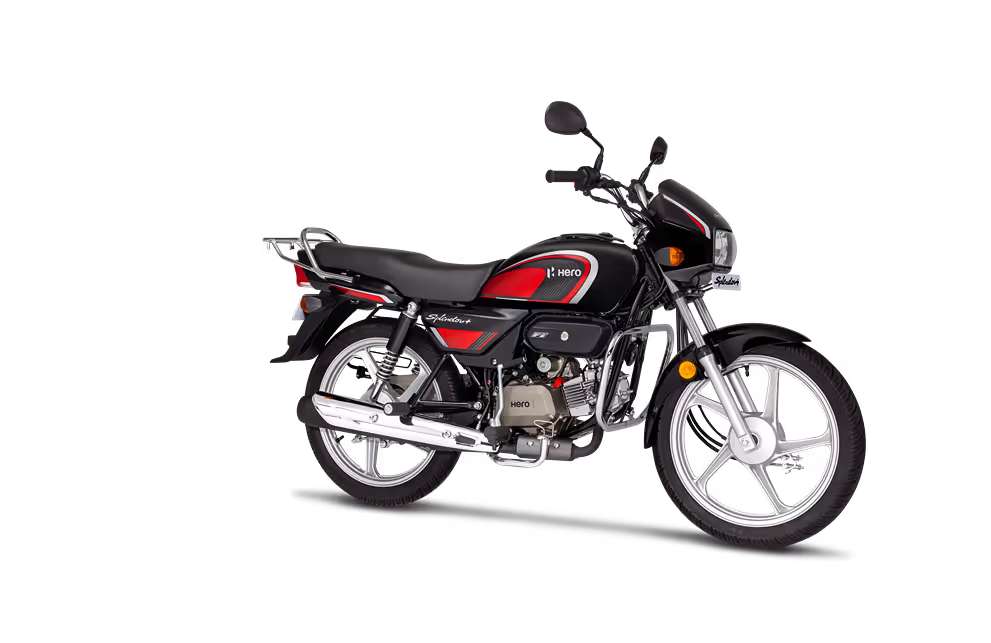
₹75,000 (ex-showroom) | 97.2cc | Real-world mileage: 55–62 km/l
India's best-selling motorcycle for over two decades does not top the mileage chart, but its 55–62 km/l real-world figure is remarkably consistent across all conditions — city traffic, highway cruising, and varying weather. What the Splendor Plus trades in peak fuel efficiency, it more than compensates for in total ownership value.
Resale value is where the Splendor quietly wins the long game. A well-maintained three-year-old Splendor Plus typically sells for 65–72% of its original price — the best retention in this entire segment. Combined with the cheapest spare parts in the country and 6,000+ service points, the total lifetime ownership cost makes a very compelling argument even if the per-litre efficiency is not class-leading.
Pros
- Consistent 55–62 km/l across all conditions
- Best resale value in segment — 65–72% after 3 years
- Widest service network — 6,000+ Hero service points
- Cheapest spare parts; proven 20+ year reliability
- Low seat height (785mm) — good for shorter riders
Cons
- No disc brake option — drum brakes only
- Basic instrument cluster, no USB charging
- Mileage drops in very heavy stop-start traffic
- Styling has not evolved significantly in years
Who should buy: Daily commuters and rural riders who want dependable mileage alongside the lowest possible long-term ownership cost and the best resale value in the segment.
View Full Specs & On-Road Price
8. Hero HF Deluxe
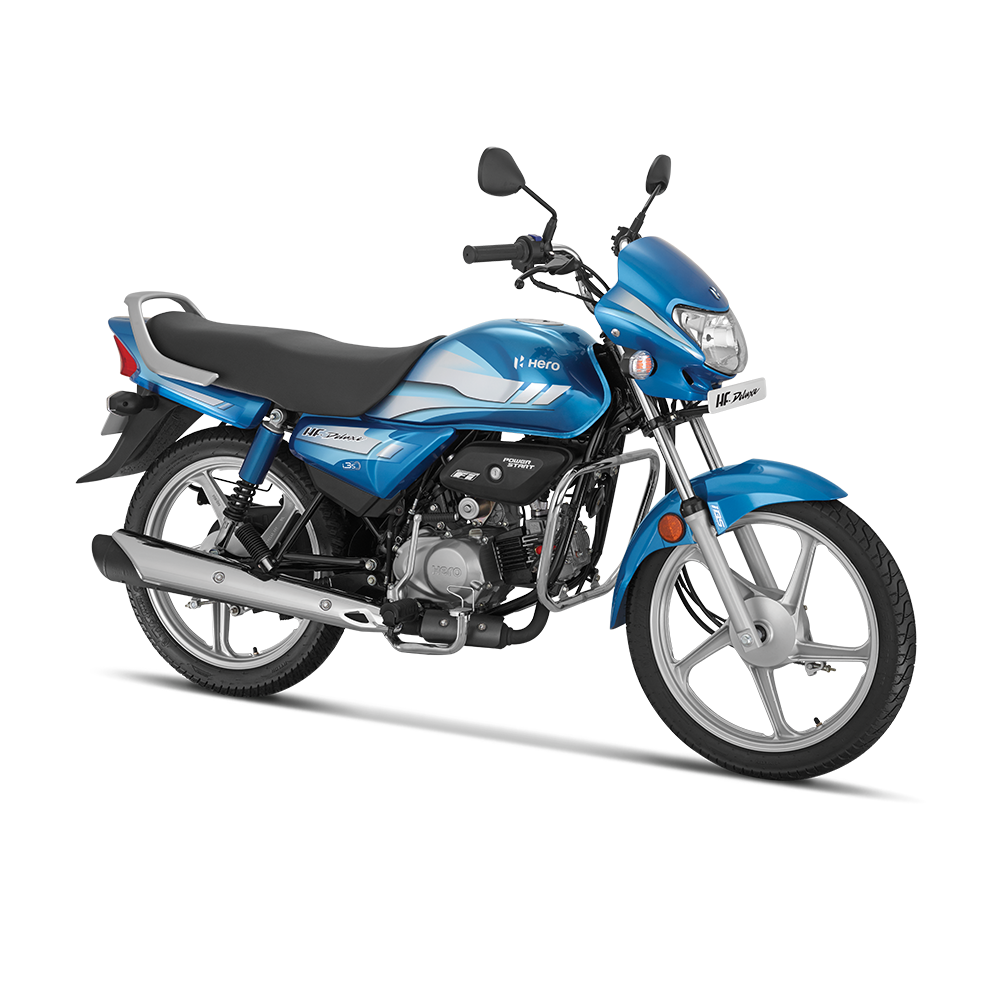
₹60,000 (ex-showroom) | 97cc | Real-world mileage: 55–63 km/l
The Hero HF Deluxe sits between the HF 100 and Splendor Plus in the Hero lineup, and offers a meaningful upgrade over the entry-level HF 100 in terms of finish and ride quality — while maintaining very similar mileage at 55–63 km/l. For buyers who find the HF 100 too basic but the Splendor Plus slightly expensive, the HF Deluxe fills that gap convincingly.
The engine is tuned identically to the Splendor Plus's 97cc unit, and real-world mileage figures are virtually indistinguishable between the two. What you give up with the HF Deluxe is primarily in features — no alloy wheels option in base variants, simpler seat design — and slightly weaker resale value compared to the Splendor. What you gain is ₹15,000 back in your pocket upfront.
Pros
- 55–63 km/l — same strong mileage as the Splendor Plus
- ₹15,000 cheaper than the Splendor Plus
- Hero's full 6,000+ service network and parts availability
- Better finish than the HF 100
Cons
- No premium features — no USB, basic cluster
- Lower resale value than the Splendor Plus
- Rougher ride than the Platina on bad roads
- Dated styling
Who should buy: Buyers who want Splendor-level mileage and reliability at a meaningfully lower upfront cost. The sweet spot in Hero's commuter lineup for budget-conscious buyers who still want a step above bare-bones.
View Full Specs & On-Road Price
9. TVS Radeon

₹72,000 (ex-showroom) | 109.7cc | Real-world mileage: 55–62 km/l
The TVS Radeon is the commuter segment's comfort-first option. It shares the 109.7cc engine with the TVS Sport but is tuned for a more relaxed riding experience — softer power delivery, more upright ergonomics, and a cushioned seat that is genuinely the most comfortable in the commuter segment. Real-world mileage of 55–62 km/l is competitive, and slightly better than the Hero Splendor Plus in equivalent city conditions.
TVS has given the Radeon a subtle retro-classic aesthetic that ages well, along with practical features including a mobile charging socket and a side stand indicator — thoughtful additions that the Hero commuters lack. The Radeon also benefits from TVS's improved service coverage in tier-1 and tier-2 cities over recent years.
Pros
- 55–62 km/l with the most comfortable seat in commuter segment
- Mobile charging socket — a practical addition at this price
- Retro-classic styling that is more distinctive than rivals
- Side stand indicator for safety
Cons
- Lower resale value than Hero models
- Smaller service network than Hero in rural areas
- Slightly heavier than the TVS Sport
Who should buy: Riders who spend long hours in the saddle daily and prioritise comfort alongside decent mileage — and who want something that looks slightly more distinctive than standard commuters.
View Full Specs & On-Road Price
10. Hero Splendor Plus XTEC
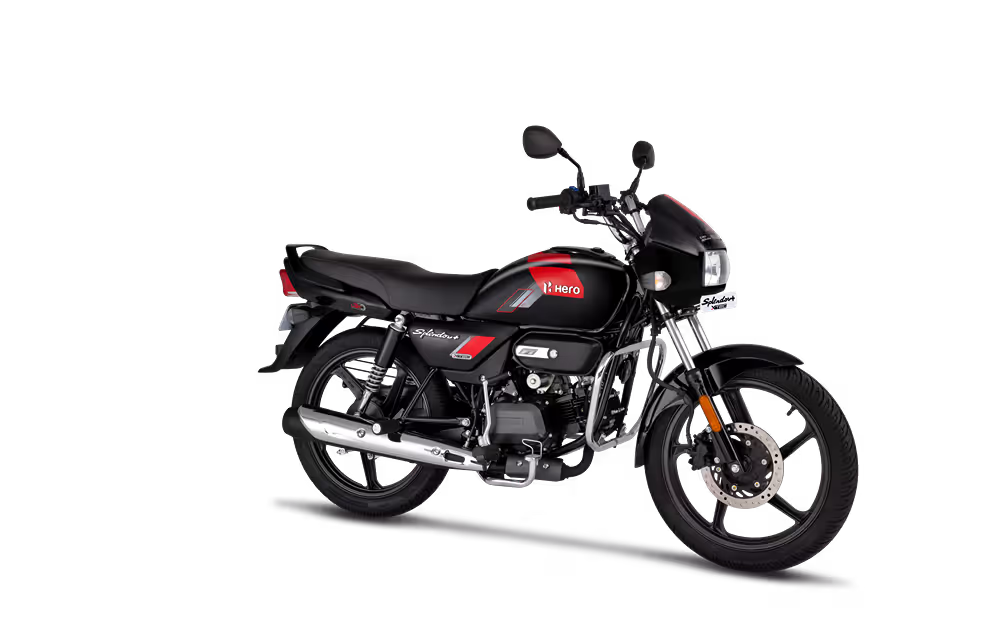
₹82,000 (ex-showroom) | 97.2cc | Real-world mileage: 54–60 km/l
The Splendor Plus XTEC is the feature-loaded version of India's best-selling commuter. It adds Bluetooth connectivity, a semi-digital instrument cluster, LED headlamp, USB charging, and a front disc brake to the proven Splendor formula — all while maintaining real-world mileage of 54–60 km/l. That is a 1–2 km/l drop from the standard Splendor Plus, but the addition of features meaningfully changes the ownership experience.
The Bluetooth integration enables turn-by-turn navigation alerts and call notifications on the cluster — a useful feature for urban riders who rely on their phone. The LED headlamp is a safety upgrade for night riding. The front disc brake materially improves stopping confidence in heavy rain. At ₹82,000, the XTEC costs ₹7,000 more than the standard Splendor Plus — a reasonable premium for the feature set.
Pros
- 54–60 km/l — strong mileage with full modern feature set
- Bluetooth connectivity, USB charging, LED lamp — best features on a Splendor
- Front disc brake — significant safety upgrade over base model
- Hero's full service network and resale value advantage
Cons
- 1–2 km/l lower mileage than the standard Splendor Plus
- ₹7,000 premium over the base Splendor Plus
- Bluetooth features are basic vs. smartphones
Who should buy: Splendor buyers who want modern features — especially the disc brake and LED headlamp — and do not want to sacrifice Hero's reliability and service advantages.
View Full Specs & On-Road Price
11. Hero Passion Plus
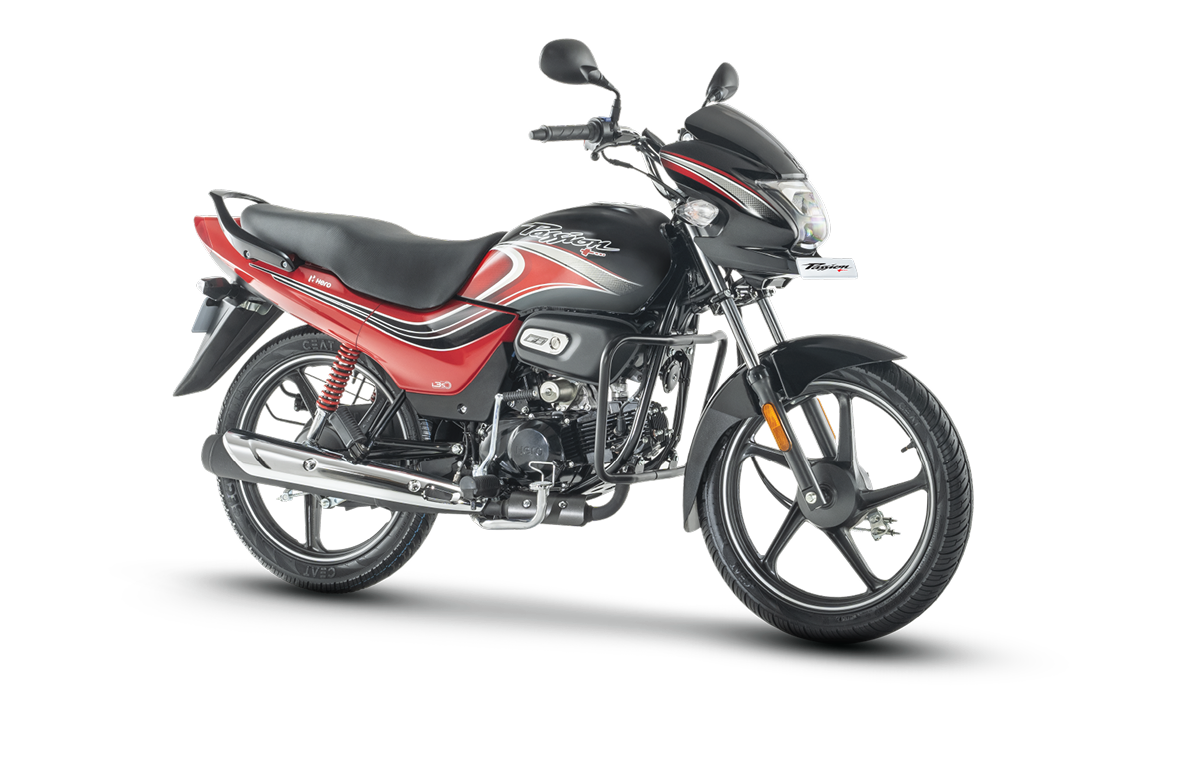
₹73,000 (ex-showroom) | 113cc | Real-world mileage: 55–60 km/l
The Hero Passion Plus is a commuter with slightly more youthful styling ambitions than the Splendor Plus. Its 113cc engine is notably smoother than the 97cc unit in the Splendor and HF Deluxe, and real-world mileage of 55–60 km/l is competitive for the displacement. The Passion Plus has a slightly higher-revving character that makes city riding feel more lively — not sporty by any means, but noticeably less flat than the Splendor.
Hero offers the Passion Plus in both self-start and kick-start variants, with alloy wheels as standard on most configurations. Build quality is at the expected Hero level — solid and dependable — and the full Hero service network applies here as with all Hero models.
Pros
- 55–60 km/l mileage with a more lively 113cc engine
- Slightly more distinctive styling than the Splendor
- Full Hero service network — same rural coverage
- Alloy wheels standard on most variants
Cons
- Lower mileage than the Splendor Plus and HF Deluxe
- Lower resale value than the Splendor Plus in most markets
- No disc brake option on base variants
Who should buy: Younger buyers who want Hero reliability and service coverage but prefer a slightly more characterful engine and more contemporary styling over the plain Splendor Plus.
View Full Specs & On-Road Price
12. Honda Livo

₹79,000 (ex-showroom) | 109.51cc | Real-world mileage: 50–58 km/l
The Honda Livo brings Honda's signature engine refinement and build quality to a price point between the Shine 100 and SP 125. Its 109.51cc engine delivers 50–58 km/l in real-world city conditions — the lowest in this guide, but still strong by any absolute measure. Where the Livo earns its place is in refinement: vibration is minimal, the engine note is clean, and Honda's panel quality is the best in the commuter segment.
Honda's Programmed Fuel Injection (PGM-FI) on select variants maintains mileage consistency better than carbureted alternatives, particularly in cold mornings. Idle Stop System (ISS) on the FI variant automatically shuts the engine at prolonged stops and restarts with the throttle — useful for Mumbai or Delhi traffic where extended idling is unavoidable. ISS can improve real-world urban mileage by 3–5%.
Pros
- Honda's best-in-class build quality and panel finish
- FI + ISS variant for the most consistent real-world mileage
- Least vibration in this engine displacement class
- Strong Honda resale value — second only to Hero here
Cons
- Lowest mileage in this guide at 50–58 km/l
- Smaller service network than Hero in rural areas
- Spare parts slightly more expensive than Hero equivalents
Who should buy: City riders who prioritise Honda build quality and engine refinement over outright mileage figures. The FI+ISS variant is the pick for stop-heavy city commutes.
View Full Specs & On-Road Price
13. TVS Raider 125

₹90,000 (ex-showroom) | 124.8cc | Real-world mileage: 55–62 km/l
The TVS Raider 125 is the style-first option in this guide — a 125cc motorcycle with a genuinely sporty design that stands out sharply against the utilitarian aesthetics of most commuters here. That it delivers 55–62 km/l real-world mileage in this context makes it all the more impressive. The 124.8cc engine has been tuned for a more engaging character than budget commuters while still prioritising efficiency.
Features are among the best in its class: USB Type-C charging, Bluetooth connectivity via the SmartXonnect app, a semi-digital instrument cluster, and a disc brake are all standard. For buyers who want the mileage of a commuter but refuse to ride something that looks like one, the Raider 125 is genuinely the best answer in the market.
Pros
- 55–62 km/l — strong mileage in a genuinely sporty package
- Best feature set at this price: Bluetooth, USB-C, disc brake
- Most distinctive styling in this guide by a wide margin
- 124.8cc engine — more confident on highway stretches
Cons
- TVS service network thinner than Hero in rural areas
- Lower resale value than equivalent Hero or Honda bikes
- Slightly sportier ergonomics — less ideal for very long daily commutes
Who should buy: Urban riders who want competitive mileage and modern features but are unwilling to compromise on style. The best-looking bike in this guide, comfortably.
View Full Specs & On-Road Price
Side-by-Side Comparison
Here is how all twelve bikes compare across the factors that matter most to mileage-focused buyers.
| Bike | Price (ex-showroom) | Engine | Real-World Mileage | Best For | Weakest Point |
|---|---|---|---|---|---|
| Bajaj Platina 100 | ₹67,000 | 102cc | 60–68 km/l | Maximum fuel economy | Build quality & resale |
| Hero HF 100 | ₹57,000 | 97.2cc | 60–65 km/l | Lowest total cost | No features at all |
| Bajaj Platina 110 | ₹75,000 | 115cc | 60–65 km/l | Mileage + disc brake | Resale value |
| TVS Sport | ₹65,000 | 109.7cc | 58–65 km/l | Mileage + city agility | Rural service coverage |
| Honda Shine 100 | ₹72,000 | 97.2cc | 58–63 km/l | Honda refinement at 100cc price | Rural service coverage |
| Honda SP 125 | ₹96,000 | 123.94cc | 60–65 km/l | Complete package | Highest price here |
| Hero Splendor Plus | ₹75,000 | 97.2cc | 55–62 km/l | Reliability & resale | No disc brake |
| Hero HF Deluxe | ₹60,000 | 97cc | 55–63 km/l | Splendor-level at lower price | Rough road comfort |
| TVS Radeon | ₹72,000 | 109.7cc | 55–62 km/l | Mileage + ride comfort | Rural service coverage |
| Hero Splendor Plus XTEC | ₹82,000 | 97.2cc | 54–60 km/l | Mileage + modern features | ₹7k premium over base |
| Hero Passion Plus | ₹73,000 | 113cc | 55–60 km/l | Mileage + lively character | Resale vs. Splendor |
| Honda Livo | ₹79,000 | 109.51cc | 50–58 km/l | Refinement + Honda quality | Lowest mileage here |
| TVS Raider 125 | ₹90,000 | 124.8cc | 55–62 km/l | Mileage + style + features | Rural service coverage |
Real-World Mileage & Monthly Running Costs
ARAI figures are measured under controlled lab conditions — useful as a benchmark, but real-world mileage in Indian city traffic is always lower. In typical urban riding with traffic lights, idling, and irregular speeds, expect 10–18% below ARAI claims.
Based on owner reports from popular Indian motorcycling forums and independent ride data:
- Bajaj Platina 100: 60–68 km/l city; up to 72 km/l on clean highway
- Hero HF 100: 60–65 km/l city; up to 68 km/l highway
- Bajaj Platina 110: 60–65 km/l city; up to 68 km/l highway
- TVS Sport: 58–65 km/l city; up to 68 km/l highway
- Honda Shine 100: 58–63 km/l city; up to 65 km/l highway; CBS standard across variants
- Honda SP 125: 60–65 km/l city; FI holds mileage consistently across conditions
- Hero Splendor Plus: 55–62 km/l city; up to 68 km/l highway
- Hero HF Deluxe: 55–63 km/l city — nearly identical to Splendor Plus
- TVS Radeon: 55–62 km/l city; up to 66 km/l highway
- Hero Splendor Plus XTEC: 54–60 km/l city; LED load marginally reduces peak efficiency
- Hero Passion Plus: 55–60 km/l city; up to 64 km/l highway
- Honda Livo (FI+ISS): 50–58 km/l city; ISS improves stop-heavy urban mileage by ~4%
- TVS Raider 125: 55–62 km/l city; up to 65 km/l highway
At ₹104/litre and a 35 km daily commute, the monthly fuel cost on the Bajaj Platina 100 works out to approximately ₹1,600–₹1,820. On the Honda Livo (lowest mileage in this guide), expect ₹1,870–₹2,160. That ₹270–₹340 per month difference adds up to ₹3,200–₹4,100 per year — significant over a 3–5 year ownership period.
Service & Maintenance Costs
Typical servicing costs across major Indian cities (April 2026, based on authorised dealer quotes):
- Basic service (oil change + filters): ₹400–₹750
- Standard periodic service (every 3,000 km): ₹600–₹1,000
- Major service with parts (every 10,000 km): ₹1,200–₹2,200
- Brake shoe replacement: ₹200–₹450
- Clutch cable replacement: ₹80–₹150
- Tyre replacement (MRF/CEAT): ₹900–₹1,400 per tyre
Hero models — the HF 100, HF Deluxe, Splendor Plus, XTEC, and Passion Plus — consistently come in at the lower end of these ranges, with the widest availability of genuine parts. Honda's parts cost slightly more but service intervals can be longer. Bajaj and TVS fall in between. The SP 125 and Raider 125, being 125cc bikes, have slightly higher parts costs than 100cc commuters.
How to Maximise Your Bike's Real-World Mileage
Regardless of which bike you choose, these habits deliver the most significant real-world improvement in fuel efficiency:
- Maintain correct tyre pressure: Under-inflated tyres are the single most common cause of reduced mileage in Indian commuter bikes. Check weekly — most 100–125cc bikes recommend 28–32 PSI front and 32–36 PSI rear (more when loaded).
- Service on time: A fouled spark plug or clogged air filter alone can reduce mileage by 5–10 km/l. Stick to 3,000 km service intervals.
- Use the correct engine oil grade: Thicker-than-specified oil increases friction and hurts mileage. Use 10W-30 or what your owner's manual specifies — not the "premium" grade the mechanic recommends.
- Avoid aggressive throttle: Smooth, gradual acceleration uses significantly less fuel than hard take-offs. Accelerate to target speed and hold steady rather than surging.
- Use engine braking: Rolling off the throttle early and letting the engine slow you down saves fuel and extends brake life simultaneously.
- Avoid unnecessary idling: At 0 km/l, idling for 30+ seconds at a level crossing or long signal consumes fuel for zero distance. Switch off if the wait is extended.
Key Buying Factors Beyond Mileage
- Daily commute distance: Under 20 km/day — mileage differences amount to less than ₹100/month; choose on comfort and features instead. Over 40 km/day — the Platina 100 or HF 100's efficiency advantage becomes financially meaningful.
- Road conditions: Consistently rough or unpaved roads strongly favour the Bajaj Platina 100 and 110 for their SNS suspension. Smooth city tarmac — any bike on this list works well.
- Service network near you: In rural or semi-urban areas, Hero's depth makes the Splendor Plus, HF Deluxe, or HF 100 the safer long-term choices — regardless of mileage rank.
- Resale plan: Selling within 3–4 years? Hero bikes return the most. Honda is second. Bajaj and TVS depreciate faster in the commuter segment.
- Feature requirements: Need USB charging, Bluetooth, or a disc brake? The Splendor Plus XTEC, TVS Raider 125, and Honda SP 125 all offer these while maintaining strong mileage figures.
- Highway use: If you regularly ride at 70–80 km/h, the 125cc options — Honda SP 125, TVS Raider 125 — deliver much better sustained highway performance than 100cc commuters.
When Mileage Should Not Be Your Only Criterion
Don't buy purely on km/l figures if: you regularly ride at 80+ km/h on highways, carry heavy loads, or need features like Bluetooth, LED lighting, or a digital display as standard. The 100cc commuters in this guide are optimised for city use — at sustained highway speeds, most are working near their comfortable limit.
In that case, spending ₹15,000–₹25,000 more on a 125cc motorcycle like the Honda SP 125 or TVS Raider 125 — both covered in this guide — will deliver materially better highway performance while maintaining very competitive mileage. Don't sacrifice usability chasing km/l.
Final Verdict
For pure, unapologetic fuel efficiency, the Bajaj Platina 100 wins — and it is not particularly close. 60–68 km/l in real-world city conditions, with the softest suspension in the segment, makes it the most efficient and comfortable choice for high-distance daily commuters.
If your budget is the tightest possible, the Hero HF 100 delivers nearly the same mileage at ₹10,000 less, with the added security of Hero's full service network. The Honda Shine 100 is worth considering for city buyers who want Honda's build quality and refinement at a 100cc price — mileage sits between the HF 100 and Livo, with the best finish in the entry segment. The Bajaj Platina 110 makes a strong case for buyers who want the Platina's mileage with the safety of a disc brake.
For most buyers who want the best balance of mileage, reliability, resale, and long-term ownership value, the Hero Splendor Plus remains the wisest overall choice — even if it is not the outright mileage leader. And if your budget extends to ₹96,000, the Honda SP 125 is the most complete mileage bike in this guide: top-tier km/l, modern features, and genuinely better highway ability in a single package.
Whichever bike you shortlist, take a test ride before finalising. Seat height, handlebar reach, and clutch feel vary more between these bikes than specs suggest — and comfort on day one often predicts satisfaction at month twelve.
Frequently Asked Questions
Which bike gives the best real-world mileage in India in 2026?
The Bajaj Platina 100 delivers the best real-world mileage at 60–68 km/l in city conditions and up to 72 km/l on clean highways. It consistently leads the commuter segment by 5–8 km/l over most rivals. The Hero HF 100 and Bajaj Platina 110 are close behind at 60–65 km/l.
What is the difference between ARAI mileage and real-world mileage?
ARAI (Automotive Research Association of India) mileage is measured under controlled lab conditions — constant speed, no traffic stops, no hills, optimal temperature. In real Indian city riding with traffic lights, idling, and variable speeds, actual mileage is typically 10–18% lower than ARAI figures. All km/l data in this guide reflects real-world city conditions based on owner forum data.
Does a larger engine always mean worse mileage?
No. The TVS Sport's 109.7cc engine delivers 58–65 km/l — better than the Hero Splendor Plus's 97.2cc engine at 55–62 km/l. Engine tuning, compression ratio, and fuel delivery system matter as much as displacement. The Honda SP 125 at 123.94cc matches the Platina 100's mileage in city conditions.
Is fuel injection (FI) better than a carburettor for mileage?
FI does not always deliver higher peak mileage, but it provides more consistent efficiency across varied conditions — cold mornings, hilly roads, high altitudes. The Honda SP 125's FI variant maintains mileage figures more reliably than carbureted alternatives. Honda Livo's FI+ISS variant also uses the Idle Stop System to cut fuel use during extended stops. For riders in hilly areas or those with wide temperature swings, FI is worth the extra cost.
Which high-mileage bike is best for rural areas?
For rural areas, Hero bikes are the clear choice. The Hero HF 100, HF Deluxe, and Splendor Plus all benefit from Hero MotoCorp's 6,000+ service network and the widest parts availability in the country. Service network depth matters more in rural areas than squeezing an extra 3–4 km/l. If you specifically need the highest mileage, the Hero HF 100 combines Hero's rural coverage with 60–65 km/l real-world figures.
How much can I save annually by choosing the highest-mileage bike?
At ₹104/litre with a 40 km daily commute, choosing the Bajaj Platina 100 (64 km/l average) over the Honda Livo (54 km/l average) saves approximately ₹300–₹380 per month — roughly ₹3,600–₹4,500 per year. Over three years, that is ₹10,800–₹13,500 in fuel savings alone.
Which bike holds its resale value best in this list?
Hero MotoCorp bikes consistently hold the best resale value in the commuter segment. A well-maintained 3-year-old Splendor Plus typically sells for 65–72% of its original price. The XTEC and Passion Plus are slightly behind the Splendor Plus. Honda models — SP 125 and Livo — come second at 60–65%. Bajaj and TVS commuters generally retain 50–60% of value after three years.
What is the approximate EMI for these bikes?
At a standard 10% down payment and 24-month tenure at approximately 10.5% interest, monthly EMIs range from roughly ₹2,300 (Hero HF 100) to ₹3,900 (Honda SP 125). Many dealers offer manufacturer-backed schemes with zero processing fees. Always compare offers from at least two lenders before signing.
How does the Honda Shine 100 compare to the Hero HF 100 on mileage?
The Hero HF 100 edges ahead on pure mileage at 60–65 km/l versus the Honda Shine 100's 58–63 km/l. However, the Shine 100 offers meaningfully better build quality, lower vibration, and stronger resale value in urban markets. For rural buyers, the HF 100's wider service network is the deciding factor. For city riders who value refinement, the Shine 100 justifies its slightly higher price.