Best TVS Bikes in India (2026)
This guide is based on real owner forum data, dealer service quotes, and independent test rides — not manufacturer claims. Mileage figures reflect typical city riding conditions, not ARAI lab results. TVS Motor Company's lineup spans basic 110cc commuters to a 225cc streetfighter — this guide covers the full range across all nine current models.
TVS Motor Company has quietly become one of the most exciting motorcycle brands in India. While Hero dominates commuter sales and Honda leads on reliability perception, TVS consistently punches above its price in features, technology, and design. The SmartXonnect Bluetooth platform, USB-C charging, and race-derived suspension tuning are available on bikes starting under ₹1 lakh — features that rivals charge significantly more for, or simply do not offer at all.
This guide covers all nine TVS motorcycles currently on sale in India in 2026 — ranked within their natural sub-categories from budget commuter to performance streetfighter. Each entry includes honest pros, cons, and a clear recommendation on who the bike actually suits.
Quick Picks — Skip to Your Best Match
- Best budget TVS: TVS Sport — India's most fuel-efficient motorcycle, lowest TVS price
- Best TVS commuter: TVS Star City Plus — practical, comfortable, strong mileage
- Best all-round TVS: TVS Raider 125 — Bluetooth, USB-C, sporty design, strong mileage
- Best entry performance TVS: TVS Apache RTR 160 2V — Apache brand at the lowest price
- Best mid-range TVS: TVS Apache RTR 160 4V — dual channel ABS, race-tuned suspension
- Best TVS for highways: TVS Apache RTR 180 — most capable 180cc in the Apache range
- Best performance TVS under ₹1.5L: TVS Apache RTR 200 4V — 20+ bhp, race DNA, dual channel ABS
- Best TVS cruiser/streetfighter: TVS Ronin 225 — most versatile, most distinctive TVS
- Best daily commuter TVS (110cc): TVS Radeon — comfort-first, stylish, 65 kmpl real-world
At a Glance — All 9 TVS Bikes Compared
All nine TVS motorcycles compared across price, mileage, and positioning — so you can see at a glance where each one sits before reading the full write-ups.
| Bike | Price (ex-showroom) | Engine | Real-World Mileage | Category | Standout Feature |
|---|---|---|---|---|---|
| TVS Sport | ₹62,143 | 109.7cc | 70 kmpl | Budget Commuter | Lowest price, highest mileage |
| TVS Radeon | ₹70,143 | 109.7cc | 65 kmpl | Commuter | Comfort-tuned, stylish 110cc |
| TVS Star City Plus | ₹72,025 | 109.7cc | 65 kmpl | Commuter | Practical daily, best ergonomics |
| TVS Raider 125 | ₹84,490 | 124.8cc | 56–60 kmpl | Feature Sport | Bluetooth, USB-C, sporty design |
| TVS Apache RTR 160 2V | ₹1,09,036 | 159.7cc | 47 kmpl | Entry Performance | Apache DNA at lowest Apache price |
| TVS Apache RTR 160 4V | ₹1,16,491 | 159.7cc | 41–47 kmpl | Performance | Dual channel ABS, race suspension |
| TVS Apache RTR 180 | ₹1,26,245 | 177.4cc | 45 kmpl | Performance | 177cc — highway confidence |
| TVS Apache RTR 200 4V | ₹1,38,407 | 197.75cc | 41.9 kmpl | High Performance | 20+ bhp, dual channel ABS, Bluetooth |
| TVS Ronin 225 | ₹1,43,190 | 225.9cc | 42.95 kmpl | Streetfighter / Crossover | 225cc, most distinctive TVS design |
1. TVS Sport

₹62,143 (ex-showroom) | 109.7cc | Real-world mileage: 70 kmpl
The TVS Sport is the most affordable motorcycle in TVS's lineup and claims the highest real-world mileage of any TVS — 70 kmpl in typical city conditions. For buyers whose single most important criterion is the lowest possible running cost, the Sport makes a compelling case. At ₹62,143 ex-showroom, it also sits at the entry point of the entire Indian motorcycle market, undercutting most competition.
The 109.7cc single-cylinder engine is the same proven unit shared across the TVS Radeon and Star City Plus — well broken-in over years of production, with a reliability record that urban service data backs up. TVS has tuned this engine specifically in the Sport for maximum efficiency rather than outright power, resulting in the 70 kmpl figure that makes it attractive to the pure economy buyer. The Eco-Thrust Fuel Injection (ETFi) variant improves mileage consistency further across varying conditions.
What the Sport gives up is every modern feature and almost all visual appeal. There is no disc brake, no digital instrument cluster, no Bluetooth, no USB, and the styling is deliberately bare. This is a tool for getting from point A to point B at the lowest fuel cost — and it does that job very well. For buyers in semi-urban or rural areas where running costs dominate the purchase decision, the Sport is hard to argue against at this price.
Pros
- Lowest price in the entire TVS lineup at ₹62,143
- 70 kmpl — highest mileage of any TVS motorcycle
- Proven 109.7cc engine — strong reliability record
- ETFi variant available for even better mileage consistency
- Very low maintenance and spare part costs
Cons
- No disc brake, no digital cluster, no USB or Bluetooth
- Very basic styling — minimal visual appeal
- 8.1 bhp — limited performance for pillion or highway use
- Weaker resale than Hero Splendor or Honda Shine equivalents
Who should buy: Pure budget commuters in semi-urban or rural areas who want the lowest purchase price and running cost combination. If fuel economy and purchase price are your only criteria, nothing at this price matches the TVS Sport.
View Full Specs & On-Road Price
2. TVS Radeon

₹70,143 (ex-showroom) | 109.7cc | Real-world mileage: 65 kmpl
The TVS Radeon sits between the bare-bones Sport and the more practical Star City Plus — offering a step up in comfort, styling, and ergonomic refinement at a ₹8,000 premium over the Sport. Where the Sport is strictly a fuel-economy tool, the Radeon is a commuter that makes a genuine effort at visual identity, with a retro-influenced design language that stands apart from the conventional commuter aesthetic.
The same 109.7cc engine produces 8.1 bhp and 65 kmpl in real-world conditions — a slight mileage trade-off versus the Sport, attributable to the Radeon's heavier kerb weight of 113 kg (versus 112 kg for the Sport). The suspension tuning is softer and better suited to the broken urban roads that daily commuters encounter, and the seat is wider with better cushioning than the Sport for riders covering 40–50 km per day.
TVS offers the Radeon with a semi-digital instrument cluster on select variants, and the ETFi fuel injection option is available for improved mileage consistency over the carbureted base variant. The CBS (Combined Braking System) is standard, improving braking balance — an important safety feature that the Sport does not universally offer. For buyers who want a step above the Sport in comfort and appearance without reaching into the Star City Plus price bracket, the Radeon hits its mark.
Pros
- Distinctive retro-influenced design — stands apart from rivals
- 65 kmpl — strong real-world mileage
- Better comfort and suspension than TVS Sport
- CBS standard — improved braking safety
- Semi-digital cluster available on select variants
Cons
- No disc brake on standard variants
- No Bluetooth or USB charging
- 8.1 bhp — limited for sustained highway riding
- Weaker resale than Hero and Honda equivalents
Who should buy: City commuters who want a step up from the Sport in comfort and visual appeal but don't need modern tech features — and prefer the Radeon's retro styling over the more conventional Star City Plus.
View Full Specs & On-Road Price
3. TVS Star City Plus

₹72,025 (ex-showroom) | 109.7cc | Real-world mileage: 65 kmpl
The TVS Star City Plus is the most practical and well-rounded daily commuter in TVS's 110cc range. At just ₹1,882 more than the Radeon, it offers a sharper feature set — including a practical storage hook under the seat, a more sizeable rear carrier, and a more conventional upright riding position that makes longer daily commutes more comfortable. TVS has optimised the Star City Plus specifically for the 30–50 km urban commuter who prioritises practicality and all-day comfort over style.
The 109.7cc ETFi-equipped engine delivers 65 kmpl in real-world city conditions — matching the Radeon — while the Star City Plus's ergonomics place it in better stead for extended saddle time. The upright handlebar position, wide seat, and forgiving suspension tuning suit riders who spend 45+ minutes in the saddle daily. TVS also offers the Star City Plus in dual-tone colour options that give it more visual presence than its conservative price point suggests.
For buyers comparing the Star City Plus to Hero's Splendor Plus at a similar price: the TVS offers better styling and marginally stronger mileage, while Hero holds the edge in service network depth and resale value. In metro and tier-1 cities with good TVS service coverage, the Star City Plus is the better-specified choice.
Pros
- 65 kmpl — strong real-world city mileage
- Practical features: storage hook, large rear carrier
- Most comfortable ergonomics in TVS's 110cc range
- ETFi variant for improved mileage consistency
- Dual-tone colour options — better looking than rivals at price
Cons
- No disc brake on base variants, no Bluetooth or USB
- 8.1 bhp — not suited to highway riding or carrying pillion
- Weaker resale than Hero and Honda in most markets
- TVS service network thinner than Hero in rural areas
Who should buy: Urban daily commuters who want the most practical and comfortable 110cc TVS — and value real-world usability features (storage, carrier, ergonomics) over sporty aesthetics or tech features.
View Full Specs & On-Road Price
4. TVS Raider 125

₹84,490 (ex-showroom) | 124.8cc | Real-world mileage: 56–60 kmpl
The TVS Raider 125 is the standout model in TVS's commuter lineup and arguably the most well-rounded 125cc motorcycle available in India today. It combines a genuinely sporty design with the best feature set in the 125cc segment — Bluetooth connectivity via SmartXonnect, USB Type-C charging, a semi-digital instrument cluster, and a front disc brake — while delivering 56–60 kmpl real-world mileage that matches commuter-oriented rivals. At ₹84,490, it undercuts Honda and Hero's feature-loaded 125cc bikes by ₹3,000–₹11,000.
The 124.8cc engine is TVS's most refined 125cc unit — smooth at idle, responsive in the mid-range, and capable of sustaining 70–80 km/h on highways without feeling strained. The SmartXonnect app integration offers turn-by-turn navigation alerts, ride statistics, incoming call and message notifications, and service reminders — the most comprehensive smartphone integration in the entire 125cc segment, including rivals from Hero and Honda. TVS's styling team has given the Raider a sharp, contemporary look that is frequently mistaken for a more expensive motorcycle.
The Raider's one genuine weakness is resale value — TVS bikes depreciate faster than Hero and Honda equivalents in the used market, and a 3-year-old Raider 125 retains approximately 52–57% of its original price. Buyers who plan to sell within 3–4 years should factor this into the total ownership cost calculation.
Pros
- Best feature set in the 125cc segment: Bluetooth, USB-C, disc
- 56–60 kmpl — competitive mileage for a sporty 125cc
- SmartXonnect — most comprehensive app integration at 125cc
- Sharp, distinctive styling — looks above its price
- 11.2 bhp — confident highway performance for a 125cc
Cons
- Weaker resale than Honda SP 125 and Hero Glamour
- TVS service network thinner than Hero in rural/semi-urban areas
- Slightly sportier ergonomics — less suited to very long commutes
Who should buy: Urban riders who want the most feature-loaded 125cc at a competitive price — Bluetooth, USB-C, disc, strong mileage, and genuinely attractive design in one package. The Raider 125 is the TVS to choose if you want technology and style alongside efficiency.
View Full Specs & On-Road Price
5. TVS Apache RTR 160 2V
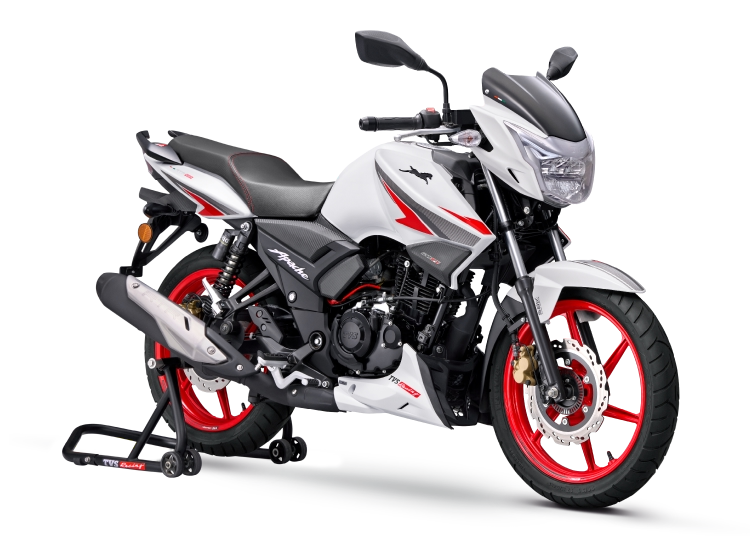
₹1,09,036 (ex-showroom) | 159.7cc | Real-world mileage: 47 kmpl
The TVS Apache RTR 160 2V is the entry point into the Apache performance family — the gateway bike for riders who want the Apache brand's race-derived DNA and aggressive styling at the most accessible Apache price. It brings the RTR design language — sharp tank extensions, muscular shrouds, the iconic Apache tail section — to under ₹1.1 lakh, making it one of the most affordable performance-branded motorcycles in India.
The 159.7cc single-cylinder engine produces 16.04 PS — a meaningful step up from 125cc bikes in power delivery, particularly at overtaking speeds above 70 km/h. The 47 kmpl real-world mileage is competitive for a 160cc performance motorcycle. Single-channel ABS is standard on the top variant, and the front disc + rear drum braking setup is adequate for the power on offer. The suspension is tuned stiffer than commuter rivals — better for enthusiastic riding on smooth roads, firmer on bad urban surfaces.
Against the 4V sibling and the Bajaj Pulsar N160 and Yamaha FZ-S Fi V4 at similar prices, the Apache RTR 160 2V is the entry point rather than the optimal choice — but for buyers who are stretching from a 125cc bike and want the Apache identity without spending ₹1.16 lakh for the 4V, it is a logical step.
Pros
- Apache RTR design language at the lowest Apache price
- 16.04 PS — meaningful highway performance over 125cc
- 47 kmpl — competitive mileage for a 160cc performance bike
- Single-channel ABS on top variant
- Strong brand identity — Apache has strong urban resale
Cons
- No Bluetooth or USB — Raider 125 has better tech at lower price
- Single-channel ABS only — 4V offers dual channel
- Stiffer suspension — uncomfortable on rough roads
- 139 kg kerb weight — heavier than Raider 125 and rivals
Who should buy: Riders stepping up from 125cc who want the Apache RTR identity and a genuine performance step-up — and are working within the tightest Apache budget. Worth comparing against the 4V before committing; the price gap is small.
View Full Specs & On-Road Price
6. TVS Apache RTR 160 4V
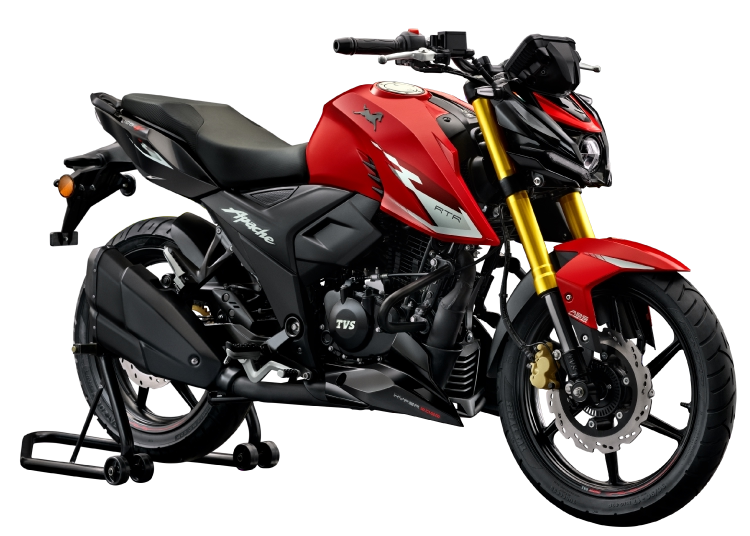
₹1,16,491 (ex-showroom) | 159.7cc | Real-world mileage: 41–47 kmpl
The TVS Apache RTR 160 4V is the most important bike in the Apache range — the model that defines the Apache brand's value proposition in the performance commuter segment. The 4V designation refers to the four-valve cylinder head, which improves breathing efficiency for a more free-revving power delivery over the two-valve 2V sibling. At 17.3 bhp, it produces more power than the Bajaj Pulsar N160 and sits competitively against the Yamaha FZ-S Fi V4.
The key advantage over the 2V is dual-channel ABS — front and rear disc brakes with independent ABS control on both wheels. This is a genuine safety upgrade on wet roads and during emergency braking, and it represents the most important distinguishing feature between the two Apache 160 variants. TVS also equips the 160 4V with a semi-digital cluster, Bluetooth SmartXonnect (on select variants), and a race-inspired riding position with clip-on style handlebars that place the Apache RTR 160 4V firmly in sporting territory.
Real-world mileage of 41–47 kmpl reflects the more aggressive tune — the performance gains come with a fuel cost. The Apache RTR 160 4V is also the most direct competition to the Bajaj Pulsar N160, Yamaha FZ-S Fi V4, and Hero Xtreme 160R 4V — all worth test-riding before deciding.
Pros
- Dual-channel ABS — front and rear disc, both ABS-protected
- 17.3 bhp — strong performance in the 160cc class
- SmartXonnect Bluetooth on select variants
- Four-valve head — more free-revving than 2V sibling
- Race-inspired ergonomics and Apache brand identity
Cons
- 41–47 kmpl — lower mileage than commuter rivals
- Sportier ergonomics — not suited to long daily commutes
- 144 kg kerb weight — slightly heavy for city traffic
- Weaker resale than Yamaha FZ-S Fi V4 in premium urban markets
Who should buy: Performance-oriented urban riders who want dual-channel ABS, strong 160cc power, and the Apache brand identity. The step up from the 2V is worth every rupee for the dual ABS alone.
View Full Specs & On-Road Price
7. TVS Apache RTR 180
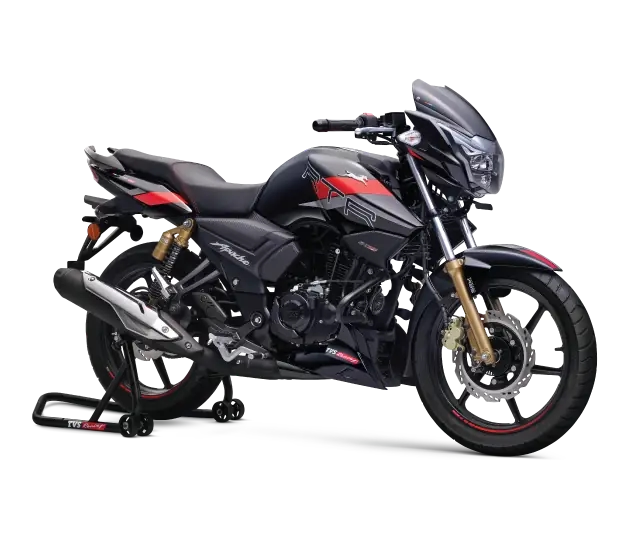
₹1,26,245 (ex-showroom) | 177.4cc | Real-world mileage: 45 kmpl
The TVS Apache RTR 180 occupies a distinctive position in the Apache lineup — the only 180cc option, sitting between the 160 4V and the 200 4V. Its 177.4cc engine produces 17.02 PS, making it fractionally less powerful than the 160 4V on paper, but delivering that power through a larger displacement that gives it a more relaxed, linear power delivery character. At highway speeds of 80–100 km/h, the RTR 180 feels more settled than the 160cc bikes — less need to rev hard, more torque available in the mid-range.
Real-world mileage of 45 kmpl is competitive for a 177cc performance motorcycle — better than the 160 4V's 41–47 kmpl range in many real riding conditions, owing to the larger engine's ability to work at lower revs for the same highway speeds. The Apache RTR 180 makes a genuine case for itself as the most comfortable highway Apache short of the 200 4V — the larger displacement provides the headroom that matters most when you're consistently riding at 80+ km/h.
The RTR 180 does not carry the SmartXonnect Bluetooth feature of its siblings — a genuine omission at this price that TVS should address. The suspension and braking setup is broadly similar to the 160 4V, with a front disc and rear drum on the base variant, and ABS available on the top variant.
Pros
- 177.4cc — more relaxed highway performance than 160cc bikes
- 45 kmpl — strong mileage for 177cc performance category
- Linear mid-range torque — better for sustained highway cruising
- More comfortable at 80–100 km/h than RTR 160 variants
- Competitive pricing in the 175–180cc performance segment
Cons
- No Bluetooth / SmartXonnect — omission at this price point
- 17.02 PS — slightly less peak power than RTR 160 4V on paper
- 140 kg kerb weight — not the lightest in its class
- Limited direct rivals — sits in a slightly awkward gap between 160 and 200
Who should buy: Riders who regularly use highways and want the most relaxed, confident Apache experience without stepping up to the RTR 200 4V's price and power. The RTR 180 is the highway Apache in the sub-₹1.3 lakh bracket.
View Full Specs & On-Road Price
8. TVS Apache RTR 200 4V
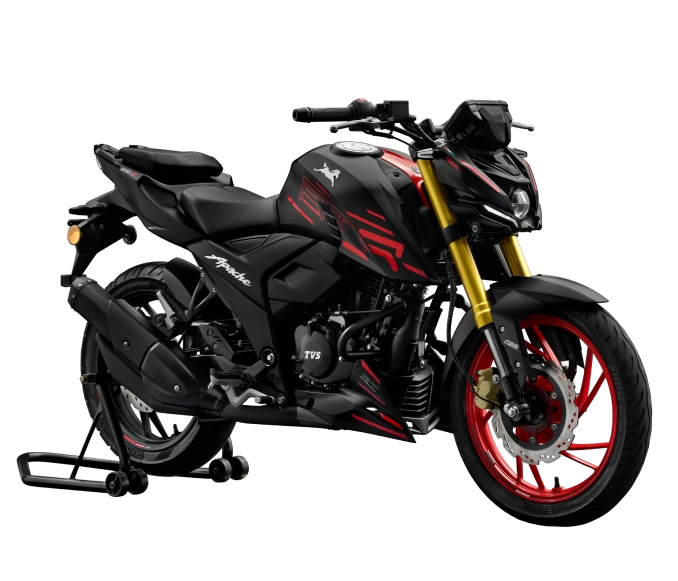
₹1,38,407 (ex-showroom) | 197.75cc | Real-world mileage: 41.9 kmpl
The TVS Apache RTR 200 4V is TVS's highest-performance commuter motorcycle — and one of the most capable sub-200cc bikes available in India under ₹1.5 lakh. Its 197.75cc four-valve engine produces 20.82 PS, placing it in the same performance tier as the KTM 200 Duke and Bajaj Pulsar NS200 at significantly lower prices. The 200 4V is the flagship of the Apache commuter range and represents the fullest expression of TVS's performance philosophy.
The feature set is the most comprehensive of any Apache: SmartXonnect Bluetooth with navigation alerts and ride analytics, a full-digital instrument cluster, dual-channel ABS with slipper clutch on the top variant, and oil-cooling for the engine — the only Apache with oil-cooling, which improves sustained performance on long highway runs and extends engine life under hard use. Real-world mileage of 41.9 kmpl is acceptable for 20+ bhp — the mileage penalty versus the commuter range is offset by the dramatically stronger performance on offer.
Against the KTM 200 Duke and Bajaj Pulsar NS200 at higher prices, the Apache RTR 200 4V is the value leader in the 200cc performance class. Riders who regularly push the performance envelope will appreciate the slipper clutch and race suspension; riders who use the RTR 200 4V primarily as a commuter will find it overspecified for that role but rewarding when the roads open up.
Pros
- 20.82 PS — highest power output in the Apache commuter range
- Dual-channel ABS + slipper clutch on top variant
- SmartXonnect Bluetooth + full-digital cluster
- Oil-cooled engine — better sustained performance and longevity
- Best value in the 200cc performance segment
Cons
- 41.9 kmpl — noticeably lower mileage than commuter TVS bikes
- 152 kg — heaviest Apache commuter, less nimble in city traffic
- Aggressive ergonomics — not suited to long daily city commutes
- Higher service cost than lower Apache variants
Who should buy: Performance enthusiasts who want the most capable Apache and plan to use the bike on highways or weekend riding as much as daily commuting. The best value 200cc performance motorcycle in India under ₹1.4 lakh.
View Full Specs & On-Road Price
9. TVS Ronin 225
₹1,43,190 (ex-showroom) | 225.9cc | Real-world mileage: 42.95 kmpl
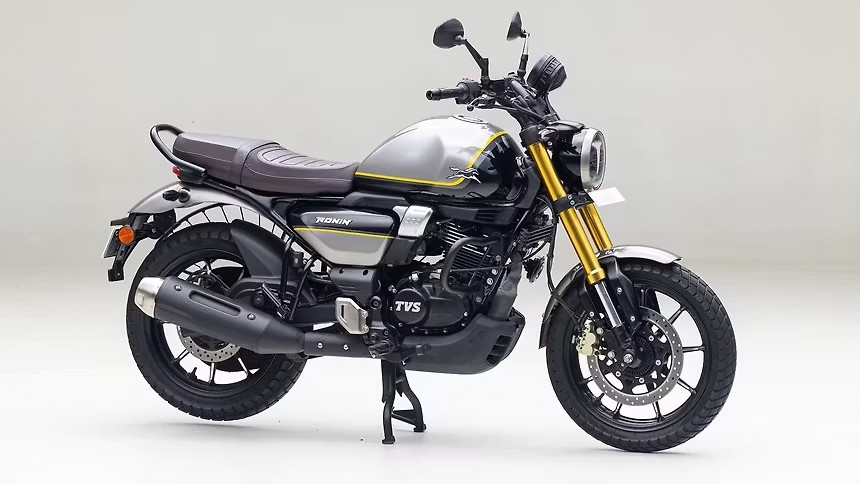
The TVS Ronin 225 is the most distinctive, most unconventional, and most ambitious motorcycle in TVS's lineup. It defies easy category classification — part naked streetfighter, part crossover, with scrambler-influenced styling cues, a wide flat handlebar, and long-travel suspension that gives it a more upright, relaxed riding position than the Apache range. TVS designed the Ronin explicitly to stand apart from every other motorcycle in its price bracket, and on that goal it largely succeeds.
The 225.9cc single-cylinder engine produces 20.4 PS and 19.93 Nm of torque — the torque figure especially impressive for a 225cc bike, delivering strong low-end pull that suits the Ronin's character as a versatile urban machine. Real-world mileage of 42.95 kmpl is strong for a 225cc motorcycle. SmartXonnect Bluetooth with turn-by-turn navigation, USB charging, dual-channel ABS, and a full-digital cluster are all standard — the Ronin's feature set rivals the RTR 200 4V's while adding the more relaxed ergonomics and characteristic design.
The Ronin occupies a space that no other Indian motorcycle currently fills: it is simultaneously a competent daily commuter, a comfortable highway tourer for weekend use, and a visually distinctive motorcycle that attracts attention. Its closest competition — the Yamaha FZ-X and TVS's own Apache RTR 200 4V — both offer different riding characters. The Ronin is for riders who want versatility and individuality in one motorcycle.
Pros
- 225.9cc — most displacement in the TVS lineup
- 20.4 PS + 19.93 Nm — strong performance and torque
- Most versatile riding character in TVS range: city + highway
- SmartXonnect Bluetooth + dual-channel ABS standard
- Unique design — stands apart from every rival at this price
Cons
- 42.95 kmpl — mileage trade-off for 225cc performance
- 160 kg kerb weight — heaviest TVS in this guide
- Higher service cost than Apache commuter range
- Weaker resale than Yamaha and KTM equivalents in premium urban markets
Who should buy: Riders who want the most distinctive TVS — a versatile 225cc motorcycle that is equally at home on a daily city commute and a weekend highway run. The Ronin 225 is the right choice if you want something that looks and rides unlike anything else in its segment.
View Full Specs & On-Road Price
Side-by-Side Comparison
Here is how all nine TVS bikes compare across the factors that matter most to buyers.
| Bike | Price (ex-showroom) | Engine | Power | Real-World Mileage | Best For | Weakest Point |
|---|---|---|---|---|---|---|
| TVS Sport | ₹62,143 | 109.7cc | 8.1 bhp | 70 kmpl | Lowest cost, best mileage | No features at all |
| TVS Radeon | ₹70,143 | 109.7cc | 8.1 bhp | 65 kmpl | Commuter with character | No disc or Bluetooth |
| TVS Star City Plus | ₹72,025 | 109.7cc | 8.1 bhp | 65 kmpl | Practical daily commuter | No disc or Bluetooth |
| TVS Raider 125 | ₹84,490 | 124.8cc | 11.2 bhp | 56–60 kmpl | Best features + style | Weaker resale value |
| TVS Apache RTR 160 2V | ₹1,09,036 | 159.7cc | 16.04 PS | 47 kmpl | Apache entry — budget | Single-channel ABS only |
| TVS Apache RTR 160 4V | ₹1,16,491 | 159.7cc | 17.3 bhp | 41–47 kmpl | Best Apache 160 | Lower mileage, sporty ergo |
| TVS Apache RTR 180 | ₹1,26,245 | 177.4cc | 17.02 PS | 45 kmpl | Highway Apache | No Bluetooth |
| TVS Apache RTR 200 4V | ₹1,38,407 | 197.75cc | 20.82 PS | 41.9 kmpl | Best performance Apache | Heavy, aggressive ergo |
| TVS Ronin 225 | ₹1,43,190 | 225.9cc | 20.4 PS | 42.95 kmpl | Versatile crossover | Heaviest TVS here |
TVS SmartXonnect — What It Actually Does
SmartXonnect is TVS's Bluetooth-based connected motorcycle platform, available on the Raider 125, Apache RTR 160 4V (select variants), Apache RTR 200 4V, and Ronin 225. Here is what it offers in practice:
- Turn-by-turn navigation: Works with Google Maps on Android and Apple Maps on iOS — the instrument cluster shows directional prompts without needing to look at your phone.
- Incoming call and message alerts: Caller ID and message previews on the digital cluster — useful for urban commuters who cannot safely check their phone.
- Ride statistics: Trip distance, average speed, fuel consumption tracking, and acceleration data stored per session in the TVS app.
- Service reminders: Mileage-based service alerts sent to the app — helpful for tracking maintenance intervals.
- Emergency assist: Crash detection alert with location sharing — notifies a registered contact if the bike detects a significant impact.
Among Indian manufacturers, SmartXonnect is the most comprehensive connected platform at commuter and mid-range motorcycle price points. Bajaj's connected features are available only on higher-end bikes; Hero's XTEC Bluetooth is more limited in functionality. TVS has a genuine technological lead here.
Real-World Mileage & Running Costs
ARAI figures are measured under controlled lab conditions — real-world mileage in Indian city traffic is always lower. Based on owner reports from Indian motorcycling forums:
- TVS Sport: 70 kmpl — best in the entire TVS range; city-optimised engine tuning
- TVS Radeon: 65 kmpl — strong for a 110cc with comfort-oriented tuning
- TVS Star City Plus: 65 kmpl — consistent performer; ETFi variant maintains this across conditions
- TVS Raider 125: 56–60 kmpl — strong for a 125cc with this feature set and performance
- TVS Apache RTR 160 2V: 47 kmpl — acceptable for a 160cc performance bike
- TVS Apache RTR 160 4V: 41–47 kmpl — varies with riding style; 41 kmpl under spirited riding
- TVS Apache RTR 180: 45 kmpl — better than 160 4V under highway conditions due to larger displacement
- TVS Apache RTR 200 4V: 41.9 kmpl — consistent across city and highway use
- TVS Ronin 225: 42.95 kmpl — strong for 225cc class
At ₹104/litre and a 40 km daily commute, the TVS Sport costs approximately ₹1,600–₹1,800 per month in fuel. The Apache RTR 200 4V costs approximately ₹2,100–₹2,500 for the same distance. Over three years, the fuel cost difference between a Sport and a 200 4V adds up to ₹18,000–₹25,000 — a meaningful number to factor into the total ownership cost.
Service & Maintenance Costs
Typical TVS servicing costs across major Indian cities (July 2026, based on authorised TVS dealer quotes):
- Basic service (oil change + filters): ₹500–₹850
- Standard periodic service (every 3,000 km): ₹700–₹1,100
- Major service with parts (every 10,000 km): ₹1,400–₹2,600
- Front disc pad replacement: ₹300–₹550
- Chain and sprocket set: ₹800–₹1,400
- Tyre replacement (MRF/CEAT): ₹1,000–₹1,800 per tyre
TVS service costs are broadly competitive with Hero and Honda across the commuter range. The Apache 200 4V and Ronin 225 have higher service costs than the commuter models due to more complex engines and additional components like the slipper clutch. TVS's service network is strong in metro and tier-1 cities; rural coverage is meaningfully weaker than Hero's 6,000+ point network and should be a consideration for buyers in semi-urban or rural areas.
Key Buying Factors for TVS Bikes
- Daily commute distance: Under 30 km/day — TVS Sport or Radeon are ideal. 30–50 km/day — Star City Plus or Raider 125 suit best. 50+ km/day — Raider 125 (for efficiency) or RTR 180/200 4V (for comfort at speed).
- Performance versus economy: Economy first — Sport, Radeon, Star City Plus, or Raider 125. Performance first — Apache RTR 160 4V, RTR 200 4V, or Ronin 225.
- Feature priorities: Need Bluetooth and navigation? Raider 125, Apache RTR 160 4V (select), Apache RTR 200 4V, or Ronin 225. Need USB charging? Same group. Happy with basics? Sport, Radeon, or Star City Plus.
- Service network location: Metro or large city — TVS service is well covered. Semi-urban or rural — Hero models from the 125cc range will serve you better long-term. TVS's rural coverage is a genuine limitation.
- Resale plan: Selling within 3–4 years? TVS bikes depreciate more than Honda and Hero equivalents. Factor in ₹5,000– ₹15,000 in lower resale depending on the model, relative to a Honda or Hero at the same price.
- Highway use: Occasional highway — any TVS here handles this. Regular sustained highway (80+ km/h) — RTR 180, RTR 200 4V, or Ronin 225. The 110cc and 125cc TVS bikes are near their comfortable limit at sustained 80 km/h.
TVS vs Other Brands — Where TVS Wins and Loses
Where TVS wins: Feature content for the price is TVS's strongest suit. The Raider 125 offers Bluetooth and USB-C at ₹84,490 — features Honda's comparable SP 125 at ₹88,750 does not have. The Apache RTR 200 4V at ₹1,38,407 offers more technology than the Bajaj Pulsar NS200 at ₹1,32,962 with a full Bluetooth platform and oil cooling. TVS also leads on design distinctiveness — the Ronin 225 has no direct equivalent from any Indian manufacturer.
Where TVS loses: Resale value and rural service network are TVS's consistent weaknesses versus Hero and Honda. A well-maintained Honda SP 125 retains 62–68% of its value after 3 years; a comparable TVS Raider 125 retains approximately 52–57%. In rural areas, Hero's 6,000+ service points versus TVS's comparatively thin rural coverage is a practical ownership consideration that matters more the further you are from a large city.
Final Verdict
For most buyers looking at TVS's lineup, the TVS Raider 125 represents the brand's best overall value. It combines Bluetooth, USB-C, disc brake, strong mileage, and genuinely attractive design at ₹84,490 — a feature-to-price ratio that no rival at this price matches. In cities with good TVS service coverage, it is one of the most compelling 125cc motorcycles available in India.
Among the performance bikes, the TVS Apache RTR 160 4V is the most complete Apache in the commuter range — dual-channel ABS, 17.3 bhp, and the option of SmartXonnect at ₹1,16,491 make it the natural first choice over the 2V sibling. For the most capable TVS overall, the TVS Apache RTR 200 4V is exceptional value at ₹1,38,407 — 20.82 PS, dual ABS, slipper clutch, and Bluetooth in one package is competitive with bikes costing significantly more.
For buyers who want TVS's most distinctive product, the TVS Ronin 225 is unlike anything else in the Indian market — a 225cc crossover-streetfighter with genuine versatility, unique styling, and SmartXonnect connectivity. It is the right TVS for riders who want a motorcycle that does not look or ride like everything else in the parking lot.
Regardless of which TVS you choose, verify service coverage in your specific area before buying — this matters more for TVS than for Hero or Honda, and the difference in rural service availability can materially affect long-term ownership experience.
Frequently Asked Questions
Which is the best TVS bike in India in 2026?
The best TVS overall depends on your use case. For the best all-round value, the TVS Raider 125 at ₹84,490 is outstanding — Bluetooth, USB-C, disc brake, and 56–60 kmpl in a sporty package. For performance, the Apache RTR 200 4V at ₹1,38,407 is TVS's most capable commuter. For uniqueness and versatility, the Ronin 225 at ₹1,43,190 stands alone.
Which TVS bike gives the best real-world mileage?
The TVS Sport gives the best real-world mileage at 70 kmpl — the highest of any TVS motorcycle. Among 125cc bikes, the Raider 125 delivers 56–60 kmpl. Among performance bikes, the Ronin 225 leads at 42.95 kmpl, slightly ahead of the Apache RTR 200 4V at 41.9 kmpl.
TVS Raider 125 vs Honda SP 125 — which should I choose?
Choose the TVS Raider 125 if features matter to you — Bluetooth, USB-C, and sporty design at ₹84,490 versus the Honda SP 125 at ₹88,750 without Bluetooth. Choose the Honda SP 125 if resale value, long-term reliability reputation, and FI mileage consistency (60–65 km/l) matter more. The SP 125 will also serve you better in rural areas due to Honda's wider service network.
Apache RTR 160 2V vs 160 4V — is the upgrade worth it?
Yes, for most buyers. The ₹7,455 price gap between the 2V (₹1,09,036) and 4V (₹1,16,491) buys you dual-channel ABS, a four-valve cylinder head for better power delivery, and SmartXonnect Bluetooth on select variants. Dual-channel ABS alone — which protects both wheels during emergency braking — is worth the premium for everyday safety.
Is the TVS Ronin 225 good for daily commuting?
Yes — the Ronin 225's upright riding position, wide handlebar, and long-travel suspension actually make it more comfortable for stop-start city commuting than the Apache RTR 200 4V's more aggressive ergonomics. The 42.95 kmpl mileage is acceptable for a 225cc motorcycle. The main considerations are its 160 kg kerb weight (heavier in tight traffic) and higher service costs versus Apache commuter variants.
Which TVS bike is best for rural or semi-urban areas?
The TVS Sport, Radeon, or Star City Plus — the commuter 110cc range — are the most practical for rural and semi-urban areas where TVS service coverage is reasonable. However, buyers in areas with limited TVS service coverage should seriously consider Hero models (Glamour, Splendor Plus) instead, as Hero's 6,000+ service points provide meaningfully better coverage in smaller towns and villages.
Which TVS bike holds its resale value best?
Among TVS motorcycles, the Apache RTR 160 4V and Apache RTR 200 4V retain value best in urban markets due to strong brand recognition in the performance segment. The Raider 125 retains approximately 52–57% after 3 years. The Sport and Radeon have the weakest resale. Note that across the entire segment, Honda and Hero models retain value better than equivalent TVS bikes.
What is SmartXonnect and which TVS bikes have it?
SmartXonnect is TVS's Bluetooth connected platform — offering navigation alerts, call/message notifications, ride statistics, service reminders, and crash detection. It is available on the TVS Raider 125, Apache RTR 160 4V (select variants), Apache RTR 200 4V, and Ronin 225. The Apache RTR 160 2V and RTR 180 do not have SmartXonnect.
What is the approximate EMI for TVS bikes?
At a standard 10% down payment and 24-month tenure at approximately 10.5% interest, monthly EMIs range from roughly ₹2,600 (TVS Sport) to approximately ₹5,800 (TVS Ronin 225). TVS Motor Finance and partner NBFCs regularly offer promotional rates with zero processing fees — always compare at least two lender offers before committing, as rates can vary by 0.5–1%.